HCN: Trappers catch a lot more than wolves

From High Country News – From the April 29, 2013 issue by Jodi Peterson

As the feds handed management of gray wolves to Idaho, Montana and Wyoming over the last few years, reactions were mixed. Conservationists worried that wolf numbers would plummet, while hunters and trappers were thrilled they’d get to legally pursue the predators. All three states have hunting seasons now. Idaho started allowing wolf trapping last year; this year, Montana had its first season.

Despite mandatory state-run education classes, though, trappers have been catching a lot more than wolves — mountain lions, coyotes, bobcats, eagles, fishers, deer, moose, even family pets. Hikers and skiers have encountered wolf traps on public lands close to trails. In January, a National Park Service employee accidentally stepped into one, just outside Glacier National Park; the next month, a dog got three of its legs caught in two different traps at once south of Livingston, Mont. Below are some figures from Idaho’s 2011-2012 wolf trapping season. (Complete data from the current season aren’t yet available for either state.)

123 Total wolves trapped

143 Number of people who reported setting traps for wolves *

557; 111 Greatest number of wolf snares set in one night in one game-management unit; foothold traps set *

45; 33 White-tailed deer caught; released alive *

45; 1 Coyotes caught; released alive *

9; 3 Mountain lions caught; released alive *

9; 7 Domestic pets caught; released alive *

39; 22 Other non-target animals caught, including bobcats, geese, skunks, raccoons, golden eagles and ravens; released alive *

$37,115 to $1,256,966 Estimated monetary value of one Northern Rockies wolf **

$38.25; $333.50 Cost for license and tag to trap one wolf for Idaho residents; for nonresidents

* Based on responses to a survey sent to 460 people who took Idaho’s wolf trapper education class and purchased a 2011-2012 trapping license.

** according to 2011 Duke University study

Sources: Idaho Fish and Game Department, Duke University.

Ecological Benefits of Wolves

Here’s an overview from the Wyoming Sierra Club on some of the good things wolves do for their environment, for those who need reminding…

BENFITS OF WOLVES

Wolves play a vital role in maintaining the health and sustainability of the landscape in the greater Yellowstone region and our western lands. They are a keystone species, one that has a disproportionate impact on its environment relative to its abundance. Since their return in 1995, wolves have benefitted this ecosystem by regulating prey numbers and movements—allowing streambank habitats to recover, reducing densities of coyotes, and providing food for scavengers.

The most recognized and well-documented ecological benefit of wolves is that they have resumed the important role of maintaining healthy wildlife herds in the northern Rockies by selecting young, old, physically impaired, or diseased animals. (5) By reducing prey numbers, dispersing these animals on the landscape, and removing sick animals, wolves also may reduce the transmission and prevalence of wildlife diseases such as chronic wasting disease and brucellosis. (7)

In addition to improving the overall fitness of wildlife herds, wolves have also altered the behavior of their prey, leading to a cascade of beneficial effects on the landscape. In the absence of wolves, elk tended to browse heavily in the open flats along rivers and wetlands, since they did not need to evade predators by seeking thicker cover. Without fear of wolves, elk over-browsed the vegetation inhibiting the growth of new trees. Since the reintroduction of wolves in Yellowstone, elk spend more time in the safety of thick cover or on the move.(6) As a result, riparian areas and aspen groves that had been suppressed by decades of over-browsing are regenerating, improving habitat for species like beavers and songbirds.(3) Beavers, which create wetland habitats with their dams, have improved water quality in streams by trapping sediment, replenishing groundwater, and cooling water.

Species that rely on healthy riparian habitats and benefit from the presence of wolves in Yellowstone National Park include:

g Yellowstone cutthroat trout and other native fish

g Moose

g Waterfowl (ducks, geese, trumpeter swans)

g Songbirds (such as warblers, wrens, and thrushes)

g Small mammals (such as beavers, muskrats,

and other rodents)

g Insects, amphibians, and countless other species (3, 6)

wolves and coyotes

In the absence of wolves, coyotes became a top predator in the ecosystem, but they are not large enough to regulate elk, deer, and moose populations.(2) The return of the wolf restored a natural complement of predators to northwest Wyoming and returned the coyote to its role as a mid-level predator.

wolves and scavengers

Scavengers, such as ravens, eagles, and bears, also benefit heavily from the return of wolves. Wolf kills provide scavengers with an important source of protein, particularly in winter. Twelve species of scavengers are known to visit wolf kills in Yellowstone National Park. (10) Ravens are especially attuned to wolves and may fly over wolf packs as they pursue prey, allowing them quick access to wolf kills. In turn, wolves may benefit from ravens by following them to carcasses that can feed both species. (8)

Prior to the reintroduction of wolves, scavengers were more dependent on animals that died due to harsh winters. Since snow is thawing earlier as a result of a warming climate, there are fewer winter kills available for scavengers. Wolf kills may help buffer the impacts of climate change for scavengers by providing them with a food source in the

The return of the wolf to Wyoming has had significant ecological benefits in a relatively short period of time. Ecological concerns contributed to the decision to return wolves and should play a role in how states manage this keystone species. Although it is easy to focus on the perceived negative impacts of wolves, it is important to recognize the actual benefits they provide to our ecosystem. By regulating wildlife herds and reducing the prevalence of diseases, revitalizing riparian areas, reducing coyote densities, providing food for scavengers, and indirectly improving conditions for a host of other species, wolves play an essential role in maintaining the ecological health and integrity of the landscape.
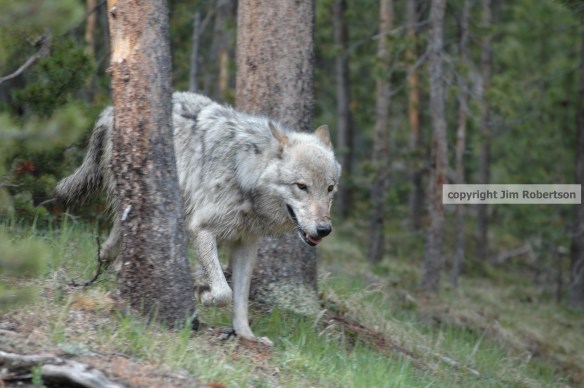
copyrighted Hayden wolf in lodgepoles

Sarah Palin Has Found Her Niche with the NRA

The other night I watched the HBO movie Game Change, about John McCain’s selection of Alaska Governor Sarah Palin as his presidential running mate in 2008. After Tina Fey’s hilarious portrayal of Palin on Saturday Night Live I was half expecting a comedy, but this fact-based film stayed so close historical reality it should have been billed a horror flick. The thought of Sarah Palin a heartbeat away from the red button that could launch our 7,000+ nukes on a president’s whim is beyond scary.

While Julianne Moore usually doesn’t do anything for me, her depiction of Palin at her highest, lowest and airheaded-est was spot on. It was almost painful watching a potential American VP be so clueless about foreign policy, domestic policy, or any other policy for that matter. Ed Harris as Senator John McCain was a bit of a stretch, but Woody Harrelson did a great job as McCain’s strategist, Steve Schmidt, who was partly responsible for suggesting Palin in the first place—and who spent the rest of the movie regretting it and desperately trying to coach her. After she goes catatonic during a Q&A session and later tries to seize power from her running mate, someone asks Schmidt, “Have you ever considered that she might be mentally unstable?30973_4756818474045_484772904_n

Well I consider it every time I see her. To me she’s little more than a female Ted Nugent—especially when she dons her hunting garb.

Near the story’s end, Harrelson’s Schmidt asks Rick Davis, his co-conspirator in picking Palin, “Still think she’s fit for office?” to which Davis answers, “Aw, who cares. In forty-eight hours no one will even remember who she is.” Unfortunately, Davis’ hopeful prediction did not come to pass.

The film leaves you wondering how the hell someone like Palin ever got tapped for VP and how she thinks she has any credibility left after monumental blunders like her interview with Katie Couric. Well, apparently Sarah Palin has found her niche as a mouthpiece for the National Rifle Association—a group clearly unconcerned with credibility (and collectively as mentally unstable as Palin herself).

Sporting a t-shirt making the simplistic yet inexplicable statement “Women Hunt” (including an obscenely suggestive line-drawing that probably went over her head), she called the NRA crowd she spoke to Friday her “brothers and sisters” during her 12-minute speech in which she told the crowd that Trigger is her son Trigg’s nickname and that Remington is her nephew’s middle name.

The creepy thing is, she received standing ovation.
Although Sarah Palin came off in the movie as a power-tripping right-wing extremist bordering on evil, if anything, Game Change was too nice in its representation of her. What sort of woman hunts? A woman like Sarah Palin.

74490788

OR-7’s Sister Dies Grisly Death…..

Nabeki's avatarHowling For Justice

Imnaha pack female_wolf_pup OR 5
Sweet girl, OR-5,  being collared in February 2010. She was caught in a leg hold trap, in the wolf killing state of Idaho,  at the end of March 2013. She’s the second sibling of OR-7 to die in  Idaho.

Iconic Oregon wolf, OR-7,  made the right decision when he left his natal pack, the Imnaha’s,  and headed west, away from Idaho but his two siblings, OR-9 and OR-5 weren’t so lucky. His brother OR-9 was killed by an Idaho hunter with an expired wolf tag, in other words the wolf was poached. It’s always such a big deal when elk are killed out of season or with expired tags but wolves are treated as if their lives are worth nothing.

And so the sad story of OR-7’s family continues with the death of his sister OR-5,  pictured above. She originally dispersed to the Blue Mountains in Washington state, I wish…

View original post 621 more words

Animal rights activists call for ban on “traditional” hunting games

2013/05/02 Taipei, By Yang Shu-min and Maia Huang

May 2 (CNA) Animal rights activists on Thursday called for a ban on traditional hunting contests by indigenous tribes, saying such competitions are a form of animal abuse.

The indigenous peoples’ traditions of hunting animals to show respect for their ancestors and Mother Earth often involve cruel actions such as torture of the animals, said the the Environment and Animal Society of Taiwan and some indigenous activists.

Furthermore, catching animals for fun and hunting pregnant creatures shows no respect for life and violates tribal traditions, said Chen Yu-min, director of the society.

The organization displayed video footage of a contest that showed about 200 people hunting squirrels and tearing the live creatures apart.

Such abuse hurts not only the indigenous culture, but also Taiwan’s international image and its tourism industry, the organization said.

It said that since 2009, at least 28 animal hunting contests have been held in 18 townships in nine counties across the country — all in the name of passing on traditions and cultural heritage.

Although hunters from indigenous tribes are excluded from the country’s wild animal protection laws, participants in such competitions could face animal abuse charges, said Lin Tzu-ling, general secretary of the Wild at Heart Legal Defense Association.

Lin urged the Council of Indigenous Peoples, Council of Agriculture and tourism-related agencies to help promote animal rights and push for the abolition of hunting games across the country.