
Here’s another older letter to the editor (this time to small, local paper in Northeast Washington), that I found in my archives…
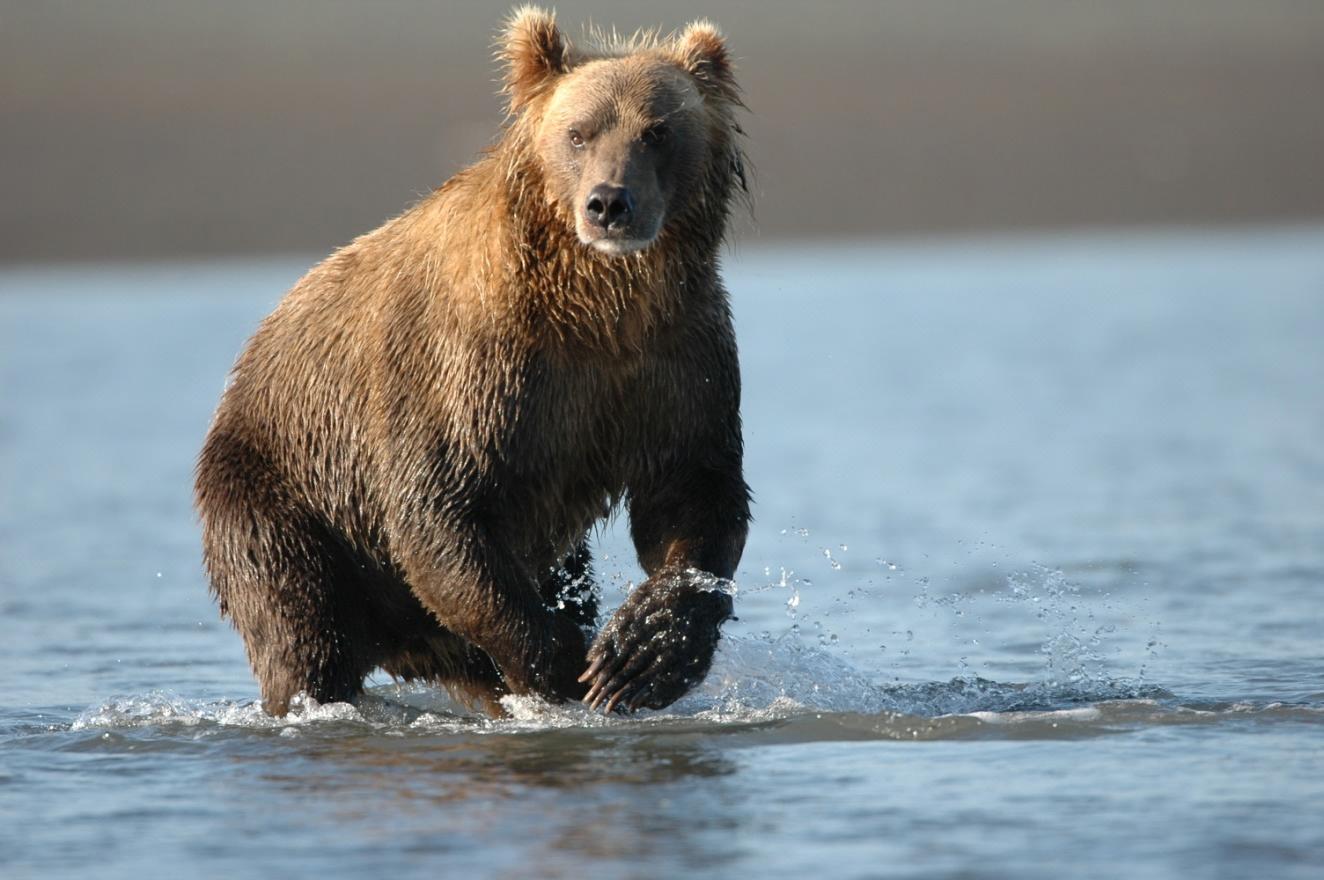
A couple of months ago I may have sided with the attitude that if grizzly bears come back to the North Cascades on their own, fine, but there’s no need to reintroduce them. But now, after a rash of anti-grizzly letters have appeared in this paper, I’m ready to become one of the champions of their full recovery here. I hope your readers are laughing off the letters from these misguided, close-minded fanatics and will learn for themselves the true nature of the grizzly bear, instead of jumping on the fear bandwagon and turning their backs on this vanishing species.
One of the common misconceptions frequently stated is that these bears are fearless and have no respect for man. This would lead you to believe that grizzlies would soon be wandering the streets of Winthrop. The fact is, grizzlies will avoid man if at all possible and will choose to inhabit the most rugged and remote areas. I worked for years in known grizzly country in Montana and the Selkirk Mountains of Washington and only sighted a grizzly in those areas once (although I saw numerous black bears).
On the other hand I’ve seen scores of grizzlies and have had numerous positive encounters with them in Yellowstone and national parks in Alaska where bear hunting is not allowed. In one case, I came face to face with a large grizzly on a narrow, brushy trail. I rounded the corner and nearly prodded him with my fishing pole before seeing him. The grizzly did not charge, but merely waited until I moved off the trail before he continued on. As John Crawford put it in an article entitled, “Getting along with grizzlies,” “…Confidence devoid of cockiness and a deep basic respect and fondness for grizzlies” should be our attitude if we meet up with Ursus arctos. Crawford goes on to describe other typical bear encounters. In one case, two B.C. trail workers met a grizzly who was running toward them in pursuit of a grouse. The bear did not see the men, but when he got a scent of them, “he reacted as though he’d run into a wall. His front legs stiffened; and mud splattered as his paws pushed out to break.” Then, “the bear turned and walked slowly, sullenly away. As soon as he was out of sight…he broke into a gallop…”
To those people who can’t appreciate living near one of the last wild areas in the lower 48, there are plenty of place to live where you won’t have to face the remote possibility of encountering a wild animal. If we are not willing to allow grizzly bears to exist in the rugged Cascade Mountains, what can we say if elephants are wiped off the African continent, or pandas have joined the dinosaurs?
Text and Wildlife Photography ©Jim Robertson, 2013. All Rights Reserved
 Exposing the Big Game
Jim such an amazing and prolific writer and defender of wildlife. Thank you
Nothing like trying to counter ignorance to inspire one to write for and defend wildlife. Perhaps that’s why I wrote so many letters to that local paper over the years.
A fantastic piece of writing. Thank you for sharing it with us.
Thanks Maureen, Glad to know it is appreciated and will live on in cyberspace.
Just beautiful! Thank you for sharing, it made my day.
Glad to hear it, thanks Kate.
Pingback: The True Nature of the Grizzly Bear | kate vrmeer
Yes the bears are wonderful. I still think it best to give them all the space they need. I still think I was dumb to make my bed in bear habitat. And remember Timothy Treadwell? He lived amongst them for years. One day he was killed by a grizzly and also his girlfriend was killed. If a person gets too close to the wild they will become part of the food chain.
Of course we’ve all heard about Treadwell, thanks to the media’s hyperbole meant to perpetuate the fear of bears. There is a good chance that the bear that killed them was wounded by poachers (or trophy hunters) who target bears right outside the park that time of year. Paul Watson brings this up in a piece he wrote in Defense of Treadwell: http://www.seashepherd.org/commentary-and-editorials/2003/10/24/in-defense-of-timothy-treadwell-and-amie-huguenard-by-captain-paul-watson-459
Hugely informative article. I hope I am not being misunderstood. I did not think Timothy Treadwell was a fool. I thought he was quite remarkable. I did think he lived dangerously close to these animals. I am terrified of bears. But it is only natural don’t you think. I still love them. Don’t think anyone should be killing them. Someone like me belongs indoors.
Yes, the media did portray Treadwell generally in a negative light.
No, sorry Denderah, I don’t thinks it’s only natural to be a terrified of bears. Are you terrified of dogs? Dogs have killed far more people than bears, yet, as with bears, the highly publicized negative events are a rarity. Fear of bears only perpetuates more negative bear encounters. Read the chapter, “Bears Show More Restraint than Ursaphobic Elmers” to learn the number of bears killed by humans vrs. humans by bears.
Reblogged this on Sherlockian's Blog and commented:
Grizzlies.
I don’t have an argument with you Jim Robertson and this is feeling perilously close to argument. But I stand my ground. Being afraid of an animal that can kill me is a healthy respect for them. I am not a Ursaphobic Elmer.
Sorry Denderah, I didn’t mean for this to turn into an argument either and I certainly wasn’t calling you an Elmer by suggesting you read a chapter in my book. An “Elmer” is a hunter (after Elmer Fudd). You’re no Elmer, but you might be an Ursaphobe. With all due respect, being afraid or terrified of a bear is not what I consider a healthy respect. Animals can smell fear and it often comes across to them as aggression. More people have been hurt by bears (or cougars) when they run from them. Instead, if you meet one, recommend you treat them with mutual respect, talk to them calmly and slowly move out of their way.
One more thing, and I’m not picking on you Denderah, here’s an article about a teenager who was shot and killed by a fellow camper that heard a noise outside his tent and thought it was a bear: http://www.theglobeandmail.com/news/national/manitoba-teen-mistaken-for-a-bear-shot-and-killed-outside-tent/article12312413/ Unfortunately, fear tends to result in this type of lethal reaction. I can understand that you can’t help being afraid of bears, but the more you learn about them the less fearful you will be. Again, I’m just trying to help you understand the true nature of bears.
Reblogged this on Carinas space.
Thank you Jim. On comment boards it is easy to misunderstand emotion. I understand what you mean by fear. Funny you mentioned cougars. I live in cougar territory and met one while I was walking after supper. He was standing by a mesquite bush. He started walking toward me like a big friendly dog. I wanted to run but my mind told me to be still. I turned anyway to try to get back to my house slowly. That cat closed the gap between us in seconds flat. Next thing I knew it was nearly beside me. Everything went black. Obviously I wasn’t hurt and made it home but I cannot tell you
You did the right thing, Denderah; your mind was correct in telling you not to run from the cougar. Next time, don’t turn away from the animal but instead, in the case of cougars, yell convincingly and wave your arms over your head to make yourself appear larger, while continuing to face it (even while you walk slowly away backwards–slowly enough not to trip). Don’t look into its eyes, but glare at the cougar as though you’re mad and not afraid.
Bears can’t see very well, so if one is advancing on you, it may be because he can’t see where you are. In their case, talk more calmly and don’t wave your arms, as they might take it for aggression.
I am having trouble with my comment section. But yes animals can sense fear. And people with guns get jumpy. Fear seems like aggression to an animal and that makes me more afraid unforunately. That’s why I stood still on the road with the cougar but I was shaking like a leaf. I am a ursaphobe and a cougarphobe and big doggy phobe. Ads a girl a big black gog came out of nowhere as I was riding my bile. He bit down on my foot and took me off the bike and down the road. All I remember is dirt, blood and spit.
I meant riding my bike and big black dog. But you get the picture. My hands are still shaking.
I got the picture and knew what you meant. I’ve been bit by dogs several times, but I still love them.
Yea me too. I love them.
I’ve got a big dog next to me on the couch as we speak;)
That is a sad story about the teen. That is what happens when fear overides us. I never carry a gun. I imagine that where you live Jim you have a comfortable relationship with the landscape. I am pretty comfortable as well living in the Mojave. I could be out at night sleeping under the stars here knowing there are cougars on occasion. It is about what we get to know.
Yes, and you don’t have to worry about cougars attacking while you sleep; they pounce on moving targets, not people in sleeping bags.
I have had plenty of dogs in my life too. From childhood on. The dearest of friends. And cats too. And so many more.
They’re all such wonderful creatures.
In CA over 230,000 Grizzlies roamed the state before we entered the scene. The Native Americans walked on Grizzly Bear trails as did many animals. They saw Grizzlies every day. Did the Native Americans fear and slaughter Grizzlies? No, they did have a healthy respect for them, but even more than that, they understood and honored their power/medicine. The ability to understand Nature comes from a perspective that is foreign to most Westerners. We must truly see the Grizzly Bear and all of Nature as our family.
We are the ones who are out of balance with nature, we are the ones who are creating the problem. At one time our ancestors knew the “way” and we can and must learn to live in harmony with Nature again.
Yes, all of our ancestors once knew how to live in relative harmony with nature. Unfortunately now even some modern-day descendants of Native Americans slaughter grizzly bears in places like Alaska or outside Glacier National Park. We need more John Muirs and fewer Teddy Roosevelts.
We who respect and love wildlife in our country and throughout the world, and who are fighting to protect all wild beings and the sanctity of their lives, are the true patriots of this country and the Earth.
Reblogged this on Exposing the Big Game.