The Roots of My Misanthropy

I am not a hate-filled person by nature, but I have what I consider a realistic view of Homo sapiens as a technologically over-evolved—yet morally under-evolved—ape that supersedes any blind allegiance to the species I might otherwise ascribe to. My disdain for humanity—hereby referred to as my misanthropy—knows no borders, boundaries, colors or cultures, aside perhaps from the emerging culture of do-no-harm veganism.

I’m not so enamored by the modest achievements and advancements we hear so much about that I don’t clearly see that mankind’s ultimate claim to fame is the “undoing” of the most incredible and diverse epoch in the history of life on earth.

My misanthropy is not aimed at individuals per se, but at an entire misguided species of animal with an arrogance so all-consuming that it views itself as separate—and above—the rest of the animal kingdom.

It’s not like humans can’t afford a little resentment once in a while, there are entire religions built specifically on the worship of mankind and its father figure—the maker made in the image of man. But sometimes someone needs to step back and see this species in perspective…

Ever since hominids first climbed down out of the trees and started clubbing their fellow animals, humanoids have been on a mission to claim the planet as their own. No other species could ever live up to man’s over-inflated self-image; therefore they became meat. Or if not meat, a servant or slave in one way or another.  If their flesh isn’t considered tasty, they’re put to use as beasts of burden, held captive for amusement or as literal guinea pigs to test drugs and torturous procedures for the perpetual prolongation of human life. Those who don’t prove themselves useful are deemed “pests” and slated for eradication.

Because, for whatever rationale, the human species sees itself as the top dog—all others: the underlings. My misanthropy is not really about a hate of humanity. I just tend to root for the underdog.

Text and Photography ©Jim Robertson, 2013. All Rights Reserved
Text and Photography ©Jim Robertson, 2013. All Rights Reserved

Possible wolf kill in offing after recent cattle deaths in Wallowa County, OR

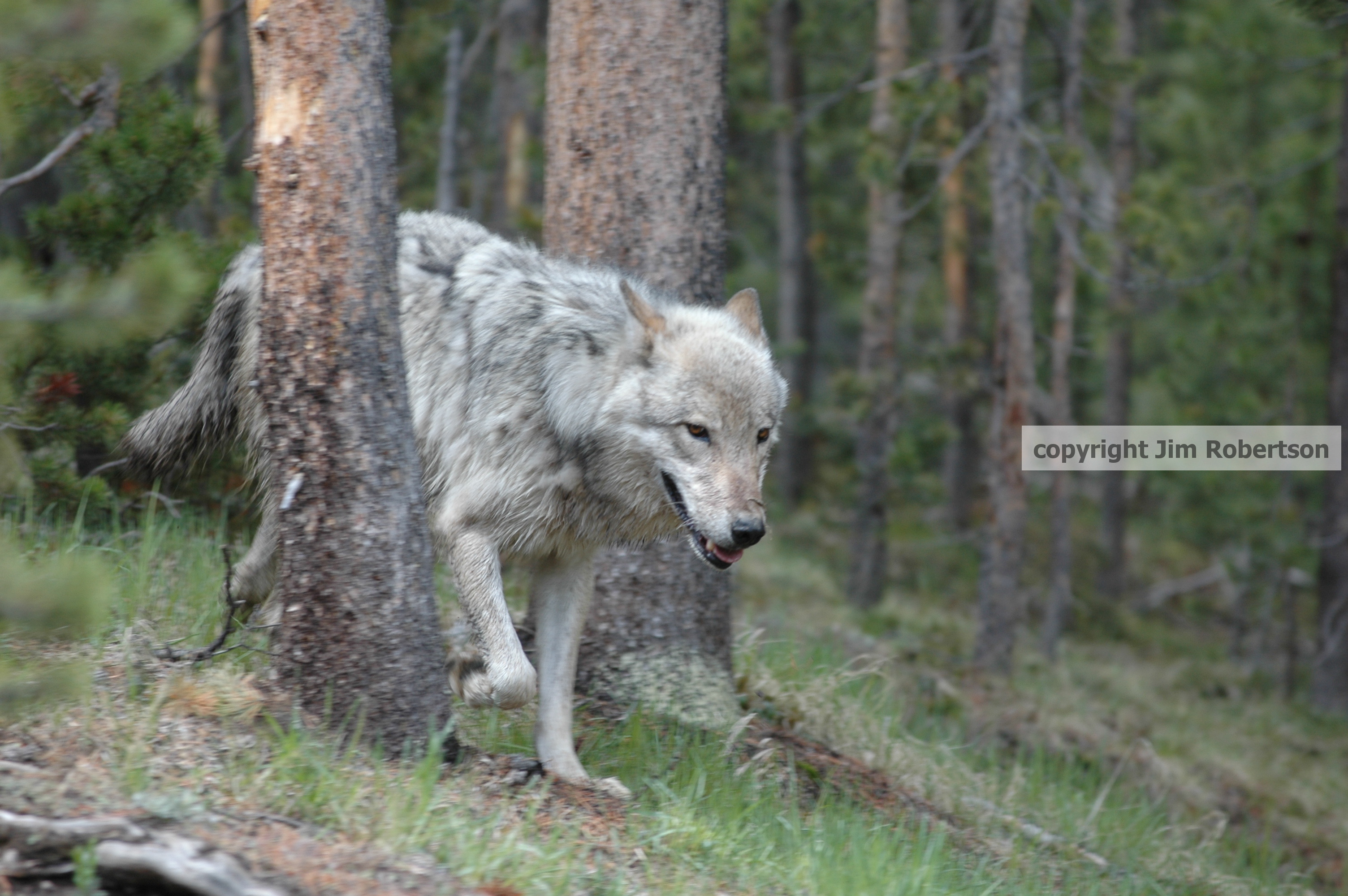
copyrighted Hayden wolf in lodgepoles

http://www.oregonlive.com/pacific-northwest-news/index.ssf/2013/08/possible_wolf_kill_in_offing_a.html

The Oregonian By Richard Cockle, The Oregonian
August 30, 2013

Two wolf attacks on cattle in Wallowa County could trigger a wolf “kill order” by Oregon wildlife officials for the first time in more than two years.

Earlier this month, wolves from the Imnaha pack injured a rancher’s cow on Upper Griffith Creek.

Last week, a horseback rider checking cattlefound the partially eaten carcass of a calf killed by a wolf along Upper Threebuck Creek.A radio-collar check showed OR-4, an Imnaha pack wolf, was in the area where the calf was discovered.

Meanwhile, the Umatilla River wolf pack northeast of Pendleton killed a goat that had been penned overnight close to the owner’s house with guard dogs nearby, said Michelle Dennehy, spokeswoman for the Oregon Department of Fish and Wildlife.

The Wallowa County attacks raised the tally of livestock deaths by the Imnaha pack to four within the past six months, enough for state wildlife biologists to begin considering “lethal controls,” Dennehy said.

Killing one or more wolves could be ordered under terms of a settlement last spring, but no decisions have been made, Dennehy said.

“I haven’t heard any discussion yet of what animals we might target, or how many,” she said.

The agreement grew out of 17 months of negotiations involving Gov. John Kitzhaber, the Oregon Cattlemen’s Association, the state Department of Fish and Wildlife and two major conservation groups after the Oregon Court of Appeals halted the killing of Oregon wolves by government hunters.

Oregon currently is home to at least 46 wolves in seven known packs — the Imnaha, Minam, Mount Emily, Snake River, Umatilla River, Walla Walla and Wenaha packs.

For the state to authorize killing a problem wolf, the affected rancher must have used at least one preventive measure to keep wolves away from livestock at least seven days before the incident.

Those can include flaggery, or strips of fabric tied to fences to frighten away wolves; burial of bone piles when cattle die naturally; guard dogs; and an increase in the presence of humans where cattle graze and wolves are known to range.

Nick Cady, spokesman for the Cascadia Wildlands environmental group, said lethal controls under the settlement are a “last resort” to deal with wolves and can occur only when livestock kills become chronic. His group helped negotiate the agreement.

If a wolf or wolves must be killed, it should be a “targeted removal” of specific animals preying on livestock, he said. Nevertheless, Cady doesn’t believe lethal controls are the best option.

Since Washington wiped out the cattle-killing Wedge pack of wolves north of Kettle Falls near the Canadian border last year, new wolves have moved in, and “they’ve been depredating again,” Cady noted.

Wolves were active this summer in northeastern Oregon. An injured calf was found July 2 in Wallowa County’s Upper Threebuck Creek drainage and was listed as a probable wolf attack, state biologists said. Calves were attacked by wolves in the same area April 22, May 10 and May 15, they said.

A calf carcass found in the Hayden Lake area of Wallowa County also suggests a possible wolf attack, they said. They also confirmed the death of a ewe sheep in the Weston Mountain area northeast of Pendleton around June 3 as a wolf kill.

In Agreement With a Hunter, This One Time…To a Point

Here’s my letter to the Daily Astorian in response to their article, “Bowhunting and Elk.”

When they printed it, the newspaper simply titled the letter, “In Agreement.” But a more fitting title would have been: “In Agreement With a Hunter, This One Time…To a Point.”


Dear Editor,

Although I don’t usually find myself in agreement with hunters on much of anything, I had to concur with the rifle hunter who stated last week that bowhunting’s 50 percent crippling rate is a calamity and absurdly unfair to elk (“Bowhunting and elk,” The Daily Astorian, Aug. 23). For every elk the average bowhunter kills, at least one escapes with an arrow painfully stuck in them.

However, I was disappointed that the rifle hunter’s main concern was for his chosen sport, not for the elk themselves. His final line, “It’s high time to care about elk seasons,” should have read, “It’s high time to care about elk.”

Jim Robertson

elk-000-home17300

16-year-old killed in hunting rifle accident

http://www.kptv.com/story/23301778/16-year-old-killed-in-hunting-rifle-accident-in-home

16-year-old killed in hunting rifle accident in home
Posted: Aug 30, 2013
By FOX 12 Staff – email

DRAIN, OR (KPTV) –
A 16-year-old boy was killed when a friend handed him a hunting rifle inside a home and a shot was accidentally fired.

Douglas County deputies said it happened at 10:45 p.m. Thursday on Hayhurst Road in Drain.

Investigators said the victim was spending the night at his 15-year-old friend’s house. The boys were in the bedroom together when they decided to handle the rifle belonging to the younger boy.

The 15-year-old was handing the rifle to his friend when it accidentally discharged, according to investigators. The 16-year-old boy was shot and died at the scene.

The Douglas County Deputy Medical Examiner’s Office determined the shooting to be accidental. Both boys live in the Drain area and attend school there.

Deputies are not releasing their names at this time.

90823_Pred_ATACS

We’re All Individuals

[This goes for observing animals in the wild as well.]

August letter by Robert Grillo, Free from harm.org

Visiting a sanctuary is a vastly different experience than visiting a farm. Farms value animals to the extent that they produce a profitable product via their flesh, mammary gland secretions or ovulation. Visiting animals on farms does not produce any “breakthrough” in our understanding of animals. On the contrary, most people simply walk away from a farm reaffirming what they have been taught: animals don’t object to being used as resources. It’s natural and sanctified by ancient traditions. Somehow, we rationalize, animals have passively accepted their lot in life. On farms, we view meek or fearful animals from a distance or on the other side of an electrical fence, typically in herds or flocks with ear tags (numbers instead of names), and under conditions which generally repress their ability to express themselves as individuals.

Yet, each animal is a self-aware individual with a unique personality – a complex of experiences, interests, emotions, thoughts, memories, likes, dislikes, desires, joys, fears, loves, families, friends, losses and pains. How do we know this? From sanctuaries and from science.

On a sanctuary, animals are individuals who, like human beings, have intrinsic value and who have no expectations placed on them. The owners are replaced by guardians who provide a caring environment that empowers them with the confidence to more authentically express their true selves. People can walk away from sanctuaries often with a “breakthrough” understanding. They recognize that these individuals are vastly more expressive, more sophisticated than their repressed counterparts on farms. They see much of themselves in these animals. They realize that the stereotypes they’ve come to believe all of their lives are based on prejudice.

Every animal-eating culture around the world has developed, over the course of centuries, a set of oppressive beliefs and traditions to deny animals – not only their identity as individuals – but also the right to exist itself, with the exception of their abbreviated lives as a human resource. Humans treated this way are appropriately called slaves. Humans killed in the manner in which animals are slaughtered is appropriately called an atrocity.

“Many who readily condemn human victimization as “heinous” or “evil” regard moralistic language as sensational or overly emotional when it is applied to atrocities against nonhumans. They prefer to couch nonhuman exploitation and murder in culinary, recreational, or other nonmoralistic terms. That way they avoid acknowledging immorality. Among others, Nazi vivisectors used the quantitative language of experimentation for human, as well as nonhuman, vivisection. Slaveholders have used the economic language of farming for nonhuman and human enslavement.” – Joan Dunayer, from her essay entitled English and Speciesism.

Many people will never have an opportunity to visit a sanctuary in person. The virtual visit we are developing for our online community is the next best thing to being there, providing a powerful way for potentially millions of people to reconnect with animals.

524958_3325028303604_654533903_n

STOP THE BADGER CULL – BOYCOTT ALL ENGLISH FARM PRODUCE

From people on the scene:

BADGERS WERE MURDERED LAST NIGHT SCREAMING IN AGONY.DOGS OFF LEADS AND UNMUZZLED WERE USED TO FINISH THE WOUNDED BADGERS OFF..SUCH HORROR !!! POOR BADGERS 😦
THE PEOPLE RESPONSIBLE ARE THE UK GOVERNMENT AND THE UK FARMERS. PLEASE SIG…

 STOP THE BADGER CULL - BOYCOTT ALL ENGLISH FARM PRODUCE

This petition will be delivered to:

DEFRA and NFU

STOP THE BADGER CULL – BOYCOTT ALL ENGLISH FARM PRODUCE

Because Badgers have been wrongly blamed for Bovine Tb in Cattle. Farmers want a cull and government have given the go ahead for Badgers to be killed in June 2013,and this will not cure the problem Scientists say. A total of 130,000 are to be slaughtered in the near future. Vaccinate instead.

To: DEFRA and NFU
Stop the Badger Cull, allow badgers to be vaccinated and press forward for a cattle vaccine.
We the under signed agree to Boycott All English Farm Produce , including meat dairy fruit veg and eggs, basically any thing produced by English farmers, in protest against the Badger Cull.

Sincerely, [Your name]

Sea otter return boosts ailing seagrass in California

[Proof that nature can take care of her own, if only we’d step aside and let her…]

Sea otter return boosts ailing seagrass in California

By Suzi Gage BBC News

sea otter ecology A sea otter enjoys a crab in California, and helps seagrass in the process.

The return of sea otters to an estuary on the central Californian coast has significantly improved the health of seagrass, new research has found.

Seagrass was deemed to be heading for extinction in this region before the otters returned.

But scientists found that the animals triggered a chain reaction of events that boosted the water-dwelling plants.

The research is published in the journal, PNAS.

The urbanisation of California has led to a huge increase in nutrient pollution in coastal waters, from increasing use of nitrogen-rich fertilizers.

Continue reading the main story

“Start Quote

It’s almost like these sea otters are fighting the effects of poor water quality”

End Quote Brent Hughes University of California

This is said to be the reason for the dieback of seagrass, which has also been declining worldwide.

This research suggests that the hunting to near-extinction of sea otters in the late 19th and early 20th Century may have exacerbated the problem, and conversely that their reintroduction is helping revive ailing seagrass populations, even in the face of hugely nutrient-rich water.

Links in the chain

The researchers assessed seagrass levels over the past 50 years in the Elkhorn Slough in Monterey Bay, and mapped their increases and declines.

They looked at a variety of changes that may have affected the grass, but the only factor that really matched the changes in seagrass was sea otter numbers.

They theorised that sea otters were eating the crabs which prey upon small invertebrates in the water.

These invertebrates eat a type of algae which blooms when there are more nutrients in the soil. It grows on the leaves of the seagrass, shading them from sunlight and causing them to die back.

This is quite a complex cascade of effects, so the researchers tested out their theory by comparing similar estuaries with and without sea otters, and by doing experiments in the lab, and in the field.

These experiments, which included putting cages that sea otters either could or couldn’t access, down on the seagrass, confirmed their hypothesis.

otters Sea otters have been responsible for improving the health of the seagrass in these estuaries.
Brent Hughes, lead author of the study, said: “This estuary is part of one of the most polluted systems in the entire world, but you can still get this healthy thriving habitat, and it’s all because of the sea otters.

“So it’s almost like these sea otters are fighting the effects of poor water quality.”

Hughes described seagrass as “the canary in the coalmine” in terms of predicting levels of nutrient pollution in the water.

Foundation species

It also acts as a nursery habitat for many species of fish and it uses CO2 from sea water and the atmosphere, thus potentially helping with climate change.

Not only that, but it acts as protection to the stability of the shoreline.

Hughes said: “It’s what we call a foundation species, like kelp forest, salt marsh or coral reef. The major problem from a global perspective is that seagrass is declining worldwide. And one of the major drivers of this decline has been nutrient inputs from anthropogenic sources, via agriculture or urban runoff.”

These findings are of particular interest at the moment, as a ban on sea otters moving along the coast to southern California was lifted last year. The ban was in place as there was a fear the sea otters would impinge on fisheries in the area.

Hughes told BBC news: “That’s important because there’s a lot of these kind of degraded estuaries in southern California because of all the urban runoff from places like Los Angeles and San Diego.

“Coastal managers will now have a better sense of what’s going to happen when sea otters move in to their systems.

“There’s a huge potential benefit to sea otters returning to these estuaries, and in to these seagrass beds that might be threatened.”

Lone Wolf OR7

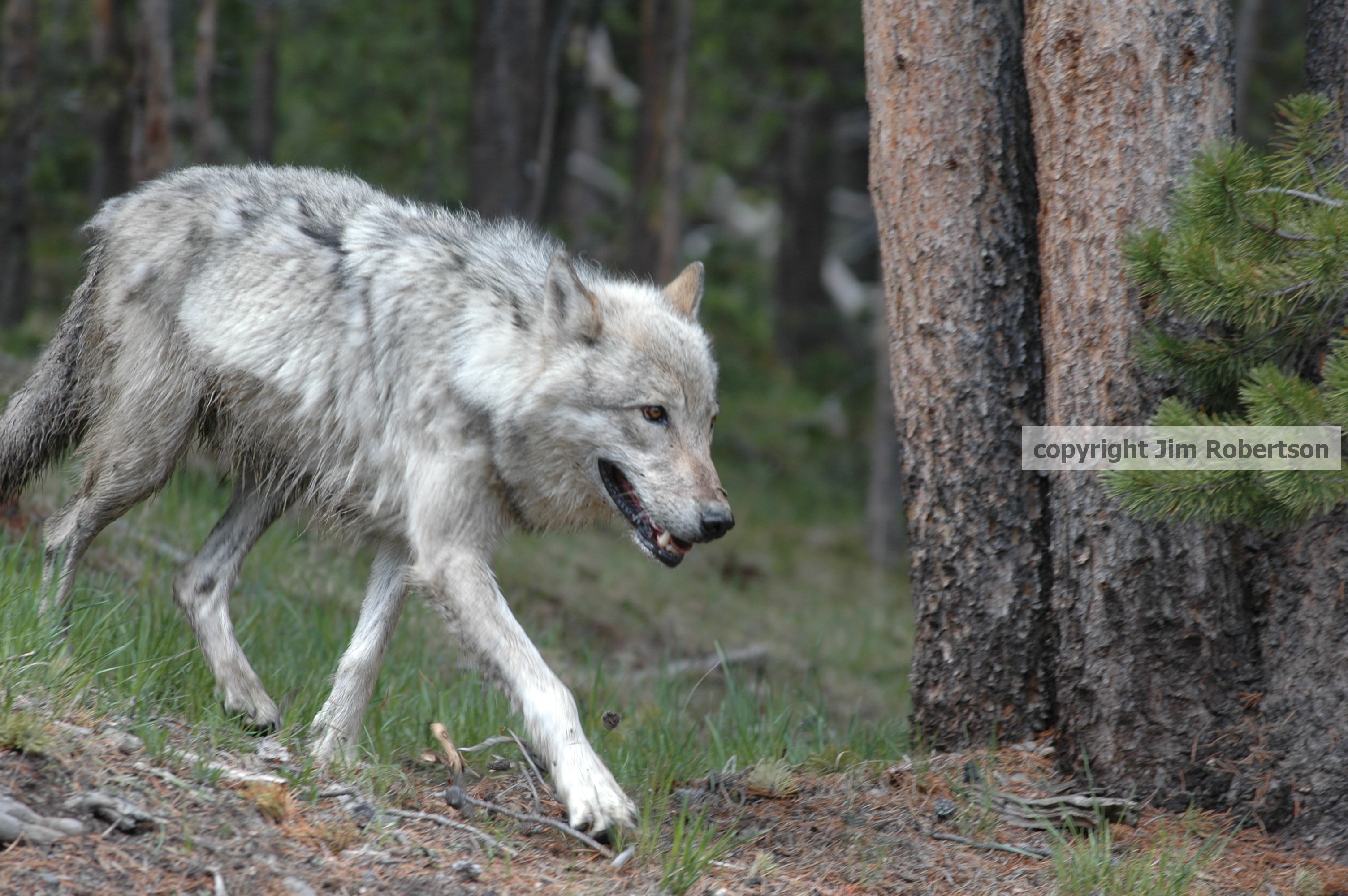
copyrighted Hayden wolf walking

http://www.orionmagazine.org/index.php/articles/article/7690

Lone Wolf

A forsaken predator reappears

By Joe Donnelly

Published in the September/October 2013 issue of Orion magazine

Here’s an excerpt from the article…

Except for a few stubborn holdouts, the era of man seems just about done in Plumas County. It’s an eerie, forgotten landscape, and there’s a certain poetic justice in OR7’s arrival. Bounty hunters killed OR7’s last remaining California cousin near here in 1924, back when wolves were considered to be an enemy of manifest destiny. OR7, though, doesn’t seem to have revenge in mind. He has yet to take sheep or cow from the descendants of those who shot, trapped, poisoned, and burned his kind to extinction in the West.

But this hasn’t stopped some locals from greeting his arrival as if the devil himself were paying a visit. As soon as his epic trek signaled a wolf with Golden State aspirations, the hysteria began. To calm local fears of pending doom, the California Department of Fish and Wildlife conducted public meetings featuring wildlife officials, celebrity wolf experts, government resources managers, and a highly agitated public—all awaiting the imminent arrival of a solitary, thirty-month-old Canis lupus.

After one meeting, Marcia Armstrong, a supervisor for Siskiyou County, where OR7 dallied briefly before moving on, told the Los Angeles Times that she would like to see all encroaching wolves “shot on sight.” Adding to the tinder were ranchers warning that a wolf repopulation would be “catastrophic.” Other folks spread rumors of conspiratorial wolf smuggling by federal agencies, and of a government out to trample rights and make it harder to log, mine, and dam the rural West.

“It was a freak act of God”

Sheep hunter dies in Alaska Range south of Fairbanks
Posted: Tuesday, August 27, 2013

Tim Mowry/tmowry@newsminer.com

FAIRBANKS—A sheep hunter from Texas was killed in the Alaska Range south of Fairbanks on Friday after a large rock fell on him as he was walking along a creek bottom.

Manuel Rechy, 48, of Laredo, Texas, was on a guided hunt in the area of Red Mountain and Dry Creek, 49 miles east of the Parks Highway near Healy, when the accident occurred, according to Alaska State Troopers.

The guide who owns the guiding company Rechy was hunting with, Eric Umphenour, of Fairbanks, called the accident “a freak deal.”

“A rock came down the hill and crushed him,” Umphenour said. “It wasn’t a rock slide; it was just one big boulder.

“It was a freak act of God,” he said. “It’s like being struck by lightning.”

Rechy and an assistant hunting guide were walking down a creek bottom at around 6:30 p.m., scouting for Dall sheep, when the large rock broke loose from about 30 feet above them on a hill, Umphenour said.

“(The assistant guide) saw it coming and told him to get out of the way, but the guy wasn’t fast enough,” he said. “It’s not like we were walking up cliffs. They were in a creek bottom. It was in the valley floor.”

The rock, which Umphenour estimated weighed 1,000 pounds, slammed into Rechy, knocking him in the creek and causing serious injuries to his legs. The assistant guide pulled the hunter out of the creek and covered him with his coat before going to alert Umphenour. When the two guides returned less than an hour later, Rechy was unresponsive, Umphenour said.

Umphenour used a satellite phone to call Alaska State Troopers, who were notified at 7:41 p.m. Troopers attempted to fly a helicopter to the scene but turned back due to bad weather, trooper spokeswoman Megan Peters said.

Troopers alerted the Rescue Coordination Center in Anchorage, which in turn notified the Alaska Air National Guard. Rescuers arrived at the scene of the accident at around 2 a.m., about six hours after troopers were notified, Umphenour said. Rechy was flown to Fairbanks Memorial Hospital, where he was pronounced dead on arrival.

Umphenour, who has been guiding in the area for 20 years, said he doesn’t know what caused the rock to move. It had been raining all day Friday prior to the accident, he said.

“It’s a creek I’ve been up 20 or 30 times over the course of 20 years,” Umphenour said. “We snowmobile up it in the winter.”

While he didn’t know Rechy well, the Texan was a repeat customer, Umphenour said. “A lot of his friends had hunted with us. He was no stranger to us.”

On Tuesday, Umphenour was still having a hard time trying to process what happened.

“I’ve never had anything like that happen,” he said. “When somebody dies in a hunting accident they usually get shot.”

Sheep photo copyright Jim Robertson

Sheep photo copyright Jim Robertson