
The following article proves that when Yellowstone biologist, Doug Smith, stated, “To get support for wolves, you can’t have people angry about them all the time, and so hunting is going to be part of the future of wolves in the West. We’ve got to have it if we’re going to have wolves,” he was dead wrong; and when wolf hunter Randy Newberg told NPR News, “Having these hunting seasons has provided a level of tolerance again” he was totally full of shit…
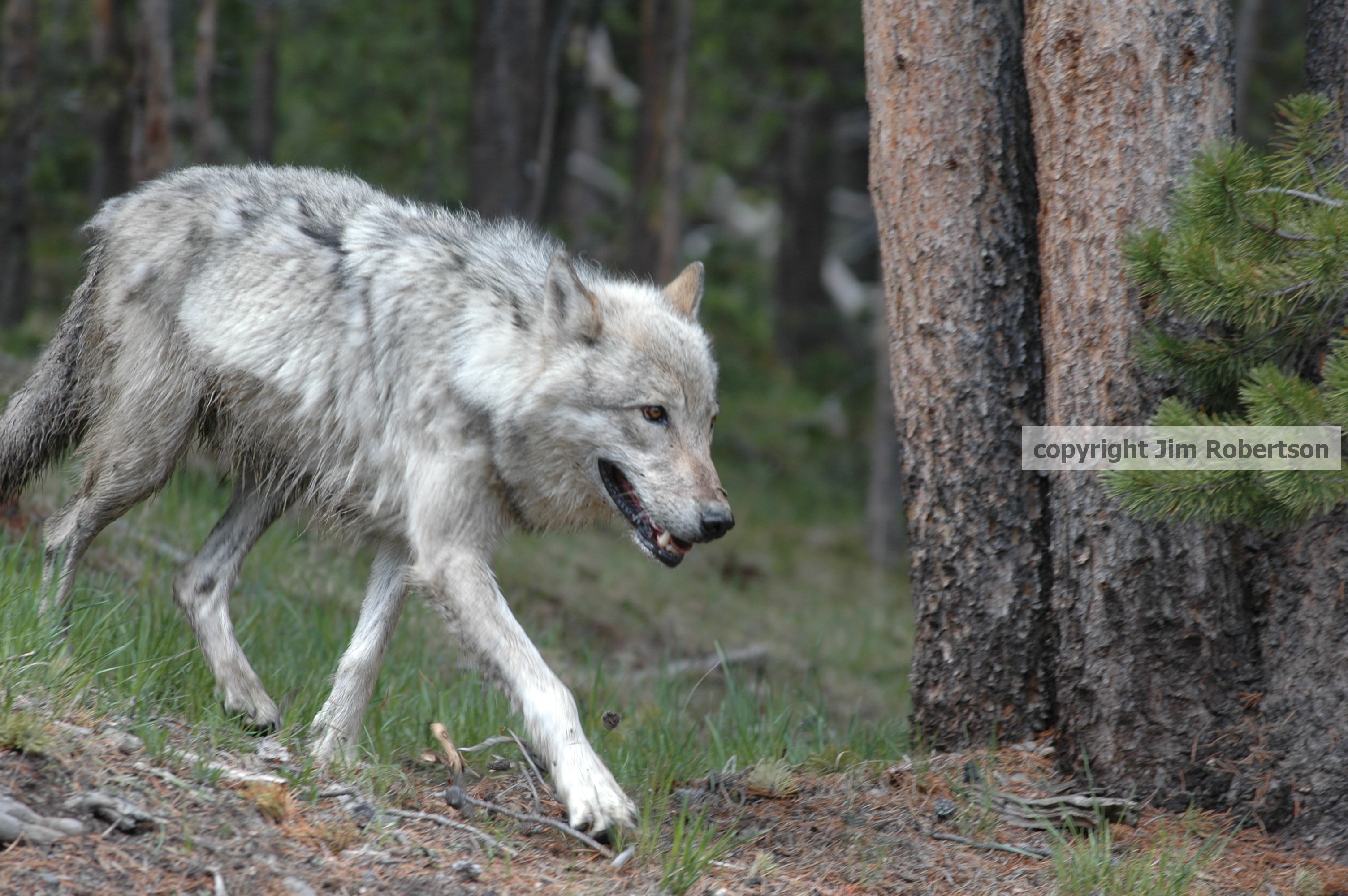
Last year’s first managed wolf hunt in Wisconsin history did not increase tolerance toward the animals among people who live in wolf country, a new survey by University of Wisconsin-Madison researchers shows.
With a growing wolf population, state wildlife managers and legislators who rewrote state hunting laws had hoped a hunting season would lower wolf numbers and reduce tensions over the animals.
But the survey shows this didn’t happen.
The last time the researchers surveyed public’s perception of wolves in 2009, 51% of wolf country residents said they would be more tolerant of wolves if the public could hunt them.
But in this year’s survey when asked the same question, residents in wolf country were much less accepting. The level of acceptance dropped to 36%.
When measuring the public’s attitudes in all parts of the state, 37% of the respondents said they would be more tolerant toward wolves with a public hunt. There was not a statewide comparison in 2009.
The wolf range is generally described as northern Wisconsin and the state’s central forests.
The hunt took place Oct. 15 to Dec. 23. Hunters and trappers killed 117 wolves, according to the Department of Natural Resources. The agency had set a harvest goal of 116 among non-tribal hunters and trappers.
“If one of the goals of the wolf hunt was to increase tolerance for the species, the first season did not accomplish this objective,” said Jamie Hogberg, a graduate student at the Nelson Institute for Environmental Studies.
Team led study
Hogberg was part of a team that examined public attitudes toward wolves. Others on the team were Adrian Treves, an associate professor of environmental studies; Bret Shaw, an associate professor of the Department of Life Sciences Communication; and Lisa Naughton, a professor of geography.
One possible explanation for the lack of change in public opinion is that despite the hunt, the state’s wolf population has changed little.
In April, the DNR estimated the wolf population from over-winter counts at between 809 and 831 animals in 216 packs. The previous winter’s estimate was 815 to 880 wolves in 213 packs.
The survey was sent to 1,311 people. There were 772 responses, or 59%. The vast majority — 538 — of people who responded reside in areas where wolves are present.
In January 2012, the federal government removed wolves from the list of protected animals under the Endangered Species Act in the Great Lakes states. That allowed states to manage the wolf population through hunting and trapping seasons.
The Legislature approved a wolf hunt in April 2012.
 Exposing the Big Game
But then again all wolf hunters are totally full of shit…
What total bullshit. You don’t need to hunt wolves so that they can be accepted as a part of the future… Apeasing a minority full stop.
This is no better than canned hunting.
Killing wolves will increase tolerance of them? Thats like saying lynching black people in the south during the civil rights era would create racial tolerance! Are these officials mentally challenged?
Yeah, that wonderful level of tolerance displayed in the increase in anti-wolf websites and outright uninhibited maliciousness in the photos and testimonies by wolf hunters/trappers.
Yeah, they sound real tolerant now.
my theory is that hunting wolves decreases tolerance. if people are led to believe hunting them is necessary than they may see wolves as evil and those that hate them anyhow are legitimized by being allowed to kill them
what a fckng mess and a shameful inhumane waste
And to think Doug Smith, the biologist who spent so much time on the effort to bring wolves back into Yellowstone, advocated for hunting wolves to promote tolerance…
That big “plop” you heard when you read the article was not Newton’s apple hitting the ground, but a road apple. The newspaper article was so poorly written that the newspaper should fire the Editor that approved it, or at least chain him/her and the author to a tree in wolf territory for two days.
http://www.news.wisc.edu/system/assets/53/original/Wolf_survey.pdf?1377190283 is the authors’ bullet-point preliminary report. The first red flag, though, is that 70% of respondents were hunters. According to the 2011 Fishing Hunting and Wildlife-Associated Recreation (2011 FHWAR), only 17% of Wisconsin residents hunt. The male/female sample rate was 81/19, probably not indicative of the population ratio of Wisconsin.
I haven’t had time to study the researchers’ report, and would still want to see the peer-reviewed paper, but I would say that the newspaper article would leave more, rather than less detritus, if used as a paper source in the house of the crescent moon.
From the Review of Preliminary Results:
Majority report no change in opinion of wolves following wolf harvest.
Majority report positive or tolerant attitudes towards wolves.