Condemning the USDA’s Decision to Slaughter Wild Turkeys

http://freefromharm.org/animal-cruelty-investigation/weighing-in-on-the-usdas-fish-wildlifes-decision-to-slaughter-wild-turkeys/#sthash.fWYeWk8O.dpuf
By Robert Grillo  –  August 15, 2013
Upon discovering a story entitled Feds round up wild turkeys on Staten Island for slaughter, I felt compelled to comment. Please consider leaving a comment as well:

Let’s call this practice what it is: a transparent form of speciesism. In other words, if you’re another species, and you get in our way or become a “nuisance” to us, we’re going to massacre you — not because we have to, but just because we can.

Might makes right. That’s the underlying premise for treating other species like trash, killing them off when they get in our way, destroying their habitat so we can play golf, breeding more so we can use them for target practice, taking away the babies of others so we can view them in captivity for our own amusement, breeding billions of others through artificial insemination so we can destroy their lives in their youth in a slaughterhouse, emptying our oceans of trillions of sentient life forms so we can buy a can of tuna, and then subjecting millions of others to needless pain and suffering in lab experiments intended to find cures for the diseases caused by eating them. We create all of our own conflicts with animals. We create a staged competition with other species to use as a pretext for destroying their lives, “for our own protection,” of course. I rescue and raise chickens and other birds that come from a kill shelter.

The germaphobe chicken keepers in this comment string have got things a little twisted. They blame the victim, not the perpetrator. They blame the birds for defecating. They excuse themselves for a much more egregious offense: buying and using them for their eggs and flesh directly from the hatcheries — the cruelest industries on earth — which creates the problem in the first place. Think for a moment how that victim blaming serves us. Voltaire famously wrote that “If we believe in absurdities, we shall commit atrocities.” What a prophetic statement to describe the utter selfishness and sociopathic age we live in.

turkey-factory-farming

IDA Action Alert: Tell Your Senator to Oppose The Sportsmen’s Act 2013 (S. 1335)

from: In Defense of Animals

The formula to protect wild animals from cruelty is simple: anything that the Safari Club International (SCI) supports MUST be opposed.

The SCI, an atrocious trophy hunter organization, is currently lobbying heavily for Selk-000-home17300 1335, sponsored by Sen. Lisa Murkowski (R-AK). If passed, the Act would make hunting and trapping a priority to be considered on federal lands–public lands that are owned and funded by us, the Public.

The bill would allow hunting and trapping in designated wilderness areas, allow “volunteers” to help in the killing of so-called “excess” animals on Federal land, including National Parks, increase the share of federal lands turned into shooting ranges, and legalize the transporting of bows through national parks and the importation of “trophies” from polar bears kills in Canada.

Please contact your Senator immediately and tell her/him to vote “NO” on the Sportsmen’s Act 2013 (S. 1335). The threats our wildlife face come from many directions- loss of habitat, trophy hunters, poaching, conflicts with humans and or human-based activities, as well as the hardships of living in the wild as predator or prey. The last thing we need right now is to open our national parks or wilderness areas that currently do not allow hunting to more killing.


Heed the call of the wild: don’t cull the wolf

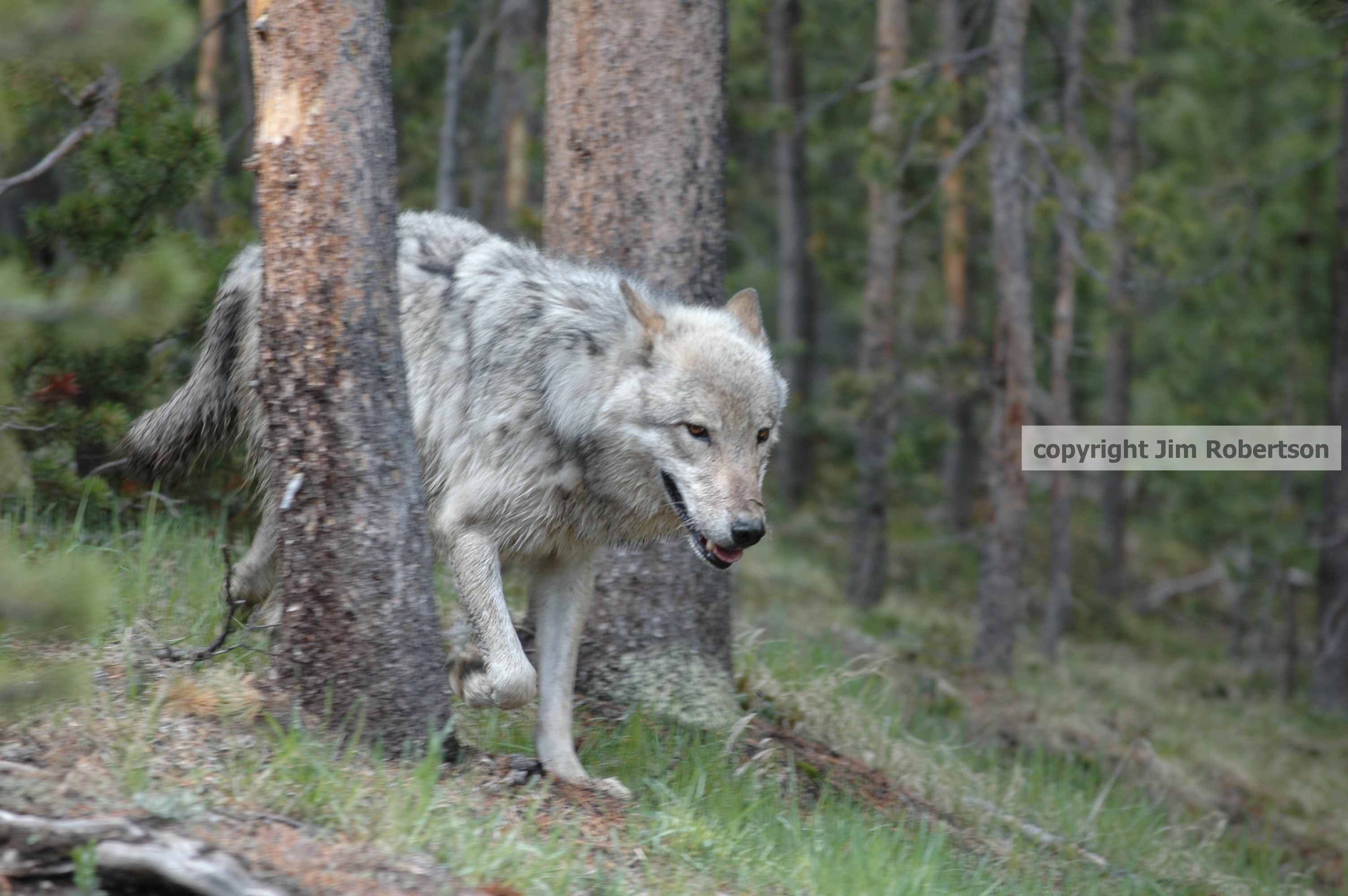
copyrighted Hayden wolf in lodgepoles

There are better ways to control North America’s wolf populations than removing wildlife protections and permitting hunting

http://www.theguardian.com/commentisfree/2013/aug/14/wolf-cull-hunting

by  www.theguardian.com,

Wednesday 14 August 2013

They encroach on natural habitats, kill wildlife and destroy native landscapes.

While this is, in many ways, the modus operendi of human populations, it is the excuse now being given by the US Fish and Wildlife Services (FWS) in its call on the federal government to remove the gray wolf from endangered species lists. All for the purpose of using human “ingenuity” (read: guns) to help reduce the population to a more “manageable” level.

Activists are beginning to take to the social media networks in calling for the government to not slaughter wolves. One petition, began last week, has already garnered several thousand signatures en route to its 10,000 goal.

With thousands of wolves across the country struggling to survive after decades of reintroduction since humans slaughtered nearly the entire population, it seems odd that calls have grown stronger to remove them from the Endangered Species Act (ESA). According to the FWS, in the Great Lakes region, there are roughly 4,000 wolves; in the Northern Rocky Mountains around 1,700; Washington State has nine total; the southwest about 60 wolves. In Alaska, where wolves are not protected by the ESA, there live about 10,000.

So, why have the calls for “culling” wolves increased so dramatically over the past five years, in a plan to reduce the populations which the FWS terms “control”?

The modern wolf story largely begins in 1995, in Idaho (my home state), when the state reintroduced a number of gray wolves into the state as part of the “experimental, non-essential” clause of the ESA. From there, the animals developed and grew in numbers across the state as wildlife biologists helped support the small ecosystems that were developed for the animals’ use. And in the United States Pacific northwest, the Nez Perce Native American tribe also started their own project, which enabled a pack of wolves to live and create familial ties in a large fenced area.

Not everyone was pleased that hills covered in snow and jagged mountains – the difficult terrain of Idaho’s mountains – are now home to wolves: some government officials and ordinary citizens claim the species has now overpopulated the wilderness areas and is a threat to “human activity”.

As one family friend, a hunter, told me recently, the wolves are “killing livestock, attacking people in the natural parks and without action could overrun our landscape”. Although he is right that wolves do attack livestock (and wild prey), there is little evidence that people are being attacked. Wolves rarely are aggressive toward humans unless threatened.

The problem is rather with the continued development on what had, historically, been remote areas; there, wolves are simply attempting to survive. With calls for removing wolves from the protection of the ESA, however, it could soon be open season for hunters – in what officials argue are “conservation” efforts to ensure the wolves’ survival.

I spoke with an Idaho biologist who has worked with both the FWS and the wolf reintroduction program. He argues that human populations continue to “overuse” hunting in the name of sport and this has reduced deer and elk populations, not just in Idaho, but in the Great Lakes and Alaska. The result?

Wolves have been forced to look elsewhere for food and sustenance. This results in cattle being attacked because the regular food chain has been disrupted. Hunting wolves won’t stop this problem unless all the wolves are killed.

He also pointed out that during such culls – which we have seen in Idaho and other areas – it is the adult wolves that are killed, often leaving cubs unprotected and unable to fend for themselves. “It is sad that this sort of thing continues,” he added.

Activists have called for a blanket ban on wolf-killing, but there is a need to work with the FWS and those who feel threatened by wolves. We must understand that the issue of wolves is a nuanced controversy in which those directly affected by the encroaching wolf populations must be heard. There needs to be compromise that does not threaten the whole wolf population and finds sustainable solutions in the specific environments where the reintroduction process has occurred.

At the same time, we can’t afford to reverse the good work of reintroduction programs and go back to the days when wolves were seen as a deadly menace to humans and their livestock – and had to be exterminated because of that perception.

Sab All Hunting, Not Just the Wolf Hunt

It never pays to procrastinate. Although I re-blogged Earth First’s “Manual for Sabotaging Wolf Hunts” a few days ago, I just now read the first speciesist lines of its pro-hunting introduction: “Lets shoot straight right from the start. We are hunters and proud of it.” (What part of the universal truth, that hunters are psychopaths and total scumbags, does EF fail to understand?) Their inconsistent attitude that it’s ok to hunt other species besides wolves prevents me from spreading the word about their manual any further.

It’s always sad when good-hearted people try to align themselves with their enemies and take on their ugly traits in order to boost the popularity of their cause. While it may seem like fun to emulate Elmers, when it comes right down to it, hating and killing wolves is a natural component of the redneck hunter’s credo. Rare is the hunter out to get “his” deer—whether for the purpose of subsistence, sport or trophy hunting—that doesn’t eventually resent the competition from natural predators.

Species like deer, moose, elk or feral hogs are every bit as sentient, and can experience fear and pain in the same way, as wolves. All animals value their lives; the frivolous taking of an innocent life is not something to be proud of. If we modern humans (7 billion and counting) can lead healthier lives without killing and consuming animal flesh, and thereby messing with the food chain, why should we inject ourselves into natures’ intricate web by playing top predator?

Remember, every grazer or browser we claim for ourselves is one less for the wolves who really need them.

Text and Wildlife Photography © Jim Robertson

Text and Wildlife Photography © Jim Robertson


Animal Advocates Say New Mexico’s Bears are Under Siege

Wildlife Photography ©Jim Robertson, 2013. All Rights Reserved

Wildlife Photography ©Jim Robertson, 2013. All Rights Reserved

Renee Blake, Public News Service – NM
August 6, 2013 ALBUQUERQUE, N.M. –

What is being portrayed by some as an infrequent and humane response to hungry bears entering towns looking for food, is actually quite another matter, according to Jan Hayes founder of Sandia Mountain Bear Watch. Hayes is looking for the state to institute stopgap diversionary feeding to keep the bears alive at this difficult time, and keep them away from people.

She said what is happening to Sandia Mountain bears is an ecological disaster, that the drought and lack of food for the bears, along with the hunter-focused attitudes of New Mexico Game and Fish, add up to a decimated bear population. “They want the animals to be there for hunter opportunity,” she said. “Their only mode of management is to trap or kill. The Sandias is a wildlife preserve. So, it’s not a moneymaker for Game and Fish. Bears are a problem species that they would really prefer not be here.”

Stewart Liley, big-game program coordinator for N.M. Game and Fish, said feeding bears would cause them to become increasingly dependent upon artificial food sources. Hayes however said she believes the temporary measure would serve to get the bears “over the hump” and save their population in the Sandia Mountains. She is requesting a meeting with someone in Governor Martinez’ administration on the matter.

Hayes declared that the current style of bear management in the Sandia Mountains has caused an alarming rate of damage that cannot be overcome. “We’re looking at bears that are completely lost to this population. There’s no way they can keep up with reproduction,” she said. “And we also expect 100 percent attrition of first-year cubs this year. They’re very slow reproducing. Our bears don’t even have their first baby until they’re five or six.”

Mary Katherine Ray, Rio Grande Chapter wildlife chair of the Sierra Club, said New Mexico adheres to the North American Wildlife Conservation Model, which says that wildlife, from roadrunners to butterflies, belongs to everyone in the state. That includes the bears in the Sandia Mountains. “We all have a share in owning that wildlife, and it’s supposed to be democratically adjudicated,” Ray declared. “But when you look at the composition of the Game Commission, every last one of them is a hunter.” She said she believes that mindset is getting in the way of seeing the benefits of diversionary feeding.

Ray said that where it has been tried, bears that have been the beneficiaries of diversionary feeding have not become either dependent or dangerous.

See more at: http://www.publicnewsservice.org/index.php?/content/article/33828-1#sthash.l9IhArpU.dpuf

Bear-Trap Saboteur in New Mexico Prevents Capture of Wild Bear

EF! J Collective Everglades Office's avatarEarth First! Newswire

bearhuntSaboteurfrom North American Animal Liberation Press Office

A dangerous bear that broke into a house and bit the homeowner remains on the loose today in the Sandia Heights neighborhood east of Albuquerque, partly because someone sabotaged a Department of Game and Fish trap intended to catch the bear.

The Department has video of someone deliberately sabotaging a baited bear trap set at the home of the man who was bitten by the bear early Friday morning. The person who sabotaged the trap has put area residents in danger and could face charges if apprehended. Anyone with information about the incident is asked to call the Department at (505) 222-4700.

The Department needs to catch the offending bear to prevent anyone else from being injured by it. The state Department of Health also requires that any wild animal that bites a human to be killed and tested for rabies.

Friday’s incident…

View original post 208 more words

No Wolf Proponents Allowed

Three wolf researchers were removed from a review panel based on their public criticism of a federal plan to turn management of the wolf over to states.

Federal officials apparently ordered a purge of an independent science panel tasked with reviewing whether gray wolves should come off the Endangered Species List, a move the federal government supports.

Three prominent independent wolf researchers — Roland Kays, John Vucetich and Robert Wayne — were removed from the review team based on their public criticism of the federal plan. They specialize in different areas of wildlife research, but they have one thing in common: In a May 21 letter to Interior Secretary Sally Jewell, they questioned the scientific basis for a plan to turn wolf management over to states.

Related: Majority of Minnesotans mad over state allowing wolf hunting

Shortly after being picked for the review team, the private contractor amec, which is running the review project, told the scientists they were off the panel because they had signed the letter, along with 13 other scientists.

In an email sent to the men on Wednesday, amec scientist Melissa Greulich wrote: “I understand how frustrating it must be, but we have to go with what the service wants,” a reference to the U.S. Fish and Wildlife Service’s concern about potential conflict-of-interest issues associated with the scientists who signed the critical letter.

Fish and Wildlife expertscharged withadministering the review said the fact that the scientists took a position on the plan was inconsistent with the agency’s scientific integrity policies.

The head of a government watchdog group said the last-minute removal of the three scientists confirms that Fish and Wildlife did exercise veto power over the review panel, despite the agency’s claims that it left the choice to the contractor.

“To avoid dealing with the serious scientific concerns … the Fish & Wildlife Service is packing the review panel for its own proposal,” Jeff Ruch, director of Public Employees for Environmental Responsibility, said in a statement.

“Selecting your own reviewers defeats the purpose of independent peer review,” Ruch said.

Related: Wolf howl identification developed by British scientists

One of the purged scientists said he thinks the process is politically driven.

“What I understand happened is, the U.S. Fish and Wildlife Service told the contractor you can’t pick anybody that’s on that list,” said Vucetich, a professor at Michigan Technical University who has spent his career studying wolves. He was referring to the letter signed by the scientists who disagree with turning gray wolf management over to states.

The federal wolf proposal doesn’t reflect the best available science and fails to measure up to the requirements of the Endangered Species Act, Vucetich said.

“The Service did not request that any particular scientists be excluded from participation as peer reviewers for the agency’s gray wolf proposals,” Fish and Wildlife spokesman Gavin Shire told MSN via email. Shire said the agency doesn’t know who the panelists are in advance of the final selection.

Gray wolves were wiped out in the Lower 48 states by the middle of the 20th century. Today they live in Alaska, Idaho, Montana, Wyoming, Michigan, Minnesota and Wisconsin, with a small population just taking hold in the Pacific Northwest. Currently, all those populations are protected under the Endangered Species Act. The Fish and Wildlife Service estimates that about 1,600 wolves in the northern Rockies and 4,400 in the western Great Lakes region.

Manual for Sabotaging Wolf Hunts Released

“We are coming into a new era of wolf genocide,”

EF! J Collective Everglades Office's avatarEarth First! Newswire

“And in that case, we choose to be saboteurs for the wild.”

The following text is from a press release of the Earth First! Media office, whichprovides correspondence to news outlets around the world.

by Earth First! News

Earth First! Media has released a manual which provides detailed information for disrupting wolf hunting in those states that allow it. Titled The Earth First! Wolf Hunting Sabotage Manual, the text, complete with step-by-step graphics, explains how to find and destroy wolf traps, handle live trapped wolves in order to release them, and various methods, including the use of air-compressed horns and smoke-bombs, for stopping wolf hunts.

The authors of the manual describe themselves as,  “hunters and proud of it,” adding, “But we aren’t proud of what passes for hunting these days and especially for what passes as ‘sportsman’ hunting. Somehow, the National Rifle Association, yuppie trophy hunters, cattle barons…

View original post 345 more words

Chinese customs seize 645 wolf skins from Greece

Pelts arrived on July 29 flight from Athens

 Author: Damian Mac Con Uladh

The 645 wolf skins were concealed in bags that were labelled ‘fur scraps’. It is not clear if the skins are from Greece’s indigenous wolf population, which is estimated to number 500-700 animals

Customs officers check wolf skins at Beijing Capital International Airport, 8 August 2013 (Reuters)


Customs officers check wolf skins at Beijing Capital International Airport, 8 August 2013 (Reuters) Customs officials in China on Thursday seized almost 650 pieces of wolf skins that arrived on a flight from Greece last month.

The pelts, which cover a total area of 200m2 when spread out, were imported into China on July 29 on a flight from Greece to Beijing Capital International Airport, officials said, describing the haul as the biggest case of suspected smuggling of skins of endangered wild animals in China in over a decade.

According to Chinese media, the goods were packed into 30 sacks, each of which was labelled “fur scraps”. The accompanying documentation stated that the total weight of the freight was 1,400kg and was valued at $3,700.

But as that represented a price of $3 per kilo – well below the average market price for fur scraps – customs officials became suspicious and decided to carry out on inspection.

Customs officers check wolf skins at Beijing Capital International Airport, 8 August 2013 (Reuters)


Customs officers check wolf skins at Beijing Capital International Airport, 8 August 2013 (Reuters) After x-raying the consignment, officials opened the bags to find up to twenty pelts in each sack concealed beneath fur scraps on top.

The seized skins are mostly brown in colour but there are also black- and grey-haired pelts.

A trading firm in Beijing is suspected of smuggling the wolf skins and arrests have been made, customs officials told the media. They estimate that the market value of the skins could be in the region of 1m yuan (€125,000) or more.

It is not clear if the skins are from Greece’s indigenous wolf population, which is estimated to number 500-700 animals, or were imported from elsewhere.