Breaking Down the Means of Stupidity

sarah-palin-lope-navo1

http://boldvisions.businesscatalyst.com/opinion.html

by Stephen Capra

Another weekend is about to pass in New Mexico, and another group enjoyed killing innocent animals. So goes it, in the modern, or perhaps throwback American West. South of Albuquerque, in Valencia County is a special place of hell for animals. It is known as Gun Hawk. It is a gun shop owned by people of greed, which make their money off the killing of innocent animals. Their method is to sponsor “killing contests” of coyotes, prairie dogs, and perhaps if they had their way, wolves.

This so-called company thrives on the negative publicity they receive, because like conservation groups, it allows them to become a cause, only they are a cause for fools. You see, if you use the words freedom enough, and talk about heritage, you will have an ample supply of cowboys, young guns, Tea Partiers and worse yet the media, which will quote everything you say without a moments fact checking.

So what this pathetic company is doing is creating a working model for others to emulate in the future. Their bravado is empowering to communities like Clovis, and allows them to take their stand despite science, compassion and simple reason. When George Bush was President many of us protested his war, his environmental policies, his views on abortion. We did it like Americans before us had. We made our case clear and went to the streets to make our case. We did not harm people with whom we disagreed. What has changed is how those on the other side approach dissent. They plant bombs and kill those that believe in a woman’s right to choose. They carry on very public killings of innocent animals, not just for fun, but because they know it is painful to us and they want us to see the carcasses of their personal rage.

To counter this opposition will require that the conservation movement, like Silicon Valley be open to new ways of engaging and fighting for our principles. We cannot speak to these people and try to reason. It is like a conversation with a sociopath, and they simply would not understand the language. I believe in organizing. I see it as essential, but the time has come where you must go from talk to action. Reason is not a guaranteed part of success.

Last week we were in Clovis, we spent time looking at the prairie dogs. Our supplemental feeding and some rain have brought them back to health. I watched as they played and as they stood guard over their territory and thought to myself, they have no idea what is occurring, no idea of the fight. Then another thought occurred, perhaps they do, perhaps they are preparing themselves for what may come. They are hoping for freedom, but resigned to death. Animals sense what is not spoken. They live with dignity and they die with even more.

So we are going to save them, which is not a goal; it is part of the center of our heart and part of our commitment to them. We spoke with the Mayor, the paper and listened to rage, and to phony religious ramblings. As they spoke I searched for their pulse. I looked deeply into their eyes trying to see their personal pain. Was it childhood, was it divorce, it matters not. We all have burdens to overcome, that is the essence of life. When they were done, I knew that our job was far from over.

The earth is heating up, this we know. Many continue to deny that climate change is real. I mention this because people are also heating up. Reason and civility are being lost as the planet continues to boil, as our artic ice melts. It would be easy to say, I want no part of this, I want a home in the country, or to move to Europe. Part of modern society, is a staunch reality that as humans we must be able to absorb more pain and visually see the result of our actions.

The challenge that we all face is how to get us on the right course. We have so many great alternatives, and it begins demanding that we share this planet with all animals-forever. Be it Clovis, be it Africa, or be it the bounty and beauty of our oceans. Stare into the eyes of an animal; you will experience one thing-love.

We can never rest while wolves are being slaughtered. While Coyotes and prairie dogs are killed for fun and laughter. However, we must change tactics, and we must be forceful in our message. People who kill for fun are cowards. What is occurring in simplification- humanity is being bullied. The way for change is to confront the bully, without fear. With this hot powered strength, the bully will yield.

We will soon begin airing our gorilla commercials to fight for the prairie dogs of Clovis and we have plans for a certain gun shop as well. Please help if you can, it’s time we all stare down the bully and share the land with our true kin, the lives that live it wild.

A very wise and learned man stated succinctly my feelings, “When you destroy nature you destroy one’s own nature as well. It kills the song.” Thank you Joseph Campbell
Make Sure FWS Gets the Message: Americans Want Wolves to Stay Protected!

Make Sure FWS Gets the Message: Americans Want Wolves to Stay Protected!

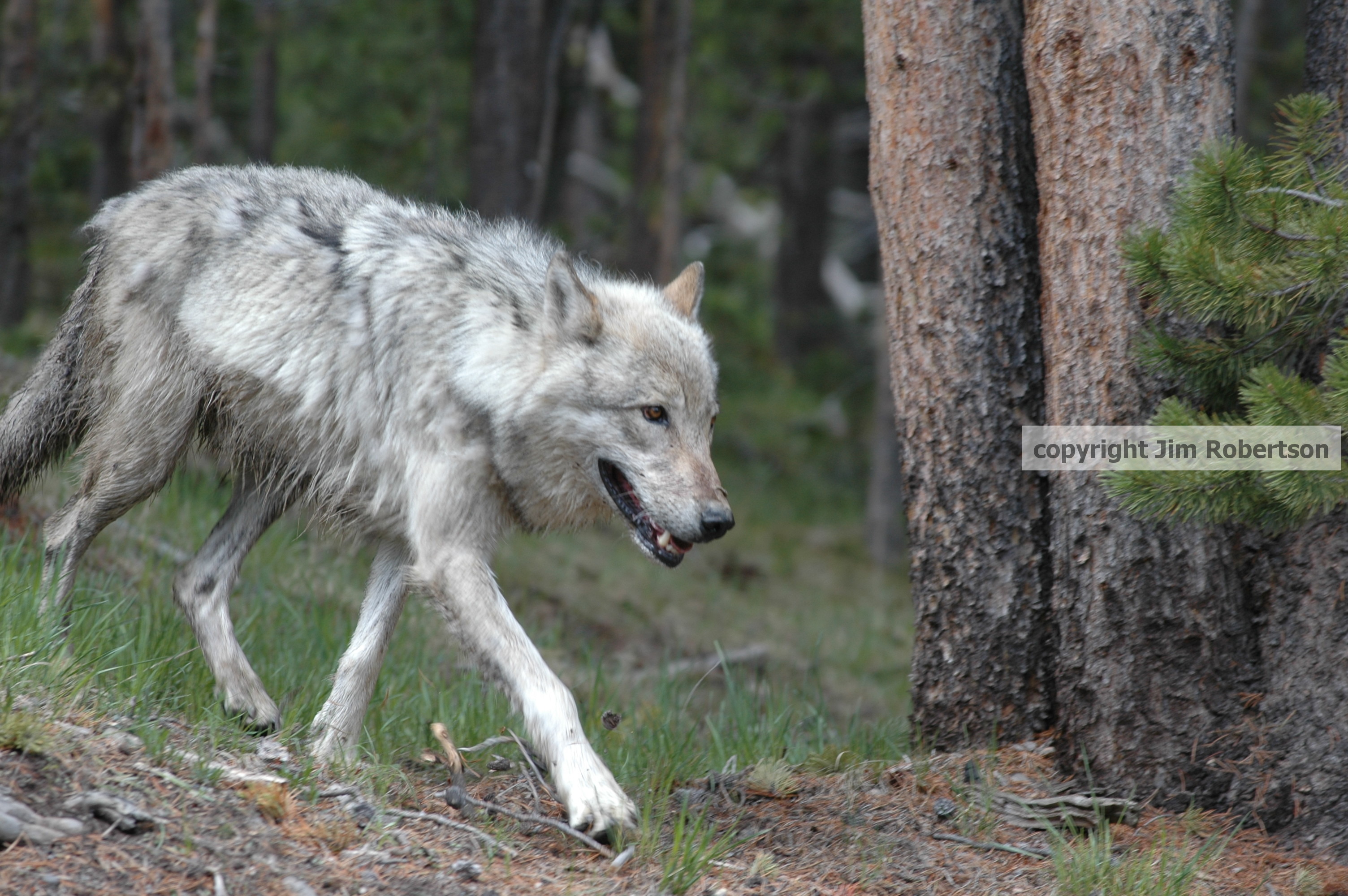
July 28, marked the halfway point of the 90-day comment period on the proposed delisting of nearly all gray wolves in the lower 48 states, and we’re making a racket they can’t ignore.

The premature delisting of gray wolves flies in the face of sound science and is an invitation to a recovery disaster.

Please send an urgent message to the U.S. Fish and Wildlife Service – demand that they withdraw their delisting proposal.

Take Action by going Here: https://secure.defenders.org/site/Advocacy?cmd=display&page=UserAction&id=2621

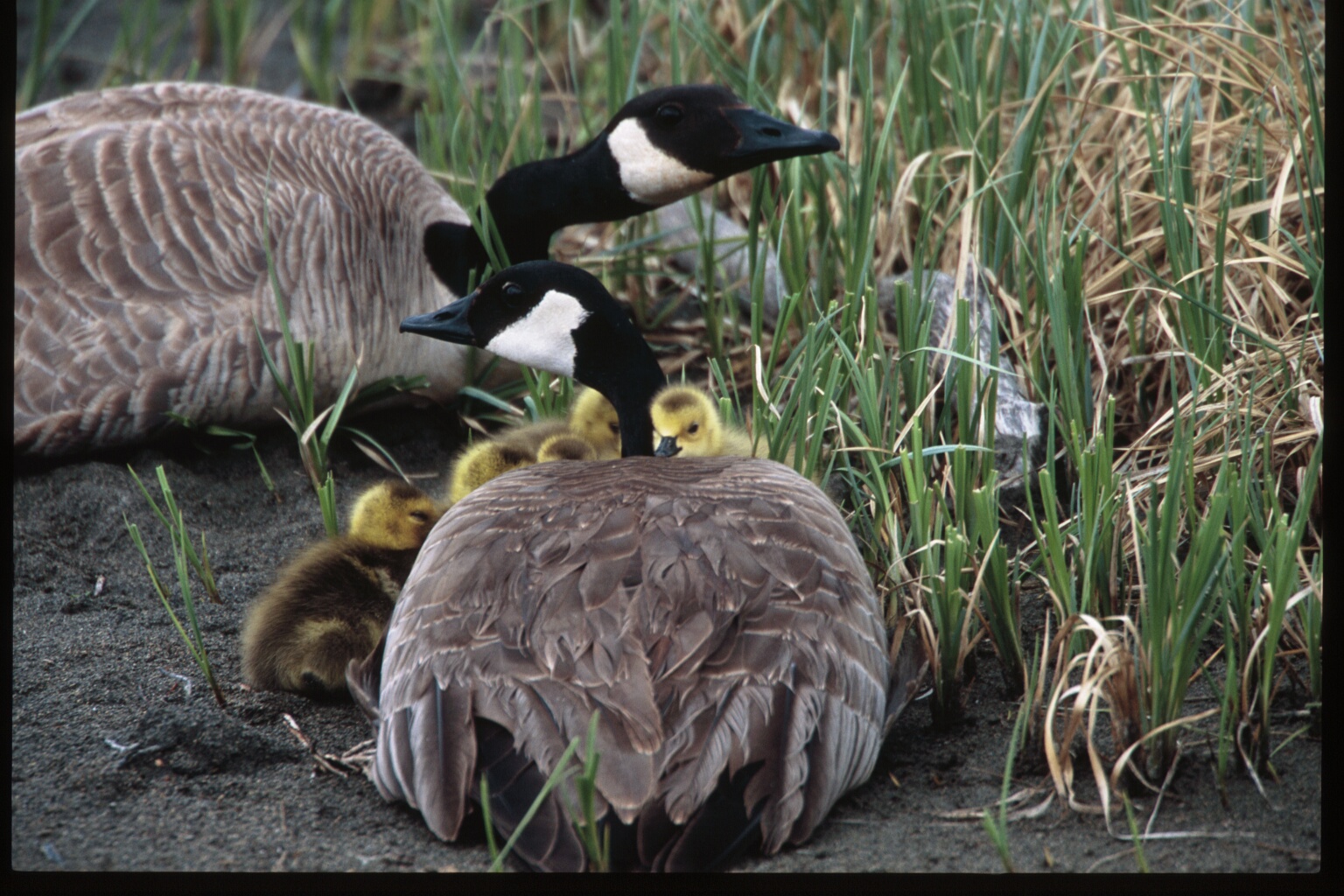
Oklahoma Doesn’t Need Wildlife “Services” to Kill Thousands of Geese…

…, they just encourage sport hunters to do it.

Oklahoma Saturday hunting news:

The Okla. Wildlife Conservation Commission approved the season dates for the next water-fowl season.The most significant change from last season is the increase in the daily limits for geese.

The daily limit for Canadian geese has increased from three to eight.

The daily limit for light geese has increased from 20 to 50. [50? Did they say FIFTY!!]

A migratory game bird biologist for the Okla. Dept. of Wildlife Conservation
hopes the increased bag limits will lure more people back to hunting geese.

He states “Hopefully, having eight birds (as the daily limit for Canadian geese) will get some folks back into the sport.”

Geese continue to cause nuisance problems in the state. He adds “We are trying to increase the harvest.”

For duck hunters, the daily limit during the Sept. teal season has increased from four to six birds. The limit of scaups during the duck seasons has been reduced from six to three birds daily. The daily limit for canvasbacks has increased from one to two.

Wildlife Photography © Jim Robertson

Wildlife Photography © Jim Robertson

Nature Takes Care of Its Own

All too often people are quick to see a population of wildlife as a “problem.” But as we’re seeing here, there’s nothing to worry about—just stay out of the way and let nature do its thing.

Exposing the Big Game's avatarExposing the Big Game

This letter is in answer to two articles about local wildlife….

Dear Editor,

On July 27th the Daily Astorian reported that residents were split over whether they liked having deer around or not (“Bambi or Bother“). Some were concerned there were too many. But then on July 30th the paper ran another article, “Cougar Spotted in Astoria.” It seems that nature is taking care of its own.

All too often people are quick to see a population of wildlife as a “problem.” But as we’re seeing here, there’s nothing to worry about—just stay out of the way and let nature do its thing. After all, nature has been regulating itself far longer than all the self-appointed “game” managers put together. And the cougar is only there for the deer, she’s not interested in you or your pet (although it is always a good idea to keep your dog…

View original post 41 more words

Humans show their thirst for blood

Roger, one of our regular readers, posted the following letter he wrote which was printed yesterday in the Missoulian, under the heading “Hunting and fishing.”

: Humans show their thirst for blood

The sports killing season of 2013 is upon us. In Montana alone, “sportsmen” will kill around 19,000 antelope, 40,000 deer, 300 wolves, 1,300 black bear, 200 bighorn sheep, 200 moose, 20,000 elk – then there are turkeys and an assortment of other birds to kill.

It is sporting tradition. Wyoming will kill even more elk, having had record years the past 10. The states of Montana, Wyoming, Idaho and Wisconsin will push wolf-killing as far as they think they can get away with and not risk re-listing. Montana sells $19 wolf tags to kill five wolves.

Then there is the U.S. Department of Agriculture Wildlife Services, which kills around 72,000 coyotes each year and around 28,000 other animals, a million animals a decade.

Then there are the poachers of Africa, and the sportsmen who go there to kill dwindling populations of elephants and rhinos and lions.

We, human animals, are overfishing the oceans and threatening sharks, whales, bluefin tuna and other marine life.

Then there are the slaughterhouses, which will kill a billion chickens worldwide and millions of cattle, pigs and sheep each year. Now conservative state legislatures are pushing every year, despite what the American people have opposed over and over, the opening of horse slaughterhouses.

Animal shelters “put down” (kill) thousands of dogs and cats each year because there are too many and too few homes for them.

You would think that humans are primarily bloodthirsty carnivores, something as scary as the worse aliens you can imagine, which we are.

Roger Hewitt
Great Falls, MT

A Tale of Two Species

First, here’s a mini guest-rant by a friend from Seattle in reference to the round up and lethal gassing of geese by Wildlife Services (that warped, wretched little wildlife-killing agency formally “Animal Damage Control”) at a nearby lake there:

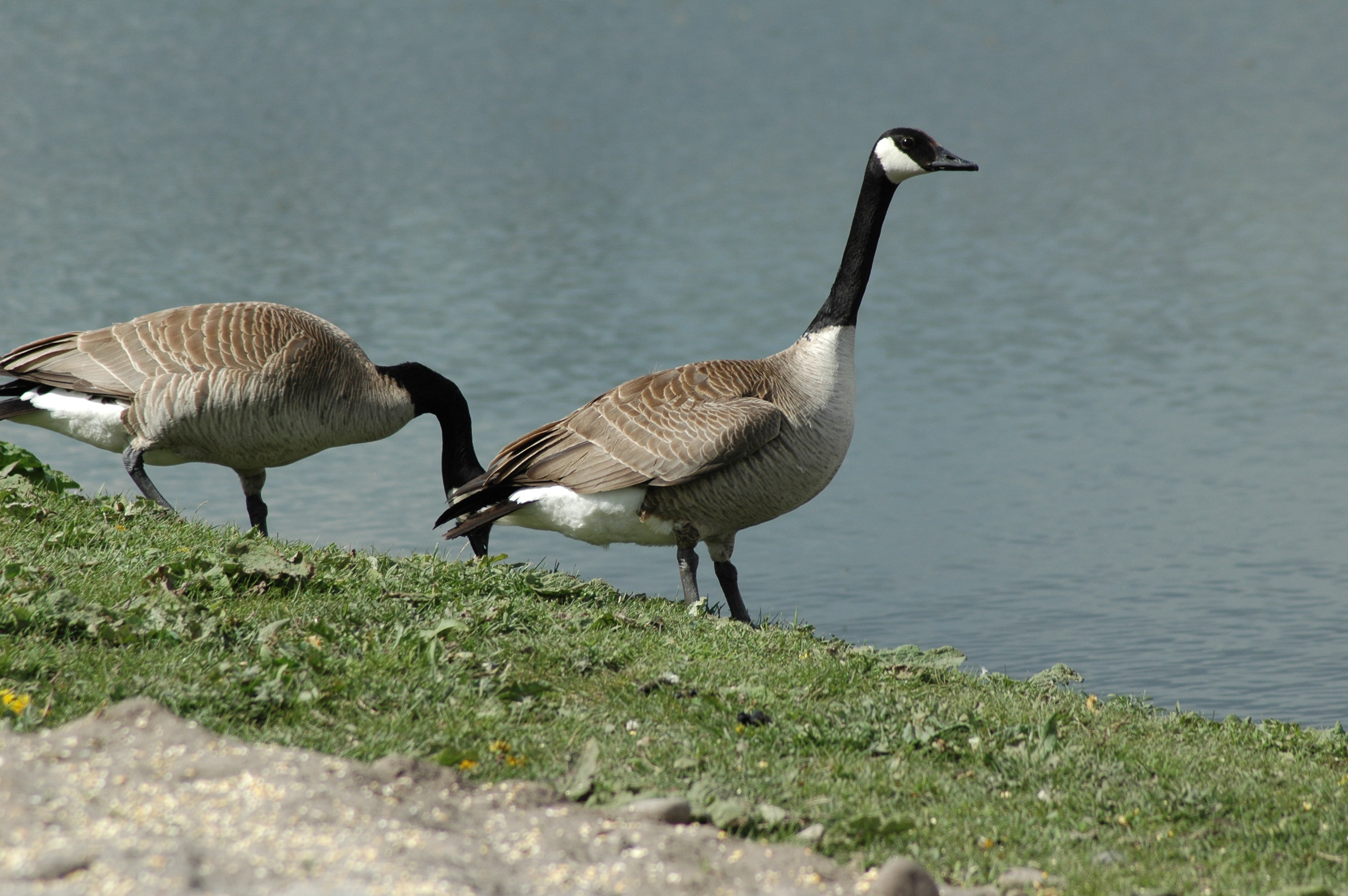
“Wtf is wrong with people!!?? Will we not be happy until we are the only species on the planet? How dare the geese leave droppings that might be picked up by some diaper-filling toddler [DFT] while visiting the park for one hour. Those beaches should be animal and bug free, and sanitized because for heaven’s sake, kids go there sometimes. Wtf!”

In just a few short, satirical sentences this rant summed up my feelings on the goose situation (and their subsequent extermination) as well as my views on the grandiose, narcissistic and intolerant species responsible for this whole mess. (Note to self: add “goose-stomping Nazi war criminals” to the list of Top 10 New Names for Wildlife “Services.”)

I do have to admit though, whenever I see poop-filled human baby diapers thrown out along the road, discarded on ocean beaches or dumped in the woods at public trailheads, I wish there was some kind of “Service” you could call to round up and do away with the people who stoop to that kind of thing. But we live in a civilized society and don’t treat others so unforgivingly—that is, unless said “other” is a goose.

If people knew geese as personally as I do (I’ve watched them go through their courtship and nest-building routines, seen a gander loyally guarding his mate while she dutifully incubated her eggs, day and night, throughout windstorms and heavy snowfalls during the fickle Montana spring, and witnessed with joy the hatching and rearing of their precious chicks), they would surely think of geese as a species every bit as worthy as their own.

This issue is all the more maddening because it’s a situation humans have brought on themselves (as with so many other wildlife “problems”).

To the casual observer, lakes in western Washington may seem relatively pristine; the water is still so clear and blue it makes you want to dip your cup in and take a long drink. But if you’ve watched the changes over the years, you’d know it’s a habitat that has seen better days.

Not only were the old growth trees that grew to the water’s edge cut down and floated off, the lakeshores themselves were sliced up and sold off as recreation lots or multimillion dollar home sites. Naturally, land owners didn’t want their tiny strip of shoreline to be just a tangle of cedar and spruce trees or shrubs, like salmonberry, thimbleberry or huckleberry, so they tore out the native vegetation, built concrete bulkheads and brought in backfill and lawn grass. Of course they would need a place to tie up their power boat or jet-ski, so pilings were pounded into the sandy shallows where periwinkles and crawdads once thrived, and docks were built, at the expense of any lily pads or riparian vegetation that used to house bullfrogs and provide cover for fish.

The result of all this rampant manipulation is a strange new world, inhospitable for all but the most grass-loving of creatures. And it just so happens that geese, like humans, love mowed lawns. But if there’s one thing in the natural world human beings have a real problem with, it’s a species who dares to do well in the world after people have done their darndest to denude the landscape, claim it all for themselves and instill a sense of “order” that only they can relate to—complete with fences, fire pits and plastic patio furniture with a half-life of roughly 100,000 years.

Disposable diapers and plastic lawn chairs are a lasting scar on the planet. Goose poop, on the other hand, adds fertilizer to the depleted, lifeless soil.

Text and Wildlife Photography ©Jim Robertson, 2013. All Rights Reserved

Text and Wildlife Photography ©Jim Robertson, 2013. All Rights Reserved


Tell Washington State Officials to Stop Killing Geese

FROM Action for Animals
July 26, 2013

ACTION:
Contact officials at Washington State Parks and tell them to stop the endless cycle of killing and to come up with a focused well thought out comprehensive plan, which uses humane alternatives. Washington State Parks hired USDA Wildlife Services to kill the geese at Lake Sammamish State Park. In all about 90 geese were herded up and gassed to death. Killing is unacceptable and we must do a better job of sharing the earth with wildlife.

Sign an online petition:
http://www.change.org/petitions/washington-state-parks-officials-stop-killing-geese

And/or better yet, make direct contact:

Rich Benson, Lake Sammamish State Park Manager
2000 NW Sammamish State Park
Issaquah, WA 98027
phone (425) 649-4275
Richard.Benson@PARKS.WA.GOV

Andrew Fielding, Washington State Parks Resource Steward
phone (509) 665-4312
Andrew.fielding@parks.wa.gov

Don Hoch, Washington State Parks Director
P.O. Box 42650
Olympia, Washington 98504-2650
phone (360) 902-8844
Don.Hoch@PARKS.WA.GOV

INFORMATION / TALKING POINTS:

A few weeks ago Washington State Parks used USDA Wildlife Services to kill geese at Lake Sammamish State Park. There was no notice given to the public or any opportunity to comment.

USDA Wildlife Services cruelly rounds up geese when the adults start to molt and they cannot fly. They then herd the adults and babies into pens. If they are still doing what they did in the past when they were killing geese in the Seattle parks, the geese are shoved into gas chambers in the back of the USDA trucks. The gas chambers were not designed specifically for large birds like geese. The chambers are too small for the geese to stand upright prior to being gassed to death. Multiple geese are stuffed into the chamber at the same time while frantically struggling and trying to escape. Of course this is all done under a cloak of secrecy, so that people are unaware of what is being done or how.

There are many humane alternatives which work well when used in conjunction with each other. Killing the geese only creates a temporary solution, as other geese will move in, which results in an endless cycle of killing.

Geese at all of the Washington State Parks are in danger. If they are killing geese at Lake Sammamish State Park, then they are probably killing them in the other state parks as well.

Thank you for everything you do for animals!

DSC_0221

Dogs caught in wolf traps set on Forest Service land

http://methowvalleynews.com/2013/08/07/dogs-caught-in-wolf-traps-set-on-forest-service-land/

By Ann McCreary

Two dogs in the Poorman Creek area were inadvertently caught last week in leg hold traps set for wolves, until the owner of one of the dogs found them and set them free.

The traps were located on U.S. Forest Service land near Second Mile Road at the end of Poorman Creek Road west of Twisp. They were set by Washington Department of Fish and Wildlife (WDFW) officials in an ongoing effort to capture and place radio collars on Lookout Pack wolves, said Scott Becker, WDFW wolf biologist.

Becker said this week the traps have been removed from that area and wildlife officials are “re-evaluating some of the trapping protocols right now. We don’t want another incident like this to happen in the future.”

Wildlife officials have confirmed that at least three pups were born this spring to a pair of wolves that have been monitored for more than a year in the Lookout Pack territory, Becker said. Efforts to collar at least one of the adults will continue, he said.

The incident involving the dogs occurred last Thursday (Aug. 1). Andy Floyd, who lives on Second Mile Road, said his dog and a neighbor’s dog followed his wife on a morning run on nearby Forest Service land, but did not return to the house with her. Concerned, Floyd began looking around the neighborhood for his dog.

Floyd said a neighbor heard a dog “barking and yipping just over his fence on the Forest Service land not 100-300 feet away.” Floyd investigated and found the neighbor’s dog with a front paw caught in a trap by the side of a Forest Service road.

“I tried getting the trap off but could not do it by myself. I ended up getting my neighbor to … use most of our strength to get the trap off,” Floyd said. In the process, Floyd said, the dog nipped his wrist. He returned the dog to its owners, Carolyn and Glenn Schmekel, who took the dog to a veterinarian.

Residents’ concerns

Floyd later found his dog caught in another trap further along the road. He said the dog had been missing for about two hours. With the help of someone camping nearby, he was able to open the trap and release his dog, which bit Floyd’s hand and slightly broke the skin. Floyd said his dog has been limping, but is recovering.

Carolyn Schmekel said she was upset that the traps were placed near the Second Mile homes without notifying area residents, and called Becker last week at WDFW to express her concerns. Fish and Wildlife officials had placed a sign on a tree in the vicinity of the traps warning about bringing dogs in the area, but did not speak to residents bordering the Forest Service land.

“This is an extension of our back yard,” Schmekel said in an interview this week. “If you’re going to have traps this close to people’s homes that have dogs and kids, we need to be informed of it.”

Floyd expressed similar concerns. “The lack of communication really frustrated me. I understand it’s good to tag the wolves because of potential problems … but what really bugged me is the traps were so close to the houses and they didn’t tell us.” He said he did not notice the sign about traps until after the dogs had gotten caught.

Schmekel said her dog was probably trapped for about 30 minutes. It had a bruised front leg but was otherwise unhurt, although the incident resulted in a $66 vet bill.

Signs posted

news-wolf-trap-post2Becker said wildlife officials sometimes talk personally with people living in the vicinity of traps, but didn’t realize that residents in the Second Mile Road area had “free ranging” dogs when they set several traps along the nearby Forest Service road. “We ended up pulling those traps out of there,” he said.

“Most traps are located away from any residences at this point,” Becker said. “No matter where we trap, because we trap on public land, there is potential” for dogs to inadvertently get caught. “Wherever we put traps we put signs at the beginning or end of the road to warn people there are traps for wildlife. We try to do everything we can with signs.”

Traps are often placed along roads on public lands because “wolves are just like people – they use roads and trails to do most of their traveling,” Becker said. Signs placed in the vicinity of traps warn about bringing dogs into the area, describe how to open the trap, and advise covering the dog’s head with a jacket or something similar to avoid being bitten while releasing the animal.

Becker said the leg hold traps are baited with scent to attract wolves, and are outfitted with a transmitter to alert wildlife officials when they are tripped.The traps are located in places that allow the trapped animal to move into the shade, and have offset jaws covered with rubber to minimize injury to the animal.

A WDFW biologist checks the traps every morning, and during the evening as well during warm weather, Becker said. The biologist was making the rounds of a dozen traps in the Lookout pack territory last Thursday morning when the dogs got trapped, and arrived while Floyd was still looking for his dog.

When a wolf is captured, wildlife officials tranquilize it, attach a radio collar and ear tags, and take measurements, Becker said.

People To Know: Jasmine Polsinelli

Jenn Robeson's avatarthe vegan sprout

I knew Jasmine Polsinelli was an incredible kid as soon as I met her. Poised, articulate, chatting with the adult folk about the cruelty in the agricultural business in one breath, (she’s been vegan since birth), then switching seamlessly to ‘regular’ 11-year-old chatter about how she can’t wait to start babysitting and is saving up for an iPod.

She wears her activism naturally, effortlessly, as though it’s just a part of who she is in the same way she wears her freckles and that contagious smile of youth. She’s stood outside of Canada Goose, leg-hold trap in hand, waiting to speak to CEO Dani Reiss about alternatives to the down and coyote fur they use in their jackets. Together with mother, Kelli and brother Dylan, she’s stood up to oppose the legalization of hunting in rural Whitby. She was the youngest person ever to be awarded a lifetime…

View original post 903 more words

Public review begins for expansion of Mexican wolf habitat

http://www.latimes.com/news/science/sciencenow/la-sci-sn-mexican-wolf-habitat-20130806,0,2399491.story

By Julie Cart
August 6, 2013, 2:39 p.m.

The Interior Department this week opened to public comment and review its proposal to expand the range of federally protected Mexican wolves.

The U.S. Fish and Wildlife Service has been attempting to reintroduce wolves into parts of Arizona and New Mexico with little success. A small population of about 75 wolves is restricted to a recovery area, and when an animal roams beyond those borders, it must be recaptured and returned.

Allowing wolves more room will increase their numbers and genetic diversity, biologists say. Livestock growers and others oppose any expansion of wolf territory.

Federal officials earlier this year proposed delisting gray wolves in the Northern Rockies and Great Lakes but preserved the endangered species status of Mexican wolves.

The agency is considering five alternatives, and the public has until Sept. 19 to comment.

copyrighted Hayden wolf walking