Game Departments Must Think They’re God

Cannon Beach, nestled along the northern Oregon Coast, used to be a prettymore housepix 235 peaceful place. It’s a nice, romantic getaway or a great place to bring the entire clan. Haystack Rock, perched immediately off CB’s two mile stretch of sand, appears on more post cards and magazine covers than any other feature on the entire coast.

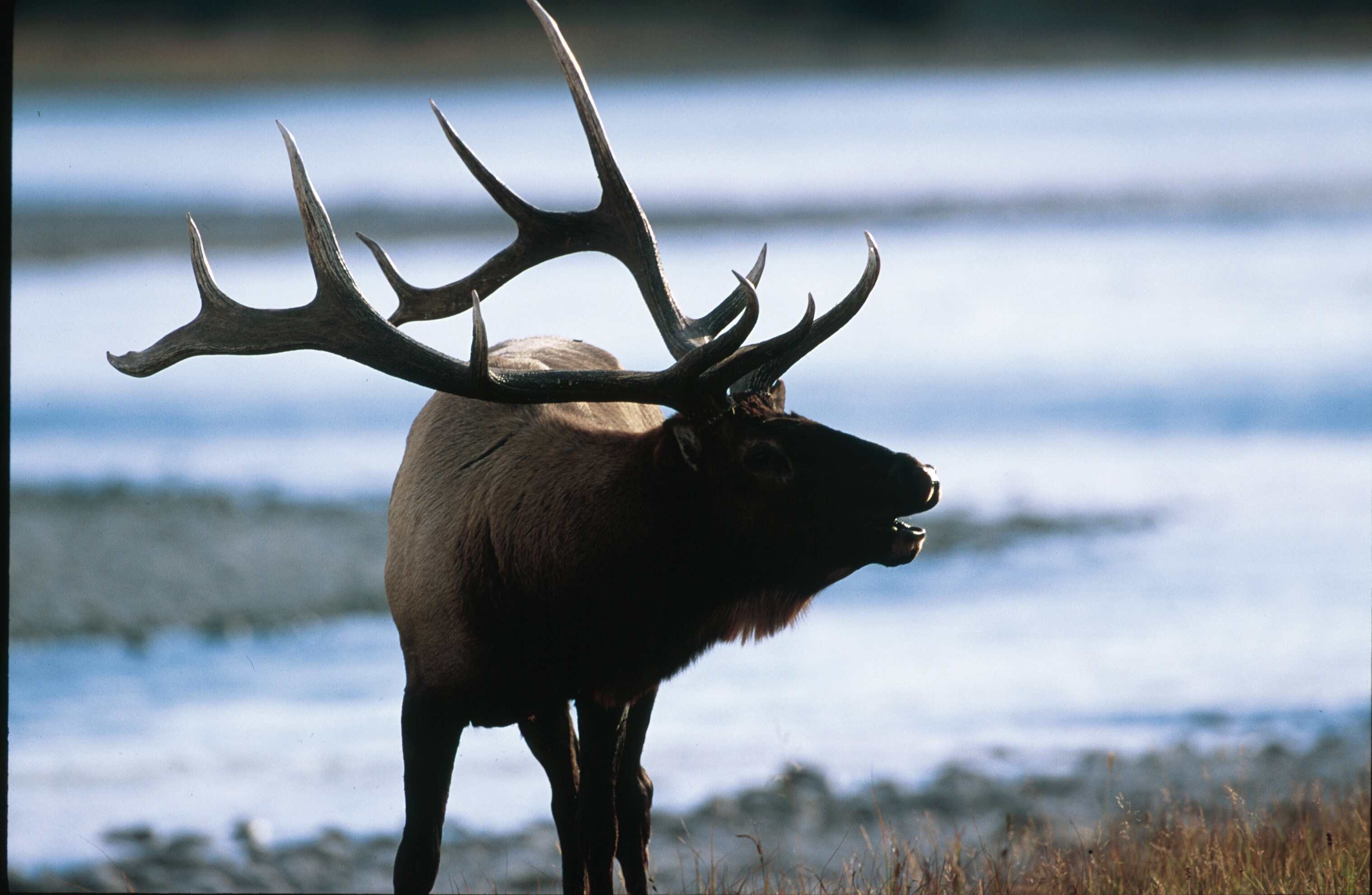
Folks stay there to escape the noise and manic pace of Portland or Seattle, enjoying quiet walks, hoping to catch a glimpse of some of the native wildlife. A small herd of elk lives there and can sometimes be seen taking their own cautious walks out on the beach in the early morning, foraging on the thick, leafy salal bushes in Ecola State Park or resting on the grass in city parks at the edge of town, adding to the natural character of area.

Cannon Beach is not the kind of place people expect to run into cammo-clad Elmers with shotguns or compound bows stalking the area’s half-tame animals.

But when the town’s parks and community services committee wanted to limit the local hunting season to only one month, the Oregon state Department of Fish and Wildlife told them they could not limit the hunting season and instead set five seasons there, totaling 90 days.  And although the town of Cannon Beach wanted to restrict hunting to bows and arrows and shotgun slugs, the ODFW informed them that buckshot would be allowed as well.

Yes, you read that right—now any hunter who wants to can blast a 700 pound bull elk with a shotgun. What a mess that would be for some sightseeing family to come across. And how many elk and deer, who were nearly out of range at the time they were shot at, will escape with a gaping, bleeding, lead-filled hole in them?!!

According to the almighty ODFW, hunting on the Ecola Creek Forest Reserve will be extended from one month to 92 days, beginning Aug. 24. And rather than being limited to one season from Sept. 28 through Nov. 1, five seasons will be allowed through Dec. 8!

The great and powerful ODFW have decreed that hunting dates in the reserve shall be:
• Aug. 24 through Sept. 22: bow hunting for deer and elk.
• Sept. 28 through Nov. 1: shotgun hunting for buck deer.
• Nov. 9 through Nov.12: shotgun hunting for bull elk.
• Nov. 16 through Nov. 22: shotgun hunting for bull elk.
• Nov. 23 through Dec. 8: bow hunting for deer.

This is just another example of state game departments pushing their weight around, defying the will of the people and town councils, not to mention the will of the wildlife. Who do “game” regulators think they are, God? Sorry, but I hear that position has already been filled.
Text and Wildlife Photography © Jim Robertson
Text and Wildlife Photography © Jim Robertson

Mohave County board opposes bigger wolves area

Tuesday, August 6, 2013

KINGMAN, Ariz. (AP) — Mohave County is on record as saying Mexican gray wolves aren’t welcome in the northwestern Arizona county.

The Kingman Daily Miner (http://bit.ly/1epSnXT ) reports that a resolution approved unanimously Monday by the Board of Supervisors says the wolves aren’t welcome unless they’ve been vaccinated, have a dog license and have been spayed or neutered.

The U.S. Fish and Wildlife Service is studying the possibility of expanding the range that Mexican gray wolves could roam in Arizona and New Mexico.

Some livestock owners and hunting guides oppose any expansion, saying the wolves would endanger their livelihoods by killing cattle and wild game.

U.S. Fish and Wildlife Mexican Wolf Recovery Coordinator Sherry Barrett says spaying or neutering the animals would defeat the project’s purpose. She says wolves are vaccinated before being released.

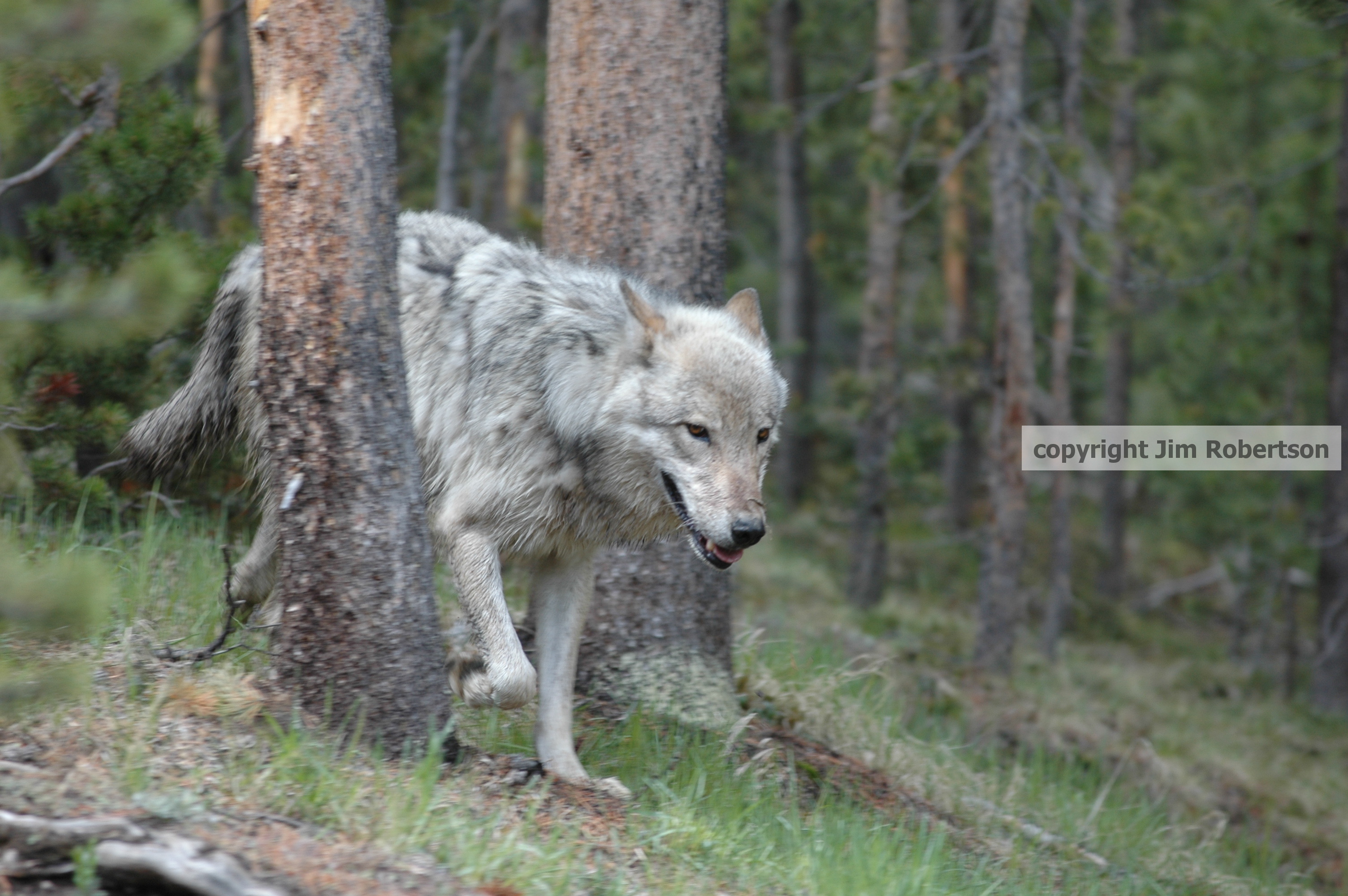
copyrighted Hayden wolf in lodgepoles

Plan would expand range in Arizona for gray wolves

The Associated Press

Posted: 08/04/2013 01:40:11 PM MDT

FLAGSTAFF, Ariz.—The federal government is floating a plan that would let endangered Mexican gray wolves roam north toward Flagstaff and across Arizona for the first time in generations.
The Arizona Daily Sun reports (http://bit.ly/1bZONIg ) that the government’s wolf reintroduction program has limited the animals to a recovery area that straddles the Arizona-New Mexico state line, where they have struggled to gain a foothold. Currently, any wolf leaving the recovery area is captured and returned.

U.S. Fish and Wildlife Service released a draft of proposed changes last month that, if put into effect, would let wolves roam from western Arizona to eastern New Mexico between Interstates 40 and 10.

The draft includes potential wolf reintroduction sites in northern Arizona on the Tonto National Forest, throughout the Sitgreaves National Forest and other public lands, as well as private lands where there’s a participating landowner. The Apache tribe has an agreement with the Fish and Wildlife Service that has allowed wolves to roam on their lands in eastern Arizona.

The Mexican wolf was added to the federal endangered species list in 1976. The 15-year effort to reintroduce them in New Mexico and Arizona has stumbled due to legal battles, illegal shootings, politics and other problems.

The federal proposal calls for expanding the area where the wolves could roam to include parts of the Cibola National Forest in central New Mexico. In all, there would be a tenfold increase in the area where biologists are working to rebuild the population.
Environmentalists welcomed the prospect of expansion, but they voiced concerns about provisions that could create loopholes that would expand circumstances in which wolves could be killed for attacking livestock or for other reasons.

Wolves have been spotted in the past as close to Flagstaff as Mormon Lake and Holbrook along Interstate 40, as the animals are capable of traveling vast distances in search of food and mates.

Emily Nelson of the Grand Canyon Wolf Recovery Project in Flagstaff said in an interview with the Daily Sun that conservation groups were unhappy with the initial federal proposal because it doesn’t include some of the “last, best area for wolves.”

Scientists have identified the Grand Canyon as prime wolf territory.

While the current population has never gotten close to the goal of 100 wolves, scientists say as many as 200 wolves could be supported in the Grand Canyon region alone.

Judy Prosser, whose family operates a ranch south of Mormon Lake and owns some 2,000 head of livestock, would see her grazing lands put inside the expanded wolf recovery area.

Prosser said that her ranching friends in the current recovery area have struggled and not been happy with the way things were managed. Losing livestock has affected their pocketbooks.

“The program has not been successful. I don’t think anyone has been happy with the outcome,” she said.

———

Information from: Arizona Daily Sun, http://www.azdailysun.com/

America: Land of the Free, Home of the Arrogant

Tisha Wardlow's avatarFight for Rhinos

rhino with US flag

Saving the rhino in Africa, from China and Vietnam is a familiar scenario. But another disturbing piece of the equation lies within the US. American hunters have long been drawn to the thrill of “big game”, hunting down rhino, elephant and lion in Africa.

Recently the US Fish and Wildlife Services set a new precedent, giving permission to a hunter to bring back his rhino kill from Africa. This has not been allowed for 30 years. Opening the door to wealthy Americans to slaughter endangered species in the wild for trophies is a dangerous trend to start.

Of course it takes two to tango. Shame on the Namibian government for allowing the hunt, and shame on US Fish and Wildlife for encouraging  the hunter with incentive to keep the trophy.

According to Fish and Wildlife, “The Service cannot and will not allow the importation of sport-hunted trophies of species protected…

View original post 321 more words

Update from the Bear-Killing Fields of Washington

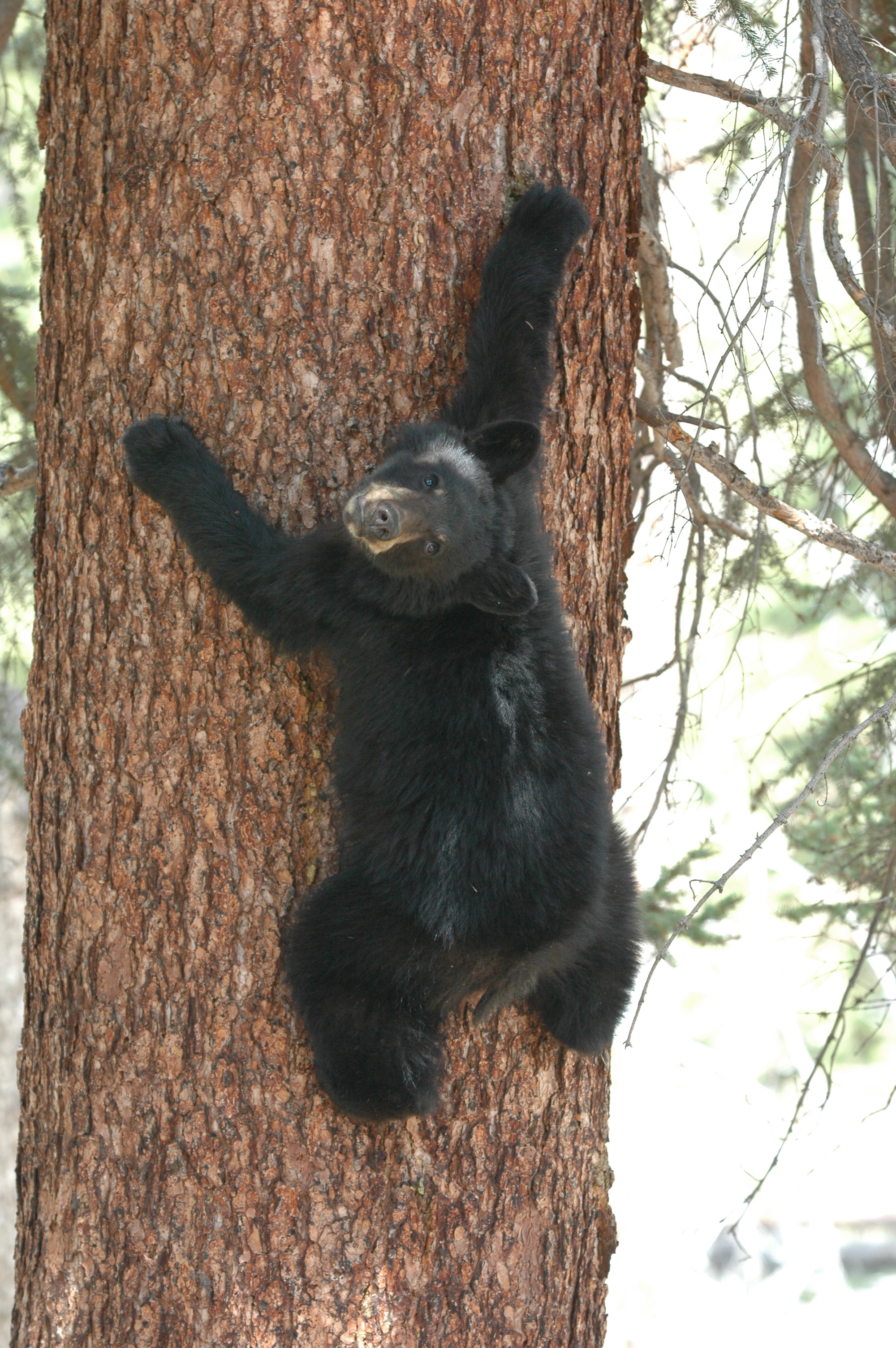
While walking my dog this morning on the ordinarily deserted logging roads around here, I came across (in addition to several fresh piles of bear scat) boot tracks in the grass heading into a draw thick with blackberry and salmonberry bushes, where one of our local bears was murdered by a hunter (“harvested”) last August. Now, I’m hearing the report of a rifle and am wondering if the same narcissistic nimrod is out there trying to kill another of our bear friends (like some serial killer who struggled through an enforced nine-month cooling off period and, consequently, is gripped by the uncontrollable urge to satisfy his pent-up his bloodlust).

Although it’s barely berry season for the bears out there trying to stock up for the coming winter, it’s bear hunting season—as of August 1st—for Elmers and Elmerettes in the Evergreen State. Nowadays, every Elmer (or Elmerette) who wants to can kill not one, but TWO, bears apiece through November 15th!

As of last Thursday, any Washington State black bear who values his or her life will have no peace ‘til the snow flies and they’re safely tucked away in their hibernation den. Until then, they must assume there’s a camo-clad coward with a high powered rifle or compound bow aimed at them, perched in every tree they pass under.

Each year 30,000 black bears are killed by hunters in the U.S. alone. And each and every one of them was a more remarkable, more worthy being than the sadists and psychos who kill them for sport.

Text and Wildlife Photography ©Jim Robertson, 2013. All Rights Reserved

Text and Wildlife Photography ©Jim Robertson, 2013. All Rights Reserved

Why Are TV Networks Airing Reality Shows That Glorify Stupidity And Cruelty To Animals?

Where I live we don’t get television reception, so my viewing time is spent the old fashioned way: watching DVDs from Netflix. On those occasions when I find myself flipping channels somewhere that has cable, the rapidly-spreading spate of “reality” wildlife blow up tv t-shirtsnuff shows gets me so worked-up I feel like pulling a John Denver and blowing up the TV. But that would do little to slow the scourge of brainless, conscienceless drivel plaguing our society like a pandemic super-bug.

Clearly, cooler heads than mine are needed to combat this ever-growing menace. Therefore I hereby relinquish the pulpit (temporarily) and turn it over to Justin Forte, who, ever since nimrod networks started cropping up across the cable TV wasteland, has been asking the question…

Why Are T.V. Networks Airing Reality Shows That Glorify Stupidity And Cruelty To Animals?

Guest Rant by Justin Forte

What is it with television networks showing these stupid reality shows about bumpkins and glorifying killing and exploiting wild animals lately? It is beyond disgusting! All you see any more on most networks is one brain-dead reality show after another! Networks like Discovery, Animal Planet, TLC, and The History Channel are supposed to show programs that raise IQ levels not lower them! All you see on these networks and several other TV networks anymore are garbage shows that glorify trapping, torturing, and killing wildlife for profit and entertainment!

If it isn’t that, the networks show other reality shows of people acting like brain-dead yuppie idiots or people craving attention for doing ordinary stuff that other people do all the time that they think they should be on TV and get a medal for doing! WTF?

It is really sad, disgusting, and disturbing that the media has gone so low and is force feeding this garbage to the masses, and our society is suffering for it! Personally, I would love to see a social study experiment conducted to show the negative effects these reality shows are having on our society. I think these brain-dead reality shows glorifying animal killing and stupidity is dumbing down the masses and I think it is high time we stand up to the networks airing this garbage before they turn us all into brain-dead idiots and zombies from all this lousy programming they keep airing!

One of the best things we can do to put an end to these lousy reality shows that glorify animal killing and stupidity is to start complaining to these networks by calling, emailing, and sending letters of outrage over their programming. Another is to boycott the networks that show them. Cut the networks off from their ratings and they will begin to lose money, then we will be able to force them to bring back intelligent programming and entertainment like they used to show before they started showing the garbage they are showing now.

410557751_d3027a6344

Hunter Killed by Buffalo he was Trying to Shoot

buf_2245221b

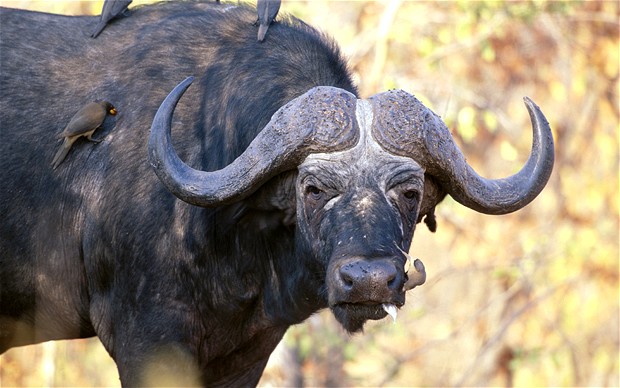
A British man working as a professional hunter on a private game reserve in Zimbabwe has been killed by a wounded buffalo he was trying to shoot.

By Peta Thornycroft, Aislinn Laing in Johannesburg
2:45PM BST 11 Jun 2012                                                           [My comments interjected in brackets throughout]
Owain Lewis, 67, had been tracking the animal for three days to finish it off after it was shot and injured by a visiting American hunter he was escorting.

[okay, first off, how many years must he have been killing animals if he was 67 when one finally finished off his career?]

Paul Smith, the owner of Chifuti Safaris in the lower Zambezi Valley, said Mr Lewis was “very tough and experienced” but had been caught unawares when the buffalo charged from the undergrowth and tossed him in the air.

[What, no video?]

“It turned on him and attacked him and unfortunately the apprentice hunter with him could not shoot the animal as Owen’s body was in the way,” he said.

[Fortunately, that is.)

“It was a very tough fight. Owain’s neck was broken but the apprentice did manage to kill the buffalo.

[Oh, that last bit is a real shame.]

“We are very shocked. This is the first time we have had an incident like this.

[and hopefully not the last.]

Why YOU Should Care About the Heritage Conservation Council Advisory Committee

Hunters should realize that their God-given right to remain silent protects them from having anything they say used against them…, such as the information in this article in Outdoor “Life” magazine…


Hunting Access: Why You Should Care About the Heritage Conservation Council Advisory Committee

by John Haughey

It may appear to be nothing more than semantics, but a proposal to make the Wildlife and Hunting Heritage Conservation Council Advisory Committee a permanent advisory panel rather than one that must have its charter renewed every two years by Congress is a significant step in ensuring wildlife, habitat conservation, and hunting are priorities in federal land-management decisions.

The Wildlife and Hunting Heritage Conservation Council (WHHCC) advisory committee was created in 2010, replacing the Sporting Conservation Council, to advise the Interior and Agriculture departments on wildlife and habitat conservation, hunting, and recreational shooting issues on federal land.

In accordance with the Federal Advisory Committee Act, the WHHCC requires Congressional reauthorization every two years for it to continue operating. The committee was renewed for the 2012 and 2013 fiscal years, but rather than renew its charter for the 2014 and 2015 fiscal years, Rep. Robert Latta (R-Ohio) has proposed a bill that will make the panel a permanent advisory committee.

The Sportsmen’s Heritage And Recreational Enhancement (SHARE) Act introduced into the House by Latta and three co-sponsors on July 23 exempts the WHHCC from the Federal Advisory Committee Act’s two-year renewal stipulation by making it a “permanent” committee.

“Ensuring that sportsmen and sportswomen have an advisory capacity role across future Administrations is vital for all who enjoy the great outdoors throughout the nation to engage and provide consensus recommendations to federal agencies that will benefit from the Council’s vast experience and expertise,” Latta said. “I am confident that this legislation will serve to the betterment of current and future generations of hunter-conservationists.”

“This legislation will ensure that sportsmen are able to provide first-hand knowledge of the wildlife and hunting issues to the federal government,” agreed Rep. Bennie Thompson (D-Miss.), co-chairman of the Congressional Sportsmen’s Caucus.

The bill was referred to the House Natural Resources and Agriculture committee where it will be reviewed before introduction onto the floor.

Like its predecessor, the revamped committee would include members of state fish and wildlife agencies, bird and big-game hunting groups, representatives of Indian tribes, and leaders in tourism, hunting equipment, and farming industries.

Members would serve staggered terms of two, three, and four years. The committee would meet at least twice a year and file an annual report.

For more, go to:
— House Congressional Sportsmen’s Caucus -Sportsmen’s Priorities Moving in Congress

— New wildlife and hunting advisory committee proposed (Video)

— H.R. 2799: To establish the Wildlife and Hunting Heritage Conservation Council Advisory Committee to advise the Secretaries …;