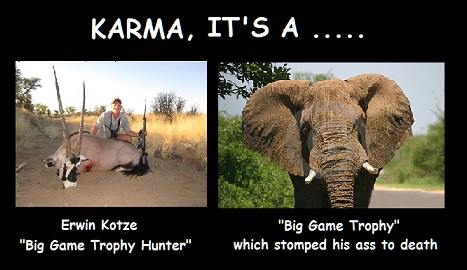
Elephant Takes a Trophy
Image
29

MARK HUME
VANCOUVER — The Globe and Mail
Published Thursday, Nov. 28 2013
When salmon runs dwindle on the B.C. coast, the stress levels in grizzlies climb, say researchers who examined hair samples collected from more than 70 bears.
And the bears, which gather along rivers in the fall to feed on spawning salmon, take those high stress levels with them into hibernation, perhaps affecting their long-term health, according to a science paper published Wednesday.
The study is expected to add weight to a growing argument that commercial salmon harvests on the West Coast should be managed not just for people, but also to reflect the needs of bears and other wildlife.
“Part of the reason bears might be experiencing stress is the fact we compete with them for food. And we really need to think about our fisheries not only in terms of our needs as humans but also of the needs of other species,” said lead author, Heather Bryan, a Hakai postdoctoral researcher at University of Victoria and a biologist with Raincoast Conservation Foundation.
In 2010, federal department of Fisheries and Oceans scientists John Ford and Graeme Ellis linked killer-whale survival to the abundance of Chinook salmon, and called on the government to consider setting aside allocations of salmon for whales.
Chris Darimont, who co-authored the grizzly-bear study, said it’s clear bears also need a share.
“Our findings highlight the importance of managing fisheries in a way that ensures enough salmon are allowed past fish nets to meet the needs of bears and other wildlife,” said Dr. Darimont, a UVic professor and the science director at Raincoast.
Dr. Bryan said the research showed the stress hormone, cortisol, was higher in bears that ate less salmon.
“That’s not surprising if you think about how stressful it would be to be going into a winter without enough food,” she said.
The long-term health implications for grizzlies haven’t been studied yet by Dr. Bryan, but other wildlife studies have shown that animals with high cortisol levels can have shortened life spans.
Dr. Bryan’s research was possible because of a network of 71 “hair snags” researchers have been monitoring for several years on a grid that covers 5,000 square kilometres on B.C.’s mainland coast. The area stretches from near northern Vancouver Island to around Prince Rupert.
“We were interested in looking at the health effects of long-term salmon declines on bears. And how we did it is we took a few milligrams of bear hair [from each grizzly] and we used that to gain insights into the health of these several-hundred-kilogram animals,” said Dr. Bryan.
She said some of the hair came from the B.C. archives, where samples from bears killed by hunters are kept. But much of it came from the hair snags – barbed wire wrapped around trees marked with fermented fish oil.
“It’s a delicious odour for bears … they come and check it out … they usually only stay a few seconds but it’s usually long enough to leave behind a strand of hair,” said Dr. Bryan.
She said none of the field workers has ever had a dangerous encounter with the bears, despite spending weeks gathering hair samples in prime grizzly habitat.
Working with only a few strands of hair from each animal, Dr. Bryan said she was able to to both measure the level of cortisol and to determine how rich a bear’s salmon diet was. The data showed that when salmon runs declined on B.C.’s Central Coast, in 2008 and 2009, stress levels increased. And when salmon runs increased, as they did in 2010, the stress levels declined.
In 2009, conservationists and ecotourism guides along the B.C. coast reported a huge drop in the number of bears they were seeing along rivers and they blamed the decline on two successive poor salmon runs. Bear watchers speculated many animals had died during hibernation and that others had stopped breeding because they were starving.
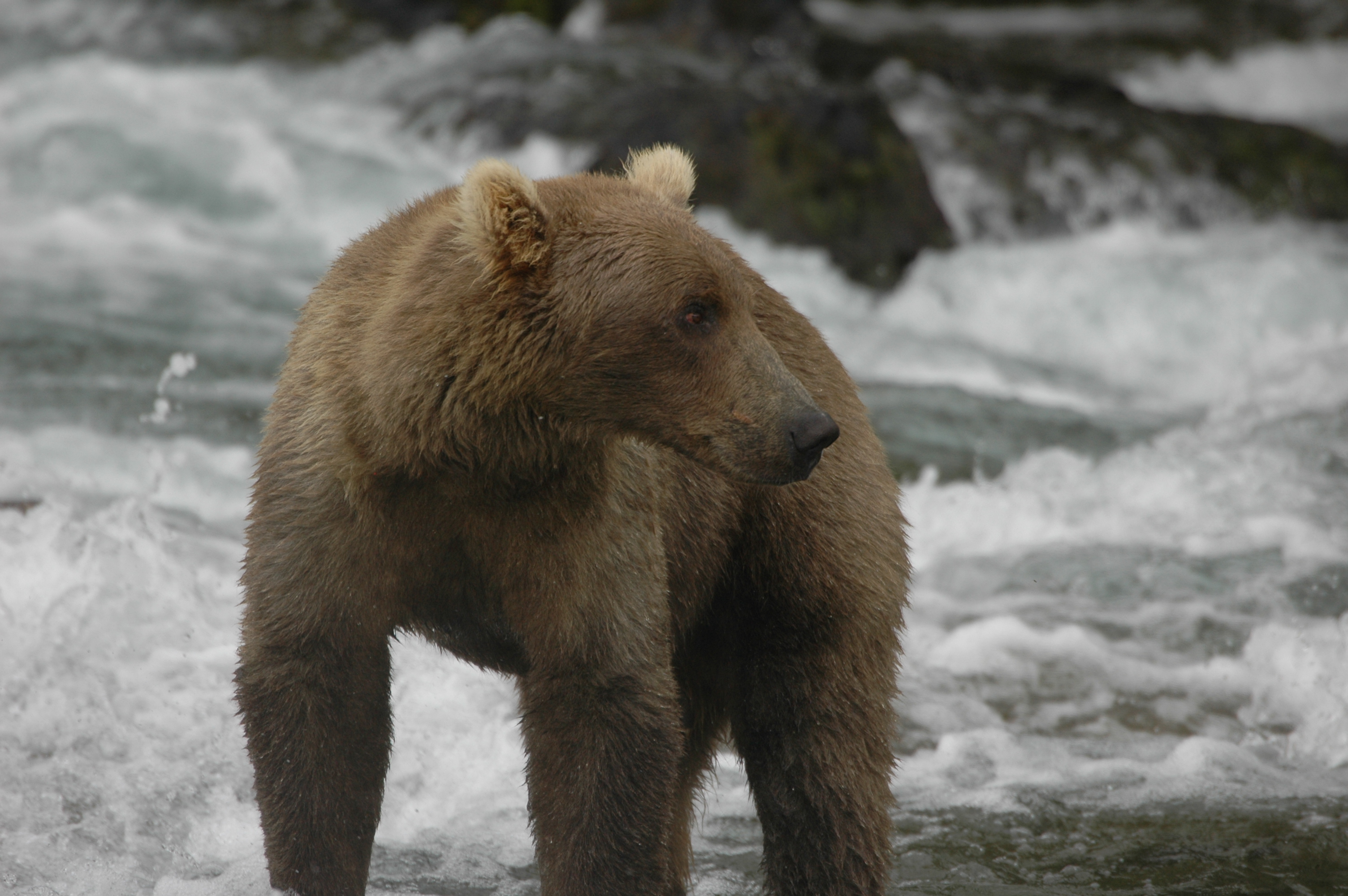
Grizzly photo Copyright Jim Robertson
Published November 26, 2013/
Associated Press
LARAMIE, Wyo. – The Wyoming Game and Fish Department is looking for information about a cow moose that was poached on state land north of Buford.
Laramie Game Warden Kelly Todd says the cow moose was shot sometime around the weekend of Nov. 9-10.
The cow was shot through the back legs and eventually died in South Crow Creek. A bull moose calf was spotted hanging around the cow’s body.
It is illegal to shoot a cow moose with a calf at its side that hunting area.
Todd says a hunter may have mistaken the moose for an elk. He says hunters need to be aware of what they’re shooting at. [Always good advice!]
The game department is asking anyone with information about the crime to come forward.
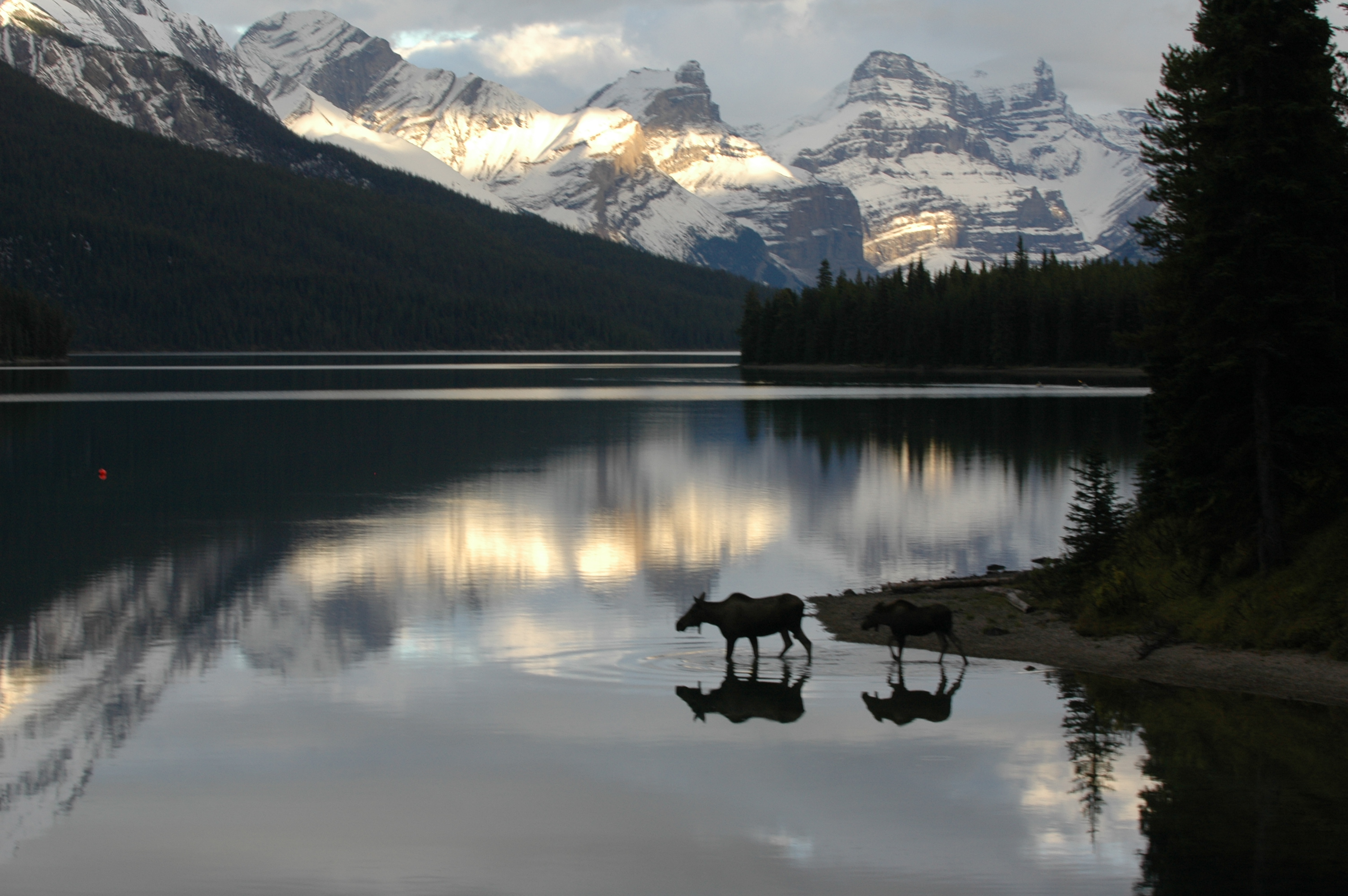
Wildlife Photography ©Jim Robertson, 2013. All Rights Reserved
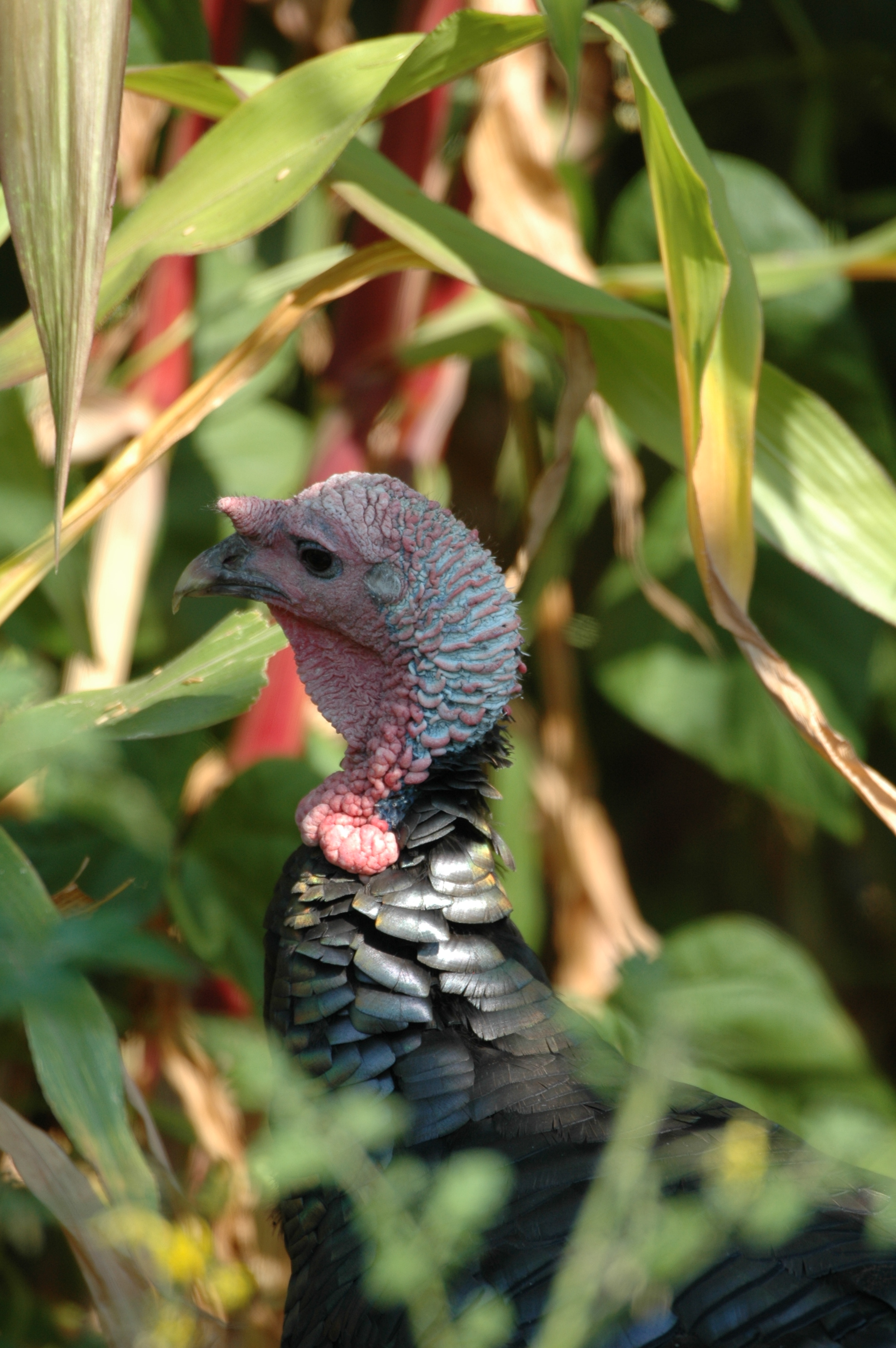
Millions of turkeys are horrifically raised and killed as mere tokens, but why?
November 28, 2013 by Marc Bekoff, Ph.D. in Animal Emotions
Many of you have heard this question over and over again, “Why kill turkeys to celebrate Thanksgiving?” They say repetition is boring conversation but I feel it’s essential to ask this question repeatedly, because there really
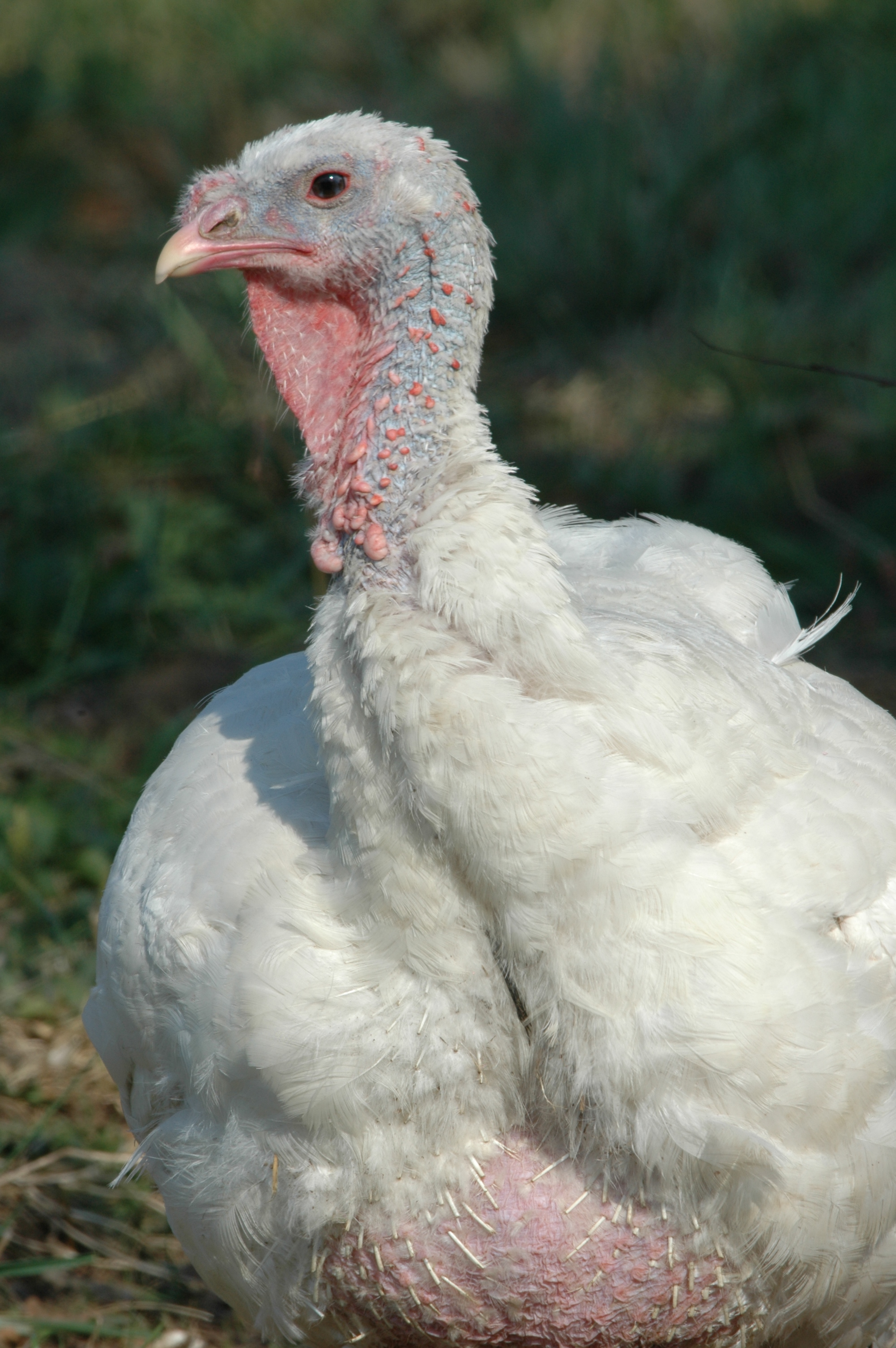
Photo by Jim Robertson
is no reason at all to slaughter and to eat these fascinating sentient beings in the name of a holiday, and turkeys surely are sentient beings (see also). Dr. Ian Duncan, a world-renowned expert on the behavior of food animals notes, based on detailed scientific research, “It is indisputable that poultry are capable of feeling pain. All poultry species are sentient vertebrates and all the available evidence shows that they have a very similar range of feelings as mammalian species. Poultry can suffer by feeling pain, fear, and stress.” More information about the lives of turkeys can be found here.
Turkeys are also very smart and have distinct personalities. People used to write off fish as being unfeeling “lower” animals but we now know, also based on solid scientific research, that they are sentient and feel pain (see also). The more we study other animals the more we learn about how complex their lives are, even for animals previously thought to be unfeeling creatures.
There’s no reason to consume pain and misery: Would you kill and eat your dog?
Holidays should be times for deep reflection. So, please reflect on these facts. More than 45 million turkeys are killed every Thanksgiving. More than 300 million are killed annually. Before they are mercilessly slaughtered individuals are kept in the most inhumane conditions, on the floors of dark, filthy sheds, houses of horrors, where they walk through their own excrement, breathe ammonia-filled air, and are cramped together so tightly they can’t move or get away from one another. As a result there are numerous fights among normally peaceful individuals and they suffer from massive injuries and a wide variety of diseases that humans consume.
Furthermore, when one eats a turkey carcass they are eating a genetically engineered animal and also consuming pain and misery. To keep turkeys from injuring one another their toes and beaks are cut off with hot blades with no anesthetic or analgesic, and when their throat is slit many are still conscious. We know chickens feel empathy and there is every reason to believe that turkeys do too. I know no one would treat their dog like turkeys are treated from birth to their heinous road to death.
There are numerous very tasty non-animal alternatives and even if you don’t think they’re as yummy as a dead bird is it really asking too much to give up something that isn’t a necessary part of your diet? I don’t think so.
Animals shouldn’t be used as token objects of joyous festivities
In order to make changes in the way we live, including who, not what, we eat, we occasionally need to leave our comfort zones. By not turning a blind eye to the incredible suffering that turkeys experience and choosing to forgo eating them, you can add more compassion to the world. You can even adopt a turkey. I urge everyone to try to make this incredibly simple change right now, for this coming holiday and for future celebrations in which animals are consumed as mere token objects of the festivities. I can’t imagine you wouldn’t feel better about yourself. Thank you very much for trying.
Marc Bekoff’s latest books are Jasper’s story: Saving moon bears (with Jill Robinson; see also), Ignoring nature no more: The case for compassionate conservation
It’s a special morning of a special day, but out in migratory bird habitat there’s a massacre going on. Though nearly every family across the country has a turkey thawing out in preparation for a gluttonous banquet a little later in the day,
Text and Photography ©Jim Robertson, 2013. All Rights Reserved
recreational meat-pursuers are ringing in the season by blasting away into flocks of wintering geese to make up for the fact that their sacrificial bird-of-the-day came from a grocery store.
Never mind that the poor being was raised in a windowless barn, crowded-in with so many other turkeys that their wings wither away to virtual stumps of appendages, their natural coloration was bred out of them anyway.
Can’t afford your own tormented Thanksgiving turkey this year? Not to worry, chances are some abattoir has donated hundreds of frozen carcasses to your local food bank, in hopes of promoting their own animal industry. Here on the coast, turkeys were donated by a thriving seafood “processing” plant.
Non-human life has very little value in today’s world. Heck, a Montana wolf hunter can go out and mow down a loyal dog walking practically at her beloved master’s side and not face any legal consequences. The value of mass-produced birds is measured by the pound. No charge for their stark white feathers; they come off the body easily and can fetch a penny or so a pound at the pillow factory.
But the mighty hunters out in the tidelands currently shooting up a storm won’t be satisfied until they kill something themselves. There’s nothing like a hands-on blood bath to get you in the mood for a feast, I guess. Some folks haven’t come far from Plymouth Rock; at least they phased out witch burnings.

Text and Wildlife Photography ©Jim Robertson, 2013. All Rights Reserved
Everyone is familiar with that old saw about dogs looking like their owners……certainly, there are plenty of photos in this genre floating around the internet………


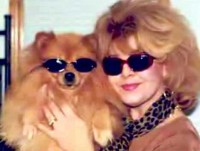
However, appearances aside, this common belief leads one to ask – Do dogs often behave similarly to their owners? Or more precisely, do dogs and their owners share personality traits? Recently, a group of collaborating scientists from Eotvos University’s Family Dog Project in Hungary and from the “Clever Dog Lab” in Vienna, Austria asked exactly this question (1).
 SHARED PERSONALITIES?
Background information: Studies of human relationships provide quite a bit of scientific support for a hypothesis entitled the “similarity-attraction hypothesis“. Rather than the “opposites attract” theory that prevails on TV sit-coms and in romance novels, it seems that friends and romantic partners who share personality traits, communication patterns, and yes, even degree of attractiveness have reduced conflict and disagreements and are generally happier in their relationships than are folks who tend to…
View original post 938 more words
Published November 27, 2013/
FoxNews.com
The leader of a pro-hunting group in Utah said he has received death threats from animal rights advocates after voicing support for a hunter who posted a picture of herself earlier this month smiling next to the carcass of a male lion during a hunting trip to South Africa.
Jason Fackrell, the founder of Hunters Against PETA, told KSL.com that one comment said, “I wish to have some money to kill you myself.” Another comment, the station reported, talked about killing Melissa Bachman, the hunter who posted the picture.
Fackrell described the torment he faced. He said he had to move, had his contact information posted online by hackers and has seen family members threatened in the past.
He expressed his dismay that about “90 percent of the population eats meat, but it’s OK to threaten the life of a human being that kills an animal.”
He has not reported the recent threat to the FBI, the report said. But highlighted what he sees as a double standard.
“I’ve never seen hunters threaten the lives of animal rights activists because they don’t like hunting, so there definitely is a double standard.”
PETA responded to KSL.com’s report and said it opposes violence. The report noted that PETA is not connected to the alleged threats on Fackrell.
Meanwhile, more than 375,000 people signed a petition to ban Bachman, the host of “Winchester Deadly Passion,” from gaining entry again into South Africa.

Wednesday, November 27, 2013, 16:20
Washington: A study, which is the most detailed range-wide assessment of the
bonobo- formerly known as the pygmy chimpanzee- ever conducted, has revealed
that this endangered great ape is quickly losing space in a world because of
forest fragmentation and poaching.
The research was conducted by University of Georgia, University of Maryland,
the Wildlife Conservation Society, ICCN (Congolese Wildlife Authority),
African Wildlife Foundation, Zoological Society of Milwaukee, World Wildlife
Fund, Max Planck Institute, Lukuru Foundation, University of Stirling, Kyoto
University, and other groups.
Using data from nest counts and remote sensing imagery, the research team
found that the bonobo avoids areas of high human activity and forest
fragmentation.
According to the model developed by the researchers in the study, as little
as 28 percent of the bonobo’s range remains suitable.
“This assessment is a major step towards addressing the substantial
information gap regarding the conservation status of bonobos across their
entire range. The results of the study demonstrate that human activities
reduce the amount of effective bonobo habitat and will help us identify
where to propose future protected areas for this great ape,”
lead author Dr. Jena R. Hickey of Cornell University and the University of
Georgia, said.
The bonobo is smaller in size and more slender in build than the common
chimpanzee. The great ape’s social structure is complex and matriarchal.
Unlike the common chimpanzee, bonobos establish social bonds and diffuse
tension or aggression with sexual behaviors.
Second author of the study, Dr. Janet Nackoney, said Bonobos that live in
closer proximity to human activity and to points of human access are more
vulnerable to poaching, one of their main threats. The results point to the
need for more places where bonobos can be safe from hunters, which is an
enormous challenge in the DRC.
The study is published in journal Biodiversity and Conservation.
http://zeenews.india.com/news/eco-news/bonobo-s-hurtling-towards-extinction_
892729.html

 Exposing the Big Game