Meanwhile in Oklahoma…

Oklahoma hunters have already checked in 30,500 deer this season. However, that pace is slightly behind last year.

As a general rule, deer aren’t moving much around during most of the muzzleloader season, but that will soon change with the beginning of the rut, the time of year when whitetails become less cautious. Deer are now starting to move more during the day, and some bucks already have been seen trailing does.

Okla.’s 16 day deer gun season, the biggest hunting season of the year, begins the Saturday before Thanksgiving. Almost 200,000 hunters in Okla. participate in the deer gun season.

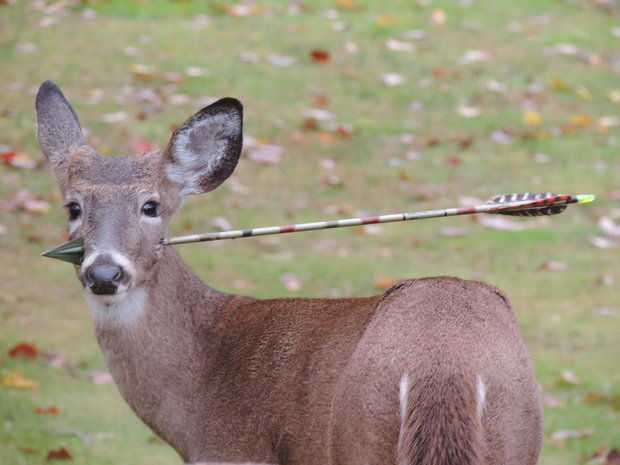
Archery deer season remains open thru Jan. 15th. [So, you can expect to see more of those arrow-impaled deer wandering around for another 2 months….]

The Okla. Dept. of Wildlife Conservation has extended the deadline for the agency’s guided youth waterfowl hunts to Nov. 21. The youth hunts are open to hunters ages 12 to 15 who have completed the hunter education course. An adult guardian must accompany the youth hunter. Many of the states wildlife refuges have guided hunts.

Wildlife Photography © Jim Robertson

Wildlife Photography © Jim Robertson


Happy Ending for Arrow-Impaled NJ Deer

N.J. biologists find injured Rockaway Township deer and remove arrow from its head

By Robin Wilson-Glover/The Star-Ledger13709511-mmmain
November 10, 2013

ROCKAWAY TOWNSHIP — A hunter’s arrow that had pierced both sides of a young deer’s head has been successfully removed, according to state officials and the woman who first notified authorities about the animal.

Staff from New Jersey Division of Fish and Wildlife tranquilized the deer Saturday afternoon in the backyard of Susan Darrah’s Rockaway Township home, removed the arrow, treated the wound and released it back in the wild, Darrah said today. DEP Spokesman Larry Hajna confirmed the arrow removal.

“Everybody loves a happy ending,” Darrah said.

After first spotting the deer with the arrow on Nov. 1, Darrah called Fish and Wildlife and authorities there instructed her to put out corn to draw the deer back into the yard. On different occasions, staff members staked out the area in an attempt to catch the animal and remove the arrow, she said.

Saturday evening, when the small deer wandered into her yard to eat, a member of Fish and Wildlife was able to tranquilize the animal, then follow it into the woods and bring it back into Darrah’s yard, she said.

They removed the arrow, put topical antibiotics on the wound, gave it a shot of antibiotics and then waited for it to wake up. The biologists who did the procedure say the arrow did not damage major arteries or organs and the deer’s prognosis for survival is excellent.

Once the deer was able to stand, it walked off into a nearby pasture and took a nap before it headed back into the woods, Darrah said.

“I can not say enough, give enough accolades to the guys at Fish and Wildlife,” Darrah said. “These guys were dedicated, determined and totally respective of me and my property… They were just terrific.”

The deer, which she had come to jokingly call Steve Martin because of the comedian’s stand-up routine with a fake arrow through his head, gained notoriety worldwide after Darrah shared the first images of it with The Star-Ledger last week.

Darrah said friends in the Netherlands told her the story appeared in the largest newspaper in Holland and a friend at the Nairobi Hilton in Kenya sent her an email, letting her know that the deer’s photograph and story also appeared in a newspaper there, as well.

Given the animal’s celebrity, she is hoping that the 5-month-old male deer will survive the fall bow hunting season.

“He has as good a chance as any when it comes to making it,” she said.

The Associated Press contributed to this report.

Bad advice: “Homework is for kids who don’t hunt”

A Montana state legislator who’s also an outfitter sponsored a bill in 2013 to lower the hunting age to nine (it’s currently 12),…

Other Nations's avatarAnimal Blawg

homeworkhuntKathleen Stachowski  Other Nations

“Homework is for kids who don’t hunt.” This proclamation, delivered on a Realtree brand boys’ T-shirt, appeared recently in a Shopko sales flier. I looked twice to make sure I read it correctly, so shocking was the message to this former teacher. Flashback to rural New Mexico and a boy in my 9th grade English class. He was a nice kid–congenial, polite–if not a committed student. His greatest enthusiasm during the school year manifested itself immediately before his week-long absence every autumn to go hunting. Attend class? Do homework? Make up missed assignments? Pff. That shirt would have fit him to a ‘T’.  

View original post 955 more words

Speaking of Crossbows…

1460129_616997745006100_946419951_n

http://www.lifewithcats.tv/2013/11/06/3-mayor-rescues-cat-shot-with-crossbow-arrow/

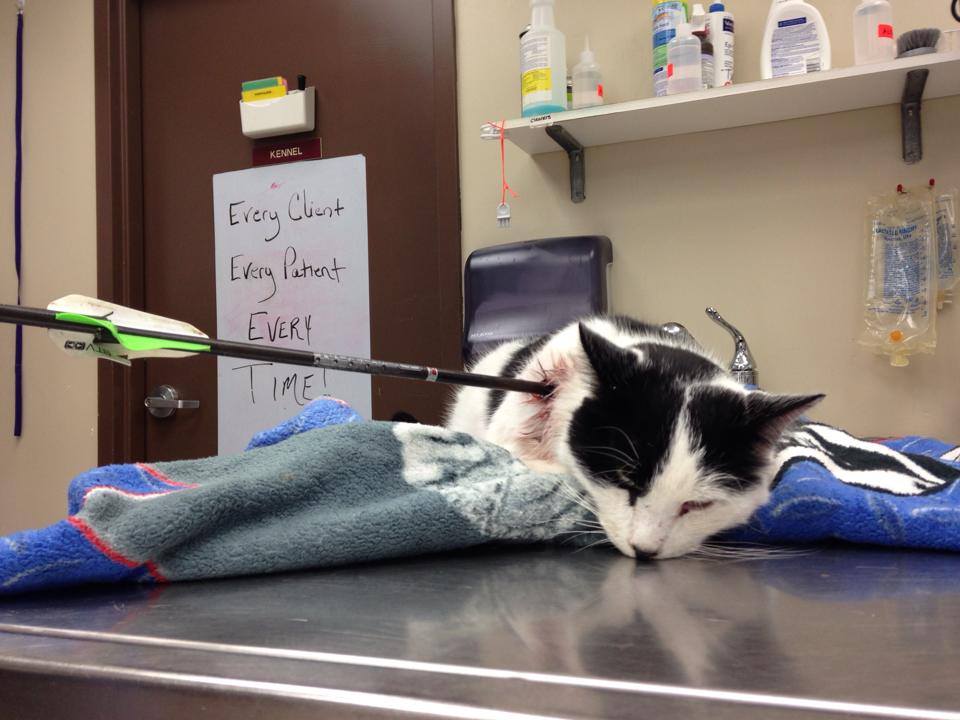
Outgoing Norwich CT mayor Peter Nystrom is being thanked for his good-heartedness and good citizenship after he found an injured cat, called for help and offered to pay for the animal’s care.

Elliot the cat had been shot in the chest and had a crossbow bolt sticking through him when Mayor Nystrom, out doing some last minute campaigning before Tuesday’s election, found him Monday night in his family’s Norwich yard.

“He wasn’t moving,” Nystrom said. “We weren’t sure he was alive at first but then [the owner’s] daughter came in and got down on the deck with him and that just broke your heart watching.”

Elliot had been missing for two days when he was found. His vets say he most likely had the arrow in him for most of that time.

Nystrom called the animal control officer, and Elliot was rushed to the vet for emergency care at All Friends Animal Hospital in Norwich.

Veterinarians were able to remove the arrow and say Elliot is doing well in his recovery, though it remains to be seen whether he will suffer lasting neurological damage. The cat was up and walking, taking a few steps on Tuesday.

“It didn’t hit anything major, which is unbelievable. It was inches away,” said Lona Harrelle, from All Friends. “Inches away from hitting his heart, his lungs.”

“He didn’t once try to bite or act vicious,” Harrelle said. “And I wouldn’t have blamed him. He’s been in a lot of pain. But he’s been just like this the whole time.”

All Friends vet Kathleen Tangari performed the surgery on Elliot, and said the tissue surrounding the arrow had begun to harden over the two days it was stuck through him, and had sealed off the blood vessels. Dr. Tangari said that plus the cold nighttime temps likely prevented Elliot from bleeding to death.

According to the Norwich Bulletin, Elliot’s owner is elderly and disabled, and unable to pay for the cat’s procedure and related care, so All Friends dipped into its “angel fund” of donated monies to cover the costs. The hospital indicated that Nystrom personally paid toward Elliot’s medical costs.

All Friends says Elliot is much loved by his family, who are devastated by what has occurred.

Peter Nystrom lost a close contest for Mayor to Deb Hinchey on Tuesday, but has earned himself a great deal of good will from the community through his actions and compassion for Elliot and his family.

All Friends Animal Hospital shared photos at Facebook on Monday, and wrote:

“We need your help!! We had a sweet kitty named Elliot come in today with an arrow through his chest. We are hoping to find the person responsible for this heinous act of cruelty. Fortunately for this kitty our city’s mayor Peter Nystrom was is the area and able to contact animal control who rushed Elliot to all friends to seek immediate treatment. Elliot is resting comfortably after having the arrow removed, although we still don’t know if there will be long term nerve damage. Elliot was shot in the area of Gates road in Norwich. If you have any information please contact Norwich animal control at (860) 887-5747.”

The shooting is thought by officials to have been intentional.

Elliot had a visitor today, when a young animal lover named Antonio Annicelli came in to bring a get well card to raise Elliot’s spirits. Antonio shared some special moments with Elliot curled up on his lap.

All Friends hopes Elliot will be ready to go home by the end of the week.

See the video report from WFSB 3 at bottom for more on the story.

B.C. Promotes Their Grizzly Bear Hunt

http://www.vancouversun.com/opinion/columnists/Stephen+Hume+promotion+grizzly+hunt+ideological/9140392/story.html

Stephen Hume: B.C.’s promotion of grizzly hunt is ideological, not scientific

Killing of a threatened species to satisfy a marginal industry makes no sense

By Stephen Hume, Vancouver SunNovember 7, 2013

A new scientific study reports that grizzly bear mortalities exceed government targets in half the areas where hunting is permitted. This earns another “ho hum” from provincial wildlife authorities.

So what’s new? When the province’s own habitat specialist first raised concerns with methodology in estimating grizzly populations and mortality rates, his bosses suppressed the study.

The province estimates 15,000 grizzlies inhabit British Columbia. Mind you, grizzly estimates seem to be whatever it takes to justify trophy hunting. In 1979, there were 6,600 grizzlies. Then, when trophy hunting was on the agenda, there were almost 17,000.

The debate over grizzlies is not a discussion of scientific evidence that contradicts hunting policy, it’s an emotional argument over lifestyle choices by trophy hunting proponents who are not really interested in science.

Presumably this why the government is comfortable saying wildlife managers don’t share the new study’s conclusions before they’ve even analyzed its evidence — although, of course, they promise to review it.

The study by six biologists from Simon Fraser University, the University of Victoria and the Raincoast Conservation Foundation reported by Larry Pynn is only the latest that will wind up gathering dust on the shelf where the provincial government puts documents it wants to forget. It has been preceded by reports from some of the world’s leading grizzly experts.

These studies gather dust not because the evidence is unconvincing but because provincial politicians are not interested in evidence-based decisions. They want justification for providing feedstock for a hunting industry that’s in steep decline.

Thirty years ago, there were almost 175,000 licensed hunters in B.C. Today, hunters’ numbers have fallen by more than half.

Clearly social values are changing.

Once, people would kill everything they could. Archival photographs record orgies of killing that most of us today — even the most ardent hunters — would find repugnant and slightly mystifying.

But values do change. Today serious anglers embrace the catch-and-release ethos, hunters accept limited-entry lotteries and poachers are reviled.

Those original values have changed, in part, because of increasing scarcity. On Vancouver Island, for example, the black-tailed deer population is less than 20 per cent of what it once was — not because of overhunting but because of habitat loss and alteration. Steelhead runs are in trouble. So are native cutthroat trout. Moose are scarce in some regions.

So as hunting effort must increase with growing scarcity, and opportunity for success decreases, fewer hunters opt to buy licenses.

Finally, a growing sense that animals have rights, too, informs changing attitudes toward the killing of wildlife, particularly among young citizens. The idea of killing large animals like grizzly bears for pleasure or personal vanity rather than for food is perceived as abusive.

The response of provincial fish and game management has not been to adapt to change, but to promote hunting in the face of falling numbers. Its service plan calls for the selling of an additional 20,000 hunting licences by 2014.

The grizzly bear trophy hunt, which the province doggedly supports in the face of overwhelming public approbation, represents ideology, not wildlife science or public will.

Industrial strategy is presented as an exercise in sustainable management based on science, even though the managers acknowledge they have already reached their own conclusions before they examine unwelcome scientific evidence to the contrary.

But let’s be clear, the opposition to trophy hunting of grizzly bears is not an issue with hunting, it’s an issue with purpose.

Most British Columbians don’t oppose sustainable harvesting of wildlife for food. Most support, for example, the goals of the B.C. Wildlife Federation, which advocates for habitat that will sustain healthy populations available for harvesting by hunters and anglers.

The opposition is to the killing, for purposes of personal vanity, of a threatened species that has already been extirpated from most of its North American range in the interests of a marginal industry dominated by a few businesses.

Write about this and one immediately is subjected to scurrilous comments from trophy hunters who don’t want “their” bears taken away. But B.C.’s wildlife doesn’t belong exclusively to hunters or outfitters. Fish and game belong to everyone, including the almost 90 per cent of British Columbians who want grizzly bears protected, not slaughtered in the service of narcissists and egomaniacs.

We live in a democracy. In democracies, majorities rule — or should rule. So if you care about grizzly bears, you know what to do. Start telling your elected representatives that if they won’t act on your behalf on this file, you’ll elect somebody who will.

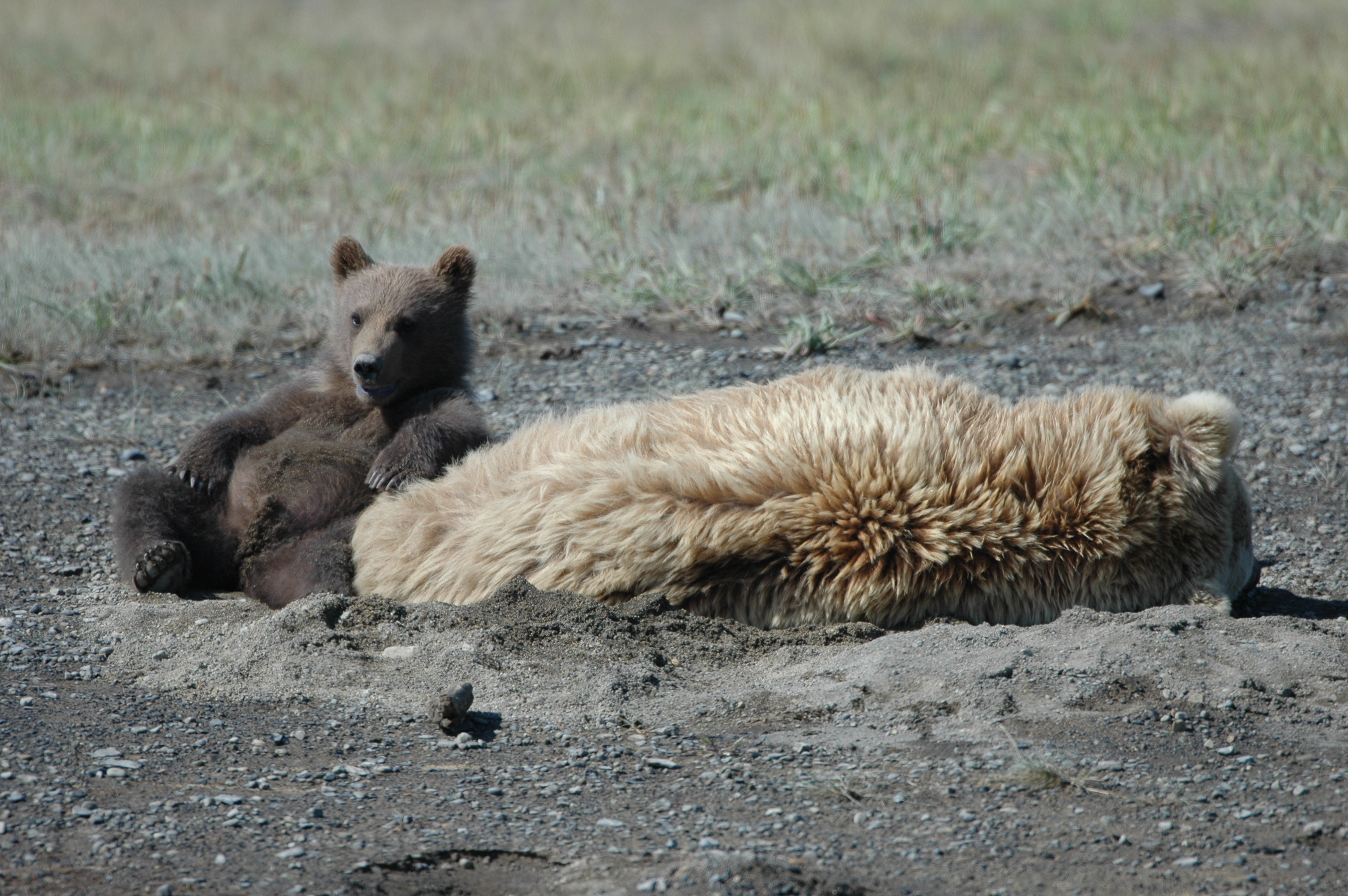
Photo of bears in the wild co Jim Robertson

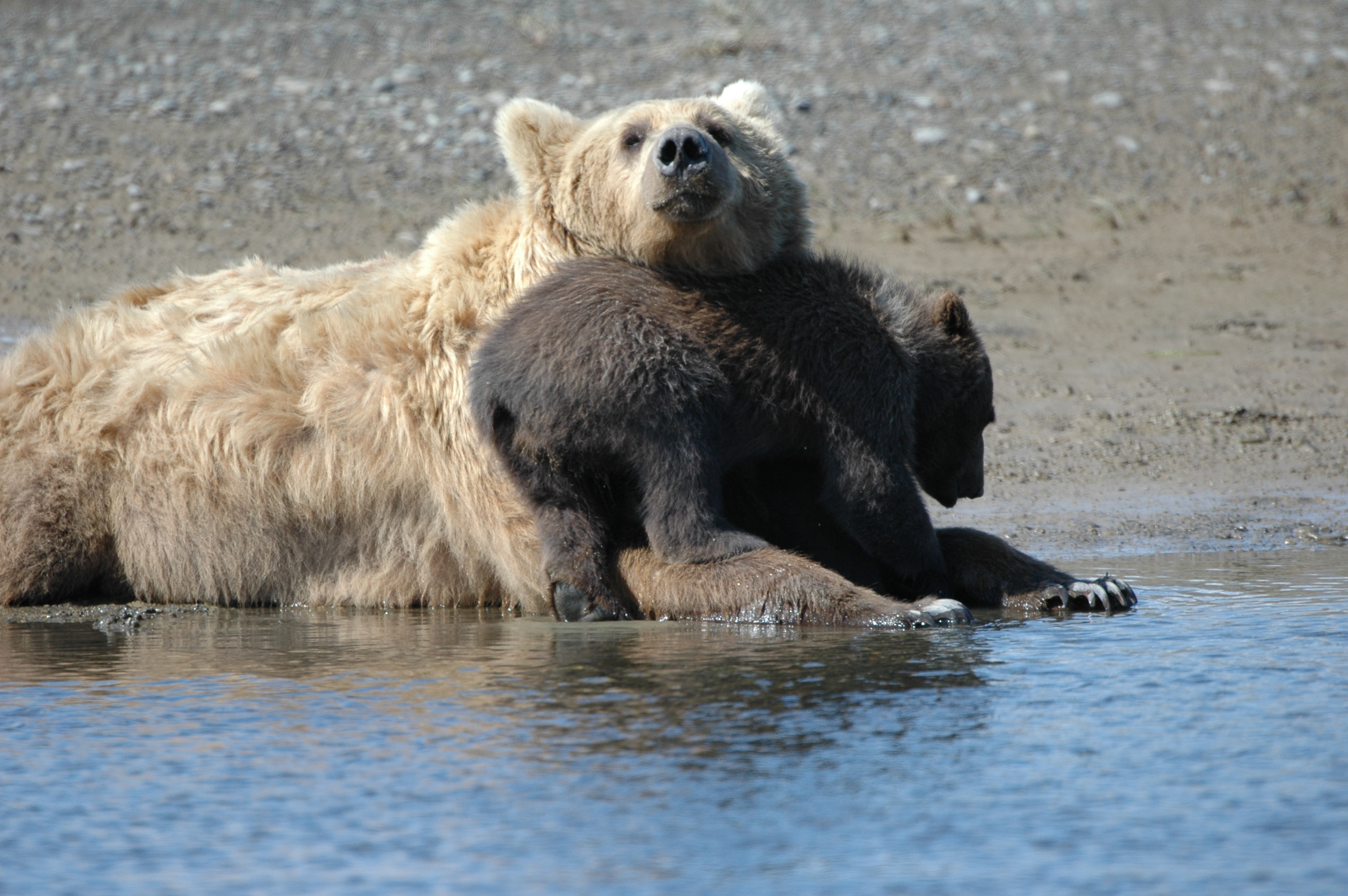
Photo of bears in the wild co Jim Robertson

Wisconsin Adds Crossbows to Their Quiver

Now the only question that remains is, what cruel kill method is NOT allowed in Wisconsin?

I can think of only a few offhand:

-Grenade launcher
-Flame thrower
-Nerve gas
-Chemical weapons

Hell, why doesn’t the state DNR just nuke itself every fall (starting with this one) and be done with it? That should take care of their deer, rabbit, squirrel, duck, geese, sandhill crane and wolf “problems” once and for all.

__________________

Assembly unanimously passes crossbow hunting bill

By Paul A. Smith of the Journal Sentinel

Nov. 9, 2013

In an era of deep political divisions, Wisconsin legislators can agree on at least one thing: increased crossbow hunting opportunities.

On Oct. 27, the Assembly unanimously passed an amended version of AB 194.

The bill would create a crossbow hunting license and a crossbow hunting season. Hunters of all legal ages could purchase the license.

Under current state law, only hunters with physical disabilities and those age 65 and over are allowed to hunt deer with crossbows.

The crossbow hunting season would run concurrent with the archery deer season.

The amended version creates a three-year trial period during which the Department of Natural Resources will monitor harvest rates by crossbow hunters. The Senate approved the bill in September.

The Assembly vote was 91 ayes, 0 no.

The bill now awaits the signature of Gov. Scott Walker. If the governor signs it as expected, the crossbow hunting season will take effect in September 2014.

Wolf season update: As of Friday, hunters and trappers had registered 201 wolves in the 2013-’14 Wisconsin wolf season, according to the DNR.

Harvest quotas were filled in five of the six wolf management zones.

Trappers have taken 82% of the wolves; the balance have been killed by hunters with firearms.

Zone 3 in north central and northwestern Wisconsin remains open. Nineteen wolves had been registered in Zone 3 as of Friday morning; the quota is 71.

The zone will be open to wolf hunting and trapping until the quota is filled or Feb. 28, whichever comes first.

Given the fast pace of wolf kills since the season opened Oct. 15, the season could be over before the Wisconsin gun deer hunt begins Nov. 23, as well as before wolf hunters could begin using dogs Dec. 2.

The DNR had sold 1,837 resident and 11 nonresident wolf hunting and trapping licenses as of Friday. It authorized the sale of 2,510 licenses through a lottery.

State wildlife managers set a kill goal of 251 wolves for the season.

Hunters and trappers are responsible to know the status of zone closures. Information is available at dnr.wi.gov and by phone at (888) 936-7463 .

Read more from Journal Sentinel: http://www.jsonline.com/sports/outdoors/assembly-unanimously-passes-crossbow-hunting-bill-b99137922z1-231303281.html#ixzz2kGrLqn3p
Follow us: @NewsHub on Twitter

90641_Varminter

Cattle Ranchers Given Wolves’ GPS Coordinates

[The fox is guarding the henhouse, so to speak. And I thought those tracking collars were only meant to be used for scientific purposes…]

http://www.spokesman.com/stories/2013/nov/10/cattle-ranchers-track-wolves-with-gps-computers/

Cattle ranchers track wolves with GPS, computers

Becky Kramer The Spokesman-Review

COLVILLE – Before the sun breaks over the mountains, Leisa

Photo Copyright Jim Robertson

Photo Copyright Jim Robertson

Hill is firing up a generator in a remote cow camp in eastern Stevens County.

Soon she’ll be poring over satellite data points on her laptop, tracking the recent wanderings of a GPS-collared wolf.

Hill is a range rider whose family grazes 1,300 head of cattle in the Smackout pack’s territory. Knowing the collared wolf’s whereabouts helps her plan her day.

She’ll spend the next 12 to 16 hours visiting the scattered herd by horseback or ATV. Through the regular patrols, she’s alerting the Smackout pack that cattle aren’t easy prey.

Her work is paying off. Last year, 100 percent of the herd returned from the U.S. Forest Service allotments and private pastures that provide summer and fall forage. This year’s count isn’t final, but the tallies look promising, said Hill’s dad, John Dawson.

“We’ve lost nothing to wolves,” he said.

Hill’s range rider work is part of a pilot that involves two generations of a northeastern Washington ranch family, the state and Conservation Northwest. The aim is to keep Washington’s growing wolf population out of trouble.

Last year, government trappers and sharpshooters killed seven members of the Wedge pack for repeatedly attacking another Stevens County rancher’s cattle.

That short-term fix came at a high political price: The state Department of Fish and Wildlife received 12,000 emails about the decision, mostly in opposition. Two wolves have again been spotted in the Wedge pack’s territory, either remnants of the original pack or new wolves moving in.

It upped the ante for all sides to be proactive.

Ranchers can’t fight public opinion

Many Washington residents want wolves, said Dawson, a 70-year-old rancher whose son, Jeff, also runs a Stevens County cattle operation.

“I can’t fight that,” John Dawson said of public opinion. “You have to meet in the middle; you have no choice.

“We put most of our cattle in wolf territory for the summer,” he said. “I’ve been trying to learn as much as possible about wolves so we can meet them at the door.”

For ranchers, “it’s a new business now, a new world,” said Jay Kehne of Conservation Northwest, a Bellingham-based environmental group that works on issues across Washington and British Columbia.

Conservation Northwest supported last year’s controversial decision to remove the Wedge pack. “We wanted to do what we felt was scientifically right, what was supported by the evidence, what people knowledgeable about cattle and wolf behavior were telling us,” Kehne said.

But the organization obviously prefers preventive, nonlethal measures, he said. Conservation Northwest had talked to Alberta and Montana cattle ranchers who use range riders and was looking for Washington ranchers willing to try it. The Dawsons were interested.

Conservation Northwest helps finance three range riders in Washington – the Dawsons in Stevens County, and others in Cle Elem and Wenatchee.

Hiring a range rider costs $15,000 to $20,000 for the five-month grazing season, Kehne said. The state and individual ranchers, including Dawson, also contribute to the cost.

In addition, the state Department of Fish and Wildlife provides daily satellite downloads on GPS-collared wolves to help range riders manage the cows.

Collared wolves are known as “Judas wolves” for betraying the pack’s location.

The downloads give the wolves’ locations for the past 24 hours, though the system isn’t foolproof, said Jay Shepherd, a state wildlife conflict specialist. Dense stands of trees can block signals, and the timing of satellite orbits affects data collection.

Last winter, the state captured and collared three wolves in the Smackout pack. One of the collars has a radio-based signal that can be detected when the wolf is nearby. The other two wolves received GPS collars. One of the collars has stopped working. The remaining GPS collar is on a young male that doesn’t always stay with the pack.

Ranchers must sign an agreement to access the satellite downloads. “They understand it is sensitive data that’s not to be shared,” said Stephanie Simek, the state’s wildlife conflict section manager.

GPS tracking adds a high-tech element to modern range riding, but much of it is still grunt work. The Smackout pack’s territory covers about 400 square miles. John and Jeff Dawson’s cattle graze 10 to 15 percent of the pack’s territory, but their range encompasses the heart of it.

Leisa Hill’s work starts in early June, when the cows and calves are turned loose on Forest Service allotments and private pastures. The range riding continues through 100-degree August days and wraps up in early November after the first snowfall.

She travels nearly 1,000 miles each month by horse and ATV through thick timber to reach scattered grazing areas. She watches for bunched or nervous cows, as well as sick or injured animals that wolves might consider easy prey.

She’s also alert to patterns in the wolves’ movements. Regular visits to a particular site probably indicate the presence of a carcass.

Hill has fired noise-makers to scare off adult wolves that were in the same pasture as cows. Last year, she spotted four wolf pups on the road.

The 46-year-old prefers to stay in the background, declining to be interviewed for this story. However, “the success of this range rider program is because of Leisa,” her father said. “She knows the range and she understands cow psychology.”

Skinny calves mean a financial loss

On a recent fall morning, John Dawson drove a pickup over Forest Service roads past small clusters of Black Angus, Herefords and cream-colored Charolais cows with their calves.

The cows were just how he likes to see them: relaxed, spread out and eating. Calves should be putting on 2 to 3 pounds a day.

“When they’re not laying around, resting and eating, they’re not gaining,” he said.

Dawson heard his first wolf howl in 2011, the year before the range rider pilot started. He and his son lost seven calves that summer, though they couldn’t find the carcasses to determine cause of death.

The remaining calves were skinnier than usual. They probably spent the summer on the run from wolves, or tightly bunched together and not making good use of the forage, Dawson said. For ranchers, skinny calves can be a bigger financial blow than losing animals.

Say a rancher has 500 calves and they each come in 40 pounds lighter than normal. At a market price of $1.50 per pound, “that’s a bigger loss ($30,000) than losing seven calves, which is about a $5,000 loss,” he said.

Over the past two years, the Dawsons have seen robust weight gain in their calves. They credit the range rider program.

Earlier this year, Jeff Dawson and Shepherd, the state wildlife conflict specialist, talked with Klickitat County cattle ranchers. Wolves have been spotted in south-central Washington, and some of those ranchers are starting to experiment with range riders.

“The success the Dawsons have had has gone a long way to helping promote nonlethal means and proactive measures to reduce conflict,” said Jack Field, the Washington Cattlemen’s Association’s executive vice president.

If ranchers take extra steps to protect their animals, the public is more likely to accept the occasional need to kill wolves that repeatedly attack livestock, said Conservation Northwest’s Kehne.

John Dawson and his wife, Melva, spent decades building their ranch, working other jobs while they grew the herd. To preserve that legacy, the family was willing to try new ways of doing business, he said.

“I think (range riding) would work for a good share of other ranchers,” he said. But “they have to be open-minded enough to want it to work.”

Mother Grizzly Killed, Cubs Sent to Zoo

To give you an idea how maddening this is, here’s a quote from a friend in Montana who sent me this article:

“I’m devastated and so is my family. This bear and her cubs frequented my son-in-laws ranch on the North Fork of the Blackfoot. My 6 year old grandson watched her and her cubs as well as 4 other grizzlies on the ranch………….This is the kind of shit that happens all too often in Montana and why I call Montana ‘The Killing Fields’…….Some son of a bitch will pay for this.”

http://fwp.mt.gov/news/newsReleases/enforcement/nr_0172.html

FWP Seeks Information on Grizzly Bear Shooting Northeast of Ovando
       <!–

var addthis_pub=”fwpwebmaster”;var addthis_options = ’email, digg, delicious, reddit, linkedin’;
Bookmark and Share


Thursday, November 07, 2013 Enforcement – Region 2

State wildlife officials are looking for information on the shooting death of a grizzly bear found Sunday approximately three and a half miles northeast of Ovando.

Montana Fish, Wildlife & Parks (FWP) game wardens responded to a report of a dead adult female grizzly on Sunday, Nov. 3, and an initial investigation that evening found the bear had died of a gunshot wound.

The bear had three cubs of the year, and FWP was able to trap two of the cubs. The cubs will be placed in the Bronx Zoo. Multiple attempts to capture the third cub were unsuccessful.

FWP bear management specialist, Jamie Jonkel, notes that there is a chance that the lone cub could survive the winter on its own, and FWP may make additional attempts to locate the bear if it receives reports of sightings.

Anyone with information on this incident is encouraged to call 1-800-TIP-MONT (1-800-847-6668). Callers can remain anonymous and may be eligible for a reward up to $1,000 for information leading to a conviction.

Photo Copyright Jim Robertson

Photo Copyright Jim Robertson

A (Wolf) Pack of Lies

Michael Markarian: Animals & Politics

There is more fallout this week in the wake of the MLive.com investigative series exposing politicians and state officials who made up stories out of whole cloth in order to prompt Michigan’s first wolf hunting season in half a century. A leading booster of the wolf hunt, Sen. Tom Casperson, took to the floor of the state Senate yesterday and apologized to his colleagues and to voters for including a fictional account about wolves at a daycare center in a resolution he authored in 2011.

Wolf2Sen. Casperson acknowledged, “I was mistaken, I am accountable, and I am sorry. Words matter. Accuracy matters. Especially here, with a topic that is so emotional and is so important to so many, especially those whose way of life is being changed in my district. A decision here of whether or not we use sound science to manage wolves, as with all decisions this body makes, should not be based on emotions, agendas or innuendo, but rather on facts.”

The Michigan DNR’s furbearer specialist, Adam Bump, also took an apology tour this week, appearing on Michigan Radio to explain the comments he previously made in May, when he had said that wolves were showing up on people’s porches and staring at them through glass doors. Bump says he misspoke back then, and the scenario didn’t exist.

Lawmakers and agency staff who claim the mantle of “sound science” have been telling tall tales, trying to drum up an irrational fear of wolves as part of the public debate to push through their political agenda. They used heated rhetoric and scare tactics to pass a law designating wolves a game species, and then to pass a second law circumventing the voter referendum process because they didn’t like the fact that citizens gathered more than 250,000 signatures to place the wolf hunting issue on the statewide ballot. The fact is, there has never been a wolf attack on a person in Michigan, it’s already legal to shoot wolves that threaten livestock or public safety, and more than half of all the reported incidents of wolf depredation have come from a single feckless farm that leaves dead cattle out to rot and attract wolves to a free buffet.

It’s one thing for these public officials to own up to their mistakes. But the people of Michigan need more than apologies—they need compensatory action. The first wolf hunting season, set to begin one week from today, is the result of a public policy decision based on false information, and it must be suspended. Wolves have just recently come off the endangered species list and have not been hunted in Michigan for decades. What harm would it do to retain the status quo for another year, and allow a fair and honest debate to play out based on the facts so Michigan voters can hear from both sides and make an informed decision in November 2014?

It’s up to Gov. Rick Snyder to bring some accountability and transparency to state government, by suspending next week’s wolf hunt. This was an abuse of power and an abuse of the process, and the only way to repair some of the damage and restore the public trust is to let the people have a say on whether wolves should be hunted, or not.

copyrighted wolf in river

Bowhunting for Wolves in Montana

Wolf puppies are legally arrowed to death in Montana: How arrows slowly kill

 http://www.examiner.com/article/wolf-puppies-to-be-legally-arrowed-to-death-montana-how-arrows-slowly-kill?cid=PROD-redesign-right-next

September 6, 2011

This season, hunters are allowed to kill 220 wolves — nearly triple the 2009 quota of 75.

Even if you agree with hunting, do you agree with the legal shooting of pups? This week in Montana, hunters are even allowed to shoot wolf puppies. Yes, puppies. And they can shoot them in the most agonizingly cruel way of all, using bow and arrow. And it’s all ‘legal’.

Worse, Mark Gamblin, spokesperson for Idaho Fish and Game, is already trying to justify bringing wolf-puppy season to his  own state next spring:

   “OK, I’ll try again. As I noted in my last post – in two (actually three – Lolo, Selway and Middlefork) wolf management zones, the 2011-2012 wolf hunting season extends until June 1 when new born pups will be technically legal to harvest/kill/take by wolf hunters. I think your point is: that is an example of how wolves are NOT managed like lions or bears. Without looking at all other hunting seasons I can’t say with certainty, but I can’t think of a routine hunting season that overlaps the birthing period of a wildlife species. With that said, if you or jon suggest that constitutes a violation of wildlife mangement or other priciples, please explain how. In those wolf management zones, the sesaon was extended to enhance the likelihood that the management prescription to reduce wolf numbers sufficiently to achieve elk population recovery objectives. That certainly is a high priority for the Lolo, Selway and Middlefork wolf management zones. Would a wolf hunter use a wolf tag on a new born pup, IF that hunter had the opportunity? What do you think? I’ll go first – Nope. Again, this is(drum roll)….. a red herring issue of very little consequence that gets some folks lathered up, but has little or no relevance to meaningful considerations for this wildlife management issue.

And finally, the old “what constitutes a meaningful trophy for the Idaho wolf hunter” discussion that you and I have engaged with since 2009.

You have a high level of certainty that you understand the desires, values and criteria for a “trophy” of thousands of Idaho hunters when it comes to ….. a wolf pelt. If you mean to say that hunters will not, cannot value the pelt of a 5 month or older wolf as a trophy or to use for other legitimate purposes – well I have to tell you that you are wrong. The legitimate value of a “trophy” to thousands of individual Idaho hunters cannot be described or catagorized by your personal values or preferences nor by mine of by any fixed set of criteria. It is enough that each hunter is given the choice to harvest/kill/take a wolf during the hunting season that runs from August 30 to March 1 in the majority of the state and until June 1 in the remaining 3 wolf management zones. The hunters who participate in this wolf hunting season will make their own decisions and if legal those decision will be entirely legitimate and ethical within the bounds established by the Idaho governmental electoral process. And yes, absolutely, one important objective of this hunting season is to significantly reduce the Idaho wolf population to achieve a broader balance of public wildlife and personal property benefits than can be achieved with the current Idaho wolf population. Hopefully, we will be able to report success after all of the data are collected and analyzed at the end of this hunting/trapping season. “

Whether you agree with arguments that support hunting for sport or so-called ‘management’ or not, most so-called ‘ethical’ hunters would agree a clean, fast kill is the goal – no matter what species is in the cross-hairs, and only in a ‘sportsmanlike way’ that gives the hunted animal a fair chance of escape.

While we won’t discuss the ethics of hunting per se, I do offer this video to consider – especially for those of strong Christian faith. Whatever your personal take on hunting, what is ‘sportsmanlike’ in arrowing puppies? Is it OK to kill babies using one of the slowest and most painful of hunting methods?

Dying from an archery wound can take – up to two WEEKS, according to Benke, and then only as a result of massive infection.

Does a puppy deserve to die this way? For that matter, does a deer, elk or any animal deserve to be sentenced to a long, agonizing death for the purposes of human ‘sport’?

Since the controversial politically-motivated delisting of endangered grey wolves resulted in open-season on wolves in several US states, including bow-hunting season beginning Sept. 3 in Montana, wolves have intentionally – and legally – been shot and killed  – Although the actual statistcs and the numbers reported keep changing.

Bowhunting season is considered legal and is permitted – although perhaps not for much longer now that this video has been released. And yes, unfortunately, certain backwards states are legalizing – even encouraging – the hunting of newborn wolf puppies as ‘trophies’. Even if you think it’s OK to hunt and kill truly helpless baby animals -puppies- for sport, is it OK to torture them first?

For some reason the general public seems to feel that bow-hunting is somehow more noble, more challenging, fair or more humane than hunting with firearms.

In this video a veteranarian describes the actual, prolonged and agonizing death these bow-shot animals actually experience.

Warning – This is graphic video. It was taken over the shoulder of a hunter – documenting his legal kill using a bow and arrow.

How many feel this kind of death is justifiable in the pursuit of ‘pleasure’? And what about for baby animals?

Should bow hunting remain legal?

For more information on open-season on wolves and the legal killing of puppies, click here.

For additional insights into why people seem to love to hunt, please see this recent study.