“Kill ‘Em All Boys” Ringleader Gets 13 Months in Prison for Poaching and Animal Cruelty

Prosecutors obviously saw the potential for this hunter/poacher’s behavior to lead to cruelty against humans–Washington state officials also suspended his nursing license.

http://www.komonews.com/outdoors/news/30924359.html

Poaching group leader gets 13 months in prison

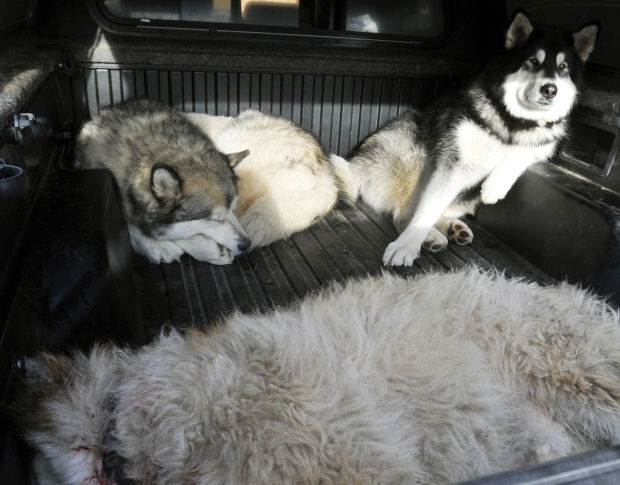
Mick Gordon poses with slain cougar

By Dan Tilkin and KATU Web Staff

Oct 13, 2008   Story Updated: Oct 30, 2013

CATHLAMET, Wash. – The man considered the ringleader of a group of poachers who called themselves the “Kill ‘Em All Boys” was sentenced to a year and a month in prison Monday for illegally killing wildlife.

Mick Gordon, pictured below, pleaded guilty to charges of first-degree animal cruelty, hunting black bear, cougar, bobcat and lynx with dogs, second-degree criminal trespass and third-degree malicious mischief.

Washington Fish and Wildlife officers said the group used a device they called “the permission slip,” which is a metal bar used to break locks blocking access to prime poaching territory on timber company lands. They even had a videotape made of the bar in use because they wanted to sell the contraption on eBay.

Undercover officers infiltrated the group as part of the investigation. Later wildlife officers seized trophy heads and guns from Gordon’s garage.

Gordon, a registered nurse, was also accused of torturing one of his hunting dogs with a shock collar as well as not giving it care for porcupine wounds; the dog eventually died.

Prosecutors on Monday asked for an exceptionally long sentence, saying Gordon had “run amok.”

“I’m deeply sorry for what I’ve done,” Gordon told the judge. “It’ll never happen again”

Judge Michael J. Sullivan called Gordon an aberration.

“When I look at you and what you’ve done here, which seems to be a highly organized crime spree, I just don’t know how to put those two together,” the judge said.

The sentence was much stiffer than normal. In other recent animal cruelty cases, defendants received sentences of about 3.2 months on average.

Washington state officials have also suspended Gordon’s nursing license.

According to state health department documents, Gordon told an undercover officer he put a shock collar on a child’s neck, turned it to its highest setting and shocked the child. He also told the officer he despised his bed-ridden, elderly patients.

A Big Deal Out of Nothing?

As most of you know, this blog, as a rule, does not allow comments from self-proclaimed wildlife killers or their apologists, for the same reason a victim’s rights group might have a policy not to approve comments from abusers of vulnerable human victims. However, once in a while I post a hunter’s comment if it gives us particular insight into how their minds work.

According to the following comment to the post “High School Class Sponsoring Crow Hunting Tournament,” crows, coyotes, deer, hogs and ducks are “nothing,” but domesticated chickens may have some value…

“I think you are all making a big deal of out of nothing. I grew up in Sasakwa, I graduated from Sasakwa, and I hunt deer, ducks, and hogs. I don’t see why crows or coyotes are any different. My family lives in the country and we have animals. Coyotes will come and kill our chickens if we don’t keep an eye out for them.

“And we are not ruthless killers. Many kids and adults in Sasakwa have taken Hunter Safety Courses and hunt. Just because our community puts a hunting event together doesn’t mean there will be a big school shooting.”

Well, that’s what the shooters from Columbine would have said. Granted, not every bully becomes a serial killer, but the shooting of crows or coyotes for the sake of a sporting event is abusive in its own right. The contest-killing of sentient beings may not qualify as mass murder according to the laws of the day, but it’s certainly not “nothing.”

Text and Wildlife Photography ©Jim Robertson, except where noted

Text and Wildlife Photography ©Jim Robertson, except where noted

Stop Ontario’s Spring Bear Hunt

Stop Ontario’s Spring Bear Hunt – Action Needed!
URGENT!  Please send Sign-On letter!
Orphaned bear cub
Take action now!

Dear Friends of Wildlife

Premier Kathleen Wynne’s decision to allow a Spring Bear Hunt in Ontario will result in the death of hundreds of small bear cubs just like this one.

Attracting hungry adult bears with food bait when they are coming out of a long hibernation and easily shot by a hunter hiding in a nearby tree blind is a cowardly act made worse by the small dependent cubs that are left to die a slow death of starvation.  Sometimes hounds are used to track and tree bears for hunters to shoot. Wounded bears fall to the ground where the hounds attack them. Hounds may also attack cubs that are stranded on the ground without their mothers.

You and I can make a difference in stopping this morally-indefensible hunt. If you live in Ontario:    

  • Add your name to the Sign-On letter. Even if you have signed other petitions or sent a letter, please send this one as it will go to all Ontario MPP’s, sending a strong message that there is province-wide opposition to a Spring Bear Hunt.
  • Make the letter your own by changing the subject line, first paragraph or adjusting the order of others.
  • Second, send a response to the Environmental Bill of Rights (EBR) consultation. The comment can be as brief as saying you are ‘strongly opposed on moral grounds to hunting bears in the spring when they are caring for very young dependent cubs’ or you can add a different point or two taken from the Sign-On letter. Click here to view the EBR posting or go directly to the comment page.

Please forward this to family and friends who share your love of wildlife and use social media to get the word out, particularly among young people, because we know they care.

Ontario Wildlife Coalition

Stop the Cruel Sled Dog Race

From ALDF.org 52894dc72233b_preview-620

Animals will be harmed during the 2014 Iditarod, this is a fact. Teams of dogs will be forced to pull a sled over a thousand miles across the Alaska wilderness, often running at a grueling pace of up to one hundred miles per day for seven to ten straight days.

Injured or “dropped” dogs may not receive shelter, unless for medical treatment, and must be put back outside once treatment is completed. Furthermore, dropped dogs are left alone at checkpoints on a chain with four pounds of dog food. Dropped dogs — and all participating dogs — remain tethered at all times. Dogs receive one mandatory 24 hour resting period and additional shorter periods for rest — but the event relies upon the honor system, and it’s up to the musher to rest for the entire period.

Since the race began more than forty years ago, more than 140 dogs have died during the event — from heart attacks, pneumonia, muscle deterioration, dehydration, diarrhea, and spine injuries. They are impaled on sleds, drowned, or accidentally strangled.

Please take action to help ALDF speak out for sled dogs by asking the corporate sponsors of events like the Iditarod to withdraw their support.

Warm Alaskan Winter May Pose Problems for Iditarod Dog Sled Race

http://www.accuweather.com/en/weather-news/warm-alaska-winter-may-present/23749451
By Kristen Rodman, AccuWeather.com Staff Writer
February 27, 2014; 4:25 PM
Alaska’s most popular sporting [sic] event, the Iditarod Sled Dog Race is set to begin March 1, 2014. However, due to the milder-than-normal weather that has depleted snowpack this winter this winter, mushers may encounter some setbacks.

Kicking off the race, the annual ceremonial start will take place in downtown Anchorage on Saturday, March 1, 2014. The actual start to the competition will be on Sunday afternoon, March 2, 2014, in Willow, despite recent discussions.

Due to the lack of snowcover thus far this winter, race organizers considered moving the race start from Willow to Fairbanks, according to an Alaska Public Media  article. However, a construction company offered to help fix the trail with specialized equipment, and as a result, the race will stick to its traditional route through the Rainy Pass of the Alaska Range.

Musher Michelle Phillips of Tagish, Yukon Territory, Canada, makes the final push on the Bering Sea ice for the finish line a few miles outside Nome, Alaska, on Wednesday, March 13, 2013. (AP Photo/Mark Thiessen)

“It’s been a very unusual winter up across Alaska,” AccuWeather Senior Meteorologist Jack Boston said. “The problem has been frequent mild days, which have been knocking down the snowcover.”

In January, Anchorage’s average temperature was 12 F above normal, causing the city’s snowcover to melt. Farther northwest in Nome, the temperature soared to a record-breaking high on Jan. 27, 2014, hitting 50 F for the first time ever during the winter season. Nome’s average temperature for January was 16 F above normal.

Despite the region’s massive winter warmup, many areas along the path of the race have received near-normal snowfall. So far this winter, Anchorage has received 53.7 inches of snow, or 90 percent of the normal snowfall, while Nome has accumulated 53.9 inches, or 96 percent of the normal snowfall.

As nearly 70 mushers get ready to make the 1,000-mile, multiple-day journey from Willow to Nome, the weather does not seem like it is going to cooperate this year but not because of its normal severity. Typically, the troublesome weather conditions that the race faces include winter storms, blizzards, high winds and subzero temperatures.

“It looks like a mild start to the Iditarod,” AccuWeather Long-Range Forecast Meteorologist Jason Nicholls said. “It looks like there can be a little snow on the ground around March 5, 2014, but it should not amount to much more than a few inches.”

Banning Wildlife Killing Contests

Earlier this month in a remote northeastern corner of California, residents in Modoc County slaughtered at least 40 coyotes in an annual killing contest known as the Adin “Coyote Drive.” In Crane, Oregon last month, the “Eight Annual JMK Coyote Hunting Contest ” advertised no geographic restrictions for its killing contest that resulted in the death of close to 150 coyotes last year. (The number of animals killed were not disclosed this year.)  In Salmon, Idaho coyotes and wolves were targeted in the “1st Annual 2 Day Coyote & Wolf Derby” where 21 coyotes were gunned down on the 40th anniversary of the passage of the Endangered Species Act (ESA) – our nation’s safety net for wildlife that brought wolves back from the brink of extinction.
What do all of these killing contests have in common? They award prizes to those who kill the most individuals and the largest (and sometimes the most females) perpetuating a culture of violence that sends a message to children that life has little value and that an entire species of animals is disposable.   Despite the incomprehensible cruelty and predictable ecological destruction, hundreds of wildlife killing contests, many encouraging youth participation, take place throughout the country, resulting in countless deaths of vital predators.     Project Coyote brought international attention to this issue generating thousands of emails and letters to federal and state agencies and to killing contest sponsors. In addition to exposing the brutality, Project Coyote and allies challenged the legality of the contests in court and were instrumental in ensuring that some of the events did not take place on public lands.   Most significantly, at the request of Project Coyote, the California Fish & Game Commission voted unanimously to consider a statewide ban on wildlife killing contests. Project Coyote Executive Director Camilla Fox requested a ban at the February 5th Commission meeting. “We urge you to use your authority to regulate and restrict take by initiating a rule-making process to prohibit wildlife killing contests — thus modernizing predator management, conservation and stewardship statewide- and setting the trend for the rest of the nation — as we do so well here in California.” Watch Project Coyote in action here:

FHC Video Play Button Still
Newly elected Commission Vice President, Jack Baylis put forth the motion to move forward on the formal rule-making process to consider prohibiting wildlife-killing contests. Commission President, Michael Sutton showed his support for the motion stating, “I’ve been concerned about these killing contests for some time. They seem inconsistent both with ethical standards of hunting and our current understanding of the important role predators play in ecosystems.” Read more in Project Coyote’s press release here.   As a result of the Commission’s vote, a formal rule-making process will begin and the issue will be on the agenda at the April 16th Fish and Game Commission meeting in Ventura. Public testimony will be heard before the Commission votes on whether to permanently ban wildlife killing contests statewide. If you live in California, please join us in this effort.   Project Coyote and eight conservation organizations, led by the Southwest Environmental Center, urged New Mexico Governor Martinez to remove two members of the New Mexico Game Commission, Chairman Scott Bidegain and Commissioner Robert Espinosa, for competing in and organizing coyote-killing contests, respectively.   Conservationists in New Mexico have reason to be hopeful. Chairman Scott Bidegain, charged as an accessory to killing a cougar on his family’s ranch and facing pressure for his participation in the coyote-killing contest, recently resigned from the Commission. And in an unprecedented stand, the Las Cruces City Council voted unanimously in support of a resolution opposing wildlife killing events that “encourage the wanton and unnecessary killing of New Mexico’s wildlife. On February 18th, city councilors opposed the Predator Masters Hunt & Convention, which takes place in and around Las Cruces.   Banning barbaric killing contests is a part of Project Coyote’s vision to change the way predators are perceived and “managed.” We are hopeful that like dog and cock fighting, which are now banned nationwide, we can make wildlife killing contests a shameful relic of our past.


Bad luck, celebs, you won’t be allowed into Mahiki if you’re wearing fur

http://www.standard.co.uk/showbiz/bad-luck-celebs-you-wont-be-allowed-into-mahiki-if-youre-wearing-fur-9154295.html

Real or fake: staff at Mahiki will be trained to spot if visitors such as Rita Ora, Rihanna or Lindsay Lohan are wearing real fur. Top right, the new sign (Picture: Photofab/Rotello/MCP/Rex/Nigel Howard)
18K
627
Alistair Foster  26 February 2014

Royal favourite Mahiki has risked riling its clientele after becoming the first nightclub in London to ban fur.

Patrons at the Mayfair nightspot will be greeted by a new neon sign donated by People for the Ethical Treatment of Animals, featuring the word “fur” with a slash through it.

Clubbers who are wearing fur will be refused entry, and other guests will be given “No Fur” badges at the door.

Campaigner Meg Mathews is behind the initiative and will be training the venue’s staff in how to spot fur items —as opposed to faux fur, which is allowed — judging by look and feel.

She will host an evening at the club, where visitors have included Kate Middleton, Prince Harry, Princesses Beatrice and Eugenie, tomorrow night, manning the door to check customers. The club plans to retain the policy.

Wrapped up: a Gucci model in fur (Picture: Splash) She said: “I love the idea of being able to show how fabulous being fur-free can be. Mahiki is one of the coolest spots in London, so it was my first choice for hosting a night to promote compassion in fashion.

“I don’t care who you are — if you’re wearing fur, you’re heartless, and you’re not coming in.”

Once a major taboo, attitudes to fur have seemed to become more lax recently as it has appeared in catwalk shows for the likes of Gucci.

But Mathews added: “Twenty years after PETA’s famous ‘I’d Rather Go Naked Than Wear Fur’ campaign began, wearing fur is now viewed with disgust. You can always find a few people who don’t care, and there will always be people so desperate for attention that they wear it just to raise eyebrows — but you can’t have any respect for someone who hears about the gassing, beating and electrocution of animals and then decides to go out wearing something made that way.

“There are so many great designers working with cruelty-free fabrics, and that’s what we should be celebrating during fashion season.”

Socialite and jewellery designer Mathews may have her hands full — celebrities spotted leaving Mahiki wearing what appeared to be fur have included Lindsay Lohan and Rihanna.

Kate Moss is a fan and last week Rita Ora was seen in a £30,000 Fendi coat made from mink and beaver fur.

PETA spokeswoman Mimi Bekhechi said: “Anyone who wants to be ‘in’ needs to know that fur is most definitely ‘out’.

“The hottest trend in fashion is compassion, so we applaud Mahiki for taking a stand against real fur.”

Conservationists worried about impending bear hunt

VANCOUVER — The Globe and Mail, Sunday, Feb. 23 2014, 10:20 PM EST

The way professional wildlife photographer John Marriott sees it, the British Columbia government has just hung a target on Big Momma, a grizzly bear so huge – and so photogenic – that he calls her “a photo tour superstar.”

The female grizzly, who has silver-tipped dark brown fur and a perpetual pout that almost got her named Sad Face, lives in one of four wildlife management units the B.C.

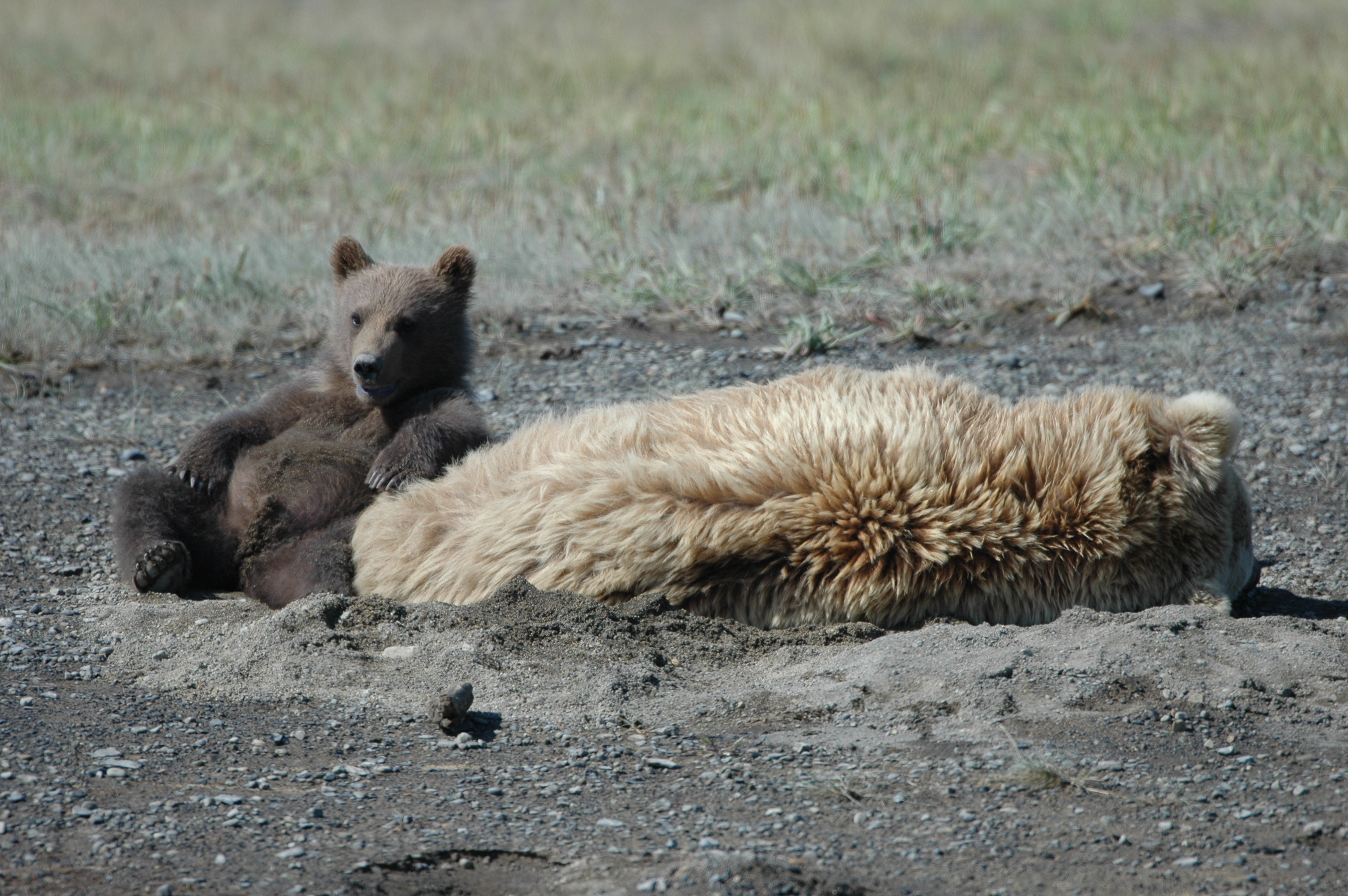
Photo of bears in the wild Copyright Jim Robertson

Photo of bears in the wild Copyright Jim Robertson

government is planning to reopen to bear hunting this year. Mr. Marriott fears the big bear – a top attraction for the photography safaris he leads in the Chilcotin Mountains in the Cariboo – will be tracked down by a trophy hunter once the area is reopened.

More Related to this Story

· Mark Hume Ecogroups hope to oust bear-hunting guides from rainforest

http://www.theglobeandmail.com/news/british-columbia/grizzly-bear-kill-limits-being-broken-across-bc-study-says/article15301716/

Grizzly bear kill limits being broken across B.C., study says

MARK HUME

VANCOUVER — The Globe and Mail

Published Wednesday, Nov. 06 2013

The B.C. government has long justified its controversial grizzly bear hunt by saying it’s based on sound science.

But new research by a team of biologists from three universities has found the kill limits are being exceeded in many areas of B.C. – up to 70 per cent of the time – because of unpredictable factors, such as bears getting killed in collisions with vehicles, or being shot by ranchers who don’t report the incidents.

“The bottom line is human-caused mortality from all sources, 85 per cent of which is hunting, is consistently over target. These overkills are frequent and they are geographically widespread,” said Chris Darimont, a conservation scientist at the University of Victoria, one of several authors on the study.

He said by allowing too many bears to be killed, the government is “playing Russian roulette” with B.C.’s vulnerable grizzly bears, because the population in some regions could easily get knocked down to a level from which it couldn’t recover.

“If I was managing bears I wouldn’t manage them this way if I wanted to have them here in the future,” said Dr. Darimont, who called for a more precautionary approach.

The B.C. government’s support for a trophy grizzly bear hunt has been under attack from environmental groups, and in 2004 the European Union banned the import of grizzly bear trophies from B.C., saying the hunt was not environmentally sound.

But the government has worked with an independent panel of grizzly bear scientists to set harvest limits intended to ensure the sustainability of bear populations. Under the strategy, the province is divided into more than 50 sub-zones, or grizzly bear population units, where the harvest levels vary, depending on the number of bears in the area, the estimated productivity of the population and the known number of bear mortalities.

“It’s very complex but we noted they didn’t incorporate all the dimensions of uncertainty in setting those limits,” Dr. Darimont said.

“You need to know a few things if you want to allocate how many bears will be killed,” he said. “You need to know how many bears there are … and for most of the province there are no on-the-ground estimates … you also need to know … how fast do bear populations grow and therefore how much can we skim off the top?”

To further complicate the picture, he said, the government needs to know the level of unreported mortalities, where bears are shot by people who don’t report the kills.

“Those are the three pieces of information the ministry needs to calculate the [harvest] limits,” Dr. Darimont said. “But any one of those things has tremendous uncertainty around them. How many bears are there? Who knows? How fast can they reproduce? Who knows? What’s the true level of unreported mortality? Who knows?”

By studying all the grizzly bear data available over about an eight-year period, the researchers from UVic, Simon Fraser University and the University of British Columbia developed simulations based on a range of population and mortality estimates. Using the provincial estimates, they found overkills in 19 per cent of the population units. But that number climbed when they factored in the range of uncertainty.

“We did the audit again and found that not in 19 per cent of cases, but closer to 70 per cent of cases, there were likely overkills,” Dr. Darimont said.

Kyle Artelle, a PhD student at SFU and lead author on the paper, said if the government wants to keep the level of risk of overkilling fairly low, it will have to eliminate hunting in about one-third of the population units.

In addition to their university affiliations, Dr. Darimont and Mr. Artelle both work for the Raincoast Conservation Foundation, a non-profit which 10 years ago took the provincial government to court to get grizzly bear mortality data released. That data was the basis for the study.

Idaho game management killing elk after killing wolves

by Justin King

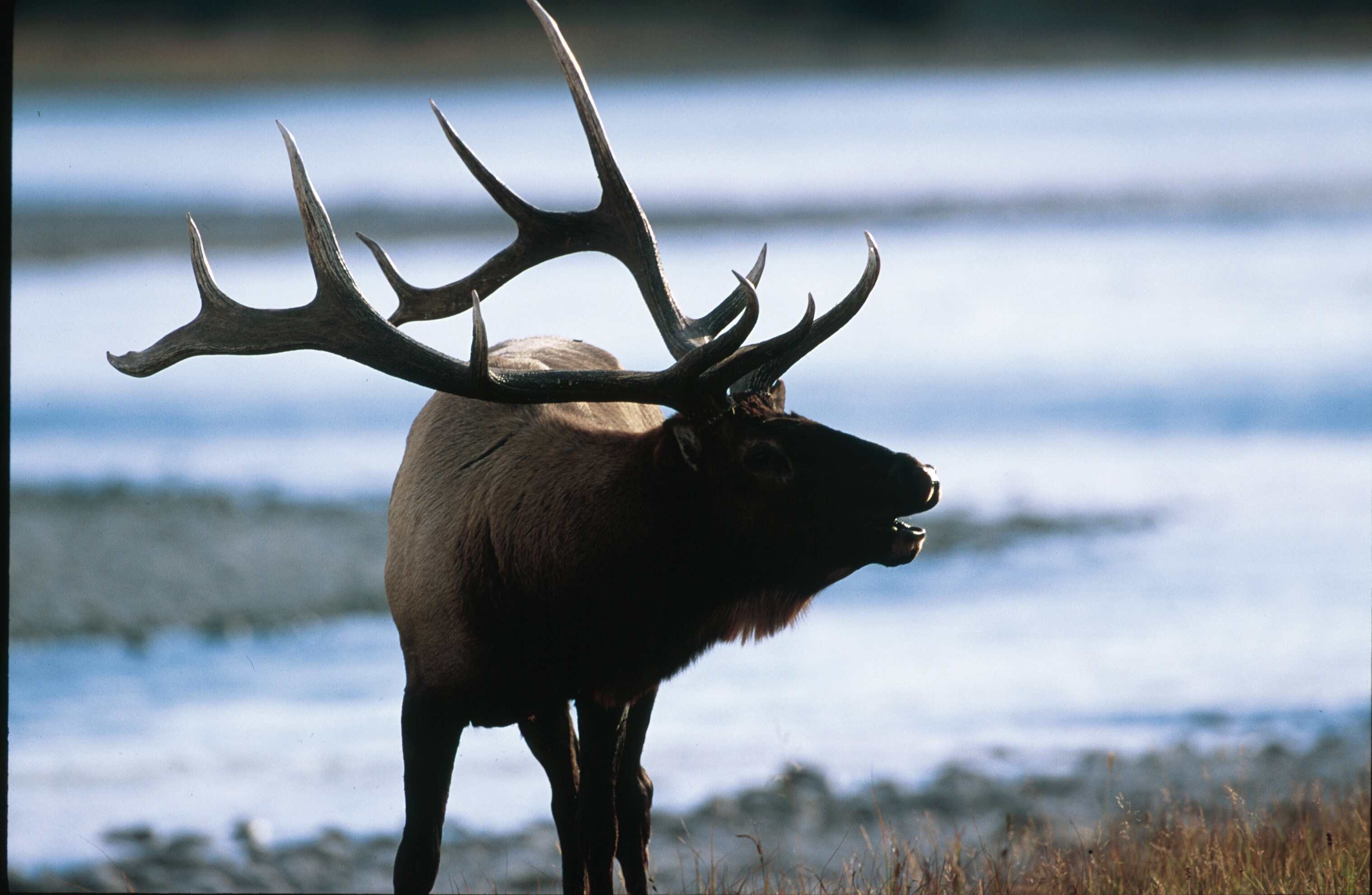
 Wildlife Photography © Jim Robertson

Wildlife Photography © Jim Robertson

Boise – Ranchers in Idaho are asking the state government to help eliminate some of the state’s elk population. The state is halfway through the wolf season, which was said to have been introduced to stop the wolves from attacking elk.

A group from Mayfield claims that Idaho’s Department of Fish and Game has been unable to protect their livelihoods from elk herds which they say are trampling their fences, crops, and causing other problems. The department currently allows a small group of hunters to participate in “depredation hunts,” in which the hunters are allowed to kill animals while hoping to drive the herds away.
Elk hunters have actively encouraged thinning the wolf population. Some have established co-ops to shoulder the cost of trapping wolves that are eating the prized trophy animals. Wolf trappers are paid up to $500 per kill.

Conservationists unsuccessfully attempted to stop the wolf hunts and predicted an explosion in the elk population if the wolf, an apex predator, was hunted. Tim Preso, an attorney representing the conservationists said of the wolf hunting efforts last week:

There is every reason to believe that this is not going to be a one-off, they have set a goal of inflating the elk population by removing wolves. According to their own plan that’s a multi-year undertaking. So I see every reason to believe that this is going to be a recurring activity.

According to the Center for Biological Diversity, almost 900 wolves have been killed since they lost federal protection.
One of the proposed solutions to Mayfield’s problem is to move the herds closer to the areas where wolves roam.

Read more: http://www.digitaljournal.com/news/environment/idaho-game-management-killing-elk-after-killing-wolves/article/367461#ixzz2uSvsIeLq

Embarrassing Press Coverage Continues For USFWS National Wolf Delisting Push…..

Nabeki's avatarHowling For Justice

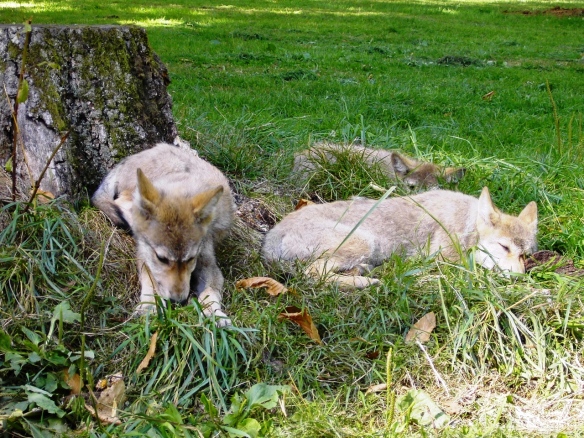
Wolf Pups Snoozing Wolf Pups Snoozing

February 26, 2014

USFWS  continues to take heat over their politically transparent push to nationally delist gray wolves. They’ve never looked more inept or disingenuous as they attempt to twist the ESA into silly putty to suit their agenda.

PLEASE COMMENT!!!

Deadline Midnight March 27, 2014

http://www.regulations.gov/#!docketDetail;D=FWS-HQ-ES-2013-0073

===

Feds’ postponement of wolf delisting follows embarrassing scientific review

 February 26, 2014 Earth Journal
By Ron Meador | 02/25/14
It’s too soon to tell, I guess, whether this month’s decision to take more public comment on federal wolf protections will change the policy eventually adopted by the U.S. Fish and Wildlife Service.

But if you’re inclined to believe, or even just to hope, that sound science still has a role in such decisions — well, this embarrassing episode may be worth a closer look. The picture you’ll see is not pretty.

It’s probably fair to say that wolves are…

View original post 884 more words