
I hope all these links work for you…
Latest Posted Idaho Wolf Hunt Kill total (current season):169
Latest Posted Idaho Wolf Trapping Kill total: 78 Latest Posted Montana Wolf Hunt Kill Total (current season): 137 Latest Posted Montana Wolf Trapping Kill total: 77 Wyoming Wolf Kill Total (2014):0
Regional Total Reported Killed Since Delisting: 1683
Pacific West
- San Francisco Bay Area Independent Media Center (Feb 6): California Department of Fish and Wildlife Recommendation: No Protection for Wolves
- Capital Press (Feb 4): Former Washington wolf killed in Canada
- San Francisco Gate (Feb 5): Gray wolf doesn’t warrant endangered status, official says
- The Observer (Feb 5): Wolf sightings increase in region
- AP via San Jose Mercury News (Feb 6): Calif. official advises against listing gray wolf
- Wallowa County Chieftan (Feb 6): New wolves discovered in Union, Baker counties (SEE BELOW)
- Oregon Public Broadcasting (Feb 6): Possible New Wolf Pack Discovered In Eastern Oregon
- KCET (Feb 6): Should Gray Wolves Be Declared Endangered in California? Agency Says ‘No,’ But That Might Mean ‘Yes’
- Ag Information Network (Feb 11): Alpha Wolf R04 Strikes Again
- The Capital Press (Feb 13): The realities of ranching and wolves
Op-ed/Letter to the Editors
- Methow Valley News (Feb 6): Critical thinking: Peter and the Wolf … and Okanogan County
National
- AP via Washington Post, Yahoo News (Feb 7): Panel says federal wolf plan used unproven science
- AP via The Republic (Feb 7): Scientists say lifting of wolf protections across most of US based on unproven genetic claims
- Science (Feb 8): U.S. Plan to Lift Wolf Protections in Doubt After Experts Question Science
- CTV News (Feb 11): Panel says U.S. should maintain protection for transplanted Canadian wolves
- Journal of Biogeography (2009): Ecological factors drive differentiation in wolves from British Columbia (attached)
- The Wildlife News (Feb 8): The Time to be Bold is Now
Op-ed/Letter to Editors
- Living Green Magazine (Feb 6): Will Ranchers Finally Eliminate Wolves?
Northern Rockies
- Great Falls Tribune (Feb 13): Wolf baiting eyed in northern Idaho
- Twin Falls Times (Feb 6): New Wolf-control Bill Gains Support
- NPR (Feb 8): Montana Ranchers Learn Ways To Live With Wolves
- The Missoulian (Feb 11): Use of nonlethal wolf deterrents would result in better ranching
- The Spokesman Review (Feb 13): Idaho officials seek to allow wolf baiting in Panhandle
- Coeur D’Alene Press (Feb 13): RMEF is in the fight
- Idaho Mountain Express and Guide (Feb 12): Legislators oppose wolf-control bill
- The Wildlife News (Feb 10): Idaho Legislature is just full of bizarre and backwards bills
Op-ed/Letter to Editors
- Idaho Statesman (Feb 10): Letter: Wolves and elk
Elsewhere and other
- The Observer (Feb 7): Coyote hunting: A blast that saves fawns, makes $$
——- Subscription Only
By George Plaven EO Media Group | 0 comments
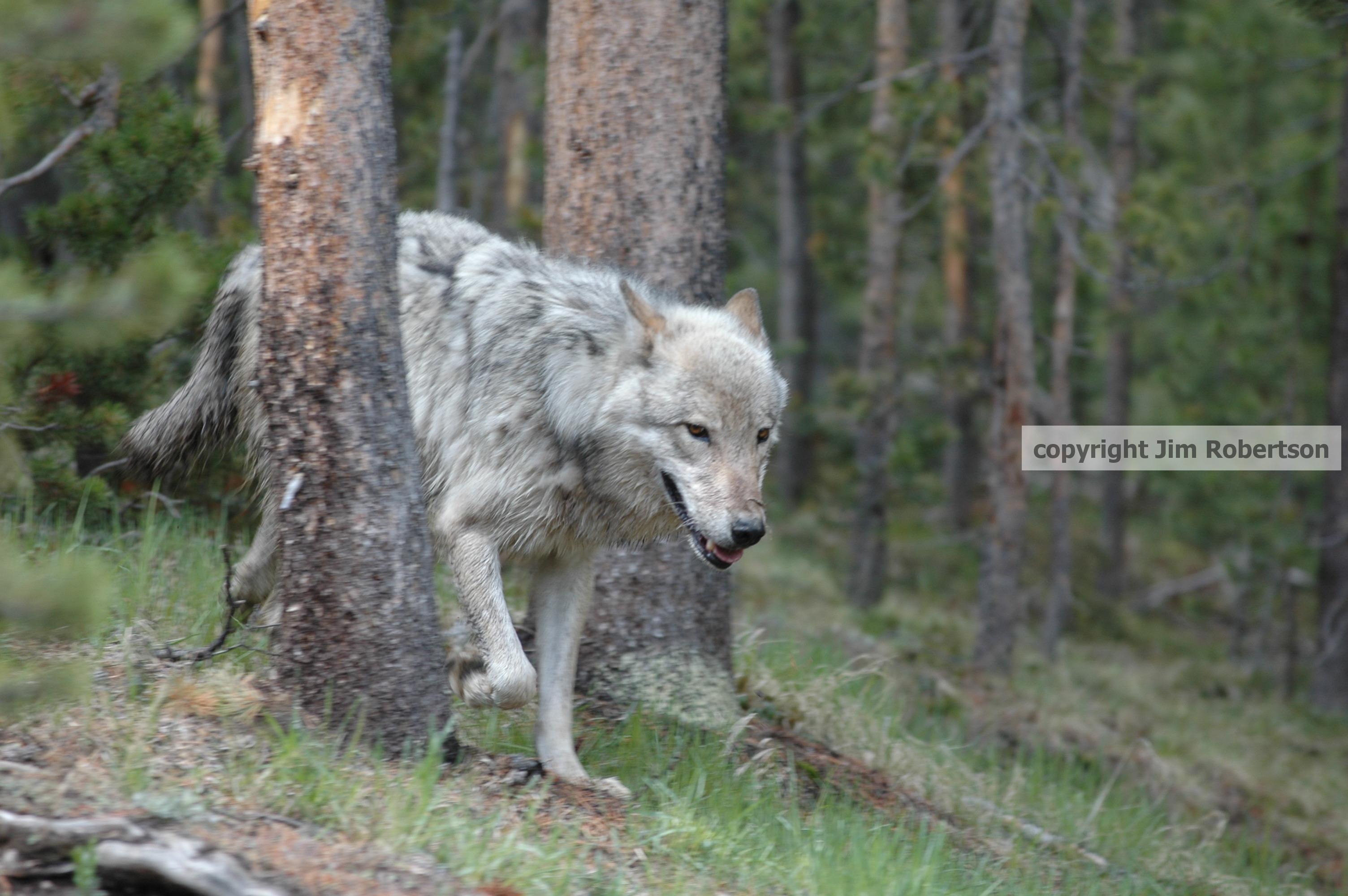
A possible new wolf pack is roaming Eastern Oregon after wildlife biologists confirmed finding tracks from five animals near Medical Springs in Union County.
The Oregon Department of Fish & Wildlife first documented tracks in late December, based on reports from a landowner in the area. Tracks were found again three more times last month, stretching into northern Baker County.
While little is known about the exact location of the pack, a designated Area of Known Wolf Activity was mapped in the southern Catherine Creek and northern Keating wildlife management units. Size was estimated by looking at the range and behavior of other packs across the region.
Wolf packs are typically defined as consisting of a male, female and their offspring. For purposes of monitoring, a pack can also mean four or more wolves traveling together over winter, and this group of wolves meets that definition.
ODFW will attempt to collar one of the new wolves to learn more about their territory and breeding status, said spokeswoman Michelle Dennehy. It is still too early to know if there is a breeding pair or pups within the group of five.
“There is evidence that they have used this area over several weeks, so we know they’re not just dispersing,” Dennehy said. “We don’t know much more about them yet.”
The as yet unnamed pack would be Oregon’s eighth. The Imnaha, Umatilla River, Wenaha, Snake River, Walla Walla, Minam and Mount Emily packs also inhabit the state’s northeast corner. Total wolf figures in 2013 are not yet available, though 46 were counted at the end of 2012.
Wolves remain listed under the state Endangered Species Act, and are federally protected west of highways 395, 78 and 95. Management is done by ODFW to conserve populations, while mitigating damage from livestock depredation.
No incidents of depredation have been reported with the new group. ODFW will work with ranchers in the area to let them know about rules and different preventative measures for minimizing wolf-livestock conflicts.
Non-lethal measures are required before ODFW will use lethal control against wolves. In order to count as a “qualifying incident,” a pack must prey on livestock four times within a six-month period. These incidents must be investigated by ODFW and be confirmed depredations by the agency.
Confirmed depredations only qualify toward lethal control if livestock producers had preventative measures already in place.
Once a wolf kills livestock for the first time, an Area of Depredating Wolves is established. At that point, livestock producers must use preventative measures for a depredation to qualify.
It is up to producers to remove, treat or dispose of all known and reasonably accessible attractants on the property, such as bone piles. Finally, ranchers must have in place one additional deterrent — such as fladry fencing or range riders — to protect livestock.
No packs have met all the lethal control criteria. Most recently, there was confirmed depredation of a ewe Jan. 30 by the Imnaha Pack on Upper Prairie Creek in Wallowa County. A report on whether this is a “qualifying incident” is still pending.
Before delisting wolves, wildlife managers need to observe four breeding pairs for three consecutive years, each with two pups that survive through the end of the year. Oregon met that requirement for the first time in 2012, and 2013 could mark the second time depending on final year-end survey results.
Additional information about wolves is available on ODFW’s website at www.dfw.state.or.us/wolves.
 Exposing the Big Game
Can Idaho Not Be Bat Sh—Crazy, and MT-WY-WI?
Elk farming in the wilderness, logging and killing the predators so there will be more elk to kill is an ID plan for sportsmen, loggers, and meadow formation! Maybe they could even build roads with pullouts and form meadows in gunshot range. Put out some lick blocks and have electronic calls at the pullouts. Maybe they could put some spotting scopes at the pullouts. Why do not ID-MT-WY-WI sportsmen or some large ranchers just form elk farms on private land, instead of distorting the meaning and purpose of the wilderness, more than they already have done so, so that “sportsmen” can just come, even by appointment, any time of year, and shoot “their elk”. They could even go beyond that and have deer, pronghorn, birds and others species to kill on the private game farms: Choke their own chicken or turkey; shoot their own pig or cow or sheep. Then maybe we could institute some rules about leaving the wilderness alone. Wildlife agencies and sportsmen alliance management is mostly based on mythology and folklore anyway, and it is harmful to the wilderness and the game animals and predators and balanced wildlife ecology. Elk numbers are up in the wolf massacre states of ID-MT-WY and all others in which elk live, even with wolves and bears and lions. There are around 140,000 in MT and WY and around 89,000 in ID. MT and ID have a 19+% chance of success in an individual taking an elk. WY has a whopping 38% success rate and ten years in a row of record harvests, despite the big bad wolf. Wolves and other predators are not making a dent in ungulate herds that is hunter folklore. There millenniums of balancing ecology between predator and prey. There are simply too few wolves in the Greater Yellowstone Area up the Bob Marshall to Glacier compared to prey. Wolves and other predators are a very healthy part of ecological system while Jeremiah Johnson Wannabees are not healthy for wilderness habitat or even ungulate herds. So, a plan to keep Elmer Fudd Nimrods happy and keep them out of the wilderness is even a better one than meadow creation.
Did you compile this
Louise Kane louise@kaneproductions.net 508-237-8326
From: Exposing the Big Game Reply-To: Exposing the Big Game Date: Saturday, February 15, 2014 1:05 PM To: louise kane Subject: [New post] Weekly Wolf News
WordPress.com Exposing the Big Game posted: “I hope all these links work for you… Latest Posted Idaho Wolf Hunt Kill total (current season):169 Latest Posted Idaho Wolf Trapping Kill total: 78 Latest Posted Montana Wolf Hunt Kill Total (current season): 137 “
No, it was forwarded to me by Jerry, originally from Wally.