State May Ban Hunting Contests For Coyotes And Other Wildlife

Jim Robertson-wolf-copyright

http://www.kcet.org/news/redefine/rewild/hunting/state-may-ban-hunting-contests-for-coyotes-and-other-wildlife.html

by Chris Clarke on February 5, 2014

California’s Fish and Game Commission voted unanimously Wednesday to consider a ban on hunting contests such as this weekend’s secretive coyote drive in Modoc County, with one Commissioner suggesting such contests are unethical.

The 4-0 vote launches a formal rule-making process, during which public comment will be solicited as the Commission considers a ban on such contests in California.

“This is obviously not about sport or fair-chase,” said Camilla Fox, whose wildlife group Project Coyote proposed the ban to the Commission on Wednesday. “Wildlife killing contests are conducted for profit, entertainment, prizes and, simply, for the ‘fun’ of killing. No evidence exists showing that such indiscriminate killing contests control problem animals or serve any beneficial management function.”

Fish and Game Commission President Michael Sutton spoke in favor of the motion before the vote. “I’ve been concerned about these killing contests for some time,” said Sutton. They seem inconsistent both with ethical standards of hunting and our current understanding of the important role predators play in ecosystems.”

Though the focus of the discussion was on coyotes, given the looming Modoc County contest, a broad ban on wildlife hunting contests would conceivably bar events where other species are the targets as well.

Advocates contend that contests such as Modoc County’s or the others we described last month are important to keep predator populations under control.

But research into the dynamics of coyote reproduction and lifestyles over the last several decades undermines such claims. Though there will likely always be a role for direct culls in management of problem coyotes, the science indicates that more indiscriminate hunting serves only to disrupt coyote family groups in which only the “alpha” adults breed. Killing one or both of the alphas in a mid-sized family group may mean two or three times as many pairs of coyotes will be actively breeding shortly thereafter.

“Killing random predators is about as effective at protecting livestock as bailing harder is at saving a sinking boat,” said Sonoma County rancher Keli Hendricks, who testified in support of a ban before the Commission. “It might help for a short time, but the only real solution is to fix the hole in the boat. The way to fix that hole is to implement one or more of the many non-lethal livestock protection methods available to ranchers today.”

The possibility of banning wildlife hunting contests will now be placed on the agenda for a Fish and Game Commission meeting, at which public comment will be solicited. That won’t happen before Modoc County’s coyote drive this weekend, but it will almost certainly happen before next year’s.

No Life of Pie

I’m sure you’ve all heard about the shark fisherman who spent over a year adrift in the Pacific. Now the papers are running headlines like: “Castaway who spent 13 months at sea not taking questions, including why other fisherman died” My theory is he had a hand in his demise to avoid starvation. The rest of the story probably played out similar to what you read about here…

Exposing the Big Game's avatarExposing the Big Game

Film Review and commentary by Jim Robertson

Life-of-Pi-Richard-Parker

Spoiler Alert:

If you haven’t seen the movie, Life of Pi, and you plan to, don’t read this post yet. In discussing what I feel is the story’s theme I will end up revealing some of its major plot points, and I don’t want to spoil the experience just to make a point about ethical veganism…

Still here? Ok, assuming you’ve seen the film (or read the book on which it’s based), you’ll recall that there are essentially three parts to the story, ending with what many critics felt was a disappointing and even unnecessary “alternate” account of events to explain how Pi survived such a long ordeal at sea. Personally, I didn’t find the ending a disappointment, perhaps because I may have been one of the few people who got the message the movie was trying to make. After…

View original post 797 more words

New Yorkers in Uproar Over Planned Mass-Killing of Swans

By Brandon Keim

http://www.wired.com/wiredscience/2014/02/mute-swan-controversy/all/

A mute swan in Prospect Park, Brooklyn. Image: Brandon Keim/Wired

In the menagerie of human mythology, mute swans occupy a special place. Across millennia they’ve symbolized transformation and devotion, light and beauty. Now a plan to eradicate the birds from New York has made them symbols of something else: a bitter and very modern environmental controversy.

The debate swirls around a host of prickly questions. Are mute swans rapacious destroyers of wetlands, or unfairly demonized because they’re not native to this area? Are some species in a given place more valuable than others, and why? Which deserves more protection, the animals that inhabit our landscapes, or the ones that might thrive in their absence? The answers depend on whom you ask.

“Mute swans always attract controversy, and tend to polarize people. And, as with most things, the truth probably lies somewhere in the middle,” said waterfowl researcher Chris Elphick of the University of Connecticut. “The real issue is that there are no simple answers.”

Mute swans are not native to North America. New York’s population descended from escapees imported for ornamental gardens in the late 1800s. Weighing up to 40 pounds apiece, they can eat 10 pounds of aquatic vegetation daily. In their absence, that food might be eaten by native wildlife. Mute swans are also aggressive during nesting season, and have been blamed for attacking ducks and pushing out other waterfowl.

Late in January, New York’s Department of Environmental Conservation issued a draft of a plan to reduce New York’s wild mute swan population to zero by 2025. Nests and eggs would be destroyed; a few adults might be sterilized or permitted to live on in captivity, but the rest would be killed.

“They are large, destructive feeding birds, and as much as they are beautiful, they can wreak havoc on the underwater habitat that a lot of other fish and wildlife depend on,” said Bryan Swift, a DEC waterfowl specialist and lead author of the plan. “We have an obligation to sustain native species. The question then is, ‘At what level?’ But in the case of introduced species, I don’t think we have that same obligation.”

That’s one way of looking at it. “We have so little opportunity to experience wildlife in New York City,” said David Karopkin, director of animal advocacy group GooseWatch NYC, “and now they’re targeting the most beautiful animals that we do have. The fact of the matter is, they’re part of our community.”

Were mute swans not so beautiful, the plan might not have caused much outcry. But unlike other animals tagged as invasive and pestilential — like Burmese pythons, feral hogs, and snakehead fish — mute swans are widely beloved. For people who live near wetlands around Long Island and the Hudson Valley, where most of New York’s mute swans live, they’re also a part of everyday life.

‘The real issue is that there are no simple answers.’

To their defenders, the fact that mute swans are non-native carries little weight. As one Queens resident told the New York Times, “If they were born here, they should be considered native by now.” And some think the swans’ heritage is being held arbitrarily against them.

“If Mute Swans were native to North America, they would not be viewed negatively by state wildlife agencies,” said ornithologist Don Heintzelman, an author of bird-watching field guides who is working with Friends of Animals, a New York-based animal advocacy group, to oppose the plan. Complaints that that mute swans harm other wildlife “are greatly overblown,” he said.

Over the last few years, some scientists have argued that non-native species are unfairly persecuted, their negative effects too frequently assumed rather than conclusively demonstrated. In fact, the evidence for ecological harm by mute swans is somewhat mixed.

In a review of mute swan impacts on wetlands published this month, French ecologists said the swans sometimes attacked other birds — but sometimes they did not. Likewise, their feeding habits sometimes damaged aquatic plant communities, but not always.

“The consequences of mute swan presence may strongly differ from an ecological context to another, so that no simple rule of thumb can be provided,” wrote the researchers. They did, however, say that the risk of mute swans reproducing prolifically and out-competing other species could justify their eradication from North America “as a safety measure.”

Swan defenders say the need for a safety measure is far from clear. In Maryland’s Chesapeake Bay, where a controversial mute swan eradication program was enacted in 2003 to help restore aquatic vegetation, the U.S. Fish and Wildlife Service previously said that swans had likely done little harm to seagrass beds.

“That’s a good example of how the science on this is incomplete,” said Brian Shapiro, New York state director of the Humane Society of the United States. Whatever effects New York’s 2,200 swans may have, he said, is a drop in the bucket compared to human-generated pollution and habitat destruction.

But scientists argue that the effects would be much more severe if mute swan populations grow as anticipated, and more difficult to control. “The dilemma wildlife managers face is that if they wait until there is no doubt that native species are being adversely affected, it will be much, much harder to do anything about it,” said Elphick. And although human impacts on habitat and native wildlife are undoubtedly greater, mute swans could consume a disproportionate amount of resources.

“Introduced species are a major cause of extinction and biodiversity loss, and the concern is that if they’re not controlled then we will see the world’s biota become much more homogenous,” Elphick said. “Mute swans are just one example of many.”

Mute swans’ lives are not the only ones that matter, said Michael Schummer, a waterfowl ecologist at the State University of New York at Oswego. People care so deeply about mute swans because they’re aware of them — but if they paid more attention to birds they impact, they might care about those as well.

Migratory tundra swans, said Schummer, which fly every year between the Arctic and southeastern United States, rely on those same wetlands. If they land after a 1,000-mile flight and can’t find a meal, it’s a disaster. “But maybe people don’t recognize that, or even realize that there’s a native swan that migrates,” Schummer said.

Swift noted that two dozen other duck species share the mute swans’ habitat, yet people are frequently unaware of them. And unlike migratory birds, mute swans stay in the same locale year-round, feeding through the growing season. “It’s like pulling up corn every time it sprouts,” Swift said. “It has a much more lasting and damaging effect.”

“I value the long-term stability of the ecosystem for the individuals that live within it,” said Schummer, who supports the DEC plan. “When that is threatened by one species, and the well-being of the collective is at risk, then something needs to be done.”

Given these competing and deeply-entrenched views, a compromise seems unlikely. Yet there may yet be a middle ground, says behavioral ecologist Marc Bekoff, a pioneer of an emerging discipline called “compassionate conservation,” which tries to balance species- and population-level considerations with the well-being of individual animals.

“The take of compassionate conservation is that individuals count. Our motto is, ‘Do no harm.’ In this case, it would be worth pursuing every single possible non-lethal alternative,” said Bekoff. Rather than killing mute swans outright, as is happening in Maryland, wildlife managers could try to prevent eggs from hatching by shaking them or spraying them with oil. Swans might also be sterilized.

These are just possibilities, said Bekoff. What matters is that people try to find alternatives to killing. In the end, non-lethal measures may prove to be the only control palatable to a public that’s come to adore swans, whatever their impacts.

Of course, non-lethal methods tend to be more expensive than killing. Volunteer assistance from the public may be required. Shapiro said the Humane Society would be open to helping. “We want there to be a focus on non-lethal management,” he said, noting that Humane Society volunteers have helped to non-lethally control Canada geese by scaring them with dogs or shaking their eggs. “We’d like to have a dialogue on this.”

Swift said he’s open to such a discussion, and would welcome the help. “There’s definitely room to work on this issue,” he said. Following public outcry, he’s also considered treating New York’s mute swan populations differently. Those around Lake Ontario, which are growing by about 13 percent every year, might be eliminated, while Long Island’s swans could be managed to balance their impacts with public sentiment.

“I can’t speak for the whole agency,” Swift said, “but I’m certainly going to entertain that idea and discuss it with other people involved in management.”

New York’s DEC is accepting public comment on the plan until February 21st. If things go their way, those non-native swans might just become fully naturalized ecological citizens.

Mexican Gray Wolf Numbers Increase But Still A Long Way To Go…..

Nabeki's avatarHowling For Justice

Two Middle Fork pups in the summer of 2011 photo courtesy of the Mexican wolf interagency field team

“Two Middle Fork pups in the summer of 2011” USFWS

The number of Mexican gray wolves has increased to 83. That’s up from 75 last year but the feds have much more to do,  to make good on their promises to recover this critically endangered wolf.

Wolf population growing, but not enough to please advocates

PHOENIX – The number of Mexican gray wolves roaming eastern Arizona and western New Mexico increased by eight to 83 wolves in the past year, according to a recent survey by the U.S. Fish and Wildlife Service.

Noting that the population has increased for four straight years, federal and state officials said in a news release that the recovery program has saved the Mexican gray wolf from extinction. However, wildlife advocates said that the effort hasn’t gone far enough to ensure the species’ genetic diversity.

“I’m happy we have seen an increase in population for…

View original post 153 more words

“Humane Slaughter,” “Ethical Hunting” Both Oxymoronic

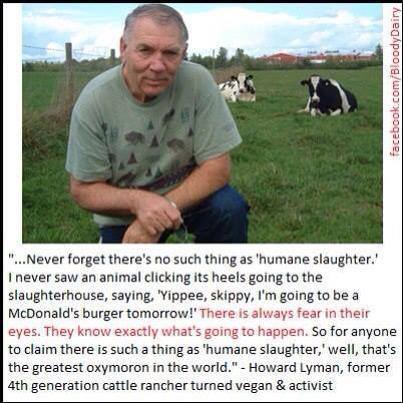
1625753_10152050799636696_1513233750_n

After forty-some years in the business, fourth generation Montana cattle rancher Howard Lyman finally saw the light. Now, the author of the bestselling books, Mad Cowboy: Plain Truth from the Cattle Rancher Who Won’t Eat Meat and No More Bull: The Mad Cowboy Targets America’s Worst Enemy: Our Diet, spends his days promoting veganism.

For the sake of our health and humaneness, for the planet and for the wolves, adopting a cruelty-free vegan lifestyle is a challenge we all must face together. As Mr. Lyman tells us: ”The question we must ask ourselves as a culture is whether we want to embrace the change that must come, or resist it. Are we so attached to the dietary fallacies with which we were raised, so afraid to counter the arbitrary laws of eating taught to us in childhood by our misinformed parents, that we cannot alter the course they set us on, even if it leads to our own ruin? Does the prospect of standing apart or encountering ridicule scare us even from saving ourselves?”

Read More here: https://exposingthebiggame.wordpress.com/2013/02/18/fourth-generation-montana-cattle-rancher-now-promotes-veganism/

Is Dolphin Slaughter Any Worse Than Ground Beef?


Is shooting dolphins for gastronomic delectation really worse than the way livestock are treated before becoming supermarket steak? A debate reaches from Japan to South America.


Angélica María Cuevas Guarnizo (2014-02-03

BOGOTA — Shark hunting season ended on Jan. 28 in Taiji, the Japanese village that1798784_10152183058444539_1110323426_n has become the focus of a worldwide environmentalist outcry. This time Green activists used the Internet to show how 500 bottlenose dolphins were trapped, disabled with nets and harpoons, and then pushed into a cove. Traditional fishermen afloat on a blood-red sea then selected 250 animals to be killed for meat or to sell to marine parks.

This year, the U.S. Ambassador in Japan, Caroline Kennedy, joined the growing chorus of international criticisms when she denounced the custom as inhumane, which promptly provoked the ire of many Japanese.

Read the full article: Is Dolphin Slaughter Any Worse Than Ground Beef? – All News Is http://www.worldcrunch.com/food-travel/is-dolphin-slaughter-any-worse-than-ground-beef-/animal-rights-vegetarian-vegan-dolphins-sea-world/c6s14905/#.UvK9T7CYZy1

Photo  Jim Robertson

Photo Jim Robertson


Idaho Lowering Big Game Hunting Age to 10?

[Next they’ll be wanting to kill more wolves so 10 year olds will have a better chance of “getting their elk.”

http://guardianlv.com/2014/02/idaho-lowering-big-game-hunting-age-to-10/

by Heather Pilkinton on February 4, 2014.
This is neither the website of, nor affiliated in any way with, Guardian News and Media.

Hunting is a way of life for many in Idaho, but a new proposal has some questioning how young is too young to huntsafe_image big game. Idaho lawmakers are considering a proposal which would lower the current age to hunt big game, such as elk, from 12 to 10.

Right now in the state, children as young as 10 are able to hunt small game like duck and rabbit, as long as they have completed a hunter’s education program and are accompanied by a licensed adult. However, the type of gun needed to hunt big game is different than small game, which leads to the question as to whether a 10-year-old is capable of handling that level of firearm.

Currently those 12 and over are able to hunt without an accompanying adult as long as they have completed a hunter’s education program. As per Idaho law, anyone born after January 1, 1975, must complete a hunter’s education program, or show proof of a valid license from another state in order to purchase a license.

Part of the reason for the idea of lowering the hunting age is to boost stagnant hunting and fishing license sales in the state, which have hovered around the 330,000. Wildlife regulators hope that by lowering the age, hunting can be promoted as a family activity, especially in this age of electronic entertainment. They are hoping that lowering the hunting age will bring families with kids back to Mother Nature.

Sharon Kiefer, the Idaho Fish and Game Deputy Director, has stated that more women are getting into hunting, but admits that not all parents are keen on the idea of younger children being out in the field with a high powered firearm. One former conservation officer and hunter education instructor, Tony Latham, worries about a 10-year-old handling a rifle, even a scaled down model, that can shoot a bullet for miles when hunting big game.

This is not the first time that Idaho’s hunting practices have come into question in the past year. In December, 2013, the Wolf and Coyote Derby held in Salmon brought a lot of unwanted attention to the state from animal rights activists, from both inside and out of the state, who sought to stop the derby. This derby is one of a few derbies in Idaho; the annual Hannah Bates Memorial Rock Chuck Derby in Bliss serves as a fundraiser for cancer research and other charity programs.

Idaho is also under scrutiny for another piece of legislation not related to hunting. Republican lawmaker Lynn Luker recently introduced two bills that would make it legal for professionals to refuse service to individuals based on characteristics such as sexual orientation, if that individual was “contrary” to the professional’s sincerely held religious belief. This would mean that a teacher could refuse to teach a child who is gay, or a medical professional could refuse to accept a single mother as a patient if items such as birth control violates that medical professional’s religious teaching.

The idea to lower the big game hunting age from 12 to 10 also comes at a time when gun violence as a whole is a pressing issue throughout the United States. The number of school shootings has raised the question as to how young is too young to handle a gun? This is brought to the forefront even more as gun manufacturers are making “youth” firearms, which are scaled down models of those used by adults.

However, many will say that education plays a big part in firearm safety and that younger hunters will benefit not just by Hunter’s Education, but by being mentored by experienced, adult hunters. Kiefer believes this and this sentiment is echoed by Jim Toynbee, who has taught hunter’s education for nearly 40 years, though Toynbee admits a lower hunter age would not be possible without the smaller sized rifles. He said his main concern is that a young hunter might get too excited and not make a clean shot. This means an animal might be unnecessarily wounded, where an experienced hunter would harvest the animal with a clean kill.

If the hunting age is lowered in Idaho from 12 to 10 for big game, it will not be the only state with a minimum age of 10; Maine and Nebraska both have that same minimum age with adult accompaniment. Those states who do have minimum ages often require adults to be with minor hunters. However, considering the type of firearms used and the controversy around children and firearms in general, the question is how young is too young to hunt big game in Idaho?

By Heather Pilkinton

Teens as Young as 13 Rescued From Super Bowl Sex Trafficking

More victims of Super Bowl-centered exploitation…

http://abcnews.go.com/US/teens-young-13-rescued-super-bowl-sex-trafficking/story?id=22361909&singlePage=true

Jan. 4, 2014

By JACK CLOHERTY and PIERRE THOMAS

Sixteen teenagers ranging in age from 13 to 17 were recovered by lawpigskin enforcement in a crackdown on child trafficking surrounding the Super Bowl last weekend. The FBI said the teens included high school students and young people reported missing by their families.

“It is the most significant operation we’ve had around a big event,” Michael Osborne of the FBI’s Violent Crimes Against Children Unit told ABC News. “This is the most recoveries we’ve had at one time.”

Officials said the vast majority of the rescued teens were girls.

Osborne said he calls taking the young people off the street “recoveries,” because the children are not charged. In child exploitation cases like this, law enforcement officials said operations are designed to remove the young victims from a life of exploitation and abuse.

“These recoveries are victim-focused,” Osborn said. “Many times these young people are kept in this life by pimps using sexual, physical and emotional abuse.”

The law enforcement effort to help the young victims goes well beyond providing overnight food, clothing and shelter, Osborne said. Over the course of the operation, the FBI’s victim specialists’ provided 70 women and children referrals to health care facilities, shelters, and other programs. Osborne said the FBI works with social service specialists to provide for the long-term needs of the victims as well.

“We provide everything we can to try to pull them out of their situation, like education information and family counseling,” Osborne said. The family counseling, he explained, is needed because many of the young girls who end up being exploited are runaways. “We know there is a very close correlation between runaway girls and prostitution.”

What is striking in many cases, he said, is that the young victims themselves don’t think they deserve the help. “They don’t think they are worth saving,” Osborne said. “Sometimes we are the only people in their lives who haven’t given up on them.”

The crackdown also identified and arrested 45 pimps and their associates. The arrests came in New York, New Jersey and in Connecticut in the days leading up to the Super Bowl.

Osborne said the FBI teamed with state and local law enforcement to develop intelligence about the movement of pimps and prostitutes into the vicinity of the Super Bowl, as they do with any big event, like a big game or convention. That’s because pimps and “facilitators” move girls around from state to state to find a large gathering of potential customers.

“High-profile special events, which draw large crowds, have become lucrative opportunities for child prostitution criminal enterprises,” said Ron Hosko, assistant director of the FBI’s Criminal Investigative Division. “The FBI and our partners remain committed to stopping this cycle of victimization and putting those who try to profit from this type of criminal activity behind bars.”

Osborne said many times, prostitutes are not walking the streets anymore, but rather their services are offered on internet sites by their pimps.

“No doubt about it, we had a lot of internet activity in the past week,” Osborne said.

The FBI’s Super Bowl operation efforts were part of the Innocence Lost National Initiative that was established in 2003 by the FBI’s Criminal Investigative Division, in partnership with the Department of Justice and the National Center for Missing and Exploited Children, to address the growing problem of child prostitution.

To date, the FBI and its task force partners have recovered more than 3,100 children. The investigations and subsequent 1,400 convictions have resulted in lengthy sentences, including 11 life terms and the seizure of more than $3.1 million in assets.

“Through partnerships, enhanced as a result of this operation, we hope to build a lasting framework that helps the community address this problem,” said Michael Harpster, chief of the FBI’s Violent Crimes Against Children Section. “It’s easy to focus on this issue in light of a high-profile event, but the sad reality is, this is a problem we see every day in communities across the country.”

German Environment Ministry Official in Elephant Killing Scandal

00847AF6_B0E63080B13AC39D9CCC0EE6E0B44890

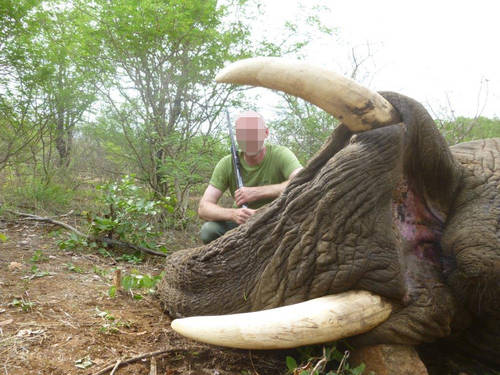
Udo W. (German law prohibits the release of his full name) is a high official in the environment ministry of the German county of Thuringia and actually still holds a leading function in the wildlife species protection department.

Just days before Botswana closed trophy “hunting” on 31. December 2013, achieving that since first of January now all such sport-killing is prohibited in the African country, the civil servant went on a trophy hunt in Botswana and bragged himself now to have killed a 40 year old, middle aged bull.

Though it apparently was a legal big-game safari in old colonial style, the case has raised a storm of protest in Germany and calls – e.g. by the Green Party – for the immediate dismissal of the civil servant from his post.

The biggest shame, however, has not yet become a viral twitter storm and that is given by the fact that Botswana actually permitted such colonial style killing for money of an elephant by a foreign trophy hunter, while at the same time and under the helm and often enough at the hands of the same Botswana officials, members of the First Nation in Botswana, the San bushmen, are tortured, killed, raped, alienated from their wildlife resources and expropriated from their wildlands. All these atrocities against the San must be seen as what they are: Outright genocide.

While peoples the indigenous hunter-gatherer cultures are driven to extinction, the kill-for-money psychopaths are allowed to continue their shameful acts in other African countries.

The leaked photos from the kill:

http://media401.zgt.de.cdn.thueringer-allgemeine.d…
http://media101.zgt.de.cdn.thueringer-allgemeine.d…

Read also the background to these atrocities against the San:

Tswana Atrocities 4.0

http://groundreport.com/5058632/

ECOTERRA Intl.
SURVIVAL & FREEDOM for PEOPLE & NATURE