Yellowstone National Park bison slaughter has begun – please take action to stop it!


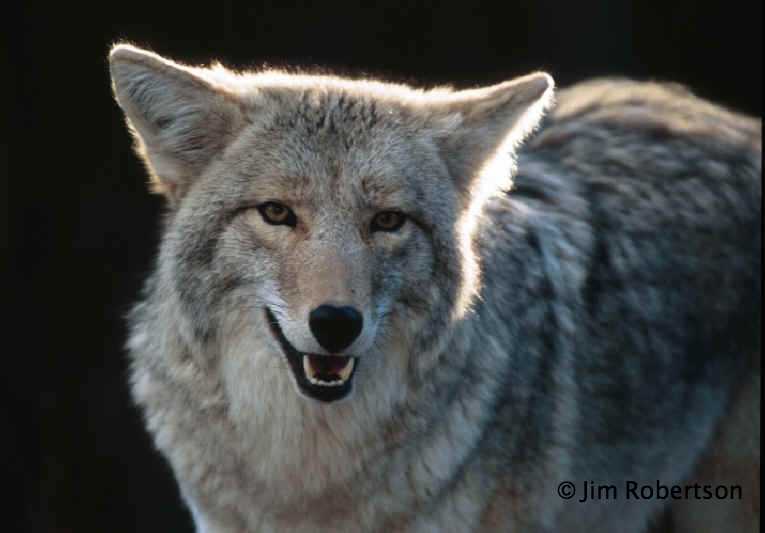
…The bad news? The aerial coyote-killers on board survived.
[True to form, the anthropocentric media makes no mention that while “conducting aerial operations” the Wildlife “Services” agents were shooting coyotes from their plane.]
http://www.sheridancountyjournalstar.net/news/item/2259-crew-members-okay-after-plane-crash
Two crew members with the USDA-Wildlife Services escaped with only bumps and bruises Wednesday, February 12, when their plane, a government owned “Super Cub” crashed south of Gordon.
The pair were returning from western Box Butte County where they had been conducting aerial operations. Approximately nine miles out the plane’s engine started acting up and losing power. They coaxed the plane along until at five miles out the engine quit.
The pilot, Gregg Alan, from Ray, Colorado, was able to land the plane on the highway at which time it was hit with a gust of wind which caused the plane to skid off the road, hitting a power pole and two fence posts before coming to a stop.
Area rancher Paul Simmons saw the accident and gave the two a ride to town. Crew member Randy Benben, of Gordon, was treated at Gordon Memorial for back and hip pain. The plane sustained major damage and the accident is still being investigated by the Aviation Training and Operation Center (ATOC) of Cedar City Utah and the FAA.
METRONEWS, By Staff The Canadian Press, February 18, 2014
BANFF, Alta. – Why did the bear cross the road?
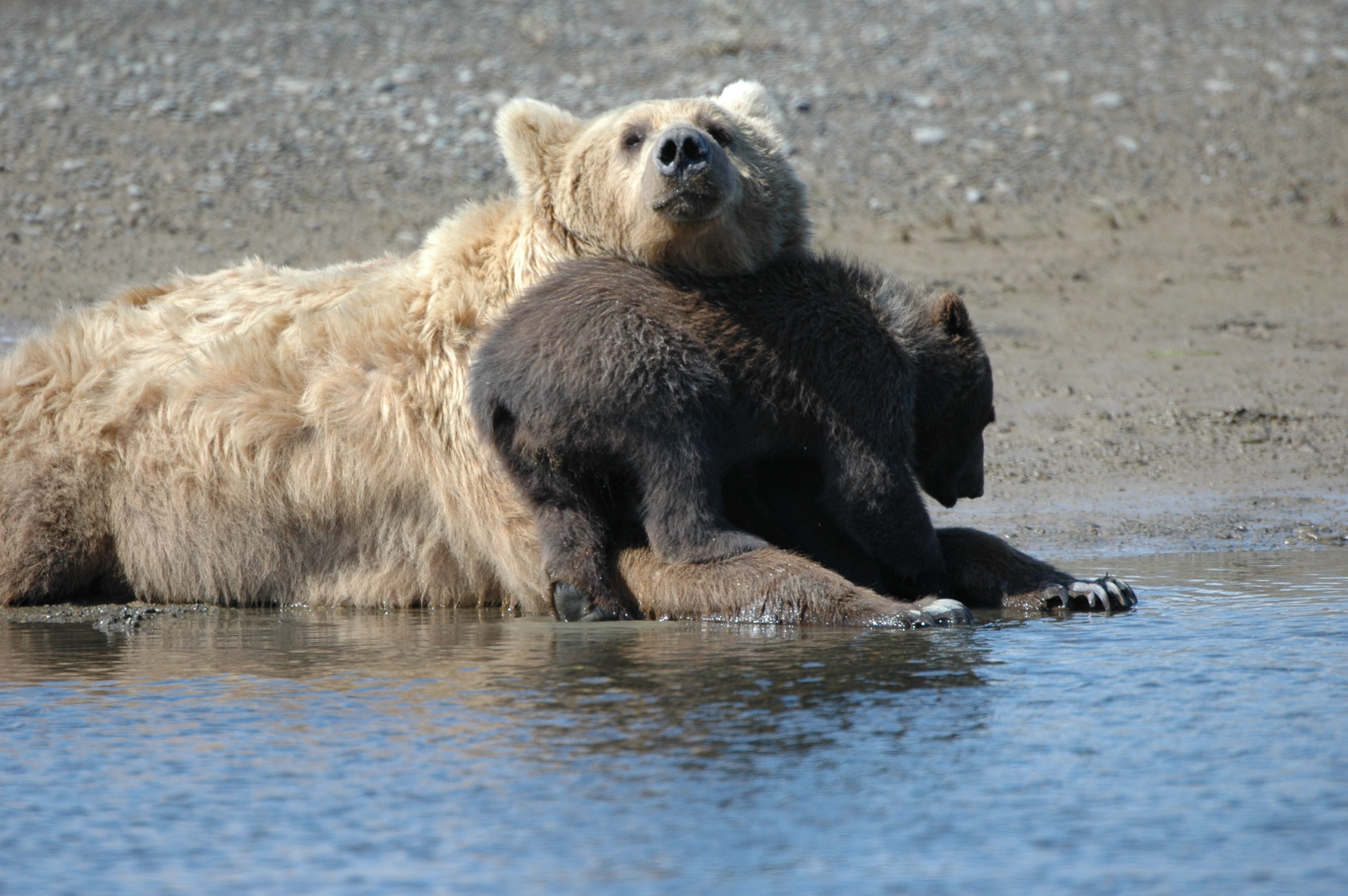
A new study suggests that at least one reason bears in Banff National Park are crossing the Trans-Canada Highway is to find mates — vindication for a series of wildlife crossings installed by Parks Canada on the busy route to try to keep bears on either side of it genetically linked.
“It is clear that male and female individuals using crossings structures are successfully migrating, breeding and moving genes across the roadway,” says the paper published Tuesday in the Proceedings of the Royal Society, Britain’s national science academy.
The Trans-Canada Highway cuts through the heart of Banff National Park. For decades, scientists have been concerned that Canada’s busiest east-west road link was isolating grizzly and black bear populations on either side of it — especially after high wire fences were built along the road to reduce wildlife traffic deaths. So between 1982 and 1997, more than two dozen underground and overhead crossings were built to allow wildlife to move north-south.
In 2006, University of Montana ecologist Mike Sawaya began a three-year research project to see if the crossings were working. After analyzing DNA from nearly 10,000 hair samples collected from strategically placed strips of barbed wire, Sawaya has concluded that they are. Last summer, he published research proving that bears were using the crossings. His latest paper suggests they’re crossing for more than a patch of tasty berries. “We found enough movement and migration across the highway to infer that, yes, the crossing structures are allowing the transfer of genes.”
Sawaya said that grizzlies on either side of the road had been slowly becoming more genetically distinct from each other, although the effect wasn’t pronounced in black bears. DNA analysis of the hair samples shows that the two ursine neighbourhoods are gradually coming back together again. “The grizzly bear population was fragmented and we’re starting to see it be restored,” said Sawaya. “If the crossings continue to work the way they are, I think we’re going to see the dissolution of that genetic structure over time.”
The research team even documented how individual bears — both black and grizzly — were able to mate with a number of different females and wound up with offspring on both sides of the highway. Previous research conducted in California had suggested the only animals that use crossings are juveniles too young to breed. Sawaya found that wasn’t true. Almost half the black bears and more than one-quarter of the grizzlies that crossed were successful breeders. In fact, males who crossed most often seemed to be the ones with the most offspring.
And Sawaya said it’s probable that the crossings are being used by other animals such as wolves, lynx or cougars for the same purposes. “Certainly, you can draw more conclusions about other carnivores and other species that have similar characteristics. This is very indicative of how these crossing structures would perform for other large mammals.”
It’s good news for wildlife managers looking for ways to mitigate the effects of roads through wilderness.
Parks Canada now has a total of 44 Trans-Canada crossings in Banff, almost one every two kilometres. The solution was expensive — the overpasses cost about $1 million each — but Parks Canada carnivore specialist Jesse Whittington said they were worth it. “For the first couple years, they didn’t look like they worked very well,” he said. “Over time, grizzly bears have learned to use them on a regular basis.”
Whittington said the model has already been used in the U.S. for pronghorn antelope. “There are people looking to Banff from all over the globe to see how well these crossings are performing,” Sawaya said. “At the time, no one really knew they worked. They just assumed intuitively that they would … and it’s comforting to find that, yes, they are working as they were originally intended.”
— By Bob Weber in Edmonton
http://metronews.ca/news/canada/945896/banff-bears-use-highway-crossings-to-find-mates/
by Jack Carone
There is a tendency for some of us who wish to promote veganism—a way of living which excludes the use of animals for food, clothing and other exploitation— to cushion the call to action with a warning/acknowledgement/suggestion that it is a difficult thing to do.
While this is surely the case for some people, for others, including me, it has happened quickly and painlessly when the time was right. To set the stage for interested seekers to expect hardship invites failure or a refusal to even try.
For someone who still really wants to eat animals and their secretions, or still wants to wear a fur coat or a silk shirt, but resists for health or moral reasons understood but not felt, it is certainly hard to do. They have to exert Willpower to resist things they still desire, and this almost inevitably leads to a failure to maintain the “sacrifice”. Someone who gives up meat for “health reasons” very often reverts, occasionally or permanently.
But for someone who has internalized the horror and immorality of subjecting other feeling beings to abuse and slaughter, and who simply refuses to, simply cannot—just won’t— be a part of this any longer, there is no feeling of deprivation, and no enticement which can make them go back to participating in these injustices.
I call this Won’tPower, and in contrast to WillPower, it is effortless to maintain.
Let me tell you what pushed the button in my being and changed my life in an instant.
At the time, I subscribed to the Los Angeles Times newspaper. I sat down one morning and turned to the feature section, and began reading a human-interest story about a man who had become very bitter about life due to some tragic personal experiences. He had become very hard-hearted.
He somehow got a job in a slaughterhouse, killing lambs—baby sheep— as they came by in procession, he took their just-beginning lives with a knife.
One day, a particular lamb passed his station, and he stabbed as before. But before this lamb could fall, mortally wounded, she turned and tenderly licked her own blood from her killer’s hand.
The man broke down, had an instant change of heart, his bitterness melted, he left and became a minister, enriching lives instead of ending them.
I folded the paper, set it down, and have never looked back, except to regret that I had not saved the article!
It is important to note that I had already been thinking about the morality of eating animals, primarily due to my experience of having my first dog as an adult, with all the revelations that living with another species brings, and having met someone’s “pet” turkey, who had expressed as much interest in me as had their Great Dane dog. In other words, the time was right for me, much as the time has to be right to change any ingrained habit, whether it’s smoking, drinking or anything else.
So if you have been wrestling with the ethics of consuming and wearing animals, if you are torn, keep wrestling. Keep thinking and considering. Keep the internal quest alive. When it coincides with the thing—your own personal newspaper article—that pushes your moral button, you may find that it is the easiest and most satisfying thing you have ever done.
THE VILLAGE OF HOLLEY, N.Y., IS PREPARING FOR ANOTHER
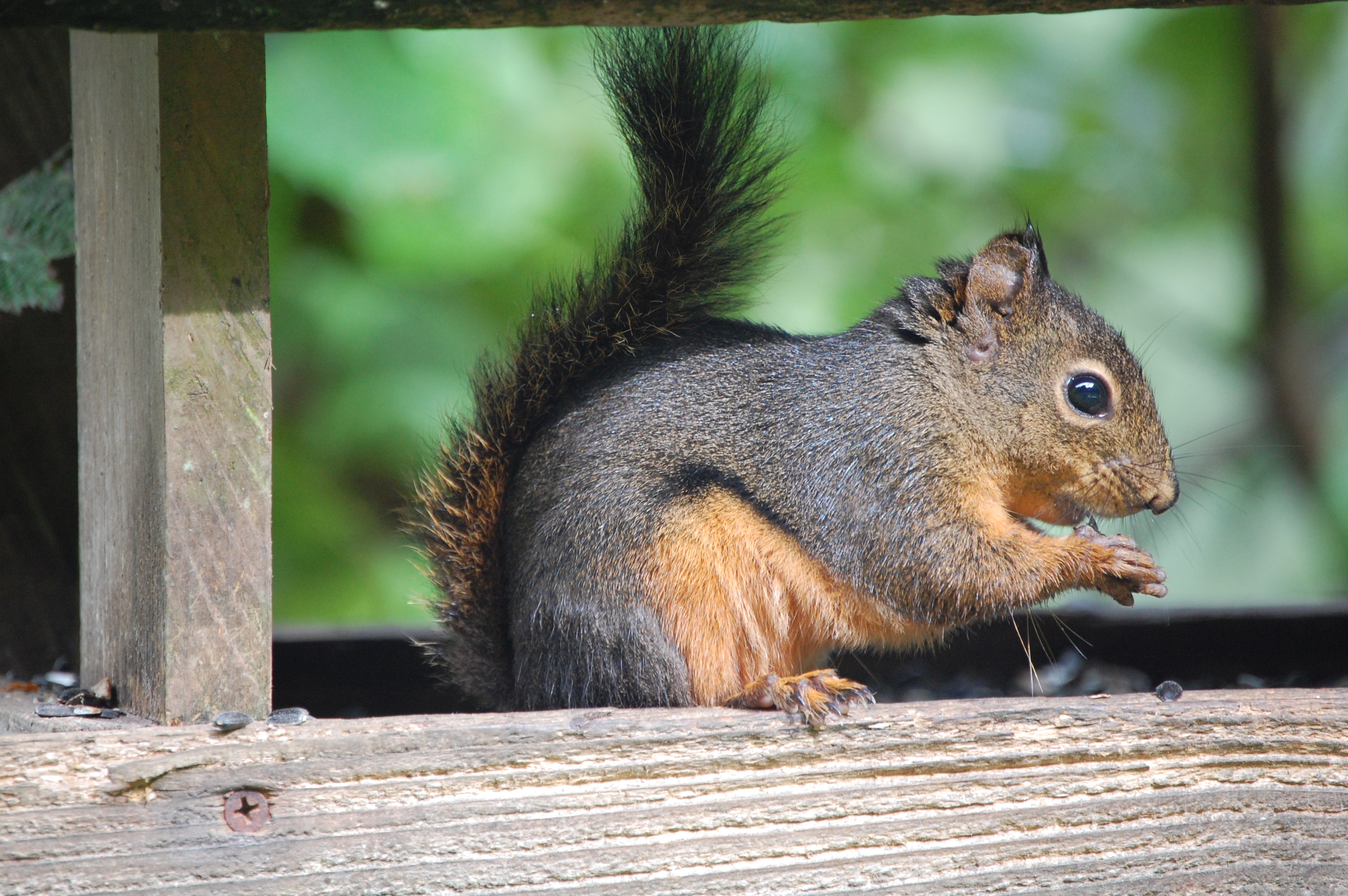
BLOODBATH SATURDAY, FEB. 22, WHEN IT WILL HOST ITS ANNUAL”SQUIRREL SLAM”
Friends of Animals (FoA) and local residents will lead a protest of the
horrific event, a squirrel-shooting contest for children and adults
disguised as a fundraiser, and take questions from the media, on Saturday
from 4:30 to 6 p.m. outside the Holley Fire Department located at 7 Thomas
St., where the hunters will bring dead squirrels to be weighed to claim prizes.
“Our experiences protesting the event last year showed a sickening,
gun-worshipping culture of adults, teenagers and children who celebrated the
violence of mass animal killing,” said Edita Birnkrant, FoA’s NY Director.
While the fire department gears up for the event despite opposition, New
York lawmakers are speaking out against the disgrace and showing support of
legislation that would put an end to animal killing contests for good.
“Any competition that encourages and glorifies the slaughter of innocent
animals for no purpose has no place in our state,” said N.Y. state Sen. Jack
Martins, one of the sponsors of a bill that would make these contests illegal.
Last year FoA, an international animal advocacy group founded in New York in
1957, mobilized supporters and took to the streets to protest and released a
mini documentary detailing its efforts. The video,
<http://friendsofanimals.org/news/2013/april/squirrel-slam-video>
http://friendsofanimals.org/news/2013/april/squirrel-slam-video , also draws
attention to the Senate and Assembly bills that would ban animal killing contests in New York.
“Killing contests like the ‘Squirrel Slam’ provide an incentive to children
and adults to shoot many animals to win prizes- a disturbing, irrational
activity that’s out-of-pace with New York culture and must end throughout
the state,” said N.Y. state Sen. Tony Avella, who created the bill.
“I believe it is an obligation and honor to advance legislation that will
protect and maintain the beauty and health of New York State wildlife,”
added N.Y. state Assembly member Deborah J. Glick.
David Brensilver, a wildlife advocate and writer/musician, created a
“Squirrel Slam” protest song in support of FoA’s efforts and can be
downloaded here: <http://thedailymaul.com/?p=9791>
Animal killing contests are part of a broader conversation on gun violence.
The Holley event comes just over a year after a rifle wielding Adam Lanza
committed mass murder at an elementary school, and last month, a 12-year-old
opened fire at a middle school and an elderly man fatally shot someone
because he was text messaging during a movie.
__________________
Friends of Animals, an international animal protection organization founded
in 1957, advocates for the rights of animals to live free, on their own
terms. <http://www.friendsofanimals.org> http://www.friendsofanimals.org
Source: Mashable
Outspoken, gun-toting American rocker Ted Nugent is promoting the spring bear hunt in New Brunswick with his Sunrize Safaris.
The website tednugent.com offers hunters a chance to go to New Brunswick and shoot a trophy black bear
Nugent has hunted bear in New Brunswick before.
Ted Nugent
Ted Nugent has hunted black bear in New Brunswick in the past. (CBC)
He chronicles one such trip on the archerytalk.com blog in 2010 in a post titled: “Hi Spirit: New Brunswick Bruins. For a rockin’ good time, try for a far-North spring blackie.”
On that occasion, Nugent arranged for a bear hunting trip in New Brunswick after his band “rocked the house royal with Lynayrd Skynyrd (sic) in Barrie, Ontario, outside Toronto, Canada’s number one cosmopolitan megacity,” the blog post says,
Nugent was hunting with Slipp Brothers Ltd. Hunting and Outfitting in Hoyt, south of Fredericton. On the third day of hunting, with daylight running short, Nugent encountered a bear.
“Right then a big black blob appeared 60 yards out in the dense boreal scrub,” wrote Nugent. “My heart pounded like a double live gonzo big bass drum gone Motor city Mad Man full-tilt boogie. I love when that happens.”
Now Nugent is offering others the chance to experience that feeling with a Sunrize Safari to New Brunswick from June 1-7 for “the bear hunt of a lifetime,” with Toby Nugent — Ted’s son — and Paul Wilson of Sunrize Safaris in camp.
The cost of the outing in $3,550 per hunter plus $184.19 for a licence.
A similar outing for bear hunting in Quebec near Malartic is also offered by the company at a cost of $3,500.
Bear hunting has been on the decline in New Brunswick in recent years.
In 2004, more than 3,600 non-residents purchased bear licences. Last year, that number had fallen to below 2,000.
http://www.therepublic.com/view/story/b0d0c545a3e9408e8e7b7352300d4e08/ID-XGR–Wolf-Panel
THE ASSOCIATED PRESS
February 17, 2014 – 6:08 pm EST
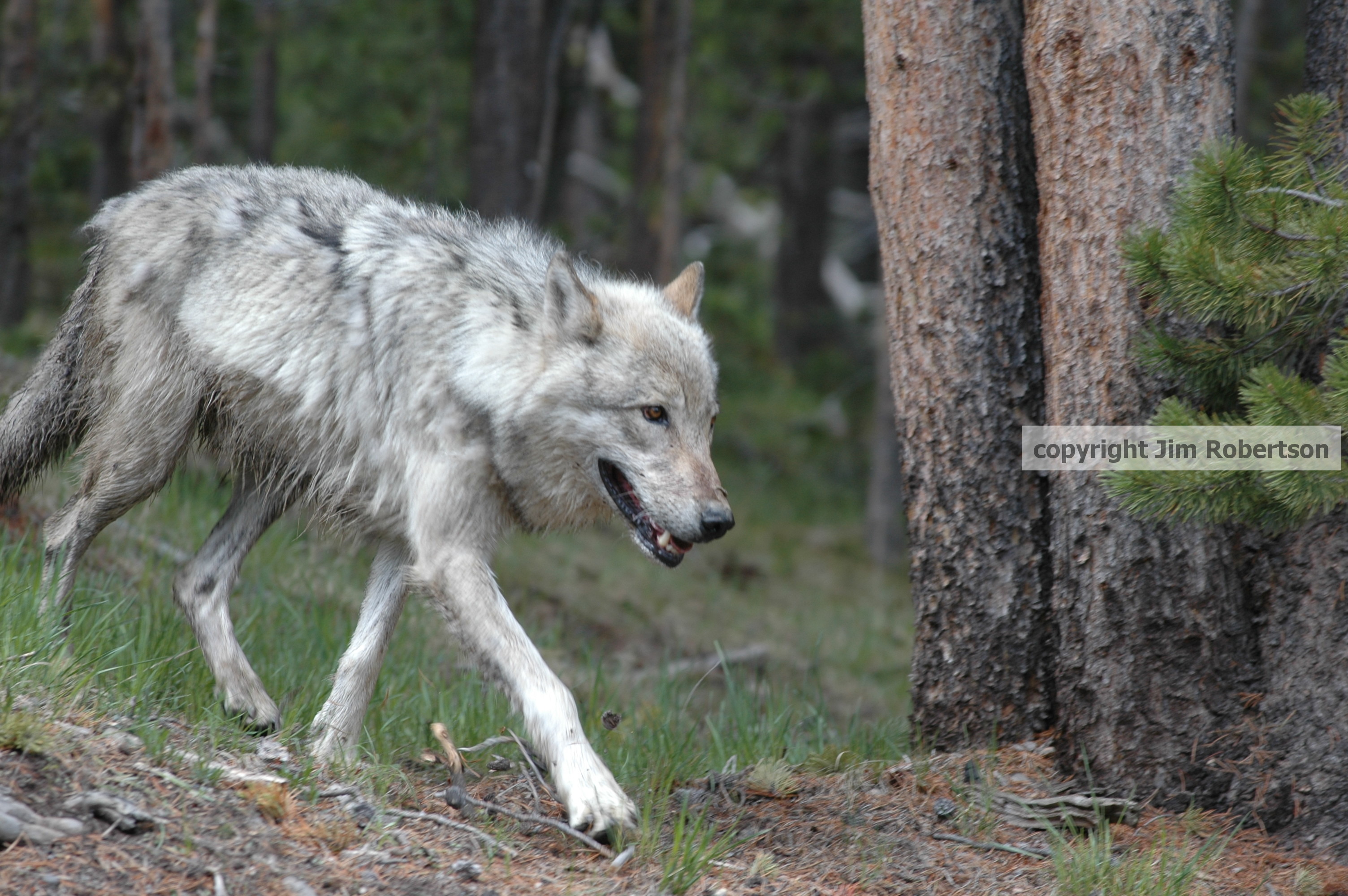
BOISE, Idaho — Idaho’s House will get to consider a measure seeking to shift $2 million in taxpayer money toward a panel that will oversee the killing of wolves that prey on livestock and elk herds. [Wolves eat elk, get over it.]
Republicans on the House Resources Committee voted Monday 14-4 for the disputed bill.
It’s being pushed by Gov. C.L. “Butch” Otter [the man is an insult to the entire weasel family], over objections labeling this a “funding mechanism for a war on wolves.”
With this cash infusion, Otter wants to target wolf packs blamed for killing too many cattle, sheep and elk. [When did elk become a domesticated species?]
Backers including the cattle and sheep industry pledged not to reduce Idaho’s wolf population, now roughly 680 animals, to levels triggering a renewed federal Endangered Species Act listing.
But foes branded it a “thinly veiled proposal aimed at the second extirpation of wolves in Idaho.”
http://ecowatch.com/2014/02/13/yellowstone-wild-bison-slaughter/
Yellowstone National Park shipped 20 of America’s last wild bison to slaughter yesterday morning. Twenty-five bison were captured Friday in the Stephens Creek bison trap, located inside the world’s first national park. After being confined in the trap for five days, 20 of the bison were handed over to the Confederated Salish and Kootenai Tribes, who are required to slaughter them under a controversial agreement between the tribes and the Park. Five bison remain locked in the trap as of Wednesday afternoon.
Nearly three hundred wild bison were rounded up at Wind Cave National Park, SD, for the annual cull in 2005. Photo credit: National Parks Service
Yellowstone plans to slaughter between 600 and 800 bison this winter, according to park spokesman Al Nash. “We’re going to seek opportunities to capture any animals that move outside the park’s boundaries,” he said. Yellowstone has set a “population target,” or objective, of 3,000 to 3,500 animals.
The current buffalo population numbers approximately 4,400 (1,300 in the Central Interior and 3,100 in the Northern range). The Central Interior subpopulation also migrates north into the Gardiner basin and has not recovered from the last Park-led slaughter in 2008 that killed over half of the Central Interior buffalo. The government’s “population target” makes no distinction for conserving subpopulations in this unique buffalo herd.
Each year, officials execute the Interagency Bison Management Plan that forcibly prevents wild bison’s natural migration with hazing, capture, slaughter, quarantine and hunting. Photo credit: Buffalo Field Campaign
According to Dan Brister, Executive Director of Buffalo Field Campaign (BFC), “This number was politically derived to limit the range of wild buffalo and has no scientific basis. It does not reflect the carrying capacity of the buffalo’s habitat in and around Yellowstone National Park.”
This is the first time Yellowstone has turned bison over to the tribes under the slaughter agreements. According to James Holt, a Nez Perce Tribal Member and a member of BFC’s board, “It is disheartening to see tribes support these activities.”
“Buffalo were made free, and should remain so,” Holt said. “It is painful to watch these tribal entities take such an approach to what should be the strongest advocacy and voice of protection.”
“It is one thing to treat their own fenced herds in this manner, it is quite another to push that philosophy onto the last free-roaming herd in existence,” Holt continued. “Slaughter Agreements are not the answer.”
Buffalo fall through ice during a hazing operation in 2006. Photo credit: Buffalo Field Campaign
Brucellosis is the reason used by Yellowstone to justify the slaughter of wild bison. There has never been a documented case of wild bison transmitting the livestock disease to cattle. Other wildlife, such as elk, also carry brucellosis and are known to have transmitted it, yet they are free to migrate, and even commingle with cattle with no consequence.
Year after year, Yellowstone and Montana officials executing the ill-conceived Interagency Bison Management Plan forcibly prevent wild bison’s natural migration with hazing, capture, slaughter, quarantine and hunting. Millions of U.S. tax dollars are wasted annually under activities carried out under the IBMP.
The wild bison of the Yellowstone region are America’s last continuously wild population. Like other migratory wildlife, bison cross Yellowstone’s ecologically insignificant boundaries in order to access the habitat they need for survival. During 2007-2008 more than 1,300 wild bison were captured in Yellowstone National Park and shipped to slaughter.
A dead bison is lifted off the ground near Gardiner, MT, April, 2011. Photo credit: Stephany Seay/ Buffalo Field Campaign
Nearly 7,200 wild bison have been eliminated from America’s last wild population since 1985. Bison once spanned the North American continent, but today, fewer than 4,400 wild bison exist, confined to the man-made boundaries of Yellowstone National Park and consequently are ecologically extinct throughout their native range.