Maybe If We Had Worshipped the Creation

Created by Jim Robertson

Sunday school children are taught that it is blasphemy to worship the creation instead of the Creator. Rather than encouraging people to praise the miraculous (in the non-secular sense of the word) living planet and all its incredible diversity of sentient life forms, western religions threaten eternal damnation if you don’t swear blind allegiance to some patriarchal creation of the human imagination, created in the image of man.

Hence, Homo sapiens has run roughshod over the Earth, destroying the very same natural systems that allowed us to come into being and trampling the rights of all other beings in our obsessed quest for domination over a world we’ve proven unworthy of even having dominion over.

Now, with so much of the land divided and conquered, the seas losing oxygen and turning acidic and the air encrusted in carbon, only fire remains untamed. Maybe if we had worshipped the creation and treated the Mother Earth with the respect she deserves, we would be feeling her love—instead of her punishing wrath.

Why is it so hard for otherwise hyper-intelligent humans to feel a sense of awe for a living world that came into form through the process of evolution, rather than one created by a mythical man-like creature? We see it happen every year, when life springs forth from a formerly frozen “wasteland.” Do people really believe some grey-bearded Santa Claus look-alike (minus the jolly disposition) waves a magic wand at every plant that shoots up to the heavens and every animal who, in their own way, rejoices?

Religion is supposed to teach humility, but after constantly being reminded that they are the Creator’s crowning achievement, humankind is anything but humble.

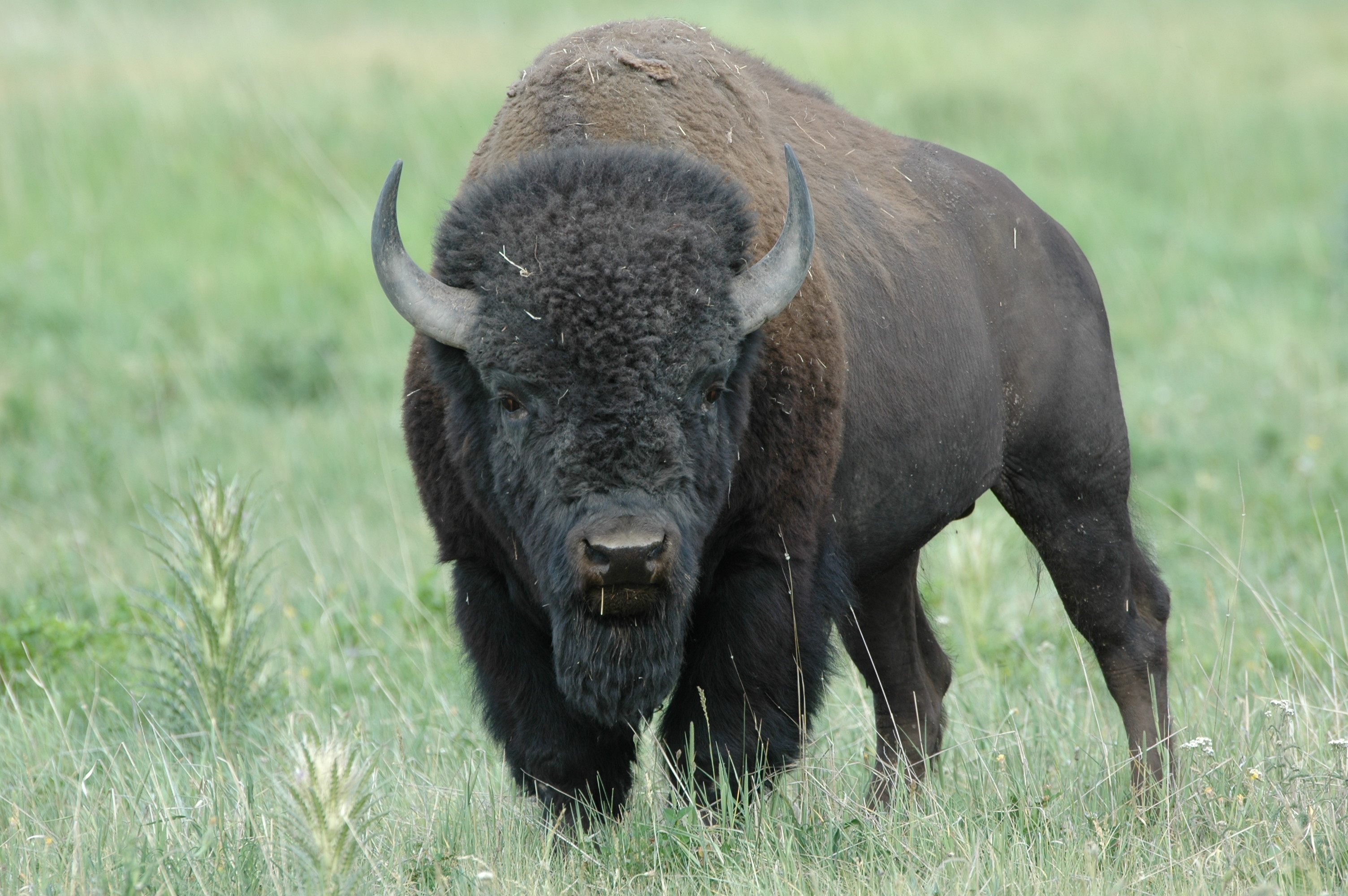
Holy bear

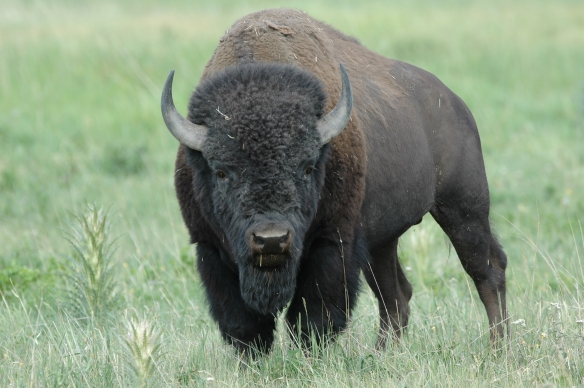
Yellowstone plans bison slaughter–Again!!

Wildlife Photography ©Jim Robertson, All Rights Reserved

Wildlife Photography ©Jim Robertson, All Rights Reserved

http://mtstandard.com/news/state-and-regional/yellowstone-plans-bison-slaughter/article_cb37559e-92f0-11e3-b8a1-0019bb2963f4.html

Article by Brett French The Billings Gazette

As large numbers of bison begin moving toward Yellowstone National Park’s northern border, park officials are making plans to truck 300 to 600 of the animals to slaughterhouses, with the processed meat, hides and heads being distributed to American Indian tribes.

“We do have some agreements with tribal entities to take those animals this year,” said Al Nash, Yellowstone’s chief of public affairs. “But everything is very dependent on the bison migrating in significant numbers.”

The last count by Montana Fish, Wildlife and Parks put the number of bison outside the park’s northern boundary near Gardiner at 60 to 70, with most staying close to private property and away from hunters on nearby public land. Hunting is not allowed inside Yellowstone.

Growing herd

This summer, Yellowstone’s bison population was estimated at 4,600, close to the park’s peak bison population of 5,000 that was recorded in 2005. The bison are divided into two herds, with about 3,200 in the northern herd and 1,400 in the central herd, which migrates out of the park near West Yellowstone along the Madison River.

By agreement with the state of Montana, the park is required to keep the bison population at 3,000 to 3,500 animals.

“Our biologists are saying that if we were to look at a removal of about 600 bison each winter for several winters, then we would have a chance to move that population figure down to 3,000 or 3,300,” Nash said. “If we had no other management action, we could see 6,000 bison by the end of the winter 2016.”

The last and largest removal of bison was in 2008, when more than 1,600 bison were killed. Since 1985, more than 7,200 Yellowstone bison have been killed, according to the bison advocacy group Buffalo Field Campaign.

The park’s winter carrying capacity for bison has been estimated at 5,500 to 7,500. The cost of shipping bison to slaughter and having the meat processed was estimated at $50,000 to $100,000 a year.

Bison slaughter

Jim Stone, chairman of the Inter Tribal Buffalo Council, based in Rapid City, S.D., said his group is preparing to line up trailers, drivers and nearby slaughterhouses to process any Yellowstone bison that are captured and held at the park’s Stephens Creek corrals. The council is composed of 58 tribes in 19 states, 50 of which have their own tribal bison herds.

Although they’ll benefit from the park’s removal of bison with possibly thousands of pounds of meat being distributed, “the tribes have been opposed to a lot of what the park has done,” Stone said.

He said the group would prefer to see disease-free young bison quarantined —adding that he didn’t like that term — and then shipped to tribes with existing bison herds.

Such a shipment of 60 quarantined bison to the Fort Peck Tribe two years ago caused an uproar among surrounding ranchers and their legislators, despite the animals’ disease-free status.

Ranchers in Eastern Montana are nervous that conservation groups may succeed in their push to restore bison to public lands on the prairie. Stone said tribes should not be lumped in with such groups.

“A couple of things you’ll never hear from us is ‘free-ranging bison,’” he said. “That’s a state issue, not a tribal issue. We’re realists when it comes to managing buffalo.”

Stone said his group supports giving Yellowstone bison more room to roam on public land outside the park where they could be killed by hunters, in keeping with tradition. He said only older bulls and cows should be selected for slaughter.

The current ship-to-slaughter process may be necessary and the meat will be appreciated by tribal members, but Stone said the procedure is not respectful to the animals.

“The problem isn’t with killing buffalo, it’s with indiscriminate killing of buffalo,” he said.

______________________

Here’s a couple of appropriate comments from the people who sent me this article:

“Can’t someone stop this senseless killing. Who says the NPS has to agree to Montana’s absurd requirements. This is all driven by the ranchers and livestock department. Doesn’t anyone in Montana have the courage to stand up to these bullies. I think the tribes are enablers. They give the state livestock department cover by accepting these dead bison and prevent the bison from reoccupying its native habitat outside of the park. If they were really respectful of the bison, these tribes would be protesting the slaughter and lining up to keep the Dept of Livestock from killing the animals. They would refuse to cooperate with the state’s slaughter. This is a disgrace.”

“What a freak show… YNP has to be stopped from slaughtering bison! … what will stop these bastards?”

Please call and complain about this nonsense and imminent tragedy:

1. Governor Steve Bullock – (406) 444 –3111

2. Policy Advisor for Natural Resources, Tim Baker – (406) 444 – 7857

Service Reopens Comment Period on Wolf Proposal

http://www.fws.gov/news/ShowNews.cfm?ID=0D493E53-AC54-99DD-52400A7BAA5A6085

February 7, 2014
Contacts: Gavin Shire, 703-346-9123 , gavin_shire@fws.gov

Independent scientific peer review report available for public review

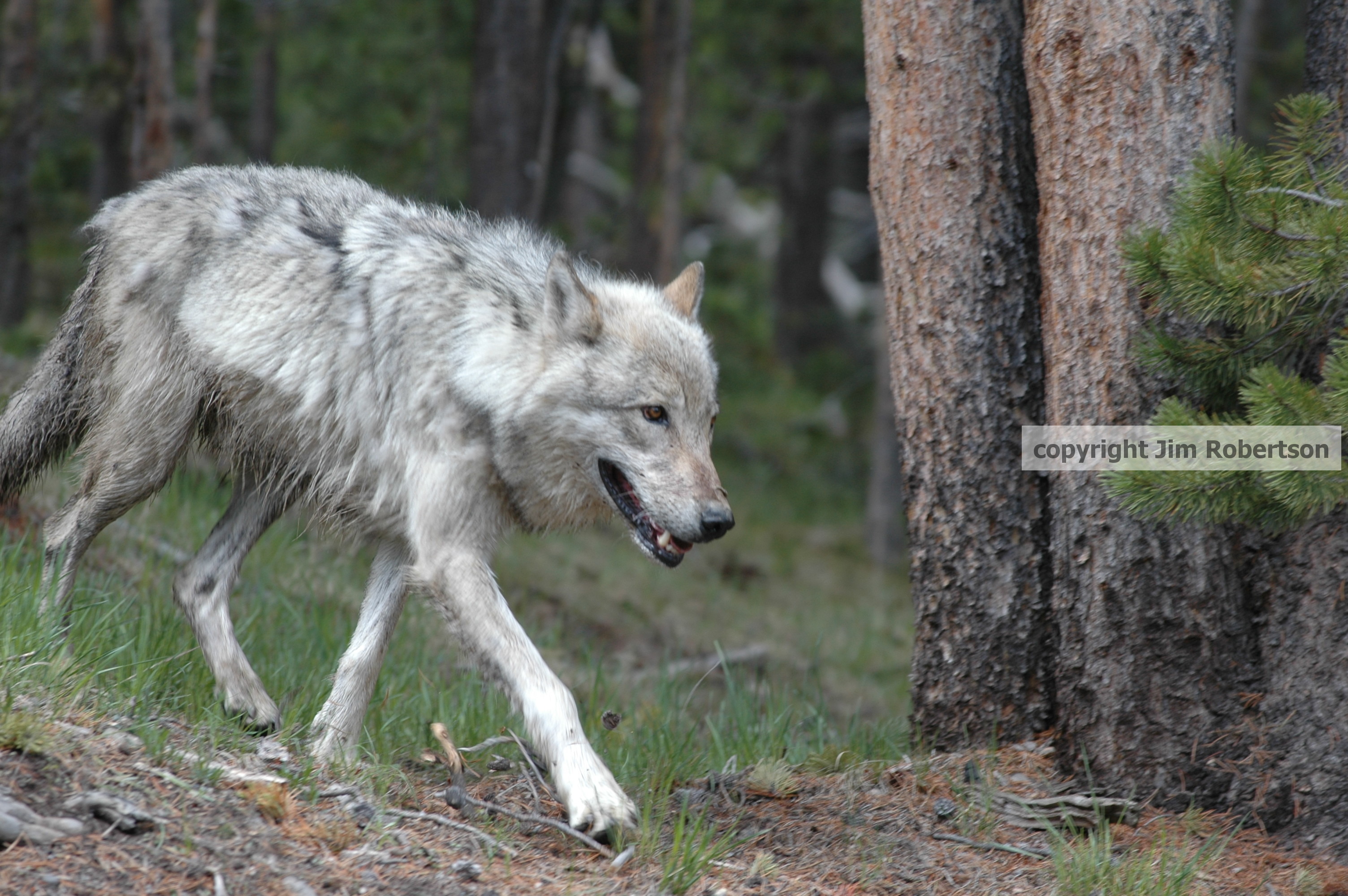
Following receipt of an independent scientific peer review, thecopyrighted Hayden wolf walking U.S. Fish and Wildlife Service is reopening the comment period on its proposal to list the Mexican wolf as an endangered subspecies and remove the gray wolf from the Endangered Species List. The Service is making that report available for public review, and beginning Monday, February 10, interested stakeholders will have an additional 45 days to provide information that may be helpful to the Service in making a final determination on the proposal.

The independent scientific peer review was hosted and managed by the National Center for Ecological Analysis and Synthesis (NCEAS), a highly respected interdisciplinary research center at the University of California – Santa Barbara. At the Service’s request, NCEAS sponsored and conducted a peer review of the science underlying the Service’s proposal.

“Peer review is an important step in our efforts to assure that the final decision on our proposal to delist the wolf is based on the best available scientific and technical information,” said Service Director Dan Ashe. “We thank the National Center for Ecological Analysis and Synthesis for conducting a transparent, objective and well-documented process. We are incorporating the peer review report into the public record for the proposed rulemaking, and accordingly, reopening the public comment period to provide the public with the opportunity for input.”

The peer review report is available online, along with instructions on how to provide comment and comprehensive links relating to the proposal, at http://www.fws.gov/home/wolfrecovery.

The Service intends that any final action resulting from this proposed rule will be based on the best available information. Comments and materials we receive, as well as some of the supporting documentation used in preparing this proposed rule, are available for public inspection at http://www.regulations.gov under the docket number FWS–HQ–ES–2013–0073.

The Service will post all comments on http://www.regulations.gov. This generally means the agency will post any personal information provided through the process. The Service is not able to accept email or faxes. Comments must be received by midnight on March 27.

The Federal Register publication of this notice will be available online Feb. 10 at http://www.fws.gov/policy/frsystem/default.cfm by clicking on the 2014 Proposed Rules under Endangered and Threatened Wildlife and Plants.

http://www.fws.gov/news/ShowNews.cfm?ID=0D493E53-AC54-99DD-52400A7BAA5A6085

The Service expects to make final determination on the proposal by the end of 2014.

The mission of the U.S. Fish and Wildlife Service is working with others to conserve, protect, and enhance fish, wildlife, plants, and their habitats for the continuing benefit of the American people. We are both a leader and trusted partner in fish and wildlife conservation, known for our scientific excellence, stewardship of lands and natural resources, dedicated professionals, and commitment to public service. For more information on our work and the people who make it happen, visit http://www.fws.gov.

Connect with our Facebook page at http://www.facebook.com/usfws, follow our tweets at twitter.com/usfwshq, watch our YouTube Channel at http://www.youtube.com/usfws and download photos from our Flickr page at http://www.flickr.com/photos/usfwshq/

If you’re really saddened by the death of Marius the giraffe, stop visiting zoos

AN37096504FILES+-+Picture+t

http://www.independent.co.uk/voices/comment/if-youre-really-saddened-by-the-death-of-marius-the-giraffe-stop-visiting-zoos-9119868.html

We wouldn’t go to a prison to learn about typical human society, so it makes no sense to observe imprisoned animals in order to learn about them

by Mimi Bekhechi
Monday 10 February 2014

If there had ever been any doubt that zoos serve no purpose beyond incarcerating intelligent animals for profit, the slaughter of Marius, an 18-month-old giraffe, on Sunday has surely settled the issue. Copenhagen Zoo delivered Marius into a life of captivity, allowing his mother to give birth to the calf while knowing that the baby would be “surplus” to its requirements and “useless” for breeding because his genes were too common.

The zoo used the baby calf to attract visitors and then slaughtered him. He was shot rather than given a painless lethal injection, just so that his flesh wouldn’t be contaminated when it was cut up in front of horrified schoolchildren and, quite literally, thrown to the lions.

As the events of this weekend illustrate, breeding animals in zoos is not a sustainable practice because of space limitations and also because the practice creates a surplus of unwanted animals. It is estimated that approximately 7,500 animals in European zoos are considered “surplus” at any one time.

While Marius grabbed the headlines, it also emerged that lions were destroyed at Longleat Safari and Adventure Park in Wiltshire, owing to a rise in the population, which had caused “excessive violent behaviour”. Anyone who thought the practice of breeding and then killing animals would surely not be sanctioned in the UK should think again. It is absolutely routine for zoos to euthanise newborn males of various breeds because they have nowhere to put them when they mature. Other unwanted animals are sold at auction and carted across the globe.

Zoo breeding programmes serve no conservation purpose because giraffes and other animals born in zoos are rarely, if ever, returned to their natural habitats. They put the “con” in “conservation”, and zoos spend millions on keeping animals confined while natural habitats are destroyed and animals are killed, as there is insufficient funding for protection.

When London Zoo spent £5.3 million on a new gorilla enclosure, the chief consultant to the UN Great Apes Survival Partnership said that he was uneasy at the discrepancy between lavish spending at zoos and the scarcity of resources available for conserving threatened species in the wild. “Five million pounds for three gorillas when national parks are seeing that number killed every day for want of some Land Rovers and trained men and anti-poaching patrols. It must be very frustrating for the warden of a national park to see.”

Animals in zoos often go insane from the frustration of life in captivity, and visitors leave without having learned anything meaningful about animals’ natural behaviour, intelligence or beauty. There is nothing dignified or inspiring about seeing bored and depressed animals. In the wild, gorillas don’t eat their own sick and pull out their hair in frustration. Free polar bears don’t pace back and forth constantly on concrete. The typical behaviour of captive animals, such as bar-biting, self-mutilation, pacing and rocking, is unheard of among their free relatives.

We wouldn’t go to a prison to learn about typical human society, so it makes no sense to observe imprisoned animals in order to learn about them. Today, we have IMAX movies and entire television channels dedicated to showing wildlife documentaries, which serve as virtual field trips and teach generations of children about animals without harming them. We no longer have any excuse for keeping intelligent social animals incarcerated and denying them everything that’s natural and important to them.

From the moment he was born, Marius was destined to lead a life of misery at the hands of his human captors. Giraffes rarely die of old age in captivity. Had he not been killed yesterday, he would have spent his short life as an exhibit, stranded in a cold climate, thousands of miles away from his true home. Although his death is heartbreaking, it’s his birth that should have been prevented. I wish we could see this kind of outrage every time an animal is born at a zoo.

For everyone who genuinely cares about giraffes and all the other individuals serving life sentences in zoos, let’s hope Marius’ story is a wake-up call. Let’s avoid patronising zoos and instead donate to campaigns that actually protect animals in their native habitats.


Animal Welfare Institute plans lawsuit over red wolf deaths

By Hayley Benton on 02/08/2014

From Tara C. Zuardo
Wildlife Attorney at the Animal Welfare Institute

To Whom It May Concern:

On October 29 2012 and you did stories on the red wolves being found shot dead in North Carolina (by Jake Frankel). There is a hearing on the next step of this campaign on Tuesday, February 11, 2014 in case you are interested for Mountain Express: We are suing the North Carolina state wildlife agency for authorizing day and night hunting in the red wolf’s recovery area of an identical looking animal – coyotes – and hence violating the Endangered Species Act, which the red wolf is listed under. Again, the hearing on our injunction is this coming Tuesday, February 11, 2014. I have included below a list of facts about this red wolf population, and I am happy to send you anything else you need – a press release, mortality statistics, court documents, etc.:

-The red wolf (Canis rufus) once ranged throughout the eastern and southcentral UnitedRed-wolf-and-pups-240x300 States. Intensive predator control programs and the degradation and alteration of the species’ habitat had greatly reduced its numbers by the early 20th Century, however. Designated as an endangered species in 1967, the red wolf was declared extinct in the wild in 1980. In 1987, an experimental population of red wolves was reintroduced into eastern North Carolina. Four pairs were released into the Alligator River National Wildlife Refuge. The red wolf recovery area is approximately 1.7 million acres along North Carolina’s Albemarle Peninsula. This is the home to the only population in the wild.
-Between June 2013, when the Red Wolf Education Center opened, to December 2013, there were approximately 2,000 visitors from around the world who came to learn about red wolves. The Red Wolf Coalition gave 40 scheduled programs and about 12 special programs for various organizations. There is much local support of and interest in the wolf population.
-Total current estimated population is only 90-110 wolves, making the red wolf one of the most endangered species in the world. –
-USFWS has determined that gunshot mortality is the single biggest threat to the recovery of the wild red wolf population. Since 2008, up to ten percent of the wild population has been shot each year (confirmed death for 20 wolves, suspected cause of death for additional 18 wolves). The number of wolves killed by gunshot increased between 2012 and 2013.
-Because of the similarity of appearance between red wolves and coyotes, it is nearly impossible for individual hunters to avoid shooting red wolves, during the day or night. Larger coyotes can weigh 35 to 40 pounds, and while red wolves are typically in the 60-pound range, smaller females can weigh 45 to 50 pounds, infringing on the typical size of a large coyote. Judging 60 pounds versus 40 pounds at a distance might be incredibly difficult. U.S. Fish and -Wildlife Service (USFWS) red wolf recovery team members believe the wolves tend to be killed because they are considered to be large coyotes and thus make for larger hunting trophies.
-To combat interbreeding and lower coyote populations in the area, the USFWS captures and sterilizes coyotes. Sterilized coyotes are then outfitted with radio collars, released back into the wild and utilized by the USFWS to expand the range of red wolves. Hunting coyotes in the red wolf recovery area – and thus the shooting of sterilized “placeholder” coyotes — allows unsterilized coyotes to move into red wolf territory, increasing opportunities for inbreeding between red wolves and coyotes, decreasing the genetic integrity of the wild population, and injuring red wolves by disrupting population dynamics.
-Daytime coyote hunting has been authorized in the recovery area by the North Carolina Wildlife Resources Commission (NCWRC) since 1993, and they proposed adding night time hunting with spotlights in February of 2012. A coalition of conservation organizations (Animal Welfare Institute, Defenders of Wildlife, Red Wolf Coalition and Southern Environmental Law Center) sued and obtained a temporary injunction to block the temporary rulemaking (authorizing night time hunting with spotlights in the recovery area) in November 2012. However, the North Carolina General Assembly then allowed the permanent rulemaking (again, authorizing night time hunting with spotlights) to go into effect in July 2013. There is no language in the state regulations indicating the red wolves should be avoided when killing coyotes, and no information distributed to hunters to let them know that red wolves live in the recovery area and should be avoided when hunting or simply shooting coyotes.
-Just between Oct 28 and Nov 19, 2013, USFWS recovered the bodies of five red wolves with gunshot wounds, and a collar for a sixth. A month later, they found a bullet-ridden body of a seventh red wolf. Nearly 10 percent of the population died during this time span.
-Anyone found responsible for illegally “taking” or killing red wolves is subject to up to a year in prison and $100,000 fine, but the threat of this punishment and the $25,000+ reward offer still has not led to any leads for fall 2013 deaths.
-According to USFWS, red wolves rely heavily on the set social structure of a pack, comprised of five to eight wolves, to grow and maintain the population. One component of that pack involves breeding pairs, or “breeders” — two wolves that bond for life and mate once a year in February. All seven wolves killed during the fall 2013 span were adults, and by extension, potential breeders. These breeder deaths can damn populations in the future because they are what actually contribute to the growth of the population. In addition, the total number of red wolf pups born during whelping season has decreased each of the last three years, from 43 pups in 2010, to 34 pups in 2013.
-The 60 day notice of intent to sue for the North Carolina Wildlife Resources Commission for violations of the Endangered Species Act; causing the illegal take of endangered red wolves by authorizing day and night hunting was filed on July 30, 2013. The federal complaint was filed on October 17, 2013. The motion for a preliminary injunction was filed on December 16, 2013. The hearing on the injunction is February 11, 2014.


Not All Winter Sports Negatively Impacted by Climate Change…

…THAT IS, IF YOU CONSIDER KILLING RABBITS A “SPORT”!!!

The USA Today ran an article yesterday by U.S. Olympic cross country skier, Andrew Newell, entitled, Climate Change Impacts Winter Sports.” Newel tells us, “As a skier, my life revolves around winter and being outside. Years spent training have not only honed my skills, but also shown me the negative impacts of climate change first-hand. There have been countless times in the past 10 years when our early season competitions have been delayed or canceled due to lack of snow, or our spring and summer training camps disrupted due to erratic weather or insufficient snowpack. It’s no coincidence then that the last decade was also the hottest decade ever recorded…

“Even the most reliable snowfall areas have seen a decrease in storms and precipitation. In the last few seasons, Scandinavian countries such as Finland, Norway and Sweden, which host world cup ski events in November and December, have had to rely upon man-made snow and injected ice for races. Many Nordic athletes, myself included, train on glaciers during the summer months.DSC_0098

“I’ve witnessed the visible recession of off season ski destinations such as Eagle Glacier in Alaska and the Dachstein Glacier in Austria in the last decade. Warming temperatures melting snow has meant in recent years, summer skiing conditions on glaciers have become too unstable to train on. Some countries have resorted to skiing indoors in artificial ski tunnels due to unpredictable conditions.

‘The conditions in Sochi are no exception. The organizers of these Winter Games ran into similar problems and had to go to extreme and unorthodox means to supply the snow necessary to hold high-level competitions. Workers in Russia have been stockpiling nearly 16 million cubic feet of snow and adding a special kind of salt to prevent melting.”

The article goes on: http://www.usatoday.com/story/opinion/2014/02/11/andrew-newell-olympics-global-warming/5370379/  and in many ways parallels an early post of mine about the impacts of climate change on skiing, “In Case You Haven’t Noticed, Global Warming is Real.”  https://exposingthebiggame.wordpress.com/2014/02/01/in-case-you-havent-noticed-yet-global-warming-is-real/

imagesQB1DEJITBut there’s one winter “sport” (if it can be called that) that isn’t effected by a lack of snow–bunny blasting. As Utah’s Daily Herald claims, “Rabbit hunting offers chance for winter sport” reports, “Regulations allow each hunter with a license to kill up to 10 cottontails.” [per day, no doubt.] And it also quotes Mark Zornes, who boasts, “This is what bunny hunting is like,” he said. “We rarely see people doing this, and this is the most fun kind of hunting. It’s also a great kid activity.”

So, forget snow sports, winter can be yet another chance to kill something.

Couple involved in hunting reality show convicted of poaching in Nebraska

http://www.omaha.com/article/20140211/NEWS/140219782/1707

By Andrew Bottrell / World-Herald News Service

A North Carolina couple who outfitted hunting trips in central Nebraska has been convicted of poaching.

Jason and Britney Edney, of Hendersonville, N.C., will both serve federal probation and pay fines for the offenses after reaching plea deals.

According to a press release from the Nebraska Game and Parks Commission Monday, with the help of the U.S. Fish and Wildlife Service, investigators uncovered more than 25 instances of overbagging or hunting turkeys without permits, 29 illegally taken deer, 17 instances of failing to check deer and five small games violations.

The incidents occurred in Frontier, Dawson, Keya Paha and Lincoln Counties.

Jason Edney will be on five years of federal probation, which includes a ban on hunting, fishing and trapping. He will also pay $35,000 in restitution. Britney Edney will serve three years of probation, which includes a ban on hunting, fishing and trapping, with $10,000 in restitution.

Poaching is a violation of the federal Lacey Act, which bans the trade of fish, wildlife and plants that are illegally taken, transported or sold.

Three other people involved – Jay Myers of Alabama, Matt Woods of Alabama, and Greg Voliva of North Carolina – were convicted of misdemeanor violations of the Lacey Act and ordered to pay fines and restitution.

The Edneys had been part of a reality TV series that had teams compete through hunting. Several of the illegal hunts were videotaped for the series, and footage was posted online to promote their outfitting business.

 Wildlife Photography ©Jim Robertson, All Rights Reserved

Wildlife Photography ©Jim Robertson, All Rights Reserved

Why Wolves Need ESA Protection

1509686_1453770291507881_1955386015_n

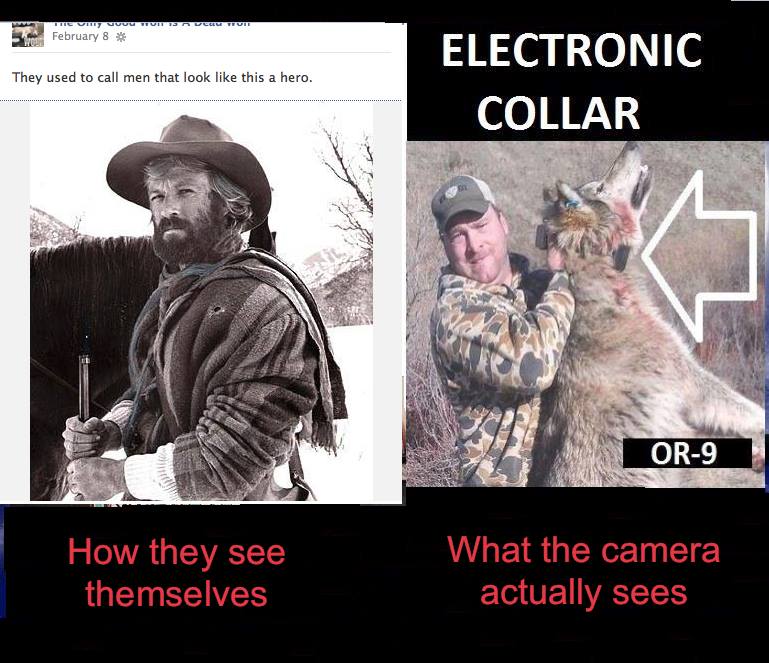
The sad story of OR9 is a prime example of why wolves need to remain on the federal Endangered Species list…

Sibling of famous OR-7 wolf killed by hunter in Idaho

Published: Friday, February 10, 2012

JOSEPH — A sibling of Oregon’s world-famous wolf OR-7 has been shot and killed in Idaho by a hunter whose wolf tag was no longer valid.

“What an amazing difference between how this wolf’s story evolved compared to his brother, OR-7, who is now in California and is an international celebrity,” said Suzanne Stone of Boise, spokeswoman for the 530,000-member Defenders of Wildlife environmental group.

The radio-collared male wolf identified as OR-9 was killed Feb. 2 near a cattle feedlot and winter calving area north of Emmett, between Boise and the Snake River, said Mike Keckler, spokesman for the Idaho Department of Fish and Game.

Like his famous brother, OR-9 was born into the Imnaha pack near the northeastern Oregon town of Joseph. He was collared Feb. 26, 2011, in the Grouse Creek area east of Joseph when he was about 1 1/2 years old and weighed 90 pounds then.

OR-9 departed Oregon in July two months before OR-7 began his epic 730-mile trek to Crater Lake and south into California earlier this winter. OR-9 headed east, swam the Snake River into Idaho at Brownlee Reservoir and traveled south toward Emmett.

His travel destination turned out to be dangerous. Unlike the Joseph area, where gray wolves are protected under Oregon’s Endangered Species Act, Idaho’s wolves are classified as big game animals and subject to regulated hunting rules.
More…http://www.oregonlive.com/pacific-northwest-news/index.ssf/2012/02/sibling_of_famous_or-7_wolf_ki.html

From Defenders of Wildlife:
You didn’t support it. We didn’t support it. Now it’s been shown that the best available science doesn’t support the plan to delist nearly all gray wolves in the Lower 48 either.

ACT NOW: Demand that Secretary Jewell abandon this reckless delisting proposal and allow for the full recovery of gray wolves!

An independent peer review board, commissioned to assess the quality and adequacy of the science underlying the U.S. Fish and Wildlife’s (FWS) delisting plan for gray wolves, just released their unanimous decision: that the proposal to strip gray wolves of Endangered Species Act Protection is not based on the best available science and contains numerous omissions and errors.

This is a major development in our efforts to stop this irresponsible proposal from going through.

Please speak out! Urge Secretary Jewell to direct the Fish and Wildlife Service to withdraw this proposal immediately!

Now that it’s been confirmed that this proposed delisting is clearly not based on the best available science, we are left wondering why FWS wants to turn its back on wolves.

In states like Idaho, we continue to see what happens when wolves are prematurely stripped of federal protection and left to be managed by states with deadly anti-wolf agenda’s – just recently they announced a proposal to kill off as many as 450 wolves statewide!

Wolves now serve as a scapegoat for anti-government extremists with a political agenda – and these groups will spare no expense to try and derail wolf conservation in America. We simply can’t allow politics and private interests to trump science – it’s irresponsible and unacceptable.