Watching ravens over time, and their interactions with a wolf, it seems that their kind of cognition (including of course their interspecies play behavior) could well have coevolved with the wolf.
One group I know, approaches the wolf closely, attempting it seems, to incite response.
Let’s look at this as social learning, a coevolved behavior: If a member of a social species becomes familiar with another socially adept species (just watch ravens for a few years! they have astonishing games/behaviors), that habituation can lead to greater attention to and more intense observation of the individuals and the raven species itself, in the case of wolves.
Ravens play dangerous games, strolling up within two meters of those lightning-fast heads and jaws. They are highly vocal, trying out sounds consistent in the two individual ravens I watch with the most determined approach. The wolf is always prepared to play, although this may well mean that he knows they could be a dainty dish to set before a king.
Strangely, though to me, another group of ravens gives little or no attention to wolves, and instead closely observe the foraging of other species of birds, uniquely imitating their foodgetting habits.. I suppose they don’t need the now-rare wolf. I don’t know what they do to recruit assistance in opening carcasses!
Jim, if this is your site, For photographic and video purposes, you might look for open areas with lots of vertical outcroppings or cliffs. In the wind, ravens do some astonishing play in the wind among themselves, that needs documentation (after losing my entire array of photographic gear to theft on the very day I was headed out to WY a few years back, I abandoned the occupation and just focus on close observation, rather than communication of the observation. At that time photography was extremely costly, and I could not replace the gear).
Adaptation and coevolution of behaviors among species sharing habitat is so far insufficiently studied. I hope that young people with the desire will explore the subject. As scientific literature on wolves and other species increases, we increasingly understand the concept that symbiosis includes mutually advantageous behavior and cognition.
Traditionally-focused members of indigenous cultures have much to offer in their observations. Cultures failing to include other kinds in their social world, are impoverished beyond the imagination of those who realize that all these others are relatives.
HOW wonderful of you, Makuye to both understand and (be able to) convey such a sacred relationship! <3!
Wolves & Ravens fascinate me. Completely. I watched a very moving video, around Xmas time; It was all about their relationship also to the entire Ecosystem, and how very vital these animals ( the entire Animal Kingdom) are to the World. Thank you! Love and Light! ❤
These are excellent photos! I am a park ranger at the Mendenhall Glacier Visitor Center in Juneau, Alaska, and I am giving a talk to visitors this year about ravens. I was wondering if I could use one of these photos in my PowerPoint to illustrate a point I make about how ravens interact with other species? These would be great to show the wary friendship between ravens and wolves. You would of course be credited on the slide. I will not use the photos without your permission or if I don’t hear from you. Thank you for your time!
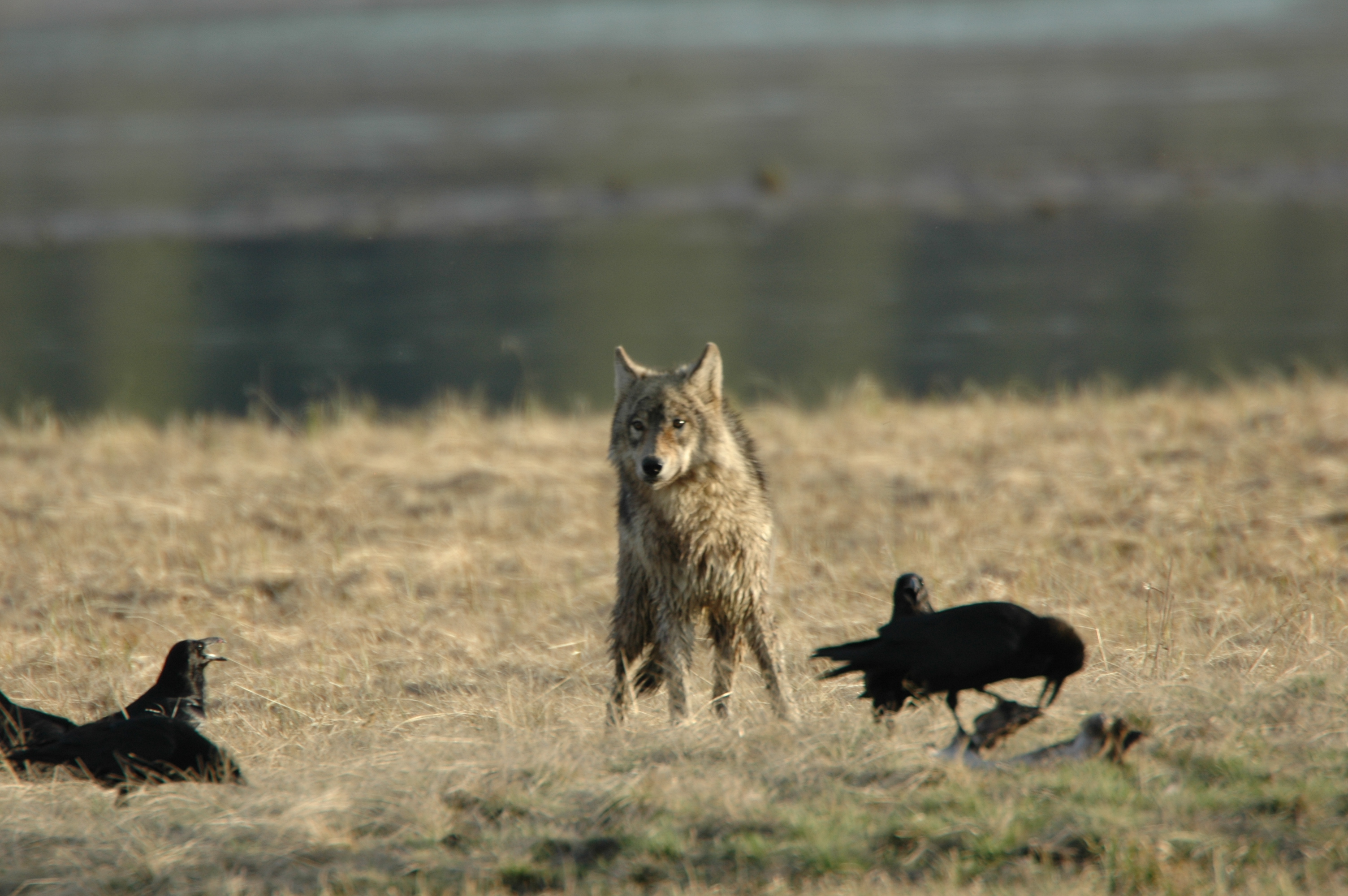 They may not always be the best of friends, but they’re constant companions…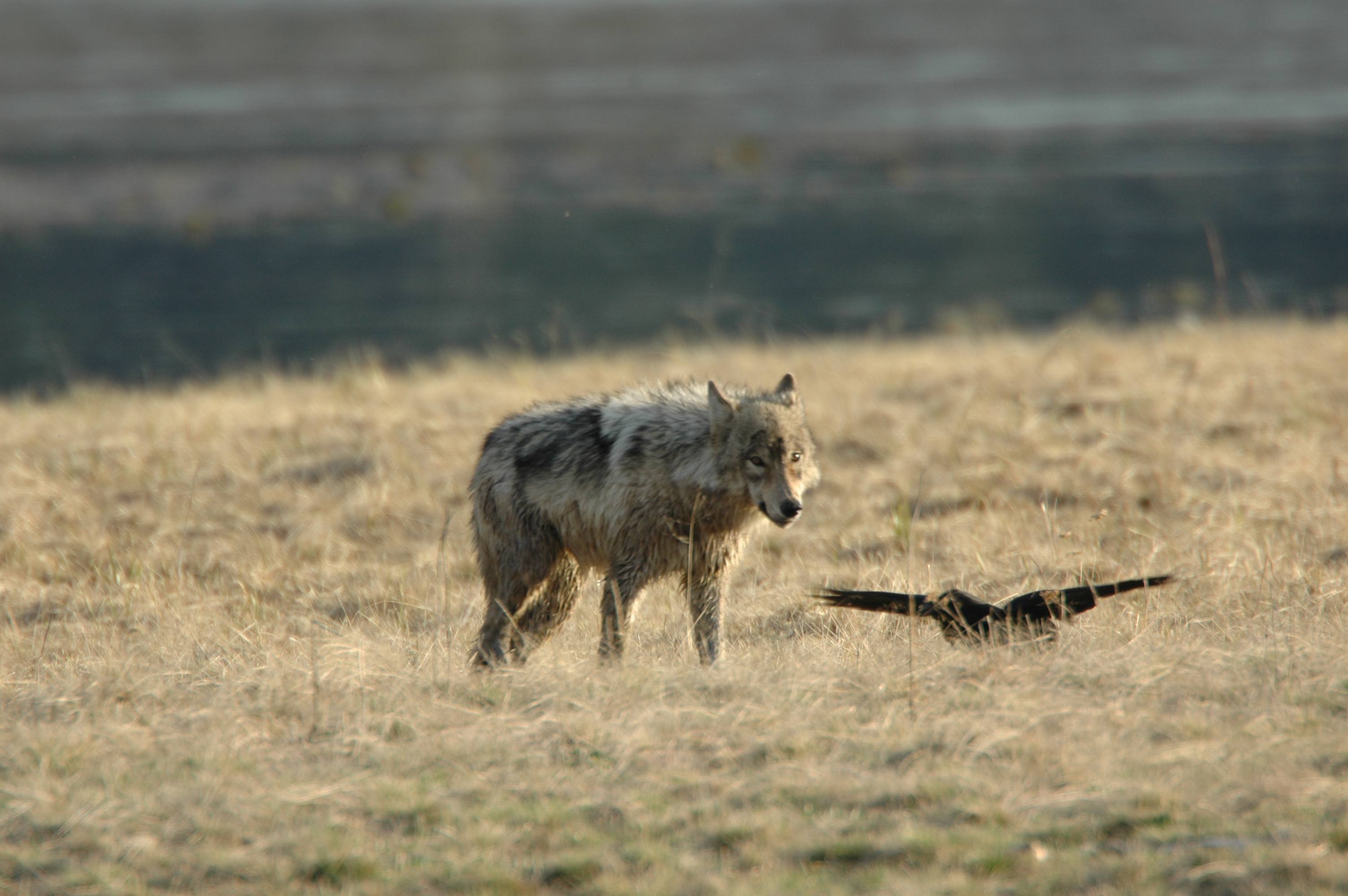
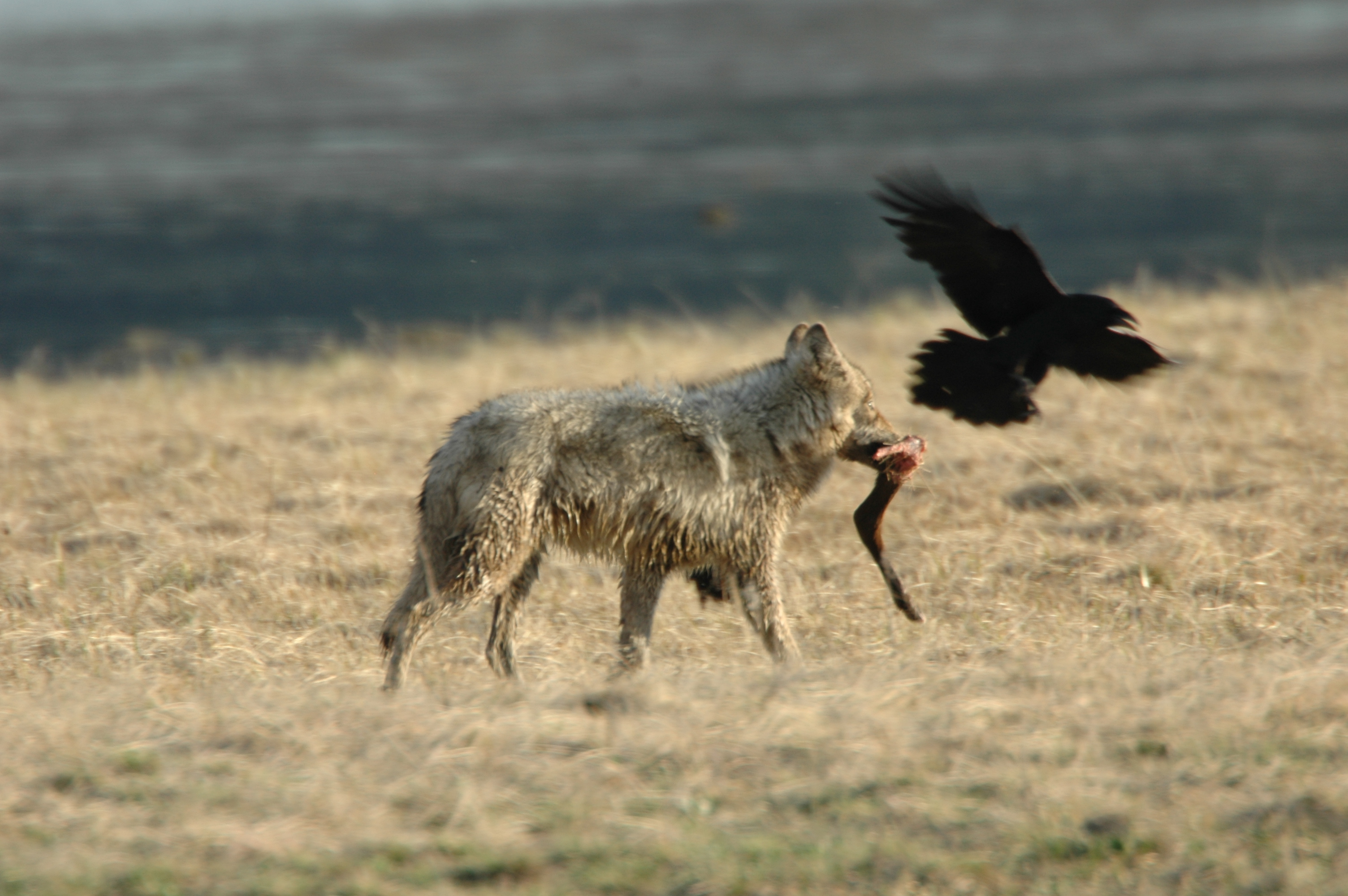

 Exposing the Big Game

Thanks for making the Photos!
Watching ravens over time, and their interactions with a wolf, it seems that their kind of cognition (including of course their interspecies play behavior) could well have coevolved with the wolf.
One group I know, approaches the wolf closely, attempting it seems, to incite response.
Let’s look at this as social learning, a coevolved behavior: If a member of a social species becomes familiar with another socially adept species (just watch ravens for a few years! they have astonishing games/behaviors), that habituation can lead to greater attention to and more intense observation of the individuals and the raven species itself, in the case of wolves.
Ravens play dangerous games, strolling up within two meters of those lightning-fast heads and jaws. They are highly vocal, trying out sounds consistent in the two individual ravens I watch with the most determined approach. The wolf is always prepared to play, although this may well mean that he knows they could be a dainty dish to set before a king.
Strangely, though to me, another group of ravens gives little or no attention to wolves, and instead closely observe the foraging of other species of birds, uniquely imitating their foodgetting habits.. I suppose they don’t need the now-rare wolf. I don’t know what they do to recruit assistance in opening carcasses!
Jim, if this is your site, For photographic and video purposes, you might look for open areas with lots of vertical outcroppings or cliffs. In the wind, ravens do some astonishing play in the wind among themselves, that needs documentation (after losing my entire array of photographic gear to theft on the very day I was headed out to WY a few years back, I abandoned the occupation and just focus on close observation, rather than communication of the observation. At that time photography was extremely costly, and I could not replace the gear).
Adaptation and coevolution of behaviors among species sharing habitat is so far insufficiently studied. I hope that young people with the desire will explore the subject. As scientific literature on wolves and other species increases, we increasingly understand the concept that symbiosis includes mutually advantageous behavior and cognition.
Traditionally-focused members of indigenous cultures have much to offer in their observations. Cultures failing to include other kinds in their social world, are impoverished beyond the imagination of those who realize that all these others are relatives.
HOW wonderful of you, Makuye to both understand and (be able to) convey such a sacred relationship! <3!
Wolves & Ravens fascinate me. Completely. I watched a very moving video, around Xmas time; It was all about their relationship also to the entire Ecosystem, and how very vital these animals ( the entire Animal Kingdom) are to the World. Thank you! Love and Light! ❤
Hi Jim,
These are excellent photos! I am a park ranger at the Mendenhall Glacier Visitor Center in Juneau, Alaska, and I am giving a talk to visitors this year about ravens. I was wondering if I could use one of these photos in my PowerPoint to illustrate a point I make about how ravens interact with other species? These would be great to show the wary friendship between ravens and wolves. You would of course be credited on the slide. I will not use the photos without your permission or if I don’t hear from you. Thank you for your time!
Tharon
Which image are you interested in using?
Reblogged this on Exposing the Big Game.
Sure Tharon,
You can use those three in your presentation.
Jim
I love the wolf and raven photos.
Old English poets spoke of their relationship in war poems. They became known as the “beasts of battle” because they came feast on the dead.