
Divided public comment starts rescheduled bison meeting
by LAURA LUNDQUIST, Chronicle Staff Writer The Bozeman Daily Chronicle | 0 Comments
BILLINGS – The group charged with exploring the possibility of a free-roaming bison herd in Montana has hard work ahead, according to many eastern Montana ranchers attending a Fish, Wildlife & Parks meeting.
“This is a pipe dream of somebody’s,” said Greg Oxarart of the South Phillips County Grazing District. “You as a panel — do you want bison in your backyard? Not many people do. I hope you take that into consideration. You have a tough job ahead of you.”

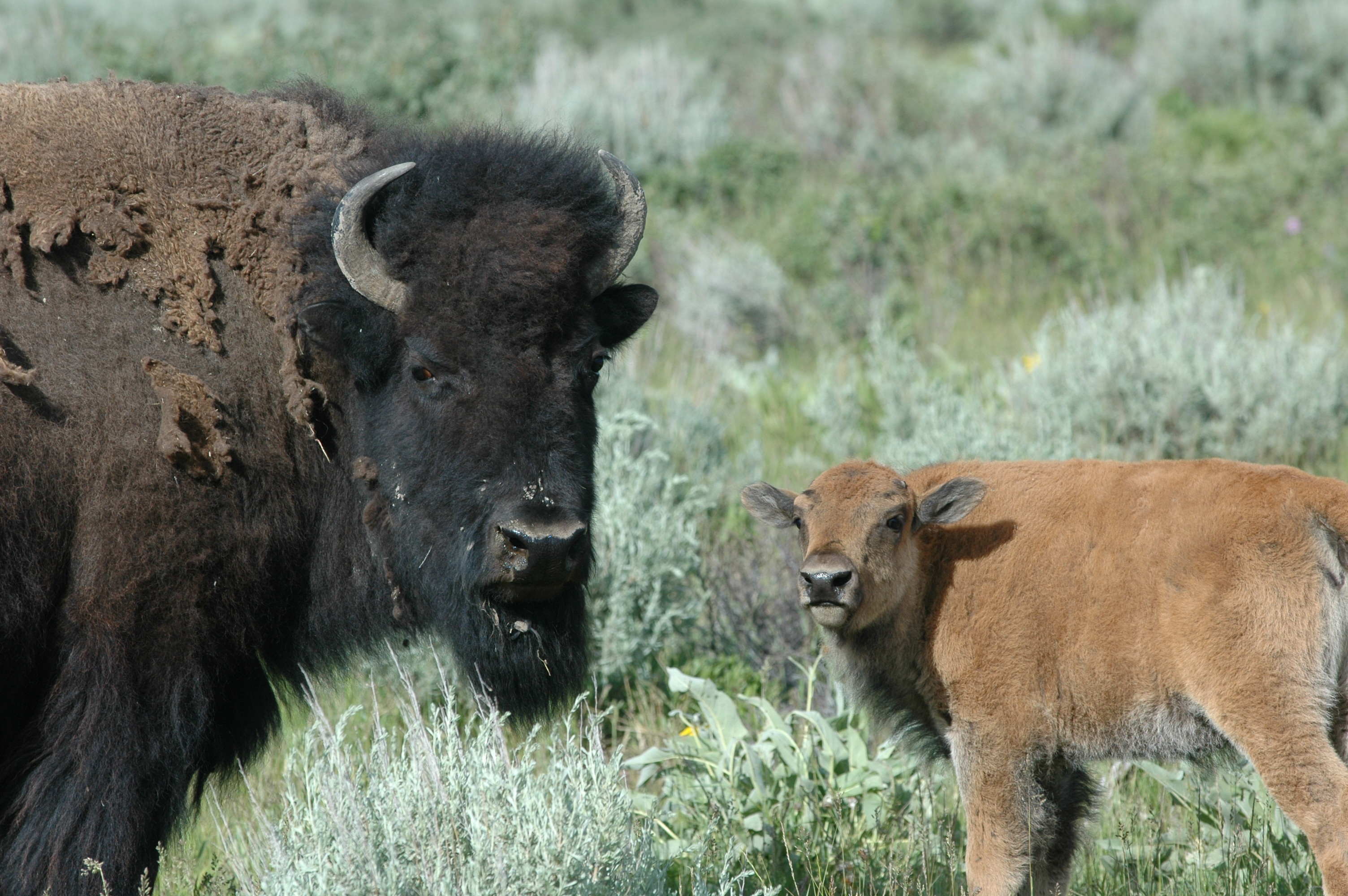
FWP Director Jeff Hagener created the group to brainstorm where and how a free-roaming bison herd could be created in Montana.
Several of the 50 people in the audience carried signs stating “No free-roaming bison” and wore buttons bearing red X’s over a bison. Most were from Phillips and Valley counties, which contain the C.M. Russell Wildlife Refuge and the American Prairie Reserve.
Some had attended the first meeting of the discussion group in Lewistown in September. That meeting produced a list of guiding principles for any future plan, including respecting private property rights and managing bison as “wildlife” through a FWP management plan.
The group was scheduled to have its second meeting in Lewistown in April. But after receiving a number of heated emails and phone calls, Hagener canceled the Lewistown meeting at the last minute.
Some people were concerned by a series of events involving Yellowstone bison, including a court ruling that bison in quarantine remain wildlife, but a main complaint was that no time had been scheduled during the meeting for public comment.
On Monday, Hagener said no comment had been scheduled because the informal group was created for discussion and would not make any decisions. He also emphasized that the group had nothing to do with the management of Yellowstone bison.
“We are allowing public comment because a lot of the members of the group thought it was appropriate to have that,’” Hagener said. “Hopefully, we’ll come to a result that’s gone through a process with a lot of public opportunity, and we’ve allowed the public to be involved all the way along.”
Facilitator Ginny Tribe opened the public comment session with the reminder that any resulting plan would have a “no action” alternative where the state would not create a free-roaming herd.
“This group has already agreed on some of these principles so keep that in mind when you make your comments,” Tribe said.
Even so, comment ranged from vehement opposition to any bison to a proposal of the exact location on the CMR Wildlife Refuge where FWP should put 1,200 bison.
Dyrck Van Hyning displayed maps of the Southerland Bay region along the northern shore of the Fort Peck Reservoir in the CMR Refuge and said the 33,000 acres could house up to 1,200 bison, based upon the Bureau of Land Management’s grazing guide of 24 acres per cow.
“There’s no private land. There’s natural boundaries. This would be a good place for a pilot project that could start small,” Van Hyning said.
A Department of the Interior report on U.S. bison herds, released a few weeks ago, named the CMR Refuge as a good site for the transplant of bison but categorized future management as highly complex because of the resistance from nearby ranchers.
Hagener said the DOI would not move to put bison on the CMR Refuge without coordinating with the state of Montana.
That assurance didn’t assuage Phillips County ranchers, who cited concerns about property and fence damage, competition for grazing resources, the loss of livelihood and brucellosis. Some were worried about losing grazing allotments on the refuge.
Craig French of Phillips County said the meeting might not be about Yellowstone bison but ranchers can’t ignore the Yellowstone situation.
“If it was in my power to do so, I would hold these people responsible and throw them in jail for cruelty to the animals and mismanagement of the land,” French said. “At least we agree that things need to be grazed. We’re arguing over what should graze.”
Jim Posewitz of Helena also argued for the animals but said people have a moral responsibility to recover a species that they almost eliminated in the late 1880s.
“What happened in Montana is shameful. We have become the bone yard of a continent,” Posewitz said. “Will this be the point in Montana history where we become committed to finishing the wildlife restoration legacy?”
Sheep rancher Becky Weed of Belgrade said that bison and Montana cattle ranchers shared one trait that could serve as common ground for resolution: both need natural functioning ecosystems.
“It’s up to this group to try and explain to each other why the bison issue and the long-term cattle ranching issues are really one and the same,” Weed said. “This is a plea to the ranchers and to the environmentalists to understand why we all have a vested interest in seeking some kind of resolution to this.”
Following public comment, the group started problem-solving exercises to develop some recommendations by the end of Tuesday.
 Exposing the Big Game
I LOVE these animals. There should be a place in this country for our bison heritage.