Editorial in the Olympian, WA: State DFW needs visionary leadership

1011767_10152168496128769_1859093580_n

December 5, 2014 

One of the most difficult challenges of the 21st Century is how to sustain life on our ever more crowded planet for many generations into the future. It’s a daunting task because it requires us to confront issues ranging from population growth to climate change to the importance of biodiversity in our ecosystem.

On the biodiversity front, the state of Washington has an immediate opportunity to create a paradigm shift within the Department of Fish and Wildlife (DFW) by hiring a visionary director who will lead the state toward a sustainable future for all species.

The department’s current director, Phil Anderson, is retiring at the end of this year after slightly more than five years in the position. The state’s independent nine-member Washington Fish and Wildlife Commission will select Anderson’s successor.

It’s a critical appointment that should not be rushed.

Since its creation in 1890 as a Fish Commission, the department has been focused on animals people hunt, fish and eat. Much later, species protected by the Endangered Species Act were added to the mix.

It wasn’t until 1921 that the Legislature abolished the Fish Commission and created a separate Department of Fisheries that focused on salmon caught commercially, and a Department of Game and Game-Fish. In 1987, the Department of Game was changed to the Department of Wildlife. And in 1994, state lawmakers merged the two departments into one Department of Fish and Wildlife, overseen by a commission that sets policy and goals.

It’s questionable whether these two cultures – fish and wildlife – have ever been effectively merged. And there is lingering tension between the biologists who see the value of all species and the hunters, fishers and ranchers who want wildlife managed to serve their own interests. Some current and former employees say that tension is the reason a recent survey of state agencies ranked morale in the DFW near the bottom, just above the Department of Corrections.

If the Fish and Wildlife Commission selects a change-agent who understands the important role of biodiversity in sustaining human life, it would bring the department back together and re-energize its legion of passionate young biologists.

Other states, such as Missouri and Florida, have moved away from the antiquated fish and game model to focus on protecting all species. Young biologists today recognize that less charismatic animals play a key role in our planet’s ecosystem and that we can no longer futilely attempt to pack all the nature we need into parks. We must preserve diverse wildlife in diverse ecosystems.

But the DFW seems to be moving in the opposite direction. That is evident in the department’s mismanagement of wolf hunts in northeastern Washington, where it catered to the small percentage of ranchers who refuse to abide by the state’s wolf conservation plan.

It’s important for the public and elected leaders to voice their concern to the commission – it meets Dec. 12 -13 in Olympia – that the DFW should join the broader effort toward sustainable living for all creatures, great and small.

http://www.theolympian.com/2014/12/05/3457683_state-dfw-needs-visionary-leadership.html?sp=/99/109/&rh=1#storylink=cpy or http://tinyurl.com/qf78vvg

Science and Sentiment Say Wolf Trophy Hunting Doesn’t Wash

Anti-wolf billboard, Spokane, WA

Anti-wolf billboard, Spokane, WA

http://www.huffingtonpost.com/wayne-pacelle/science-and-sentiment-say_b_6278208.html?utm_hp_ref=green

W

Science and Sentiment Say Wolf Trophy Hunting Doesn’t Wash

 12/05/2014

If policy makers stick to their guns and continue allowing trophy hunters to kill  wolves in six states in the Great Lakes and Northern Rockies regions, they will be defying both science and, generally speaking, the will of voters.

Folks, the recent weeks of 2014 have brought us to a turning point. So let’s turn. It’s time to turn away from the past and catch up with the future in the way we manage predators in the wild.

The right decision now, after what we have learned, is to suspend trophy hunting and trapping programs for the small, recovering wolf populations just recently taken off the federal list of endangered species – with the knowledge that it’s the right thing to do on so many levels.

One compelling reason is science. Underlying the growing number of wolf hunts in the United States is the wrongheaded, but long-standing, belief that trophy hunting and trapping programs for wolves reduce the threat that wolves pose to cattle, sheep, and other free-ranging livestock.

Well, that theory is now in doubt. And it’s not just me who says so.

The first serious study of that theory has been released and it found just the opposite. When I say serious, I mean very serious science. Washington State University researchers dug into comprehensive statistics from 25 years of wolf “management” and found that shooting wolves indiscriminately may make things worse for farm animals. As well as for wolves.

That’s because when disrupted, wolf families adapt, move, split up, increase reproduction — and then they kill even more livestock.

Researchers found that shooting wolves indiscriminately reduces predation on cattle and sheep only when wolf populations are brought so low that, guess what, they end up protected again under the Endangered Species Act.

Wolf haters are having a hard time coping with the truth here. A spokeswoman for one Washington state group was quoted as criticizing the integrity of the 25-year statistical survey because it was sponsored by the state legislature.

Or here’s what a spokesman for Idaho’s wool growers told National Geographic: “The professor can say whatever he wants. We’re not going to just let wolves run wild.”

Well, folks, you can’t invoke science only when it suits you — as the trophy hunting lobby so often does. The science may not be the final word, but it’s an important set of facts to inform a final decision.

The other element to consider is our values: obviously, here we differ with the wool growers and the trophy hunters. But let’s face it, by all accounts, it appears their views are in the minority. The public wants more protection for wolves, in a world where we all are showing greater conscious consideration of animals.

In the first-ever plebiscite on the subject, voters in Michigan sided with wolves and against trophy hunting and trapping. Voters faced two separate votes on laws passed by the Legislature to permit wolf hunts, and both were repealed. The margins were overwhelming, 64-36 and 55-45, with one of the measures getting more than 1.8 million votes against wolf hunting, more votes than any of the statewide candidates for office received in their winning elections.

Let me add that Michigan has one of the most deeply rooted and publicly popular hunting traditions in the United States. But voters there, including hunters, understood that wolf haters were plain wrong — and that these ancient animals played a vital role in the wild ecosystem, and in fact were more valuable as a draw for tourists than as stuffed decorations in private trophy rooms. What’s more, nobody eats wolves, so the idea of killing them has no practical value, and responsible hunters don’t go for that, either.

Just as with the new science, there can be no quibbling with the meaning here.

The two pillars of good policy — independent and verified science and thoughtful electoral consensus — agree: Hunting wolves is not acceptable to the public and makes life worse for ranchers who raise cattle and sheep.

**

Sign up here to stay up to date on our work with wolves.

This article first appeared on Wayne Pacelle’s blog, A Humane Nation.

Oceans: Study shows whales are ecosystem engineers

Bob Berwyn's avatarSummit County Citizens Voice

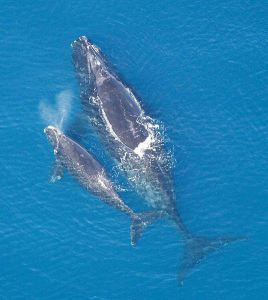
A North Atlantic right whale and calf. PHOTO COURTESY NOAA. A North Atlantic right whale and calf. PHOTO COURTESY NOAA.

Healthy whale populations could buffer oceans from some global warming impacts

Staff Report

FRISCO — Whales may play a much bigger role in ocean ecosystems than previously thought, according to a University of Vermont researcher who studied how the great cetaceans recycle and move nutrients from one region to another.

“For a long time, whales have been considered too rare to make much of a difference in the oceans,” notes University of Vermont conservation biologist Joe Roman.

That was a mistake, he said, explaining how his research shows that whales  have a powerful and positive influence on the function of oceans, global carbon storage, and the health of commercial fisheries.

View original post 619 more words

Morning photo: Snow dancing

Bob Berwyn's avatarSummit County Citizens Voice

Powder love!

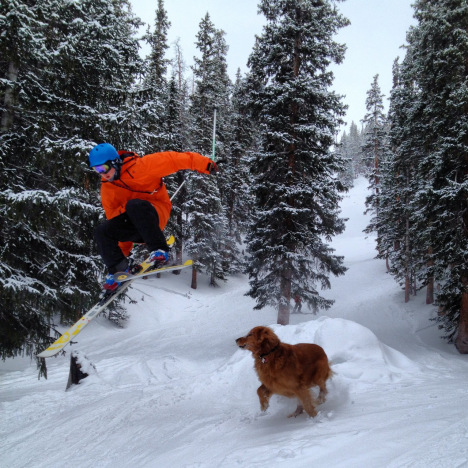
jo Dylan and Comet enjoy some powder and air time in the Loveland Pass backcountry.

FRISCO — All the world’s eyes focusing on the current round of climate talks in Lima, Peru, made me realize once again how much is at stake for those of us who love winter and snow. Of course, global warming isn’t going to wipe out all the snow at once, but that’s one of the things that makes the global warming issue so vexing. Even if we can’t see much change from season to season, there’s a good chance that snowfall patterns will be very different 50 years from now. Based on everything we know, it’s hard to say with any certainty that skiing will be be sustainable as a sport by the end of the century. Since I want my son, and his children, to have the same chance to experience winter…

View original post 38 more words

New Book! “Beware the Straw Man: The Science Dog Explores Dog Training Fact & Fiction”

The Science Dog's avatarThe Science Dog

Beware the Straw Man: The Science Dog Explores Dog Training Fact & Fiction” is now available! Click on the image below for more information and to order.

Book summary:   The Science Dog (aka Linda Case) takes a skeptic’s look at many commonly held beliefs about dog behavior and training. Each of the book’s 32 essays explores a question posed by leading researchers and provides detailed and thought-provoking analysis of their findings. Learn how dogs react to different training methods, discover the pitfalls associated with the use of extinction, and read about new studies that evaluate programs that communities use to keep children safe from dog bites. Other essays explore owners’ ability to understand their dog’s emotions, how people perceive and train small dogs, and if standard behavior tests used by animal shelters to assess dogs’ adoptability hold up under scrutiny. Whether you are a professional trainer, work with dogs in…

View original post 69 more words

Thanks To All Who Called Wisconsin DNR – Zones 3 and 6 Will Close 12/5 – Wisconsin Wolf Hunt Will End!!

Nabeki's avatarHowling For Justice

Wisconsin DNR Will Close Zones 3 and 6

December 4, 2014

Thank you to everyone who called the Wisconsin DNR and put pressure on them to close zones 3 and 6. As I stated in my previous post, Wisconsin went over limit by 18 dead wolves in zones 1 and 2 earlier in their “season”. Even though they set a  quota  of 150 dead wolves for the hunt, the Wisconsin DNR was keeping zones 3 and 6 open, which would have pushed the number of dead wolves over limit.  As you can see by the above chart zones 3 and 6 will close tomorrow! The death toll now stands at 151, one wolf over limit. I’m expecting that number to increase by tomorrow but it could have been much worse if you had not called and protested. Every wolf life is precious and we grieve that so many wolves died in this hunt and especially the wolves who…

View original post 77 more words

Rewilding of America is a natural thing to do


Rewilding of America is a natural thing to do

The News West / By Todd Wilkinson | Posted: Wednesday, December 3, 2014 4:30 am

We human beings are set apart by our capacity to express extraordinary compassion, empathy and charity — especially, it seems, at this time of year.

We also are unrivaled on the planet for carrying out acts of cruelty, not only against others of our own kind but toward vulnerable creatures around us that have no voice to plead their case for mercy and therefore no defense.

In ignorance, thoughtlessness and the warped logic of Manifest Destiny — the absurd notion that God would encourage us to be plunderers — we’ve erased other species from existence.

Witless sometimes, we inflict pain on animals, rationalizing it on the conceit that other creatures are incapable of knowing suffering or that our superiority gives us license to not acknowledge it exists.

This sort of thinking, Marc Bekoff says, is precisely the logic that degrades humanity.

Bekoff has a new book out that any animal-loving human (including hunters, anglers and ranchers) needs to read. “Rewilding Our Hearts: Building Pathways of Compassion and Coexistence” is an important work because it will change how you think about your relationship with nature.

That challenge can be exhilarating if you’re ready, frightening if your worldview is so fragile it cannot withstand scrutiny.

While reading Bekoff’s book and reflecting on the twisted individuals who publicly boast of inflicting abuse on wolves and coyotes, I thought of the observation made by the great psychoanalyst Carl Jung: “The healthy man does not torture others. Generally it is the tortured who turn into torturers.”

Bekoff is a world-renowned ethologist who wrote the critically acclaimed book “The Emotional Lives of Animals.” As professor emeritus of ecology and evolutionary biology at the University of Colorado-Boulder, he is also a former Guggenheim Fellow — confirmation that he is among a club of people held in highest regard for being exceptional big-picture thinkers.

Author Richard Louv, in his bestselling book “Last Child in the Woods,” identified a chronic problem plaguing modern people, Nature Deficit Disorder, running rampant in our kids.

Bekoff’s book confirms Louv’s diagnosis and casts it in fresh light. He believes that in our zeal to conquer nature, tame and control it, we’ve become “unwilded,” cut off from the very things that keep us grounded.

Bekoff isn’t just an advocate for rewilding physical landscapes — restoring them to their life-nurturing ecological function and recognizing the intrinsic value of their interconnected parts. As individuals, he says, we benefit from rewilding ourselves by maintaining contact with nature or making changes in our lives that give us daily exposure to wild things, the same as if taking a health-enhancing vitamin.

It is with empathy that we reach out to others suffering pain, loss and trauma caused by violence. And it is through extraordinary groups like Wounded Warriors that exposure to nature is used as a salve to heal.

Bekoff shares observations about hunting that, he notes, have sparked philosophical conversations with Wyoming outfitters. He also blasts commercial media. His thoughts are sure to provoke. Rather than divulge them here, suffice it to say they’re well worth absorbing.

Not long ago “60 Minutes” interviewed scientific researchers who had discovered that dogs can understand hundreds of human words and have a huge emotional range. It’s something Bekoff has known for decades.

Of interest to Westerners, Bekoff calls attention to those who kill wolves and, denying they are sensitive, thinking, feeling creatures, try to put them in a separate category from domestic canids.

“Then I ask the person if they would hunt and kill their own dog. ‘Of course not!’ they usually respond with incredulity. But in the end, a dog and the wild animals people hunt are not all that different, except that we already love our dogs.”

The terrain Bekoff explores may unsettle some, for it challenges the belief that animals, especially wild ones, are somehow lesser life forms, not worth consideration as sentient beings.

The whole point of Bekoff’s book is: It’s difficult to consciously inflict harm upon, or knowingly exploit for fun and profit, or wantonly eradicate beings that possess their own inner soul and spirit. They’re all around us.

“Alienating ourselves from other animals and dominating them and their homes is not what it means to be human,” Bekoff writes. “We must stop this insanity now. Ecocide is suicide.”

Hunter criticized for video guide showing how to kill parakeets in back garden

http://www.telegraph.co.uk/earth/wildlife/11268335/Hunter-criticised-for-video-guide-showing-how-to-kill-parakeets-in-back-garden.html

By

3:04PM GMT 02 Dec 2014

The video, created by hunter James Marchington for the Fieldsports Channel, shows him shooting ring-necked parakeets after creating a fake bird to entice them.

The clip, named Shooting Parakeets in London, is part of a series of videos providing advice on shooting animals.

According to the online description of the video on YouTube, “The flocks of ring-necked parakeets that ravage the fruit farms and vineyards of the south-east of England are at last under threat.

“They went on the quarry list in 2013. Now they are in the telescopic sights of pest controllers, including the owner of The Bird Table Of Doom himself, James Marchington.”

A spokesman for the Royal Society for the Protection of Birds criticised the video’s creators for glorifying hunting.

He told the Standard: “I’d urge others not to follow this advice. Those who act like this could find themselves with a criminal record. Under the general licence, there is a defence for the ultimate sanction ONLY if crops or public health are at risk. The presenter says the birds are damaging his fruit tree.

“The tree is leafless with no sign of any crop. It is clearly not a commercial operation. He even lures the poor parakeet in with food. Under the general licence, if you can’t prove there is just cause for your actions, you’re not safe from prosecution; especially if you’ve not explored alternative forms of control.”

He continued: “London is not the Wild West. London is a densely packed place where no one should be firing a weapon from their window. I would seriously hope that all right-minded, experienced marksmen, would support my call for this sort of behaviour to stop and for the video to be removed.”

Parakeets, which originate from the foothills of the Himalayas, have soared in number in London over the last two decades and they can now be found across the wider south east, especially large parts of Kent, Surrey and Sussex.

More: http://www.telegraph.co.uk/news/earth/wildlife/11268335/Hunter-criticised-for-video-guide-showing-how-to-kill-parakeets-in-back-garden.html

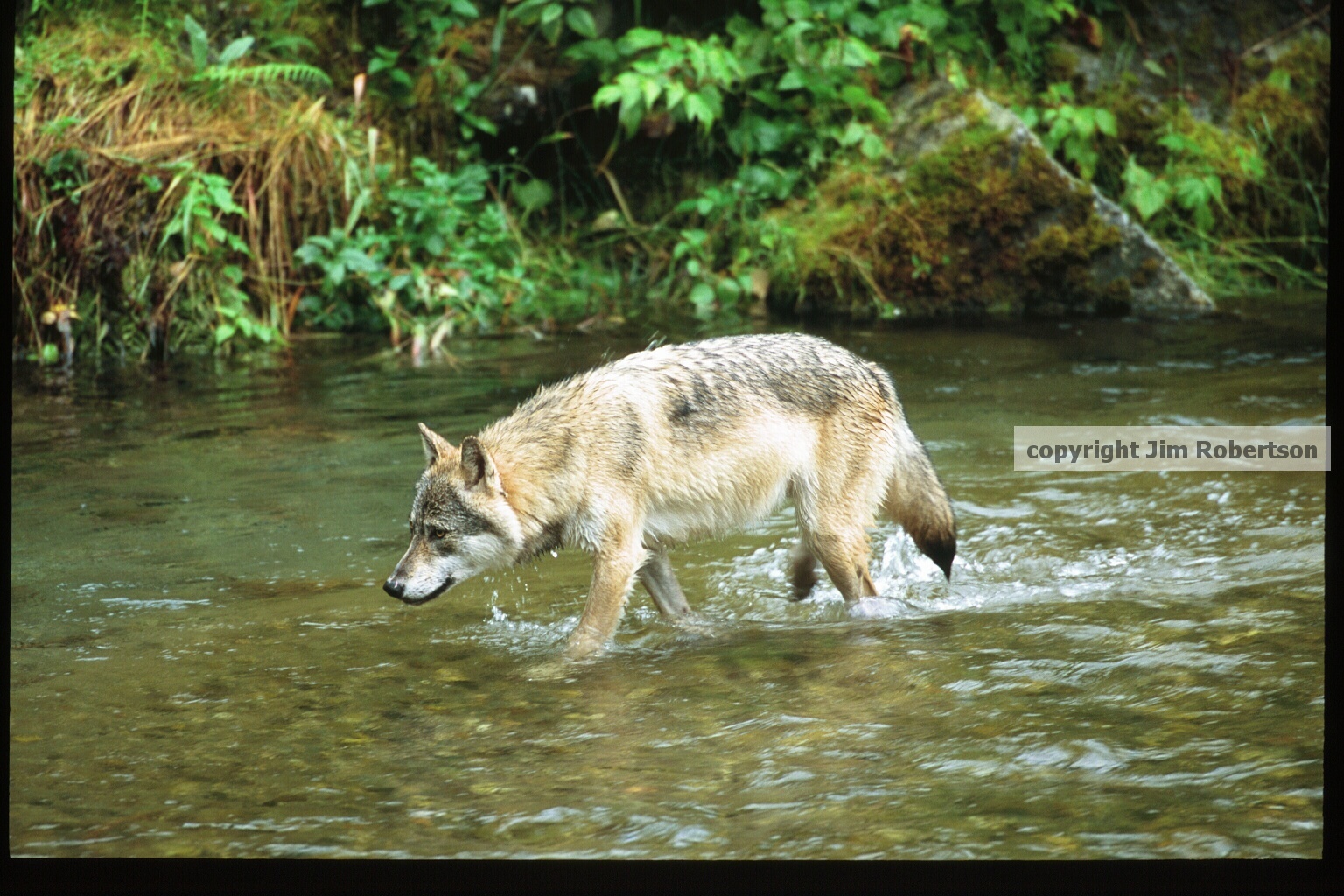
Nt’l Geo: Why Killing Wolves Might Not Save Livestock

[What do they mean “save” livestock. The cows and sheep are all doomed to be sent to the slaughterhouse eventually anyway…]

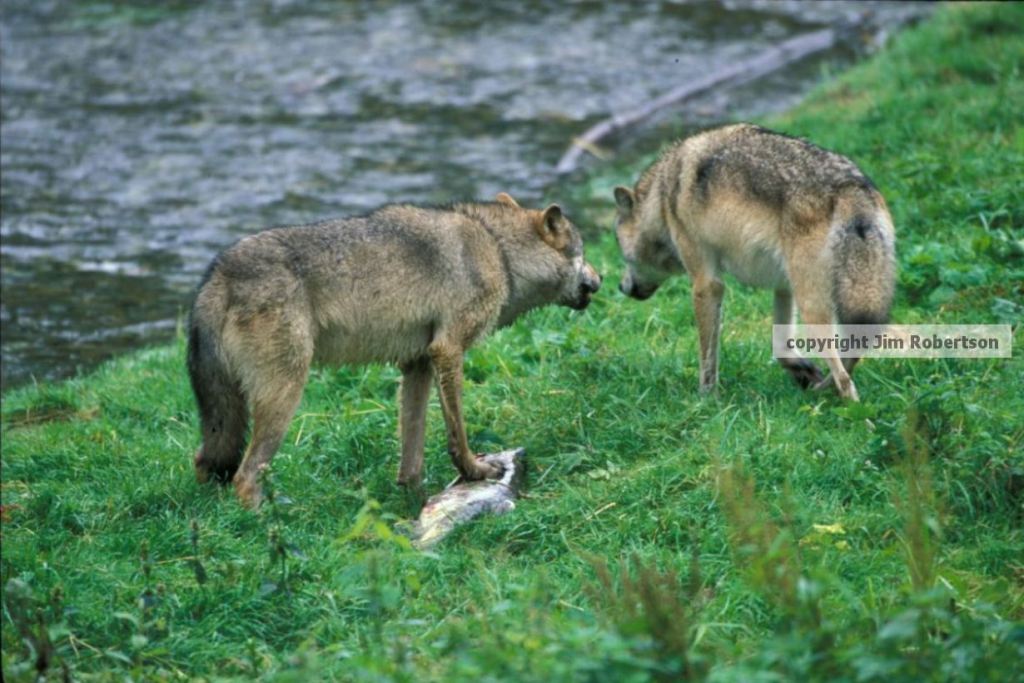
copyrighted wolf in water

http://news.nationalgeographic.com/news/2014/12/141203-wolves-hunting-livestock-ranchers-endangered-species-environment/

New study fuels debate over how to reduce attacks on cows and sheep.

Warren Cornwall

for National Geographic

Published December 3, 2014

In late August, a government sharpshooter in a helicopter hovering above a wooded eastern Washington hillside killed the lead female wolf of the Huckleberry Pack. The aim was to end attacks by the wolf pack, which had killed more than two dozen sheep.

But in the long run, a shooting like this could just make matters worse. A new study has found that—paradoxically—killing a wolf can increase the risk that wolves will prey on livestock in the future.

The research, published today in the scientific journal PLOS One, flies in the face of the common idea that the swiftest and surest way to deal with wolves threatening livestock is by shooting the predators. It adds to a growing understanding of how humans influence the complex dynamics driving these pack animals, sometimes with unexpected consequences.

As wolves spread across the West, triggering more encounters with sheep and cattle, and as two states host wolf-hunting seasons, the new research also adds more fuel to an already heated political debate about how to deal with wolves.

“The livestock industry, they’re not going to be happy with this,” said Rob Wielgus, a Washington State University ecologist and the study’s lead author.

Back From the Brink

Shooting wolves is a long-standing practice in the ranching world. It helped lead to the animal’s eradication in the western United States in the 1930s. Since the wolf’s reintroduction in the mid-1990s, government officials and ranchers have frequently reached for a gun to cope with livestock problems—killing more than 2,000 wolves by 2013.

In 2011, wolves were removed from federal protection under the Endangered Species Act in Idaho, Montana, and parts of Washington, Oregon, and Utah. (Wyoming got a similar stamp of approval in 2012, but a federal judge recently overturned that decision.) That has made it easier to shoot wolves—Idaho and Montana now even allow recreational hunting.

But there have never been any large-scale studies of whether killing wolves really helps protect livestock.

Enter Wielgus. He has a track record for turning conventional wisdom on its head when it comes to attempts to control predators. In 2008 he made news with research that found shooting cougars led to more attacks on livestock. When mature adults were killed, Wielgus said, less seasoned adolescents moved in and were more likely to prey on cows and sheep.

After wolves arrived in Washington in 2008, growing to 13 packs by 2013, Wielgus turned his attention to the newest carnivore on the block. He examined 25 years of data on killing of wolves and cases where wolves attacked cattle and sheep in Idaho, Montana, and Wyoming—the first states where wolves were reintroduced.

What the Data Say

Wielgus found that when a wolf was killed, the chances of livestock getting killed increased the following year in that state—by 5 to 6 percent for cattle and 4 percent for sheep. With each additional wolf killed, the chance of livestock attacks rose further. The trend didn’t reverse until more than a quarter of the wolves in the state were killed in a single year. Then livestock losses started to decline.

That level of wolf-killing happened several times even while wolves were federally protected, under rules that allowed shooting of wolves that threatened livestock. And it is happening now in Idaho and Montana. Last year, hunters killed 231 wolves in Montana and 356 in Idaho, helping to reduce the population to slightly more than 600 in each state. The Idaho legislature this year created a Wolf Depredation Control Board, a move critics say is aimed at pushing wolf numbers down to just above 150—a cutoff that could trigger renewed protection under the Endangered Species Act.

Wielgus isn’t certain why more livestock die when smaller numbers of wolves are killed. But he suspects it’s tied to changes in pack behavior. Packs are led by a male and female breeding pair. If one or both of those wolves is killed, the pack can break up, giving rise to several breeding pairs—and thus an uptick in the wolf population. Livestock losses decline only when enough wolves are killed to overwhelm their ability to keep up through reproduction.

The theory fits observations made in and around Yellowstone National Park. Wolf packs inside the park—where wolves aren’t shot—are large and complex, with wolves of a variety of ages living together, said Doug Smith, a lead wolf researcher at Yellowstone. Wolf packs elsewhere tend to be just a breeding pair and pups.

For Wielgus, the upshot of his study is that while killing a wolf might sometimes be necessary, as a routine practice it’s counterproductive and unsustainable. Either livestock losses go up or, if enough wolves are killed to reduce livestock deaths, wolf numbers eventually drop so low that wolves wind up back on the endangered species list. If the killing slows to less than 25 percent of the wolf population per year, his study suggests, depredation rates shoot back up.

“It’s a bit of a catch-22,” Wielgus said. “You can reduce them now, but you can only reduce them so far, and when you stop that heavy harvest, now you’re at maximum livestock depredation.”

Is There Another Way?

Reaction to the new study was split down predictable fault lines. Wolf conservationists pointed to it as evidence that shooting wolves to save livestock usually doesn’t make sense. “You have this very archaic paradigm of kill first, ask questions later,” said Suzanne Stone, senior northwest representative for the environmental group Defenders of Wildlife. Overall, people in the livestock industry are “still pretty rigid in their views that the only way to deal with predators is to kill them. And that’s not true. It actually works against them.”

Stone has run a program with sheep growers in one Idaho valley aimed at finding ways for sheep and wolves to coexist. The ranchers there resort to a number of tactics to protect roughly 30,000 sheep: monitoring wolves to avoid grazing the sheep near denning sites, using guard dogs, flashing bright lights to scare off wolves, stringing a wire hung with small strips of fabric around the flock at night, and increasing the number of people herding the animals.

Stone said the program is cheaper than dispatching a gunman in a helicopter. Fewer than 30 sheep have been lost to wolves in seven years, and no wolves have been killed.

Stan Boyd, executive director of the Idaho Wool Growers Association, said his group works with members to help them deter wolves without shooting the animals. But he still sees guns as critical tools, and he says wolf problems have declined recently as the number of Idaho wolves has gone down.

“Wolves get into livestock, we kill the wolves. And that works well,” Boyd said. “The professor can say whatever he wants. We’re not going to just let wolves run wild.”

In Washington state, the U.S. Fish and Wildlife Service, which paid for Wielgus’s research, is waiting for him to complete a broader examination of all options for managing wolves, said John Pierce, the agency’s chief wildlife scientist. “In the long run, we definitely would prefer to do nonlethal removal if we can figure out how it works,” Pierce said.

Meanwhile, all eyes are on the Huckleberry Pack. In the aftermath of the shooting of the lead female, will fewer sheep die in wolf attacks—or more?