Federal judge’s ruling on hunting wolves could have national impact
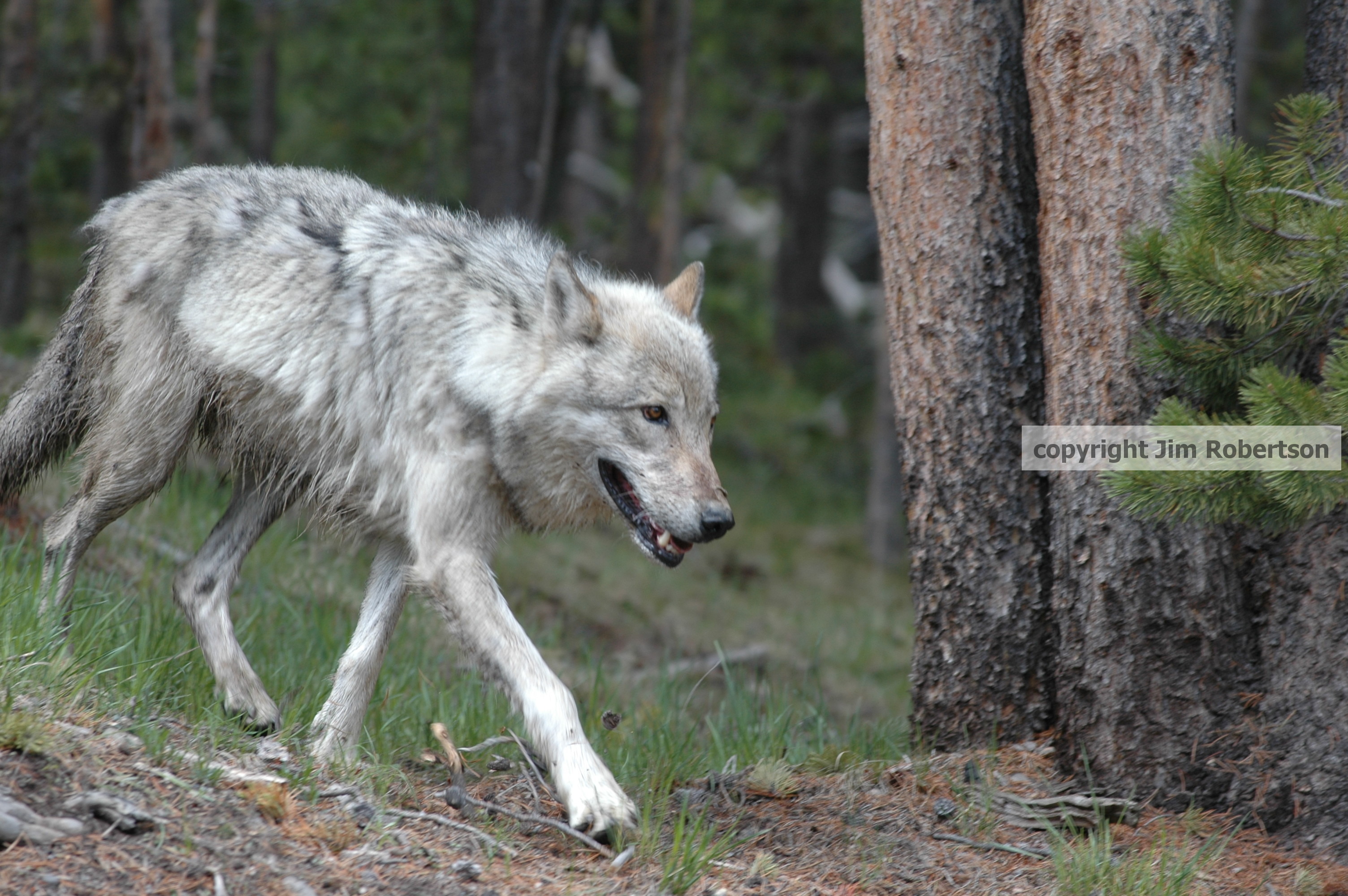


Politicians play to the incoherent fears of wimpy folks.
This is bad for protecting the planet and its wildlife-
Just two months ago many Americans feared they would soon be stricken by dread Ebola and those who survived would have their heads lopped off by ISIS. Fortunately a cure was deployed for both Ebola and the bloody blade of ISIS. The November election cured both.
The practice of politics consists mostly of talk –well, it’s best to say “communication.” A surprising amount of this talk is designed to manipulate fear in the public. Raising the fear level appropriately, or lowering it, or misdirecting it, are tools of the trade.
With the coming of the web, however, it isn’t hard to find some objective facts about what needs to be feared. There are statistics that enable us to find the probability of the possible ways of our demise. Now as a result people can know to worry most about heart disease because they can find their chances of dying from it are one in five. Next on the worry list is cancer, one in seven. Third is stroke, one in 23. Some kind of accident is one in 36, auto accidents being one in 112. Assault by firearms is one in 306, while accidental firearms discharge is one in 6500.
We can also learn what is improbable, such as getting hit by an asteroid is estimated at one in 200,000 to 500,000. Fireworks is one in 386,000. Really improbable is death by falling coconut — one in 250-million. Improbable too is death by terrorist attack. It’s one in 9.3-million. We could go on. Perhaps death by one’s lover sitting on your face (a growing concern of the U.K. government). Whoops! That one is not reported.
What about those big, mean animals? Death by shark attack is one in 200-million. I couldn’t find grizzly bear or wolf, but it is not hard to estimate grizzly bear attack for American to be about one in 225-million. I assume about 1.5 deaths by griz a year. The odds of becoming wolf dinner over the last 20 years appears to have been only one in 6-billion (just one case in the USA)! I calculated this using 300-million Americans and the odds of a fatal wolf attack somewhere in the U.S. once every 20 years.
Some anti-wolf activists call them “wildlife terrorists,” but the odds of death by wolf seem to be close to 6500 times less than attack by real terrorists in the United States, the latter still being very unlikely.
So, given that this information is now available at the click of a mouse, do people appropriately worry a lot about heart trouble and nothing about wolves? Do they change their lifestyle to save their heart, but not avoid outdoor recreation so to avoid wolf trouble? No, it turns out. Many people are wimps about about wolves, yet their fear is incoherent because they think little about their cardio, not even to worry how their fear of wolves raises their blood pressure.
Why is this so – people underestimating danger of real threats and overestimating uncommon things, even incredibly rare events like wolf attack? One reason might be, to quote a recent article by Gary Ferguson, the offerings of the Animal Planet and the Discovery Channel. Recent listings there include “North America’s Top 20 Most Fearsome Predators,” a rerun or two of “Shark Attack,” and a couple of episodes of “Nature’s Deadliest,” or “Rattlesnake Roundup,” or “Yukon Men.”
It would be wrong to blame it all on the media because fear is not the media’s intent. The passive fear generated by them is just a way to make money.
Fear is the intent, however, when some cattlemen’s group predicts wolf attacks on people. They want people to fear for their lives, or more likely, those of “the little children,” when they think of wolves roaming in the hills. It is politically beneficial to them. They make similar predictions about other animals they don’t like.
This brings us to the Center for Biological Diversity (CBD) wanting to restart the plan to restore grizzly bears to central Idaho. We can bet this will be met with blatant fear-mongering. After all, the process was well on its way back at the turn of the millennium, when Idaho’s then- governor Dirk Kempthone stated that the grizzly restoration plan “is perhaps the first federal land-management action in history likely to result in injury or death of members of the public.” He continued railing against “bringing these massive, flesh-eating carnivores into Idaho.” He forgot they were already in Idaho, with a small population in both the Panhandle and in Eastern Idaho, in Yellowstone and adjacent country. He also forgot that grizzlies are omnivores, not carnivores . . . kind of like himself.
Kempthorne’s worries at the time, which seemed almost personal, seemed to cause the Bush Administration to stop the process. Now CBD wants a restart. Politicians and groups usually don’t truly fear big animals because they think they will get eaten though, they have other reasons to oppose them. The fear is meant for the public. Do they disrespect us when they use it, or are we as wimpy as they think and hope?
Unrealistic fear has major consequences for the outdoors, for conservation, and more are worrying about these.
Fear of harm coming to children has resulted in children not playing outdoors unsupervised. There is little unstructured access to it. This writer, being of a earlier generation, had almost total unsupervised time in the outdoors. This was during the days when the crime rate was much higher than now. Now, we have traded fun and fearless time in the sun (and familiarity) for watching “killer” fish and wildlife on TV indoors. This kind of child rearing makes it hard to instill love of the wilderness, though this has always been true to an extent, with most Americans never spending a night outdoors in the woods alone.
Climate change is something that should lead to great anxiety. It is very probable and already underway, but as we have seen, more than half relegate it to a low concern. It is perhaps like a smoker’s view of the dangers of cigarettes. “I want to quit, but not right now.”
It is true that those who hate endangered species are more than proportionately folks who say they love a high CO2 emitting economy. It is also likely true that the same are content with our alienation from nature and have no problem is Americans have an unreasonable fear of the outdoors.
So, I am afraid . . .
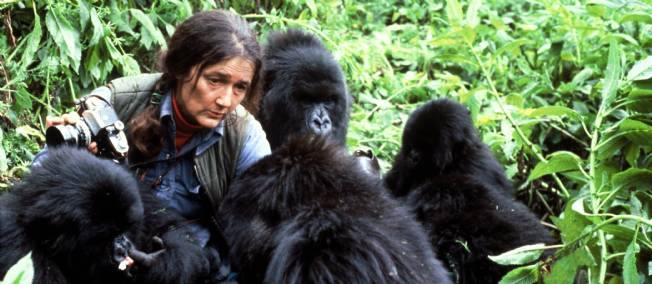
DIAN FOSSEY
January 16th, 1932 – December 26th, 1985
WE SHOULD NEVER FORGET
…
Commentary by Captain Paul Watson
Twenty-nine year ago today Dian Fossey was murdered at her camp in Volcanoes National Park in Rwanda. She was 53.
Fossey was one of the foremost primatologists in the world while she was alive and along with Jane Goodall and Birutė Galdikas, the group of the three most prominent prominent researchers on primates (Fossey on gorillas; Goodall on chimpanzees; and Galdikas on orangutans) sent by Louis Leakey to study great apes in their natural environments.
On three occasions, Fossey wrote that she witnessed the aftermath of the capture of infant gorillas at the behest of the park conservators for zoos; since gorillas will fight to the death to protect their young, the kidnappings would often result in up to 10 adult gorillas’ deaths. Through the Digit Fund, Fossey financed patrols to destroy poachers’ traps in the Karisoke study area. In four months in 1979, the Fossey patrol consisting of four African staffers destroyed 987 poachers’ traps in the research area’s vicinity. The official Rwandan national park guards, consisting of 24 staffers, did not eradicate any poachers’ traps during the same period. In the eastern portion of the park, not patrolled by Fossey, poachers virtually eradicated all the park’s elephants for ivory and killed more than a dozen gorillas.
Fossey helped in the arrest of several poachers, some of whom served long prison sentences.
In 1978, Fossey attempted to prevent the export of two young gorillas, Coco and Pucker, from Rwanda to the zoo in Cologne, Germany. During the capture of the infants at the behest of the Cologne Zoo and Rwandan park conservator, 20 adult gorillas had been killed. The infant gorillas were given to Fossey by the park conservator of the Virunga Volcanoes for treatment of injuries suffered during their capture and captivity. With considerable effort, she restored them to some approximation of health. Over Fossey’s objections, the gorillas were shipped to Cologne, where they lived nine years in captivity, both dying in the same month. She viewed the holding of animals in “prison” (zoos) for the entertainment of people as unethical.
The killing of so many of her beloved Mountain Gorillas provoked Fossey to take bolder actions and to speak out loudly to those she knew were compromising with the poachers.
While she was alive Fossey was severely criticized by many for her opposition to poaching. The WWF and National Geographic both cut off her funding because she refused to back off from her outspoken and physical opposition to poaching.
According to Fossey’s own letters, the Rwandan national park system, the World Wildlife Fund, African Wildlife Foundation, Fauna Preservation Society, the Mountain Gorilla Project and some of her former students tried to wrest control of the Karisoke research center from her for the purpose of tourism, by portraying her as unstable. In her last two years, Fossey did not lose a single gorilla to poachers. Meanwhile the Mountain Gorilla Project, which was supposed to patrol the Mount Sabyinyo area, covered up gorilla deaths caused by poaching and diseases transmitted through tourists. Despite this the public contributions for gorilla conservation went to these organizations and not to Fossey, although the public often believed their money would go to Fossey and this belief was encouraged by many of these same groups, some of whom blatantly exploited her name. As others became rich from her work.
Fossey wrote that much of the money collected for Gorillas was instead put into tourism projects and as she put it “to pay the airfare of so-called conservationists who will never go on anti-poaching patrols in their life.” Fossey described the differing two philosophies as her own “active conservation” or the international conservation groups’ “theoretical conservation.”
This kind of corruption and disingenuous “conservation” has grown more and more prominent since her death as conservation has become a profitable business for many groups. In other words there are groups that do, and then, there are groups that do “mail-outs.”
Today poaching continues to eradicate large numbers in Africa and threatens many species with extinction.
The same method used to capture gorillas is now used in Taiji, Japan to capture dolphins with entire pods being wiped out to provide “specimens” for display in dolphinariums.
One of the theoretical conservationists Dian Fossey had in mind would be British writer Tunku Varadarajan who wrote in The Wall Street Journal in 2002 that Fossey was a “colourful, controversial, and a racist alcoholic who regarded her gorillas as better than the African people who lived around them.”
My own thought is that perhaps she did think exactly that, and if she did, it is because the mountain gorillas are indeed better than the African people who live around them. In fact they are better than all of humanity who lay waste to nature, war on each other and wage hatred towards our fellow humans and all other species. As for being an alcoholic, considering the death and misery she witnessed, I can well understand her turning to the bottle for solace.
She was a great woman, an influential scientist and a courageous conservationist who sacrificed her life in the cause for which she fought so long and so valiantly for.
I have been fortunate to have met Jane Goodall many times and I consider Birute Galdikas a longtime personal friend. I have always regretted that when I was working with elephant conservation work in East Africa that I did not visit Dian in Rwanda. What I do know is that what she did was inspiring. My friend, the late Farley Mowat wrote the book Virunga about Dian Fossey and confided in me many things about her that the public did not know, things about her past that fired the passion in her heart to do what she did and ultimately made her a legend and a symbol of resistance to human corruption and greed.
A few hours before she was murdered she wrote the following words in her journal:
“When you realize the value of all life, you dwell less on what is past and concentrate more on the preservation of the future.”
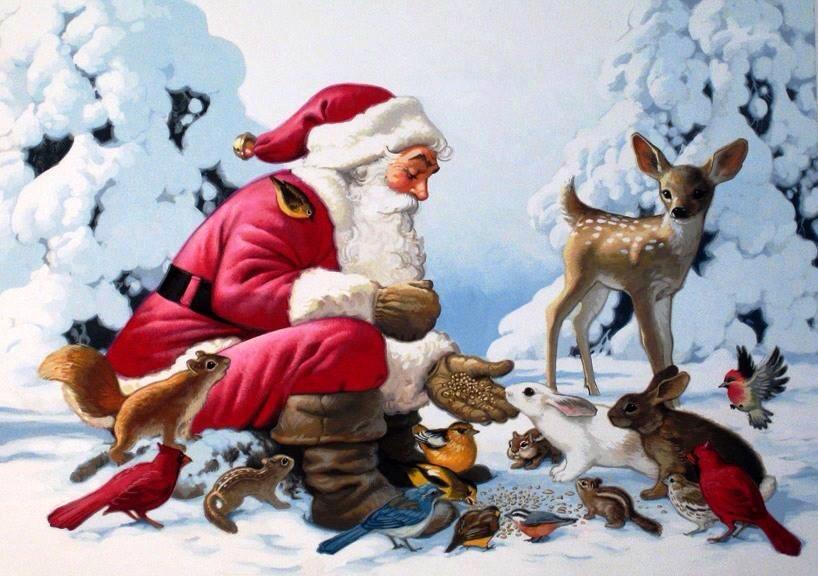
As the Pope recently decreed, animals are hereby allowed into Heaven (as long as they wipe their feet, shut the door behind them and stay off the furniture). Since non-humans are now part of the in-group permitted into Paradise, it’s only logical to assume that God is granting them the occasional miracle too.
You might be wondering why He would put off eternal bliss for animals until their afterlife, considering that He allows untold misery to befall animals on a daily basis—for example, farmed animals like pigs, chickens, cows, lambs and turkeys spend every day of their short lifetimes in the most inhumane of conditions. Apparently he thinks the odd miracle more than makes up for a lifetime of desolation.
Miracles for humans are often shrouded in tragedy. When 800,000 people died in the catastrophic day-after-Christmas Indonesian Tsunami, someone surely declared it a miracle that anyone survived. Animal miracles are also often hard to see at first glance, as well.
Here then, is a partial list of some of the animal miracles of 2014:
– Although 426 wolves were mercilessly killed by hunters and trappers in the Great Lakes area this year alone (272 in Minnesota and 154 in Wisconsin) a federal judge miraculously threw out an Obama administration decision to remove the gray wolf population in the western Great Lakes region from the endangered species list — a decision that banned further wolf hunting and trapping in those states.
-Despite the fact that we’re in the midst of the sixth mass extinction event in Earth’s history, with so many species going extinct per year that no one can possibly keep track, last year remote cameras miraculously captured images of both an ocelot and a jaguar in southern Arizona.
– While no actual examples of rights to which a nonhuman animal is entitled are given and there is no statement that either orangutans in general, or Sandra in particular, are entitled to any rights, a seemingly miraculous landmark decision in Argentina appears to suggest that some non-human beings (animals) are entitled to some kind of rights, and therefore their protection is required…
– Even though more than 155,000 birds were destroyed after a bird flu virus hit 8 locations in B.C.s’ Fraser Valley, extra turkeys are being shipped to southwest Canada this Christmas to make up the shortage caused by the avian flu outbreak, and officials say birds raised within the province are safe to eat.
Wait a minute, that’s not an animal miracle, it’s just another miracle in favor of we overly-successful humans…
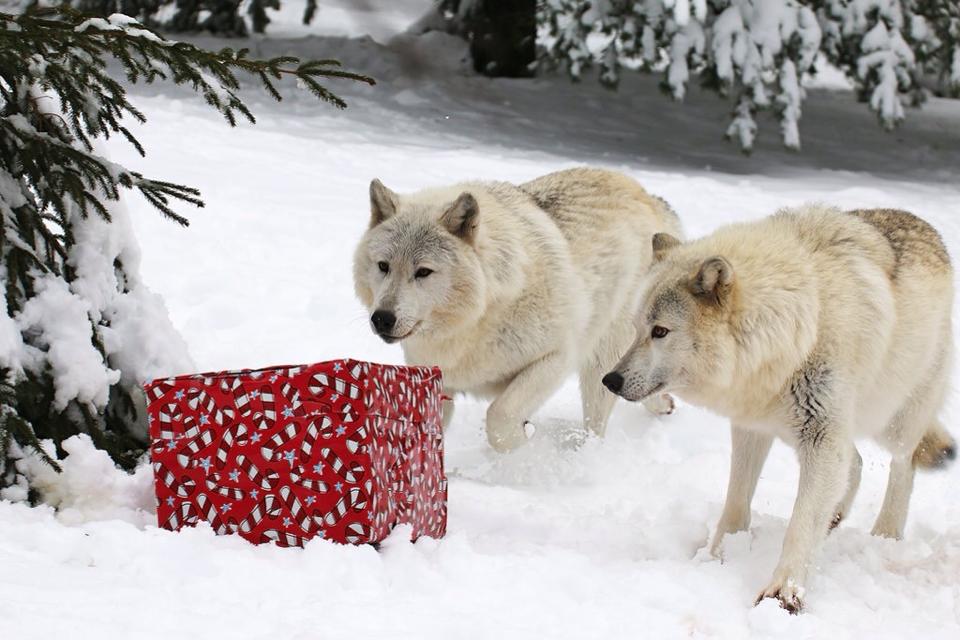

These comments from FB friends aptly set the stage for this article:
–Boo hoo, that’s what happens when you do an asshole thing with other assholes.
Tiffany Compton is a former police officer. She has worked as a guard in an all-male lockup inside a state prison. She knows how to use deadly force and take down bad guys twice her size.
But when Compton, 29, recently found herself alone and intimidated on a recent morning, it wasn’t at the hands of hardened criminals. It was a group of duck hunters.
The Indianapolis woman had walked into a wildlife area office to sign up for her first public-lands duck hunt. She was the only woman in a room full of camouflaged men. Immediately, she felt the stares.
And then, with her back turned, she heard words that made her cringe. It was a father talking to his son.
“As I’m looking at the map,” Compton recalled, “I can hear the dad chuckle, and he says (to his son), ‘I know what you’re looking at.’ ”
Women are increasingly making inroads into traditionally male-dominated hunting and shooting sports. Still, stories such as Compton’s are common — and they illustrate a troubling hurdle for hunting groups, wildlife agencies and outdoor retailers seeking recruits to a sport that isn’t growing.
Based on surveys conducted by the U.S. Census Bureau, the number of U.S. hunters has largely stayed flat or declined in recent years, a factor hunting associations and wildlife officials blame at least in part to increased urbanization. The trend poses a particular challenge for state wildlife agencies, whose funding is almost entirely dependent on fishing and hunting license fees and taxes on hunting and shooting equipment.
“The very last thing you want to do is make a new hunter feel uncomfortable in a scenario like you described when she’s simply trying to draw for a blind,” said Nick Pinizzotto, president and CEO of the U.S. Sportsmen’s Alliance, a hunting and shooting lobbying group. “Women hunting is the best thing that could happen to our sport.”
After all, he said, female hunters — or even women who might be merely supportive of hunting — are key allies at the voting booth or in public policy debates about hunting and gun-rights issues.
‘Be prepared to deal with that sexism’
Of the 13.7 million hunters in the U.S. in 2011, 11 percent were women — and that’s up from 9 percent since 2001.
Women also make up a growing demographic among firearms owners.
For example, the number of women with gun permits in Indiana jumped 42.6 percent since 2012 — from 86,617 permits two years ago to 123,536 through the first quarter of this year. The National Rifle Association estimated that about 25 percent of 70,000 attendees at its Indianapolis convention this year were women.
With female hunters and shooters on the rise, companies have taken notice. Women now increasingly host big-game hunting cable television shows; outdoor retailers have begun marketing products and gear designed for women; and one of the nation’s most venerable hunting magazines, Field & Stream, recently put a female hunter on its cover.
But Compton’s story and several others that female hunters told The Indianapolis Star illustrate the depth of the problems women face from some male hunters. Women shared with The Star not only tales of sexism and mere rudeness, but disturbing examples of sexual harassment in the field, at outdoors retailers and at conferences.
“Men need to be involved in changing that climate,” said Nadya Fouad, a professor at the University of Wisconsin-Milwaukee who has studied barriers to minorities and women entering workplaces dominated by white men. “That’s going to take some time. Meanwhile, women need to be prepared to deal with that sexism.”
‘It is a lot of sexual comments sometimes’
Morgan Born knows a thing or two about that. The 20-year-old mother from Lake County says she basically taught herself, a female friend and her boyfriend how to hunt ducks.
But in spite of being as skilled as any man in the duck blind, she said, there are some public duck hunting areas near her home where she won’t go because “a little circle of men” have repeatedly made her feel uncomfortable or were rude to her and her female hunting partner.
“It gets kind of weird at times,” Born said. “You get a lot of comments like, ‘I wish you would come in our blind.’ It’s like, ‘Oh my God.’ It is a lot of sexual comments sometimes.”
Terri Millefoglie, a conservation officer with the Indiana Department of Natural Resources, said now that she’s an officer with a gun and a badge, male hunters are much more respectful, but she remembers what it was like being the only woman signing in at public hunting areas.
“I got to the point where I asked if I could stay in the car when they (hunting partners) went inside,” she said.
Even in her field, she’s vastly outnumbered by men. She said she’s one of just six women among the 200 officers who patrol the state, enforcing fish and wildlife laws.
‘Maybe I should show a little respect’
Elsewhere, female hunters may fare better. California hunter Holly Heyser, the editor of a waterfowl hunting magazine, says she has not been treated disrespectfully by men out in the field.
But the 49-year-old former newspaper editor says that might be because female hunters are fairly common in California.
Still, Heyser knows that sexism in the hunting world can be very real. She noted there are private duck hunting clubs in California that won’t allow her to hunt.
But Heyser is encouraged to see that among the census survey results, girls younger than 16 make up the fastest-growing segment of hunters, an increase of 165 percent since 1991. The number of male hunters actually declined by 6 percent during that time.
She said she assumes it’s because more fathers are taking their daughters out into the field, a trend she hopes continues. If anything, she said, it might raise the level of decorum among her male peers.
“If a dad took a little girl hunting and they were in line at that check station together — a little girl in her pigtails — and some troglodyte sees a woman hunter and, you know, he thinks, ‘Maybe I should make a comment about her ass,’ maybe he would be smart enough to think, ‘Hey, maybe I should show a little respect,’ ” she said.
Compton, who endured the sexist comments on her first duck hunt, has this advice for her male counterparts:
“Just feel comfortable around us is the biggest thing,” she said. “Don’t make us kind of feel like we’re the outsiders. I think people would be surprised that there are some hard-core women hunters out there.”
The story of Yellowstone’s O6 Female, the iconic Lamar Canyon Pack alpha, who was shot and killed outside the park by a hunter, on December 6, 2012.
We all still mourn her and the thousands of unsung wolves who’ve been slaughtered since the wolf hunts began in 2009!
But this year we can give thanks that Wyoming and Great Lakes wolvesare protected once again under the ESA. A tremendous Christmas gift for wolves, wolf advocates and all who value the natural world!
===

Video: YouTube: The Zone (Nat Geo)
Photo: Courtesy Treehugger (CC BY 2.0 Flickr)
Posted in: gray wolf, Yellowstone wolves, Wolf Wars, Biodiversity
Tags: Yellowstone wolves, Lamar Canyon pack alpha female, O6 Female, Rock Star, tragic loss, Wolf Wars, stop the wolf hunts, Nat Geo
spent 2 nights stuck in snow.
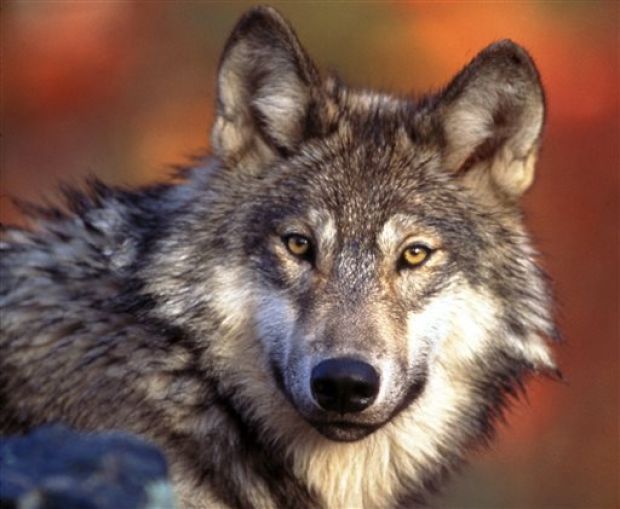
BUTTE – A father and son who were hunting wolves and hadn’t been seen since Saturday morning have been found safe, according to the Beaverhead County Sheriff’s office.
Scott, 56, and Conrad, 33, McDougal were located in a southwest portion of Beaverhead County, approximately 40 miles from Dell Montana. The father and son got stuck in deep snow and spent two nights with their vehicle. Both are in reasonably good condition.
Early Sunday afternoon, Beaverhead Search and Rescue was called to help find the pair. The hunters did not provide relatives information concerning their hunt. Searchers could only identify a starting point based upon the hunters usual activity.
Search members used four-wheel drive trucks and all-terrain vehicles to comb the area outside of Dell, in the area of Sage Creek, until 10 p.m. Sunday.
A helicopter from Lifeflight in Butte assisted as well. Weather was problematic, sheriff Jay Hansen said.
On Monday, 16 searchers planned to work with fixed-wing aircraft and searchers using trucks and ATV’s…
|
|
| Florida Power & Light Co. is planning a huge new power plant on thousands of acres of rural land south of Lake Okeechobee in Hendry County – but this land is prime habitat for the endangered Florida panther. Although they once roamed the entire southeast of the country, there are now only 100 to 160 Florida panthers remaining.
The Florida panther is one of the most at-risk mammals in the country and has been listed on the Endangered Species Act since 1973. This vulnerable animal is protected by Florida state law, yet Florida Light & Power Co. is moving ahead with plans for their massive new plant. The plant would fragment and destroy the panther habitat just north of the Seminole Tribe’s Big Cypress Reservation. Plus, it could use as much as 22 million gallons of water a day, threatening water availability. It’s up to us to send Florida Power & Light Co. the message that building this plant will be bad for business. Let’s act now to demand that they protect the panthers’ habitat and preserve its natural environment for future generations.
|
 |

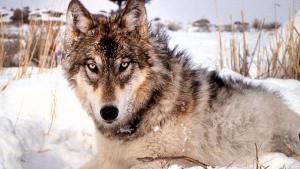

Wolves across the Great Lakes region are back under full protection of the federal Endangered Species Act as a result of a ruling by a federal judge Friday in Washington.
Judge Beryl A. Howell sided with animal rights groups in a 111-page decision stating the U.S. Fish and Wildlife Service went too far in removing federal protections for wolves in nine Great Lakes states in 2012.
The judge ruled that wolves in the Great Lakes states be immediately placed under the protections of the government’s 1978 ruling to protect the animals, which had been hunted, trapped and harassed to near extinction at the time.
By then only a few hundred wolves remained in the continental United States, mostly in and around Minnesota’s Superior National Forest.
Under federal protections for three decades, wolf numbers rebounded in Minnesota, with the animals spreading…
View original post 663 more words

 Exposing the Big Game