Judge orders gray wolf back on endangered list in Wisconsin, 2 other states

TRAVERSE CITY, Mich. — A federal judge on Friday threw out an Obama administration decision to remove gray wolves in the western Great Lakes region from the endangered species list — a decision that will ban further wolf hunting and trapping in three states, including Wisconsin.

The order affects wolves in Minnesota, Michigan and Wisconsin, where the combined population is estimated at around 3,700. The U.S. Fish and Wildlife Service dropped federal protections from those wolves in 2012 and handed over management to the states.

U.S. District Judge Beryl Howell in Washington, D.C., ruled Friday the removal was “arbitrary and capricious” and violated the federal Endangered Species Act.

Unless overturned, her decision will block the states from scheduling additional hunting and trapping seasons for the predators. All three have had at least one hunting season since protections were lifted, while Minnesota and Wisconsin also have allowed trapping. More than 1,500 Great Lakes wolves have been killed, said Jonathan Lovvorn, senior vice president of the Humane Society of the United States, which filed a lawsuit that prompted Howell’s ruling.

“We are pleased that the court has recognized that the basis for the delisting decision was flawed, and would stop wolf recovery in its tracks,” Lovvorn said.

Fish and Wildlife Service spokesman Gavin Shire said the agency was disappointed and would confer with the U.S. Department of Justice and the states about whether to appeal.

“The science clearly shows that wolves are recovered in the Great Lakes region, and we believe the Great Lakes states have clearly demonstrated their ability to effectively manage their wolf populations,” Shire said. “This is a significant step backward.”

State officials acknowledged being caught by surprise and said they would study the judge’s 111-page opinion before deciding what to do next.

“It’s an unusual turn of events,” said Tom Landwehr, Minnesota’s natural resources commissioner.

The Wisconsin Department of Natural Resources said in a statement that it is disappointed by the decision, which it is reviewing along with Department of Justice legal staff to determine how it will impact the state’s wolf management program.

DNR said immediate implications of the ruling include: Permits allowing lethal removal of wolves issued to landowners experiencing wolf conflicts are no longer valid; the department is not authorized to use lethal control as part of its conflict management program; Wisconsin’s law allowing landowners or occupants of the land to shoot wolves that are in the act of depredating domestic animals on private property is no longer in force; landowners may not kill wolves in the act of attacking domestic animals.

Jodi Habush Sinykin, an attorney for Midwest Environmental Advocates, which supports science-based wildlife management, said the decision should serve as a clear signal of caution to people who would kill the nation’s wolves.

Hunters in Wisconsin killed 154 wolves in this year’s hunt that ended Dec. 5, exceeding the state limit for non-tribal hunters by four wolves. In 2013, 257 wolves were killed, six more than the limit. Hunters killed 116 wolves, one more than the limit, in 2012, the first year of the organized hunt.

The ruling is the latest twist in more than a decade of court battles over the gray wolf, which has made a strong recovery after being shot, poisoned and trapped into near-extinction in the lower 48 states in the last century. Only a remnant pocket in northern Minnesota remained when the species was added to the federal endangered list in 1974.

The wolf is now well-established in the western Great Lakes and in the Northern Rockies, where the minimum population is estimated at around 1,700.

Animal protection advocates repeatedly have sued over federal efforts to drop federal protections in both regions, arguing that the wolf’s situation remains precarious.

Meanwhile, ranchers and farmers complain of heavy financial losses from wolf attacks on livestock
Read more: http://host.madison.com/news/local/environment/judge-orders-gray-wolf-back-on-endangered-list-in-wisconsin/article_0e0cf872-e6c8-5450-b4a0-975e82e82f5e.html#ixzz3MSW2ZL9e

Christmas Came Early: Great Lakes Wolf Hunting Ends Now

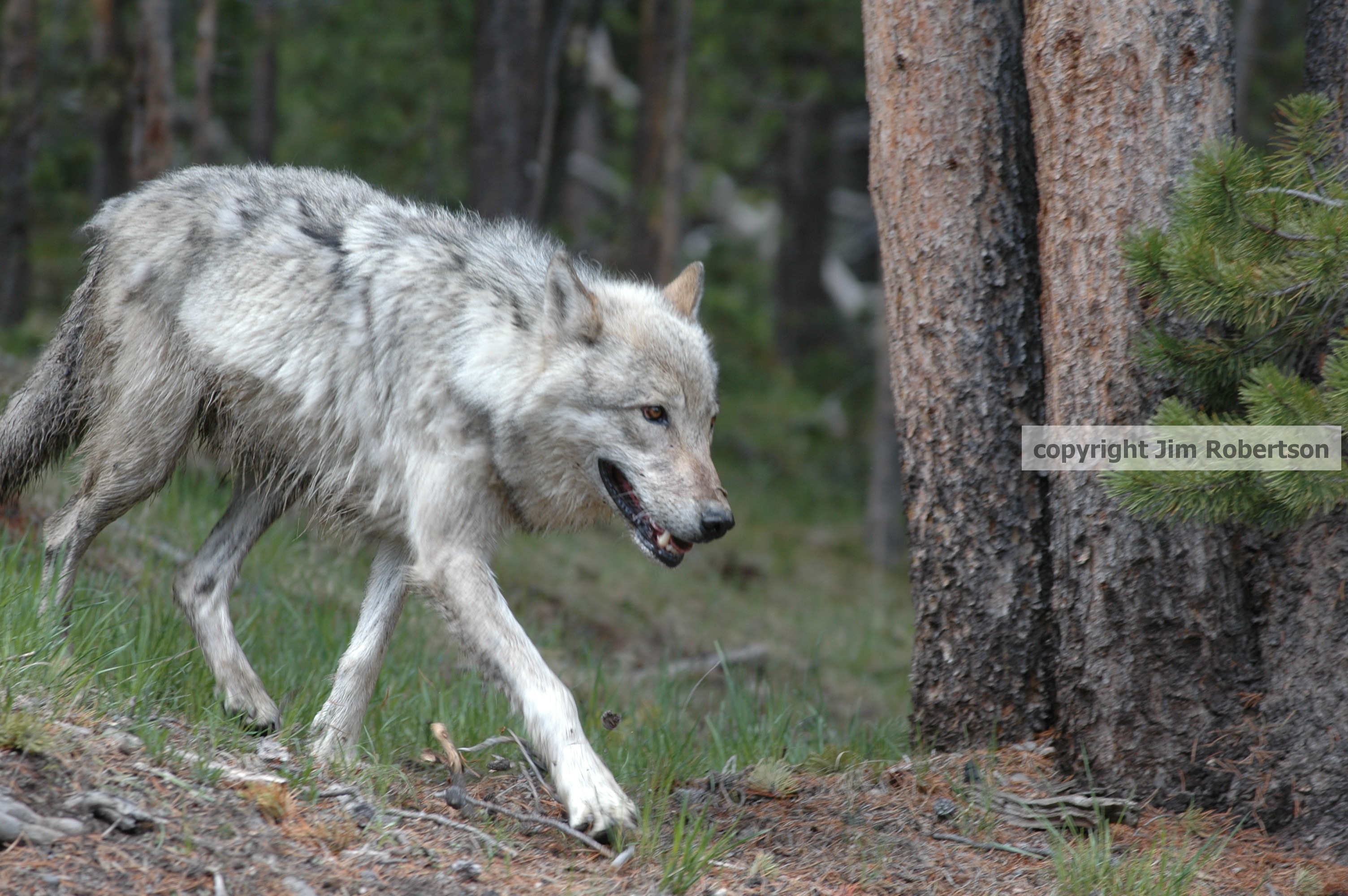
copyrighted Hayden wolf walking

http://www.humanesociety.org/news/press_releases/2014/12/fed-court-wolf-hunt-season-over-121914.html

December 19, 2014

Federal Court: Great Lakes Wolf Hunting Ends Now

Sport Hunting and Trapping of Wolves is Over

Sport hunting and trapping of wolves in the Great Lakes region must end immediately, a federal District Court has ruled. The court overturned a U.S. Fish and Wildlife Service decision that removed Endangered Species Act protections for gray wolves living in the western Great Lakes region, which includes Michigan, Minnesota, and Wisconsin.

The Humane Society of the United States and a coalition of wildlife protection groups, including Born Free USA, Help Our Wolves Live and Friends of Animals and Their Environment, filed suit against the USFWS’s premature December 2011 delisting decision. The decision threatened the fragile remnants of the gray wolf population by confining wolves to a small area in the Great Lakes region—where state politicians and agency officials have rushed forward with reckless killing programs that threaten wolves with the very same practices that pushed them to the brink of extinction in the first place.

Jonathan Lovvorn, senior vice president and chief counsel for animal protection litigation at The HSUS, said, “In the short time since federal protections have been removed, trophy hunters and trappers have killed more than 1,500 Great Lakes wolves under hostile state management programs that encourage dramatic reductions in wolf populations. We are pleased that the court has recognized that the basis for the delisting decision was flawed, and would stop wolf recovery in its tracks.”

In its 111-page ruling, the court chided the USFWS for failing to explain why it ignored the potential for further recovery of wolves into areas of its historic range that remain viable habitat for the species.  The court also noted that the USFWS has failed to explain how the “virtually unregulated” killing of wolves by states in the Great Lakes region does not constitute a continued threat to the species.

Following federal delisting, Wisconsin and Minnesota rushed to enact emergency regulations to allow the first public hunting and trapping seasons in the Great Lakes region in more than 40 years. The states authorized some of the most abusive and unsporting practices, including hound hunting, snares, baiting, electronic calls and the use of leg hold traps. Wisconsin’s wolf hunt ended this year after killing 154 wolves – 80 percent of them in leghold traps. And in Minnesota, 272 gray wolves were killed – 84 percent of the wolves in this year’s late season were trapped.

The Michigan legislature also passed three separate laws to designate wolves as a game species, in its zeal to allow the state to authorize a trophy hunting and trapping season for wolves, and to undermine a fair election by Michigan voters on wolf hunting. However, in response to a referendum campaign launched by The HSUS and other animal welfare and conservation groups and Native American tribes, the 2014 wolf hunt was canceled and voters in Michigan soundly rejected sport hunting of wolves in the recent November election.

Despite rhetoric from state politicians about wolf depredation of livestock, a new study of 25 years of wolf data has shown that hunting wolves may increase livestock losses.  Michigan lawmakers relied on false stories about wolves to push through a hunting season, and had to apologize for misleading statements.

Today’s ruling by the U.S. District Court for the District of Columbia follows another ruling by the same court in September that rejected the USFWS’s decision to delist wolves in the State of Wyoming. The HSUS was also a plaintiff in the Wyoming litigation.

The plaintiffs in the Great Lakes lawsuit were represented in the case by Schiff Hardin, LLP and attorneys within The HSUS’ Animal Protection Litigation section.

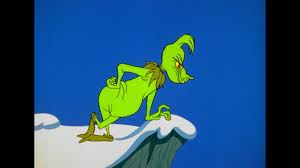
How the Grinch Stole Hunting Season, Redux

….It’s that time of year again….

Every hunter

Down in Hunt-ville

Liked hunting season a lot…

But the Grinch,

Who lives just North of Hunt-ville,

Did NOT!

The Grinch hated hunting! The whole hunting season!

Now, please don’t ask why. There are many good reasons.

It could be because hunter’s heads aren’t screwed on quite right.

It could be, perhaps, that their belts are too tight.

But I think that the most likely reason of all

May be that their hearts (and other parts) are two sizes too small.

“They’re cleaning their guns!” the Grinch snarled with a sneer.grinch

“Tomorrow is hunting season! It’s practically here!”

Then he growled, with his Grinch fingers nervously drumming,

“I MUST find a way to keep hunting season from coming!”

For, tomorrow, he knew…

…All the Hunt-girls and boys

Would wake up bright and early. They’d rush for their toys!

Their rifles, their shotguns—all things that destroy!

And then! Oh, the noise! Oh, the noise! Noise! Noise! Noise!

That’s one thing he hated! The NOISE! NOISE! NOISE! NOISE!

Then they’d carve up the body of some unfortunate beast,

Which was something the Grinch couldn’t stand in the least!

And they’d feast! And they’d feast!

And they’d FEAST! FEAST! FEAST! FEAST!

I MUST stop hunting season from coming!

…But HOW?”

Then he got an idea!

A brilliant idea!

THE GRINCH

GOT A WONDERFUL, BRILLIANT IDEA!

“I know just what to do!” The Grinch laughed in his throat.

And he made a quick Santy Claus hat and a coat.

And he chuckled, and clucked, “What a great Grinchy trick!

With this coat and this hat, I’ll look just like Saint Nick

And I’ll slide down their chimneys, empty bags in my fist,

AND I’LL STEAL ALL THEIR FUCKIN’ AMMO!”

Making Contest Hunts History

On December 3rd, we made history for wildlife! After a long and hard fought battle, the California Fish and Game Commission voted 4 to 1* in favor of a rule that closes the loopholes permitting prizes and inducements for wildlife killing contests, derbies and tournaments that target nongame mammals and furbearers. Read more here in the Huffington Post.

The Commission received tens of thousands of letters in support of our petition calling for a ban on this cruel practice that awards cash and prizes to those who kill the most and largest coyotes, foxes, bobcats and other wild animals.

As President of the California Fish and Game Commission, Michael Sutton said in this exclusive video message, Project Coyote was a leader in this effort and is being increasingly recognized as a leader in state and federal wildlife management reform. President Sutton commends Project Coyote for using science and education to push our predator advocacy platform. That’s what we do best.

We are already working with allies to repeat this victory in other states and regions across the nation. And in California, this is just the first step in predator management reform.  But we need your help to do this! 

photo by Jim Robertson

photo by Jim Robertson

Is it time to end barbaric wildlife killing contests?

Bob Berwyn's avatarSummit County Citizens Voice

asdf Should coyoyes be targeted in wildlife killing contests?

Advocacy groups seek ban in New Mexico

Staff Report

FRISCO — Emboldened by California’s recent ban on wildlife killing contests, wildlife advocates say they want lawmakers to enact similar restrictions in New Mexico, which holds more such events than any other state.

A coalition of 10 groups is calling on the governor and state legislature to ban contests that target coyotes, bobcats, foxes, prairie dogs and other animals, calling them immoral and biologically unsound.

View original post 590 more words

Filling out the dialogue on trapping

Leslie's avatarLeslie Patten Books: Wild Places, Sacred Spaces

Last week in Casper, a family was walking their three St. Bernard dogs in a public area within a mile from their home.  The dogs were legally off-lease, and under voice command, but the smell of baited traps drew all three of them into the bush where snares choked them to death.  The family and their kids tried desperately to loosen the cables that constitutes a snare trap, but lacking wire cutters, the dogs died within minutes.

Because more people are using public lands to recreate, more and more dogs are being caught in traps placed near trails and roads.  These and other incidents have produced a groundswell of outrage which is growing across the West.  Organizations like Wyoming Untrapped and Footloose Montana  have sprung up to answer this need. Bobcat trapping around the perimeter of Joshua Tree National Park prompted California to establish the Bobcat Protection Act of 2013 banning trapping around national and state parks and…

View original post 667 more words