The girl who gets gifts from birds

http://www.bbc.com/news/magazine-31604026

The girl who gets gifts from birds

Eight-year-old Gabi Mann sets a bead storage container on the dining room table, and clicks the lid open. This is her most precious collection.

“You may take a few close looks,” she says, “but don’t touch.” It’s a warning she’s most likely practised on her younger brother. She laughs after saying it though. She is happy for the audience.

Inside the box are rows of small objects in clear plastic bags. One label reads: “Black table by feeder. 2:30 p.m. 09 Nov 2014.” Inside is a broken light bulb. Another bag contains small pieces of brown glass worn smooth by the sea. “Beer coloured glass,” as Gabi describes it.

Each item is individually wrapped and categorised. Gabi pulls a black zip out of a labelled bag and holds it up. “We keep it in as good condition as we can,” she says, before explaining this object is one of her favourites.

There’s a miniature silver ball, a black button, a blue paper clip, a yellow bead, a faded black piece of foam, a blue Lego piece, and the list goes on. Many of them are scuffed and dirty. It is an odd assortment of objects for a little girl to treasure, but to Gabi these things are more valuable than gold.

Gifts given by the crows

She didn’t gather this collection. Each item was a gift – given to her by crows.

She holds up a pearl coloured heart. It is her most-prized present. “It’s showing me how much they love me.”

Gabi’s relationship with the neighbourhood crows began accidentally in 2011. She was four years old, and prone to dropping food. She’d get out of the car, and a chicken nugget would tumble off her lap. A crow would rush in to recover it. Soon, the crows were watching for her, hoping for another bite.

As she got older, she rewarded their attention, by sharing her packed lunch on the way to the bus stop. Her brother joined in. Soon, crows were lining up in the afternoon to greet Gabi’s bus, hoping for another feeding session.

Gabi’s mother Lisa didn’t mind that crows consumed most of the school lunches she packed. “I like that they love the animals and are willing to share,” she says, while admitting she never noticed crows until her daughter took an interest in them. “It was a kind of transformation. I never thought about birds.”

In 2013, Gabi and Lisa started offering food as a daily ritual, rather than dropping scraps from time to time.

Each morning, they fill the backyard birdbath with fresh water and cover bird-feeder platforms with peanuts. Gabi throws handfuls of dog food into the grass. As they work, crows assemble on the telephone lines, calling loudly to them.

Gabi feeding birds in her garden

It was after they adopted this routine that the gifts started appearing.

The crows would clear the feeder of peanuts, and leave shiny trinkets on the empty tray; an earring, a hinge, a polished rock. There wasn’t a pattern. Gifts showed up sporadically – anything shiny and small enough to fit in a crow’s mouth.

One time it was a tiny piece of metal with the word “best” printed on it. “I don’t know if they still have the part that says ‘friend’,” Gabi laughs, amused by the thought of a crow wearing a matching necklace.

When you see Gabi’s collection, it’s hard not to wish for gift-giving crows of your own.

“If you want to form a bond with a crow, be consistent in rewarding them,” advises John Marzluff, professor of wildlife science at the University of Washington. He specialises in birds, particularly crows and ravens.

Crow on feeder

What food is best? “A few peanuts in the shell,” he says. “It’s a high-energy food… and it makes noise when you throw it on the ground, so they hear it and they quickly habituate to your routine.”

Marzluff, and his colleague Mark Miller, did a study of crows and the people who feed them. They found that crows and people form a very personal relationship. “There’s definitely a two-way communication going on there,” Marzluff says. “They understand each other’s signals.”

The birds communicate by how they fly, how close they walk, and where they sit. The human learns their language and the crows learn their feeder’s patterns and posture. They start to know and trust each other. Sometimes a crow leaves a gift.

But crow gifts are not guaranteed. “I can’t say they always will (give presents),” Marzluff admits, having never received any gifts personally, “but I have seen an awful lot of things crows have brought people.”

Not all crows deliver shiny objects either. Sometimes they give the kind of presents “they would give to their mate”, says Marzluff. “Courtship feeding, for example. So some people, their presents are dead baby birds that the crow brings in.”

Read More: http://www.bbc.com/news/magazine-31604026

How Many Wolves Died for Your Hamburger?

by               06/27/2014

Population and Sustainability Director, Center for Biological

http://www.huffingtonpost.com/stephanie-feldstein/how-many-wolves-died-for-your-hamburger_b_5535494.html

When you bite into a hamburger or steak, you already know the cost to the cow, but what about the wolves, coyotes, bears and other wildlife that were killed in getting that meat to your plate?

There are a lot of ways that meat production hurts wildlife, from habitat taken over by feed crops to rivers polluted by manure to climate change caused by methane emissions. But perhaps the most shocking is the number of wild animals, including endangered species and other non-target animals, killed by a secretive government agency for the livestock industry.

Last year Wildlife Services, an agency within the Department of Agriculture, killed more than 2 million native animals. While wolf-rancher conflicts are well known, the death toll provided by the agency also included 75,326 coyotes, 3,700 foxes and 419 black bears. Even prairie dogs aren’t safe: They’re considered pests, blamed for competing with livestock for feed and creating burrow systems that present hazards for grazing cattle. The agency killed 12,186 black-tailed prairie dogs and destroyed more than 30,000 of their dens.

The methods used to kill these animals are equally shocking: death by exploding poison caps, suffering in inhumane traps and gunned down by men in airplanes and helicopters.

How many of the 2 million native animals were killed to feed America’s meat habit? No one really knows. This is where the secrecy comes in: While we know that they frequently respond to requests from the agricultural community to deal with “nuisance animals,” Wildlife Services operates with few rules and little public oversight. That’s why the Center for Biological Diversity, where I work, has called on the Obama administration to reform this rogue agency to make it more transparent and more accountable. Despite the growing outcry from the public, scientists, non-governmental organizations and members of Congress, the federal agency shows no signs of slowing its killing streak.

There are two important ways that you can help rein in Wildlife Services. First, sign our online petition demanding that the Department of Agriculture create rules and public access to all of the agency’s activities. Second, start taking extinction off your plate. Our growing population will mean a growing demand for meat and for the agency’s deadly services, unless we take steps to reduce meat consumption across the country. By eating less or no meat, you can reduce your environmental footprint and help save wildlife.

Also see: https://exposingthebiggame.wordpress.com/2012/08/18/save-the-wolves-go-vegan/

copyrighted Hayden wolf walking

the Dangerous “Noble Savage” Myth

Dave Foreman, formerly of Earth First! and now The Rewilding Institute, wrote in the glossary of his timely over-population book, Man Swarm and the Killing of Wildlife, of the “Noble Savage Myth: Jean Jaques Rousseau is the best-known flag-waver for the myth of the noble savage, which holds that man in a natural state was noble, peaceful, and ecologically sweet before being besmirched by civilization. Anthropology, archaeology, paleontology, history, field biology, conservation, and so on have shown this belief to have no ground on which to stand.” Foreman recommends the book, Constant Battles, by archeologist Stephen A. LeBlanc as the current must read on the subject. Having been keenly interested in the subject since reading Jarred Diamond’s The Third Chimpanzee, Richard Wrangham’s Demonic Males, and even before, I of course ordered Constant Battles to fill in the blanks.

The book arrived in the mail yesterday and I couldn’t wait to get started. From that book’s prologue: “War today and in the last century seems unprecedented in intensity, ferocity, and number of lives claimed. With this ominous could hanging over our heads, it’s easy to believe that humans have somehow abandoned the benign behavior that characterized our earliest history. What happened to those ‘noble savages’ of old who were content to live in peace and harmony and were not out to colonize and exploit the undeveloped world? The ecological catastrophes occurring all around us present another modern maelstrom—and no ecosystem is immune, from the tropical rainforest, from the pristine arctic to the ozone layer. Humankind today seems to have abandoned a reverence for nature and lost long-held abilities to live in ecological balance. Has ‘progress’—that escalating desire to be bigger, better, faster, stronger—totally extinguished our ancestral instincts to grow everything we consume and hunt only what we need to sustain us? Many view the march of civilization not as a blessing but a curse, bringing with it escalating warfare and spiraling environmental destruction unlike anything in our human past.

“Contrary to exceedingly popular opinion, and as bad as our problems may be today, none of this is true. The common notion of humankind’s blissful past, populated with noble savages living in a pristine and peaceful world, is held by those who do not understand our past and who have failed to see the course of human history for what it is.

“…I have spent my entire career attempting to make sense of the past, and I find the world completely at odds with popular misconceptions. Not only is the past I observed not peaceful and pristine, but, cruel and ugly as it may be, it provides great insight into the present. The warfare and ecological destruction we find today fit into patterns of human behavior that have gone on for millions of years. Humans have been destroying their environment for a long time and continue to do so for the same reasons they did in the past… [P]roper grasp of the past has invaluable benefits for humankind today. We are far better off understanding the past than ignoring it, or believing a mythical version of history that bears little to resemblance to what actually took place.

“A myth, due to its very nature, is not grounded in any reality, so it is susceptible to total manipulation. Though we can manipulate reality, it is subject to objective questioning, because we presume there is an objective basis to it. Once we accept a myth as truth without any consideration of its reality, how do we question its implications or manipulations on objective grounds? Myths are dangerous, and we are better off without them…”

00-intro

Patricia Randolph’s Madravenspeak:The wisdom of John Livingston: ‘The Fallacy of Wildlife Conservation’

I ordered 2 of John Livingston’s book’s last week…

dvoight09's avatarWisconsin Wildlife Ethic-Vote Our Wildlife

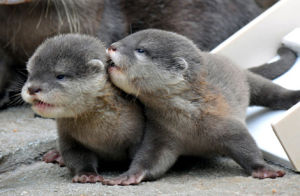
54dd14929599f.preview-300 Baby otters

“I think it (hunting) always was abnormal behavior. It was the fullest expression of the commodification of nature.” — John Livingston (1923-2006)

This column is a resource for people interested in rescuing wildlife as our brothers and sisters — and in the living earth surviving intact for its own sake. It is a challenge to conservationists. Today it focuses on the wisdom of John A. Livingston.

Livingston, who died in 2006, served as executive director of Canadian Audubon in the 1950s, left to produce “The Nature of Things” for CBC television in 1962-1968, then taught ecology at York University. This column consists primarily of excerpts from Farley Mowat’s 1990 interview with Livingston, which is included in “The John A. Livingston Reader,” published in 2007. The reader also includes “The Fallacy of Wildlife Conservation,” originally published in 1981, and “One Cosmic Instant: A Natural History of Human Arrogance,” first…

View original post 818 more words

Number of wolves in Oregon grows to 77

http://www.statesmanjournal.com/story/news/2015/02/24/number-wolves-oregon-increase/23968745/


The number of gray wolves in Oregon has increased for the sixth year in a row, as the species slowly expands into the western half of the state, according to the annual report issued by the Oregon Department of Fish and Wildlife.

The number of wolves increased to 77 confirmed wolves in nine packs, up from 64 wolves in eight packs the previous year. Twenty-six of the wolves listed were pups less than a year old.

Seven wolves have now reached the Cascade Range, including the famous wandering wolf OR-7, which became head of the newly formed Rogue Pack, which has five members including three pups. The pups marked the first known wolf reproduction in the Oregon Cascades since the mid-1940s.

The Keno Pair, also in the Southern Cascades, has two members.

Even with the increase, ODFW said that the number of wolf conflicts with livestock (depredation) decreased to 11 incidents, down from 13 the previous year.

Wolves in Oregon are listed statewide as endangered under the Oregon Endangered Species Act. Wolves occurring west of Oregon Highways 395/78/95 are federally protected as endangered under the federal ESA.

Wolves in eastern Oregon are now under “Phase II” management, which triggers a status review and could result in changes to how wolves are managed.

Zach Urness has been an outdoors writer, photographer and videographer in Oregon for seven years. He is the author of the book “Hiking Southern Oregon”

Go Vegan or Die

10959824_10152683692271188_8744564479023804055_n

On the tip of one my K2 Apache Outlaw skis is a sticker of a skull and crossbones with the shocking statement, “Go Vegan or Die.” That sentiment might seem mean-spirited unless taken as fair warning about the very real health risks associated with eating meat—such as the greatly increased risk of cancer.

Like the anti-smoking campaign slogan, “Quit Smoking or Die,” “Go Vegan or Die” is simply good advice for people seeking longevity. (Stone-age meat-eaters seldom lived past 30, after all.)

There’s also a less-charitable motive for the slogan on the sticker. Anybody who has been the victim of thoughtless mockery from a meat-eater for the selfless act of eschewing animal flesh would be tempted to use the slogan, “Go Vegan or Die,” as would anyone frustrated by the results of their futile attempts to help others see that animal slaughter is cruelty and humans can live quite happily on a plant-based diet—sans the complicity in causing animal suffering.

Indeed, “Go Vegan or Die” could be a message to Homo sapiens that if they don’t want to exceed their carrying capacity, and ultimately join the list of species headed for extinction, they must change their murderous ways.

Displayed on the left-hand column of the home page of my wildlife photography site, “Animals in the Wild,” is a kill counter that continually adds to the ever-growing list of animals slaughtered for the sake of human hedonism.

If you ever need a starkly chilling reminder of why someone might utter the shocking slogan, “Go Vegan or Die,” stop in for a visit and watch how fast the numbers fly…

………………………………

Animals Slaughtered:

Number of animals killed in the world by the fishing, meat, dairy and egg industries, since you opened this webpage.

1,516,838 marine animals
773,503 chickens
38,123 ducks
20,966 pigs
14,444 rabbits
11,646 turkeys
8,983 geese
8,680 sheep
5,815 goats
4,921 cows / calves
1,095 rodents
1,062 pigeons / other birds
388 buffaloes
270 dogs
67 cats
67 horses
51 donkeys and mules
34 camels / camelids

View in real-time here.

“Social Acceptance” of Wolves has Disappeared in NE Washington

[Never mind that wolves are social animals too…]

From Capital Press: http://www.capitalpress.com/Washington/20150224/wolf-cougar-and-hemp-bills-meet-deadline-to-stay-alive-in-olympia

Here is a look at where some agriculture-related bills stand:

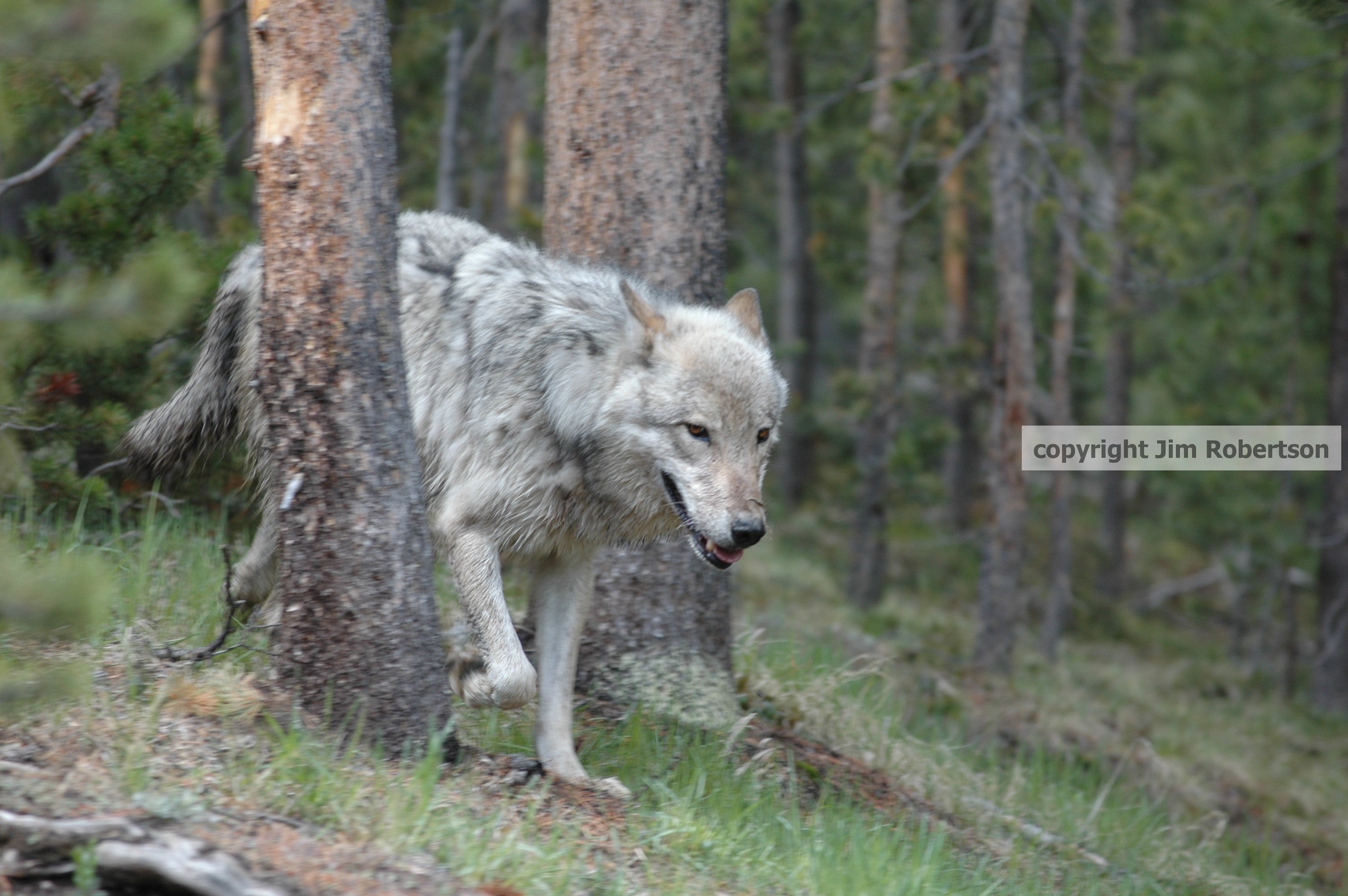
• Wolves: House Bill 2107 requires the Department of Fish and Wildlife to amend by June 30, 2017, the wolf recovery plan. The bill instructs game managers to review thecopyrighted Hayden wolf in lodgepoles plan in light of the fact that wolves are concentrated in northeast Washington but have not spread throughout the state.

The bill got bipartisan support in the House Agriculture and Natural Resources Committee. But it may be amended by the full House to require that changes to the wolf plan be reviewed under the State Environmental Policy Act, a lengthy process.

Northeast Washington officials say “social acceptance” of wolves has about disappeared in their corner of the state. If SEPA is attached to HB 2107, any change to the wolf recovery plan likely will be pushed back much later than mid-2017.

• Cougars: SB 5940 would allow hounds be used to pursue or hunt cougars in Ferry, Stevens, Pend Oreille, Chelan and Okanogan counties for the next five years. Other counties could opt in. The bill received bipartisan support in the Senate Natural Resources and Parks Committee.

Alberta Wolf Kill and “Collateral Damage”‏

Besides the 1000 wolves at least 163 cougars have been killed, along with 38 wolverine, etc. It also demonstrates what happpens when you allow habitat degradation to occur.

http://www.raincoast.org/2015/01/alberta-wolf-slaughter/

Alberta slaughters more than 1,000 wolves and hundreds of other animals

WARNING:  THIS A DISTURBING ACCOUNT OF ANIMAL SUFFERING AND SLAUGHTER

Killing wolves for

Published on 2015 · 01 · 10 by Raincoast
Raincoast scientists Dr. Paul Paquet and Dr. Chris Darimont, along with colleagues at the University of Saskatchewan, have published the paper “Maintaining Ethical Standards during Conservation Crises” in the journal Canadian Wildlife Biology and Management.  It  addresses the ethics and science of the  Alberta wolf cull as published in Canadian Journal of Zoology, November 2014.
Download this paper: Brook et al 2015 CWBM
Download the press release
The wolf kill
For the last few years, Raincoast has been sounding the alarm about the slaughter of wolves at the hands of the Alberta government.  This slaughter is a consequence of Alberta oil and gas development, and other industrial activities, that have endangered caribou.  The Alberta government and its resource industries have transformed the caribou’s boreal habitat into a landscape that can no longer provide the food, cover and security that these animals need to survive.  Rather than address this problem, Alberta has chosen to scapegoat wolves that are using a huge network of new roads and corridors to reach dwindling numbers of caribou.
For a decade now, the Alberta government has hired hitmen and biologists to kill wolves, more than 1,000 of them, through aerial gunning from helicopters, poisoning with strychnine, and allowing them to be strangled with neck snares.  They also trap and collar wolves that become “Judas wolves,” leading the gunners to the pack.  After shooting all but the collared wolf, the collared wolf then leads the gunners to more wolves and then watches as they too are slaughtered.
Not just wolves
In addition to aerial gunning, strychnine is set out to poison wolves.  Many other species that incidentally eat the poison also die. We do not have a death toll for the additional animals that died from poisoning. Neck snares, another form of torture and suffering, are also permitted.  Internal Alberta government documents show that up until 2012, neck snares were the primary cause of death for 676 animals, in addition to the wolves, around the Little Smokey region in Alberta. Note caribou, the reason for the wolf cull in the first place, are dying as incidental deaths in neck snares.
Number of animals/species that have died incidentally in Alberta’s wolf kill (up to 2012) near the Little Smokey region, primarily in neck snares.  Numbers obtained from internal Alberta government documents.
Black bear 12
Caribou 2
Cougar 163
Deer 62
Eagle (bald and golden) 40
Fisher 173
Fox 3
Grizzly bear 3
Goshawk 1
Lynx 70
Moose 12
Otter 73
Owls 12
Small mammals (marten, mink, skunk, squirrel, weasel) 12
Wolverine 38
TOTAL 676
Calling it science
In 2014, 5 authors (3 from Alberta government, 1 from University of Montana, 1 from University of Alberta) published a paper in the Canadian Journal of Zoology (CJZ) called Managing wolves to recover threatened caribou in Alberta.  This paper describes, condones, and implements the use of aerial gunning and strychnine poisoning as acceptable methods to undertake their study on caribou survival. Neck snares are not included in the journal study methods, despite their known use for killing wolves in the Little Smokey Region.
A response to this paper was published in the journal of Canadian Wildlife Biology and Management in February 2015  by Raincoast scientists and colleagues called “Maintaining Ethical Standards during Conservation Crises“.
The above response addresses the issue of ethics and animal welfare in science. Research on animals in Canadian universities and papers published in the CJZ must meet ethical standards from an animal care committee (nationally, the Canadian Council on Animal Care). Poisoning and aerial gunning (using Judas wolves)  do not meet these criteria.  Below is the call for proposal from the beginning of the study with the statement that the lethal methods being employed were approved according to protocols 008 and 009.  Also below are protocols 008 and 009 that show such activities are not permitted.  The objective of these protocols (specifically 9) is to enforce the humane treatment of animals and ensure minimal stress. In the event that a wolf is injured during a study it describes how euthanasia must occur.  A gun shot is explicit to extreme cases in close range where a single shot to the head causes instant death.  To imply such permits allow a wildlife slaughter is dishonest, at best.
Huffington Post Articles
Additional files for download