
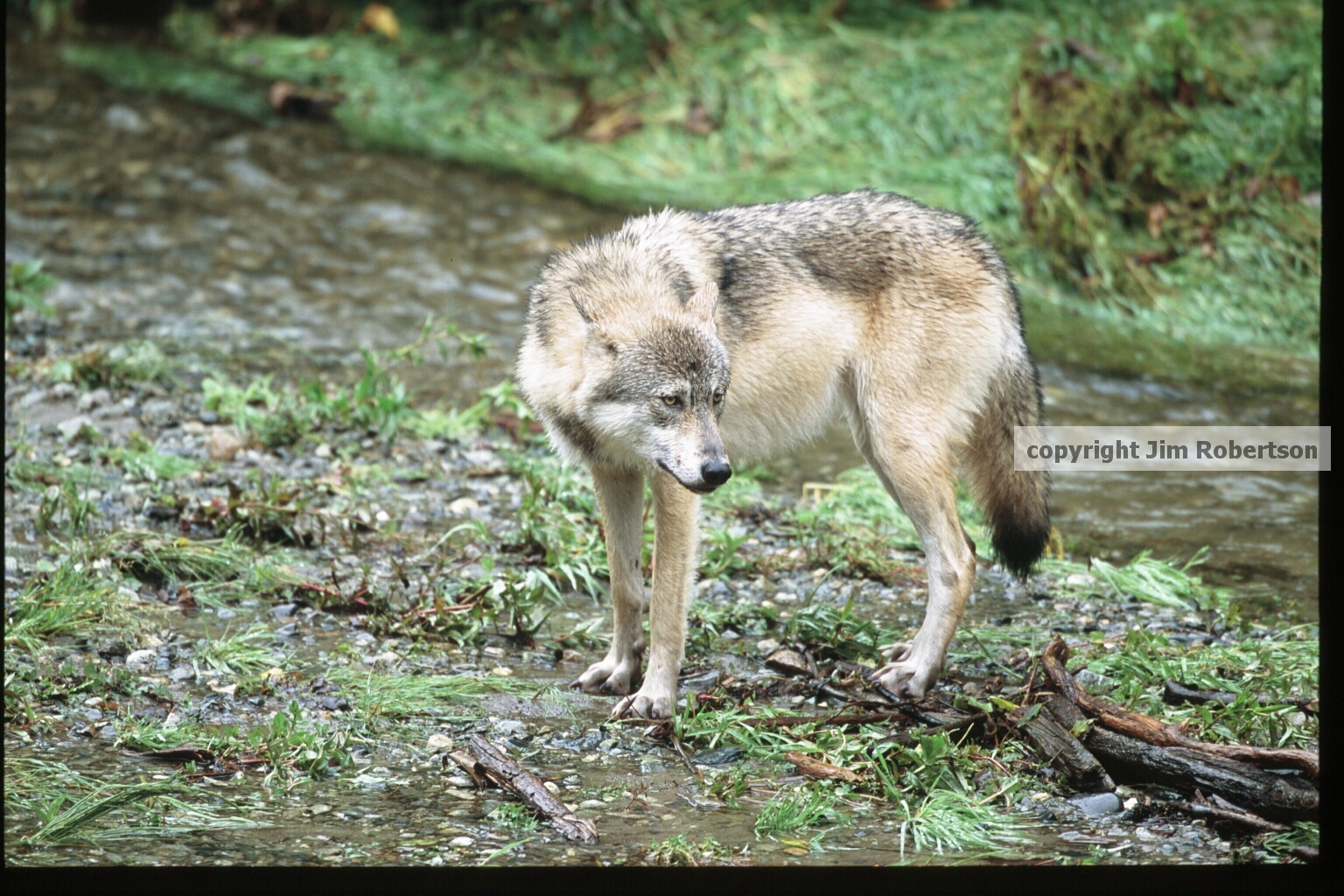
“Since 2009 more than 1,300 wolves have been hunted or trapped in Idaho, and another nearly 500 have been lethally removed from Idaho’s landscape,” Andrea Santarsiere, an attorney with the Center for Biological Diversity, said in a statement. “In the face of these astounding numbers, it’s no wonder that Idaho may have experienced a nearly 50 percent drop in breeding pairs.”
The Idaho Department of Fish and Game in a 70-page report released April 3 said there were at least 770 wolves in the state, with a minimum of 26 breeding pairs, as of Dec. 31, 2014. The Center notes that’s a steep drop from the 49 breeding pairs in 2009, when wolves in Idaho reached their peak.
The Center also questions the state agency’s estimate of 6.5 wolves per pack, a key number as it’s part of an equation — when multiplied by the number of packs in the state— to tally the overall population.
Jim Hayden, a biologist with Fish and Game, defended the state report’s estimate of the minimum number of wolves in Idaho. Hayden is listed as an editor of the report.
“The 770 is a number we’re very confident with,” he said. “We know the actual truth is higher than that, we just don’t know how far higher.”
He said the agency stopped counting breeding pairs of wolves after surveying 43 packs because it’s expensive and the number had cleared the minimum as required by the U.S. Fish and Wildlife Service. The federal agency could retake management control of the Idaho wolf population if numbers fall below certain criteria.
If the state fails to maintain 15 breeding pairs and 150 wolves over any three-year period, or if the population falls below 10 breeding pairs and 100 wolves in any year, the federal agency could take over.
Mike Jimenez, Northern Rocky Mountain wolf coordinator for Fish and Wildlife, said the federal agency reviewed Idaho’s methodology and is confident in the numbers.
“From our perspective, they are far above recovery goals,” he said. “How to manage wolves and hunt wolves — that’s a state issue.”
The wolf population has grown so much, Jimenez said, that biologists can no longer rely on using radio collars when doing counts.
“We’re way past that,” he said. “We have a very large wolf population in the Northern Rockies. We’re trying to reduce the need for radio collars.”
Fish and Wildlife estimates that a minimum of 1,783 wolves in more than 300 packs roamed the six-state region at the end of last year.
Hayden said that radio collars on 32 packs in Idaho were used by Fish and Game to come up with 6.5 wolves per pack, which is an increase from 5.4 wolves per pack the previous year.
But he said the agency is relying more on remote cameras and, this spring, will be collecting scat at wolf rendezvous sites to get DNA samples. The DNA can help determine pack size and the number of pups. He noted the wolf population is expected to jump 40 percent with the addition of pups this spring.
The DNA can also be used to help determine harvest levels by hunters.
Some groups, including the Center for Biological Diversity, would rather there be no harvest.
“We don’t think wolves should be hunted at all,” Santarsiere said. “But with such aggressive killing of a species so recently considered endangered, there at least needs to be careful monitoring.”
 Exposing the Big Game
Reblogged this on Sherlockian's Blog.
I thought I had heard that no actual counts are done by Idaho F&G (too hard to do! Awwww.) – just estimates. You can’t rely on an estimate. I thought the report was framed in a much too optimistic a way also. Is there an account of illegally taken wolves, poached wolves? Or did that fall under “Other Human Causes?” In addition to the 90 or so percent mortality caused by humans.
You rock, Jim Robertson!
Idaho officials are overestimating the number of wolves in the state for a number reasons including relying on sightings by hunters rather than using only trained professionals, a conservation group said.
Oh yeah, that’s really objective isn’t it. Some of them can’t tell a coyote from a wolf. Or so it would appear. *facepalm*
I think in the same breath the Idaho Fish & Game was defending the ‘I tot it was a coyote’ excuse by affirming how difficult it can be to tell the two apart – now they are saying that hunter sightings can be relied upon? It is hard to believe these people because we all know they get their marching orders from the Wolf Butcher Otter. How long has that guy been in office anyway?
The collaring issue reminded me of articles I have read about Idaho biologists questionable practice of invading wolf dens to collar pups. Even Carter Neimeyer doesn’t trust it, and the other comments don’t either. 😦
http://www.spokesman.com/stories/2014/jun/01/idaho-department-of-fish-and-game-defends/
Reblogged this on Coalition for American Wildbirds.