
April 21, 2015 by Donny Moss
On the topic of our planet’s future, Jane Goodall, the legendary chimpanzee researcher, does not mince words: “How is it possible that the most intellectual creature that has ever walked on planet earth is destroying its only home?” Dr. Goodall, who is 81, spends 300 days year traveling the world in an effort to save it. The biggest problem, she says, is climate change. And the biggest culprit? Animal agriculture.
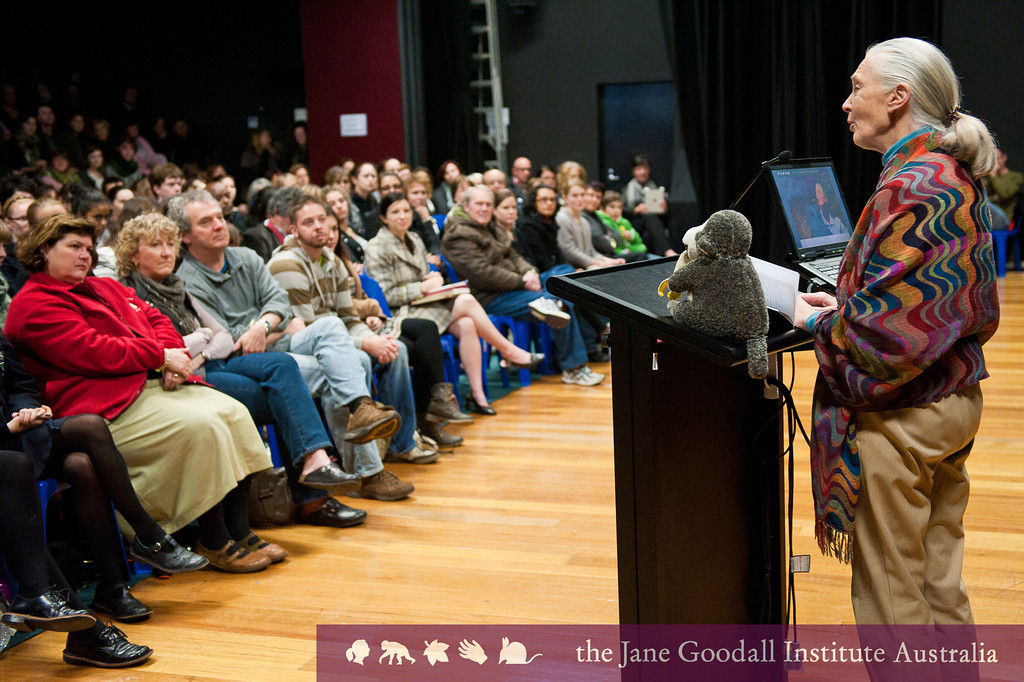
In a lecture to hundreds of fans in NYC on April 15th, Dr. Goodall explained that agribusinesses are clearing rainforests in the Amazon to graze cattle and grow crops to feed them. Without rainforests – the “lungs of the earth” – the planet’s ability to convert carbon dioxide (CO2), a greenhouse gas, into oxygen is compromised.

Even more harmful than CO2, Goodall said, is the methane gas emitted in cow farts. As developing countries adopt Western diets heavy in animal protein, more methane and CO2 are released into the atmosphere, further warming the planet and jeopardizing our ability to inhabit it.
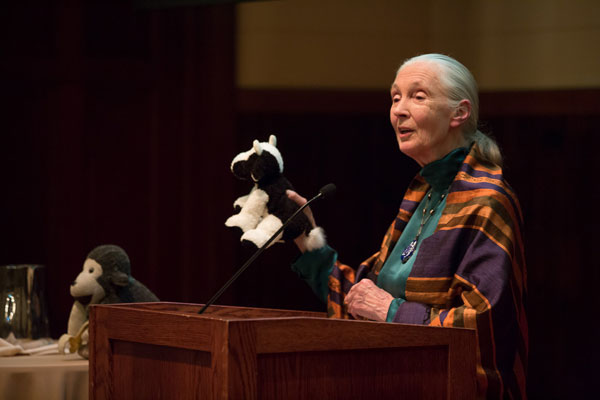
During her talk, Dr. Goodall described some of the other destructive effects of animal agriculture, including land and water pollution, antibiotic resistance, depletion of fresh water resources and animal cruelty, which is was motivated her to go veg. In a recent interview with the Toronto Globe & Mail, she said, “I became a vegetarian because of the horrendous suffering on factory farms and in abattoirs.”
Jane Goodall paints a grim picture of the state of the planet, but she is hopeful that humans will work together to save ourselves from ourselves. And she offers some advice that each of us can put into action today:
- Go vegetarian.
- Consume less. The more we buy, she argues, the more natural resources we extract from the planet. How much stuff do we really need?
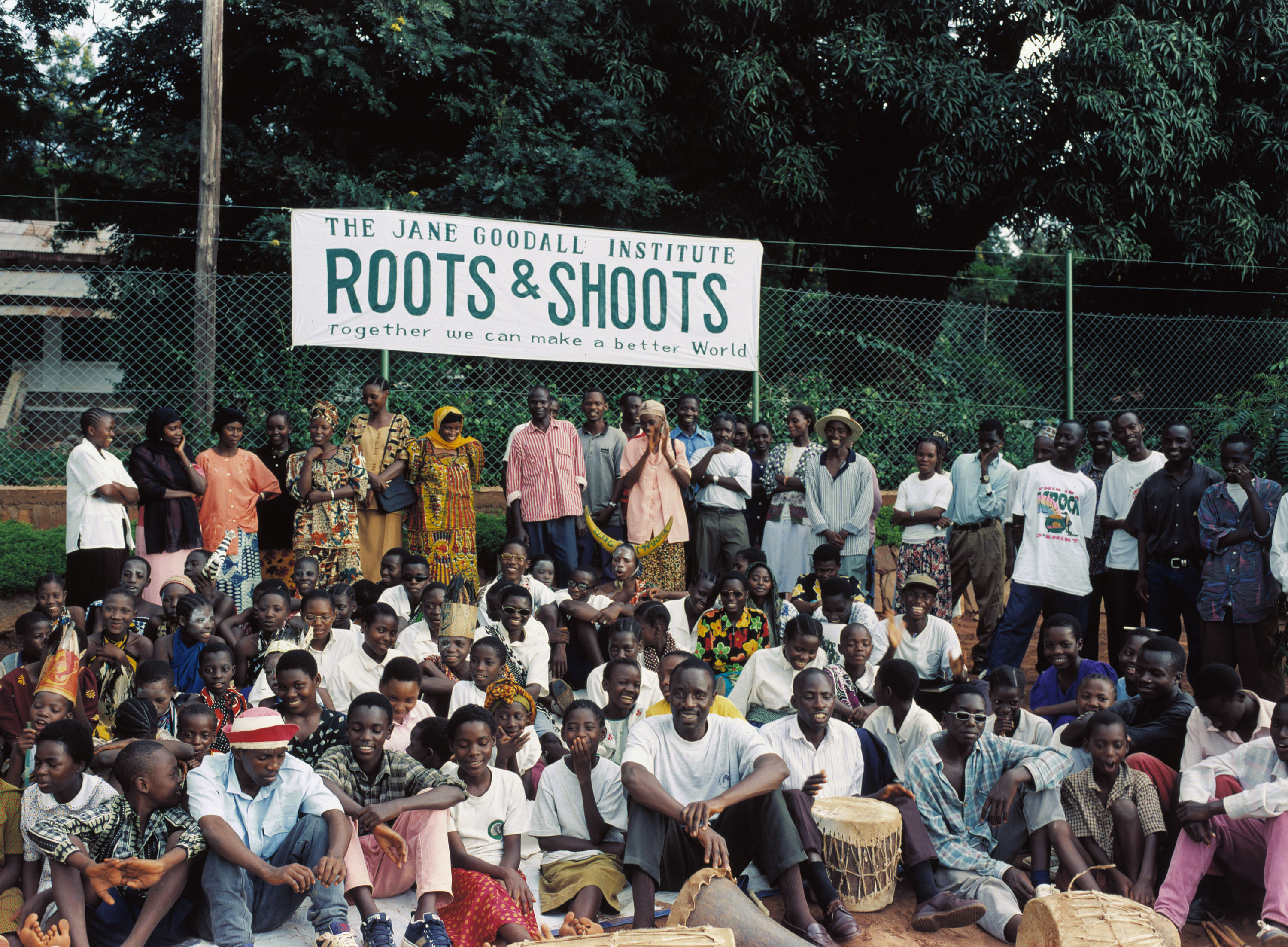
- Improve the environment in our own communities. Goodall’s Roots & Shoots program, which has chapters in 130 countries, is helping people plant trees, clean rivers and perform other community services in their own backyards.
At the end of her presentation, Dr. Goodall showed a video of a newly-released captive chimpanzee hugging her when she emerged from her crate and realized she was home in the jungle. Goodall uses this remarkable event to point out that, as intelligent as chimps are, their brains are far less powerful than those of humans. And she left the audience with a challenge — to harness the brainpower that we’ve used to damage the planet to save it.
 Exposing the Big Game
Great post. Thank you.
She has been my hero for many years. One very wise woman, Love her !Blessings to you Dr Jane Goodall
Hmmm. Animal agriculture is the biggest problem? As a vegan, I would like to see the end of raising animals just to kill them for our favorite burgers. However, the main reason there so many animals being raised is because there is huge and increasing demand for meat, and there is a huge and increasing demand for meat because the human population is out of control.
But that leaves us with two big problems to overcome: Getting people to even believe in climate change and encouraging them to talk about overpopulation, which has become a politically taboo subject. Until we can do that much, we seem to be on the road to planetary ruin.
Yes, wonderful woman! And, while CAFO’s are horrendous, and should be closed down, we must, quickly get the word out that millions of domestic livestock are all over the wild lands, especially in the West. Even Alaska, now as it warms, has cattle grazing in wild areas–a terrible threat to the grizzly, wolves. wolverines, and other so-called predators. Many people, “vegans” included do not have a clue about Public Lands Ranching, and it is literally causing forests fires, riparian destruction and water pollution and depletion. Grazing is taking place right in Point Reyes, CA, while ranchers are demanding that the endangered Tule Elk be “fenced.” W
We had a table at the last CA Animal Rights Conference, and we were the only table which had any meaningful info about wildlife, and public lands ranching. I was shocked that the majority of “vegans” were not even interested or concerned about the wild lands and wild animals. The mantra seemed to be “well I’m Vegan, and I drive a Prius, so I’m doing my part.” Well, I’m a plant-based eater, too, but I drive a used car, but I now realize the importance of all of us expanding our compassion and work into saving whatever of The wild places and wild lives we can. Vegans need to become educated about this and stop wearing their badges of “I’m Vegan and that’s enough.”
http://www.foranimals.org
Couldn’t agree more! To me veganism is about all animals. Anyone fighting for wolves, bison, grizzlies, wild horses, etc., sees the dark shadow cast by ranchers. They possess an enormous power base, contribute huge sums of money to legislators, and want all the land for themselves (they and their legislative supporters don’t seem to understand the concept of “public” lands). However, as you note, even vegans are often not interested in wildlife or the whole issue of deep ecology with its emphasis on the interconnection of all living things. There is little objection to what the ranchers are doing to the land, the wild animals, the “trash” animals, and their own herds. Furthermore, they don’t care. Trees, land, and animals are viewed as just “resources” to be utilized for human pleasure and profit.
I think in the ideal world, veganism would be more than a food choice. It would be the basis for a spiritual life that encompasses the welfare of all living beings and the planet we call home.
Sorry about my punctuation, grammar today–just got off a 15 hour nursing shift!
Jane Goodall is so great for so many reasons!