
Excerpts from:
Shot and Gassed: Thousands of Protected Birds Killed Annually
Sunday, 24 May 2015 00:00
Written by
Rachael Bale and Tom Knudson By Rachael Bale and Tom Knudson, Reveal from The Center for Investigative Reporting
-Even in the best of times, migratory birds lead perilous lives. Today, with climate change and habitat loss adding to the danger, wildlife advocates say the government-sanctioned killing is a taxpayer-funded threat that the birds should not have to face, one that is hidden from the public and often puts the needs of commerce ahead of conservation.
-The total body count for a recent three-year period came to 1.6 million, including more than 4,600 sandhill cranes. Four populous species – brown-headed cowbirds, red-winged blackbirds, common grackles and Canada geese – accounted for two-thirds of the mortalities.
But many less common birds were killed, too, including 875 upland sandpipers, 479 barn owls, 79 wood ducks, 55 lesser yellowlegs, 46 snowy owls, 12 roseate spoonbills, three curlew sandpipers, two red-throated loons and one western bluebird.
-California, where American coots were killed by the thousands to protect golf course greens and fairways. Usually the birds are shot, but sometimes they’re fed bait laced with a chemical that makes them fall asleep. Then they’re rounded up and killed in portable carbon dioxide chambers in the backs of pickup trucks. In California, some robins also were killed to protect vineyards.
No. 3 was Arkansas, where more than 22,000 double-breasted cormorants and thousands of other fish-eating birds were killed at fish hatcheries and aquaculture facilities.
Most of the killing is carried out without public notice. Even many conservationists are unaware of it. But those who are familiar with the permit program mostly don’t like it. They say that nonlethal options – such as scaring birds away or making the landscape less bird-friendly – are not given enough consideration and that lethal action is too often the default option.
“Nonlethal methods should always be given preference in these kinds of situations,” said Mike Daulton, vice president of government relations for the National Audubon Society, one of the nation’s oldest and most powerful conservation organizations. “The Migratory Bird Treaty Act is one of America’s most important wildlife conservation laws, and it should be strongly and reasonably enforced to maintain healthy wild populations of America’s native birds.”
Allen at the Fish and Wildlife Service said allowing the killing of nuisance birds protected by the Migratory Bird Treaty Act isn’t antithetical to the service’s mission of conserving wildlife populations.
See the data: Birds killed under depredation permits in the United States
Birds and humans have clashed for generations, of course. That’s why farmers put out scarecrows. But as cities and agriculture have grown, the scope of the conflicts has expanded. Today, even green industries sometimes kill birds. The government estimates that wind farms will take the lives of 1 million birds every year by 2030. To make that legal, the Fish and Wildlife Service is considering a new permit system for the “incidental” killing of birds protected by the Migratory Bird Treaty Act.
That act, a cornerstone of U.S. conservation history, grew out of an era of excess and slaughter at the turn of the 20th century. Many of North America’s migratory birds were being decimated, not for food but for feathers and other body parts that were used to make ladies’ hats, which had become signs of luxury and sophistication. In 1916, the United States and Great Britain, on behalf of Canada, signed the Migratory Bird Treaty Act. It became illegal to kill or capture migratory birds, as well as to buy or sell them.
The U.S. government, however, later made an exception. If a migratory bird is causing economic damage (such as destroying crops), posing a risk to humans (airports) or doing some other type of damage, a landowner can ask the Fish and Wildlife Service to approve the “lethal take,” or killing, of the problem birds.
–
For generations, Wildlife Services has long specialized in killing wildlife – including migratory birds – that are considered a threat to agriculture, commerce and the public. In recent years, the agency’s practices have drawn volleys of criticism from wildlife advocates and some members of Congress, who say they are scientifically unsound, heavy-handed and inhumane.
The agency relies on traps, snares and poison that kill indiscriminately. In 2012, the Sacramento Bee reported that Wildlife Services had killed more than 50,000 animals by mistake since 2000, including federally protected bald and golden eagles; more than 1,100 dogs, including family pets; and several species considered rare or imperiled. The investigation also noted that a growing body of science has found the agency’s killing of predators “is altering ecosystems in ways that diminish biodiversity, degrade habitat and invite disease.”
The U.S. Department of Agriculture’s Office of Inspector General now is conducting an audit to determine if the agency’s lethal control is justified and effective.
“Wildlife Services depends on killing predators and depredating migratory birds for its existence. When that’s what you do for a living, you tend to encourage people to adopt that solution,” said Daniel Rohlf, an environmental lawyer and professor at Lewis and Clark Law School in Oregon.
When landowners do get a permit to kill birds, Wildlife Services often is contracted to do the work. That contributes to a tendency to look to lethal control, rather than find more creative, nonlethal solutions, Rohlf said.
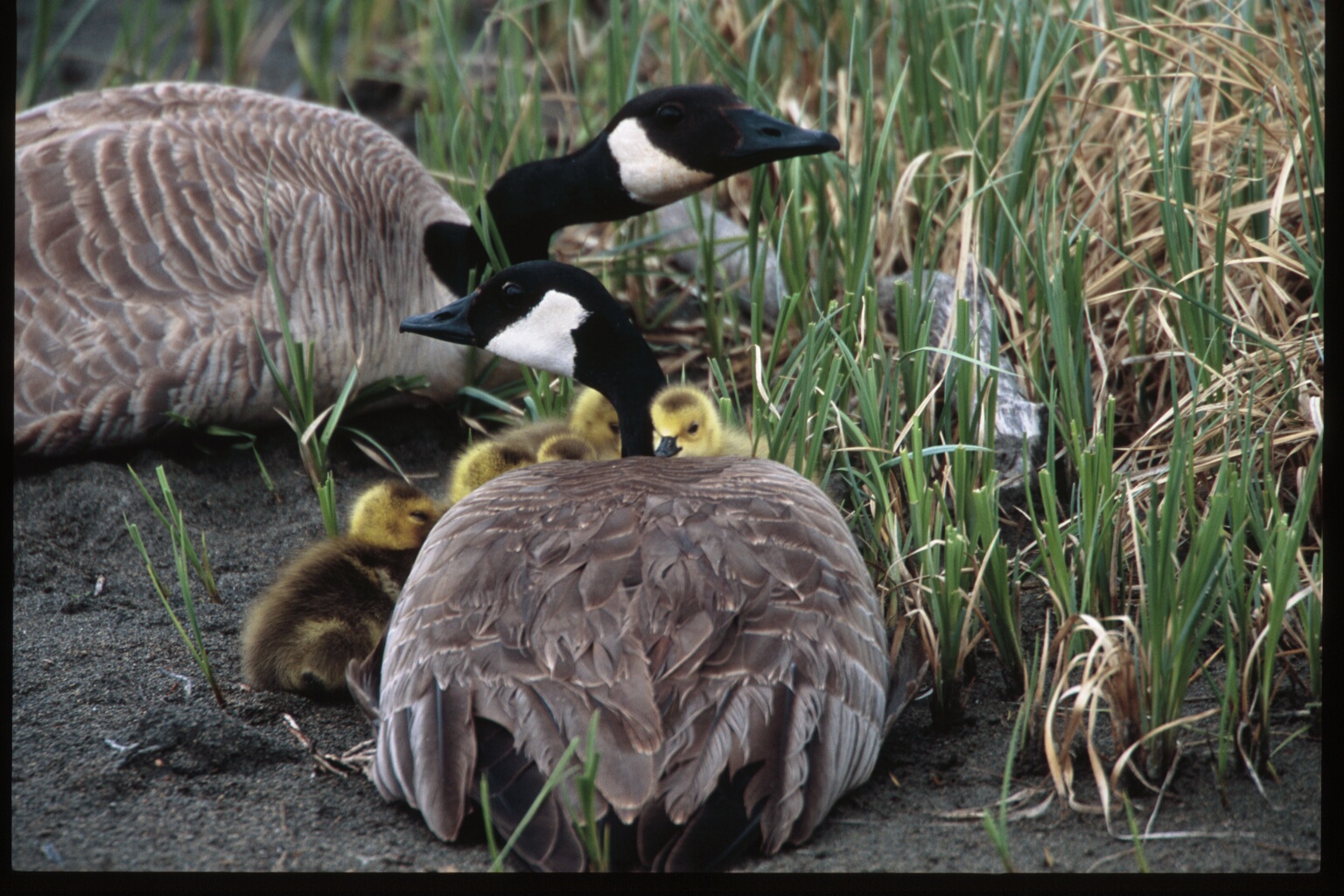
Wildlife Photography ©Jim Robertson
 Exposing the Big Game
Hopefully, golf courses greens and fairways are going to become a thing of the past in much of California. This division is outdated and no longer necessary in the modern world. Using poisons in the environment without public notice should be a violation. Wind energy in theory sounds like a good, progressive thing, except that we bring our past history of the old thinking of wildlife as expendable into the equation and making money paramount, without much more than a dismissive consideration of other species’ welfare that would have to be affected by yet another danger in the environment for them. Nearly every pro-wind article is careful to point out that other myriad individual factors in the environment kill more birds (wires, tall buildings, glass windows, even pets); but fail to grasp or do not want to grasp or want to spread misleading information to discredit the fact that all bird deaths are cumulative no matter what their source. We are tired of having our intelligence insulted.
What would the so-called ‘ecomodernists’ have to say about trophy hunting and government-sanctioned killing? Silence.
Reblogged this on Coalition for American Wildbirds.
hope this will stop wildlife services they are not needed in many cases most cases they are not needed, they are a killing machine and they do it with our tax dollars that really should be stopped
God forbid there be any annoyance on the golf courses! I used to think that the anti-government crowd was a little off the wall, but I’m beginning to reevaluate that opinion when I see the kinds of things that are going on in secret, such as the killing of all these birds. Of course, if the WS announced their executions, there would be protests, and that would just be a distraction from the business at hand. (Besides, why should government agencies have to put up with protests in a democracy?) As an example of the danger in disclosure, a sharp-shooter here was hired to kill crows in a local park because the birds were impolite enough to caw in the early morning and disturb sleepers. When the news got out, many people were angry about it, and the shooting was canceled. So I imagine that possibility accounts for some of the secrecy.
So, yes, even an inconvenience as small as birds greeting the dawn makes some people demand a death sentence. We hold animal life in so little regard, as Idalupine notes, those lives aren’t even factored into decisions about how our lifestyles will impact them. Tall buildings, oil spills, preserving immaculately groomed golf courses, even the wind farms we build to keep up with our endless demand for energy can be deadly. But if any of the feathered ones are still left to bother us, then call out the WS.