Couple caught trying to smuggle 400 rare turtles from Japan

May 25, 2015

By AYAKO TSUKIDATE/ Staff Writer

TOKONAME, Aichi Prefecture–Customs officers stopped a couple from boarding a flight out of Japan with hundreds of rare turtles, which are high valued in China for their medical properties and as pets.

In the incident in early May, officers at Chubu Airport here confiscated
400 or so Asian brown pond turtles and Japanese pond turtles.

Trans-border transactions of the creatures have been regulated by the Convention on International Trade in Endangered Species of Wild Fauna and Flora (CITES), also known as the Washington Convention, since 2013.

The turtles, packed in suitcases, were bundled in pairs with their bellies facing each other and stuck inside socks.

The couple’s nationality and their destination have not been disclosed.

Under the Washington Convention, government permission is required to export the turtle species. The Environmental Ministry effectively banned the export of Asian brown pond turtles from Japan in April.

Nagoya Customs are investigating the case as an attempted violation of the Customs Law’s ban on the unauthorized export of regulated products.

Customs officers at the airport also caught a passenger attempting to export 80 or so rare turtles, including Asian brown pond turtles, without permission in April.

The Asian brown pond turtle is a subspecies that inhabits rice paddies on Ishigaki, Iriomote and Yonaguni islands in the southernmost island chain of Okinawa Prefecture. The first ever survey conducted by the Environment Ministry in 2014 estimated the population of Asian brown pond turtles on the islands at 33,000.

Approval was granted for the export of 1,000 and 5,214 Asian brown pond turtles in fiscal 2013 and 2014, respectively. The ministry banned exports in April based on its concern that the species could become extinct within just eight years if the turtles continued to be captured at this pace.

Japanese pond turtles, which are indigenous to Japan, widely inhabit rivers and other waterfronts in the Honshu, Shikoku and Kyushu islands.
A total of 3,850 turtles were exported from Japan in fiscal 2013, followed by 11,155 in fiscal 2014, mainly to China.

According to a turtle hunter based in Aichi Prefecture, who also exports his catches to China, Asian brown pond turtles are highly valued in China as an ingredient for “turtle jelly” that is widely eaten for its supposed health and cosmetic benefits.

The turtle’s shell and bones are also ground up and used as ingredients for traditional Chinese herbal medicines.

Japanese pond turtles are also cherished as pets, as their yellow and orange shell patterns are viewed as harbingers of good financial fortune under traditional feng shui philosophy.

The two species are traded at 2,000 yen to 8,000 yen ($16.45 to $66) in Japan but fetch twice to 10 times those prices in China.

While export of the turtles are regulated by the Washington Convention, capturing or possessing them is not legally prohibited in Japan.

This means that customs authorities may have to return the confiscated turtles to their owners, depending on the outcome of their investigation.

http://ajw.asahi.com/article/behind_news/social_affairs/AJ201505250031

1451324_650954518277931_1616731734_n

WS Killls Thousands of Protected Birds Killed Annually

Excerpts from:

Shot and Gassed: Thousands of Protected Birds Killed Annually

Sunday, 24 May 2015 00:00
Written by 
Rachael Bale and Tom Knudson By Rachael Bale and Tom Knudson, Reveal from The Center for Investigative Reporting

http://www.truth-out.org/news/item/30956-shot-and-gassed-thousands-of-protected-birds-killed-annually

-Even in the best of times, migratory birds lead perilous lives. Today, with climate change and habitat loss adding to the danger, wildlife advocates say the government-sanctioned killing is a taxpayer-funded threat that the birds should not have to face, one that is hidden from the public and often puts the needs of commerce ahead of conservation.

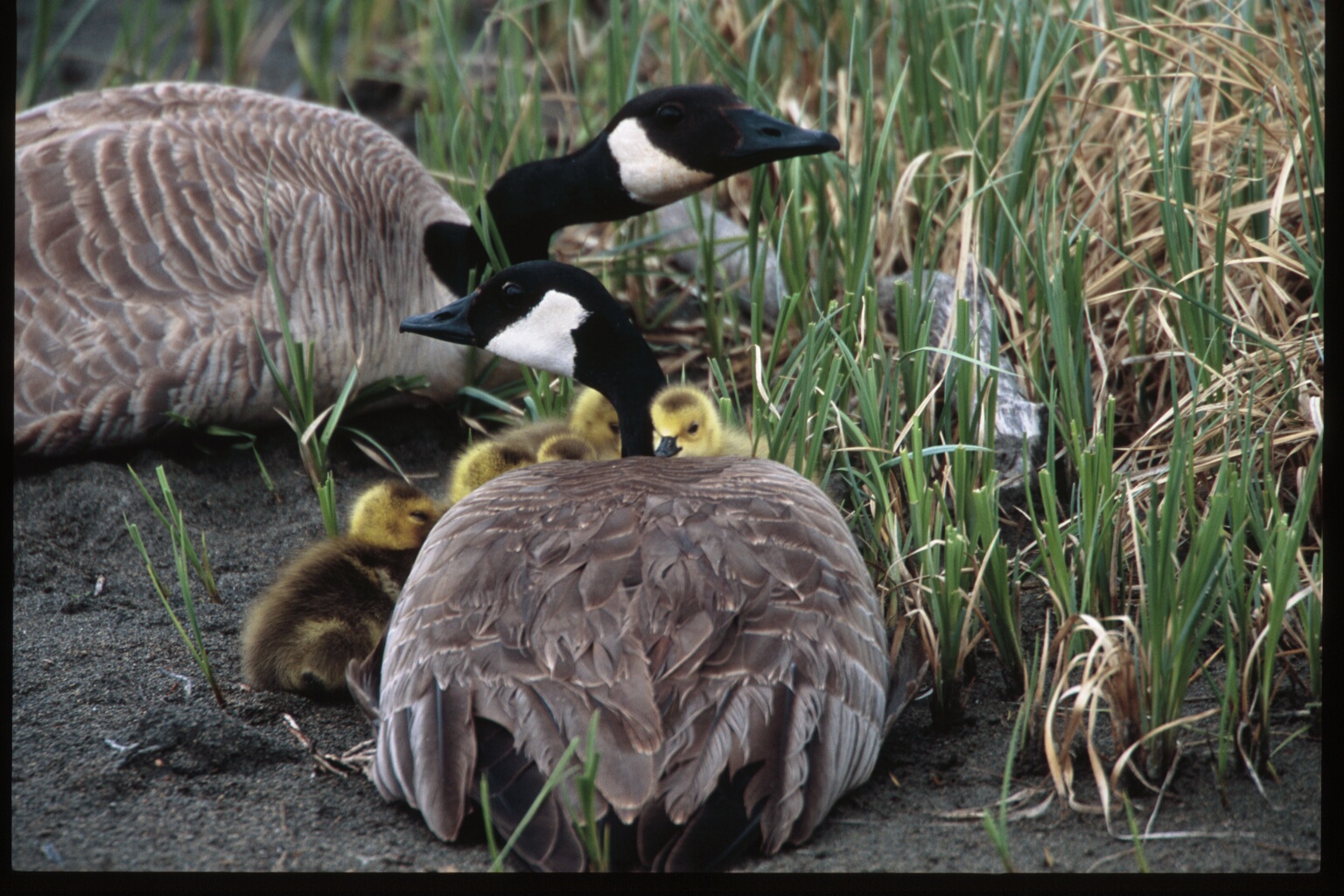
-The total body count for a recent three-year period came to 1.6 million, including more than 4,600 sandhill cranes. Four populous species – brown-headed cowbirds, red-winged blackbirds, common grackles and Canada geese – accounted for two-thirds of the mortalities.

But many less common birds were killed, too, including 875 upland sandpipers, 479 barn owls, 79 wood ducks, 55 lesser yellowlegs, 46 snowy owls, 12 roseate spoonbills, three curlew sandpipers, two red-throated loons and one western bluebird.

-California, where American coots were killed by the thousands to protect golf courseimagesQB1DEJIT greens and fairways. Usually the birds are shot, but sometimes they’re fed bait laced with a chemical that makes them fall asleep. Then they’re rounded up and killed in portable carbon dioxide chambers in the backs of pickup trucks. In California, some robins also were killed to protect vineyards.

No. 3 was Arkansas, where more than 22,000 double-breasted cormorants and thousands of other fish-eating birds were killed at fish hatcheries and aquaculture facilities.

Most of the killing is carried out without public notice. Even many conservationists are unaware of it. But those who are familiar with the permit program mostly don’t like it. They say that nonlethal options – such as scaring birds away or making the landscape less bird-friendly – are not given enough consideration and that lethal action is too often the default option.

“Nonlethal methods should always be given preference in these kinds of situations,” said Mike Daulton, vice president of government relations for the National Audubon Society, one of the nation’s oldest and most powerful conservation organizations. “The Migratory Bird Treaty Act is one of America’s most important wildlife conservation laws, and it should be strongly and reasonably enforced to maintain healthy wild populations of America’s native birds.”

Allen at the Fish and Wildlife Service said allowing the killing of nuisance birds protected by the Migratory Bird Treaty Act isn’t antithetical to the service’s mission of conserving wildlife populations.

See the data: Birds killed under depredation permits in the United States

Birds and humans have clashed for generations, of course. That’s why farmers put out scarecrows. But as cities and agriculture have grown, the scope of the conflicts has expanded. Today, even green industries sometimes kill birds. The government estimates that wind farms will take the lives of 1 million birds every year by 2030. To make that legal, the Fish and Wildlife Service is considering a new permit system for the “incidental” killing of birds protected by the Migratory Bird Treaty Act.

That act, a cornerstone of U.S. conservation history, grew out of an era of excess and slaughter at the turn of the 20th century. Many of North America’s migratory birds were being decimated, not for food but for feathers and other body parts that were used to make ladies’ hats, which had become signs of luxury and sophistication. In 1916, the United States and Great Britain, on behalf of Canada, signed the Migratory Bird Treaty Act. It became illegal to kill or capture migratory birds, as well as to buy or sell them.

The U.S. government, however, later made an exception. If a migratory bird is causing economic damage (such as destroying crops), posing a risk to humans (airports) or doing some other type of damage, a landowner can ask the Fish and Wildlife Service to approve the “lethal take,” or killing, of the problem birds.

For generations, Wildlife Services has long specialized in killing wildlife – including migratory birds – that are considered a threat to agriculture, commerce and the public. In recent years, the agency’s practices have drawn volleys of criticism from wildlife advocates and some members of Congress, who say they are scientifically unsound, heavy-handed and inhumane.

The agency relies on traps, snares and poison that kill indiscriminately. In 2012, the Sacramento Bee reported that Wildlife Services had killed more than 50,000 animals by mistake since 2000, including federally protected bald and golden eagles; more than 1,100 dogs, including family pets; and several species considered rare or imperiled. The investigation also noted that a growing body of science has found the agency’s killing of predators “is altering ecosystems in ways that diminish biodiversity, degrade habitat and invite disease.”

The U.S. Department of Agriculture’s Office of Inspector General now is conducting an audit to determine if the agency’s lethal control is justified and effective.

“Wildlife Services depends on killing predators and depredating migratory birds for its existence. When that’s what you do for a living, you tend to encourage people to adopt that solution,” said Daniel Rohlf, an environmental lawyer and professor at Lewis and Clark Law School in Oregon.

When landowners do get a permit to kill birds, Wildlife Services often is contracted to do the work. That contributes to a tendency to look to lethal control, rather than find more creative, nonlethal solutions, Rohlf said.

More: http://www.truth-out.org/news/item/30956-shot-and-gassed-thousands-of-protected-birds-killed-annually

Wildlife Photography ©Jim Robertson

Wildlife Photography ©Jim Robertson

Speak for Wolves: August 7-9, 2015

August 7-9, 2015
West Yellowstone, Montana

An opportunity for the American people to unite and demand wildlife management reform and restore our national heritage.
 film by Predator Defense – a national nonprofit helping people & wildlife coexist since 1990.
Approximately 3500 gray wolves have been slaughtered in the northern Rockies and Great Lakes region in the United States over the last few years. Under state management, wolves have been hounded, baited, trapped, snared and/or killed by hunters in Idaho, Montana, Wyoming, Wisconsin, Michigan and Minnesota. Wolves have been aerial gunned in Washington and, most recently, shot in Utah.Speak for Wolves: Yellowstone 2015 is about taking an important step towards stopping the wolf slaughter that is currently taking place across the United States. Learn more

Victory! Another Major Airline Bans Hunting Trophies

by  May 19, 2015

http://www.care2.com/causes/victory-another-major-airline-bans-hunting-trophies.html#ixzz3b4fUmKGx

Victory! Another Major Airline Bans Hunting Trophies
In more good news for wildlife, things just got a even harder for sport hunters looking for a way to transport their trophies home.

Emirates Airlines, the world’s largest international airline, just announced that hunting trophies will no longer be allowed and that the change would be effective immediately.

In a statement, the airline said the ban will be applied to all trophies, whether or not they’re from species protected by Convention on International Trade in Endangered Species of Wild Fauna and Flora (CITES), and it will include trophies from species that aren’t currently threatened with extinction.

It further said, “This decision is to support international governments, intergovernmental and non-governmental organizations, that are managing wildlife population towards sustaining the task to eliminate illegal trade and transportation of hunting trophies worldwide and saving wildlife heritage.”

The announcement comes just weeks after South American Airlines (SAA) announced it would no longer transport trophies from rhinos, elephants, lions and tigers in an effort to protect wildlife being targeted by sport hunters and the illegal wildlife trade.

Tim Clyde-Smith, a representative for SAA, told the media that at the time that, “The vast majority of tourists visit Africa in particular to witness the wonderful wildlife that remains. We consider it our duty to work to ensure this is preserved for future generations and that we deter activity that puts this wonderful resource in danger.”

Despite conservation efforts, Africa’s iconic wildlife continues to be targeted at an alarming rate by poaching and sport hunting that has put the future survival of a number of species in jeopardy.

Now it won’t matter whether or not hunters have the required permits, since they’re not getting their trophies on flights from either of these airlines. Not only does this send a message that sport hunting isn’t supporting conservation, but it will make it harder for anyone trying to move illegal items by claiming they’re from legal hunts.

Conservationists are cheering the latest change in policy from Emirates Airlines and hope other companies will follow the ethical lead these two airlines have set.

“This is a bold move by the world’s biggest international carrier,” said Dr. Elsayed Mohamed, Middle East Regional Director for the International Fund for Animal Welfare. “Emirates have taken an important and responsible step in showing they are serious about wildlife conservation. We value their decision and look forward to other national airlines in the Gulf region to follow their lead.”

Delta Airlines, which TakePart previously reported is the only carrier based in the U.S. with direct flights to South Africa, is also being pushed to make a similar change in policy, but so far the airline hasn’t budged.

Read more: http://www.care2.com/causes/victory-another-major-airline-bans-hunting-trophies.html#ixzz3b4e0J9Z5

Paul Ehrlich Was Right After All

world-population-through-history-to-2025

Looking back through some old copies of the National Wildlife Magazine, I came across an article from April/May, 1990, by John Nielsen entitled, “Whatever Happened to the Population Bomb? Two decades after Paul Ehrlich’s doomsday predictions, the biologist answers his critics with a new book.” The article came out at the time of Ehrlich’s then new book, Population Explosion, 22 years after his best-selling book (more than 20 million copies), Population Bomb. Ehrlich told National Wildlife, “What we were seeing on a global scale, was the rise to total dominance of a single species, man. This phenomenon was absolutely new and it threatened to wreck the planet.”

The article states, What about the population bomb? What happened to the notion that exponential population growth is the cause of almost all environmental woes? If to Ehrlich his 1968 message was clear, to his more extreme critics it has proved inaccurate and wrong-headed.

Like other ‘doomsayers,’ economist Julian Simon says, ‘Ehrlich underestimates the human ability to respond to change.’

But what about the rest of nature’s ability to respond to change wrought by humans?

Other critics point to Ehrlich’s erroneous predictions of traffic riots in Los Angeles, cataclysmic famines and dead oceans…

We may not be hearing a lot about traffic riots in LA—aside from road rage and regular drive-by shootings, but over-exploited fisheries and massive dead zones are cropping up in oceans across the globe.

Meanwhile, Right- to-Life activists attack him for favoring abortion. His notions of coercive population control in countries such as India and China have been called inhuman.

The problem with these charges, he says, is that they miss the point. Ehrlich admits that some of the scenarios that he made did not unfold [yet]. But he maintains, scenarios are not predictions and being out of date is not the same as being wrong.

Though a new environmental awareness is sweeping the United States [again, this was 1990], population control doesn’t seem to be generating as much concern in the press…The very notion, charges Ehrlich, is becoming ‘taboo’. “Politically, the pressure has been on to stay away from this issue,” he says.

“Each hour,” Ehrlich writes, “there are 11,000 more mouths to feed.”

Nowadays that number is roughly 16,000 per hour. (But of course that’s not taking into account people’s ability to respond to change.)

About his then new book, The Population Explosion, Ehrlich concedes that readers might ignore him this time around. They do so, he says, at the peril of their children’s world. Either way, this will be the last written warning.

“About the only thing I can guarantee is that this will be the last book on population by Paul Ehrlich,” he says. “You can only spend so much time alerting people to a problem. After that, they do their own thing.”

Texas Cattle Rancher Becomes Vegan

May 21, 2015, 1:38 PM ET

Woman spends night chained to Shell ship

By Associated Press Published: May 23, 2015

BELLINGHAM, Wash. (AP) – The Coast Guard says it has no plans to remove a woman who has chained herself to the Arctic Challenger, a support ship for Royal Dutch Shell’s exploratory oil drilling plans.

The activist attached herself to the ship anchored in Bellingham Bay, north of Seattle, on Friday evening.

The Coast Guard cutter Osprey spent the night monitoring the protester but took no action, Petty Officer 3rd Class Katelyn Shearer said Saturday morning. “We’re really most concerned for her safety and the safety of everyone involved,” Shearer said.

Authorities spoke with the woman and asked her to remove herself. “There’s no plans right now to do anything further,” Shearer said.

The ship isn’t scheduled to leave the port for several days.

Rob Lewis, a spokesman for the Bellingham activists, identified the woman who has suspended herself in a climbing harness from the anchor chain of the Arctic Challenger as Chiara Rose.

Lewis said she is protesting Shell’s plan for arctic drilling. He described the Arctic Challenger as a savior vessel that is used in the case of an oil leak, but said activists doubt its effectiveness at preventing environmental disasters like the Deepwater Horizon explosion in the Gulf of Mexico.

He confirmed that the Coast Guard was not interfering with Rose, but they had impounded … More:

http://www.komonews.com/news/local/Woman-chains-herself-to-Shell-ship-in-Bellingham-Bay-overnight-304814081.html

Corey Knowlton? Yup, I Hate Him Too

The idea that hunting saves African wildlife doesn’t withstand scrutiny

Zambia has lifted a ban on hunting lions and leopards and said the move will help protect wildlife, as a US hunter killed a black rhino in Namibia in what he called a victory for conservation. But experts have serious doubts about the claims
http://news360.com/article/293613760/#

Exposing the Big Game's avatarExposing the Big Game

Corey Knowlton is the hunter who won the right to kill an endangered rhino in the Safari Club auction. This is part of trophy room (Big Horn Sheep section – Knowlton claims that he has hunted “over 120 species on every continent” – obviously many animals per species)…

1613918_577895065613412_412557772_n

…and this is what Grumpy Cat has to say about him:

1017393_10202261526713538_1876940690_n

View original post

Young barred owls leaving nest in the USA

petrel41's avatarDear Kitty. Some blog

This is a video series about the Wild Birds Unlimited Barred Owl nest cam in the USA.

From the Cornell Lab of Ornithology in the USA:

May 22, 2015

It’s almost time!

The young Barred Owls are nearing the moment when they will begin to explore the world outside their nest box. Rather than fledging right away, most owls go through a process called “branching,” where they spend days or even weeks clambering around the branches near the nest, making short flights, and completing their development.

The largest owlet featured on the Wild Birds Unlimited Barred Owl cam has already been perching at the entrance to the box (watch highlight). We’re also excited that a new camera positioned outside the box enables you to see the transition from within the box to the green forest beyond (click on “View 2nd Camera Angle” below the video screen). Be…

View original post 89 more words