Ironic Timing for New Offshore CA Oil Spill

Santa Barbara oil spill recalls 1969 spill that changed oil and gas exploration forever

The estimated 21,000-gallon oil spill that sent plumes of black through the waters off Santa Barbara County on Tuesday brought haunting echoes of a much larger spill nearly half a century ago, one that gave birth to the modern environmental movement and forever changed the trajectory of oil and gas exploration in California.

The Santa Barbara oil spill of 1969 spewed an estimated 3 million gallons of crude oil into the ocean, creating an oil slick 35 miles long along California’s coast, and killing countless birds, fish and sea mammals.

Following the spill, the region became ground zero for some of the most significant conservation efforts of the 20th century.

More: http://www.latimes.com/local/lanow/la-me-ln-santa-barbara-oil-spill-1969-20150520-htmlstory.html

Bird Flu Disposal Fun

http://www.kcci.com/news/des-moines-pitches-in-with-bird-flu-disposal-efforts/33116758

DES MOINES, Iowa —The city of Des Moines is pitching in to help with the bird flu cleanup.

The Des Moines Public Works has property that can hold a sprawling 10 acres of dumping ground for the city’s unwanted trees.

But instead of the city paying to have the massive pile of mulch hauled off to a landfill, truckers are traveling to Des Moines to pick it up and deliver the wood waste to communities in northwest Iowa fighting the bird flu.

Massive mounds of mulch are stacking up and private contractors are hauling it off.

When one bed is full, the next truck is waiting to move in.

Matt Ohlson covered more than 800 miles alone on Tuesday transporting Des Moines’ dumped wood to Iowa counties hit by the bird flu.

“It’s good for me because I get the steady haul-in. And it’s great for the city because they get an easy way out,” Ohlson said.

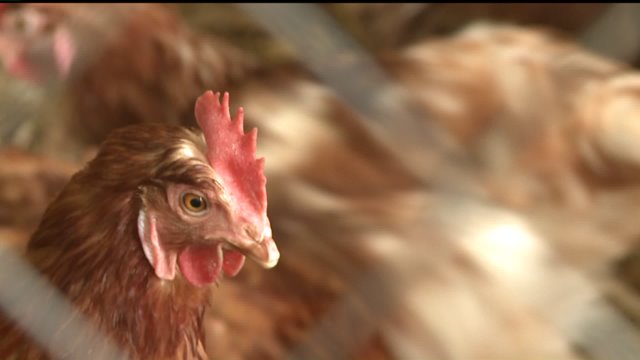
Iowa has 60 confirmed cases of the avian flu. The number of chickens dead or dying is about 26 million.

The city of Des Moines is donating 2,000 cubic yards of wood waste used to help poultry farms dispose of birds infected with the disease.

Public Works is saving $50,000 by cutting out its landfill costs.

“We’ve got a great win-win situation [the only losers so far? The birds.]

Featured Image -- 9291

Sea Lions Shot in Astoria, Again!

SLDB observers report on May 18,2015 at approximately 9:00am that eleven bullet shell casings were found on the causeway in the East Mooring Basin in Astoria, Oregon. This incident was reported to NOAA and is now under Federal investigation.

At 10 :20 am a sea lion suffering with a severe eye injury is observed

This is the second time bullet shell casings have been found in the EMB within two months. At the same time SLDB observers have documented numerous sea lions suffering with severe head and eye injuries from what appear to be gun shot wounds.

Please contact :

Astoria City Hall

(503) 325-5821
1095 Duane St
Astoria, Oregon 97103

_***
The Port of Astoria
Office: 503 741-3300 (Toll free in Oregon: 800-860-4093)
****
Astoria-Warrenton Area Chamber of Commerce
Address: 111 W Marine Dr, Astoria, OR 97103
Phone :(503) 325-6311 http://www.oldoregon.com/

*****
Governor Kate Brown
State Capitol Building
900 Court Street NE, 160
Salem, OR 97301
Phone: (503) 378-4582 (503) 378 3111

Thank you for taking action for the sea lions!

Sea Lion Defense Brigade's photo.

Sadistic hunters vie to be Extreme Huntress champ

EXCLUSIVE: The next Rebecca Francis? ‘Sadistic’ hunters vie to be Extreme Huntress champ

THESE are the women animal rights campaigners have branded “sadistic” and “unhinged”.

PUBLISHED: 19:30, Mon, May 18, 2015 | UPDATED: 08:14, Tue, May 19, 2015

Jodi Schmideder, Rebecca Francis and Jen The Archer CordaroIG

Rebecca Francis, centre, has received death threats since the show

They are in the running to be finalists in the American television female hunting competition Extreme Huntress, which has seen previous winners receive death threats and worldwide hate.

This year’s fearless competitors have admitted they are anxious about public perception, but remain defiant in their “right” to kill animals which includes zebras, lionesses, antelopes and bears.

**WARNING: GRAPHIC CONTENT PICTURES TO FOLLOW**

Rebecca Francis, the competition winner in 2010, has been repeatedly slammed by comedian and animal lover Ricky Gervais in recent months after a photograph emerged of her lying with a giraffe she had killed, beaming with happiness.

After angry animal rights activists called for her head, she refused to accept she had done anything wrong.

This year’s competitors are equally as unabashed as they fight for votes to be selected into the finals of what is regarded one of the most prestigious titles a huntress can achieve.

Jen “The Archer” Cordaro is no stranger to hate after receiving death threats for teaching children to hunt with the campaign #Bringakidhunting.

Activists even turned up at her house and threatened to murder her first born when she starts a family.

Lorraine LawrenceIG

One of the finalists Lorraine Lawrence with a lioness

Charisa ArgysIG

Contestant Charisa Argys says she believes in living with integrity and morals

I know putting myself out there could potentially attract abuse yes, but that’s the risk I am willing to take

Jodi Schmideder

Thousands of people have signed a petition to “stop” the PhD student, following graphic images of her slicing sows and posing with dead boars.

She told Express.co.uk: “Threats on someone’s life is never acceptable.”

But nothing will stop the city-born bow hunter who started shooting 18 months ago with an aim to be self-sufficient and live “off-grid” within ten years.

She added: “If anything, it makes me want to keep fighting the good fight.”

She sympathised with the abuse Ms Francis is attracting, adding she too would kill endangered and wild animals including zebras, lions or giraffes.

She said: “If the need was there for culling or management, absolutely.

Tanya Chegwidden with a zebraIG

South African contestant Tanya Chegwidden has killed game from zebra, impala, and waterbuck

Jodi SchmidederIG

Jodi Schmideder said some contestants were trophy hunters

“There are management reasons to hunt all types of animals, including endangered animals or animals that humans put at the top of their cute and fuzzy hierarchy.”

But charity People for the Ethical Treatment of Animals (PETA) accused the Extreme Huntress semi-finalists of “perpetuating violence”.

Associate director Elisa Allen said: “It has been a long time since humans truly needed to hunt in order to survive – today, people who get their kicks from hunting and killing defenceless animals are either sadists or suffering from a psychological break.

“Common decency says that we should protect the most vulnerable and helpless in society, not destroy them – much less derive “pleasure” from doing so.

“When cruelty is glorified and portrayed as a ‘hobby’, it debases society and perpetuates violence.

“Hunting of any kind has no place in modern society, and it should have ended years ago, along with cockfighting, bear-baiting and dogfighting.”

Tanya Chegwidden, top left, Jessica Amoss, right, and Taylor ReisbeckIG

Tanya Chegwidden, top left, Jessica Amoss, right, and Taylor Reisbeck

Miss Cordaro is joined by 19 other female hunters in the competition, including mother-of-one Michelle Slyder, 41, from Montana in America.

The engineer told Express.co.uk: “Nothing that happens to me personally could make me waiver in my passion for hunting. It’s not about what others think, it’s just who I am, how I was raised, and a part of me.

“I can’t and won’t ever change that. Every person has a right to their opinion and I can handle what comes my way. I also will protect my right, which is why I would never back down from someone engaging in that manner.”

Meanwhile Jodi Schmideder, 24, who started hunting before she could walk, aged two, admitted some contestants are trophy hunters.

“For some, that is what hunting is to them. I on the other hand, would love to luck out sometimes and bag a big game animal, however, it is not what hunting is to me.

Jen The Archer CordaroIG

Hunter Jen The Archer Cordaro said no one deserves death threats

Michelle Slyder with a dead wild goatIG

Michelle Slyder hunts for meat and wouldn’t kill endangered animals

“When you do shoot an animal, and you decide to post pictures for the general public to view, you should know not everyone will be ok with it. I don’t wish upon anyone to receive death threats towards them, it is extreme and yes, scary. However, every picture or post you are debating to show could potentially put you in a bad position, and precaution should be taken.

“I know putting myself out there could potentially attract abuse yes, but that’s the risk I am willing to take.”

Votes are being cast across the world to decide who is the Extreme Huntress of 2016.

The 20 semi-finalists will be reduced to six for the television finals. There they will go to a Texan ranch to compete head-to-head in outdoor skills and fitness challenges to decide who is the Extreme Huntress 2016.

Angry animal lovers claim Extreme Huntress has “nothing to do with conservation”, with one calling the television programme “a stain on the world”.

But producers are brazen in their fight back, claiming on social media “ignorance is bliss”.

Business as Usual: Oil pipeline spills about 21K gallons off California coast

The Associated Press

GOLETA, Calif. (AP) — A broken pipeline spilled 21,000 gallons of crude oil into the ocean before it was shut off Tuesday, creating a slick stretching about 4 miles along the central California coastline, the U.S. Coast Guard said.

Authorities responding to reports of a foul smell near Refugio State Beach around noon found a half-mile slick already formed in the ocean, Santa Barbara County Fire Capt. Dave Zaniboni said. They traced the oil to the onshore pipeline that spilled into a culvert running under the U.S. 101 freeway and into a storm drain that empties into the ocean.

The pipeline was shut off about three hours later but by then the slick stretched four miles and 50 yards into the water.

“Plains deeply regrets this release has occurred and is making every effort to limit its environmental impact,” the company said in a statement.

The Coast Guard, county emergency officials and state parks officials were cleaning up the spill. Boats from the nonprofit collective Clean Seas also were providing help but were having trouble because so much of the oil was so close to the shore, Coast Guard spokeswoman Jennifer Williams said. About 850 gallons of oil have been recovered from the water, Williams said.

The accident occurred on the same stretch of coastline as a 1969 spill that at the time was the largest ever in U.S. waters and is credited for giving rise to the American environmental movement. Several hundred thousand gallons spilled from a blowout on an oil platform and thousands of sea birds were killed along with many marine mammals.

More: http://www.seattletimes.com/nation-world/pipeline-bursts-spills-oil-off-california-coast/

DSC_8029

Why SC’s Animal Cruelty Laws Rank 45th

http://www.wltx.com/story/news/2015/05/18/why-scs-animal-cruelty-laws-rank-45th/27550493/

Columbia, SC (WLTX) South Carolina’s laws against animal cruelty rank 45th in the nation, according to the Humane Society of the United States, and state lawmakers who’ve tried to toughen those laws say there’s one main reason for that.

“We have people that are avid hunters and fishermen and they believe that anything to do with animal concerns, animal abuse, is going to take away, infringe on their rights, take away their guns, not let them hunt and that kind of thing. So anytime you bring something up about animals you’re hitting a brick wall,” says Rep. Deborah Long, R-Indian Land, who sponsored a bill two years ago to create an animal abuse registry, similar to the sex offender registry. Now, someone can be convicted of animal abuse in one county and, even if a judge prohibits them from having any more animals, if they move to another county enforcement of that ban is difficult. The bill never made it out of committee.

One of the main opponents of tougher animal cruelty laws has been Rep. Mike Pitts, R-Laurens, who is an avid hunter and fisherman. “I am not against toughening animal cruelty laws,” he says. “What I am against is an intrusion that most people don’t see, don’t understand, that uses animal cruelty laws as a façade for a much bigger agenda.”

He says local Humane Societies are fine and do good work. His concern is with the Humane Society of the United States, or HSUS, and People for the Ethical Treatment of Animals, PETA. “My absolute opposition to animal rights bills is not based on trying to stop something in good direction to protect pets and service animals. It is to keep HSUS and PETA at bay in my state,” he says.

He says HSUS president and CEO Wayne Pacelle wants to ban all sport hunting, so Pitts is worried that any bill that HSUS supports is a foot in the door to move in that direction. Officially, HSUS is working to ban some forms of hunting, like hunting animals that are kept in enclosed areas.

One example he says of a bill that seems good but can go too far is a tethering law. The state has no law against keeping a dog chained to a tree, post, or stake in the ground, but Pitts and others fought against a tethering bill. “In that tethering bill, it also included that I couldn’t put my bird dog or rabbit dog in a box in the back of my truck, a box that’s made for them. I couldn’t put, tie my horse while I was saddling my horse. That would be illegal tethering, because a rope’s not over six foot. So the devil is in the details of what they’re trying to do,” he says.

Wayne Brennessel, executive director of the Humane Society of South Carolina, says there are a couple of laws the state needs, one of them being a tethering law. “We need some laws about puppy mills, about these people who breed and breed and breed animals until, basically, the female animal is just falling apart because she’s been so overbred,” he says.

But Pitts counters with a question. How do you prevent puppy mills without unfairly restricting legitimate dog breeders? A bill just introduced on May 5th tries to answer that. It would put standards in place that would allow commercial dog breeders to operate without overbreeding their dogs.

Lawmakers did pass a tougher law last year that increases penalties for repeat offenders. Sen. Paul Campbell, R-Goose Creek, chaired a subcommittee that traveled around the state and listened to residents’ concerns about animal cruelty and laws to prevent it.

“It’ll be interesting to see how they rate South Carolina after we tightened those, the law up last year on the penalty and made it much more severe on a repeat offense,” he says.

Gray Whale Threats

http://en.wikipedia.org/wiki/Gray_whale#Threats

Threats[edit]

According to the Government of Canada’s Management Plan for gray whales, threats to the eastern North Pacific population of gray whales include:[106]

  • Increased human activities in their breeding lagoons in Mexico
  • Climate change
  • Acute noise
  • The threat of toxic spills
  • Aboriginal whaling
  • Entanglement with fishing gear
  • Boat collisions
  • Impacts from fossil fuel exploration and extraction

Western gray whales are facing, the large-scale offshore oil and gas development programs near their summer feeding ground, as well as fatal net entrapments off Japan during migration, which pose significant threats to the future survival of the population.[32]

The substantial nearshore industrialization and shipping congestion throughout the migratory corridors of the western gray whale population represent potential threats by increasing the likelihood of exposure to ship strikes, chemical pollution, and general disturbance.[33][97]

Offshore gas and oil development in the Okhotsk Sea within 20 km (12 mi) of the primary feeding ground off northeast Sakhalin Island is of particular concern. Activities related to oil and gas exploration, including geophysical seismic surveying, pipelaying and drilling operations, increased vessel traffic, and oil spills, all pose potential threats to western gray whales. Disturbance from underwater industrial noise may displace whales from critical feeding habitat. Physical habitat damage from drilling and dredging operations, combined with possible impacts of oil and chemical spills on benthic prey communities also warrants concern.[33][58]

Along Japanese coasts, four females including a cow-calf pair were trapped and killed in nets in the 2000s. There had been a record of deceased individual thought to be harpooned by dolphin-hunters found on Hokkaido in 90s.[107][108] Meats for sale were also discovered in Japanese markets as well.[109]

Captivity[edit]

A gray whale in captivity

Because of their size and need to migrate, gray whales have rarely been held in captivity, and then only for brief periods of time.

In 1972, a three-month-old gray whale named Gigi (II) was captured for brief study by Dr. David W. Kenney, and then released near San Diego.[110]

In January 1997, the newborn baby whale J.J. was found helpless near Los Angeles, California, 4.2 m (14 ft) long and 800 kilograms (1,800 lb) in weight. Nursed back to health in SeaWorld San Diego, she was released into the Pacific Ocean on March 31, 1998, 9 m (30 ft) long and 8,500 kg (18,700 lb) in mass. She shed her radio transmitter packs three days later.[111]

From Bad to More Bad

Demonstrators depart after morning protesting Shell oil rig

And, more bad:
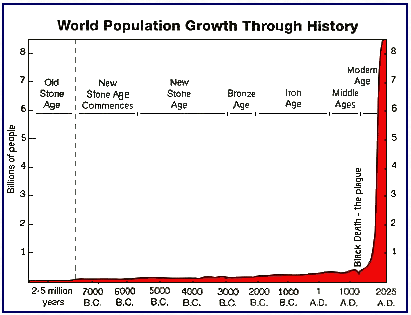
Climate change meets population shift: More people will be hotterworld-population-through-history-to-2025
The Associated Press

WASHINGTON (AP) — The combination of global warming and shifting population means that by mid-century, there will be a huge increase in the number of Americans sweating through days that are extremely hot, a new study says.

More:

http://www.seattletimes.com/seattle-news/science/future-for-warming-us-not-just-the-heat-but-the-humanity/

Nature Climate Change: http://www.nature.com/nclimate