
by Oliver Starr
Like all of you, I was overjoyed to hear the extraordinary news that a new wolf family has made California their home. For the first time in nearly 100 years the howls of WILD WOLF PUPPIES are gracing the slopes of Mt Shasta! How fitting that such a picturesque location would host such an important guest.
But my joy quickly turned to dismay when I saw that once again, as a community, we are making a mistake in our collective use of language and this mistake is harming wolves.
People that know wolves are well aware that groups of wolves are families — not “gangs of associated animals”. The term “pack” as defined by Webster’s provides many meanings for the word; most of them negative, none of them having anything in common with the reality of wolves: http://www.dict.org/bin/Dict…*
When we use the term “pack” to refer to wolf families, we “de-humanize” the species and we diminish what they are. The use of the term “pack” when applied to wolves is not only biologically inaccurate, it plays into the hands of those that hate them. It’s one thing for “Wildlife Services” to say, they’re eliminating the Wedge Pack, then if they told the truth and said they were going in to kill the Wedge Family of Wolves.
Even as I write this, I am watching tweets appear announcing the “Shasta Pack” in Northern California, I’ve received at least half a dozen emails from NGO’s and seen more news items than I can count announcing the same thing.
But imagine the even more positive nature of this news if the headlines read like this instead:
“California Welcomes Shasta Wolf Family as Species Gains Ground in West”
“CDFW Reports New Wolf Family Confirmed Via Camera Trap: Meet The “Shasta’s”
“Shasta Family: newest wolves to grace the Siskiyou…”
It’s a small change in language but one that gives a vastly different impression. It’s also a distinction that’s factually true. We can help the wolf by taking control of this language and consistently bringing this point home.
I know there are many others among you that share this conviction, one I owe to the late Gordon Haber. So for Gordon and for the wolves, let’s take back the dialog and welcome all wolf families, but most especially the Shasta Wolf Family, home.
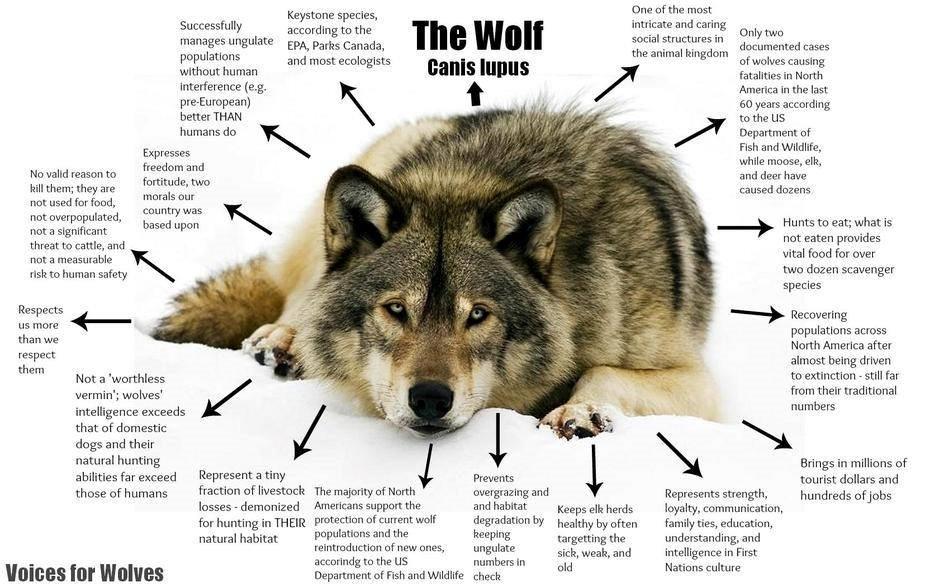
 Exposing the Big Game
Aren’t’ they wonderful? Those eyes could melt the biggest iceberg
(sorry, maybe is OT, but I’m in love with Wolves )
Well, you’ve changed my language.
thank you, Oliver for educating me about the true meaning of pack versus family; unfortunately, I really didn’t know that and I call myself a wolf advocate! At least it is confirmed in my brain that we do NOT own animals, but are truly lucky enough to be their guardians, and I am very grateful for that privilege. Hope you’re well up there in Shasta County; Marin misses you and your ‘family”. deb lapidus
Yes. “Smoke a Family A Day” just doesn’t have the same ring to it, does it. Thanks for bringing this to our attention!
BTW, I’m thrilled about the Shasta family also!
I wonder if it was a good idea to get the information out about the wolves. Now will hunters be watching for them and mistaking them for coyotes?
Yes language makes a difference in perception. We certainly see it in ways wolves can be demonized and how we distance ourselves from meat by calling it other names that do not reference its source. Personally, I would like to do away with the word “carcass,” since it signifies a distinction between a human “body” (important) and a deceased animal (whose life and death presumably meant nothing).
Then there is the recent commercial about whooping cough, speaking of giving wolves a bad impression. A woman is given a child to hold, and since she has not been vaccinated, her head turns into a wolf’s head to symbolize potential danger.
so wrong to send this message about an animal we’ll never see and not come in contact with.
Thanks so much for your great comments–wolf family-yes! Another thing: I refuse to use any terms anymore that are manufactured by game agencies, the livestock/hunting industries–I will not legitimize them: the hunting term, harvest, & others, such as predation, predator, varmints, multiple use, game management, –there are more, but can’t think anymore tonight!
Yes – those who don’t want to upset sensibilities will use less harsh terms, “harvest, field dress, cull, game management” or any other terms not associated with what is really happening. I can’t stand mincing words and call a spade a spade. These guys like blood sports and blood all over their hands and clothes; otherwise they would not participate in killing animals whose only crime is being alive. Bowhunting in my township starts around 9-18-15. The commissioners don’t even have an estimate of how many deer there are in the township, because they don’t want to spend the money to find out.
Yes, Chris, it’s a slaughter out there. Unfortunately, while most the majority don’t hunt, they are not Anti-Hunting. Many seem to swallow the “game management and feeding our families” lies, and they do not fight hunting. Trapping, is also continuing, and here in NM, the Game Dept. just unanimously voted to hunt & trap more mountain lion–and hunt more bear. We are working on a campaign on Trophy Hunting—perhaps a NM boycott of tourism–hope to get things going soon.
http://www.foranimals.org
I get tired of all this politically correct crap! the sentence ” we “de-humanize” the species and we diminish what they are.” THEY ARE NOT HUMANS!!! I love wolfs and dogs I have a PACK of dogs myself. Are we going to change a school of fish now, what about a murder of crows?
Great comments! We just had the atrocious NM “Game” Dept. (& Commission) hearing (supposedly public) on the 27th. Those opponents of increased mountain lion and bear killing outnumbered the proponents (hunters, trappers, ranchers), at least 4 to 1 in absolute numbers. Unfortunately, the big wildlife/animal groups who are collaborating with the enemies of wildlife, got to speak, but as the Game Commission continued to change the rules midstream in this hearing, many of us individuals were not allowed to speak on behalf of the wildlife. I take issue with many of these groups who purport to “defend” or otherwise care about wildlife, using the “game jargon” of these killing agencies, accepting the game management philosophy — and that is what they did, and do. The vote, of course, was unanimous to increase the killing.
Those who erroneously think that by changing these departments’ names, or changing funding structure (so we should bribe them too?), or continue to accept their wildlife “game management policies” as something worthy of support, are not helping wild animals.
These game agencies were started in the early 1900’s, and Aldo Leopold (a long-time wolf killer), literally wrote the textbook on game management. Yes, he was “sorry” for killing one wolf too many, but he was responsible for the atrocious model of today’s “modern game management” which views wild animals as “commodities and resources.” Terms such as “harvest,” “sustainable yield,” “game quotas,” are all designed to artificially maintain wild species for trophy/trapping–keep just enough of them around to kill. It is a “good ol boy” mentality, which does not respect animals for their own sake: they exist purely for human greed, “sport.” They make up their statistics as they go, but always with the goal of “using them.” This model is the framework for trophy hunting, and trapping, and is supported, encouraged by numerous so-called “wildlife groups,” who have collaborated with The Enemy.
The World Wildlife Living Planet Report says: “Populations of fish, birds, mammals, amphibians and reptiles measured for the report have declined by 52 per cent since 1970; and freshwater species have suffered a 76 per cent decline – an average loss almost double that of land and marine species.”
We are developing a campaign against trophy hunting, and the state game departments which support it, on our EARTH for Animals website.
Wolf pack, a murder of crows, herd of cows. Changing the terms does not change what they are, an apex predator. Anthropomorphizing them does them no favors.
Anyone out there who wants to help us on this Trophy Hunting, please let us know, especially anyone here in New Mexico.