Ranchers and hunters intent on wiping out wild horses wolves bison

Wild horse and bison roundup area

Wild horse and bison roundup area
Image: Public Domain


Zika and the New Climate Dystopia — Human Hothouse as Disease Multiplier

robertscribbler's avatarrobertscribbler

As of today, authorities in Brazil, Colombia, Jamaica, El Salvador and Venezuela were urging women to avoid getting pregnant… It is unthinkable. Or rather, it is something out of a science fiction story, the absolute core of a dystopian future. — Bill McKibben in a recent statement on global warming and the now pandemic Zika virus.

******

There are a plethora of diseases out there. Diseases we don’t know about. Diseases locked away in far-off, rarefied corners of the world. Diseases that operate in small niche jungle environments. Diseases that live in only cave systems or within a single species. Diseases that were locked away millions of years ago in the now-thawing ice. Diseases that, if given a vector — or a means to travel outside of their little rarefied organic or environmental niches — can wreak untold harm across wide spans of the globe.

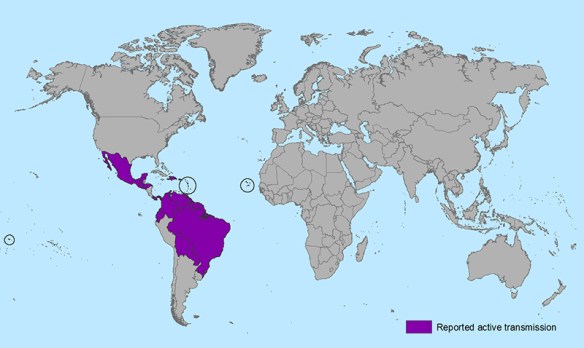
Countries with Reported Active Zika Transmission

(Countries with reported active Zika…

View original post 1,735 more words

Authorities closing in on Oregon’s Malheur occupation

http://www.hcn.org/articles/malheur-occupiers-1-dead-7-arrested-finicum

FBI calls for removal of occupiers following eight arrests and the death of one man late Tuesday.

I’m not a humanist, I’m a nonhumanist

With all the patrician talk about who were the original occupiers of Malheur National Wildlife Refuge, I was planning to write a post about the nonhuman animals being the only inhabitants for millions of years until about 12,000 or 13,000 years ago.

But Marc Bender beat me to it, with the following comment:

“…humans are not indigenous to the Americas. The original inhabitants of the wildlife refuge are, of course, the wildlife.”

Likewise, I was going to inaugurate the word, “nonhumanist” to classify those of us whose ethical values incorporate nonhuman needs and interests. But when I looked it up, I found that “nonhumanistic” is already in use (in reference to those who are Not humanistic).

Meanwhile, that same search produced this related article:

Why I Am Not a Humanist

by Luke Muehlhauser on November 11, 2009 in Ethics,General Atheism

humanismSome people think atheism is synonymous with humanism. If you’re an atheist, you must be a humanist.

Not so. I am an atheist but not a humanist.

Why?

Let’s look at at what humanism is. According to the Oxford English Dictionary, humanism is “a rationalistic system of thought attaching prime importance to human rather than divine or supernatural matters.”

I can already distance myself from this position, but before I say why, let’s get more specific.

The “standard” positions of humanists are summarized in the latest (2003) Humanist Manifesto, which states:

  1. Knowledge of the world is derived by observation, experimentation, and rational analysis.
  2. Humans are an integral part of nature, the result of unguided evolutionary change.
  3. Ethical values are derived from human need and interest as tested by experience.
  4. Life’s fulfillment emerges from individual participation in the service of humane ideals.
  5. Humans are social by nature and find meaning in relationships.
  6. Working to benefit society maximizes individual happiness.

It’s #3 that bothers me. I do not believe that moral values are derived from human desires. I believe moral values are derived from desires, period. To focus on human desires and ignore all other desires in the universe is blatant speciesism.

But can’t I just sign on with humanism, understanding there’s one qualification to be made on point #3?

No, for speciesism is central to humanism. Heck, it’s in the name of the thing. Humanity is the whole point of humanism. Now that is good progress beyond religious ethics, but it’s not progress far enough.

I count humanists as my brothers as sisters. We’re fighting for the same things. Mostly.

But if this post persuades you to cancel membership in a humanist association, please don’t quit activism altogether. Please join another organization that will help you live out your moral values.

That way, we can all work together to make this world a better place, for all of us.

chimpanzee_with_baby

– See more at: http://commonsenseatheism.com/?p=4630#sthash.zfGe8n2A.dpuf

Will the History Books Record How Neo-Nazis Made Eyes at the Bundy Militia?

http://www.truth-out.org/news/item/34575-will-the-history-books-record-how-neo-nazis-made-eyes-at-the-bundy-militia

Wednesday, 27 January 2016 00:00
Written by
Spencer Sunshine By Spencer Sunshine, Truthout | News Analysis

With fellow protesters on either side of him, Ammon Bundy, back to camera in center, speaks to reporters at the Malheur National Wildlife Refuge, Princeton, Ore., Jan. 4, 2016. (Jarod Opperman / The New York Times)With fellow protesters on either side of him, Ammon Bundy, back to camera in center, speaks to reporters at the Malheur National Wildlife Refuge, Princeton, Oregon, January 4, 2016. (Photo: Jarod Opperman / The New York Times)

Fight back against the spread of misinformation perpetuated by the mainstream media. Help Truthout grow stronger by making a tax-deductible donation today!

The FBI and the Oregon State Police have arrested most of the leaders of the three-and-a-half-week armed occupation of the Malheur National Wildlife Refuge. At least two militia members were shot during a highway traffic stop that turned into a shoot-out Tuesday night, and one militia leader – Robert “LaVoy” Finicum – was killed.

From its start, the Malheur occupation highlighted the social and political fault lines within the United States, drawing sharply conflicting reactions ranging from mockery to hero worship to criticisms of the capitalist and colonial underpinnings of the militia’s tactics and aims. Reactions to the shoot-out have also revealed even more fault lines, including divisions within the left, as some celebrate the downfall of the far-right-wing occupiers and others question how any progressive could ever celebrate the shooting of a civilian by the police.

As the Malheur occupation fades into history, there are many insights on the US social and political landscape to be distilled both from this episode and from the national conversations it has sparked. One underreported aspect of the affair is what it revealed about the nature of the partial but significant overlaps between neo-Nazis and anti-federal-government activists like the Bundys.

The occupiers had been demanding the abolition of the federal government as we know it, using a set of rationales that were originally derived from racist movements. Some of the occupiers were known to spout anti-Semitic or Islamophobic conspiracy theories, while another denied that slavery existed. And so it should not have surprised anyone that neo-Nazis and other organized racists have applauded the occupation.

Instead of wearing a swastika and burning a cross, they were wrapped in the American flag and waving the Constitution.

Until their arrest, Ammon and Ryan Bundy (sons of deadbeat rancher Cliven Bundy) were leaders of the occupation of the refuge’s headquarters outside of Burns, Oregon, which had gone on since January 2. They had two demands: to remove control of the bird sanctuary (previously Indigenous-held land) from the federal government’s hands so that ranchers could use it for private gain without current environmental and other restrictions; and release two members of the Hammond family, local ranchers serving sentences for arson on public land.

Many of the ideas and political forms that Ammon Bundy and his friends used were derived from the 1970s white supremacist group Posse Comitatus. It promoted the formation of militias, developed a fictitious parallel legal world based on an idiosyncratic reading of the US Constitution, and rejected the authority of federal and state governments – claiming that the county sheriff was the highest legitimate elected official. But while Ammon Bundy and the others directly around him had many of the same ideas, they were careful not to use Posse Comitatus’ bigoted language.

This was not true of many of the Bundys’ followers at the refuge. Jon Ritzheimer, who was also arrested Tuesday night, is a famous Islamophobic organizer, known for his vicious rhetoric. Blaine Cooper once wrapped a Koran in bacon and set it on fire. Brand Thornton and David Fry are reported to hold anti-Semitic ideas. Ryan Payne (also arrested on Tuesday) believes that slavery didn’t exist. Rance Harris is said to have neo-Nazi tattoos like “88” – the alphanumeric code for “Heil Hitler.” And together they collectively offended the Burns Paiute Tribe (whose land used to include the refuge), by – among other things – breaking into an area where the tribe’s artifacts are stored.

So flirtatious overtures from neo-Nazis to the Bundy gang should not have surprised anyone.

More: http://www.truth-out.org/news/item/34575-will-the-history-books-record-how-neo-nazis-made-eyes-at-the-bundy-militia

Radioactive Water From Fukushima Is Leaking Into the Pacific

Dahr Jamail | Radioactive Water From Fukushima Is Leaking Into the Pacific Wednesday, 27 January 2016 00:00
Written by 
Dahr Jamail By Dahr Jamail, Truthout.org

The Ikata Nuclear Power Plant, which was idled after the 2011 disaster in Fukushima, in the Ehime prefecture of Japan, Jan. 23, 2014. (Ko Sasaki / The New York Times)The Ikata Nuclear Power Plant, which was idled after the 2011 disaster in Fukushima, in the Ehime prefecture of Japan, January 23, 2014. (Photo: Ko Sasaki / The New York Times)

Truthout will never hide stories like this behind a paywall or subscription fee. Help us continue publishing free and uncensored news by making a donation today!

“Fukushima is the biggest industrial catastrophe in the history of mankind,” Arnold Gundersen, a former nuclear industry senior vice president, told Truthout shortly after a 9.0 earthquake in Japan caused a tsunami that destroyed the cooling system of Tokyo Electric Power Company’s (TEPCO) nuclear plant in Fukushima, Japan.

While this statement might sound overdramatic, Gundersen may be right.

Several nuclear reactor meltdowns in the plant, which at the time forced the mandatory evacuations of thousands of people living within a 15-mile radius of the damaged power plant, persist, and experts like Gundersen continue to warn that this problem is not going to go away.

More: http://www.truth-out.org/news/item/34565-radioactive-water-from-fukushima-is-leaking-into-the-pacific

Slaughter of Up to 900 Wild Bison at Yellowstone Park Sparks Federal Lawsuit to Protect First Amendment Rights

The Animal Legal Defense Fund (ALDF), Jamie M. Woolsey of the law firm Fuller, Sandefer & Associates and two constitutional law professors filed a federal lawsuit Tuesday on behalf of journalist Christopher Ketcham and wild bison advocate Stephany Seay, who are seeking access to Yellowstone Park’s controversial bison trapping operations that lead to the slaughter of hundreds of bison. The lawsuit argues that the First Amendment guarantees citizens and journalists reasonable, non-disruptive access to the publicly funded national park.

Photo credit: Yellowstone National Park
The National Park Service is scheduled to capture and facilitate the killing of up to 900 bison inside Yellowstone Park starting on Feb. 15, 2016. Photo credit: Yellowstone National Park

The National Park Service is scheduled to capture and facilitate the killing of up to 900 bison inside Yellowstone Park starting on Feb. 15. During the capture and kill operation, the park service closes parts of the park to public access.

“It’s ironic that to benefit Montana ranchers grazing their cattle—an invasive species—Yellowstone Park has agreed to facilitate the capture and killing of 900 American bison, an iconic, native species,” Law Professor and ALDF Attorney Justin Marceau said.

Past accounts of similar bison killing operations have provided evidence of brutal treatment of the animals. The centerpiece of the park’s role in the slaughter is the Stephens Creek Capture Facility, which is located entirely within the national park. The bison are driven into the facility, held in pens, tested and eventually forced into trucks and transported to slaughter. In recent years, the park service reversed its previous policy that allowed members of the public to witness and document the operation—the park service itself shot video and photographs—and now proposes to offer only three supervised tours, including one when the trap facility at Stephens Creek was not in operation.

Yellowstone’s public information office also used to offer information on how many bison were captured, shipped to slaughter or injured each day. During the past two bison kills, however, the park delayed release of that information for two weeks.

“If the First Amendment right of access is to mean anything,” Marceau went on to say, “it means that citizens and journalists should have reasonable, non-disruptive access to their publicly-funded national park to observe and memorialize one of the most controversial uses of national park land imaginable.”

“No one wants their federal tax dollars to be used by park service rangers to abuse and kill the very animals the service is responsible for protecting,” Seay said. “The park service doesn’t want the public to see these shameful activities.”

Ketcham has written about the bison controversy for VICE, Harper’s and other magazines and websites. “I want full access to the operations,” he said, “so I can effectively report on the issue. I want to be able to see the suffering of these animals up close and thus bring readers up close.”

Although there were once tens of millions of bison throughout most of North America, today wild bison are ecologically extinct throughout their native range, with fewer than 5,000 living in and around Yellowstone National Park, the last continuously wild, migratory herds left in the nation. The animals are currently managed under the controversial Interagency Bison Management Plan; thousands of bison have been abused and killed through hazing, hunting, scientific experiments and capture-for-slaughter operations.

The purported reason for the enactment of the plan is that bison threaten to infect local cattle populations with brucellosis, a non-fatal disease originally brought to North America by European cows. Wild bison, however, have never transmitted the disease to cattle. In fact, no transmission from bison to cattle has ever occurred outside of a laboratory setting.

“Denying access to the park during this controversial publicly-funded wildlife slaughter campaign is very similar to the intent of ag-gag laws,” ALDF Executive Director Stephen Wells said. “Such laws ‘gag’ would-be whistleblowers, journalists and activists by making it illegal to record and disseminate photos or footage taken in agricultural operations. ALDF has successfully proven ag-gag laws are unconstitutional under he First Amendment and we are confident we will do the same in this case.”

The coalition of law professors, non-profit lawyers and private attorneys are joined by a team of top law students at the University of Denver and they are all eager to aggressively litigate the free speech rights of journalists seeking to document the trapping of bison within national park lands.

Petition on BC Wolves

http://action.sumofus.org/a/stop-wolf-cull/?sub=fb

Nearly 200 wolves are going to be shot from helicopters over the next few weeks — a bloody attempt to save an endangered caribou herd in western Canada. And these killings are likely to go on for five years.

Oil, gas, mining, and logging companies have been trashing the mountain caribou’s habitat for decades — but instead of curtailing this industrial habitat destruction, the British Columbia (BC) provincial government is scapegoating wolves, condemning them to a gruesome death.

This cull is just a stopgap measure and not a viable long-term solution to the caribou’s problems. It will, however, cause immense suffering to the wolves, who are highly social and intelligent creatures.

Tell the BC government to stop the industrial encroachment of the caribou’s and wolves’ territory!

Decades of habitat destruction and human encroachment have led to this tragic situation. The BC government needs to be protecting the caribou’s critical food and natural habitat, such as lichen-rich interior forests.

Part of the problem is the caribou’s natural protection from wolves has been undermined by commercial activity. Normally, thick winter snow is enough to keep them safe from most predators, but the wolves have been using the industrial infrastructure of pipeline corridors, roads, railways and snowmobile trails to move through the landscape and hunt. Some feel the cull is awful but necessary to save the caribous, and others feel the cull should be canceled outright — but fundamentally, the BC government should never have let the problem get to this point.

We need to stand up for nature against profit-making companies who are destroying our wildernesses all over the world. These innocent wolves, who are right now being hunted from the skies, are a powerful symbol of how the long-term future of the natural world is being sacrificed for short-term profit.

Please add your voice to ask BC to place responsibility at the feet of the oil, gas, mining and logging companies who are causing the real damage to caribou and wolves.

Sign the petition asking the BC government to protect caribous and wolves from industrial encroachment.

********** More information:

B.C. wolf cull will likely last 5 years, assistant deputy minister says, CBC News,

Quotes on Animal Rights…

http://www.veganoutreach.org/advocacy/quotes.html

The world, we are told, was made especially for man – a presumption not supported by all the facts.… Why should man value himself as more than a small part of the one great unit of creation?
—John Muir, naturalist and explorer (1838–1914)

Until he extends the circle of his compassion to all living things, man will not himself find peace.
—Albert Schweitzer, French philosopher, physician, and musician (Nobel 1952)

Whenever people say “We mustn’t be sentimental,” you can take it they are about to do something cruel. And if they add “We must be realistic,” they mean they are going to make money out of it.
—Brigid Brophy (1929–1995)


Animal Rights

[I]t is difficult to picture the great Creator conceiving of a program of one creature (which He has made) using another living creature for purposes of experimentation. There must be other, less cruel ways of obtaining knowledge.
—Adlai Stevenson, American statesman (1835–1914)

There is no fundamental difference between man and the higher animals in their mental faculties.… The lower animals, like man, manifestly feel pleasure and pain, happiness, and misery.
—Charles Darwin, naturalist and author (1809–1882)

The difference in mind between man and the higher animals, great as it is, certainly is one of degree and not of kind.
—Charles Darwin, The Descent of Man

Even in the worm that crawls in the earth there glows a divine spark. When you slaughter a creature, you slaughter God.
—Isaac Bashevis Singer, writer and Nobel laureate (1902–1991)

As long as people will shed the blood of innocent creatures there can be no peace, no liberty, no harmony between people. Slaughter and justice cannot dwell together.
—Isaac Bashevis Singer, writer and Nobel laureate (1902–1991)

I don’t hold animals superior or even equal to humans. The whole case for behaving decently to animals rests on the fact that we are the superior species. We are the species uniquely capable of imagination, rationality, and moral choice – and that is precisely why we are under an obligation to recognize and respect the rights of animals.
—Brigid Brophy (1929–1995)

The love for all living creatures is the most noble attribute of man.
—Charles Darwin, English naturalist (1809–1882)

Wild animals never kill for sport. Man is the only one to whom the torture and death of his fellow creatures is amusing in itself.
—James A. Froude, English historian (1818–1894)

If you visit the killing floor of a slaughterhouse, it will brand your soul for life.
—Howard Lyman, author of Mad Cowboy

A man can live and be healthy without killing animals for food; therefore, if he eats meat, he participates in taking animal life merely for the sake of his appetite. And to act so is immoral.
—Leo Tolstoy, Russian novelist (1828–1910)

In fact, if one person is unkind to an animal it is considered to be cruelty, but where a lot of people are unkind to animals, especially in the name of commerce, the cruelty is condoned and, once large sums of money are at stake, will be defended to the last by otherwise intelligent people.
—Ruth Harrison, author of Animal Machines

The beef industry has contributed to more American deaths than all the wars of this century, all natural disasters, and all automobile accidents combined. If beef is your idea of “real food for real people,” you’d better live real close to a real good hospital.
—Neal D. Barnard, MD, President, Physicians Committee for Responsible Medicine

About 2,000 pounds of grains must be supplied to livestock in order to produce enough meat and other livestock products to support a person for a year, whereas 400 pounds of grain eaten directly will support a person for a year. Thus, a given quantity of grain eaten directly will feed 5 times as many people as it will if it is eaten indirectly by humans in the form of livestock products.…
—M.E. Ensminger, PhD

Now I can look at you in peace; I don’t eat you anymore.
—Franz Kafka, while admiring fish in an aquarium

Poor animals! How jealously they guard their pathetic bodies…that which to us is merely an evening’s meal, but to them is life itself.
—T. Casey Brennan (1948–)

Life is life – whether in a cat, or dog or man. There is no difference there between a cat or a man. The idea of difference is a human conception for man’s own advantage.
—Sri Aurobindo (1872–1950)

Humanity’s true moral test, its fundamental test…consists of its attitude towards those who are at its mercy: animals. And in this respect humankind has suffered a fundamental debacle, a debacle so fundamental that all others stem from it.

–The very beginning of Genesis tells us that God created man in order to give him dominion over fish and fowl and all creatures.  Of course, Genesis was written by a man, not a horse.  There is no certainty that God actually did grant man dominion over other creatures.  What seems more likely, in fact, is that man invented God to sanctify the dominion that he had usurped for himself over the cow and the horse.  Yes, the right to kill a deer or a cow is the only thing all of mankind can agree upon, even during the bloodiest of wars.
—Milan Kundera, The Unbearable Lightness of Being, 1984

What is it that should trace the insuperable line?… The question is not, Can they reason? nor, Can they talk? but, Can they suffer?
—Jeremy Bentham (1748–1832)

Can you really ask what reason Pythagoras had for abstaining from flesh? For my part I rather wonder both by what accident and in what state of soul or mind the first man did so, touched his mouth to gore and brought his lips to the flesh of a dead creature, he who set forth tables of dead, stale bodies and ventured to call food and nourishment the parts that had a little before bellowed and cried, moved and lived. How could his eyes endure the slaughter when throats were slit and hides flayed and limbs torn from limb? How could his nose endure the stench? How was it that the pollution did not turn away his taste, which made contact with the sores of others and sucked juices and serums from mortal wounds?… It is certainly not lions and wolves that we eat out of self-defense; on the contrary, we ignore these and slaughter harmless, tame creatures without stings or teeth to harm us, creatures that, I swear, Nature appears to have produced for the sake of their beautyand grace. But nothing abashed us, not the flower-like tinting of the flesh, not the persuasiveness of the harmonious voice, not the cleanliness of their habits or the unusual intelligence that may be found in the poor wretches. No, for the sake of a little flesh we deprive them of sun, of light, of the duration of life to which they are entitled by birth and being.
—Plutarch

I abhor vivisection. It should at least be curbed. Better, it should be abolished. I know of no achievement through vivisection, no scientific discovery, that could not have been obtained without such barbarism and cruelty. The whole thing is evil.
—Charles Mayo, founder of the Mayo Clinic

Truly man is the king of beasts, for his brutality exceeds them. We live by the death of others. We are burial places.
—Leonardo Da Vinci (1452–1519)

As long as men massacre animals, they will kill each other. Indeed, he who sows the seeds of murder and pain cannot reap the joy of love.
—Pythagoras

When a man wants to murder a tiger, he calls it sport; when a tiger wants to murder him, he calls it ferocity.
—George Bernard Shaw, writer and Nobel laureate (1856–1950)

It is my view that the vegetarian manner of living, by its purely physical effect on the human temperament, would most beneficially influence the lot of mankind.
—Albert Einstein (1879–1955)

A human being is a part of the whole, called by us the “Universe,” a part limited in time and space. He experiences himself, his thoughts and feelings, as something separate from the rest – a kind of optical delusion of his consciousness. This delusion is a kind of prison for us, restricting us to our personal desires and to affection for a few persons nearest to us. Our task must be to free ourselves from this prison by widening our circle of compassion to embrace all living creatures and the whole of nature in its beauty. Nobody is able to achieve this completely, but the striving for such achievement is in itself a part of the liberation and a foundation for inner security.
—Albert Einstein (1879–1955)

When a human being kills an animal for food, he is neglecting his own hunger for justice. Man prays for mercy, but is unwilling to extend it to others. Why then should man expect mercy from God? It is unfair to expect something that you are not willing to give.
—Isaac Bashevis Singer, writer and Nobel laureate (1902–1991)

A dead cow or sheep lying in the pasture is recognized as carrion. The same sort of carcass dressed and hung up in a butcher’s stall passes as food.
—J. H. Kellogg, American physician (1852–1943)

It ill becomes us to invoke in our daily prayers the blessings of God, the Compassionate, if we in turn will not practice elementary compassion towards our fellow creatures.
—Mahatma Gandhi (1869–1948)


Activism

The reasonable man adapts himself to the world; the unreasonable one persists to adapt the world to himself. Therefore all progress depends on the unreasonable man.
—George Bernard Shaw, writer and Nobel laureate (1856–1950)

There may be times when we are powerless to prevent injustice, but there must never be a time when we fail to protest.
—Elie Wiesel, writer and Nobel laureate (1928–)

The fact that an opinion has been widely held is no evidence that it is not utterly absurd; indeed, in view of the silliness of the majority of mankind, a widespread belief is more often likely to be foolish than sensible.
—Bertrand Russell, Marriage and Morals, 1929

Never doubt that a small group of thoughtful, committed, citizens can change the world. Indeed, it is the only thing that ever has.
—Margaret Mead, American cultural anthropologist (1901–1978)

Each snowflake in an avalanche pleads not guilty.
—Stanislaw Jerzy Lec, Polish poet and aphorist (1909–1966)

In matters of conscience, the law of majority has no place.
—Mohandas Karamchand Gandhi (1869–1948)

To forgive and accept injustice is cowardice.
—Mohandas Karamchand Gandhi (1869–1948)

The ultimate measure of a man is not where he stands in moments of comfort and convenience, but where he stands at times of challenge and controversy.
—Martin Luther King, Jr. (1929–1968)

There are a thousand hacking at the branches of evil to one who is striking at the roots.
—Henry David Thoreau, Walden, 1854

It takes two to speak the truth: one to speak, and another to hear.
—Henry David Thoreau (1817–1862)

Loyalty to a petrified opinion never yet broke a chain or freed a human soul.
—Mark Twain, American author (1835–1910)

There is nothing more frightful than ignorance in action.
—Johann Wolfgang von Goethe, German writer (1749–1832)

What would we do if we didn’t try? We have to try.
—Lyle Lovett

None so blind as those who will not see.
—Matthew Henry, English clergyman (1662–1714)

[A] long habit of not thinking a thing wrong, gives it a superficial appearance of being right, and raises at first a formidable outcry in defense of custom. But the tumult soon subsides. Time makes more converts than reason.
—Thomas Paine, Common Sense

Ultimately, an unbiased observer of human behavior must conclude that most action is not shaped by theory, but rather theories are shaped to conform to actions we have no intention of changing.
—Marjorie Spiegel, The Dreaded Comparison

All of us cherish our beliefs. They are, to a degree, self-defining. When someone comes along who challenges our belief system as insufficiently well-based – or who, like Socrates, merely asks embarrassing questions that we haven’t thought of, or demonstrates that we’ve swept key underlying assumptions under the rug – it becomes much more than a search for knowledge. It feels like a personal assault.
—Carl Sagan, The Demon-Haunted World

To cultivate kindness is a valuable part of the business of life.
—Samuel Johnson, English author (1709–1784)

Man’s mind stretched to a new idea never goes back to its original dimensions.
—Oliver Wendell Holmes, Jr., American jurist (1841–1935)

All truth passes through three stages. First, it is ridiculed. Second, it is violently opposed. Third, it is accepted as being self-evident.
—Arthur Schopenhauer, German philosopher (1788–1860)

Those who will not reason, are bigots, those who cannot, are fools, and those who dare not, are slaves.
—George Gordon Noel Byron (Lord Byron), English Romantic poet (1788–1824)

The conventional view serves to protect us from the painful job of thinking.
—John Kenneth Galbraith, Canadian-American economist (1908–2006)