
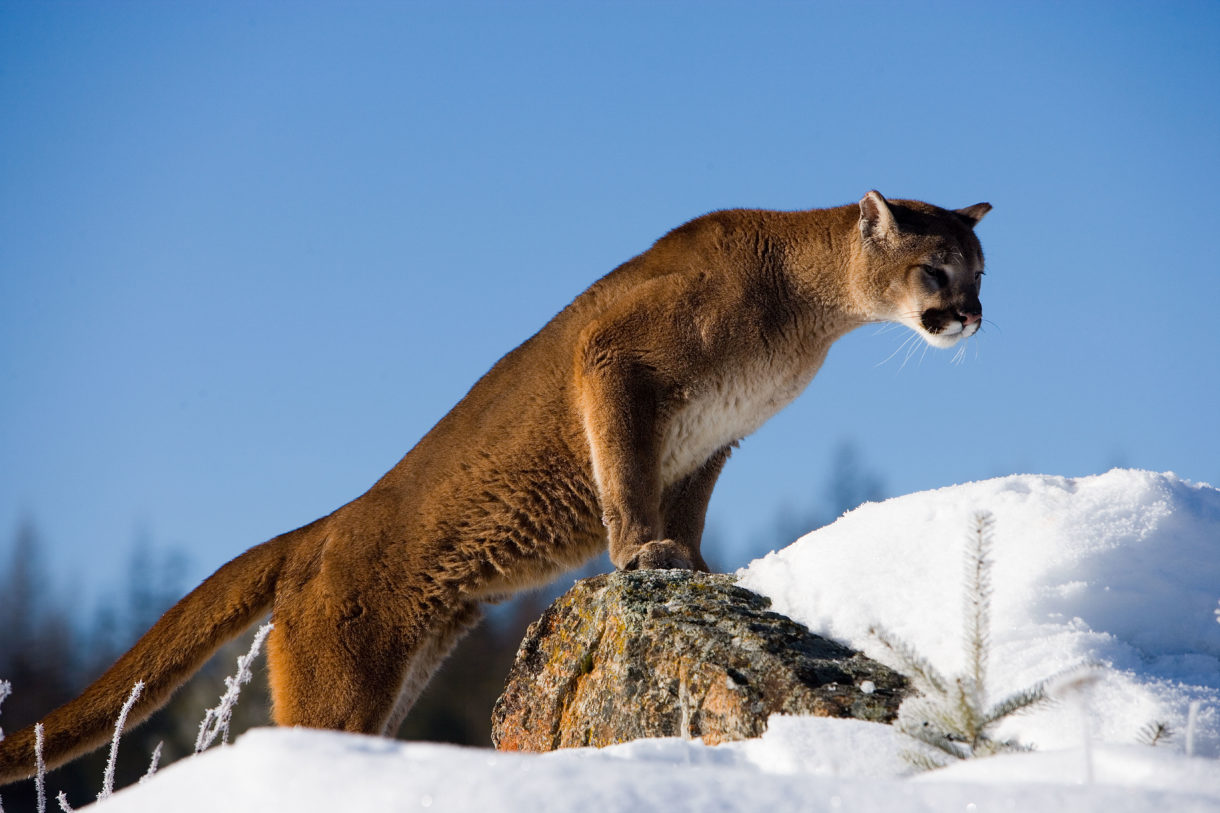
This will be the sixth ballot measure in the west to stop the trophy hunting of mountain lions, and voters have sided with establishing or maintaining protections for lions in every single one of them. Photo by Alamy
https://blog.humanesociety.org/wayne/2017/10/ballot-measure-launched-ban-trophy-hunting-americas-lions.html
Two summers ago, a color photograph of Minnesota dentist Walter Palmer and his hunting guide kneeling over Cecil, an African lion they’d slain, found its way onto social media platforms and ricocheted across the planet. In response, 45 of the world’s biggest airlines – including all major U.S. carriers – said they’d no longer ship lion trophies in the cargo holds of their planes.
These companies knew that the public found the practice of trophy hunting of African lions and leopards and other rare wildlife repugnant.
With the launch of an Arizona ballot measure yesterday to stop the trophy hunting of mountain lions and bobcats, voters in the Grand Canyon State will have an opportunity to stop the same sort of pointless, cruel killing practices on a big patch of land on this side of the globe.
Specifically, The HSUS and a coalition of about 60 organizations have filed a ballot initiative to stop the trophy hunting of mountain lions and bobcats in Arizona. The measure would also ban trapping of bobcats, currently killed by the thousands every year in this state for their fur. In addition, the ballot measure would codify a no-trophy-hunting policy on jaguars, ocelots, and lynx, in case these rare cats establish healthy populations in Arizona and trophy hunters see them as future targets.
The question that millions of people asked in the wake of the killing of Cecil is the same one that people should ask in Arizona: Why would a person of wealth and privilege shoot a lion he isn’t even going to eat? An animal whose hunting behavior keeps prey populations in check and whose presence is a reminder that there are still wild places in our world where all kinds of beautiful animals, including native carnivores, should be allowed to flourish.
This will be the sixth ballot measure in the west to stop the unsporting trophy hunting of mountain lions, and voters have sided with establishing or maintaining protections for lions in every single one of them. It is also the seventh statewide ballot measure on animal protection issues in Arizona since 1994, and voters have sided with the animal protection position in six of six cases.
There are perhaps few things as senseless as the trophy hunting of mountain lions; no one eats these animals, and that makes killing them easy to classify as trophy hunting in its purest form.
What makes it even worse is that the primary method of hunting the lions is with packs of dogs and radio telemetry equipment, in what amounts to a high-tech search-and-destroy mission. A trophy hunter releases a pack of hounds, fitted with radio transmitters on their collars, and then tracks the chase with a handheld directional antenna. Once the dogs pick up a scent and careen after the lion, the quarry flees, but sometimes turns to fight – resulting in a situation that pits animals in violent combat. If the cat doesn’t kill the dogs, or the dogs don’t overtake and kill the cat (including young kittens), the cat will scamper up a tree.
The hunter will then follow the radio signal to the base of the tree or cliff face, and shoot the lion at close range.
It’s about as sporting as shooting an animal in a cage at the zoo.
Trophy hunting clubs like Arizona-based Safari Club International have, in recent years, promoted the killing of mountain lions by offering awards, certificates, and killing contests to reward and encourage trophy hunters. SCI’s award categories like “North American 29,” “Cats of the World,” and “Trophy Animals of North America” include mountain lions.
Mountain lions pose an immeasurably small risk to humans and do their best to avoid us. Lions have attacked just a handful of people in the United States in the last 30 years, even as we’ve invaded their traditional habitats with developments, agriculture, and recreational activities.
On the other hand, trophy hunters have killed more than 78,000 mountain lions during that same period – an average of 2,500 a year in 10 western states, according to a report we released earlier this year in cooperation with the Summerlee Foundation: State of the Mountain Lion: A Call to End Trophy Hunting of America’s Lion.
These native carnivores provide all sorts of benefits to their ecosystems. Mountain lions keep deer and elk herds healthier, taking weak, sick, and diseased animals. They leave carrion for black bears, grizzly bears, and other scavengers. They are highly sentient and familial. A mother will care for her kittens for up to 24 months, and if she is killed, the kittens could die from starvation, predation, or exposure.
In cases where lions cause an actual problem or pose a perceived or actual threat, the ballot measure allows selective killing of those individuals. The measure, on the other hand, is designed to stop trophy hunters from chasing down and killing unoffending lions – lions who aren’t bothering anyone, and like any creature, are just trying to live and get through another day.
This ballot measure is about our humanity. It’s about ending unsporting methods, killing for no good reason, or killing as a head-hunting exercise. It’s about letting animals have small slices of land where they don’t have to worry about the threat of premeditated human violence.
Join us in this fight to protect America’s own iconic lion and other wild cats of the west. Their future depends on our decision to act on their behalf.
 Exposing the Big Game
Reblogged this on The Extinction Chronicles.
So beautiful!!!! We really ought to have ‘pride’ in our beautiful native wildlife, instead of killing them.