Exposing the Big Game

Forget Hunters' Feeble Rationalizations and Trust Your Gut Feelings: Making Sport of Killing Is Not Healthy Human Behavior

Exposing the Big Game

GOP-Controlled Senate Paves Way for Oil Drilling in Alaska’s Arctic National Wildlife Refuge

Exposing the Big Game's avatarThe Extinction Chronicles

http://truth-out.org/buzzflash/commentary/gop-controlled-senate-paves-way-for-oil-drilling-in-alaska-s-arctic-national-wildlife-refuge

LORRAINE CHOW OF ECOWATCH FOR BUZZFLASH AT TRUTHOUT

Article reprinted with permission from EcoWatch

The work done by BuzzFlash and Truthout is possible only through support from readers like you. Join the independent media movement: Click here to donate today!

The Senate Republicans’ narrow passage of the 2018 budget plan on Thursday opened the door for oil and gas drilling in the Arctic National Wildlife Reserve (ANWR).

But Democratic lawmakers and environmental groups criticized the GOP for sneaking the “backdoor drilling provision” through the budget process. Past proposals to drill in the refuge have consistently failed.

The budget was passed through a legislative tool known as reconciliation which only requires a simple majority, rather than 60 votes. The budget was approved 51-49, with Kentucky Republican Sen. Rand Paul joining Democrats in opposition, paving the way for President Trump‘s tax overhaul proposal.

Drilling ANWR would…

View original post 503 more words

Conservation Groups Join Reward to Catch Oregon Wolf-killer Reward for Information Jumps to $15,500

http://www.biologicaldiversity.org/news/press_releases/2017/wolf-10-24-2017.php

PORTLAND, Ore.— Conservation organizations are bolstering a U.S. Fish and Wildlife Services reward for information on the illegal killing of OR-33, a federally protected gray wolf in southwestern Oregon. The Service has offered a $5,000 reward, and five conservation organizations have contributed an additional $10,500, bringing the total to $15,500.

Since 2015 at least eight wolves have been poached or died under mysterious circumstances in Oregon. Those include OR-33, OR-28, OR-22, OR-34, OR-31, an uncollared sub-adult wolf from the Walla Walla pack, and two wolves known as the Sled Springs pair. Poaching is an acute problem in Oregon, which demands serious attention from lawmakers and wildlife management officials — to strengthen and enforce wildlife laws, and to deter and fully prosecute criminals.

“Poaching is a huge and growing problem in Oregon. We need everyone’s help to catch this killer. The U.S. Fish and Wildlife Service and conservation groups alike are working together to bring justice for OR-33, and send a message that this vile act won’t be tolerated in our state,” said Quinn Read, Northwest representative of Defenders of Wildlife.

“We can only hope that this reward helps stop the next protected wolf from being killed,” said Joseph Vaile, executive director at the Klamath-Siskiyou Wildlands Center.

“This is a heartbreaking loss for Oregon’s wolves. Wolf recovery in Oregon depends on wolves like OR-33 making their way west and thriving, so his death is a major setback. We hope someone will do the right thing and come forward with information,” said Amaroq Weiss, West Coast wolf advocate at the Center for Biological Diversity.

“We are helping contribute to the reward fund in the hopes of finding the perpetrator and bringing them to justice. Going forward, we encourage the Oregon Department of Fish and Wildlife to take wolf poaching more seriously,” said Danielle Moser, wildlife coordinator for Oregon Wild.

“The senseless killing of one of Oregon’s iconic wolves is an appalling and serious crime. We are grateful to the U.S. Fish and Wildlife Service for their diligent efforts to find those responsible and bring the offender or offenders to justice,” said Scott Beckstead, senior Oregon state director for the Humane Society of the United States.

Anyone with information about this case should call the U.S. Fish and Wildlife Service at (503) 682-6131 or Oregon State Police Tip Line at (800) 452-7888.

Background 
OR-33 was found dead of gunshot wounds near Klamath Falls on April 23. Details about this illegal killing were released on Oct. 11 after the Fish and Wildlife Service completed a necropsy.

OR-33 was a 4-year-old male gray wolf. He dispersed from the Imnaha Pack in northeast Oregon in November 2015. Although he had a collar, it stopped functioning in August 2016.

Killing a gray wolf in the western two-thirds of Oregon is a violation of the Endangered Species Act. It is also a violation of Oregon state game laws and is subject to both criminal and civil penalties. The investigation of this crime is being conducted by the Oregon State Police and the Fish and Wildlife Service.

TRUMP MOVES THE DOOMSDAY CLOCK CLOSER TO MIDNIGHT

Exposing the Big Game's avatarThe Extinction Chronicles

Jessica Sleight | 

This morning the Doomsday Clock was moved forward to 2 minutes and 30 seconds to midnight.

Created by the Bulletin of Atomic Scientists in 1947 to convey the urgent threat nuclear weapons pose — other threats such as climate change are now also taken into account — the clock represents how close humankind is to destroying our world. The stroke of midnight is the end of humanity.

Last year, the clock remained at 3 minutes. Today, it moves half a minute closer — the closest to midnight it’s been since 1953.

The Bulletin cited two troubling concerns in their decision: the growing disregard for scientific expertise and the “cavalier and reckless language” used around the globe, particularly during the U.S. presidential election.

Which brings us to the elephant in the room: Donald Trump, a man who appeared to have called for a new nuclear arms…

View original post 302 more words

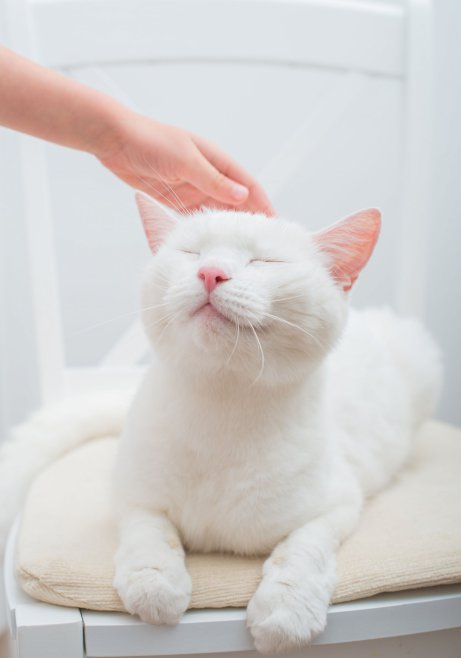
iCatCare Talks Science: Stress sensitivity and welfare assessment – Katzenworld

Nancy's avatar"OUR WORLD"

What is animal welfare? An animal’s welfare refers to both its physical health and its psychological well-being. Good welfare is achieved when an animal is physically healthy and experiencing positive emotional well-being (ie, experiencing more… More

Source: iCatCare Talks Science: Stress sensitivity and welfare assessment – Katzenworld

View original post

Hollywood actress Maggie Q on how becoming vegan can help save the planet

http://www.scmp.com/news/hong-kong/health-environment/article/2116303/hollywood-actress-maggie-q-how-becoming-vegan-can

The Mission: Impossible star tells City Weekend of her passion for animal welfare and why she became a vegan

PUBLISHED : Saturday, 21 October, 2017, 9:02am
UPDATED : Saturday, 21 October, 2017, 2:54pm


The Mission: Impossible III star views her acting career as a stepping stone to pursuing her true passion – environmentalism.

From supermodel Gisele Bundchen’s eco-friendly flip-flop line to a Leonardo DiCaprio film on global warming, those in the limelight are leveraging their celebrity status to push causes close to their heart.

For Q, promoting veganism is her way of doing her bit to build a sustainable future. She says carbon emissions from animal farming are “the real issue driving climate change”.

“Once you’ve done the research you can’t unlearn what you know,” says Q, who became a vegan 20 years ago.

A report by the United Nations in 2010 said a global shift towards a vegan diet would be vital to save the world from hunger and the worst effects of climate change.

One lesser known cause of climate change is raising animals for food consumption, which requires huge amounts of land, food, energy and water.

Over half of the world’s greenhouse gas emissions come from animal agriculture, according to a report by research organisation the Worldwatch Institute, and more than 90 per cent of the Amazon rainforest land cleared since 1970 has been used to raise livestock.

Q tells City Weekend that kicking our meat habit will be the most important building block towards preserving our planet for future generations.

How do animals relate to environmental sustainability?

We are seeing climate change right in front of our eyes. One of the things that is missing from political discourse, from policy, from government, is the fact that the leading cause of carbon emissions in the world is animal agriculture and no one is talking about it. This is the real issue that is driving climate change.

Ninety per cent of rainforest destruction is caused by animal agriculture. We raise 70 billion animals for food annually – this is using up 45 per cent of the world’s land mass and most of our water. In the United States, 5 per cent of our fresh water is used in homes and 55 per cent goes to animals so that we can eat richer foods.

About 18 per cent of emissions are from animal agriculture, and 13 per cent are from transportation. That 18 per cent is from the methane, the ammonia, the nitric oxide which is being put into the air by animal waste.

It’s not a sustainable way to live. First world countries are very spoiled: we can eat richer foods because we have the money to attain them. You have to remember there is a cost, it doesn’t come for nothing: 80 to 90 per cent of the fresh water in the US goes to agriculture.

I understand it’s a topic that makes people uncomfortable. Food is a comfort thing and we associate it with being cared for. But the truth of the global impact cannot be denied any more. The science is there.

What is the main thing we can do in everyday life to pass on the Earth in a sustainable way to future generations?

I can’t tell anyone else what to do, but I don’t eat animals: that is my daily solution. As a vegan I save 1,100 gallons of water a day. It takes 440 gallons of water to produce a pound of eggs, 1,000 gallons to produce a gallon of milk, 900 gallons to produce a pound of cheese, and 2,500 to produce beef. If we are talking about a sustainability message, you cannot leave out the animal message – absolutely impossible.

I don’t have the power to make the change I want to. I can only wake up every day and look in the mirror and say I am making the best decision. I worry about the world I am leaving. We are looking at a world that is facing ultimate destruction if we don’t make better, smarter choices, and that starts with you. Every dollar you spend goes to feed a corporation that is either responsible or not responsible. I have felt in life very underpowered in moments because it can be a very overwhelming issue. In the absence of my power in some areas, I know that every single day my dollar is a vote. And I don’t want to contribute to anyone who is not responsible. That is the power I have. Know that every day when you wake up you have those choices, and those choices can become very powerful for the future of our environment.

What is the main issue China, or Hong Kong, needs to address when it comes to the environment?

With China being the leading population in the world, when you talk about carbon emissions from food, this is the largest footprint in the world. Meat consumption in China has gone way up because of the influence of the Western diet. The No 1 restaurant in China is KFC, which I find completely disgusting, but they are being influenced by our fast food. So there is no country in the world that has a bigger carbon footprint than China.

What are your thoughts on China’s Yulin dog meat festival?

Any kind of cruelty for me is off the table. I understand that culturally certain people do certain things, but when I speak to my Chinese friends they say that this is not cultural, this is new. This is not something that is ancient, that they have done forever. A lot of times these practices spring up because they make money. If you’re just collecting animals off the street or stealing people’s dogs, that is not a lot of overheads.

What does it mean to use your platform to speak out, and do you feel pressured to do so?

Passion – that’s all I feel. Our rainforest, the lungs of the planet, are disappearing because we need to feed our cows. That’s not worth it, a steak is not worth that.

I sort of feel like my career is a stepping stone to talk about the things I really want to talk about. I enjoy my career – I’m an artist, a creative person and obviously that fulfils a certain part of me – but at the same time we have a social responsibility as people in the public eye to speak of the things we are passionate about, the things we believe can make a difference. And if we are not doing that, why do we even have a public platform?

How do you influence people around you to lead a green life?

With the facts. The thing is, now we have statistics that are undeniable. I used to try to influence people to be more compassionate in their lifestyle and their diets, but you can’t always influence people to be compassionate the way you are. We are different people for different reasons, but now with the environmental impact and footprint that a meat diet has, you really can’t look at the facts and not care what is being done to our planet.

A meat diet is the No 1 destroyer of our planet. No 2 is transportation, and even 25 per cent of that transportation is meat transport, so now we are talking about the No 1 and No 2 killers of our planet. This is unacceptable. We know the facts, and if we are not doing anything about it, not making individual decisions to be better, we are guilty of destroying our planet.

It is difficult to eat cheaply as a vegan. How do we get companies to supply more options?

There is a way to eat sustainably that is not super fancy, where you don’t have to shop in Central. I was talking to someone the other day about his rice and beans supply: US$20 a month feeds him all the beans and protein he needs. He buys vegetables at the farmers’ market – grains in bulk. That’s really how you bring the price down. If we don’t demand it, the price is not going to come down.

There is a fear in the business world – no one wants to be on the outside of what people want. You guys in Hong Kong had the massive protest a few years ago that was so impressive, I started crying when I saw. The Hong Kong people so impressed me, because it was something they truly believed in. They took to the streets and they said, this is not something we can accept. That is what you do with your dollar; silently, in your homes, on your credit card, at the ATM – you can protest daily through your decisions, or you can do it en masse as you did, but again, the power is in our hands.

Do you have any future plans for movies in China, or about the environment?

If the script is good, I’ll work anywhere. I am talking to different movie companies in China and Hong Kong all the time, but it’s hard because of the timing. When you’re on a television show, you work nine or 10 months of the year, so it’s hard to find the time.

There are three things I want to make movies about: environmental problems, animals and human rights. Those are the three things I look out for all the time.

You were selected by Jackie Chan in Hong Kong as a future action star. How does it feel to be back in the city?

For me it’s very personal because I’ve met some of my best friends in the world here. I have people here who are like family, so coming back is important to me. It’s been a long time.

MAKING SENSE OF MAGGIE

Maggie Q was born in Honolulu in Hawaii to an Irish and Polish father and a Vietnamese mother.

The 38 year old left the islands as a youngster after her family were unable to support her through her course studying veterinary science at university, and so she started modelling in Tokyo aged 17.

She later undertook modelling work in Hong Kong where she began going by the surname Q after finding Asian audiences had trouble pronouncing her actual surname, Quigley.

She was spotted by Jackie Chan as a potential action movie star and later worked alongside him in Rush Hour 2. Next came a role in spy thriller Mission: Impossible III, in which she starred opposite Tom Cruise. Since last year she has been seen in the drama series Designated Survivor as FBI agent Hannah Wells.

Q was named by People for the Ethical Treatment of Animals (Peta) as 2008’s Asia-Pacific person of the year. Last year she appeared on a billboard for the NGO to promote diet change in aid of climate change.

Facts about Q:

At one stage she took care of eight rescue dogs, and now has two

She has three tattoos: one on each arm, and a phoenix on her left hip

She won an athletics scholarship to university

She got engaged to her fiancé, American actor Dylan McDermott, after four months dating

Yoga is her main form of exercise

She has been trained in sword fighting

“We are a plague on Earth:” David Attenborough: ‘If We Don’t Limit Our Population Growth, the Natural World Will’

IN BRIEF
  • The famed British naturalist warns that our current rate of population growth is unsustainable and will ultimately have devastating consequences for the human race.
  • He recommends several ways to combat this problem, emphasizing a need to give women political control of their bodies and investing in sex education worldwide.

“A PLAGUE ON EARTH”

David Attenborough, renowned British naturalist and TV presenter, has some pretty scathing words for humanity: “We are a plague on Earth.”

Attenborough made that statement to the Radio Times back 2013, but it’s far from the only time he’s shared his controversial views on population growth. Attenborough has made it clear that he believes that at the rate humans are growing we will soon be unable to feed or house ourselves. It’s an uncomfortable truth, but one that needs to be faced, especially for anyone who agrees with Attenborough that humans have become a plague on this planet — a relentless force of destruction tearing its way through a world shared with other creatures.

“It’s coming home to roost over the next 50 years or so. It’s not just climate change; it’s sheer space, places to grow food for this enormous horde,” he said in that same interview. “Either we limit our population growth, or the natural world will do it for us, and the natural world is doing it for us right now.”

The rapid growth of our population is making it very difficult for the world to address several serious environmental challenges. What’s needed is a real discussion about the reality of overpopulation. Too many people, combined with insufficient methods of creating and distributing resources, ultimately leads to loss of life and resources.

“We can’t go on increasing at the rate human beings are increasing forever, because Earth is finite and you can’t put infinity into something that is finite,” Attenborough said in a story published by The Independent.

TOO LITTLE, TOO LATE?

Despite all his efforts to bring awareness to the subject of overpopulation, Attenborough sternly warns that simply acknowledging these eventualities is not enough — we must act. He believes that controlling our population is dependent on investing in sex education globally, giving women more political control over their bodies, and implementing other voluntary means of population control in developing countries.

“The only straw of comfort or of hope, and even that is pretty fragile, is that wherever women are given political control of their bodies, where they have the vote, education, appropriate medical facilities and they can read and have rights and so on, the birth rate falls, there’s no exceptions to that,” Attenborough says.

Putting more emphasis on women’s reproductive rights and empowerment, as well as providing universal access to birth control and education, will ultimately give people an opportunity to make informed family planning choices. Our only hope of living on this planet for a long time into the future is making sure we start planning for it now.

Rescuers Come Together To Help The Animal Victims Of California’s Wildfires | Care2 Causes

Nancy's avatar"OUR WORLD"

By: Alicia Graef
October 20, 2017

About Alicia
Follow Alicia at @care2

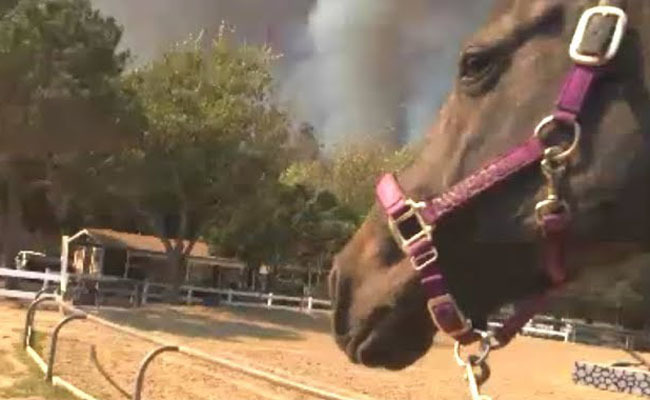
As thousands of firefighters continue to battle wildfires blazing across California, rescuers are coming together to help save both companion and wild animals affected by the fires.

In Defense of Animals (IDA) has offered a harrowing glimpse into the situation with footage that shows horses being rescued from dark clouds of smoke.

“It was pretty scary, as the fires were right there, and they were moving fast,” said Nicole Otoupalik, an IDA rescuer seen in the video. “The poor horses were scared, too. It was amazing to see people just running to help the horses at Irvine Park. They didn’t have enough staff to evacuate the horses, and so members of the public who had come to get a look at the fire just started running back into the park to help lead the horses out. Strangers were…

View original post 484 more words

Another deer hunter falls out of tree stand

http://www.news-sentinel.com/news/local-news/2017/10/15/archery-deer-hunter-seriously-injured-in-tree-stand-fall-in-steuben-county/

ANGOLA — Indiana conservation officers are investigating a fall from a tree stand that seriously injured an archery deer hunter Saturday evening in Steuben County.

Mark Neuhaus, 50, of Angola was archery hunting on private ground just northeast of Angola when he fell about 16 feet while climbing into his deer stand at around 5:30 p.m., according to Indiana Conservation Officer James Price.