Authorities in North Carolina say a man went on a slur- and threat-filled rant before he rammed a boat carrying a state wildlife commissioner and another man who he said was hunting in his duck blind.
Jan. 30, 2018,
SWAN QUARTER, N.C. (AP) — Authorities say a man assaulted a cousin of Gov. Roy Cooper and a North Carolina wildlife official, ranted at them with slurs and threats and accused them of hunting in his duck blind.
The Hyde County Sheriff’s Office said 29-year-old Jarrod Thomas Umphlett faces multiple charges, including assault with a deadly weapon with intent to kill.
An incident report says Umphlett’s boat rammed a boat carrying John Clark Purvis Sr. and Wildlife Resources Commission member Richard Edwards on Dec. 16. The impact knocked Edwards over, according to the report.
Umphlett boarded the boat, hit Purvis in the back of the head with his fist, also hit him on the shoulder and yelled racial slurs multiple times, the report said. All three men are white. The report says Umphlett threatened to “crush your skull in this lake.”
Purvis told deputies he pointed his shotgun at Umphlett to get him to stop his attack. The report said Purvis was bruised and had a bump on his head but was not seriously injured.
The men also said as they were leaving the lake that Umphlett told them he would kill them if they came back, according to the report.
It’s not known if Umphlett has an attorney. Deputies said when they went to his home to question him, Umphlett used the racial slurs multiple times again to refer to the men, whom he also called “rich pretty white boys.” He also told authorities he got no closer than 15 feet to the other boat and that the men were trying to run away when he saw them.
“Duck hunting has always been a gentlemen’s sport and it needs to remain this way,” Purvis said. He called the incident an “unfortunate event” and “traumatic.”
The sheriff’s office said Umphlett was also charged in a similar incident Dec. 27 when he and another man confronted a man and his son on the same lake. The report on that incident said Umphlett again used racial slurs even though the man and his son were white. The man said the harassment continued until he and his son left to hunt at a different location.
“Hello!” says the human. “Hello!” pipes the orca right back.
It’s not a children’s movie, but an actual orca emitting human(ish) words. An international team of researchers has taught Wikie, a 14 year-old killer whale in France, to mimic certain simple bits of speech, a discovery that gives them insight into wild orca dialects.
Repeat After Me
In all, Wikie learned six words, in addition to five orca sounds that she didn’t know before. The phrases included “hello,” “ah ha,” “one, two,” “Amy,” and “bye, bye.” She even nailed a few on her first try, though one took as many as 17 attempts to get right. The researchers taught her to “speak” by using a “copy” command that she had learned previously, though it had always been used to indicate that she should imitate physical actions, not sounds.
In a paper published Wednesday in Proceedings of the Royal Society B, the researchers detail how they first refreshed her memory on the “copy” command, and then had her repeat sounds made by her three year-old calf Moana, before progressing to unfamiliar killer whale noises. When Wikie demonstrated her imitation abilities with those sounds, the researchers moved on to human words.
When asked to say both “hello” and “one, two, three,” Wikie was able to say the phrases right back on the first try. The other words gave her a little more trouble, though she was able to repeat them with some practice. Still, Wikie was better at producing some sounds than others, though the researchers were nevertheless impressed by her ability to make human sounds given that orcas’ vocal systems look very different than ours. When asked to repeat the sounds, there was a fair amount of variability in her vocalizations, something the researchers say could be due to the simple difficulty of producing the sounds or even different levels of motivation between sessions.
After recording her speech, the researchers had six independent judges listen to Wikie’s vocalizations to confirm that she was imitating the human sounds well enough to be understood. While the sounds may be accurate, there’s no evidence that Wikie actually understands what any of it means. Instead, it’s simply a demonstration of orcas’ ability to learn and repeat new sounds, a skill that may be at the heart of some puzzling behavior observed in the wild.
Researchers have long tracked pods of killers whales by their dialects. Each pod produces unique calls, and this research reveals that these vocalizations are passed down through learning, rather than being a genetic trait. Researchers suspected this was the case, but hadn’t gathered enough evidence of orcas learning and mimicking sounds.
Some species, though not many, can learn to repeat human sounds. Belugas and bottlenose dolphins have been observed doing it, as well as elephants. How, and why they are able to do so varies, though the researchers do note that Wikie was producing the sounds in the open air, as opposed to under water as she normally would. This could add another layer of difficulty, though it also raises questions as to whether she would learn and repeat sounds differently underwater.
The “chicken toss” consists of throwing chickens, one or two at a time, up in the air from a tavern roof. Crowds scramble to grab the birds as they fall to the ground. The chickens are huddled freezing and fearful together in crates and bags awaiting their mistreatment by villagers who consider this animal abuse fun.
There is no similarity between a chicken being pulled from a container and thrown roughly up in the air from a roof, and a chicken fluttering to the ground voluntarily from a perch.
In addition to the physically cruel conditions is the heartless attitude toward the birds.
“Chickens are very intelligent, sensitive creatures,” says Karen Davis, President of United Poultry Concerns. “They know they are in an atmosphere of meanness and hurtfulness from which they cannot defend themselves.”
It’s time for Ridgeland to quit this cruel, moronic entertainment. They shame themselves by acting like village idiots, abusing helpless animals for fun, and teaching their children to be vicious bullies.
Many liberals check their minds at the door when anyone yells “Fascist.” Such knee jerk reactions are typical of rednecks and right wingnuts, who typically need only hear “socialism” to bring them into lock-step opposition to the most benign social program or safety net.
But the Pavlovian response seems in full bloom with the more intellectually challenged of our Democratic brothers and sisters,
Most people couldn’t define fascism if you handed them an encyclopedia. According to that well known fascist, Benito Mussolini, the Italian dictator, fascism is the merger of corporate and government power. By Mussolini’s standard, America is already a fascist state. The less than informed seem to think fascism is blowhard rhetoric and stiff-arm salutes.
Most who oppose Trump haven’t a clue as to his actual positions on anything. Most opinions about Trump have been carefully crafted by media talking heads and political pundits. Ironically, the very same…
WASHINGTON — Most trophy hunters consider displaying the head, hide or tusks of a kill just as important as bagging the big one. And advocates of this controversial sport wasted little time asking Interior Secretary Ryan Zinke to change some policies that would ensure hunters could bring exotic wildlife killed in other countries into the United States.
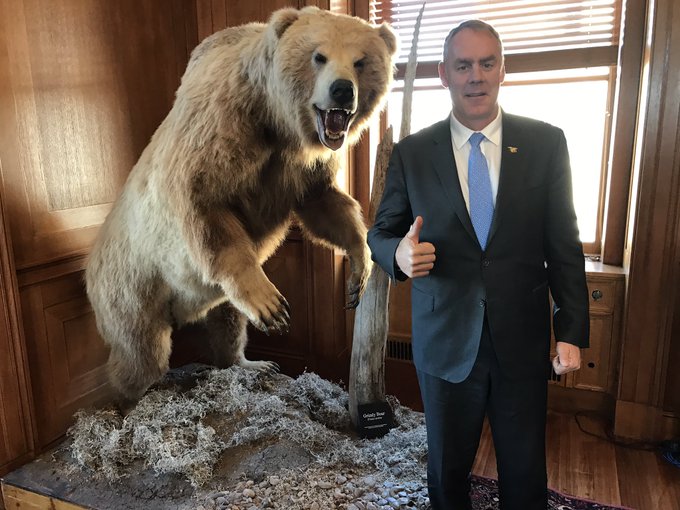
In a July letter, which HuffPost obtained last week as part of a Freedom of Information Act request, eight trophy hunting organizations urged Zinke ― who talks often about the hunting community’s contributions to conservation and was quick to outfit his office with taxidermied creatures ― to take swift action to right the perceived wrongs of the previous administration.
Conservation Force, a trophy hunting advocacy group based in Louisiana, spearheaded the July letter. In it, the nonprofit’s president, John J. Jackson III, and executives at several safari clubs and sport hunting advocacy groups called on Zinke to walk back several Obama-era regulations.
First, they asked the interior secretary to roll back a pair regulations that prevented U.S. hunters from importing the trophies of lions and elephants killed for sport in certain African countries. The organizations also petitioned the new administration to reform how the Endangered Species Act is applied to species outside the U.S., and to reject a petition calling on the U.S. Fish and Wildlife Service to list all African leopards as endangered under the ESA and restrict hunters from importing their parts. They also called for Zinke to revise seizure and forfeiture practices that they say “discourage lawful tourist hunting.”
The letter writers noted the groups’ members annually “contribute tens of millions of dollars to the conservation of wildlife and protection of habitat across the globe.” They warn that failing to implement the recommendations could hurt African economies, incentivize poaching and threaten the survival of iconic species.
“This is not an ideological issue to us,” Jackson told HuffPost. “It’s traditional conservation practices.”
He called the letter to Zinke an “emergency request” and “an urgent wish list.”
A little more than three months after the letter landed on Zinke’s desk, FWS started fulfilling that wish list — be it strategic or by coincidence.
FWS quietly began issuing trophy import permits for lions hunted in Zimbabwe and Zambia. And a few weeks after that, in mid-November, the administration lifted a 2014 ban on importing elephant trophies from those African countries. It determined that sport hunting of elephants there would “enhance the survival of the species in the wild,” a spokesperson for the FWS said at the time.
The decision sparked widespread public outrage, including from lawmakers on both sides of the aisle.
But then President Donald Trump tweeted that he was putting elephant trophy imports on hold ― reversing his own administration’s decision less than 15 minutes after FWS released an official announcement. He called trophy hunting a “horror show” and said he was unlikely to allow for such imports.
More than two months later, neither the administration nor the Interior Department has made an official announcement. But in an interview with Piers Morgan that aired Sunday, Trump indicated that the ban on importing elephant trophies will remain in place.
Jackson is among those who argues that expensive safari hunting is crucial to the conservation of big game species. He says the Obama administration failed to protect African species, interrupting the flow of money that groups in Africa use to fight poaching and protect habitat.
“If these elephants’ survival is dependent upon that revenue — those incentives to the government, to the local people — then any delay is detrimental,” he said. “We’re talking about hurting the species.”
Jackson said the Trump administration has not lived up to his expectations.
“We’re disappointed in the progress that’s been made so far,” he said. “Part of it is because of the president’s hold on the progress that had been made [by Fish and Wildlife].”
That Trump would side with the conservation community over gun rights and hunting advocacy groups is surprising. His sons Donald Trump Jr. and Eric Trump are avid big game hunters. In a photo that surfaced in 2012, Trump Jr. can be seen holding the tail of an elephant he shot and killed in Africa.
BARCROFT VIA GETTY IMAGES
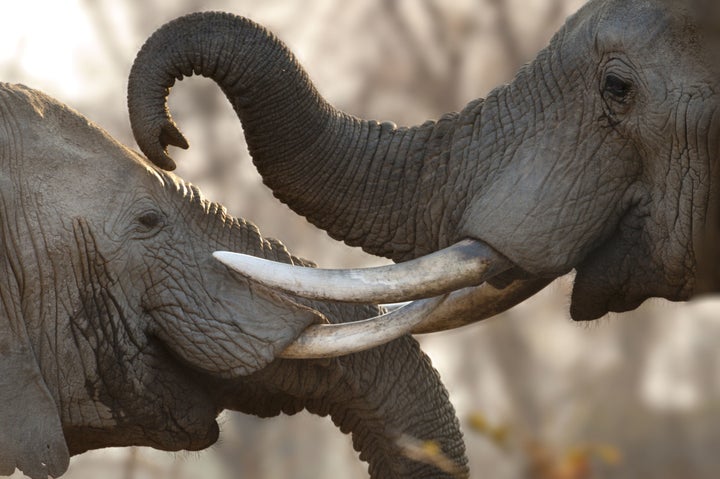
Bull African elephants sparring at South Luangwa National Park, Zambia.
Subscribe to the Politics email.
How will Trump’s administration impact you?
Jackson isn’t alone in his frustration. A day after Trump suspended his administration’s decision to allow elephant imports, the Safari Club sent out a “call to arms,” in which the group encouraged hunters to complain to Trump and Zinke and blasted “hysterical anti-hunters and news media outlets.”
Conservationists and animal rights advocates applauded Trump for stepping in.
“This is the kind of trade we don’t need,” Wayne Pacelle, CEO of The Humane Society of the United States, tweeted in November.
The Center for Biological Diversity and the Natural Resources Defense Council filed a lawsuit against the administration Nov. 20, seeking to clear up any confusion about where things stood and to block the Trump team’s effort to roll back the bans on importing elephants and lions. The government’s actions are “arbitrary and capricious,” the conservation groups wrote in their complaint.
It would seem that Zinke is letting Safari Club set Interior’s agenda on wildlife just like other industry representatives are setting the rest of Interior’s work, which is a travesty for wildlife and wild places.Tanya Sanerib, international program legal director at the Center for Biological Diversity
African elephants have been listed as threatened under the Endangered Species Act since 1978. African lions were listed in 2015. A provision of the law, which is intended to safeguard threatened species and the habitats critical to their survival, allows for sport-hunted trophies to be imported if the government determines that hunting will help safeguard the population. The FWS concluded that Zimbabwe, for example, had made strides to improve elephant management and anti-poaching efforts, according to a notice published in the Federal Register.
The decision on elephant trophies has raised questions about Zinke’s close relationship with the sport hunting community, in particular the Safari Club. The organization’s political action committees donated a collective $24,500 to Trump’s presidential campaign and Zinke’s 2014 and 2016 congressional bids, according to Federal Election Commission data.
“It would seem that Zinke is letting Safari Club set Interior’s agenda on wildlife just like other industry representatives are setting the rest of Interior’s work, which is a travesty for wildlife and wild places,” Tanya Sanerib, the international program legal director at the Center for Biological Diversity, told HuffPost via email.
The Trump administration has not yet moved to fulfill any other demands from the sport hunting groups.
But in his time at Interior, Zinke has worked to promote and increase opportunities for hunting and fishing. He installed a “Big Buck Hunter” arcade game in the cafeteria of Interior Department headquarters, which he said would highlight the contributions that hunting and fishing communities make to conservation. And in November he announced the creation of a so-called International Wildlife Conservation Council to advise him on “the benefits that international recreational hunting has on foreign wildlife and habitat conservation, anti-poaching and illegal wildlife trafficking programs.” Jackson told HuffPost he is among department’s nominees to serve on the council.
During his interview with Morgan, Trump said “a very high-level government person” was responsible for the “terrible” decision to lift the Obama-era ban, but he didn’t specify who that was. “I totally turned it around,” he boasted.
Neither the White House nor the U.S. Fish and Wildlife Service responded to HuffPost’s request for comment on which high-ranking official made the decision and on whether Trump is planning to keep the trophy import bans in place.
Read the full July 4 letter below. Along with Conservation Force, it was signed by representatives of the Dallas Safari Club, Dallas Safari Club Foundation, Houston Safari Club, African Safari Club, Wild Sheep Foundation, Grand Slam Club/Ovis and Chancellor International Wildlife Fund, Inc.
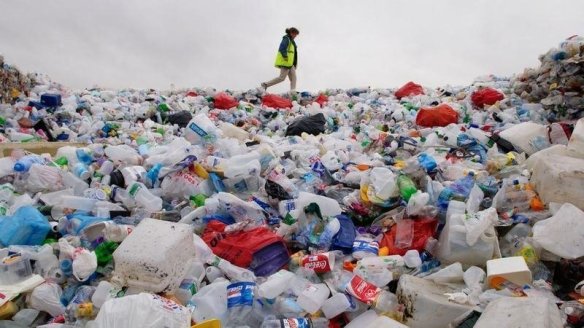
Plastic is made from oil. If we ever going to wean ourselves from fossil fuels we must also wean ourselves a plastic packaging. Estimated 12.7 million tons of plastic end up in the oceans each year, according to Greenpeace.












 Exposing the Big Game