Exposing the Big Game

Forget Hunters' Feeble Rationalizations and Trust Your Gut Feelings: Making Sport of Killing Is Not Healthy Human Behavior

Exposing the Big Game

(Image: Lauren Walker / Truthout)(Image: Lauren Walker / Truthout)

Last December, atmospheric scientist Peter Kalmus ruffled some feathers when he called out 25,000 of his colleagues for flying to the American Geophysical Union’s Fall Meeting.

Being acutely aware of the worsening impacts from anthropogenic climate disruption (ACD) — since it was, after all, his job — Kalmus had already made some dramatic changes in his own life to reflect some of the steps he knew the larger culture needed to take.

In 2010 he quantified his own carbon emissions and realized they were dominated by flying: More than three-quarters of his emissions were from flying alone. So, over the next two years he made an effort to fly less, and began to think of his airplane trips within the context of a warming planet.

To see more stories like this, visit “Planet or Profit?”

“In 2012, I was sitting on a plane — the last flight I’ve taken — and I had this strong, visceral sense that I didn’t belong there, that I didn’t want to continue being part of the problem,” Kalmus told Truthout, speaking for himself (and not on behalf of any institution with which he is affiliated). “Flying felt like a sort of taking from my children. It wasn’t guilt; it was clarity.”

He has not flown again.

And now Kalmus is not alone. He has been joined by a growing number of environmental scientists and academics who are committing to fly less or not at all.

Flying Less

Flying Less, a petition for academics with over 400 signatories, is becoming better known by the day, as is the No-Fly Climate Sci website, where Earth scientists and other academics who don’t fly or fly less are joining together to share their ideas.

Dr. Andreas Heinemeyer is a senior researcher and assistant professor at the Stockholm Environment Institute at the University of York, where she works on carbon cycling and ecosystem services in relation to ACD and land use. ​

“Flying felt like a sort of taking from my children. It wasn’t guilt; it was clarity.”

Like Kalmus, her work has impressed upon her the urgency of our global situation. She told Truthout the situation with ACD is “very urgent” and that real changes are long overdue.

“We should have curbed greenhouse gas levels about 20 years ago,” she explained. “We certainly have created the issue in the first place — all our wealth is based on this overuse of resources in connection with fossil fuel and land use impacts on rising greenhouse gases.”

In addition to the need for government action, Heinemeyer feels we are all obliged to do something about it.

“This includes assessing where we overuse resources and waste energy and limit this excess behavior,” she said. “This requires education but also leadership.”

Christoph Küffer is a professor of urban ecology in Zurich, Switzerland, and a member of No-Fly Climate Sci. He studies the ecology of the Anthropocene and ACD’s impacts on mountain ecosystems as well as restoring green infrastructure and biodiversity in cities.

“Obviously, [ACD] is a very urgent issue,” he told Truthout of his reasons for joining the group. “It affects foremost the weakest, and a small minority of us uses the vast majority of resources.”

Kalmus told Truthout he believes ACD is a far more urgent situation than the average person understands. He explained how it is affecting nearly every aspect of life on Earth.

“It threatens our homes, our livelihoods, our food supply, our geopolitical stability,” he said. “It’s happening faster than we expected. In the scientific community, we’ve had this unfortunate tendency to underestimate rates of change due to under-modeling complex processes such as permafrost methane release and ice sheet disintegration.”

He added that ACD is long-lasting because CO2 will stay in the atmosphere for tens of thousands of years, and the injury to biodiversity will take millions of years to heal.

Kalmus believes it is time for us all to take a step back and think seriously about what we actually need. Do we really need to fly halfway around the world in a matter of hours?

“Or are things like a healthy biosphere, stable climate and reliable food system more important?” he asked. “Is a carbon-rich lifestyle for an elite few worth hundreds of millions of climate refugees tomorrow, and disruption for tens of thousands or even millions of years?”

Kalmus believes that while wind and solar energy are obviously also part of the solution, he does not see the prospect of developing renewables as enough of a fix on its own. Hence, he is taking action to spread consciousness about how we all live.

He told Truthout that his own process of reducing his emissions has been surprisingly fun and satisfying. He wrote about it in his book Being the Change: Live Well and Spark a Climate Revolution.

“At work he studies the physics of clouds in a changing climate, and at home he explores how we can address climate change while living happier, more connected lives,” reads his “About the Author” page. “He lives in Altadena, California, a suburb of Los Angeles, with his wife and two children on 1/10th the fossil fuels of the American average. He enjoys orcharding, beekeeping, and backpacking.”

Is our fast, fossil-fueled lifestyle even that satisfying, or might we be happier if we slowed down a bit?

In our interview, Kalmus said that we all need to be asking ourselves some challenging questions.

“Can we get by with less electricity?” he asked. “If we cut our use in half in the US, we’d only need to build a quarter as much wind, solar and storage to decarbonize our grid. Is our fast, fossil-fueled lifestyle even that satisfying, or might we be happier if we slowed down a bit?”

Kalmus thinks what is required is a cultural shift to bring about the rapid, large-scale change that is our only hope for some mitigation of the impacts of ACD. In addition to institutional action, that cultural shift will require individuals to push the bounds of what society views as normal.

“We need to get to a point where burning fossil fuel is no longer socially acceptable,” he said. “I know we’ll get there, I’m pretty sure I’m on the right side of history here, but the question is how long will it take? Time isn’t on our side.”

Living What They Preach

Küffer, who has managed to go a year without flying, decided to affiliate himself with the No-Fly Climate Sci group because, he says, while humans invented the airplane, the pursuit of “non-flying” is its own form of innovation.

“Innovation happens only if we try, experiment and learn by doing,” he said. “There is a belief in our society that we can have everything together, that we can fly as much as we like and have simultaneously all the benefits of non-flying. But there are opportunity costs. My experience is that non-flying brings lots of benefits.”

Heinemeyer decided to affiliate herself with the no-fly group because of ACD’s impacts on society’s underpinning ecosystem services, including food security.

She does not see her efforts to fly less as an inconvenience.

“It might be an inconvenient truth, but it is quite convenient to stop flying … just do it!” she said. “However, I have to admit that there are some downsides and consequences one has to consider: lower international profile (no conferences over the pond), less involvement in conference attendance overall … and potential issues with promotion.”

However, Heinemeyer has three children and is working to be truthful with them about ACD issues and the urgency of changing their lifestyle, as well as how to do so.

“I feel that I have to live what I preach,” she said.

Kalmus thinks scientists and academics should be taking on the role of “cultural leaders.” He points out that Earth scientists, in particular, have front row seats to multiple, connected Earth system catastrophes unfolding in real time, from dying coral reefs to record-breaking wildfires — and they need to share that perspective with the public.

“We know that this isn’t the ‘new normal.’ It will get steadily worse until we stop burning fossil fuel,” he said. “Doesn’t this knowledge come with some responsibility? Studying climate change isn’t like studying astrophysics: Earth science has revealed a clear and present danger to civilization.”

The scientists behind the no-fly campaigns are not calling for individual change in a vacuum.

Kalmus feels he can’t separate being a scientist from being a concerned, responsible citizen and father. One way to communicate the urgency of the climate emergency, he says, is to live his life like it’s urgent — to model the transition away from fossil fuels.

“I don’t expect every Earth scientist to do this, but I do hope more start to see it this way, because we need all hands on deck,” he said, going on to add that he hopes that as a community, Earth scientists and climate researchers will embrace the seriousness of what their science is telling them. “A good place to start would be to find ways to systematically reduce our flying, like more teleconferencing, more local conferences. Doing this can only enhance our credibility.”

Küffer echoes the belief that “walking the talk” should be part of how credibility is evaluated among scientists and academics.

“As environmental scientists we can’t call upon the world to stop all CO2 emissions within the coming few decades while we ourselves don’t change our habits,” he said. “Maintaining credibility of scientific facts, academia and experts has become a key challenge of the sciences in our time.”

Reflecting on the kind of science that is needed today, Küffer added, “Flying even affects how we do science.”

Heinemeyer wants her colleagues to know that it is indeed possible to fly less, or even to cease flying altogether. Her hope is that her efforts will inspire people. She says she wants to “create a feel for ‘it does matter what I do,’ because simply put, it does — but only if enough of us do it!​”

Too often, Heinemeyer said, people in her research area and institute work on the issue but then ignore the fact that they themselves can also be part of the solution. Many of them refuse to change their own emissions practices.

“Justifying flying by doing good is no good per se, mostly just a simple excuse for not trying alternatives,” she said. “Certainly flying less, if not stop flying, should be part of any research project.”  ​

The scientists behind the no-fly campaigns are not calling for individual change in a vacuum. Kalmus, for example, also points to many ways we can all push for large-scale change, such as voting out those who attack science, and advocating sensible policies such as an annually increasing carbon fee and dividend. However, he also thinks a key tool in the individual toolbox is conspicuous non-consumption: cultural shift through individual change.

“This isn’t a hopeless situation,” he said. “Yes, climate change is here, and it’s a shame we didn’t start dealing with it 10 years ago. I’m not optimistic that we’ll keep global mean surface warming below 2 degrees Celsius. But 3 degrees of warming will be much worse than 2 degrees. And 4 degrees of warming will be much, much worse.”

There are worst-case warming projections that exceed even 4 degrees Celsius, and there are many factors that will continue to drive warming under the current global economic system. However, Kalmus and his colleagues are working to bring their lives in line with Mahatma Ghandi’s code of “being the change” they hope to see in the world. It is a heartfelt and dignified stance in a time of environmental uncertainty, violence and strife.

Copyright, Truthout. May not be reprinted without permission.

The CDC’s Prescription for Nuclear War

Exposing the Big Game's avatarThe Extinction Chronicles

http://www.truth-out.org/buzzflash/commentary/the-cdc-s-prescription-for-nuclear-war

GAR SMITH FOR BUZZFLASH AT TRUTHOUT

Nuke 0202wrp opt(Photo: Dr Case / Flickr)Donald Trump’s wrecking-ball approach to governing has left Washington in a shambles. Instead of presiding as a caretaker, Trump has proven to be more comfortable in the role of an undertaker.

One would hope the Centers for Disease Control and Prevention (CDC) would be spared. If only. Under Trump, the nation’s premiere health protection agency has been given an unsettling new task: to promote acceptance of the greatest looming threat to human life — nuclear war.

Under Trump, the CDC was recruited to host a January 16 press briefing on the “Public Health Response to a Nuclear Detonation.” The intent appeared to be normalize the prospect of nuclear war by offering US families a checklist they could use to eke out a living in the smoking rubble of a post-nuclear landscape.

As it turned out, this attempt to…

View original post 1,692 more words

Patricia Randolph’s Madravenspeak: Lawmakers push irrational cruelty to wolves

dvoight09's avatarWisconsin Wildlife Ethic-Vote Our Wildlife

This is the stuffed bear in Sen. Tom Tiffany’s office in Madison. PHOTOGRAPH COURTSEY OF RANDY O’CONNELL

Professionals built the Titanic, amateurs the Ark” — Frank Pepper

Wisconsin urgently needs a wildlife ark created by citizens — a Wildlife Cooperative, replacing the Department of Climate Change Denial and Wildlife Destruction. The “experts” are stuck in a predator-killing rut despite abundant science documenting the health benefits of wolves to complex, intact ecosystems.

When I was elected Dane County delegate to the Conservation Congress 1999-2002, DuWayne Johnsrud was chair of the Assembly Natural Resources Committee. He called sandhill cranes “ribeyes in the sky,” roasted mourning doves in his office, and had a bear skin thrown over his office couch.

Toxic manhood still rules in deadly entitlement. Sen. Tom Tiffany, chair of the Senate Natural Resources Committee, has his mean-spirited ego on display in the large taxidermy black bear in his office.

I…

View original post 744 more words

Punish Man Accused of Running Wildlife Smuggling Ring

Nancy's avatar"OUR WORLD"

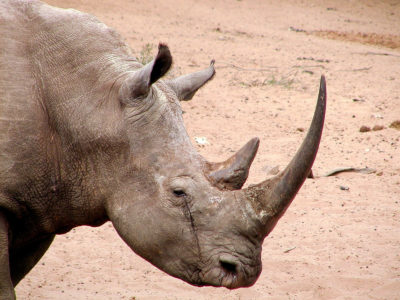
A man was caught allegedly illegally smuggling rhinoceros horns into Thailand from Africa. It is believed that he has run a notorious smuggling operation for the past decade. Sign this petition to ensure he is severely punished.

Source: Punish Man Accused of Running Wildlife Smuggling Ring

View original post

Save Dolphins from Mistreatment: Maintain Ban on Captive Breeding

Nancy's avatar"OUR WORLD"

In a giant step backward for animal welfare, France has overturned a hard-won ban on breeding dolphins in captivity. Demand that these innocent animals be protected from mistreatment and this ban reissued.

Source: Save Dolphins from Mistreatment: Maintain Ban on Captive Breeding

View original post

Stop Supporting Trophy Hunting Auction

Nancy's avatar"OUR WORLD"

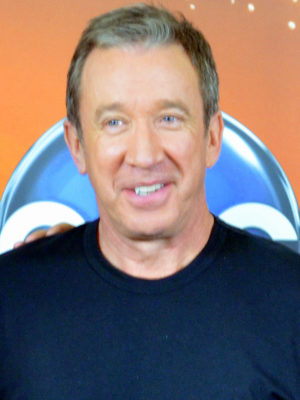
Famous comedian Tim Allen is scheduled to perform at an upcoming trophy hunting auction that will offer hundreds of permits for trophy hunters to slaughter wild lions, rhinos and other threatened species. Sign this petition to demand that he withdraw his support immediately.

Source: Stop Supporting Trophy Hunting Auction

View original post

Protect Returning Wolves in Europe

Nancy's avatar"OUR WORLD"

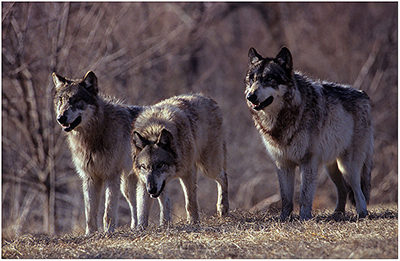
For the first time in a century wolves are returning to mainland Europe, only to be met with persecution and calls for their extermination. This is completely inhumane, especially as wolves are considered endangered. Sign this petition to demand the European Union preserve the legal protection of wolves.

Source: Protect Returning Wolves in Europe

View original post

Wayne’s Not So Humane World

Exposing the Big Game's avatarExposing the Big Game

An Animal Rights Article from All-Creatures.org

FROM

Captain Paul Watson, Sea Shepherd Conservation Society
April 2016

[Also read SeaWorld’s Three Whoppers.]

Keiko sea pen
Keiko in Icelandic sea pen…

Wayne, what are you doing?

Wayne Pacelle is the President of the Humane Society of the United States.

I have known Wayne since the Eighties when he and I were both working with the Fund for Animals. At the Higgins Pigeon shoot in Pennsylvania I filmed Wayne running in front of hunters armed with shotguns who were blasting defenseless pigeons being released from cages. It was a brave thing to do and Wayne was a dedicated and passionate activist for the Fund for Animals, mentored by Cleveland Amory himself.

I’ve always liked and respected Wayne, even when he decided that Sea Shepherd and I were too controversial to be seen together in public, but that’s okay, we get that from lots of folks…

View original post 1,344 more words

Humane Society CEO is subject of sexual harassment complaints from three women, according to internal investigation

 https://www.washingtonpost.com/business/economy/humane-society-ceo-is-subject-of-sexual-harassment-complaints-from-three-women-according-to-internal-investigation/2018/01/29/12c8961e-053b-11e8-94e8-e8b8600ade23_story.html?hpid=hp_hp-top-table-main_humane-10pm%3Ahomepage%2Fstory&utm_term=.e97e383d8bb7

Humane Society chief executive Wayne Pacelle and his dog Lily at work in Washington in August 2016. (Linda Davidson/The Washington Post)
An internal investigation by a law firm hired by the Humane Society of the United States has identified three complaints of sexual harassment by chief executive Wayne Pacelle and found that senior female leaders said their warnings about his conduct went unheeded, according to two people familiar with the matter and a Humane Society memo describing the investigation.

The investigation also found the nonprofit agency, one of the country’s biggest animal charities, had offered settlements to three other workers who said they were demoted or dismissed after reporting Pacelle’s alleged behavior, according to the Humane Society memo.

Investigators from the law firm Morgan Lewis, who interviewed 33 people, including Pacelle, also reported that there was a perception within the Humane Society that certain women owed their career success to romantic relationships with the chief executive.

Pacelle denied the complaints from all three women in an interview Monday with The Washington Post. “This is a coordinated attempt to attack me and the organization,” he said. “And I absolutely deny any suggestion that I did anything untoward.”

He denied allegations he had consensual sex with donors and volunteers as “just ad hominem attacks.” And he said no senior women had warned him about his conduct. “Absolutely not. I enjoy the support of senior women throughout the organization. No one has ever warned me of such a thing, ever.”

A spokesperson for the Humane Society declined to comment on the findings of the investigation, referring The Post to a statement made Thursday by Eric Bernthal, chairman of the organization’s board of directors. His remarks came shortly after the charity announced it was launching an investigation.

“We do not have information that can be shared regarding the investigation, its findings, or board actions at this time,” the statement said. “We believe it is important to deal in substance and not rumors, and our process is designed to ensure confidentiality and fair consideration of these issues.”

The decision to launch an investigation was first reported by the Chronicle of Philanthropy.

Pacelle said that he was aware of the investigation but added: “There are allegations only. Beware of rumors and other unsubstantiated claims.”

The earliest complaint against Pacelle dates to 2005, when an intern said the chief executive asked to meet outside of work at a public coffee shop, according to the memo reviewed by The Post.

According to her account, Pacelle pulled her close, started slow dancing with her and gave her an unwanted kiss, the investigation document said.

Another woman told investigators she regularly traveled with Pacelle on business and that donors mentioned his sexual interest in her, remarking that dating him would be good for her career.

On one such work trip in 2006, she told investigators Pacelle asked her to stop by his hotel room after an event. He asked if he could masturbate in front of her, requested that she take off her clothes and offered to perform oral sex on her, according to two people briefed on the matter and the memo. When the woman refused, Pacelle told her not to tell anyone or she would destroy the Humane Society and lose her job, according to the memo.

A third woman, who joined the Humane Society in 2012 but has since left the organization, told investigators that Pacelle stopped by her office late one night when she was working alone, started salsa dancing on his own and asked her to join him.

Pacelle denied all three complaints. “The one complaint about the salsa dancing, I simply had a conversation with a person and it turned into that,” he told The Post. “The person with the hotel — I’m familiar with that. I worked with the person eight years after that allegation. The person never said a thing to me about any harassment, and I certainly never invited her to a hotel room.”

Pacelle also denied the complaints to investigators, according to the memo.

The investigation began on Dec. 20 after the Humane Society received an anonymous complaint about Pacelle’s behavior. The organization then hired Morgan Lewis, a Washington law firm, to look into the matter.

The investigation also found that Pacelle had maintained a sexual relationship with a female subordinate and exchanged more than 100 emails with her. The woman told the investigation that she became afraid of Pacelle after the relationship ended, describing him as abusive and controlling, according to the memo.

Pacelle denied having a relationship with the subordinate. He also disputed there was anything inappropriate in the relationship to investigators, according to the memo.

The investigation’s findings are based on interviews, evidence provided by witnesses and emails on Pacelle’s work computer, according to the memo.

Since taking the helm at the Humane Society, which has its headquarters in the District, Pacelle’s salary rose to nearly $380,000 in 2016, according to IRS filings.

Some employees defended Pacelle to investigators, describing him as someone who engaged in consensual relationships with adults. Others said the chief executive created a toxic environment at the Humane Society in which workers thought they had to sleep with Pacelle to get ahead, or suspected women who achieved career success of dating him in secret, according to the memo.

The people briefed on the investigation told The Post they wanted to come forward to repair the culture at the Humane Society, which they believe does important work to help animals.

The organization is focused on ending animal cruelty, abolishing “puppy mills” and banning seal slaughter, among other causes.

The people briefed on the investigation said they worried that money going to address Pacelle’s actions was misdirected from protecting wildlife.

One woman said she received a settlement from the Humane Society after she complained about Pacelle’s alleged girlfriend joining her team without proper qualifications and was shut out of work opportunities, according to the memo.

Two more received payouts after they leveled retaliation charges against the organization, asserting they lost their jobs after speaking up about Pacelle’s office romance and sexual behavior in the office, according to the memo.

Pacelle said he would not comment on any settlements.

The amounts of the settlements were not disclosed.