by: Stephanie M
target: Howard Schultz and Kevin Johnson, Starbucks Corporation
134,864 SUPPORTERS -140,000 GOAL
Americans use 500 million plastic straws every single day.
This severely impacts us, future generations, and our precious marine life. It is estimated in the year 2050 there will be more plastic than fish in our oceans.
I would like to see Starbucks, the company I work for, help lead the way to shrink our footprint on the planet. Plastic straws are too lightweight to be recycled, and oftentimes are made out of the same plastic as Styrofoam which CANNOT be recycled. There are many different alternatives to plastic straws! Many companies have started using compostable straws or paper straws.
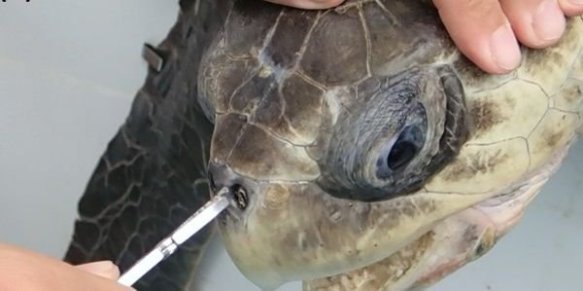
Plastic straws can be horrible for wildlife. The photo above is from a painful-to-watch video of researchers in Costa Rica struggling to remove an obstruction from the nasal passage of a sea turtle. During the…
by: Care2 Team
target: Dr. Timothy Gallaudet, Acting Under Secretary for Oceans and Atmosphere (NOAA), Commerce Department
72,890 SUPPORTERS – 75,000 GOAL
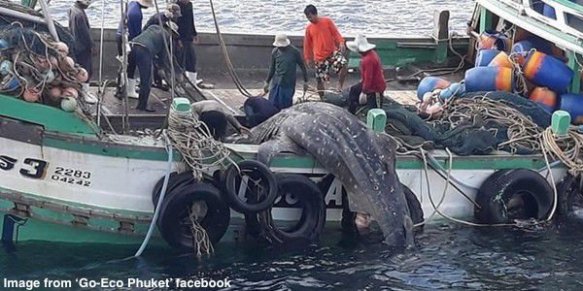
The video is tragic and heartbreaking. An enormous whale shark hoisted onto the side of a vessel by commercial fishermen in Thailand. Unfortunately, the whale wasn’t freed in time to survive. Even worse, the whale shark was reportedly seen giving birth while hanging off the side of the ship, and the baby died as well. We must do more to protect these amazing animals.
Whale sharks are the largest fish in the sea, and gentle filter-feeders. Due to their slow moving, wide-ranging nature, the species is incredibly vulnerable to extinction.
Scientists understand very little about the species, but some think they are a world-wide population, not subdivided by regions. If so, that means what happens in Thailand, affects the whale sharks well-known to feed in specific areas in…
change.org
Innovate plastics in the ocean into nike shoes · Change.org
Gabe Florez started this petition to NIKE
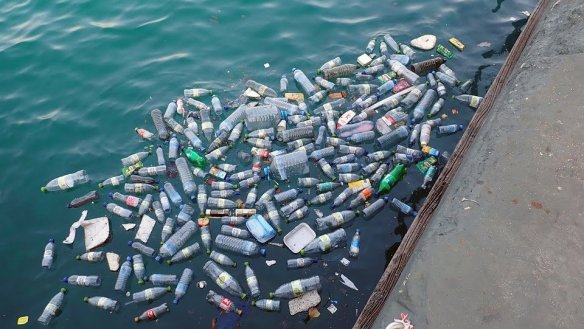
The reason this is important to many people is because the amount of plastics in the ocean is detrimental to the environment and humans. Every year, the total increases. By 2050, it is said there will be more plastics in the ocean than marine life. Plastics harm every part marine food webs physically entangling marine life and poisoning them from within. If Nike incorporated large amounts of plastics into innovative athletic shoes, they would be making a huge difference in the plastic problem. In 2017, Adidas sold over a million shoes created from plastics in the ocean. We want the biggest sports company, Nike, to create shoes from plastics in the ocean and help save marine ecosystems one step at a time.
Now floating northwest of the South Georgia islands near the tail of South America, the iceberg — named B-15 — has traveled more than 6,600 miles (10,000 kilometers) from the ice shelf and is veering dangerously close to the equator. [Photos: Diving Beneath Antarctica’s Ross Ice Shelf
Satellite images taken from the International Space Station (ISS) on May 22 confirm that the remains of the iceberg are on a crash course with warm tropical waters, where growing pools of meltwater will soon “work [their] way through the iceberg like a set of knives,” NASA glaciologist Kelly Brunt said in a statement.
The freewheelin’, formerly Connecticut-size iceberg first embarked on its long cruise after breaking away from the Ross Ice Shelf in 2000, NASA said. At the time, it was the largest single chunk of ice ever to split off from the shelf, measuring 160 nautical miles long and 20 nautical miles wide. (That’s a total area of 3,200 square nautical miles — larger than the island of Jamaica.)
Iceberg B-15 broke off of the Ross Ice Shelf in 2000, floated three quarters of the way around Antarctica and is now veering north toward its doom.
Credit: NASA/ International Space Station
Currents swept the berg three-quarters of the way around Antarctica; then, it suddenly shifted northward into the southern Atlantic Ocean within the past year or two, NASA said.
The stately raft of ice has gradually splintered into many smaller pieces, most of which have already melted. Today, only four chunks remain with a large enough surface area to be trackable by the National Ice Center (20 square nautical miles is the minimum).
The chunk observed from the ISS last month (its name is B-15Z) still has a surface area of about 50 square nautical miles, but it is likely nearing the end of its journey as it floats ever closer to the equator. According to NASA, icebergs have been known to rapidly melt once they drift into this region. A large fracture is already visible at B-15Z’s center, and smaller pieces are crumbling away from its edges.
B-15 will be missed. But its fans may take solace in knowing that, thanks to climate change, another “largest iceberg ever” will probably break away soon enough.
FILE – In this Aug. 3, 2016, file photo, a large bison blocks traffic as crowds of tourists take photos in the Lamar Valley of Yellowstone National Park, Wyo. The park’s superintendent says he’s being forced out for what appear to be punitive reasons following disagreements with the Trump administration over how many bison the park can sustain. (AP Photo/Matthew Brown, File)
onegreenplanet.org
Why Breeding Dogs is a Problem, Even if the Breeder is ‘Reputable’
Corrine Henn
5-7 minutes
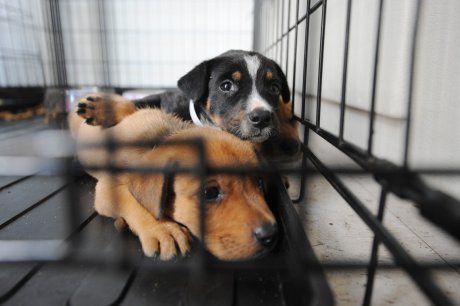
Despite the fact that nearly 62 percent of Americans have a pet, there are still more than 70 million homeless dogs and cats living in the U.S. Of these 70 million needy animals, only around six to eight million enter shelters each year. Although they only take in a fraction of America’s homeless animals, these shelters are mostly packed to capacity and strapped trying to function with limited funds. Yet, regardless of this wealth of pets looking for loving homes, only around 20 percent of Americans adopt their dogs from shelters.
So where are the other 74 percent coming from? Well, breeders.
You can find virtually any breed of animal in your local shelter – purebred or mixed – but consumers continue to pay hundreds, sometimes thousands, of dollars for dogs from breeders.
The culture wars and social justice issues plaguing the country now involve our fight for animals. Events in the last few months suggest our speech may be curtailedalso , and that will make our attempts to abolish speciesism more difficult.
For example, last January Ingrid Newkirk was scheduled to give a talk at Google, sponsored by Googlers for Animals. However, when Newkirk arrived at the Google parking lot (after paying her airfare from Washington, DC). She was disinvited (banned). She has yet to hear from anyone “in authority” at Google about why she was turned away from a long-scheduled talk. But one employee admitted some people found her planned discussion racist.
The subject of Newkirk’s talk was racism, sexism, and speciesism. She planned to be inclusive in the discussion and advocate for all victims of violence and discrimination, including animals. (Newkirk’s thesis sounds a lot like the intersectionality movement that animal rights activists are…
Cargo airline says will no longer accept shipments with immediate effect
HANNAH BRENTON
06.06.2018
The death of Cecil the lion, who was killed by a US big-game hunter in 2015, led to international outrage Photo: Shutterstock
Luxembourg cargo airline Cargolux has banned the transport of game hunting trophies on board its aircraft.
The cargo handler said the ban would come in with immediate effect.
“This practice does not align with the company’s ethical engagements and policies, we can therefore no longer accept these shipment requests,” said Richard Forson, president and CEO of Cargolux.
International outrage over the death of Cecil the lion, who was killed by a US big-game hunter in 2015, led a number of airlines to ban the transport of the wildlife “trophies”.
Cargolux wants to build a sustainable business model which “includes preserving the environment and its natural resources”, Forson added.
The National Park Service (“NPS”) instituted regulatory provisions in 2015 to ban certain extreme hunting practices in the State of Alaska, recognizing that Alaska “has allowed an increasing number of liberalized methods of hunting and trapping wildlife … [that] are not consistent with the NPS’s implementation of [the Alaska National Interest Lands Conservation Act’s] authorization of sport hunting and trapping in national preserves.” These banned practices include killing wolf and coyote pups and mothers in their dens, shooting caribou from boats or from shore, using dogs and bait to hunt and kill bears, and using artificial lights to kill mother black bears and their cubs as they hibernate.
Now Interior Secretary Ryan Zinke and the NPS are proposing to adopt a rule (RIN 1024-AE38) that rolls back the 2015 regulatory provisions, and would again allow egregious and scientifically unsound methods of hunting native predators in Alaska’s National Preserves.
Every non-vegan human is responsible for 30,000 animal deaths over his/her lifetime.
Before the Armory came into being, I was publishing Notes on my Facebook profile which I called political grenades, weapons to be wielded in the war for animal rights. Those modest apothegms and observations have grown to over two thousand grenades and articles.
In addition to regular articles, the Armory has begun publishing Politically Incorrect, an ongoing, daily stream of grenades that I hope will be shared extensively.
Most will be provocative, all will be irreverent, many seditious, and each will be designed to hit people upside the head.
The purpose of the Armory is to challenge people to think, to question what they believe, to weigh what they value.
To question authority, society, law, government, religion, politics, and their own worldviews.
I believe the Armory to be the most radical and incendiary blog for universal rights to…








 Exposing the Big Game