84,488 SUPPORTERS – 85,000 GOAL
Alia was a 10-year-old bottlenose dolphin living a sad life in captivity at Dolphinaris Arizona when she tragically died. The dolphinarium has not released the cause of death but we know that captivity is horrible for these intelligent, fun animals. Six other dolphins are still there and at risk.
Sign the petition to urge Dolphinaris Arizona to do the right thing and release the remaining six dolphins to a sanctuary where they can live out their days in a happy, natural habitat.
Bottlenose dolphins normally live at least 40 years so it’s not a stretch to imagine some kind of death due to living in captivity. In fact, Alia is the second dolphin to die there in the last year – Bodie was only 7 years old when he died last year. Dolphins are not meant to live as…
by: Finley B
target: New Jersey Governor Phil Murphy, New Jersey
7,253 SUPPORTERS in New Jersey
105,064 SUPPORTERS
110,000 GOAL
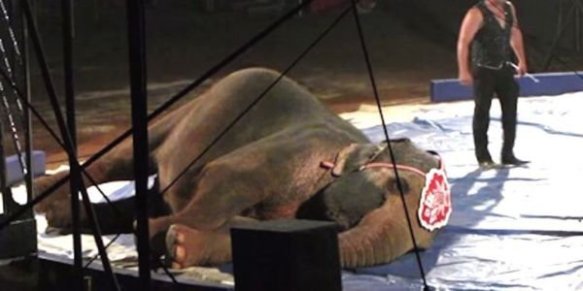
In 2017 Illinois and New York became the first states in the U.S. to ban circus elephant acts. This means that any circus that still uses elephants can no longer perform anywhere in the entire state of Illinois or New York. Now in 2018 New Jersey is poised to take this even farther and completely ban the use of any exotic animals in circuses, this includes elephants, tigers, lions, and bears.
All animals, especially elephants, suffer terribly in the circus industry. They lead lives of sadness, constant fear, and despair. This bill passed the New Jersey legislature by votes of 66-2-2 in the General Assembly and by 31-0 in the State Senate. Unfortunately outgoing New Jersey Governor Chris Christie decided to “pocket veto” the bill, which means that he declined…
An 8-year-old Pomeranian was found dead during a layover near Detroit, Mich., on Wednesday after the dog was on a Delta Air Lines flight en route to New Jersey, his owners and the airline said.
Alejandro was found dead in his crate in the cargo facility at Detroit Metropolitan Airport, southwest of Detroit in Romulus. Michael Dellegrazie, the owner, said the dog was alive when the flight from Phoenix, Ariz., landed at the airport around 6:30 a.m. Wednesday for a scheduled layover.
About two hours later, Alejandro was found dead by an agent, who said the dog was unresponsive. He reportedly had vomit in his crate. The dog’s blanket also had blood stains.
The dog named Alejandro died Wednesday during a layover at Detroit Metropolitan Airport after a Delta flight from Phoenix, Ariz. (EVAN OSHAN/ OSHAN & ASSOCIATES)
“We lost a family member. That’s exactly what happened, and somebody has to be responsible for it. He was in their care and they didn’t take care of him,” Dellegrazie told WDIV-TV.
Dellegrazie, who owns the dog with his girlfriend, said he’s grasping to understand how his Pomeranian had died while heading to Newark, N.J.
“Things need to change, and I’m here to tell you that the people will make them change,” Evan Oshan, Dellegrazie’s attorney, told the news site.
A Delta Air Lines spokesman told Fox News the dog was seen in good health after the flight and brought to the staging area. The kennel facility determined the dog had died about two hours later and airline officials immediately notified the owner. The spokesman added that Delta offered to conduct a necropsy, but was told by the owner to hold off.
In a statement, Delta said it is conducting an investigation.
“Pets are an important member of the family and we are focused on the well-being of all animals we transport. Delta is conducting a thorough review of the situation to ensure this does not happen again and have been working directly with Alejandro’s family to support them however we can,” the statement provided to Fox News read.
“As part of that review, Delta offered to have Alejandro evaluated by a veterinarian while in our possession to find out more about why this may have occurred. We are disappointed that we were not allowed to have a necropsy performed immediately following this unfortunate situation. The family now has Alejandro and we continue to offer our support,” it added.
It’s still unclear what caused the dog’s death. Oshan said the family is “devastated” over the incident.
Oshan is the same lawyer who represented the owners of the French bulldog that died on a United Airlines flight. The 9-month-old puppy, Kokito, died after he stopped breathing on a flight from Houston to New York in March. A flight attendant told the owner to put him in the overhead bin rather than under the seat.
The French bulldog that died in March was not part of the cargo program.
In 2008, Cabot Oil and Gas started fracking operations in Dimock, Pennsylvania. It was around that time the community started noticing their water was turning brown and making people and animals sick. One woman’s water well exploded. Fracking had come to town.
It’s a familiar story in other rural communities—from Pennsylvania to Montana and Texas—where fracking has contaminated drinking water resources and emitted toxic air pollution associated with higher rates of asthma, birth defects, and cancer.
But the story is similar in other communities where fracking or other extreme fossil fuel extraction isn’t happening. Air and drinking water that’s been dangerously polluted from industrial operations affect communities across Iowa, including the state’s largest city, Des Moines. Polluting facilities are operating in Central Oregon, North Carolina,Wisconsin, and Maryland. None of those places are fracking, but they are host to another environmental hazard facing rural communities: factory farms.
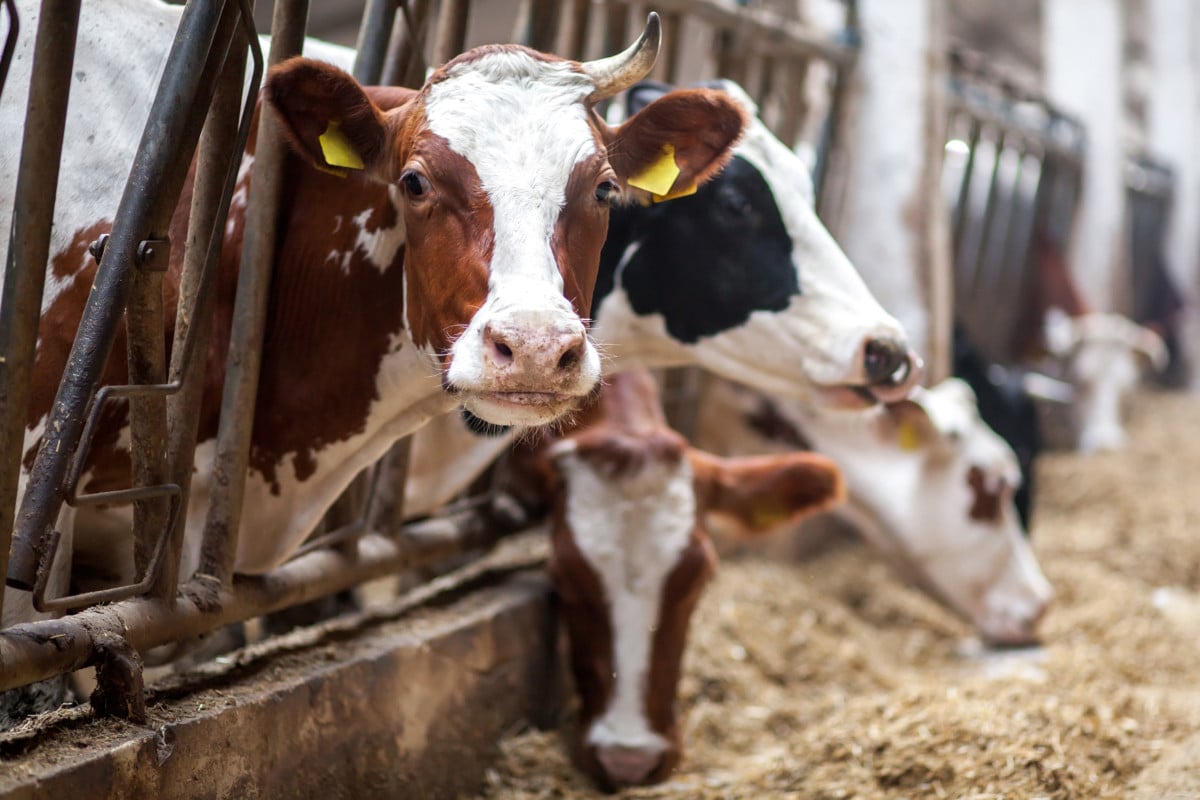
Like the fossil fuel cartel, this highly consolidated industry prioritizes profits at the cost of our environment. Factory farms are an industrial model for producing animals for food where thousands of cows, pigs, or birds are raised in confinement in a small area. While farms can and do apply manure as a fertilizer to cropland, factory farms produce more manure than nearby fields can absorb, leading to runoff into surface waters and contaminants leaching into groundwater. And storing concentrated quantities of manure releases toxins like ammonia and hydrogen sulfide into the air, threatening nearby communities—and even leading to worker deaths. The nearly half a million dairy cows on factory farms in Tulare County, California, produce five times as much waste as the New York City metropolitan area and carries chemical additives and pathogens like E. coli, many of which are antibiotic resistant.
Factory farms are also an issue of environmental injustice. In North Carolina counties that contain hog factory farms, schools with larger percentages of students of color, and those with greater shares of students receiving free lunches are located closer to hog farms than whiter and more affluent schools. Just like with fossil fuel infrastructure, these toxic facilities are more likely to be in places that are least able to resist their development.
Another thing factory farms have in common with fossil fuels: They are a danger to the climate. Livestock production contributes 14.5 percent of all human-caused greenhouse gas emissions. Methane emissions from the digestive processes of cattle contribute 39 percent of the greenhouse gas emissions from livestock production, and manure storage and processing contribute 10 percent. Additionally, monoculture crops like corn and soy are a hallmark of our highly consolidated food system and are one of the reasons we can raise mass quantities of livestock. These crops contribute nearly half of the emissions from the sector. Meanwhile, more sustainable meat production methods like smaller farms and grass-fed operations may have lower greenhouse gas emissions than factory farms. Without a rapid transition away from factory farming, we will not avoid catastrophic climate change.
Instead, Truthout is fueled by generous donations from readers. Want to support our work? Make a donation today!
Yet attempts to regulate factory farms have been weak-kneed and ineffective. For example, federal law requires they report significant releases of toxic pollutants like ammonia. But the Environmental Protection Agency actually does little to monitor, much less prevent, these emissions. In 2009, for example, the agency rolled back regulations so that only the largest facilities had to report these emissions—and only to local, not national, emergency response officials. In 2018 Congress went even further, granting an exemption from reporting requirements for air emissions created by manure on farms. Similarly, the EPA does not collectcomprehensive data on factory farm size or location, making oversight impossible. And while the Clean Water Act regulates water pollution from industrial facilities, the EPA has looked the other way; the agency estimated in 2011 that less than half of the facilities required to get discharge permits had actually obtained them.
Calls to ban fracking have been proliferating since we have found that it is too dangerous to simply regulate. The inherent risks to our environment, our climate, and our communities are simply too much.
Now, we need to say the same thing about factory farms. Both industries are putting rural communities at risk so that large polluting companies can become larger and more profitable. Climate advocates who are already facing down the fossil fuel industry should find common cause with those who are fighting to stop industrial agriculture in their community.
Systemic change is needed. We can’t shop our way out of the damage that is being done to our environment by simply choosing to reduce meat consumption or ride bikes to work. While these are meaningful steps, we must also demand policy action. It’s time to reverse the decades of pro-industry policy that have made Big Ag and Big Energy bigger and badder, and create policies that start phasing out pollution from agriculture and energy.
We know how to do it: We need to demand meaningful laws and regulations—including bans on new polluting factory farms and fossil fuel infrastructure—that prioritize people over profit. This is already happening at the state level in places like Iowa, but we need to work at all levels, starting now, to enact the changes we need to protect our environment, our water, and our communities.
Urgent! Calls Needed Now To Help Advance 3 Bills In California Senate: Plant-Based Meal Options, CA Cruelty-Free Cosmetics Act & The Iconic African Species Protection Act
By Judie Mancuso
People in California are urged to contact their Senators today to help advance three crucial bills to the next step in becoming law.
SB 1138 – Plant-Based Meal Options
SB 1138, Food Options: Plant-Based Meals, which was introduced by Senator Nancy Skinner, would require licensed California healthcare facilities and state prisons to make available plant-based meal options containing no animal products or by-products, including meat, poultry, fish, dairy, or eggs.
SB 1138 is sponsored by the Physicians Committee for Responsible Medicine and Social Compassion in Legislation.
SB 1249 – CA Cruelty-Free Cosmetics Act SB 1249, the CA Cruelty-Free Cosmetics Act, introduced by Senator Cathleen Galgiani, would make it unlawful for any cosmetic manufacturer to knowingly import or sell any cosmetic, including…
The pain of starvation is horrific. It is a prolonged suffering where death comes slowly with a myriad of painful symptoms throughout each stage of physical deterioration.
Starvation is terrible, but to be starved out of apathy is morally abhorrent. For 169 horses at the army unit in South Africa, the nightmare of starvation was only too real.
Sign the petition to demand the people responsible for this crime against living creatures are brought to justice.
An initial loss of body fat is followed by muscle loss and atrophy and, ultimately, organ failure. In long-term starvation, degeneration of the liver, cardiac changes, anaemia, and skin lesions may develop. The brain, which relies on chemical signals to function properly, begins to deteriorate, along with the heart and other muscles. A coma follows soon after, and then death.
MAYVILLE, N.Y. (WIVB) – A Chautauqua County hunter who shot and killed his neighbor the day before Thanksgiving, mistaking her for a deer, has been indicted on a manslaughter charge.
Thomas B. Jadlowski, 34, surrendered himself to the Chautauqua County Sheriff’s Office in connection with the Nov. 22 incident.
According to the Chautauqua County Sheriff’s Office, Jadlowski shot and killed Rosemary Billquist, 43, who had been out walking her dogs behind her Sherman home after believing she was a deer.
Jadlowski was arraigned Thursday in Chautauqua County Court on a two-count indictment, second degree manslaughter and hunting after hours.
DEC’s Environmental Conservation Police officers and Chautauqua County Sheriff’s deputies say the incident occurred just after 5:22 p.m…
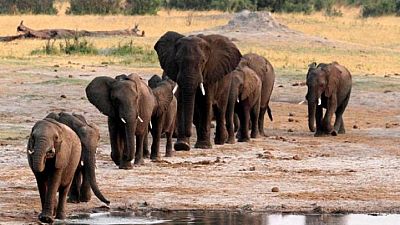
About 57 508 people across the world have signed a petition for the Ministry of Environment and Tourism to stop the hunting of desert elephants in Namibia.
Iris Koch from Esslingen, Germany, started the online petition on Change.org website.
She stated in the petition that Namibia’s desert elephants are iconic and highly endangered.
These animals are among the rarest creatures on this and have adapted to extremely arid desert conditions.
“These animals are among the rarest creatures on this and have adapted to extremely arid desert conditions.
Unfortunately, their extraordinary status makes them a preferred target for trophy hunters, and even though they are survival experts, desert elephants don’t stand a chance against the rifles of hunters,” she stated.
She added that they are horrified that the Ministry of Environment and Tourism has sold three more permits for the hunting of desert elephant bulls in the Ugab region.
Koch said the small population in that area is on the brink of extinction, adding that the elephants left in the Ugab area in 2016 had gone down to 30, declining drastically year by year.
“A shocking five out of five newborn calves died, three adult females were lost, while the total number of breeding bulls in the Ugab river region amounted to five,” she said.
She noted that they were under the impression that desert elephants have been designated as a top priority for protection by the International Union for the Conservation of Nature (IUCN).
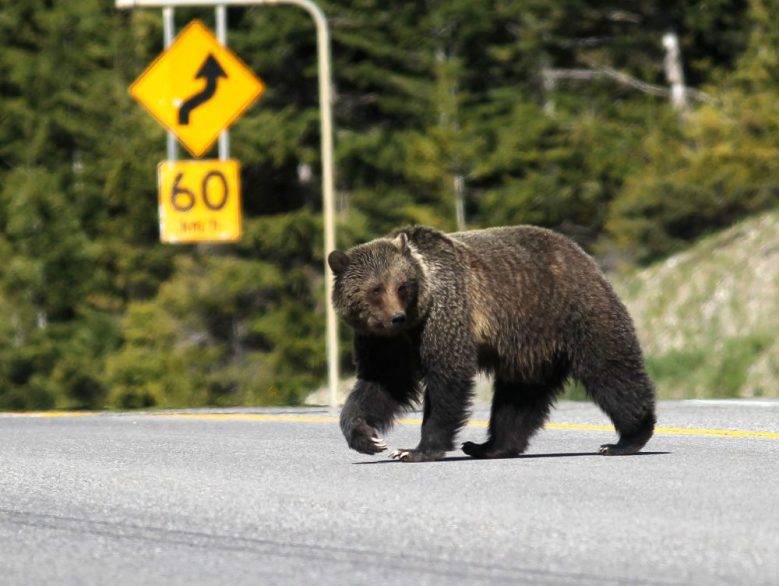
A grizzly bear runs across Highway 93 in Kootenay National Park on June 7, 2014.Leah Hennel / Calgary Herald/Postmedia Network
PRINCE GEORGE, B.C. — A conservation officer in northern British Columbia suspects an animal parts trafficking ring may be behind a gruesome discovery north of Prince George.
The Conservation Officer Service said a grizzly bear carcass was found beside Highway 97 on Wednesday.
All four of the paws on the bear had been removed. Grizzly hunting across British Columbia was banned last year.
Conservation officer Eamon McArthur said the animal appeared to have been killed sometime in the past week.
“It was definitely shot, and with the paws having been taken, it leads us to believe it was probably being used for trafficking in parts,” McArthur said.
It’s not known if the bear was killed where it was found or if it was dumped…
Wear Orange Weekend is an initiative started by Everytown for Gun Safety, an organization launched in 2014 by former New York City mayor Michael Bloomberg to lobby for more stringent gun control.
Supporters were encouraged to wear orange starting all weekend starting on Friday, June 1, which is National Gun Violence Awareness Day.
Early Friday morning, the NRA changed its logo on Twitter to orange, and tweeted that “Orange has always been ours.”
NRA SOCIAL GOING ORANGE: While Everytown for Gun Safety has devoted close to no resources to making citizens safer, the NRA continues to be the world’s leading gun safety organization since 1871. Send us pics in your orange hunting and NRA gear to be featured. #wearorange
“Orange has been hunters and sportsmen’s choice for decades,” the NRA said in a later tweet. “No organization in the world does more than the NRA to promote the safe and responsible use of firearms.”
Orange has been hunters and sportsmen’s choice for decades. No organization in the world does more than the NRA to promote the safe and responsible use of firearms. Don’t forget to send us your orange!
Orange is the color traditionally worn by hunters because of its high visibility. In some states, hunters are required to wear at least some orange clothing in an effort to avoid hunting accidents.
Gun control activists tweeted back at the NRA, including Fred Guttenberg, whose daughter Jamie died in the February shooting at Marjory Stoneman Douglas High School in Parkland, Fla.
Fred Guttenberg
✔@fred_guttenberg
This is why we wear orange today. Our world is simply not complete but glad that you were able to join us in orange today. We miss you more than anything JT






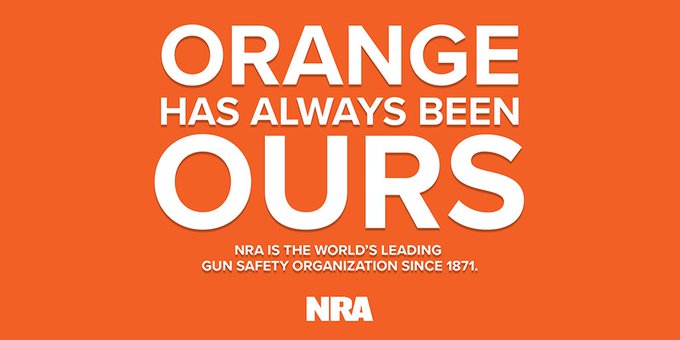

 NRA SOCIAL GOING ORANGE: While Everytown for Gun Safety has devoted close to no resources to making citizens safer, the NRA continues to be the world’s leading gun safety organization since 1871.
  Send us pics in your orange hunting and NRA gear to be featured.





 Exposing the Big Game