New research shows that crows can recreate tools from memory, a capacity previously thought impossible for birds.
Crows are super smart—we knew that already. In addition to understanding causality and analogies, they can remember human faces, plan ahead, and hide their food from others. But crows are also known for their amazing tool-building skills, which they use to construct sticks, hooks, and barbs from plant material. New research published today in Scientific Reports suggests this ability, at least among New Caledonian crows (a particularly intelligent species of corvid), is more sophisticated than we thought, and that these birds are able to construct tools from memory.
In human societies, cultural evolution and tool building is an iterative process, whereby social traditions improve over time due to teaching, language, and imitation. But among New Caledonian crows, it’s not clear if their tool-making skills are the result of imitation, or an ability acquired through the passing down of cultural traditions. A going hypothesis is that tool designs are in fact culturally transmitted, and that it’s done through a process known as “mental template matching.”
“Under the mental template matching hypothesis, New Caledonian crow tool designs could be passed on to subsequent generations if an individual used or observed the products of tool manufacture (such as their parents’ tools), formed a mental template of this type of tool design (a mental representation of some or all of the tool’s properties), and then reproduced this template in their own manufacture,” explain the authors in the new study.
A New Caledonian crow inserts a card tool into food dispenser.
Photo: Sarah Jelbert
Researchers Russell Grey from the University of Auckland, New Zealand, Sarah Jelbert from the University of Cambridge, along with colleagues from several other institutions, conducted an experiment that now provides the first evidence in support of this assertion.
The researchers trained eight crows to drop bits of paper into a vending machine, which the birds did to receive food rewards. The crows later learned that only cards of a specific size, either large pieces measuring 40 x 60 mm or small pieces measuring 15 x 25 mm, were rewarded. Once the crows were trained to recognize which sizes of paper tools resulted in a food reward, the scientists took all paper pieces away and replaced them with a single large sheet of paper that didn’t fit into the dispenser. Incredibly, the birds tore up the large card to create pieces that matched the size of the paper they previously used to earn rewards. The researchers called it “manufacture by subtraction.”
Importantly, the birds did not have visual access to any of the previous scraps of paper. The experiment suggests the birds held a mental image of the desired tool in their minds, which they used to construct the new tool. It also means some species of birds may have the ability to improve tools over time (something not proven in the study, but alluded to as a possibility), which they could do by recreating and then adjusting other designs they’ve seen and memorized. That’s an important consideration, because the ability to modify items from memory is typically associated with tool-making cultures, such as humans and some nonhuman primates.
Edward A. Wasserman, an experimental psychologist and brain scientist at the University of Iowa who wasn’t involved with the new research, says the study is an important addition to our understanding of avian intelligence, and that the conclusions were “clear and compelling.” That said, he wasn’t surprised by the results.
“The prime limitation on our appreciation of avian intelligence is the lack of creativity in our own experimental methods,” Wasserman told Gizmodo. “Birds keep looking smarter as we conduct more ambitious and assiduous experiments.”
Wasserman was also keen to point out that crows aren’t the only intelligent birds.
“Pigeons, parrots, and jays have all been found to exhibit remarkable abilities to learn and remember a wealth of challenging tasks,” he said. “This evidence has come from both naturalistic observations and controlled laboratory experiments. The fact that the last common ancestor of birds and mammals lived 300 million years ago raises a profound question: was that ancestral species also smart or did intelligence evolve independently? That will be a hard question to answer.”
A captive red wolf grooms another at the North Carolina Museum of Life Science in Durham, N.C., in November 2017. (Salwan Georges/The Washington Post)
In a proposal that would essentially end a 30-year effort to reestablish critically endangered American red wolves in North Carolina, the Interior Department on Wednesday announced a plan that would allow private landowners to kill wolves that stray onto their property from a protected federal wildlife refuge.
U.S. Fish and Wildlife officials who presented the proposal in a news conference said the Alligator River National Wildlife Refuge, which supports about a dozen of the 35 red wolves that roam a five-county area in eastern North Carolina, would be the only place where they would be safe.
The service’s new objective, said Leopoldo Miranda, assistant director for ecological services in the agency’s Southeast region, would be to intensively…
WASHINGTON – The U.S. House passed a bill Tuesday that would allow tribal managers and government fish managers to kill limited numbers of sea lions in the Columbia River to improve the survival of endangered salmon and steelhead populations.
The legislation passed by a vote of 288 to 116.
Under the bill, designated officials would be able to remove some California and Stellar sea lions from specific areas where they are posing the most harm to endangered native fish runs.
The bill is sponsored by U.S. Rep. Jaime Herrera Beutler, R-Wash., and U.S. Rep. Kurt Schrader, D-Ore.
“For the salmon and steelhead fighting to make it upstream, today’s vote in the U.S. House significantly improves their chances of survival,” Beutler said after passage of the bill.
“The passage of my bipartisan bill signals a return to a healthy, balanced Columbia River ecosystem by reining in the unnatural, overcrowded sea lion population that is indiscriminately decimating our fish runs.”
Beutler said supporters of the bill are “not anti-sea lion,” adding, “We’re just for protecting a Pacific Northwest treasure – salmon, steelhead, sturgeon and other native fish species iconic to our region.”
A companion bill is moving through the U.S. Senate now, sponsored by U.S. Sen. Jim Risch, R-Idaho, and U.S. Sen. Maria Cantwell, D-Wash.
Joe Stohr, acting director of the Washington State Department of Fish & Wildlife, supported the passage of the bill.
“We appreciate today’s action by the House of Representatives and the efforts of Representatives Herrera Beutler and Schrader to secure the bill’s passage. Sea lion predation on salmon is a complex issue, and we thank them for recognizing the need for action to help recover threatened and endangered populations in the Columbia River.”
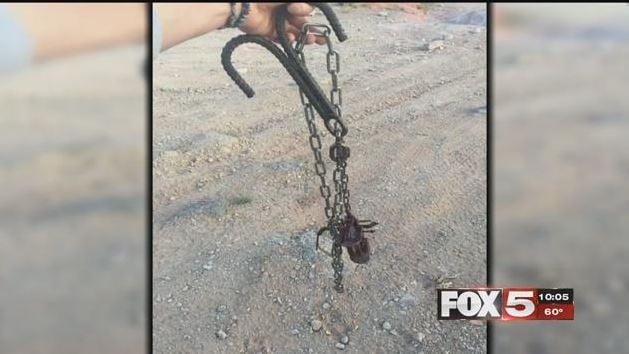
The owner of the dog holds up the trap that seriously injured their pet (FOX5).
LAS VEGAS (FOX5) –A dog suffered serious injuries after being caught in a leg trap near a popular trail, according to a witness who was hiking near the area.
Brandon Kennedy said he hikes at Little Red Rock once or twice a month. Little Red Rock is an area north of Red Rock Canyon, that boasts trails and unique rock formations.
But while Kennedy was hiking with friends on Friday, he heard screaming.
“Almost like bloody murder,” Kennedy said.
He said the screams were coming from a couple hiking nearby, and when he went to help them, he found a dog severely injured after it’s leg was caught in a trap set up near the trail.
“Their dog went over into a bush to go to the bathroom and then ended up stepping right into the trap and it closed on him,” Kennedy said. “The pup broke some teeth trying to get the trap off it because it went down on its leg.”
Trapping is legal in Nevada, as long as the person setting the trap has a license and follows a list of regulations. On its website, the Nevada Department of Wildlife advises trappers to “be considerate of those who enjoy the outdoors,” and to “avoid setting traps near neighborhoods or along trails frequented by others.” Kennedy said in this case, the trapper ignored that advice.
“It was right where you would hike up onto the rocks. That trap was not in the right area where it should have been,” Kennedy said. “People are going up there for the serenity of nature and not really paying attention, but now, it’s crazy. You really have to have your eyes open.”
MADISON, Wis. (AP) — The state Department of Natural Resources says seven hunters were shot during the nine-day gun deer season.
According to the DNR’s website Monday, five hunters accidentally shot themselves during the season. The sixth was shot by someone in his own party during a deer drive in Ozaukee County on Wednesday. The seventh hunter was hunting ducks from a kayak in Waukesha County on Friday when a stray bullet hit him in both legs.
Gov. Scott Walker signed a bill on Nov. 13 eliminating the minimum age for participating in a mentored hunt. All five of the hunters who shot themselves were at least 24. It’s unknown who fired the shots in Waukesha and Ozaukee counties. Those incidents remain under investigation.
Barred owls are being culled in the Pacific Northwest to save the critically endangered spotted owl. (Toby Talbot, File/AP)
Humans shouldn’t be interfering with nature by killing one species to save another, according to a lawyer who is working to oppose a cull of barred owls.
The owls are being shot by conservationists in the Pacific Northwest in an effort to save their feathered cousin, the critically endangered spotted owl.
“We shouldn’t be choosing sides,” said Michael Harris, the director of the wildlife law program at Friends of Animals. His group opposes the cull and is preparing a second lawsuit to try to stop it.
“We really believe that they need to be given that opportunity to see if they can coexist in their new environment,” he told The Current’s guest host Piya Chattopadhyay.
“We just don’t know what the ultimate outcome would be if these two species were given a chance to figure it out.”
Barred owls are relatively new to the west coast, having spread across the continent via the towns and cities that have grown in the last century. They’re bigger and more aggressive than the spotted owl, and have been pushing them out of their nesting grounds, which is what has prompted conservationists to cull their numbers.
The spotted owl, seen here in California’s Tahoe National Forest, is one of the most endangered birds in Canada. (Debra Reid/AP)
About halfway through a six-year experimental cull, roughly 2,000 of the birds have been shot in Oregon, Washington and California.
Harris argued that the barred owl is just doing what it’s supposed to do: finding ways to survive and prosper.
By intervening, he told Chattopadhyay, we’re not giving the barred owl “a fair shake.”
Not ‘natural evolution’
Animal ethicist William Lynn said by destroying the owls’ habitats, humans contributed to the problem in the first place.
“This is not natural evolution,” he told Chattopadhyay.
“This is entirely the product of human actions. It’s a human-caused extinction in the making.”
Lynn was hired by the U.S. government to examine the ethics of killing the birds. While “we can’t kill our way back to biodiversity,” he ultimately came to support the cull. Government conservationists have explored non-lethal ways to manage barred owl numbers, but they just don’t work, he said.
Barred owls are doing great across North America. Spotted owls are critically endangered.- William Lynn. animal ethicist
He argued that when you weigh the value of a barred owl’s life against the chance that the endangered spotted owl species will become extinct, the barred owl loses.
“Barred owls are doing great across North America. Spotted owls are critically endangered,” he said.
The culling is an experiment, he added, and is not expected to continue indefinitely.
“This experiment is to remove some barred owls to see whether spotted owls can form a refugia, a sort of a defensible territory in which they can live and flourish in the wild.
“If they can’t — and this experiment ends — that doesn’t mean that killing barred owls is going to go on.”
Many of the threats we know are associated with climate change are slow moving. Gradually rising seas, a steady uptick in extreme weather events, and more all mean that change will come gradually to much of the globe. But we also recognize that there can be tipping points, where certain aspects of our climate system shift suddenly to new behaviors.
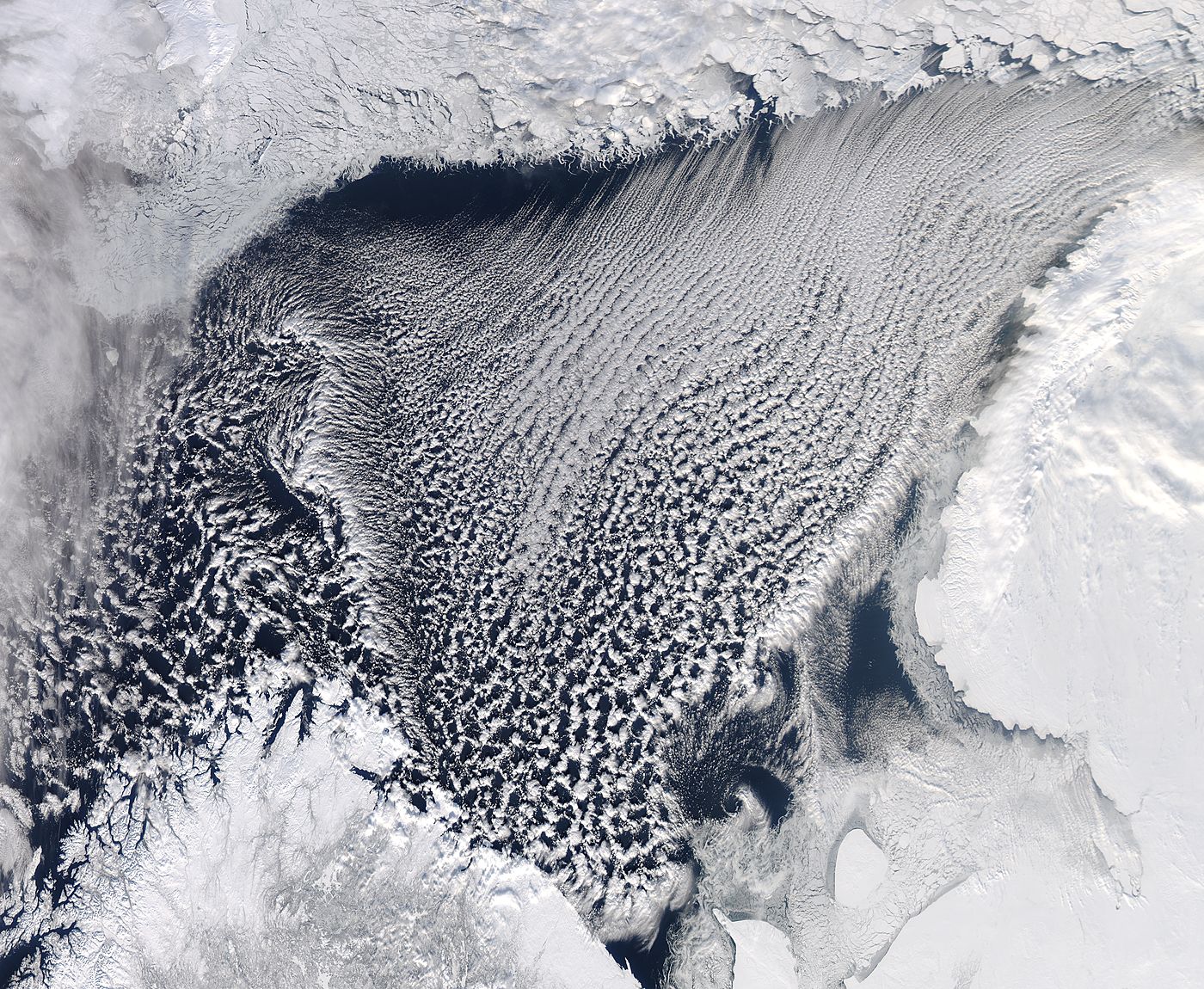
The challenge with tipping points is that they’re often easiest to identify in retrospect. We have some indications that our climate has experienced them in the past, but reconstructing how quickly a system tipped over or the forces that drove the change can be difficult. Now, a team of Norwegian scientists is suggesting it has watched the climate reach a tipping point: the loss of Arctic sea ice has flipped the Barents Sea from acting as a buffer between the Atlantic and Arctic oceans to something closer to an arm of the Atlantic.
Decades of data
The Norwegian work doesn’t rely on any new breakthrough in technology. Instead, it’s built on the longterm collection of data. The Barents Sea has been monitored for things like temperature, ice cover, and salinity, in some cases extending back over 50 years. This provides a good baseline to pick up longterm changes. And, in the case of the Barents Sea in particular, it’s meant we’ve happened to have been watching as a major change took place.
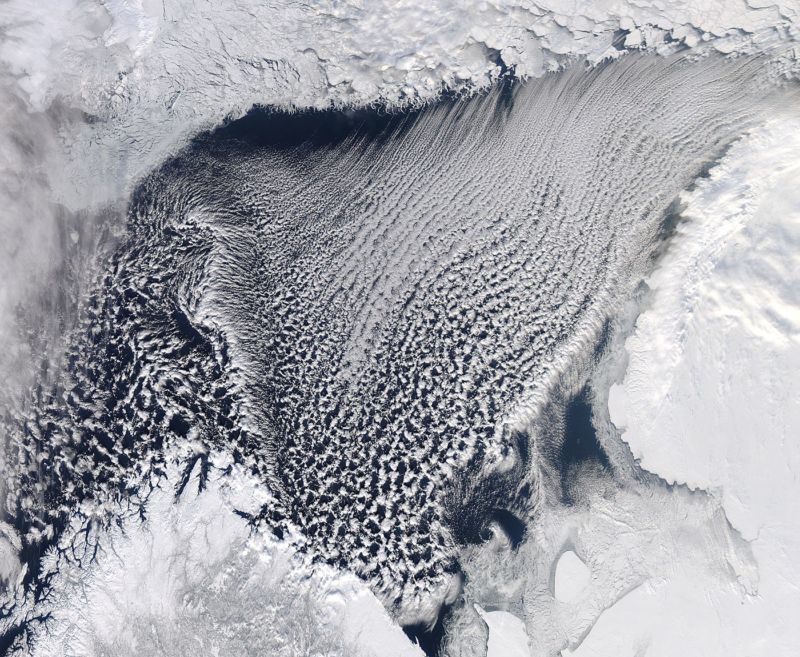
The Barents Sea lies north of Norway and Russia, bounded by Arctic islands like Svalbard and Franz Josef Land. To its west is the North Atlantic, and the Arctic Ocean is to its north. And data from prior to the year 2000 indicates that the Barents acted as a buffer between the two oceans.
To the north, the Arctic Ocean has been dominated by sea ice, which spreads into the Barents during the winter. The ice acts as a barrier to exchanging heat with the atmosphere and blocks sunlight from reaching the ocean water, helping keep the Arctic colder in the summer. As it melts, the Barents also creates a layer of fresh water that doesn’t mix well with the salt water below it, and it is light enough to remain at the surface. The water of the Atlantic is warmer but saltier and better mixed across its depths.
In between, in the Barents, the two influences create a layer of intermediate water. The Arctic surface water and sea ice helps keep the Barents fresher and cool. And while the Barents is warmed from below by the dense, salty Atlantic water, it’s not enough to allow the two layers to mix thoroughly. This helps keep the Barents Sea’s surface water cold and fresh, encouraging it to freeze over during the winter.
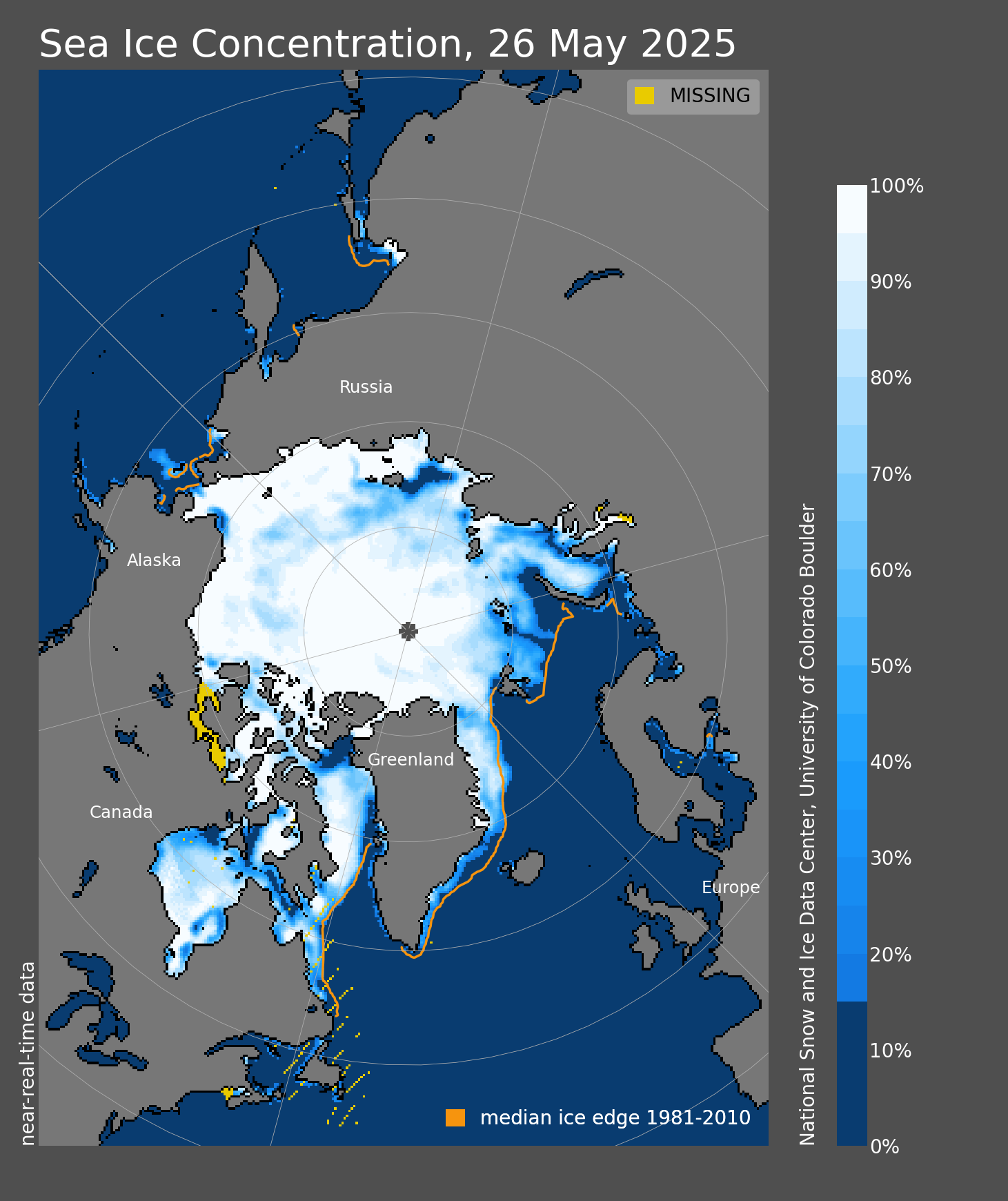
The researchers behind the new work say that this layered structure was “remarkably stable” from 1970 all the way through 2011. But change started coming to the area even as the layers persisted. The atmosphere over the Arctic has warmed faster than any other region on the planet. In part because of that, the amount of ice covering the Arctic Ocean began to decline dramatically. It reached what were then record lows in 2007 and 2008. As a result, the Barents Sea was relatively ice-free in the Arctic summer, decreasing the fresh water present in the surface layer.
Sea-ice drift into the Barents sea dropped enough so that the 2010-2015 average was 40 percent lower than the 1979-2009 mean. The researchers checked precipitation at some islands on the edge of the Barents Sea, and they confirmed that the loss of fresh water at the surface was due to the loss of ice rather than a change in weather patterns.
(For context, the Barents Sea is essentially ice-free at the moment, even though the melt season typically extends through September.)
Triple threat
The loss of ice also means that the surface water in this area is exchanging heat with the atmosphere and absorbing more sunlight during the long Arctic summer days. These two have combined to heat the top 100m of water dramatically. If the mean of its temperature from 1970-1999 is taken as a baseline, the temperatures from 2010-2016 are nearly four standard deviations higher. 2016—the most recent year we have validated data for—was 6.3 standard deviations higher.
This has the effect of heating the intermediate water from above. Meanwhile, the warm Atlantic water will heat it from below. As a result, the cold intermediate water has essentially vanished from the Barents Sea, turning the area into a basin dominated by Atlantic water. The entire water column, from surface to the sea floor, has both warmed and gotten saltier, all starting in the late-2000s.
While dramatic, that in and of itself doesn’t make for a tipping point. But the authors argue that the present conditions make it extremely difficult for the sea ice to re-establish itself during the winter: “Increased Atlantic Water inflow has recently enlarged the area where sea ice cannot form, causing reductions in the sea-ice extent.” The water both starts out warmer and has increased salt content, making freezing more difficult.
In essence, the authors argue that the entire Barents Sea has started to behave as an arm of the Atlantic. Unless some external factor re-establishes the layer of fresh water on the surface, “the entire region could soon have a warm and well-mixed water-column structure and be part of the Atlantic domain.”
Tip of the ice
From a strictly human-centric position, the changes aren’t necessarily a terrible thing. In terms of ecosystems, the authors describe the Barents as “divided into two regions with distinct climate regimes—the north having a cold and harsh Arctic climate and ice-associated ecosystem, while the south has a favorable Atlantic climate with a rich ecosystem and lucrative fisheries.” The expansion of these fisheries, while coming at the cost of the native ecosystem, could prove a boon for the countries bordering the region.
But the general gist of the study is considerably more ominous: not only have we discovered a climate tipping point, but we’ve spotted it after the system has probably already flipped into a new regime. It also provides some sense of what to expect from the future. Rather than seeing the entire planet experience a few dramatic changes, we’re likely to see lots of regional tipping points that have more of a local effect. The future will be the sum of these events and their interactions, making it a bit harder to predict which changes we should be planning for.
Witnesses tell Milwaukee-based TMJ4 the duck hunter was dressed in camouflage and the shooting appeared to be accidental.
The Town of Oconomowoc and the Waukesha County Sheriff’s Department responded to the scene. TMJ4 has also learned the ambulance that was called to the scene crashed into a light pole and was taken away by a tow truck.
Neighbors say the injured hunter was eventually transported to a nearby hospital. There is no word on their condition.
The incident remains under investigation. The Wisconsin DNR says they will release more information on Monday.
Caledon, Ont. resident Roger Irwin photographed these deer. – Roger Irwin photo
A Caledon area man has been fined a total of $2,000 for hunting offences in Peterborough County under the Fish and Wildlife Conservation Act.
Stephen Anderson pleaded guilty June 14 in Ontario Court of Justice in Peterborough and was fined $1,250 by Justice of the Peace Jason Mariasine for not having a valid deer licence while being in possession of a high-powered rifle during the gun season for deer and $750 for hunting small game without a valid small game licence. His rifle and ammunition were permanently forfeited to the Crown.
Court heard that on Nov. 19, Anderson went hunting on a property in Douro-Dummer Township. During the hunt, Anderson was inspected by a conservation officer and was found to be in possession of a high-powered rifle during the gun season for deer…


 Text and Wildlife Photography ©Jim Robertson, 2014. All Rights Reserved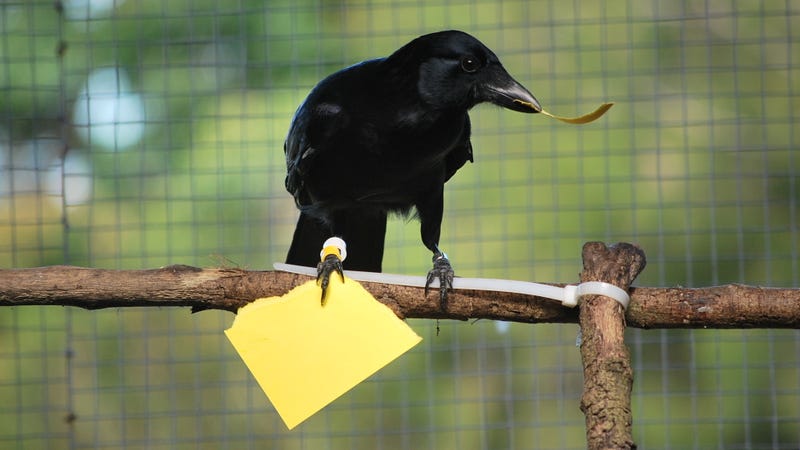




 Exposing the Big Game