Exposing the Big Game

Forget Hunters' Feeble Rationalizations and Trust Your Gut Feelings: Making Sport of Killing Is Not Healthy Human Behavior

Exposing the Big Game

Beluga whales adopt lost narwhal in St. Lawrence River

The narwhal, a species which normally lives in the Arctic, has been spotted for 3 years in a row
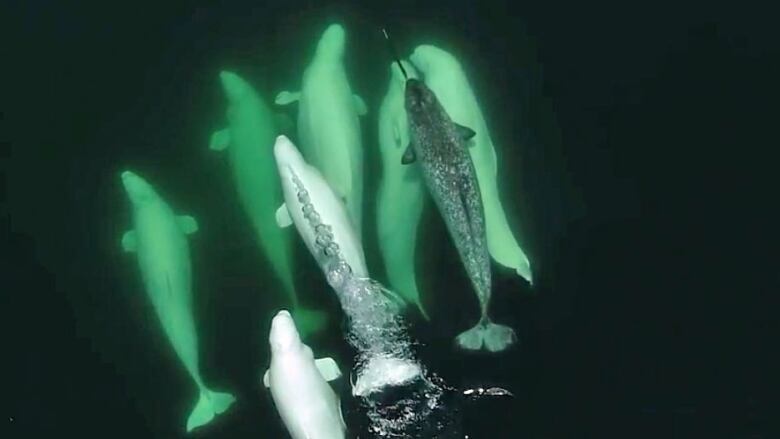
Drone footage captured by the Group for Education and Research on Marine Mammals (GREMM) shows a narwhal with a group of belugas in the St. Lawrence River in July 2018. (GREMM)

91 comments

An unusual visitor has been hanging out in the St. Lawrence River for the past three years: A narwhal, more than 1,000 kilometres south of its usual range.

But the lone narwhal is not alone — it appears he has been adopted by a band of belugas.

The narwhal — thought to be a juvenile male because of its half-metre-long tusk — was filmed in July playing among a pod of young belugas, thought to be mostly or all males.

The video was taken by the Group for Research and Education on Marine Mammals (GREMM), a non-profit group dedicated to whale research, conservation and education based in Tadoussac, Que.

“It behaves like it was one of the boys,” said Robert Michaud, the group’s president and scientific director.

In the drone footage captured by GREMM researchers and posted on their website Whales Online, a pod of nine or 10 belugas swim closely together near the surface, rolling and rubbing against each other.

“They are in constant contact with each other,” Michaud said. “It’s a like a big social ball of young juveniles that are playing some social, sexual games.”

The interactions between the narwhal and the belugas appear to be identical to those among just the belugas, suggesting the narwhal has been fully accepted as part of the group.

Narwhals live in the icy waters of the Arctic, including those surrounding parts of Canada, Norway, Greenland and Russia. They typically don’t range any farther south than northern Quebec’s Ungava Bay, located south of the southern tip of Baffin Island.

One was previously spotted in the St. Lawrence estuary by the Department of Fisheries and Oceans in 2003, according to GREMM.

But sightings are rare enough that there was a bit of a buzz when the researchers aboard GREMM’s boat, Le Bleuvet, spotted one on July 29, 2016, among a pod of 60 to 80 belugas.

Blowing bubbles with belugas

The researchers reported that it behaved like the belugas, even blowing bubbles from time to time, and drawing no special attention, except from one curious juvenile beluga.

The same narwhal — identified from photographs of its unique markings — was spotted again the following year, in 2017, and three times this year, likely with the same population of belugas, some of whom are identified and named by GREMM.

The group tracks and studies the whales from June to October, but loses track of them in the winter, when ice prevents GREMM from getting out in the research boat.

The narwhal itself hasn’t been named, Michaud said, as the group doesn’t tend to name “vagrants” — “because we don’t know when they will leave.”

So how did the narwhal end up in the St. Lawrence in the first place?

The narwhal was first spotted among the belugas of the St. Lawrence in 2016. (GREMM)

Michaud said it’s not unusual for young whales to wander into strange habitats. Young belugas, for example, have wandered as far as New Jersey and Nova Scotia.

Some, unable to find their own kind, end up trying to make friends with boats and humans, and get fatally injured by propellers.

“That little narwhal that made a similar trip was very lucky,” Michaud said. “Because he found almost normal buddies.”

Stick to their own kind

Kristin Laidre, a University of Washington researcher who has studied narwhals and other Arctic marine mammals for nearly two decades, said she’s surprised that a narwhal has been spotted so far south — and interacting so closely with belugas.

These beluga whales were spotted off Ingonish, N.S., earlier this year. Young whales are known to wander.(Submitted by Levon Drover)

While beluga and narwhal habitats overlap in many parts of the Arctic, they’re not observed interacting very often, and tend to be in different places at different times, especially in the summer.

“Narwhals and belugas, though closely related, are pretty different,” she said.

Narwhals are good divers that hunt deepwater fish and more comfortable in areas that are covered in dense ice in the winter. Belugas prefer coastal, shallower waters with less ice, and prefer fish like salmon and capelin that swim close to the surface.

But there are some similarities: they’re both very social species, although few details are known about their social structures. And little is known about how similar their communication may be; both make a variety of clicks and chirps.

There is some evidence that interaction takes place between belugas and narwhals from time to time.

A study published in 1993 described the skull of what was believed to be a narwhal-beluga hybrid, with teeth somewhat similar to both, although that was never confirmed with DNA testing.

The narwhal was spotted three times by GREMM researchers this year. (GREMM)

The study was co-authored by Randall Reeves, a Canadian scientist and consultant with Okapi Wildlife Associates in Hudson, Que., who has been studying whales for 40 years.

He, too, said belugas and narwhals tend to “stick to their own kind” when they encounter one another in the north.

But Martin Nweeia, a researcher at Harvard University who has been studying narwhals for nearly two decades, said given how social both species are, he thinks they’d be similarly capable of caring and compassion. (Although he agreed not much is known about their social structures.)

Nweeia, who has worked with Inuit in the Canadian Arctic and Greenland to gather traditional knowledge about narwhals and belugas, says there’s an Inuit legend that puts a narwhal among belugas. In it, a woman hunting belugas falls into the water and her hair twists into a narwhal horn.

Nweeia’s research team has also “observed the opposite,” he said, spotting belugas swimming among narwhals in Arctic Bay, Nunavut.

“I don’t think it should surprise people,” he said. “I think it shows … the compassion and the openness of other species to welcome another member that may not look or act the same. And maybe that’s a good lesson for everyone.”

Exposing the Big Game's avatarCommittee to Abolish Sport Hunting Blog

Hunting guide Mark Uptain was killed by a bear in Wyoming while helping a hunter pack an elk.
Hunting guide Mark Uptain was killed by a bear in Wyoming while helping a hunter pack an elk. Screen capture GoFundMe by Rauli Perry

Bears showed ‘abnormal behavior’ in attack that killed hunting guide, Wyoming official says

View original post 472 more words

Paris global warming targets could be exceeded sooner than expected because of melting permafrost, study finds

Exposing the Big Game's avatarThe Extinction Chronicles

https://www.independent.co.uk/environment/climate-change-paris-agreement-permafrost-melting-carbon-emissions-a8541686.html

Planet on brink of ‘tipping point’ as thawing soil and sediment releases large volumes of carbon dioxide and methane into atmosphere

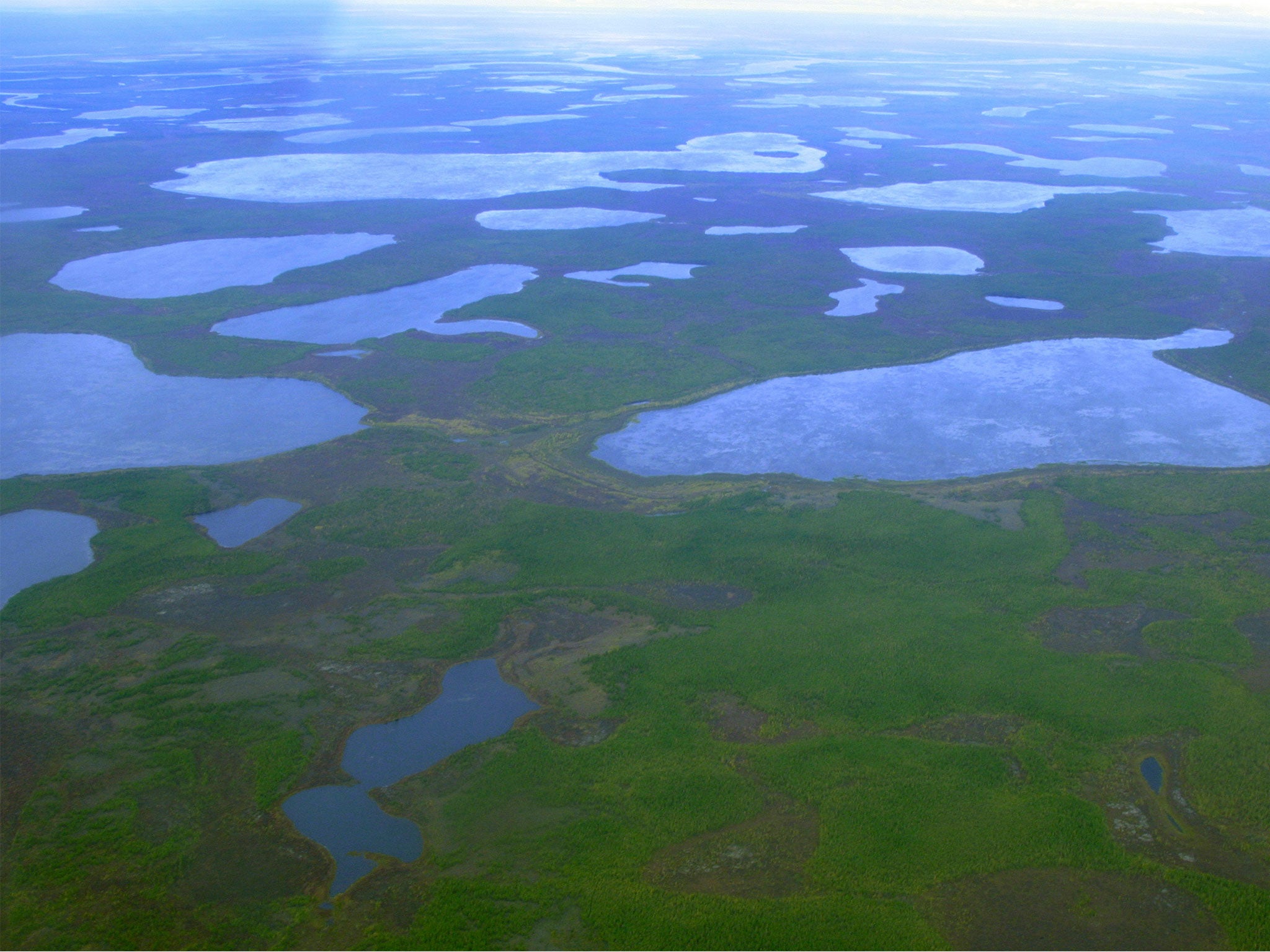
For millennia, layers of animal waste and other organic matter left behind by the creatures that used to roam the Arctic tundra have been sealed inside the frozen permafrost. Now climate change is thawing the permafrost and lifting this prehistoric ooze from suspended animation
For millennia, layers of animal waste and other organic matter left behind by the creatures that used to roam the Arctic tundra have been sealed inside the frozen permafrost. Now climate change is thawing the permafrost and lifting this prehistoric ooze from suspended animation ( Reuters )

The world is on course to exceed global warming limits set out in the Paris climate agreement much earlier than previously thought, scientists have warned, following the first comprehensive study of the impact of melting permafrost.

Experts said dangerous climate change was almost “inevitable” and the planet was on the brink of a “tipping point” as thawing permafrost releases large volumes of carbon dioxide and methane into the atmosphere, causing temperatures to rise and more permafrost to…

View original post 686 more words

The 416 Fire reminds us there’s no escape from climate change

Exposing the Big Game's avatarThe Extinction Chronicles

Rumors that a popular tourist train sparked the fire have forced a reckoning.

For longtime Southwesterners, this year’s low snowfall and high temperatures bring back memories of 2002, a year that seemed to stand as the region’s come-to-Jesus climate moment. The snow cover was thin to nonexistent, even in the high country. Fields dried up and Lake Powell began its big shrink. Record-breaking fires burned across the region.

But as the warm spring of 2002 moved into a scorching summer, I wasn’t worried. I lived in Silverton, Colorado, at 9,318 feet in elevation, where extreme drought for everyone else just meant a more pleasant summer for us. We could actually barbecue on Memorial Day instead of suffering through a blizzard, ride our bikes up the high passes before July 4, and swim in the Animas River without instantly contracting hypothermia. I believed…

View original post 1,029 more words

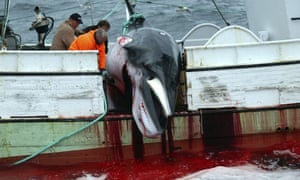
Iceland sets target of 191 kills as country resumes whaling

https://www.theguardian.com/environment/2018/apr/18/iceland-sets-target-of-191-kills-as-country-resumes-whaling

Authorities grant whalers a quota to hunt the endangered fin whale this summer after a two-year pause

Whaling company Hvalur has a quota of 191 kills as Iceland announced it would resume hunting the endangered fin whale this summer.
 Whaling company Hvalur has a quota of 191 kills as Iceland announced it would resume hunting the endangered fin whale this summer. Photograph: Adam Butler/AP

Icelandic fishermen will resume their hunt for the endangered fin whale this year after a two-year pause and have set a target of 191 kills for the season.

An apparent loosening of Japanese regulations on Icelandic exports had made the resumption of the hunting commercially viable again, the country’s only fin whaling company, Hvalur, announced.

The firm also has plans to collaborate with researchers from the University of Iceland to develop medicinal products made of whale blubber and bones, aimed at combating iron deficiency.

Sigursteinn Masson, at the Icelandic branch of the International Fund for Animal Welfare (Ifaw), said: “I’m very disappointed. This decision is not based on real market needs and is not in line with public opinion polls on whaling, which doesn’t belong in modern times.”

Iceland and Norway are the only countries in the world to authorise whaling in defiance of the 1986 International Whaling Commission’s moratorium.

Iceland resumed whaling in 2006 on economic grounds and has defied threats of US sanctions to continue to do so. The US did not invite Iceland, one of the largest fishing nations in the north Atlantic, to the Our Ocean conference in 2014.

Japan hunts whales, but claims it does so for scientific research purposes, although a large share of the whale meat ends up being consumed.

Iceland’s whaling season opens on 10 June and the authorities have granted its whalers a quota of 161 fin whales in 2018, compared to 150 in 2017. In addition, Hvalur’s two ships are entitled to hunt 20% of its unused quota from last year, which means it will be allowed to hunt an 30 additional whales.

During its last hunt in 2015, Hvalur killed a record 155 fin whales, which are the planet’s second largest mammal after the blue whale.

The latest records from the Icelandic institute suggest there are about 40,000 in the north Atlantic ocean, up from 25,000 in 2006.

Iceland has only one other whaling company, IP-Utgerd Ltd, which specialises in hunting minke whales. The meat from the whales is served in Icelandic restaurants, but largely to cater to intrigued tourists.

A poll commissioned in October 2017 by the Ifaw suggested that 35.4% of Icelanders supported the fin whale hunt, compared to 42% in 2016.

The two-year suspension of hunting followed the claims from the Japanese authorities that the Icelandic company had not met Japanese health standards.

The company’s attempts to ship 1,700 tonnes of whale meat to Japan via Angola in 2015 had also been hampered by the reluctance of some foreign ports to allow transit of the meat.

Kristjàn Loftsson told the Associated Press that the company was working with Japanese officials on developing methods to fulfil Japanese standards for fresh meat imports.

Missing Hunter’s Body Found in Wyoming Mountains

Exposing the Big Game's avatarCommittee to Abolish Sport Hunting Blog

https://www.usnews.com/news/best-states/wyoming/articles/2018-09-16/missing-hunters-body-found-in-wyoming-mountains

Searchers in Wyoming find body of a man who went missing while hunting.

Sept. 16, 2018

WORLAND, Wyo. (AP) — Searchers in Wyoming have found the body of a man who went missing while hunting.

Washakie County Sheriff Steve Rakness says Richard Morris Rush, of Worland, apparently crashed his all-terrain vehicle. Foul play is not suspected.

The Northern Wyoming Daily News reports Rush was camping in the Bighorn Mountains. Family and friends began to worry when he didn’t return home Sept. 9.

Searchers began looking for Rush on Wednesday. They found his pickup truck hunting gear and camper but not his ATV. Searchers found his body Friday.

An autopsy is pending.

A Worland man has been reported missing after failing to return from a weekend hunting trip.

Richard Morris Rush, 51, is described as a white male standing 5’10” tall…

View original post 120 more words

WYOMING MAN REPORTED MISSING; HASN’T RETURNED FROM HUNTING TRIP

Exposing the Big Game's avatarCommittee to Abolish Sport Hunting Blog

A Worland man has been reported missing after failing to return from a weekend hunting trip.

Richard Morris Rush, 51, is described as a white male standing 5’10” tall and weighing 200 pounds. He was last seen on Friday, Sept. 7.

The Washakie County Sheriff’s Office says Rush was staying in his camp trailer at his hunting camp, located two miles north of Big Trails and 18 miles south of Ten Sleep.

Rush was due to return to Worland on Sunday, Sept. 9, but he did not do so. His pickup and hunting gear were found at his camper, but his four-wheeler has not been located.

Anyone who has seen him or his four-wheeler since Friday, Sept. 7 is asked to call the Washakie County Sheriff’s Office at 307-347-2242.

Washakie County Sheriff’s Office via Facebook

View original post

Hunters Caught Trespassing To Kill Five-Point Elk

Exposing the Big Game's avatarCommittee to Abolish Sport Hunting Blog

RED FEATHER LAKES, Colo. (CBS4) — Two members of a hunting party from New York state were cited Wednesday for tracking and killing a bull elk on a private ranch property.

Those men face suspensions that could prevent them from hunting for at least a year almost anywhere in the nation, including their home state.

Jason Clay, a spokesman for Colorado Parks & Wildlife, said other hunters witnessed four hunters crossing onto the ranch property Tuesday and phoned in a report to the state’s Operation Game Thief tipline.

The ranch owner told a CPW officer there was no permission given to access his property or to hunt animals on it.

That officer’s K9, Cash, led him to one of the hunters and, later that day, to a kill site on the ranch property.

CPW NE Region@CPW_NE

After a tip from the public through operation…

View original post 423 more words

Wyoming hunting guide killed during bear attack

Exposing the Big Game's avatarCommittee to Abolish Sport Hunting Blog

Wyoming hunting guide killed during bear attack
(Getty Images)

JACKSON, Wyo. (Meredith/AP) — Wyoming authorities say a hunting guide has been found dead after he and a client were attacked by a bear.

The Jackson Hole News & Guide reports the body of 37-year-old Mark Uptain was found Saturday.

Teton County spokesman Billy Kirk said the client, Corey Chubon of Florida, suffered leg, chest and arm injuries and was flown to a Jackson hospital. The newspaper reported he left the hospital Saturday.

His hometown wasn’t listed.

Authorities said Chubon was bow hunting and shot an elk Thursday, but he and Uptain could not find the animal until Friday. They were preparing to pack it out that day when they were charged by two bears.

Kirk said one of the bears attacked Uptain and then Chubon. He says Chubon was able to flee and phone for help.

View original post

Florence will have impact on hunting, fishing in South Carolina

Exposing the Big Game's avatarCommittee to Abolish Sport Hunting Blog

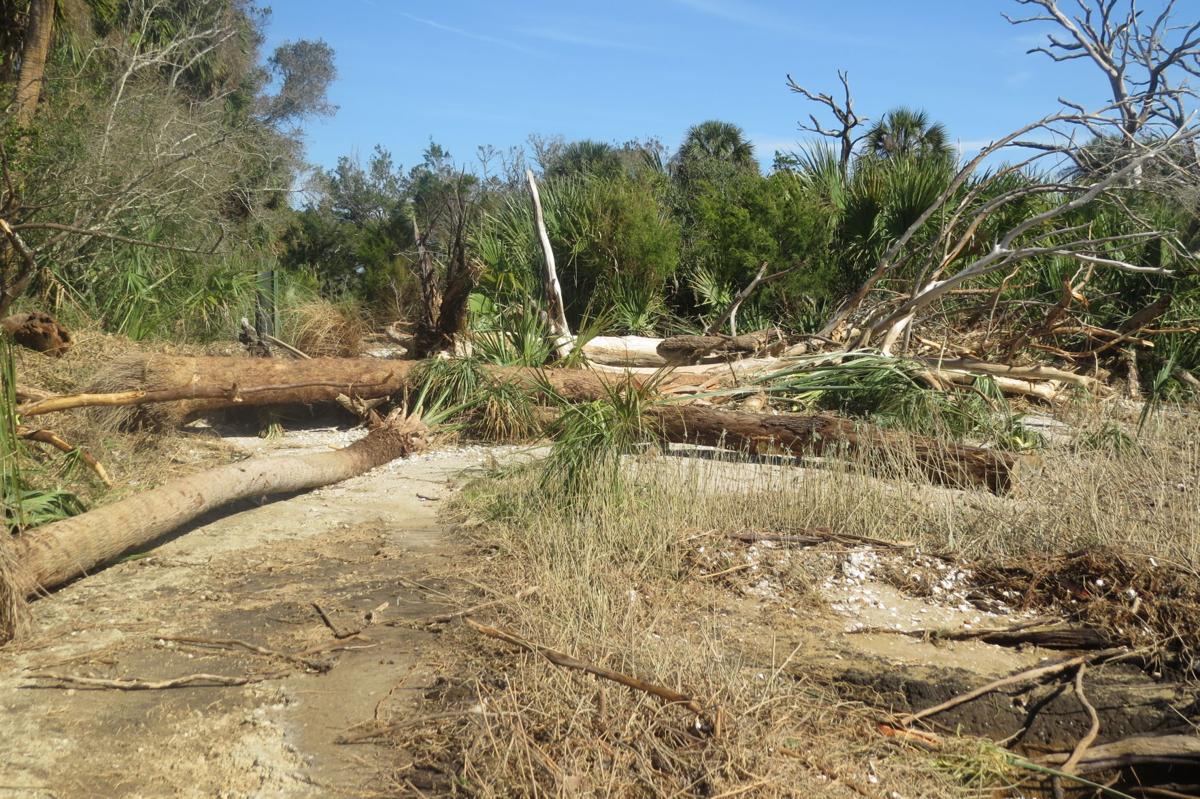
Botany Bay damage (copy)
Hurricane Matthew in 2016 left downed trees and other debris on land and in the lakes and rivers across South Carolina. File/Provided

I also began to contemplate our wonderful hunting and fishing opportunities and how they would be affected by a major hurricane. Looking at the forecast early this week, I immediately thought back to Hurricane Matthew, a storm that pummeled the East Coast in 2016 and brought lots and lots of rain.

Shortly after Matthew paid its visit to South Carolina, Charles Ruth, Deer and Wild Turkey Program coordinator for the South Carolina Department of Natural Resources, said there typically “isn’t a lot of direct…

View original post 175 more words