Exposing the Big Game

Forget Hunters' Feeble Rationalizations and Trust Your Gut Feelings: Making Sport of Killing Is Not Healthy Human Behavior

Exposing the Big Game

Authorities identify Spanish hunter who tortured and killed a fox

Exposing the Big Game's avatarCommittee to Abolish Sport Hunting Blog

The 35-year-old man is seen in a video that was spread via social media flinging the animal through the air and stamping on its head

VIEWER DISCRETION ADVISED: Hunter tortures and kills fox. EPV
Madrid 

A Spanish hunter who was filmed while he chased and tortured a fox has been identified by the Civil Guard in the Spanish province of Huesca. The man, aged 35, is facing charges of crimes against wildlife.

The incident came to light after the recording of the incident spread via social media. In the shocking images, the man is seen grabbing the fox by one leg and throwing it through the air. He then runs after the animal, which does its best to escape.

The man then strikes the animal in the head with his shotgun. The animal tries to escape again but the…

View original post 154 more words

Crews rescue lost hunter in Eldorado Marsh

https://www.fdlreporter.com/story/news/local/2018/12/31/eldorado-marsh-melting-ice-leads-hunter-rescue/2449024002/

LINKEDINCOMMENTMORE

ELDORADO – On Sunday crews rescued a hunter from the Eldorado Marsh after he repeatedly fell through the ice into thigh-deep marsh water and became disoriented, authorities said.

The Fond du Lac County Sheriff’s Office said dispatchers received a 911 call from the hunter, a 38-year-old Fond du Lac man, around 5:45 p.m. He had finished hunting for the evening and was lost and cold.

Dispatchers pinpointed his location in a patch of cattails. Recent high temperatures thawed the ice there, so crews could not easily walk onto the ice to reach him.

Law enforcement drove a utility vehicle into the icy-watery mix and rescued the man within an hour, the sheriff’s office said. They brought him to a waiting ambulance, and paramedics treated him at the scene.

Eldorado Fire Department supplied the utility vehicle while Ripon Fire Department contributed a drone to the rescue effort.

Global warming will happen faster than we think

Exposing the Big Game's avatarThe Extinction Chronicles

https://sites.google.com/site/irelandclimatechange/Safe%20Climate%20Zone.jpg

Three trends will combine to hasten it, warn Yangyang Xu, Veerabhadran Ramanathan and David G. Victor.

Prepare for the “new abnormal”. That was what California Governor Jerry Brown told reporters last month, commenting on the deadly wildfires that have plagued the state this year. He’s right. California’s latest crisis builds on years of record-breaking droughts and heatwaves. The rest of the world, too, has had more than its fair share of extreme weather in 2018. The Lancet Countdown on health and climate change announced last week that 157 million more people were exposed to heatwave events in 2017, compared with 2000.

Such environmental disasters will only intensify. Governments, rightly, want to know what to do. Yet the climate-science community is struggling to offer useful answers.

In October, the Intergovernmental Panel on Climate Change (IPCC) released a report setting out why we must stop global warming at 1.5 °C above pre-industrial…

View original post 1,594 more words

Not many people like cormorants, but should hunters be allowed to kill 50 birds per day?

Exposing the Big Game's avatarCommittee to Abolish Sport Hunting Blog

https://www.cbc.ca/news/canada/toronto/cormorant-hunting-hunters-ontario-fishing-1.4933928

Ontario’s proposed hunting season would allow each hunter to kill 14,000 cormorants in a year

A double-crested cormorant surfaces after catching dinner. Many Ontario fishermen say the bird is hurting their livelihoods. (Robert F. Bukaty/Associated Press)

47 comments

If you visit their largest North American nesting ground in Toronto’s Tommy Thompson park, you’ll realize cormorants aren’t the prettiest birds — and they’re definitely not the cleanest.

The air smells like fish from their vomit, and in the past, their acidic feces has killed thousands of the park’s trees.

In the last few years, the birds have spread across the province, their colonies multiplying by the thousands on shorelines. Landowners have complained about the destruction of vegetation and fishermen blame the bird’s diet for hurting their livelihoods.

Now the province is considering controlling the double-crested cormorant by creating a hunting season for it. If approved, the…

View original post 480 more words

Manitoba trapper sorry after cougar caught in snare

Gerry Sherman found the endangered animal in a snare near Gilbert Plains, Man. last week

The cougar was pulled from the trap sometime between Dec. 28 and Dec. 31. (Supplied)

A Manitoba trapper is sorry a rare and protected animal species was caught in one of his snares.

Gerry Sherman went out last week to check his snares in Duck Mountain Provincial Forest near Gilbert Plains, Man., and at first thought he snagged a wolf. But when he got closer, he realized it was something else — a cougar, a rare species that used to live in Manitoba but was driven out of the province.

“I wondered what I was supposed to do because I knew it was a [protected] species,” Sherman told CBC. “The proper thing that I came up with was take it out of the snare and take it home and once I got home I called Manitoba Conservation.”

Sherman is a registered trapper and uses the provincial forest, which borders Duck Mountain Provincial Park, with permission.

He said a pair of Manitoba Conservation officers came and picked up the animal on New Year’s Day and were very understanding about the whole ordeal.

“I am really sorry that it happened,” Sherman added. “Nobody likes to catch endangered species.”

“I am really sorry that it happened” – Gerry Sherman 

Bill Watkins is a wildlife biologist with the province. He confirmed the wild cat was caught sometime between December 28th and 31st.

“It’s what we refer to as bycatch,” he said. “There’s no way that a trapper could control the animals that wander into the trap. It was set for wolves so everything is completely legitimate.”

Watkins said that while the find was concerning, it could be a sign that the cougar population is recolonizing Manitoba. The animals were very rare in the province up until about six years ago.

Now, there are two to three sightings per year. A sign, according to Watkins, that they could be repopulating. The latest estimates pegged the population in Manitoba at fewer than 50.

Sherman said it’s the first time he’s heard of a cougar being caught in the Duck Mountains. He believes the animal will be stuffed and put on display at the Duck Mountain Interpretive Centre near Minitonas, Man., once it’s been inspected by a biologist.

“It’s a magnificent animal,” he said. “Anyone destroying these animals at will should be punished. On an accidental catch like this there is really nothing anyone can do.”

Not the first time

It’s the second time in just months that a cougar has been accidentally caught in Manitoba.

A female cougar was caught and killed near Boissevain, Man., on Nov. 21.

Watkins, at the time, said it is possible that the animal wandered up from North or South Dakota.

Jerry Brown: Climate change challenges as serious as those faced in World War II

Exposing the Big Game's avatarThe Extinction Chronicles

The outgoing California Democratic governor joined “Meet the Press” for an in-depth discussion about climate change.
By Ben Kamisar

WASHINGTON — California Democratic Gov. Jerry Brown warned that America and the rest of the world are falling behind in the fight against climate change and likened the challenge to fighting the Nazis in World War II.

In an interview for Sunday’s “Meet the Press,” the outgoing governor called on President Donald Trump to take the lead in addressing the issue. “Instead of worrying about tariffs, I’d like to see the president and the Congress invest tens of billions in renewable energy, in more-efficient batteries, to get us off fossil fuel as quickly as we can,” Brown said.

“I would point to the fact that it took Roosevelt many, many years to get America willing to go into World War II and fight the Nazis. Well, we have an enemy, though…

View original post 575 more words

New Year 2019, and I’m hoping for a miracle

Articles Reflecting a Vegan Lifestyle From All-Creatures.org

Vegan lifestyle articles that discuss ways of living in peace with humans, animals, and the environment.

from: There’s an Elephant in the Room blog

https://www.all-creatures.org/articles/new-year-2019-miracle.html
December 2018

Today, as 2018 slips away, I have a new and excruciating awareness of the climate catastrophe that is breaking in slow motion.

So this year, because it’s all I know, I’m just going to keep on writing about veganism, keep on defending our trillions of annual victims, and keep on pleading with my species to wake up and realise what’s happening. I don’t know what it will take to make humanity sit up and take notice, but I have to keep trying.

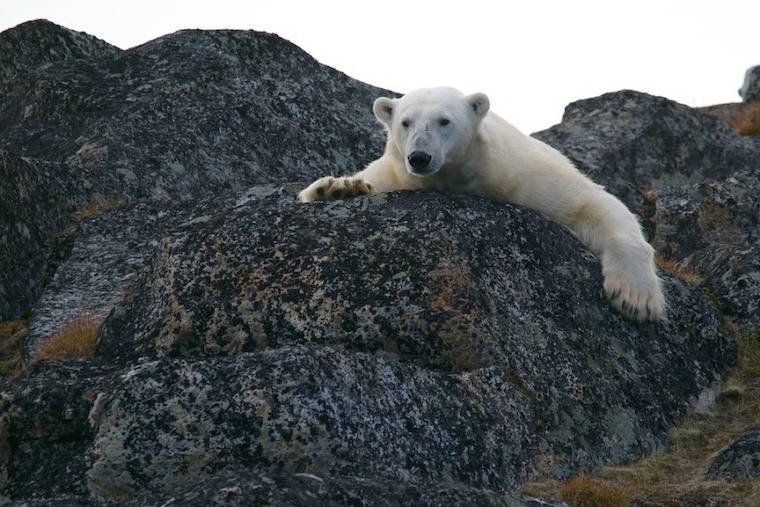
Polar Bear

I usually do a blog at this time of year – it’s an apt time to reflect on the changes that have taken place and a chance to evaluate the slow but steady progress that we’re making towards a vegan world. However this year I found my thoughts being drawn in an altogether different direction from usual; something has irrevocably changed since I last sat down to write my New Year thoughts.

Humans – facing up to what we do

In 2012, I became vegan in recognition of the brutal injustice that we are inflicting on every species on the planet by the unending ways that we ignore their vital interests in favour of our own trivial and frivolous preferences. Today, as 2018 slips away, I have a new and excruciating awareness of the climate catastrophe that is breaking in slow motion like a wave over this beautiful world, and we are running out of time to fix it. Let’s face it, our causative role in the atrocity, and our resulting peril as a species, are not even being acknowledged yet, at a time when we ALL need to be working on – and close to – the solution.

We hack and butcher our vicious way through the gentle and innocent creatures whose world this also is, ‘farming’ and mutilating them, violating, impregnating, breaking up their families and pumping out their breast milk, genetically altering them to increase egg production, slaughtering, sawing, dismembering and flaying the sweet individuals who face our slavering appetite for gore in uncomprehending bewilderment while we kill them by the trillions each year. We devour, excrete, wear, experiment on, and are ‘entertained’ by the pitiful ways that our despairing victims try to please us, their desperate attempts to make us stop hurting them. None of it works, despite the fact that none of what we do is necessary.

We are a species drunk on delusions of grandeur.

It’s real. We’re in big trouble

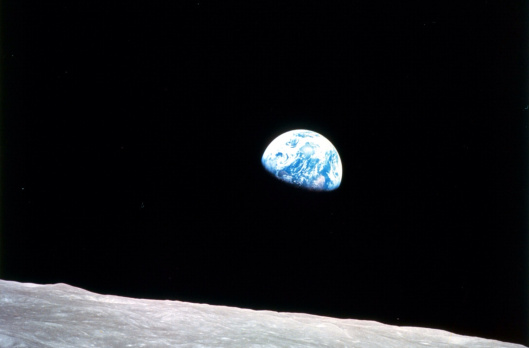
Be assured, there are charlatans who will say otherwise because the status quo of nonhuman exploitation is making vast sums of money for them, but as the old year slips away, the environmental and health related science against our use of others is continuing to pile up and the clamour for action to save the world grows louder. This year we all must surely be beginning to realise that humanity, and humanity alone, has brought our beloved planet, and all who travel through the black depths of space on this irreplaceable blue green orb, to the very brink of disaster. We are teetering now on the edge of the abyss.

It’s too late to complain about corporations and industries. It’s too late to carry on as before and blame everyone but ourselves for the disasters that afflict our world with increasing severity. We are consumers and it is our cash that is creating the demand that continues to drive vast agricultural industries; it is our cash that funds all the industries and practices that are wrecking our global home and depriving our children and grandchildren of a future. We are depriving them of a habitable world on which to even have a future. It’s time to take responsibility as individuals because if we don’t, we are condemning our loved ones to a world from our nightmares. We may be dead and gone, but our legacy of senseless corruption will remain as long as our species lasts – which isn’t likely to be very long at all as things are.

Global warming – the cosy myth of climate change

I know when I was younger, the term ‘global warming’ was occasionally mentioned, and here in the bitter cold of a Scottish winter, people smiled and nodded and agreed that a wee bit of warmth wouldn’t be a bad thing. How little I understood the mechanisms behind the idea of the ‘warmth’ that we all crave here.

I had no idea about the man-made build-up of greenhouse gasses that in turn was heating the planet, changing climates, bringing extreme weather events with increasing frequency and severity. I didn’t think about indigenous crops and species no longer being able to survive as their environment becomes increasingly hostile; the land, oceans and waterways clogged with effluent and assorted and non-biodegradable waste. I had no concept of melting icecaps raising sea levels and releasing even more greenhouses gas into an already seething atmosphere. To my younger self, the world seemed so unchanging, so unaffected by the life forms who swarm its surface. Earth seemed unbreakable.

Climate change – the consequences

Yet here we are as the year 2019 looms, well on our way to quite literally eating, using, and poisoning our planet to death. We are in it up to our necks, persisting in our brutal use of all other species while the very survival of our own is on the line as a direct result. New scientific reports support this view almost every week. All this devastation has been created in the recent past by a species whose technological burgeoning, enslaving, modifying, despoiling and displacing every other species and every environment to our own ends, while disregarding the tragic consequences of our indulgence.

As if all that wasn’t bad enough, we sanctimoniously delude ourselves 1) that we care about other animals and ‘nature’, and 2) that we can claim superiority amongst the millions of other species in the world; millions whose number falls daily as a result of our actions in what is known and recognised as the 6th Mass Extinction event. Google it.

I recently wrote a blog that highlighted a recent report that we had 12 years left to change our ways [Twelve years. Twelve.]. Oh, I know humanity won’t disappear in 12 years; our doomed species is likely to struggle on for a considerable while after that point is reached. But the science is clear that by then – or even earlier according to some – it will be too late for us to avoid the consequences of our desecration of our fellow creatures and the planet we all share. And the effective word that our children and grandchildren will get to know too well for any of us to feel good about, is ‘struggle’. Life will become an increasingly hard struggle for them in ways we find difficult to imagine, and it won’t be just in terms of the occasional storm or flood that they’ll get used to dealing with.

How would I know about this ‘struggle’?

In what feels increasingly like a past life, I worked in the related areas of ‘Disaster Planning’ and ‘Business Continuity’ in local government. Because effective planning made it essential for me to understand the realities of what might be faced, I am only too well aware of the speed with which the veneer of ‘civilisation’ falls away in the event of even a relatively localised catastrophe such as a disease pandemic, or extreme climatic event such as an earthquake or flood.

For the most part, we live in a world where our every daily requirement relies on a largely unrecognised network of interdependent services; people going to work to create supplies, transporting these supplies to where they need to be to keep the population fed, clothed and moving. Supporting the population we have health and emergency services, schools, refuse collection, and such unrecognised essentials as crematoria – all with staff who need transport to get to work. All these services work in an equilibrium.

These systems are more fragile than we suppose and here in the UK we can see just how little it takes to upset that balance. In Scotland, all shops close on New Year’s Day and many on 2 January, and in the days leading up to this planned closure, we see panic buying that strips the shelves of vast supermarkets. That’s for a planned and short-termclosure – imagine an unplanned one.

All it takes is an interruption in any part of the service network and it’s like a house of cards. Once transport links fail, fuel supplies fail and food supplies fail because whatever is available cannot be distributed. Without transport, power stations, hospitals and schools can’t be staffed. Any available medical provision starts to be overwhelmed. Roads and infrastructure are impaired, but there’s no fuel at the filling stations anyway, people have to stay home to look after their children and no one can get to work to earn money. With nothing to eat and no way to feed their families, desperation takes hold. Public services are prioritised in increasingly futile efforts to cover the bare essentials. I could go on.

I have been employed to plan for eventualities such as these but even I can scarcely imagine this sort of scenario on a planetary scale. However I am convinced that our children – that’s yours and mine – may well become aware of it as an everyday reality. Disaster Planning will become a new and vital career choice. My heart breaks to realise that this is the world that my generation is bequeathing to our children; those children we love more than anyone else may find themselves living hand to mouth as they fight for survival on a dying planet.

Plant based consumption – it’s a start

Along with so many self-interested and scathing dismissals of the scientifically proven need for plant based consumption, are the same old calls for yet more laws, yet more regulations, yet more support for small-scale ‘farmers’ of animal-derived substances, the same old calls to penalise large-scale animal substance producers and so on. Now apart from the fact that the concept of penalising large-scale producers for meeting large-scale demand (see the obvious problem there?) demonstrates a woeful lack of a grasp on the basic mechanics of supply and demand, basically here we have a call for the same old, same old. These tired, worn, and desperately weary suggestions have shown no sign of working in the decades that they have been buzzing around, but making a big thing about calling for them to be implemented/enforced seeks to give the appearance of concern while indicating that the individual does not intend to take personal responsibility for their own actions. All the problems arising from those actions are conveniently the fault of ‘someone else’ who now apparently has responsibility for putting things right using the same tried and tested measures that have spectacularly failed animals for hundreds of years.

Without a widespread commitment to action, such pie-in-the-sky measures to regulate animal substance use are now physically impossible to achieve while the human population (currently 7.7 billion) spirals upwards, carrying with it the increased consumer demand for our fellow species to be used as inappropriate ‘food’ on a planet with dwindling resources.

We are out of time. Really.

What do we need? Action! When do we need it? Now!

As pointed out so eloquently by climate activist Greta Thunberg, the climate crisis should be the emergency first priority of every government and every one of us. Despite this, many are still in denial and in this world of sensationalised gossip-mongering that masquerades as journalism, denialists continue to find a ready platform for their anti-science opinions. However any one of us who has lived more than a decade or two can see clearly evidenced in the changing landscape, the disappearance of insect life, and the terrifyingly increasing incidence of extreme events, the torment of a planet entering its death throes.

Some appear to be sitting on the metaphorical fence. Waiting to be convinced. Thinking that ‘there’s time’; thinking it’s all bullshit but hell, if it is real, we can always take steps in the future if we’re absolutely forced into it. Sadly that is not the case. The time to act is now. By the time the doubters and deniers are beginning to wake from their torpor and believe what the scientists have been trying to tell us about for decades, it will be well beyond too late. We couldn’t backtrack, any more than we could stuff a bullet back in a gun once the trigger has been pulled.

Start with veganism

So this year, because it’s all I know, I’m just going to keep on writing about veganism, keep on defending our trillions of annual victims, and keep on pleading with my species to wake up and realise what’s happening. I don’t know what it will take to make humanity sit up and take notice, but I have to keep trying.

But now, as the bells of 2019 begin, the thing we need most is the thing that every single one of us should be working for, day and night, with every fibre of our being. A miracle.

The Psychology and Thrill of Trophy Hunting: Is it Criminal?

https://www.psychologytoday.com/us/blog/animal-emotions/201510/the-psychology-and-thrill-trophy-hunting-is-it-criminal

Trophy hunting is gratuitous violence that can justifiably be called murder.

Posted Oct 18, 2015

“Still, the need to hurt animals that some children feel doesn’t explain why some adults hunt and kill large, and often dangerous, animals that they have no intention of eating. I have searched the psychology literature and, while there’s a lot of conjecture about what it means, the fact that very little research exists to support any assumptions makes reaching anunderstanding of this behaviour very difficult.”  (Xanthe Mallett, 2015)

Kids ask the darndest questions

A few years ago a youngster told me a story about a murder in his neighborhood in Boulder, Colorado, my hometown. I hadn’t heard about it so I asked him for more information and he told me about a cougar who had been murdered because this magnificent cat was living down the block from him. I instantly said something like, “Animals can’t be murdered,” and he looked at me – stared me straight in the eyes – and innocently but forcefully asked, “Why not?” I realized that I wasn’t going to “win” this discussion nor get out of it easily or cleanly, and his mother was calling him home, so I said that’s the way it is for now in the legal system, and, not unexpectedly, he once again asked, “Why?”

I was at a loss to say more given the time constraints and given the fact that I really wanted to let him know that I thought animals could indeed be murdered.” But, that would have made his mother angry and we both would have missed dinner. So, I told him that he really had made an impression on me, I thanked him for asking “Why, why, why,” and that I’d continue to think about this, for I do believe that killing an animal is murder (please also see) when an animal is killed in the same manner for which it is declared that a human has been murdered. And, sanitizing the killing by calling it culling, dispatching, or euthanizing doesn’t really do the job.

I haven’t thought much about this conversation, although I have pondered many times why the word “murder” is reserved for human animals and categorically excludes nonhuman animals (animals). And, some recent events have led me to write this brief essay about why the use of the word “murder” should be broadened to include other animals and why, for example, “trophy hunting” is really “trophy murder.”

I’m sure many people will likely weigh in on this topic and many already have. There also are some interesting exchanges at debate.org where the question, “Is killing an animal murder?” was raised. As of today, 58% of the respondents voted “yes” and 42% voted “no.” In addition, “Americans are turning thumbs down on trophy hunting by a two-to-one margin. Sixty-four percent of U.S. voters polled told the Humane Society of the United States that they also oppose trophy hunting in the United States.”

Definitions of murder invariably exclude nonhumans.  However, I can’t see any good reason other than “that’s the way it is.” Reasons given include misleading claims that animals don’t feel pain, they aren’t smart, or they don’t display what philosophers call agency, loosely put as the ability to make free choices and to act independently and to adapt in different environments. Furthermore, “All jurisdictions require that the victim be a natural person; that is, a human being who was still alive before being murdered. In other words, under the law one cannot murder a corpse, a corporation, a non-human animal, or any other non-human organism such as a plant or bacterium.”

The comments for the above debate make for interesting reading. One noted, “I love animals and have several pets but no killing animals for food is not murder. Killing animals for food is not murder because they do not have the ability to speak or have complex thoughts. For example, lets say there is a tiger hat is hungry and one of you who think its murder to kill an animal in a cage. That tiger would not hesitate to eat you so I say why can’t we do the same.” Another reader wrote, “Cruelty to animals is wrong, but it is not murder. People kill animals for a wide variety of reasons. Some of these reasons may be seen as cruel by different people: for example, some feel that killing animals for food is cruel, while others see it as a necessary evil, and some (like those who enjoy hunting) even take pleasure in it. However, even cruelty to animals does not rise to the level of “murder” as such.”

And, we also read, “(Non human) Animals are also sentient, conscious beings who feel pain and emotion If killing animals isn’t murder (because they are not people, or intelligent, or capable to express their fear, etc…) we should apply the same logic to humans who are handicapped or mentally retarded. No human ceases to be an animal simply because they are intelligent, we are merely perpetuating a sort of speciesism if we exclude unintelligent or unresponsive humans.”

These and other comments raise many of the issues that are central to arguing for using the word “murder” when an animal is involved in situations when it used for humans, and that laws need to be changed to reflect this.

A few recent events have made many others and me revisit the selective and speciesist use of the word “murder.” A few weeks ago a dog was killed and skinned in my hometown and once again, someone asked me if this could be classified as murder. Animals in zoos also are killed rather often even if they are healthy and could live longer lives. Marius, an otherwise healthy young giraffe, was killed in the Copenhagen zoo in February 2014 because he didn’t fit into their breeding program. Zoo administrators said he was euthanized, but of course this wasn’t a mercy killing but what I call “zoothanasia.” And, I also noted it could well be called murder.

Is trophy hunting really trophy murder? Cecil the lion and the recent killing of the largest African elephant in almost thirty years

“As for trophy hunting, I think it is probably the kind of animal killing that most resembles murder – murder in the first degree. It is done with planning (premeditation) and without provocation or biological justification. The animals are entirely innocent creatures killed only for ego-gratification and fun. It’s time we began to see this practice as akin to murder.” Kirk Robinson (executive director of the Western Wildlife Conservancy, comment on this essay)

Trophy hunting in the wild and in places where animals are bred and held captive for the purpose of being killed (canned hunting), also makes the news especially when a charismatic animal is slaughtered. Basically, trophy hunting is a gratuitously violent act that often results in dismemberment and taking the head as a “trophy.

This past summer the world learned about, and millions were outraged by, the killing of Cecil, a magnificent lion, by a Minnesota dentist under the guise that it served some conservation purpose. Cecil’s undoing was premeditated, he hadn’t done anything to deserve being killed, and the dentist paid a royal sum to be allowed to kill him. And, this week, we’ve learned that a magnificent elephant killed in Zimbabwe for fun was the biggest killed in Africa for almost 30 years (please also see).

There are many, far too many, examples of trophy hunting accompanied by pictures of happy hunters. Indeed, recreational sport hunting that doesn’t involve long-distance travel or huge sums of money can also be called murder. And, sport hunting is often glorified. Colorado has “hug a hunter” and “hug an angler” campaigns because Colorado Parks and Wildlife claim that hunting is a conservation tool (but please see). We read, “Coloradans are proud of the wildlife and natural beauty in Colorado. And we have hunters and anglers to thank for helping to support it. So if you love protecting Colorado and its natural beauty, go ahead and hug a hunter.” Of course, not all wildlife is valued.

Let’s get the discussion going and let’s begin by making it simple

The time has come to open the discussion about the limited use of the word “murder.” Detailed scientific research has more than amply shown that reasons for excluding animals that include their supposed lack of emotions, that they are not really sentient, and that they really don’t care what happens to them, for example, clearly don’t hold.

I’m sure there are people who are passionate on both sides of the ledger and we need to hear all voices. Attorney Steven Wise and his team, who have worked tirelessly for granting animals rights, have been focusing their attention on chimpanzees, so to begin, let’s just consider mammals. And, perhaps to get the discussion going, let’s only consider animals who are killed for trophy hunting, for sport and for fun, and exclude, for the moment, animals who are killed for our entertainment (dog- or cock-fighting), animals who are killed because they harmed, or supposedly harmed, a human(s), animals who wind up living in urban or suburban areas “dangerously” close to humans because we forced them out of their preferred and natural homes because of relentless development, animals who are killed for food or research, animals who are considered to be “pests,” animals who are “collected” “in the name of science.” We can also limit our early discussions to animals who clearly are sentient, which includes the vast majority of animals who are killed when there is no other reason to do it other than for fun.

I’m sure readers will have a category of animals they’d like to add to the list of candidates, and this is all part of the ongoing discussion. It’s difficult, for example, to exclude companion animals who are brutalized for no reason at all, so perhaps in early discussions we can also consider them as animals for whom the word “murder” applies.

Let me strongly emphasize that this early focus is not to say that other animals shouldn’t be granted legal rights nor that they can’t be murdered. However, we’ve got to begin somewhere, so let’s begin with the clearest cases in which an animal is killed for no other reason than someone thought it would be okay to kill them, perhaps for sport, perhaps for fun, perhaps because they like the high of the thrill, or perhaps because they enjoy killing the animals by “playing predator,” but surely not in any way that could be considered playing fair.

One of my friends suggested to me that perhaps the world isn’t ready for such a discussion, but surely there are crimes against animals that fall smack into the arena of crimes that are considered to be murder when there is a human victim(s). Trophy hunting is one clear case; it is voluntary and intentional and there is no reason to engage in it other than the hunter finds it to be a form of recreation or fun. It’s often not that challenging, and surely one doesn’t have to do it.

The psychology of trophy hunting: What drives people to thrill kill?

Hunting for ‘sport’ is basically another way to describe the thrill of killing.” Graham Collier, Psychology Today

The phrase “trophy hunting” – a form of thrill killing (for example, please see) is all about nonhumans, but gratuitous violence in the form of thrill killing also occurs in humans. When there are human victims it’s clearly considered to be aberrant and criminal behavior that rightfully is called murder. The bottom line is that anyone who thrill kills should be punished regardless of whom the victim is. And we also should keep in mind what psychologists call “the Link,” the close relationship between human-animal violence and human-human violence.

While I cannot find any formal studies of what drives trophy hunting specifically, many people have weighed in on questions of this sort. One essay called “Why we may never understand the reasons people hunt animals as ‘trophies‘” by criminologist Dr. Xanthe Mallett reports “Research shows increased levels of hostility and a need for power and control are associated with poor attitudes towards animals, among men in particular.”

Dr. Mallett also writes, “Another paper has linked personality traits of some people who hunt for sport to a different ‘triad’ of behaviours, known ominously as the ‘dark triad’. This includes narcissism (egotistical admiration of one’s own attributes, and a lack of compassion), Machiavellianism (being deceitful, cunning and manipulative) and psychopathy (lack of remorse or empathy, and prone to impulsive behaviour).”

Dr. Mallett ends her essay as follows: “And that [the lack of hard data] means we may never know why hunters are compelled to seek animal trophies for their walls. Indeed, we might be condemned just to watch and wonder about their motive and emotional capacity.” Surely, if people just want to “get out into nature” and rewild themselves, there are better and much less harmful ways to do it. Trophy hunting also violates the tenets of compassionate conservation, namely, first do no harm and all individuals matter (please seeand links therein).

What drives trophy hunting is a field rich in questions and ideas that should be of interest to many readers of Psychology Today and also practitioners.

Words count

The wide-ranging concern and condemnation of trophy hunting is not merely an animal rights or vegan perspective, but rather one grounded in concerns about respect and decency. Many people who eat and wear animals are outraged by Cecil’s demise and by the latest elephant to be killed for fun. Many of my friends say something like, “It just isn’t right,” and all the academic arguments in the world aren’t going to convince them that trophy hunting can be justified. And, hunters with whom I’ve spoken are appalled by canned and wild trophy hunting. There’s a lot going on here about which I hope to write later on.

Words count. The failure to use the word “murder” for nonhumans is due to a misleading extension of the “them” versus “us” way of thinking, one that is, or should be, long gone, and a view that ignores who other animals truly are – their cognitive and emotional lives and capacities — based on large amounts of detailed empirical research. While we surely are different from other animals, we also share many traits that make us all very similar to the magnificent animals who are routinely hunted as trophies. These shared traits are those that are used erroneously by some to separate “them” from us as if the differences are black and white, rather than shades of gray.

So, if legal systems change and recognize the fact that animals can be murdered, we can expect that crimes that count as murder will be punished accordingly, other than by shame. And, perhaps, someday I’ll be able to tell some inquisitive “annoying” kid that animals can indeed be murdered. And, I’ll also let him or her know that when people say they love animals and harm them, I always say I’m glad they don’t love me.

Note: For more on ways to stop the killing, please see Hope Ferdowsian’s “5 Ways to Stop the Killing.” The man who killed the elephant has now been identified.

Marc Bekoff’s latest books are Jasper’s Story: Saving Moon Bears (with Jill Robinson), Ignoring Nature No More: The Case for Compassionate ConservationWhy Dogs Hump and Bees Get Depressed, and Rewilding Our Hearts: Building Pathways of Compassion and CoexistenceThe Jane Effect: Celebrating Jane Goodall (edited with Dale Peterson) has recently been published. (marcbekoff.com; @MarcBekoff)

Trophy Hunters’ Smiles Show How Much They Like to Kill

Exposing the Big Game's avatarCommittee to Abolish Sport Hunting Blog

“Pleasure smiles” are greater when hunters pose with large “dangerous” corpses

Posted Nov 26, 2015

Trophy hunting, or what some call “trophy murder,” is a hot button issue. In a recent essay called “The Psychology and Thrill of Trophy Hunting: Is it Criminal?” I examined some of the reasons why people choose to go out and kill other animals for fun and pleasure, essentially engaging in gratuitous violence. I also wrote about this topic in an earlier essay called “Do Some People Simply Like to Kill Other Animals?” and concluded that some people do, indeed, get pleasure out of killing another animal when they really don’t have to do it.

There really is a killing smile: Pleasure smiles are greater when hunters pose with large dangerous corpses

When I wrote the essay asking whether some people simply like to kill other animals for fun, sport…

View original post 512 more words