NASHVILLE, Tenn. (AP) — Wildlife officials in Tennessee are implementing an emergency plan after at least 13 cases of chronic wasting disease were discovered in deer.
WTVF-TV reports the sick deer were found in Fayette and Hardeman counties in Tennessee.
The Tennessee Fish and Wildlife Commission says chronic wasting disease has no known risk to the health of humans or livestock. It says CWD is a deadly neurological disorder that affects deer.
In response to the cases, the agency is enacting a plan for hunters in Fayette, Hardeman and McNairy counties.
The station reports deer hunted in those counties must remain there, except meat with all the bones removed, antlers with no tissue attached, tanned hides and finished taxidermy products.
Starting Dec. 29, hunters killing deer in the CWD zone are required to check for testing at sampling and check stations with the counties.
Extreme weather and dire climate reports are intensifying the mental health effects of global warming: depression and resignation about the future.
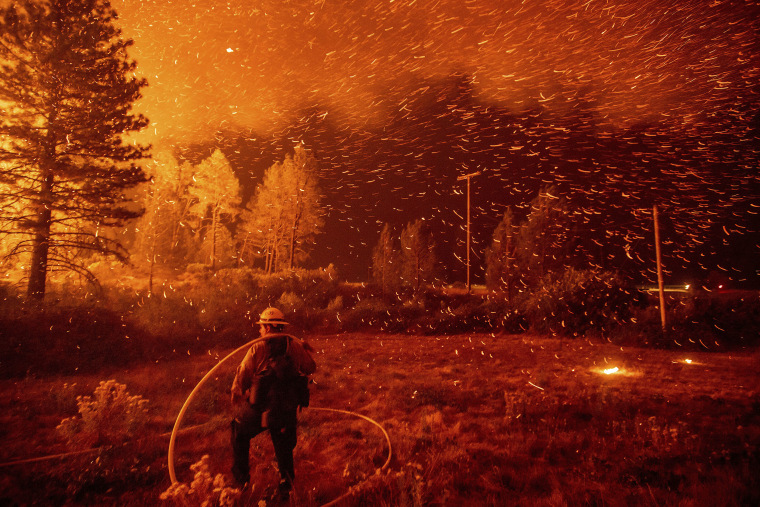
The Delta Fire rages in Shasta-Trinity National Forest in California on Sept. 6.Noah Berger / AP file
By Avichai Scher
When the U.N. released its latest climate report in October, it warned that without “unprecedented” action, catastrophic conditions could arrive by 2040.
For Amy Jordan, 40, of Salt Lake City, a mother of three teenage children, the report caused a “crisis.”
“The emotional reaction of my kids was severe,” she told NBC News. “There was a lot of crying. They told me, ‘We know what’s coming, and it’s going to be really rough.’ “
This week on 60 Minutes, Bill Whitaker reports on the wolves’ impact in the national park. Last month, a hunter killed one of its most beloved wolves
2018Dec 23
BYBrit McCandless Farmer
Wolf watchers are calling for new measures to protect the canines around Yellowstone National Park after a Montana hunter killed a beloved wolf outside the park’s borders last month.
Wolf 926F, known to photographers and wolf enthusiast as “Spitfire,” was legally killed outside the park in Montana, a parks department official told the Jackson Hole News & Guide.
Spitfire’s mother was also famous among Yellowstone wolf watchers. Known as “06” for the year she was born, she had been the leader of her pack – and was legally shot and killed by a hunter outside the park’s borders in 2012.
Like her mother, Spitfire had been the alpha female of her pack until ceding…
A father and son have been charged with several crimes after they allegedly shot a mother bear and her crying newborn twins inside their Alaska den, authorities said.
The men’s actions were captured on a motion-activated video camera installed by wildlife officials who were tracking the mother bear.
Owen Renner, 18, was seen on the video shooting the mother black bear in April on Esther Island in Prince William Sound, said police. According to a sworn summary of events by police that was filed in court, the “cubs begin shrieking in the den after the initial shots are fired,” The Anchorage Daily News reported Wednesday.
His father, Andrew Renner, 41, then took “aim through his rifle scope only feet away and fires several more shots, killing the newborn bear cubs,” per the court…
An American big-game hunter who boasted of gunning down local animals while visiting a Scottish island is now facing criminal charges.
Larysa Switlyk, 33, ‘a world-renowned hunter’ from Sarasota, Florida, was accused of ‘trophy hunting’ wild animals on the island of Islay, Scotland in September after she posed for a series of Instagram photos during the hunt.
Now, Police Scotland have confirmed that the hunter, who regularly posts photos of her hunts alongside her boyfriend Jason, has been reported for firearms offences, along with…
Happy was one of seven Asian elephant calves captured, probably from the same herd, in Thailand in the early 1970s. Named after Disney’s seven dwarves, they were shipped to America and sold to circuses and zoos. Happy and Grumpy ended up in the Bronx zoo, where they lived in an enclosure for 25 years. In 2002 they were transferred to a larger enclosure with a second pair of pachyderms, Patty and Maxine. Their new environment was a little closer to the wild one, in which elephants form large families. But Patty and Maxine charged at Grumpy, injuring her. Unable to walk and with suppurating wounds, Grumpy was euthanised.
Happy was then paired with a younger female elephant, Sammy. She died of kidney failure in 2006. But meanwhile Happy had become a scientific celebrity. In 2005 she became the first elephant to pass the “mirror self-recognition test”, an indicator of self-consciousness. Scientists painted a white cross over her left eye, and led her to a large mirror. Happy repeatedly touched the marking with her trunk, showing that she recognised herself. Most animals (and human infants) cannot do this.
Give a cooler planet as a gift this Christmas. As the Earth warms from humans pouring tons of greenhouse gases (GHG) into the atmosphere, carbon offsets are growing as a way for individuals to reduce their impact.
While no substitute for systematic economic and political change, the concept of an offset is that it removes GHG from the atmosphere, or prevents it from being emitted in the first place. Most retailers sell each offset—the equivalent of a ton of GHG—for $5 to $10 from projects ranging from capturing landfill methane, a potent GHG, to reforestation, which stores carbon dioxide in trees. Verified offsets come with a certificate, and independent certification that your money was put to good use.
Credible credits
Residents of industrialized nations emit about 10 tons of greenhouse gases each year just going about their daily lives. It’s not all by choice. Most utilities still…
When the ruling came down in October, Wyoming and Idaho were on the cusp of hosting the first, public grizzly bear hunts in the Lower 48 U.S. states since 1991.
A grizzly bear cub searches for fallen fruit beneath an apple tree a few miles from the north entrance to Yellowstone National Park in Gardiner, Montana on Sept. 25, 2013.Alan Rogers / The Casper Star-Tribune via AP
By Associated Press
BILLINGS, Mont. — U.S. government attorneys filed notice Friday that they are appealing a court ruling that blocked the first public hunts of grizzly bears in the Northern Rockies in decades.
The appeal challenges a judge’s ruling that restored threatened species protections for more than 700 bears in and around Yellowstone National Park.
Protections for the animals had been removed in 2017. When the ruling from U.S. District Judge Dana Christensen came down in October, Wyoming and Idaho were on the cusp of hosting their first public hunts for grizzly bears in the Lower 48 U.S. states since 1991.
Federal biologists contend Yellowstone-area grizzlies have made a full recovery after a decades-long restoration effort. They want to turn over management of the animals to state wildlife agencies that say hunting is one way to better address rising numbers of bear attacks on livestock.
But wildlife advocates and the Crow Indian Tribe successfully sued to stop the hunts. Their attorneys persuaded Christensen that despite the recovery of bears in Yellowstone, the species remains in peril elsewhere because of continued threats from climate change and habitat loss.
The Yellowstone population has rebounded from just 136 animals when they were granted federal protections in 1975.
Grizzlies in recent years have returned to many areas where they were absent for decades. That has meant more dangerous run-ins with people, such as a Wyoming hunting guide who was killed this fall in a grizzly attack.
Christensen’s ruling marked the second time the government has sought to lift protections for Yellowstone bears only to be reversed in court.
The agency initially declared a successful recovery for the Yellowstone population in 2007. But a federal judge ordered protections to remain while wildlife officials studied whether the decline of a major food source — whitebark pine seeds — could threaten the bears’ survival.
The Fish and Wildlife Service concluded last year it had addressed that and all other threats.
There was speculation the agency would not appeal the latest ruling and instead draft a new proposal to get the animal off the threatened list.
That possibility was raised by the agency’s grizzly bear recovery coordinator during a meeting last month with Wyoming state lawmakers, according to the Powell Tribune.
Friday’s appeal signals that at least for now the court battle over grizzlies will grind on.
But Andrea Santarsiere with the Center for Biological Diversity, one of the plaintiffs in the case before Christensen, said the government still has the option in coming months to dismiss the case.
“I think Fish and Wildlife should go back to the drawing board and come up with a new plan to actually recover grizzly bears across the West, rather than a piecemeal approach,” she said.
Also pending before the 9th Circuit are appeals from parties that intervened on behalf of the Fish and Wildlife Service. They include the states of Idaho and Wyoming and groups representing hunting interests, gun rights and agriculture.
Cody Wisniewski with the Mountain States Legal Foundation said that if allowed to stand, Christensen’s ruling could make it harder for other species to be taken off the threatened and endangered species list.
“Opinions like this move the goalposts,” he said.
U.S. Fish and Wildlife spokeswoman Jennifer Strickland referred questions about the case to the Department of Justice, which did not provide an on-the-record comment.
Larysa Switlyk, a hunter and host of ‘Larysa Unleashed,’ was slammed on Twitter after posting pictures of her with a dead goat during a hunting trip in Scotland.
2018 saw its fair share of hunting scandals involving those both within and beyond the hunting community — and many received swift backlash as a result.
Read on to learn more about some of the wildest scandals that rocked the hunting community this year.
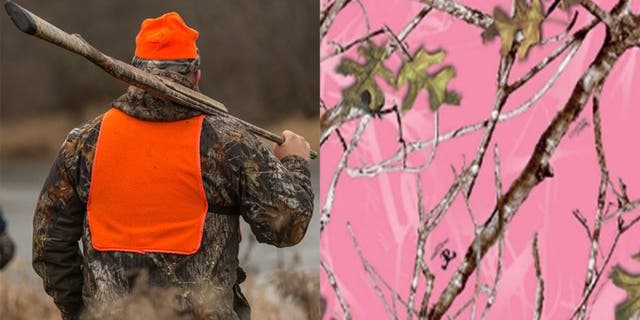
A memo asking for pink to be a legal hunting color has been attacked on social media for its comments about female fashion. (iStock / True Timber)
In January, a memo was presented to the House Natural Resources Committee calling for hunters to be allowed to wear pink in addition to orange. The memo was…
LAMBERTON – An individual was injured Saturday while pheasant hunting in Redwood County when he was struck with accidental gunshots to the head and arm.
The incident was reported at 11:14 a.m. in the Lamberton State Wildlife Management Area.
According to the Redwood County Sheriff’s Office, a male hunter shot at a pheasant located between himself and another male hunter.
While attempting to lift his gun to shoot the pheasant and taking the safety off he accidently fired the gun at the other hunter, according to a news release from the Sheriff’s Office.
The individual was taken to the Springfield Hospital with non-life threatening injuries.
The names of the individuals involved were not provided by the Sheriff’s Office, which issued a warning to hunters to use extreme caution while hunting and to always be aware where all the hunters…





 Exposing the Big Game