Exposing the Big Game

Forget Hunters' Feeble Rationalizations and Trust Your Gut Feelings: Making Sport of Killing Is Not Healthy Human Behavior

Exposing the Big Game

Botswana lifts ban on big game hunting

A young bull elephant is seen in the Okavango Delta, Botswana, April 25, 2018. REUTERS/Mike Hutchings

GABORONE (Reuters) – Botswana, home to almost a third of Africa’s elephants, lifted a ban on big game hunting on Wednesday, citing growing conflict between humans and wildlife and the negative impact of the hunting suspension on people’s livelihoods.

Conservationists estimate the southern African country has around 130,000 elephants, but some lawmakers say the number is much higher and causes problems for small-scale farmers.

“The Government of Botswana has taken a decision to lift the hunting suspension,” the Environment Ministry said in a statement.

“The Ministry would like to reiterate that it will work with all stakeholders to ensure that re-instatement of hunting is done in an orderly and ethical manner”.

It said the return of wildlife hunting would take place in accordance with laws and regulations governing wildlife conservation, hunting and licensing, but did not elaborate. Minister of Environment, Natural Resources Conservation and Tourism Onkokame Kitso Mokaila would hold a news conference on Thursday to give details, it said.

President Mokgweetsi Masisi set up a committee in June last year to consider the hunting ban, which was imposed by former President Ian Khama in 2014 after surveys showed declining wildlife populations.

At the time, the committee chair said it recommended “a legal framework that will enable the growth of a safari hunting industry and manage the country’s elephant population within the historic range”. The committee also called for “regular but limited” elephant culling.

Botswana, a mostly arid country the size of France, has a population of around 2.3 million people and its vast tracts of remote wilderness make it a magnet for foreign tourists who want to view wildlife.

Fierce divide as Botswana lifts hunting ban

Exposing the Big Game's avatarCommittee to Abolish Sport Hunting Blog

Botswana says lifting the ban will not threaten the elephant population

https://phys.org/news/2019-05-botswana-elephant.html

Many conservationists on Thursday reacted with anger over Botswana’s decision to lift its blanket ban on hunting, describing it as a “horrifying” move, though others backed the idea.

Botswana fended off criticism of its decision to end the five-year ban, saying the move would not threaten the elephant population.

A government statement said the cabinet had been influenced by the “high levels of human-elephant conflict” and its “impact on livelihoods”.

“Predators appear to have increased and were causing a lot of damage as they killed livestock in large numbers,” it said.

“The general consensus from those consulted was that the hunting ban should be lifted.”

A blanket hunting ban was introduced in 2014 by then-president Ian Khama, a keen environmentalist, to reverse a decline in the population of wild animals.

But lawmakers from the ruling Botswana Democratic Party…

View original post 246 more words

Marineland confirms walrus death, two deer killed in opening day stampede

Marineland has confirmed the death of walrus Apollo and said the 18-year-old animal had a heart attack.

Cillian O’BrienCTVNews.ca writer

@cillian_obrien

Published Wednesday, May 22, 2019 12:33PM EDT 

Controversial Canadian waterpark Marineland has announced the death of one of its walruses, days after “demonstrators” were blamed for causing a stampede that led to the deaths of two deer.

The tourist attraction in Niagara Falls, Ont. announced Apollo’s death on Tuesday, confirming the 18-year-old animal died of a heart attack in late April.

“Even with the immediate intervention of multiple medical marine mammal experts, we are sad to report that Apollo passed away,” a Marineworld release said.

“While the loss of Apollo is truly devastating for all of us who knew him, we are comforted in knowing he passed very quickly and without obvious pain.”

The park is now keeping a close eye on its last remaining walrus, Smooshi, which has been subject to “extensive additional checkups to confirm the status of her health.”

“Our team is providing her with additional enrichment and care while plans for her future at the park are finalized,” the park said.

“Smooshi continues to show her love and adoration for her favourite marine mammal trainers and appeared to be in good spirits when taking to the stage at Marineland’s educational presentation on Saturday’s opening day.”

Apollo is the fourth walrus to die at Marineland in two years.

Zeus died of natural causes on Boxing Day last year. Another walrus, Buttercup, died in the winter of 2017/18.

Female walrus Sonja died suddenly in May 2017 from a rare abdominal aneurysm, the park said.

Two deer killed in stampede

Meanwhile, Marineland said it had its busiest opening day in a decade, despite protests from animal rights groups.

The park claims two men deliberately started a deer stampede Saturday, resulting in the deaths of two of the animals.

“These individuals laughed in the face of staff as they tried to get them to stop,” a Marineland statement said.

“They refused all instruction by staff and resisted efforts to remove them from the Deer Park. We are all upset by this terrible act against innocent animals.

“In order to protect our animals, we are closing the Deer Park to make modifications to prevent this type of incident from ever happening again.”

Ontario SPCA and Humane Society has called for an overhaul to provincial animal welfare legislation, which it says is failing animals kept in captivity for commercial gain.

“The Ontario SPCA and Humane Society has formed a task force dedicated to developing ‎new provincial animal welfare legislation that reflects the need for both greater protection and social justice for animals,” the charity said in a statement.

“The task force is reviewing the need for animals to be recognized under law as sentient beings to acknowledge their ability to feel, to have subjective experiences and to be treated accordingly, rather than as property.”

World’s intelligent hunters in a race for survival in Iran

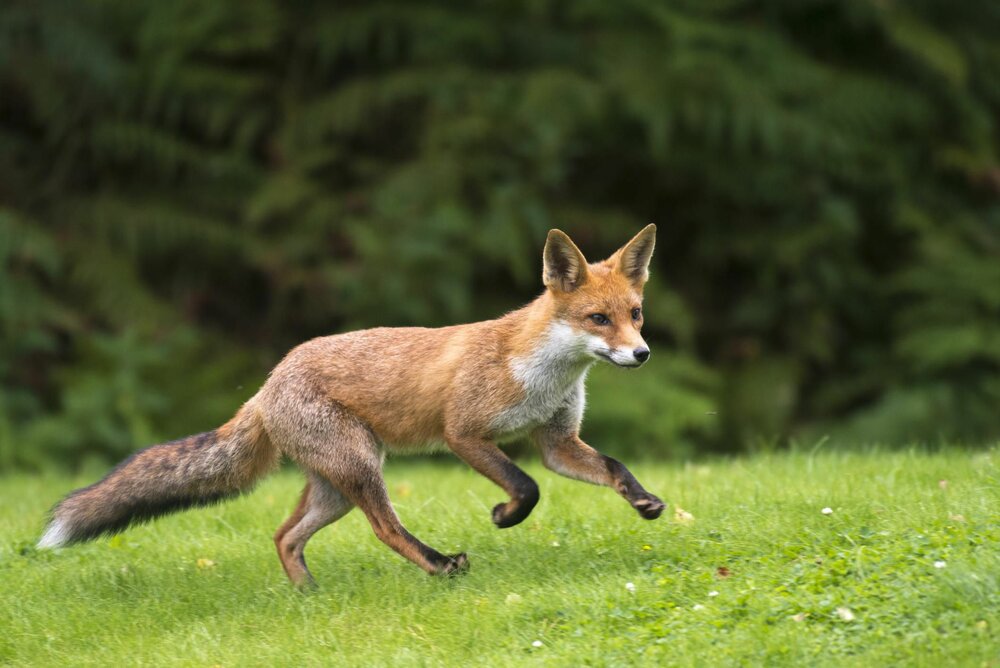
TEHRAN – Foxes, the intelligent hunters who avoid humans, having a limited range in Iran, are endangered due to human encroachment on their habitats and the lack of safety, said Jalil Imani, a biodiversity and ecosystems management expert.

There are more than 20 species of foxes who eat almost anything, including small mammals, birds, reptiles, insects, worms and fruit. The common fox is considered by some as pest species, being an opportunistic hunter of game birds, ground-nesting birds and small mammals, often killing animals’ surplus to its needs.

Foxes in Iran are often seen in farmlands in search of rodents. They are also likely to feed on melons, scavenge in refuse dumps, or track hares and other small mammals, especially when there is snow on the ground. Foxes in Iran are trapped, shot, and hunted almost everywhere they occur, and yet they still manage to thrive.

Foxes feed on small animals like rats, but farmers turning pastures into agricultural land over the past few years are using pesticides to protect their product, which kill foxes’ prey, and in some case the foxes themselves by the poisonous baits.

Four fox species inhabiting in Iran, including Blanford’s, Corsac, Rüppell’s and common foxes, Imani said, lamenting, according to the Red List of the International Union for the Conservation of Nature and Natural Resources (IUCN), all four aforesaid species of foxes in the world are defined as least concern, however in Iran, their condition is different.

“Blanford’s fox is assigned endangered by the Department of Environment, any hunting or trade of which is considered illegal,” he noted, adding, while Corsac fox has been listed as extinct before sighting some in northeastern part of the country, which switched to critically endangered.

Rüppell’s fox is also placed in the IUCN’s least concern category, while being vulnerable in Iran which requires protection, he said.

“Fortunately, common fox is in better condition and is not listed as endangered yet,” he added.

So far, no measures have been taken to estimate fox population in the country, he said, adding, so there are no accurate statistics on the number of foxes in the country.

“The results of genetic tests showed that genetic variation of the foxes is desirable. There are two major genetic groups in the country that are in some ways compatible with the global groups.”

Imani went on to say that the Rüppell’s fox found mainly in Yazd, Kerman, somewhat Sistan-Baluchestan and Isfahan provinces, have proper genetic diversity, so there is still hope for the preservation of the sub species.

Blanford’s and Corsac foxes while offering insufficient information for a proper assessment, can be conserved to some extent, he said, noting, for precise determination scientific analysis and researches must be conducted in this regard.

One of the most important threats to fox species are habitat fragmentation, as well as the use of pesticides eradicating their prey, road construction, rabies and stray dogs, although the conflict with humans is the leading cause for their heading toward extinction.

“Foxes feed on small animals like rats, but farmers turning pastures into agricultural land over the past few years are using pesticides to protect their product, which kill foxes’ prey, and in some case the foxes themselves by the poisonous baits.

“On the other hand, road accidents took lives of many of the smart species, for example, there is a road in northern island of Qeshm, in which one to two foxes are killed per day due to road crashes.

“Unfortunately, another threat posed to the foxes is hunting for the fur trade, or some people keep their pelt for prosperity beliefs and superstitions.

“Foxes are primarily nocturnal hunters who prefer to search for food at a time when there is little chance of being spotted by humans, therefore, they are no threat to humans and there is no need to persecute the precious species,” Imani regretted.

Corsac fox’s habitat no longer safe

An official with the Golestan DOE, Mahmood Shakiba, said in October 2018 that living conditions for rare corsac fox in the country is so improper that spotting a few nests of the species is a pleasure.

In the Iranian calendar year 1395 (March 2016-March 2017), some 14 Corsac nests have been found in Turkmen Sahara in Golestan province, of which only four nests have been active and last year the nests have no longer been active, he added.

All Corsac habitats have been destructed turning into agricultural land, animal husbandry, manufacturing workshops or factories, so that the animal has no place to live, he regretted.

What happens when species go extinct?

As the species is at the top of the food chain, it plays an important role in conservation of the country’s ecosystem as well as protecting other species.

When an ecosystem loses key species such as common fox, it triggers what ecologists call a trophic cascade—a butterfly effect that spirals down the food chain. A well-documented case study for this phenomenon is the gray wolf, once among the world’s most widely distributed mammals. Prior to their extirpation, North American gray wolves were a key predator of deer, elk, moose, bison and caribou, as well as numerous smaller mammals. Following the wolves’ disappearance, the abundance of deer skyrocketed, with some populations climbing to six times their historical size.

Disappearance of foxes also have potential of disrupting the balance. For example, common fox’s function as an apex predator control the abundance of their prey and thus help to maintain a balance of nature.

China has been emitting illegal greenhouse gas that destroys ozone layer, scientists find

Exposing the Big Game's avatarThe Extinction Chronicles

KEY POINTS
  • A study by scientists from the University of Bristol, Kyungpook National University, and the Massachusetts Institute of Technology finds China responsible for much of a recent spike in the emission of an illegal greenhouse gas.
  • China accounted for 40% to 60% of the global increase in trichlorofluoromethane, or CFC-11, emissions between 2014 and 2017, the study says.
  • CFC-11 was internationally banned under the Montreal Protocol because it can destroy earth’s protective ozone layer.
GP: China factories 190523
Factories in China’s Shandong province.
Zhang Peng | LightRocket | Getty Images

There has been a rise in the emission of an illegal greenhouse gas that destroys the earth’s ozone layer — and China is responsible for “a substantial fraction” of that increase, according to a new study.

The research published on Wednesday found that China accounted for 40% to 60% of the global increase in trichlorofluoromethane, or CFC-11, emissions…

View original post 308 more words

Republicans aren’t just climate deniers. They deny the extinction crisis, too

Exposing the Big Game's avatarThe Extinction Chronicles

Republican officials and their industry benefactors are sowing doubt about the wildlife extinction crisis that threatens as many as one million species

Mandarin ducks, an endangered species.
 Mandarin ducks, an endangered species. Photograph: Yuri Smityuk/TASS

Maybe you’ve read King Lear and remember this famous line: “‘Tis the time’s plague when madmen lead the blind.” The words were written more than 400 years ago as a comment on the deadly consequences of greed, delusion and political folly, but they could serve just as well as a Republican party slogan today. They’re a fitting description of the Republican party’s delusional campaign to deny the environmental crises that threaten our planet and our civilization.

For decades now, Republican politicians and their patrons in the fossil fuel industry have used thinktanks, front groups and public relations operatives to promote faulty science and perpetuate the myth that the climate crisis is a hoax. This campaign…

View original post 954 more words

What To Know About The Sudden Talk Of War With Iran

Exposing the Big Game's avatarThe Extinction Chronicles

The USS Arlington, shown in December in Morehead City, N.C., has been sent to the Middle East to bolster an aircraft carrier force sent to counter alleged threats from Iran.

MC3 Chris Roys/Navy Office of Information/AFP/Getty Images

President Trump came into office criticizing the U.S. wars in Afghanistan and Iraq and promised he would try to avoid foreign military engagements. Yet this month the White House has been talking as if conflict with Iran is suddenly on the table. Trump tweeted over the weekend, “If Iran wants to fight, that will be the official end of Iran.”

But it’s not clear if U.S. officials have…

View original post 862 more words

Unravelling migration connectivity reveals unsustainable hunting of the declining ortolan bunting

Exposing the Big Game's avatarCommittee to Abolish Sport Hunting Blog

 See all authors and affiliations

Science…

View original post 660 more words

Zebras, lions, kangaroos among exotic animals seized at Quebec zoo

Owner of St-Édouard Zoo facing charges of neglect and cruelty to animals

Sophie Gaillard, animal advocacy director with the Montreal SPCA, speaks to reporters after the arrest of the owner of the Zoo St-Édouard, in central Quebec, on Tuesday. (Ivanoh Demers/Radio-Canada)
75
comments

A zoo owner in central Quebec is facing criminal charges after roughly 100 animals were seized at a facility in Saint-Édouard-de-Maskinongé.

Normand Trahan was arrested Tuesday morning by SPCA investigators, with the assistance of provincial police, on charges of animal neglect and cruelty.

If found guilty, Trahan could face up to five years in prison and a lifetime ban on owning an animal.

“To our knowledge, this is the first time in Canada that a zoo owner is facing criminal animal cruelty charges,” said Sophie Gaillard, animal advocacy director with the Montreal SPCA.

It is also the first time in Quebec that animal cruelty charges have been laid by way of indictment under the federal Criminal Code, Gaillard said, which opens the door to harsher penalties than under provincial laws.

Several primates are among the animals that will be transferred to animal sanctuaries across North America. (Submitted by Humane Society International/Canada)

“We’re really pleased that this file is being taken seriously by the prosecutors involved,” she said at a news conference at the zoo on Tuesday.

The animals found at the St-Édouard Zoo, about 120 kilometres north of Montreal, include lions, tigers, zebras, camels, kangaroos and bears.

Flags raised in 2018

The SPCA said it started investigating after a visitor called them in 2018.

“We received a complaint from the public and conducted a thorough investigation that led us to discover other pieces of evidence,” said Gaillard.

Two alpacas were seized in October 2018, following an initial inspection the previous August. Four animal carcasses, including those of two tigers, were also found, as well as the bodies of two birds.

Before 2015, the zoo only featured nordic animals like wolves. (Submitted by HSI/Canada)

Humane Society International (HSI), a non-profit organization, is tasked with caring for the remaining animals and finding them new homes.

SPCA and HSI employees have spent the day going around the zoo to take inventory of the living conditions.

“Some animals didn’t have access to water and proper food,” said Ewa Demianowicz, senior campaign manager with HSI/Canada.

“Some animals needed veterinary care, so these are not conditions that we usually see in zoos,” said Demianowicz.

So far, none of the animals were found to be in “imminent danger,” but it will take weeks to transfer them to other sanctuaries in the HSI network, in Canada and in the United States.

Quebec zoo owner Normand Trahan, pictured in 2017, could face up to five years in prison on charges of animal cruelty and neglect. (Josée Ducharme/Radio-Canada)

“This is without a doubt the most complex animal rescue we’ve undertaken in Canada,” said Rebecca Aldworth, executive director of HSI/Canada.

The costs of the operation are partially being covered by the Eric S. Margolis Family Foundation, which supports wildlife advocacy organizations.

Multiple infractions

The St-Édouard Zoo had been fined in the past for breaching Quebec’s wildlife protection laws.

The Ministry of Wildlife, which is responsible for issuing permits to zoos, could not confirm at this time whether Trahan had the proper permits to run an exotic zoo.

Quebec’s business registry lists the zoo as a breeding facility for livestock and poultry.

HSI/Canada said so far, the animals found at the zoo were not in “imminent danger.” (Submitted by HSI/Canada)

According to Radio-Canada, it had been for sale for several years because Trahan wanted to retire.

The 69-year-old appeared at the Trois-Rivières courthouse Tuesday afternoon and was released on a promise to appear June 21.

His lawyer, Michel Lebrun, said Trahan has always collaborated with officials and was planning to open the zoo this week.

“As far as I know, he has had the proper permits with the Ministry of Wildlife and the MAPAQ [Quebec’s food and agriculture inspection agency] for the past 30 years,” said Lebrun.

Trahan took over the property in 1989 when it was known as the Centre d’Observation de la Faune.

According to the zoo’s website, visitors can see up to 100 species of exotic animals, including lions, tigers, baboons and leopards.

Bear-baiting or baiting bears — a matter of semantics

Exposing the Big Game's avatarCommittee to Abolish Sport Hunting Blog

https://www.idahostatejournal.com/opinion/columns/bear-baiting-or-baiting-bears-a-matter-of-semantics/article_6928da45-1e5d-5a5c-a553-fd6b610f2e90.html

A recent ISJ article titled ‘Baiting for bears’ caught my eye as it reminded me of the background lectures I gave on Shakespeare and the theater prior to studying one of his plays in my high school classes.

The students were shocked as we discussed bear-baiting as a form of entertainment back in sixteenth-century England. They found it hard to believe that people could be so cruel and enjoy viewing such blood sport. Ah, to be young and naïve.

Generally, in bear-baiting a pit was formed in which the bear was chained to a post in the ground. Several trained dogs were set loose to attack the bear until they were tired, wounded, or killed. Fresh dogs would then replace them, and the fight continued.

×

Stands were set up for the spectators and wagering frequently took place as to the outcome of the battle. Bear-baiting…

View original post 779 more words