Exposing the Big Game

Forget Hunters' Feeble Rationalizations and Trust Your Gut Feelings: Making Sport of Killing Is Not Healthy Human Behavior

Exposing the Big Game

Wisconsin father killed in freak accident during hunting trip in Idaho

Exposing the Big Game's avatarCommittee to Abolish Sport Hunting Blog

New Berlin man killed in freak accident during hunting trip in Idaho

>

MILWAUKEE — A Wisconsin father of two died during a hunting trip in Idaho when a tree branch fell on the tent he was sleeping in Sept. 18.

Sheriff’s officials say a lightning strike likely caused the massive limb to crash down on 33-year-old Chris Perow, killing him instantly while he slept.

“It’s overwhelming,” said Lee Mostowik. “It’s tough to think about. It’s been rough, he was excited to go and spend some time out there.”

Several years ago, Mostowik invited Perow to join his soccer team, through which he met his wife, Lauren.

“It was an instant bond,” said Mostowik. “You could tell. I think Chris fell for her right away.”

They were married last June.

“She is still in shock and trying to process…

View original post 166 more words

Some of the Best “Shots” Are From the Car Window

Exposing the Big Game's avatarCommittee to Abolish Sport Hunting Blog

In National Parks, such as Yellowstone, you can’t help but getting close to your subject—especially if a so-called “bison jam” is blocking the road. Rather than shouting or swearing impatiently at the animals blocking the roadways, times like these are perfect for stopping the car, grabbing the camera (which should be charged and ready on the seat beside you) and taking advantage of your mobile photo-blind. Better yet, have someone else drive while you fire away, as long as whoever does the driving does so respectfully and lets the wild subjects have the right of way. Unlike hunting, it’s legal to “shoot” from the roadway, and as always, it’s immensely more satisfying.

Wildlife Photography©Jim Robertson, 2012. All Rights Reserved

View original post

Hunters in Ill. face charges, some caught with nearly 100 doves over the legal limit

Exposing the Big Game's avatarCommittee to Abolish Sport Hunting Blog

Hunters in Ill. face charges, some caught with nearly 100 doves over the legal limit
The hunters were found in be in violation of dove hunting regulations (Source: Illinois Department of Natural Resources Conservation Police)

WILLIAMSON COUNTY, Ill. (KFVS) – Several hunters in Illinois have been charged according to officers with the Illinois Department of Natural Resources.

According to officials, Conservation Police Officer (CPO) Johnson and CPO Somers were working in Williamson County, Illinois.

They saw dove hunters and said the hunters became nervous when they pulled up.

Officers said three of four hunters began to walk very fast across a field while two others ran into the woods.

Johnson spoke with a separate hunter who did not run and noticed an over limit of doves.

View original post

Walrus sinks Russian Navy boat in the Arctic Ocean

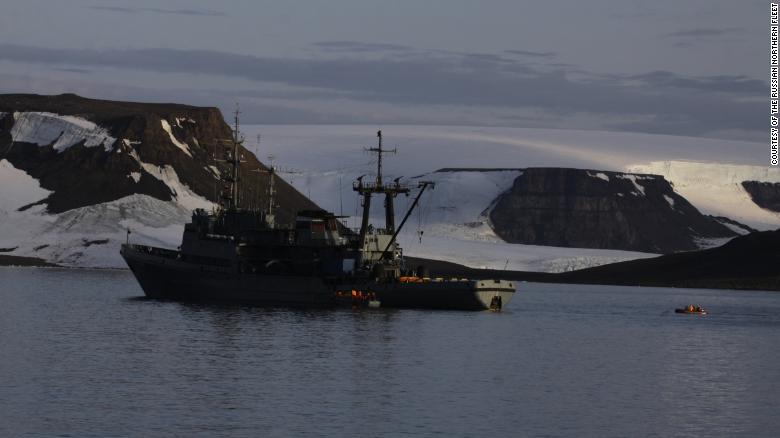
The landing craft had been dispatched from the Russian rescue tug 'Altai', which is on the Northern Fleet's mission in the Arctic Ocean.

London & Moscow (CNN)walrus attacked and sunk a Russian Navy landing boat in the Arctic Ocean last week, with no one hurt in the incident.

According to the Russian Ministry of Defense, the female animal was protecting its calves when it targeted the craft carrying researchers to the shore of Cape Geller in the Arctic.
Those on board were members of a joint expedition by the Northern Fleet — Russia’s naval fleet in the Arctic — and the Russian Geographical Society (RGO).
The ministry said: “Serious troubles were avoided thanks to the clear and well-coordinated actions of the Northern Fleet servicemen, who were able to take the boat away from the animals without harming them.”
The RGO explained in a statement that the boat had “sunk” but confirmed that everyone had reached shore safely.
The organization added: “Recently, we wrote about the risks that accompany expedition members. Wild animals, storms, low temperatures.
“The incident is another confirmation that no one is expecting humans in the Arctic.”
The joint mission is working around the Franz Josef Land archipelago to investigate the flora and fauna of the region, as well as making glaciological observations.
It is also mapping historical expeditions such as those of Austro-Hungarian military officer Julius von Payer in 1874, and American explorer Walter Wellman in 1898.

Trump mocks teen climate activist

U.N. GENERAL ASSEMBLY

Updated 

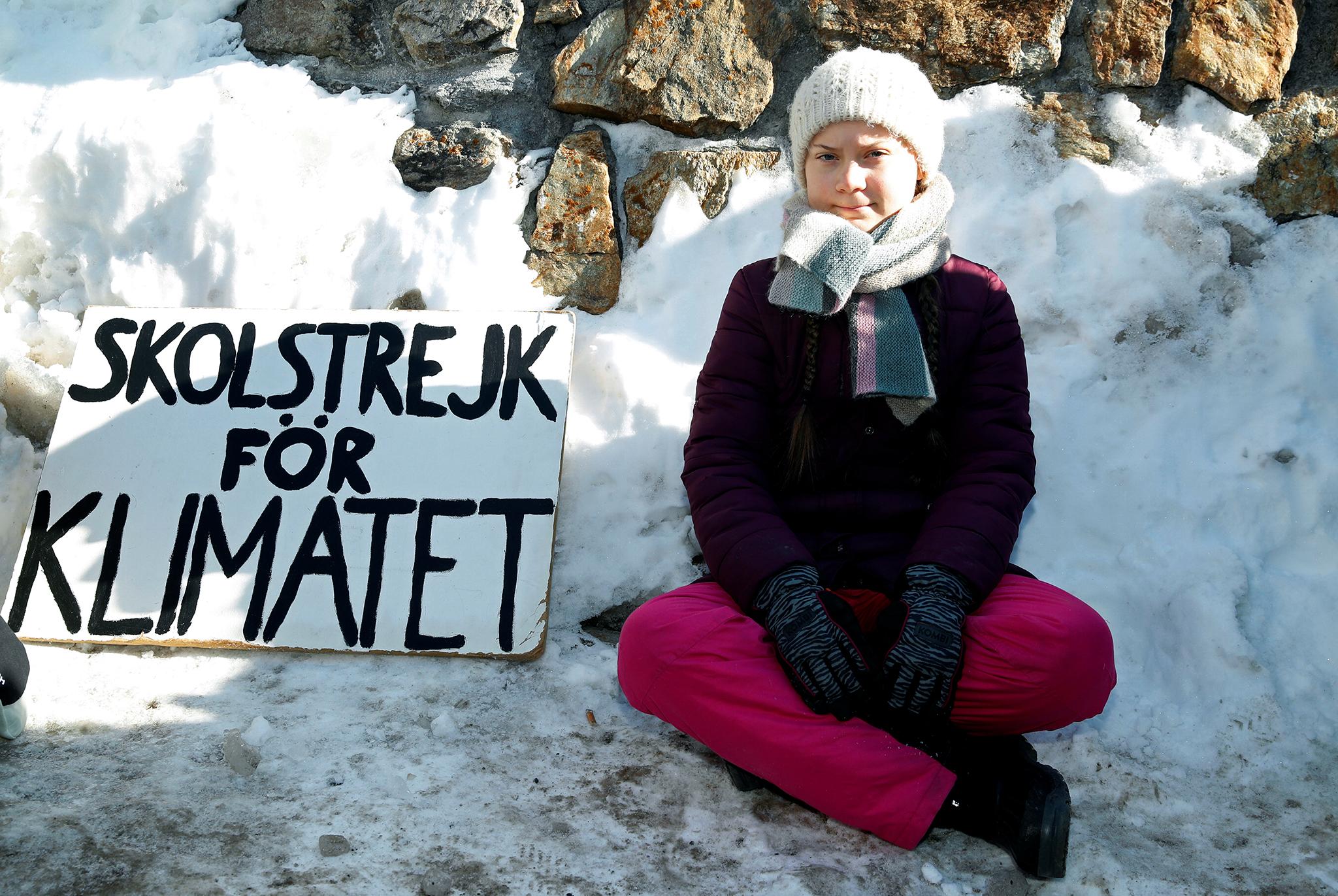
President Donald Trump mocked 16-year-old climate activist Greta Thunberg on Twitter late Monday.

Posting a fatalistic statement the Swedish teen had made earlier Monday at the United Nations’ special meeting on climate change, Trump tweeted: “She seems like a very happy young girl looking forward to a bright and wonderful future. So nice to see!“

Trump briefly attended the Climate Action Summit in New York but left after 14 minutes. The president has consistently expressed skepticism about the notion of man-made climate change, and his administration has declined to make the issue any sort of priority.

Thunberg acknowledged Trump’s tweet on Tuesday, changing her Twitter biography to read, “A very happy young girl looking forward to a bright and wonderful future.”

Thunberg has developed an international following for her persistent efforts to get the international community to combat climate change, particularly winning support among young people. Trump’s tweet contained one of her quotes from her U.N. remarks Monday: ”People are suffering, people are dying, entire ecosystems are collapsing. We are in the beginning of a mass extinction and all you can talk about is money and fairytales of eternal economic growth.”

Thunberg did not mention Trump or any other leaders by name in her remarks, but she did scold the world’s leaders.

“You are failing us,” she said to the assembled leaders. “But the young people are starting to understand your betrayal. The eyes of all future generations are upon you. And if you choose to fail us, I say: We will never forgive you.“


Last Wednesday, Thunberg addressed a congressional committee in Washington. “I want you to listen to the scientists,” she said. “And I want you to unite behind the science. And then I want you to take real action.”

Trump was not alone Monday in mocking Thunberg. On Fox News, Michael Knowles referred to Thunberg as “a mentally ill Swedish child who is being exploited by her parents and by the international left,” then doubled down and called her “mentally ill” a second time. The network subsequently apologized for his remarks.

Abbey Marshall contributed to this report.

Wildlife Management: When Forest Wails and Mourns

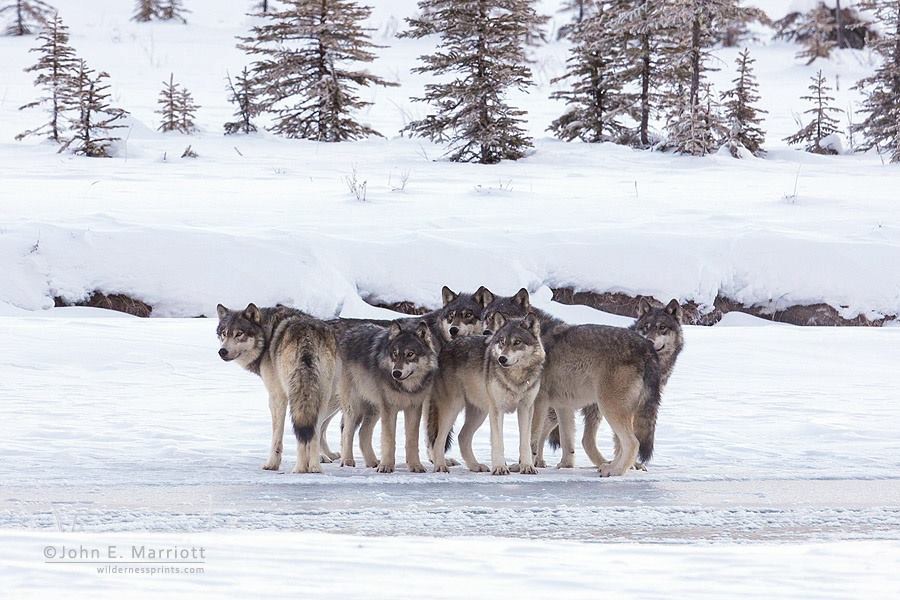
Photo credit: John E. Marriott

“Just as ships’ bottoms pick up layers of barnacles over time, so, through their lives, human societies and individuals become encrusted with layers of cultural and ideological sediment. … The cemented coating clings as though chemically bonded to me and screams bloody bloody murder at my slightest advance…”~John Livingston

Awar on wildlife in British Columbia never ends; cruelty goes on, unabated. We cannot unshackle ourselves from the self-centered belief system — the thickened layer of barnacles — that destines us to view nature as a resource subordinate to our needs. When, in 1981, John Livingston wrote “Fallacy of Wildlife Conservation”, he cautioned against the fallacy of turning the Earth’s fabric into a “natural resource”. It was echoed by Neil Evernden who recognized that, once deemed a resource, nature inevitably becomes a casualty of reckless exploitation. And this is what has happened. Under the guise of fostering “conservation”, we have concocted a management approach that gives us a license to discard a delicate assembly of life as if it were a lump of coal.

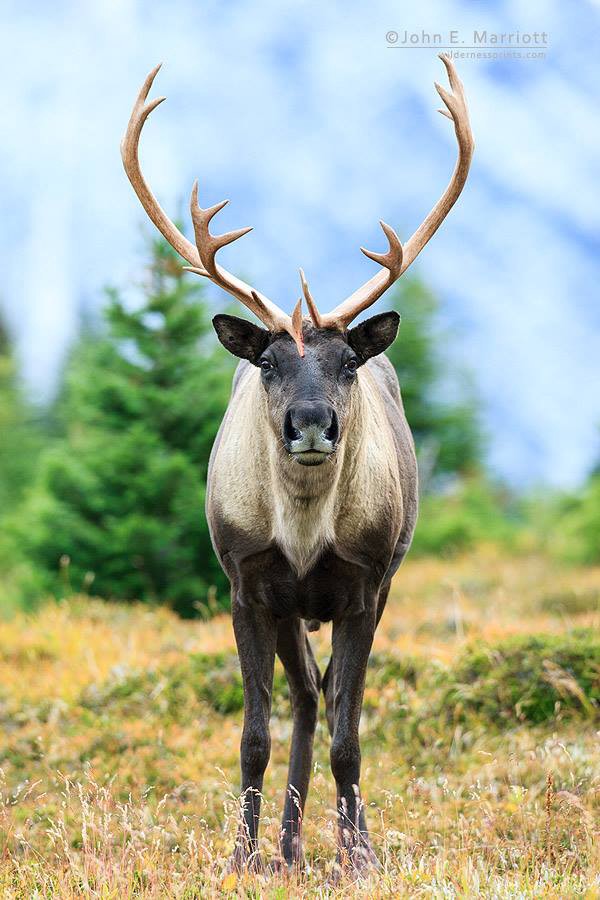
The decades-long tragedy of the caribou habitat is a proof, as good any, of cruelty and travesty inherent to current wildlife management strategies. What strikes the most is how long it has lasted. In the 1970s, a biologist, Michael Bloomfield, showed that the widespread destruction of the habitat by logging and other resource development activities threatened caribou survival. These warnings were never listened to. The B.C. government has allowed for the destruction of the habitat to continue, and the caribou population dwindled from 40,000 in the early 1900s to approximately 15,000 today, all scattered among 54 herds. Thirty of those herds are at risk of extinction and 14 have fewer than 25 individuals.

Photo credit: John E. Marriott

This is the current reality. With impunity grounded in political support — regardless of a party in power — the industrial encroachment fragments the caribou habitat and decimates their food source. Consequently, chances for the survival of the caribou diminish as their habitat shrinks in size. The resilience of nature is no match for greed and political expediency. A cycle of life gets broken. What is worse, the officially sanctioned ecological devastation not only ensures the eventual disappearance of the caribou but sentences to death wolves, cougars, and many other species that depend on the same habitat.

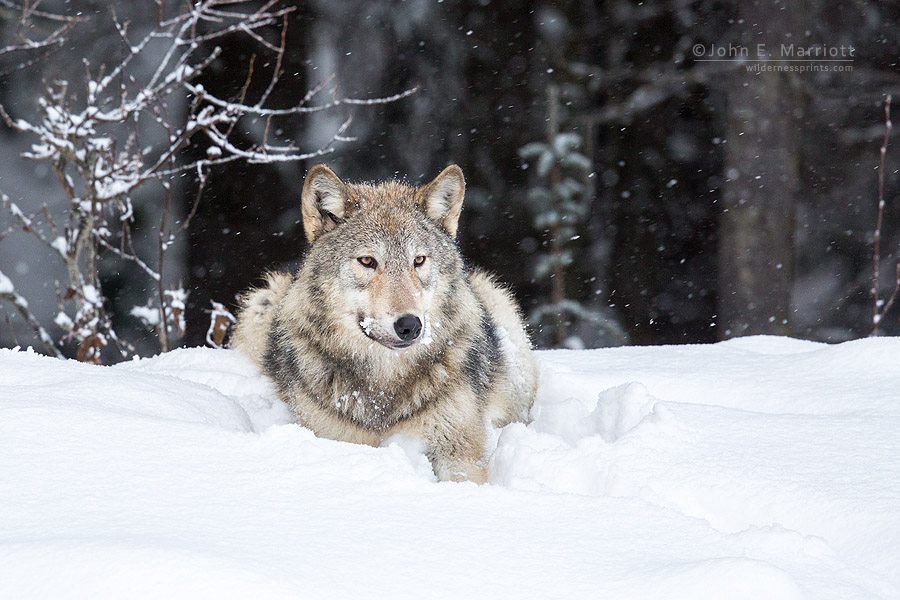
Death comes in many forms, and, for some animals, anguish and agony mark the path. The fate that wolves suffer shows most glaringly the tragedy that befalls nature when the government gives in to demands of the resource-extraction industry. In 2014, the B.C. government, with its Management Plan for the Grey Wolf, authorized the war on wolves. Since 2015, under the guise of caribou conservation, over 700 wolves have been killed. They were trapped, hunted, poisoned to death, gunned down from helicopters. Even more abhorrently, extermination tactics have used “Judas wolves” to find their packs and wipe out all of their members. But this not where the war against the wolf ends. The stated number does not include “wolf whacking” contests that take place in the interior of B.C. — an officially sanctioned bestiality that not only dooms wild animals but debases us, as human beings.

Photo credit: John E. Marriott

And, yet, even this is not enough. Now, the NDP government argues that “landscape scale habitat management is needed to support self-sustaining caribou populations”. It thus proposes a predator hunt legislation that would — in the name of reversing caribou population declines — erase more than 80 percent of the wolf population in parts of the central B.C. In other words, it would get rid of the “surplus” of wolves. To call this wildlife management approach fallacious and unethical is to be greatly euphemistic. The innocuously sounding phrase — “landscape scale habitat management” — camouflages an outright slaughter.

And it is the slaughter compounded by ecological ignorance. Any discussion about maintaining stable wolf populations — an underlying premise behind the predator hunt legislation — defeats its purpose if the exact number of wolves in a habitat remains unknown. As so is the case here. The Management Plan for the Grey Wolf states that the wolf population might be approximately 8,500. In reality, this number can be anywhere between 5,300 and 11,600, since, as the plan admits, estimating the population size is challenging due to the secretive nature of wolves, their extensive range, and the density of forested habitats they inhabit. Moreover, hunting data in B.C. lack reliability. The plan states that there is “considerable uncertainty in the current take of wolves by resident hunters and trappers as B.C. does not have a mandatory reporting system…[and] without more reliable estimates of the harvest, it is difficult to assess the sustainability of BC’s wolf harvest.” This ignorance does not, however, prevent the government, Max Foran states, from accepting “generous hunting quotas, no limit on killing females or pups, no bag-limit zones, long and sometimes open year-round hunting seasons, no license requirement for residents.” This is not management but a “wolf killing plan”, he writes.

Killing that will never stop. The ministry’s scientists claim that “a very extensive effort will be required every year to continue to keep the wolf population low” because of the wolf’s natural resilience and quick recovery. Like stubborn weeds, wolves must be eradicated repeatedly. This malignancy cannot be allowed to grow.

Unfortunately, the cruelty and the bureaucratic cold-heartedness underpinning this statement account for merely a part of its tragic perversity. However inhumane, the perpetual killing of wolves is based on the premise that, following a bout of slaughter, the species is able to recover. Only an unfounded human hubris would allow for such a premise to sustain itself. The so-called “surplus” of wolves is very fragile in the face of climate change, and wolves are vulnerable to the unpredictable ecosystem dynamics. Precariousness and unpredictability are the words that define a broad range of interdependences in the critical caribou habitat. The social-ecological system operates on various scales– some of them observable and some not — and there are tipping points, the crossing of which takes us into a place of no return. After all, we live in the times of a rapid environmental change where the only certain expectation is uncertainty. That is why the “managed” killing of predators is a callous misnomer that is bound to unleash not only savagery but also unknown ecological ramifications.

Photo credit: John E. Marriott

Still, numerical variations in the wolf population, as well as both known and unknown ecological consequences of their repeated slaughter, do not tell the whole story. What remains hidden from all of us, living far away from the land of the wolf, is individual suffering to which, through our political indifference, we implicitly consent. What we do not see is paralyzing anguish, pain, and psychological trauma that comes in the aftermath of the shattered family structure. Death destroys even those who survive. After a killing spree is temporarily over, surviving wolves return to mourn a loss. They also face a world unknown to them. As Marc Bekoff and Sadie Parr write, “those individuals that survive to make new wolf families must do so without access to the knowledge and culture held by their slain family members, something that takes generations to build. They become refugees on their own land.”

Finally, this is not only about the caribou or the wolf, but also about us, humans. Perceiving nature through the prism of its cruel and ignorant management comes at a price that we will have to pay. Destroying wolves destroys us as a society. It diminishes us. Our appreciation of and compassion for the natural world have evolved throughout centuries and molded into moral and ethical principles. We break these principles at our peril.

It is time to start peeling layers of “cultural and ideological” sediment we wrapped ourselves in. The cemented coating that clings to us offers the comfort of familiarity, but it is a false comfort that chips away at our humanity. The main argument for killing wolves in the caribou habitat is ensuring that the caribou will still be there, in the future. So our children and their children can watch them roam the forest. Given the ongoing destruction of the habitat, it will not happen no matter how many wolves we decide to shoot. But even if the demise of the caribou were to be somehow temporarily postponed by the merciless “recovery” plan, what then? Should we tell our children how many generations of wolves we have killed to accomplish this? Should we tell them that they what they see is the legacy of killing fields?

PLEASE TAKE ACTION:

In British Columbia:

  1. Support Pacific Wild campaign “Save BC Wolves” at https://pacificwild.org/campaign/save-bc-wolves/
  2. Support Wolf Awareness campaign at https://www.wolfawareness.org
  3. Support Wildlife Defence League campaign at https://www.wildlifedefenceleague.org/mountain-caribou
  4. Write and Send letters to:

Premier John Horgan — Premier@gov.bc.ca
Minister Doug Donaldson — FLNR.Minister@gov.bc.ca
Darcy Peel — Director, BC Caribou Recovery Program caribou.recovery@gov.bc.ca

Please also help wolves In Ontario:

“The Ford government wants wolves and coyotes to pay the price for declining moose populations in Ontario. By re-opening a proposal abandoned by the previous government after it was outed as being unscientific and unethical, the PCs are trying to liberalize the hunting of both wolves and coyotes across northern Ontario.”

Comment by September 26th at http://earthroots.good.do/wolf/huntingcomment/?fbclid=IwAR08lwxns1Z0hw5tnc_uBZ5M9y6syqKQwWy5u48mkT0S2A1mOBZ6Zz2Pn_0

Should Point Reyes’ elk be shot so dairy cattle can graze?

Exposing the Big Game's avatarCommittee to Abolish Sport Hunting Blog

POINT REYES NATIONAL SEASHORE — Twice each day, 80-year-old Betty Nunes ventures into the wet winds and murky fog that regularly blow across her coastal Marin ranch to feed her calves and check the land her family has worked for generations.

Usually, her 230 dairy cows aren’t the only creatures she finds eating the grass in her farm’s meadows.

The last several years, about 20 tule elk have taken up residence on Nunes’ historic A Ranch, one of a handful of private dairy farms and cattle ranches that sit inside the federally owned Point Reyes National Seashore.

The elk have become as popular with tourists as the aquatic mammals, but they are a drain on Nunes’ bottom line because there isn’t enough grass for both elk and cows to thrive, she said.

Nunes and her fellow Point Reyes farmers would like the National Park Service to…

View original post 1,555 more words

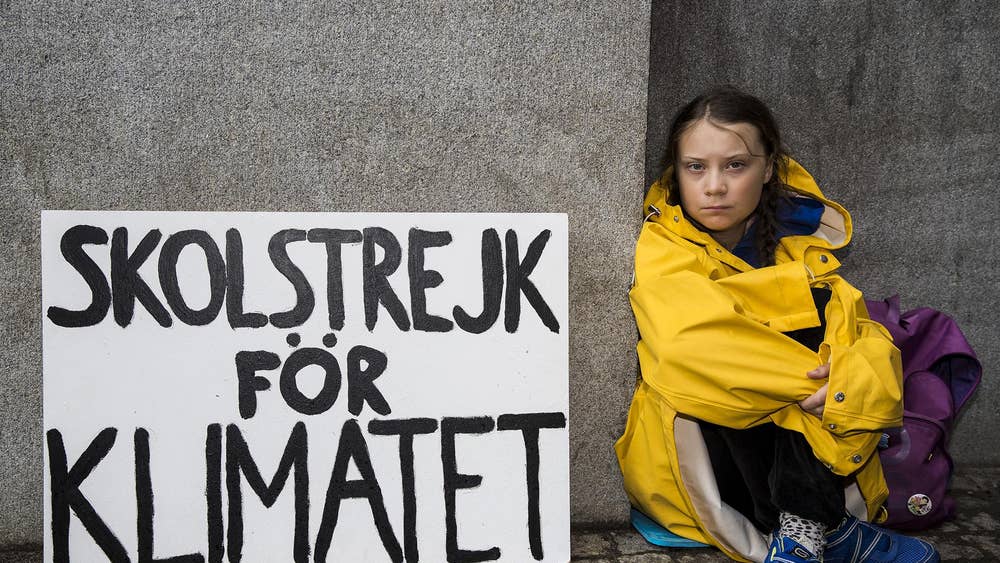
Greta Thunberg glares at Donald Trump arriving at United Nations after scolding international politicians over climate change

https://www.independent.co.uk/environment/climate-change/greta-thunberg-trump-glare-united-nations-climate-change-a9117476.html?utm_medium=Social&utm_source=Facebook&fbclid=IwAR3YLMOxMzn29Z1K4IuEEHMr3PAqwTrRTZRkTrzKvabQSYfgf1htRpecpcI#Echobox=1569267470

The 16-year-old activist’s reaction to the world’s most powerful climate change denier seems to speak volumes

A clip showing climate activist Greta Thunberg giving Donald Trump an ice-cold glare has gone viral, just after the Swedish 16-year-old told the United Nations that the leaders of the generations before hers had stolen her childhood and her dreams.

The video of Ms Thunberg shows her standing in the United Nations lobby in New York, just as Mr Trump arrived.

Cameras captured the moment in which the 16-year-old’s expression changes from a slight curiosity to what looks like steely anger as the American president walked by.

Ms Thunberg had just delivered a speech to the United Nations in which she called for urgent action on climate change.

“How dare you continue to look away, and come here saying that you are doing enough, when the politics and solutions needed are still nowhere in sight,” she told the United Nations.

She continued: “You say you ‘hear’ us and that you understand the urgency. But no matter how sad and angry I am, I don’t want to believe that. Because if you fully understood the situation and still kept on failing to act, then you would be evil. And I refuse to believe that.”

Mr Trump, for his part, has challenged the idea that climate change — which is supported by the vast majority in the scientific community, of which the American is not a member  — exists, and has openly mocked the idea, on one occasion suggesting it was a Chinese hoax.

Since taking office, Mr Trump has overseen an expansive effort to destroy his predecessor’s policies aimed at slowing the rate of climate change, including by easing up on restrictions for greenhouse gas emissions and bringing up new oil and gas leases.

Worldwide agreement to curtail export of wild elephants from Africa.

Exposing the Big Game's avatarCommittee to Abolish Sport Hunting Blog

Animals Today September 14, 2019.  The cruelty of holding elephants and other animals in captivity. How to help elephants in the wild.

This show features elephant expert Will Anderson, with In Defense of Animals, who provides the background and events leading up to an important new international agreement to limit the exportation of wild elephants from Africa to the US, China and other countries.

Lori begins covering a few key events related to elephants in captivity, including the decline of Ringling Bros and Barnum and Bailey Circus, which, after substantial public pressure, retired all its elephants in 2016 and then shut its doors in 2018. She then goes on to tell the 2016 episode in…

View original post 217 more words

Final Plan for Arctic Refuge Drilling Could Cause Extinctions, Admits Government

The decision to open the refuge’s entire coastal plain to development, combined with climate change, ‘may result in extinction’ for some birds.


By Andy McGlashenAssociate Editor, Audubon Magazine

September 17, 2019

Birds in This Story


Gyrfalcon

Falco rusticolus


Whimbrel

Numenius phaeopus


Spectacled Eider

Somateria fischeri

Permanently Protect the Arctic Refuge

A new bill in Congress would permanently protect the Refuge from drilling.

Take Action

The U.S. Department of the Interior last week took a major step toward the first-ever oil drilling in the Arctic National Wildlife Refuge. In a decision that outraged but did not surprise environmentalists, the agency announced its final plan to develop one of the world’s last great wildernesses, acknowledging that its chosen course might wipe out some bird species and harm other animals that make their home on the pristine reserve.

The Trump administration had multiple options when planning to open the 19.3 million-acre sanctuary to drillers. After Republicans in Congress and President Trump directed Interior in 2017 to create a leasing plan for the refuge’s 1.5 million-acre coastal plain, the department laid out three possible scenarios for energy development there. But on Thursday, Interior Secretary David Bernhardt announced that the department’s Bureau of Land Management (BLM) had chosen the most extreme plan, one that makes the entire coastal plain eligible for leasing and comes with the fewest restrictions on industry’s footprint.

Such an aggressive approach, the BLM acknowledged in its final environmental impact statement, combined with the effects of climate change, could drive birds to extinction, as E&E News first reported. Species that nest in the refuge “already are experiencing decreasing populations, and many could suffer catastrophic consequences from the effects of global climate change in one or more of their seasonal continental or even global habitats,” the document says. “These effects combined with development-related impacts across the ranges of many bird species may result in extinction during the 85-year scope of this analysis.”

Some 200 bird species rely on the refuge, including hardy year-round residents like American Dipper, Gyrfalcon, and Rock and Willow Ptarmigan. The area fills with birdlife each summer, including migrants from every U.S. state and six continents, such as Red-throated Loon, Buff-breasted Sandpiper, and Whimbrel.

According to the BLM report, development could require energy companies to pump out large volumes from the coastal plain’s limited water bodies, resulting in food and habitat loss for loons and other waterbirds. Additional species could lose nesting habitat to roads and other infrastructure, and a variety of birds will likely be injured or killed in collisions with drilling rigs, communications towers, and vehicles.

Birds are far from the only wildlife with habitat at stake on the coastal plain, a strip of tundra, rivers, and wetlands wedged between the Brooks Range foothills and the Beaufort Sea. Federally threatened polar bears, which nurture their cubs in dens along its rivers and shoreline, will likely be killed as interactions with humans become more common, the impact statement says. Caribou migrate roughly 1,500 miles each spring to give birth on the plain, where there’s plenty to eat, sea winds to keep mosquitoes at bay, and few predators to threaten their calves. With new development, the biggest threat to caribou is displacement through oil and gas activities.

While the impact statement mentions some potential threats to wildlife, many experts believe it is not explicit enough when addressing the potential risks and even likelihood of extinction for a variety of species. “Oil and gas infrastructure in the Arctic Refuge, when considered in conjunction with climate change, poses an existential risk to several Arctic bird species,” said Audubon Alaska in a press release. Moreover, choosing such an aggressive development plan despite the toll it will take on wildlife “just goes to show how far this administration is willing to go to extract oil and gas, even in what should be a protected area,” says Susan Culliney, the group’s policy director.

The Arctic Refuge provides potential breeding habitat for Spectacled Eiders and hundreds of other species of birds. Photo: Danita Delimont/Alamy

In several high-stakes fights over the past 50 years, advocates for preserving this rare expanse of untouched wild have prevailed over the oil companies, Alaskan politicians, and native corporations that have pursued drilling. Political headwinds—produced in part by the public outrage after the 1989 Exxon Valdez oil spill in Alaska—have blocked past attempts to open the refuge. A bill to do so made it through Congress in 1995, but President Bill Clinton vetoed it. Democrats and some Republicans have voted to stop other such efforts. A 2017 Yale University poll found that 70 percent of Americans oppose drilling in the refuge.

But that dynamic shifted in December of 2017, when Republicans in Congress, backed by the administration’s call for “energy dominance,” tucked into a tax bill a provision to establish a fossil-fuel leasing program on the refuge’s coastal plain. Sometimes referred to as the 1002 Area, the coastal plain is considered the ecological heart of the refuge, but federal scientists estimate that it also sits atop 7.7 billion barrels of recoverable oil. The bill gave Interior until 2021 to conduct the first of at least two lease sales, each offering 400,000 or more acres. Department officials have pledged to hold that initial sale this year.

One reason for the aggressive timeline is to give industry a foot in the refuge’s door during President Trump’s first term, since having leases in place would complicate a future administration’s efforts to block drilling there, U.S. Sen. Lisa Murkowski (R-AK) said last year.

As a result, the regulatory process—typically measured and deliberate—has been rushed, confusing, and even misleading, according to reports from federal agency employees. A comprehensive review for any leasing program over such a large area would typically take two or three years. But the administration compressed that timeline: The draft environmental impact statement was published last December, only eight months after the review began. Investigations have found that, in its hurry, Interior omitted relevant information, and even altered reports from career scientists to downplay potential environmental impacts. And the rush for leasing this year didn’t leave time for seismic testing to give energy companies an idea of where oil deposits most likely exist, which can only happen when the tundra is frozen.

On Thursday, Interior Secretary David Bernhardt called the final environmental impact statement “a big step to carry out the clear mandate we received from Congress to develop and implement a leasing program for the Coastal Plain, a program the people of Alaska have been seeking for over 40 years.”

Energy development in the Arctic Refuge will likely harm polar bears and other wildlife. Photo: Steven J. Kazlowski/Alamy

Many Alaskans support drilling in the refuge—perhaps not surprising in a place where, over the past four decades, oil revenue has averaged about 85 percent of the state budget—but questions linger around the purported economic benefits of doing so. The Congressional Budget Office estimates that lease sales would generate only half of the $1.8 trillion in revenues claimed by the Trump administration. More recently, a New York Times analysis found that sales may generate just $45 million across the entire coastal plain.

Although some Alaska Natives advocate tapping into the oil reserves, the Gwich’in people have been outspoken opponents. They live outside the refuge but hold sacred the Porcupine caribou herd that migrates there each spring, and subsist by hunting the animals. The plan announced last week “demonstrates that this administration and the Alaska delegation will disregard our way of life, our food, and our relationship with the land, the caribou, and future generations to pander to industry greed,” said Bernadette Demientieff, executive director of the Gwich’in Steering Committee, in a statement.

Even before the administration’s plan was announced, there was pushback on Capitol Hill. Hours earlier, the House of Representatives passed a bill to prohibit energy development in the refuge. A companion bill was introduced in the Senate on Wednesday, but it stands little chance of passing the Republican-majority chamber where pro-drilling Alaska Sen. Lisa Murkowski holds the powerful chairmanship of the Energy and Natural Resources Committee. “I’m hopeful we can now move to a lease sale in the very near future, just as Congress intended,” Murkowski said in a statement, “so that we can continue to strengthen our economy, our energy security, and our long-term prosperity.”

Environmental groups, meanwhile, are gearing up to fight the plan in the courts. While the plan is final, Interior still needs to issue a formal record of decision, expected in about a month. Once it does so, lawsuits will certainly follow, as they did when the Trump administration lifted protections from national monuments and gutted the Migratory Bird Treaty Act, the Endangered Species Act, and other environmental laws and regulations.

The plan is “categorically illegal,” said Jamie Rappaport Clark, president and CEO of Defenders of Wildlife, in a press release. “We will not tolerate the administration’s brazen attempt to paper over the impacts of this disastrous proposal, and we will see them in court for this reckless effort to turn this iconic American landscape into an industrial oilfield.”

***

Audubon magazine is a nonprofit that depends on the generosity of our readers. You can support stories like this by making a donation today.