
A short glossary of the changes we’ve made to the Guardian’s style guide, for use by our journalists and editors when writing about the environment
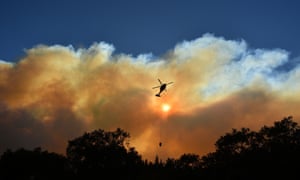
In addition to providing updated guidelines on which images our editors should use to illustrate the climate emergency, we have updated our style guide to introduce terms that more accurately describe the environmental crises facing the world. Our editor-in-chief, Katharine Viner, said: “We want to ensure that we are being scientifically precise, while also communicating clearly with readers on this very important issue”. These are the guidelines provided to our journalists and editors to be used in the production of all environment coverage across the Guardian’s website and paper:
1.) “climate emergency” or “climate crisis” to be used instead of “climate change”
Climate change is no longer considered to accurately reflect the seriousness of the overall situation; use climate emergency or climate crisis instead to describe the broader impact of climate change. However, use climate breakdown or climate change or global heating when describing it specifically in a scientific or geophysical sense eg “Scientists say climate breakdown has led to an increase in the intensity of hurricanes”.
2.) “climate science denier” or “climate denier” to be used instead of “climate sceptic”
The OED defines a sceptic as “a seeker of the truth; an inquirer who has not yet arrived at definite conclusions”. Most “climate sceptics”, in the face of overwhelming scientific evidence, deny climate change is happening, or is caused by human activity, so ‘denier’ is more accurate.ot “global warming”
‘Global heating’ is more scientifically accurate. Greenhouse gases form an atmospheric blanket that stops the sun’s heat escaping back to space.
4.) “greenhouse gas emissions” is preferred to “carbon emissions” or “carbon dioxide emissions”. Although carbon emissions is not inaccurate, if we’re talking about all gases that warm the atmosphere, this term recognises all of the climate-damaging gases, including methane, nitrogen oxides, CFCs etc.
5.) Use “wildlife”, not “biodiversity”
We felt that ‘wildlife’ is a much more accessible word and is fair to use in many stories, and is a bit less clinical when talking about all the creatures with whom we share the planet.
6.) Use “fish populations” instead of “fish stocks”
This change emphasises that fish do not exist solely to be harvested by humans – they play a vital role in the natural health of the oceans.
Since we announced these changes, they have been reported widely, shared across social media channels, and even prompted some other media outlets to reconsider the terms they use in their own coverage.
The update to the Guardian’s style guide, originally announced earlier this year, followed the addition of the global carbon dioxide level to the Guardian’s daily weather pages – the simplest measure of how the mass burning of fossil fuels is disrupting the stable climate. To put it simply, while weather changes daily, climate changes over years and decades. So alongside the daily carbon count, we publish the level in previous years for comparison, as well as the pre-industrial-era baseline of 280ppm, and the level seen as manageable in the long term of 350ppm.
In order to keep below 1.5C of warming, the aspiration of the world’s nations, we need to halve emissions by 2030 and reach zero by mid century. It is also likely we will need to remove CO2 from the atmosphere, perhaps by the large-scale restoration of nature. It is a huge task, but we hope that tracking the daily rise of CO2 will help to maintain focus on it.
Viner said: “People need reminding that the climate crisis is no longer a future problem – we need to tackle it now, and every day matters.”
 Exposing the Big Game
Indeed, words have meaning, and they have impact. Using words that give deference to those who lack the ability to analyze the issues and those who profit from claiming a given problem does not exist get a free-pass when we use words like ‘skeptic’, or statements like “it’s not settled science,” or “controversy exists among scientists” when the score is 90-10 in support, and the 10 consists of scientists outside the field, and scientists that retired a decade or two prior and want to step into the spotlight by being contrary. Compare “retired climatologist agrees with everyone else,” to “former professor of climatology says his former students are full of crap regarding warming.”
Since this is a wildlife blog, an example of the latter regarding trophic cascades and the impact of wolves as a keystone species is David Mech, the new darling of wolf-haters partly through his 2012 article “Is Science in Danger of Sanctifying the Wolf?” Mech states “However, later research challenges several earlier studies’ findings such that earlier conclusions are now controversial, especially those related to causes of browse regrowth. In any case, any such cascading effects of wolves found in National Parks would have little relevance to most of the wolf range because of overriding anthropogenic influences there on wolves, prey, vegetation, and other parts of the food web. The wolf is neither a saint nor a sinner except to those who want to make it so.” First off science is a method to search for facts and truth, so science is not trying to sanctify the wolf, but discover truths about the wolf and its impact on natural areas. I am unaware of any wolf advocates or scientists that believe wolves rebuilt beaver dams in Yellowstone NP. But Mech appears to have revitalized interest in Mech by creating a controversy for wolf-haters to cling to.
The Guardian is right to use language that more accurately reflects consensus science than to allow the perception of scientific deniability to those whose interest are not in determining truth.
Excellent comment, and article. 🙂