Exposing the Big Game

Forget Hunters' Feeble Rationalizations and Trust Your Gut Feelings: Making Sport of Killing Is Not Healthy Human Behavior

Exposing the Big Game

The Next Yellowstone: A Hunter’s Paradise

  OCT 23, 2019

In northeastern Montana, a controversial group of millionaires and billionaires is trying to build a privately-funded national park. The group is purchasing ranches, phasing out the cattle, and opening the land up to genetically pure bison and other wildlife.

It’s called American Prairie Reserve. But as we’ve heard in our series, “The Next Yellowstone,” most long-time locals are bitterly opposed to the idea. Still, there are some supporters.

This story was supported by the Pulitzer Center on Crisis Reporting. Listen to the full documentary here.

PARTS: How Big Money Is Building A New Kind Of National Park | A Privately-Funded Park For The People | Save The Cowboy, Stop The American Prairie Reserve |  A Hunter’s Paradise | The Bison Is A Symbol Of God

I find myself in Justin Schaaf’s black Toyota Tundra heading down a two-track dirt road. Schaaf, 27, looks like a high school linebacker. His head is shaved and he’s wearing cargo pants. He’s taking me to one of his favorite hunting spots. While he works as a train conductor for the local railroad, his passion is hunting.

“If I’m not hunting I’m thinking about hunting and planning hunts, and when I’m sitting in the motel for work or when I’m sitting at home in the recliner I’m looking at maps, looking at Google Earth,” he says.

He’s always trying to find the perfect place to hunt.

As the road peters out, Schaaf pulls over. We grab some water and begin hiking in. It’s not big game hunting season yet, so we’re just scouting.

“We’re hoping to see some elk. Definitely some bighorn sheep. I have seen some pretty good mule deer in here,” he says.

We climb over sweet clover and sagebrush. This seems like an easy place to get lost but I’m not worried because Schaaf has lived in eastern Montana all his life. His great-great grandparents homesteaded just a few miles south of here near the Musselshell River. They lasted about 40 years before quitting and heading into town.

“They didn’t have enough land to support the ranching that you need and I don’t think the farming was cutting it at all,” he says.

It was a fate suffered by a lot of homesteaders out here. They couldn’t produce enough food or money to survive. As eastern Montana’s population continues to decline, Schaaf thinks it’s time to try something different.

“Is a little shot of tourism, capitalizing on hunter dollars, bringing more hunters into this area, will that make the difference?” he asks.

He thinks it might. After all, Schaaf is a young guy who stayed in eastern Montana precisely because of this wild country in his backyard.

“I can make more money in other places but it’s the outdoors, being able to pull my pickup up here and not talk to anyone and go for a hike all day long, that keeps me here,” he says. “Opportunity to just roam, I think, is enticing to young people.”

So-called rural recreation counties are growing faster than counties that don’t have a lot of hiking, hunting and fishing opportunities, according to the non-profit Headwaters Economics.

And here’s an important point: unlike a traditional national park, American Prairie Reserve allows hunting.

We don’t spot any wild bison. They’re mostly confined to privately-owned reserve lands north of us. But we do see a big herd of elk, about 45 cows and calves.

“That’s a crapload of elk,” Schaaf says.

It’s getting hot and the hike is grueling. We stumble up steep ravines and past stands of ponderosa pine. Schaaf says he understands that American Prairie Reserve is funded by rich people, some who made millions helping finance industries that degrade the environment.

“I do worry where that money comes from,” he says. But dirty money doesn’t just come from the private sector. He points to the Land and Water Conservation Fund, a federal program that takes royalties from offshore oil and gas drilling and pumps it back into parks and public lands.

“It’s helped my kid’s playground and it’s provided hunting opportunities for me,” Schaaf says.

More: https://www.kunc.org/post/next-yellowstone-hunters-paradise#stream/0

OR: HUNTER CHARGED FOR SHOOTING DEER IN ASHLAND NEIGHBORHOOD

Exposing the Big Game's avatarCommittee to Abolish Sport Hunting Blog

https://www.kdrv.com/content/news/Police-Hunter-charged-for-shooting-deer-in-Ashland-neighborhood-563733081.html

OSP said that the man shot the deer while it was lying next to a house in a residential area of Ashland.

Posted: Oct 23, 2019 3:17 PM
Posted By: Jamie Parfitt
ASHLAND, Ore. — A Riddle man faces poaching charges after he allegedly shot and killed a buck in an Ashland neighborhood earlier this month, according to Oregon State Police (OSP).

On October 16, an Ashland resident called OSP to report “suspicious hunter activity” within the Ashland city limits, in the 600-block of Thornton Way. The caller reported seeing a man load a deer into a pickup while parked along the street.

“The reporting party approached the male to inquire about the deer but the male then drove off,” OSP said. The caller managed to get the license plate number and make of the truck.

When a trooper arrived at the scene, he talked to several neighbors —…

View original post 344 more words

Animal Agriculture is the Leading Cause of Climate Change – A White Paper

Exposing the Big Game's avatarThe Extinction Chronicles

https://www.climatehealers.org/animal-agriculture-white-paper

To download a PDF version of this white paper, please right click here.

Abstract

In this paper, we present the results of a Global Sensitivity Analysis (GSA) proving that Animal Agriculture is the leading cause of climate change, responsible for 87% of human-made greenhouse gas emissions. The burning of fossil fuels is currently the leading source of human-made Carbon diOxide (CO2) emissions. However, climate change is caused by cumulative human-made greenhouse gas and aerosol emissions and not just current CO2 emissions alone. While humans have been burning fossil fuels for a little over 200 years, we have been burning down forests for Animal Agriculture for well over 8,000 years! For the GSA analysis, we use factual data from the Fifth Assessment Report (AR5) of the Intergovernmental Panel on Climate Change (IPCC) and other peer-reviewed scientific sources. We show that we need to transition to a global plant-based economy…

View original post 6,305 more words

Deer hunting changes coming to Minnesota

Exposing the Big Game's avatarCommittee to Abolish Sport Hunting Blog

SP Outdoors.JPG

The Minnesota DNR is implementing some significant rule changes for deer hunters during the 2019 deer hunting season in an effort to minimize chronic wasting disease. Most of the rules are new to Minnesota and represent a shift in how deer are going to be managed in some areas of the state.

Dogs may be used to retrieve a wounded deer or bear, provided the dog is on a leash no longer than 30-feet and has the owner’s name and telephone number on its tag. Hunters are able to harvest an unlimited number of antlerless deer in areas of southeast Minnesota and north-central Minnesota with CWD. Hunters are also able to bag up to three bucks in the CWD-affected zones in southeast Minnesota, while antler tagging points are canceled in those zones. Deer must be presented at a CWD sampling station on the…

View original post 317 more words

The real reason some scientists downplay the risks of climate change

Exposing the Big Game's avatarThe Extinction Chronicles

Climate deniers often accuse scientists of exaggerating the threats associated with the climate crisis, but if anything they’re often too conservative

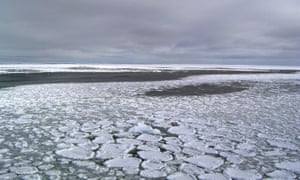
Sea ice on the ocean surrounding Antarctica.
 Sea ice on the ocean surrounding Antarctica. Photograph: Ted Scambos/AP

Although the results of climate research have been consistent for decades, climate scientists have struggled to convey the gravity of the situation to laypeople outside their field. If anything, the wider public only recently seems to have awakened to the threat of the climate crisis. Why?

In our new book, Discerning Experts: The Practices of Scientific Assessment for Environmental Policy, we attempted to illuminate how scientists make the judgments they do. In particular, we wanted to know how scientists respond to the pressures, sometimes subtle, sometimes overt, that arise when they know that their conclusions will be disseminated beyond the research community – in short, how scientists are affected…

View original post 773 more words

Fixing Livestock Emissions Metrics

Are we looking at the livestock industry's GHG emissions holistically—and can a new framework help turn livestock into a solution for climate change?

Young elephants flown out of Zimbabwe after being ‘secretly’ removed from national park

https://www.telegraph.co.uk/news/2019/10/24/young-elephants-flown-zimbabwe-s
ecretly-removed-national-park/

.  Roland Oliphant, SENIOR FOREIGN CORRESPONDENT
24 OCTOBER 2019 . 4:38PM

Three dozen baby elephants at the centre of a controversy over the sale of
wildlife to Chinese zoos have left Zimbabwe after they were loaded secretly
onto a cargo flight, the Telegraph has learnt.

Thirty-two of 37 young elephants were removed from a holding facility in
Hwange National Park in the early hours of Thursday morning and loaded onto
a Saudia Cargo jet at Victoria Falls airport in the afternoon, sources close
to transfer said.

Five of the elephants were rejected, apparently for health reasons.

The Zimbabwe National Society for the Protection of Animals, the national
animal welfare agency, confirmed the reports but said its inspectors had
been denied access to the elephants to check on their welfare.

“Inspectors on the ground have confirmed that an unknown number of elephants
were loaded at Victoria Falls airport. The destination and of which is
unknown. The buyers are unknown and the condition of the animals are
unknown,” a source close to the society said.

“The airport was on lock down. There was  no transparency and it was
very secretive,” the source said.

Zimbabwe is home to more elephants than it can sustain CREDIT: CEDAR TREE
MARKETING AND PUBLIC RELATIONS LTD The young elephants, who are believed to
have been forcibly separated from their parents in the wild, have been at
the centre of a legal battle since footage of them being held in pen in the
Hwange national park emerged in February.

Wildlife activists say the group have been sold to a Chinese safari park,
and have warned that the sale might breach Zimbabwean law because details of
the deal, including the price, the customer, and the animals’ final
destination have not been made public.

The People and Earth Solidarity Law Network, a Zimbabwean NGO, filed a
lawsuit demanding the government release details of the sale of the
elephants in May.

The case has yet to go before a judge, and last week the group warned the
Zimbabwe National Parks Authority that any attempt to export the elephants
before the case was resolved would amount to contempt of court.

Zimbabwean wildlife activists who mounted a legal challenge in an attempted
to block the export said the move amounted to contempt of court.

The ZNSPCA, the equivalent of Britain’s RSPCA, opened legal proceedings
against the Zimbabwe National Parks authority after inspectors were denied
access to the holding pen last week.

The Telegraph understands the group is now seeking a High Court order to
force Zim Parks to grant inspectors to the elephants that were reportedly
left behind.

Tinashe Farawo, a spokesman for Zimbabwe National Parks, said he was not
aware of the transfer.

Additional reporting by Peta Thornycroft

Drunk men wearing moose heads didn’t actually terrorize drivers on Interstate 35


We’re in the middle of moose hunting season in some states, but don’t expect to see any of the animals driving down the road with a man strapped to the roof.

“This actually happened,” begins an Aug. 29 Facebook post showing a photo of three moose heads poking out truck windows and a man in hunting gear tied down overhead.

“They tied the guy on the roof. The driver and passengers put on moose heads. Then they went down road I-35…. causing 16 accidents. Yes; they went to jail.. Yes; alcohol was involved… Yes; men cannot be left alone.”

This post, which has been shared more than 24,000 times, was flagged as part of Facebook’s efforts to combat false news and misinformation on its News Feed. (Read more about our partnership with Facebook.)

Because this actually did not happen.

Interstate 35 spans the country from Texas to Minnesota but the booze-fueled, predator-becomes-prey chaos described in the Facebook post would have likely made national news, and most certainly warranted local attention. And yet, the top search results are posts debunking this tall tale. Back in 2016, it was even wilder: this imgur.com post claims they also killed three people and that charges were pressed against the woman who left them unattended. In 2011, it didn’t even happen on Interstate 35 — it happened in Maine.

People were sharing this tale via email and on hunting message boards, according to Minnesota newspaper the Pioneer Press: “This actually happened with some guys from Maine. They dressed the truck up with the guy dummy spread eagle on the roof of the truck. The drivers and passengers put on moose heads. Down the Maine Toll interstate they went causing about 16 accidents. They went to jail.”

“Great story and completely bogus,” a spokesman for the Maine State Police then told the paper.

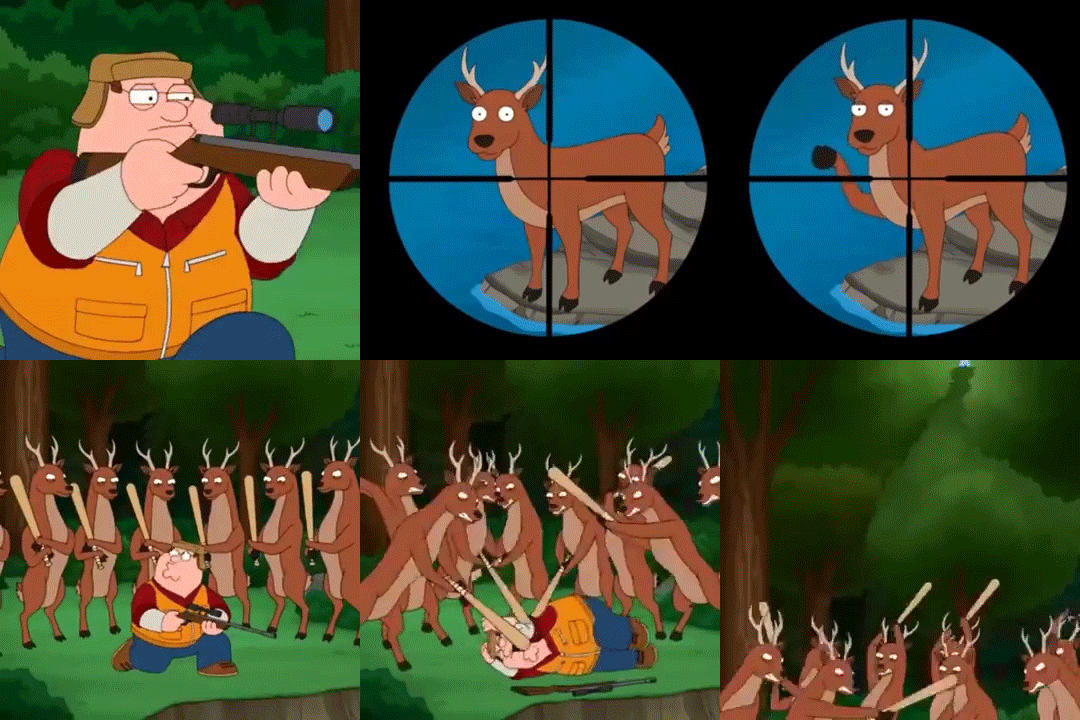
#Family Guy GIF - Find & Share on GIPHY

Hunter thought he killed a deer until it stood up and attacked

Exposing the Big Game's avatarCommittee to Abolish Sport Hunting Blog

, Arkansas officials say

Play Video
Duration 0:53
If you see a deer in the road, here’s how to avoid a collision

City residents should be wary of urban deer, which create a unique road hazard for drivers. Here are some tips on how to avoid an accident. 

A hunter in Arkansas is dead after officials say the deer he thought he killed stood up and attacked him on Tuesday.

Thomas Alexander, 66, was hunting near Yellville when he shot a buck, KY3 reported. Yellville is about 100 miles east of Fayetteville.

When Alexander walked up to the deer to ensure it was dead, the animal stood up and attacked, Arkansas Game and Fish Commission spokesman Keith Stephens told the outlet.T

“He apparently went over to the buck and it got up and attacked him,” Stephens told Fox News.

View original post 278 more words

Hunting accident in Solon Springs leaves 1 hospitalized

Exposing the Big Game's avatarCommittee to Abolish Sport Hunting Blog

Incident took place during mentored hunt
98

A western Wisconsin man remains hospitalized after being shot in the back during a hunting incident Saturday, Oct. 19, in the village of Solon Springs. The man was taken to St. Luke’s hospital by helicopter and remained hospitalized Thursday, Oct. 24. Spokeswoman Melissa Burlaga said no condition update was being released.

The shooting took place at about 3:18 p.m. on Tom Green Road, about 500 feet east of Gregerson Road, according to a report from Douglas County Sheriff’s Deputy Matt Izzard.

The victim, a 42-year-old man from Alma, Wisconsin, was shot in the back by his girlfriend with a shotgun while hunting. The victim told Izzard that they were on a mentor hunt.

His girlfriend, a 45-year-old woman from Luck, Wisconsin, told Izzard she loaded and closed the shotgun. Because she’d had difficulty closing the action earlier, she…

View original post 75 more words