Exposing the Big Game

Forget Hunters' Feeble Rationalizations and Trust Your Gut Feelings: Making Sport of Killing Is Not Healthy Human Behavior

Exposing the Big Game

The vegans are coming, and we might join them

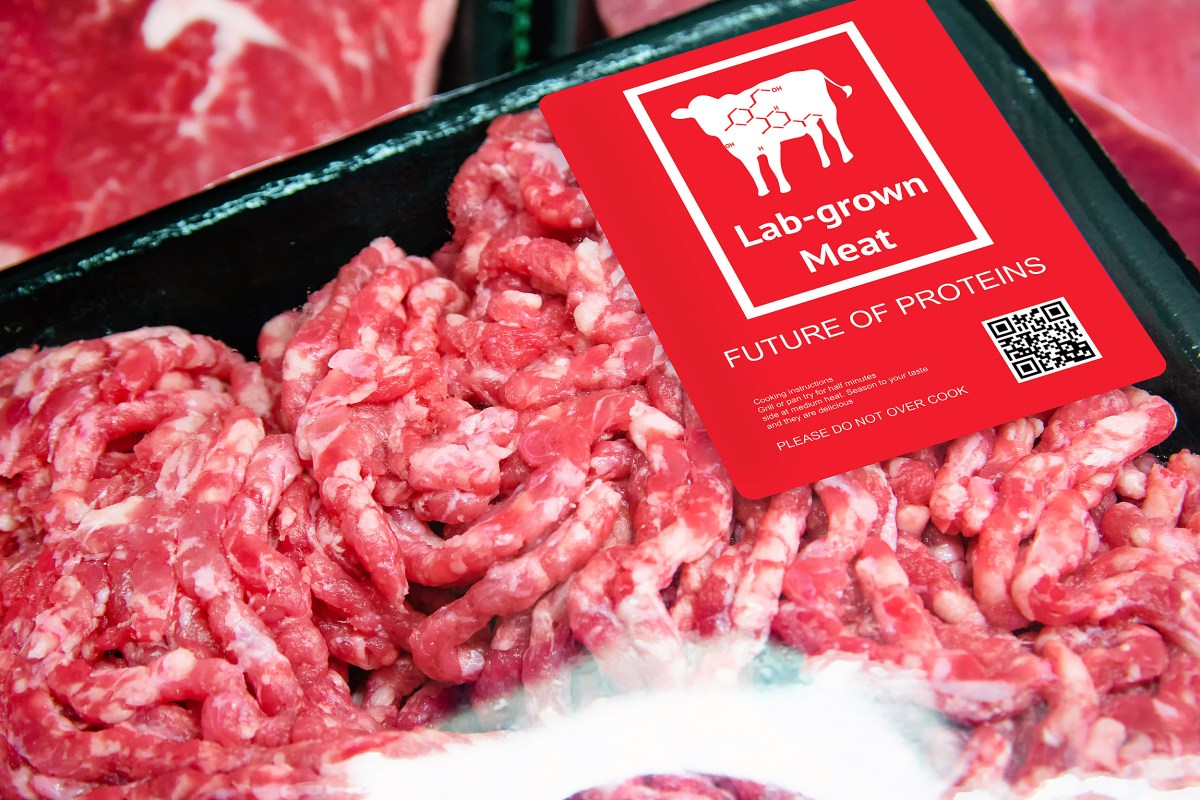
Package of lab-grown meat.

Jiraroj Praditcharoenkul/iStock

In replicating the look and taste of real meat, companies are appealing to the mainstream consumer

Some Burger Kings recently introduced a new version of the iconic Whopper with its signature flame-broiled beef patty swapped for a meatless replica that the company claims is virtually indistinguishable from the real thing.

It’s called the Impossible Whopper, and it’s the latest iteration of the trend of vegan food intended to appeal to the average consumer. So appealing is it, in fact, that the restaurant intends to roll out the new take on its signature sandwich in all 7,200 stores nationwide by the end of this year. White Castle has been selling a slider version of the Impossible Burger in its almost 400 stores since last year. In January, more than 1,000 Carl’s Jr. restaurants started offering a vegetarian burger made by Beyond Meat, which, like the Impossible Burger, tries to replicate real beef. It even appears to bleed. Restaurants and supermarkets also stock the products.

“What this is, is the mainstreaming process,” said Nina Gheihman, a Ph.D. candidate in sociology at Harvard’s Graduate School of Arts and Sciences (GSAS). She researches how veganism, a historically marginal practice, has become a popular lifestyle choice as the demand for healthier, more sustainable food has grown in recent years. “Especially in the past three to five years, veganism has really transformed from this fringe animal-rights movement into a lifestyle movement,” she said.

It has done so by shifting from a strategy focused on convincing consumers to abandon animal products for ethical reasons to using technology to satisfy those meat cravings, Gheihman said.

When it comes to meat, the idea is to get people to give it up without feeling like they’re giving it up. The leaders in this field are the vegan tech companies looking to mimic and replace meat and other animal products using one of two approaches: plant-based or cell-based.

The plant-based “meat” approach, led by companies like Impossible Foods, the one behind the Impossible Burger, and Beyond Meat, both based in California, combines high-protein vegetables like peas and soybeans to replicate the taste, texture, and look of meat. The “blood” in the Beyond Meat burger, for example, is beet juice. The meatlike texture and taste of the Impossible Burger comes from genetically modified yeast that is used to create the burger’s central ingredient, soy leghemoglobin, or “heme.”

The cell-based approach, led by companies like Memphis Meats and Mosa Meat, is science fiction made real in a laboratory. Workers take cells from animals like cows, chicken, or turkeys and grow specific products in a culture dish — steak, chicken breast, or turkey nuggets. It is real meat but producing it does not harm animals.

The two approaches differ in strategy, but the underlying key is creating a product indistinguishable from the original.

“What’s happening is that these companies are saying, ‘We’re not going to appeal any more to just vegans,’” Gheihman said. “‘Instead we’re appealing to the omnivores; we’re appealing to the average person. … We’re going to create this thing that you’re already consuming. It’s just going to be plant-based or cell-based.’”

The plant-based strategy has been gaining traction in the U.S. According to a 2017 Nielsen Homescan survey, 39 percent of Americans are trying to consume more plant-based foods, and it’s showing on their grocery lists. Meat alternatives posted a 30 percent growth in U.S. sales between April 2017 and April 2018, according to Nielsen, while traditional plant-based options like tofu trended down by 1.3 percent in the same period. Plant-based cheese, yogurt, pizza, and noodles showed similar growth to meat alternatives.

Cell-based (or “clean”) meat is still in development, but it’s expected to hit the market as early as 2021. Its potential is promising, with initial testers saying it provides virtually the same taste as meat but without the ethical dilemmas around the treatment of animals or the environmental effects of raising livestock, which, according to a 2006 UN Report, is responsible for approximately 18 percent of greenhouse gas emissions — not to mention air and water pollution and high energy consumption.

While both approaches show promise in terms of human and planetary health, healthy-diet researcher Frank Hu, from the Harvard T.H. Chan School of Public Health, says there is a need to keep a watchful eye on these products.

“The current effort to produce more plant-based protein food like the Impossible Burger and some other plant options, I think that is in a good direction,” said Hu, the Fredrick J. Stare Professor of Nutrition and Epidemiology and chair of the Department of Nutrition. “I think it could have potential benefits in improving the health of humans in the world. Of course, the data on the products like the Impossible Burger or other types of [similar] veggie burgers is still very limited. I think it’s very important to monitor the trends of the consumption patterns in the population and also monitor the health effects of those products, because some of those products, even though they contain high amounts of plant-based protein, may also contain unhealthy ingredients, such as high amounts of sodium or unhealthy fats. Being plant-based doesn’t necessarily mean it’s healthier.”

As for cell-based meat, Hu said it is too a new phenomenon to have reliable data, so its effects on humans are currently unknown. “At this point, there is no data whatsoever because it’s at such an early stage,” he said.

Hu also noted the high production costs of both plant-based meat and clean meat, which currently translate to the consumer but are expected to lower with time.

The vegan trend has not lost touch with its origins in the animal-rights movement, it just embraces them in a subtler, pragmatic way while at the same time tapping into people’s desire for sustainability and good health.

“It’s sexy; it’s aspirational; it’s desirable,” Gheihman said. “And it’s been framed in that way. … I think it really is shifting the perception of the average person. With the rise of social media and documentaries, a lot more people are more informed about what they’re putting into their bodies in terms of its costs both for them from a health perspective and for animals and the environment.”


‘Hunt the Hunters’: Wisconsin deer stands vandalized with anti-hunting messages

Exposing the Big Game's avatarCommittee to Abolish Sport Hunting Blog

For the second time in just weeks, deer stands in Wisconsin’s Dunn County were discovered vandalized with messages targeting the area’s hunters, including one message which read, “Hunt the hunters.”

On Friday, the Dunn County Sheriff’s Office confirmed that the second deer stand — located in the Township of Dunn — had been spray-painted with the message, as well as what appeared to be the logo for the Animal Liberation Front.

“The suspects also located and damaged several trail cams that would have caught their actions,” police wrote on Facebook.

This incident marks the second such incident in Dunn County since late September when vandals took down a…

View original post 168 more words

Fish should be part of the animal welfare conversation


Jessica Scott-Reid | Special to The Globe and Mail
Published 6 hours ago
Updated October 20, 2019

From October 19-21, The Globe and Mail is offering complimentary access to
all our election, news and business coverage. Learn more | Open this photo
in gallery

[At Newfoundland’s Northern Harvest Sea Farms, as many as 1.8 million salmon
suffocated to death in early September owing to lack of oxygen in the water.
A ship is seen in Fortune Bay, off the Newfoundland coast, on Oct. 2
disposing the decomposing remains of salmon into the water after the mass
die-off. The layer of rotten fish sludge sitting on the bottom of bay is
said to be more than 15 metres thick in some areas.]

Atlantic Salmon Federation/Bill Bryden/The Globe and Mail

Jessica Scott-Reid is a Montreal-based freelance writer and animal advocate.

It’s a notion that has made headlines several times over the past few years:
Fish feel pain, and the way we catch and kill them for food may actually be
cruel. This evolution in understanding of the sentience of an animal
long-considered too simple has caused some controversy and discomfort. And
as Newfoundland copes with a massive fish-farm die-off, concerns about the
well-being of the fish in crowded farms are being added to this mounting
conversation.

At Newfoundland’s Northern Harvest Sea Farms, as many as 1.8 million salmon
suffocated to death in early September, due to lack of oxygen in the water.
As The Globe and Mail reported two weeks ago, concerned marine biologists
noted the fish would have been stressed and fighting for oxygen in the
cramped, warm waters. Workers have also been struggling to deal with the
decomposing remains, which are being vacuumed out of the cages, processed on
land and dumped back into the sea. The layer of rotten fish sludge sitting
on the bottom of bay is said to be more than 15 metres thick in some areas,
and marine biologists worry this sludge could create algae blooms that steal
oxygen from the water and choke out other wild marine life.

Fish farming is a rapidly growing sector within Canada’s fishing industry,
with salmon being the most commonly farmed fish, and worth about $1-billion.
There are concerns, however, about a lack of government oversight of these
farms and about the damage they can cause to surrounding environments.
Deterioration of water quality owing to waste production and the spread of
disease to wild fish populations (and of drugs used to treat those
diseases), are included in these concerns. Last year, member of Parliament
Fin Donnelly told CBC News that open-net fish farms are essentially “using
the ocean as a toilet.”

For a food source typically touted as environmentally sustainable, and
perhaps less ethically fraught than their land-bound counterparts, fish may
actually be more complicated than we once thought.

Growing research now points to the fact that fish have the ability to
experience sensations, including pain and suffering. In a 2018 article in
Smithsonian Magazine, It’s Official: Fish Feel Pain, author Ferris Jabr
explains that at the anatomical level, fish have neurons known as
nociceptors, “which detect potential harm, such as high temperatures,
intense pressure, and caustic chemicals.” Fish bodies also produce the same
innate painkillers (that is, opioids) that mammals do.

Mr. Jabr details several studies, which show fish demonstrating atypical
behaviours when inflicted with pain and returning to typical behaviours when
given painkillers.

In more recent research, biologist Lynne Sneddon of the University of
Liverpool told The Independent, “When the fish’s lips are given a painful
stimulus they rub the mouth against the side of the tank much like we rub
our toe when we stub it.” She added: “If we accept fish experience pain,
then this has important implications for how we treat them.”

Although evidence is growing about the sentience of fish, they still lack
legal protection in Canada regarding their welfare or humane handling, and
are legally considered property when caught or farmed. Fishing is exempt
from most provincial animal-care acts as an accepted activity in which an
animal may be permitted to suffer (much like the farming and slaughtering of
other animals for food).

And though there are no statistics on the number of fish killed for food in
Canada each year, we know the industry is worth several billion dollars,
with exports of $6.6-billion worth of fish and seafood in 2015 putting
estimates in the hundreds of millions of fish permitted to suffocate to
death each year. The potential suffering associated with that number of
animals is hard to comprehend.

Ethical and environmental concerns surrounding the way we farm, catch and
kill fish for food are increasing. Allowing sentient animals capable of
suffering to be crammed into cages where they are unable to escape harmful
conditions, or to be pulled out of their environments, allowed to suffocate
to death, no longer aligns with the values of many Canadians who care about
the humane treatment of animals.

Compounding environmental stress upon already vulnerable ecosystems and
biodiversity only exacerbates this very obvious problem.

It’s time to care about fish, and perhaps that means leaving them alone.
 

https://www.theglobeandmail.com/opinion/article-fish-should-be-part-of-the-a
nimal-welfare-conversation/

Ozone hole is the smallest on record due to ‘rare event,’ NASA says

Exposing the Big Game's avatarThe Extinction Chronicles

Unusual weather patterns in the upper atmosphere over Antarctica have caused a drastic reduction in ozone depletion, leaving the ozone with the smallest hole seen sin1982, according to NASA and the National Oceanic and Atmospheric Administration.

The government agencies said that the hole had shrunk to 3.9 million square miles for the remainder of September and October, according to satellite data. The peak in the hole was 6.3 million square miles, observed on Sept. 8. During normal weather conditions, the hole is usually around 8 million square miles during this time of year.

“It’s great news for ozone in the Southern Hemisphere,” said Paul Newman, chief scientist for Earth Sciences at NASA’s Goddard Space Flight Center in a statement on NASA’s website. “But it’s important to recognize that what we’re seeing this year is due to warmer stratospheric temperatures. It’s not a…

View original post 405 more words

Many Animals Can’t Adapt Fast Enough to Climate Change

Climate change has thrown our beautifully balanced planet into chaos. As oceans and forests transform and ecosystems go into shock, perhaps a million species teeter on the edge of extinction. But there may still be hope for these organisms. Some will change their behaviors in response to soaring global temperatures; they might, say, reproduce earlier in the year, when it’s cooler. Others may even evolve to cope—perhaps by shrinking, because smaller frames lose heat more quickly.

For the moment, though, scientists have little idea how these adaptations may be playing out. A new paper in Nature Communications, coauthored by more than 60 researchers, aims to bring a measure of clarity. By sifting through 10,000 previous studies, the researchers found that the climatic chaos we’ve sowed may just be too intense. Some species seem to be adapting, yes, but they aren’t doing so fast enough. That spells, in a word, doom.

Matt Simon covers cannabis, robots, and climate science for WIRED.

To determine how a species is adjusting to a climate gone mad, you typically look at two things: morphology and phenology. Morphology refers to physiological changes, like the aforementioned shrinking effect; phenology has to do with the timing of life events such as breeding and migration. The bulk of the existing research concerns phenology.

The species in the new study skew avian, in large part because birds are relatively easy to observe. Researchers can set up nesting boxes, for instance, which allow them to log when adults lay eggs, when chicks hatch, how big the chicks are, and so on. And they can map how this is all changing as the climate warms.

By looking at these kinds of studies together, the authors of the Nature Communications paper found that the 17 bird species they examined seem to be shifting their phenology. “Birds in the Northern Hemisphere do show adaptive responses on average, though these adaptive responses are not sufficient in order for populations to persist in the long term,” says lead author Viktoriia Radchuk of the Leibniz Institute for Zoo and Wildlife Research.

In other words, the birds simply can’t keep up. By laying their eggs earlier, they’re encouraging their chicks to hatch when there are lots of insects to eat, which happens once temperatures rise in spring. But they’re not shifting quickly enough.

This isn’t a phenomenon exclusive to human-caused climate change. Life on Earth is so diverse because it’s so adaptable: Temperatures go up or down, and a species might move into a new habitat and evolve to become something different over time. But what we humans have unleashed on this planet is unparalleled. “We’re experiencing something on the order of 1,000 times faster change in temperature than what was seen in paleo times,” says Radchuk. “There are limits to these adaptive responses, and the lag is getting too big.”

LEARN MORE

Many Animals Cant Adapt to Climate Change Fast Enough
The WIRED Guide to Climate Change

Which means now more than ever, we have to aggressively conserve habitats to help boost species. “I think the results of this paper really add an abundance of caution, that we shouldn’t hope that species will adapt to changing climate and changing habitats, that we don’t need to do anything,” says Mark Reynolds, lead scientist for the Nature Conservancy’s migratory bird program, who wasn’t involved in the study.

Indeed, this paper is a terrifying window into what might be happening to ecosystems at large. A bird doesn’t live in a vacuum—it preys and is preyed upon. An ecosystem is unfathomably complex, all sorts of creatures interacting, which makes these dynamics extremely difficult to study, especially when Earth’s climate is changing so quickly.

“It’s not an internet type of network, it’s not an electrical grid,” says Peter Roopnarine, curator of geology and paleontology at the California Academy of Sciences, who wasn’t involved in this work. “These are systems that have very specific structures and configurations to them. We have poor documentation of that.”

On a very basic level, if insects start breeding earlier in the year because the planet is warming, birds have to shift their life cycles. That means the birds’ predators do, too. “One phenological change in one species can have a ripple effect through the system,” says Roopnarine.

Another major consideration here is generation length. Species that more rapidly produce offspring tend to adapt better to change. That’s why bacteria can so quickly evolve resistance to antibiotics: They proliferate like mad, and individual bacteria with the lucky genetics to survive the drugs win out and pass those genes along. Something like an elephant, which may not reproduce until she’s 20 years into a 50-year lifespan, is working with way longer timescales and may struggle to adapt to change.

What’s so troubling about this study is that, by comparison to other animal families, birds are relatively adaptable in their phenology: They can tweak the timing of their migrations, for instance. A less mobile critter like a frog has no such luxury. But what these researchers have found is that flexibility is no longer enough for salvation.

Fire the NM Game Commission

Exposing the Big Game's avatarCommittee to Abolish Sport Hunting Blog

More than 60 years ago, Rachel Carson warned of the coming “Silent Spring” as pesticides threatened bird populations. Now the climate emergency is devastating bird populations. Birds are not the only animals facing extinction. Yet the New Mexico Department of Game and Fish continues to promote hunting and trapping wildlife, while turning a blind eye to violations of their rules and regulations. It is appropriate that the Santa Fe New Mexican featured these two stories together on the front page of its October 17 issue, as they highlight opposite approaches to wildlife.

Game Department policies have hardly changed since they were first put in place by Aldo Leopold’s Game Protective Association, the predecessor of today’s New Mexico Wildlife Federation. Leopold spent decades working to eradicate wolves and mountain lions from New Mexico. Rachel Carson, who devoted her life to protecting wildlife, aptly described Leopold…

View original post 648 more words

Global Wildfires Are Raging, Leaving Long-Lasting Damage

Exposing the Big Game's avatarThe Extinction Chronicles

Global Wildfires Are Raging, Leaving Long-Lasting Damage

Record or near-record temperatures, combined with drought in many areas, are contributing to yet another record-setting summer for wildfires. California has been largely spared so far this year, but wildfires in the Amazon rainforest and in or near the Arctic Circle are ringing alarm bells, as is a sharp increase in wildfires in Southern Europe.

As many of these fires are occurring in remote areas, they may not pose a major threat to densely populated areas, but rural populations, particularly Indigenous groups, are being affected. And whatever the immediate human toll, the fires do not bode well for humanity’s future.

View original post 711 more words

Federal judge oversees wild court at America’s original national park

Exposing the Big Game's avatarCommittee to Abolish Sport Hunting Blog

Four million visitors a year go to Yellowstone National Park to admire varied wild animals. USA TODAY

LINKEDINCOMMENTMORE

MAMMOTH HOT SPRINGS, Wyoming — Federal judge Mark Carman steps cautiously out of the federal courthouse. He’s worried about where a 700-pound elk with a wicked looking set of antlers has gone.

The bull spent the morning herding its harem of cows around the parking area in front of the courthouse, forcing tourists and security guides alike to duck behind cars or into buildings as the wild animal stalked the area. A few days earlier, the same bull attacked a tourist about 100 yards away when the man failed to get out of the animal’s way during the fall mating season known as the rut.

“He’s a beaut,”…

View original post 1,882 more words

Debate Moderators Ask About Ellen and Bush, But Ignore Climate Crisis

Exposing the Big Game's avatarThe Extinction Chronicles

As America’s pundits and newspapers rushed to pronounce the winners and losers of Tuesday night’s 2020 Democratic presidential debate, progressives argued the event’s moderators deserve to be placed in the latter category for framing healthcare questions around insurance industry talking points, hand-wringing about “demonizing” rich people, and failing to ask a single question about the greatest existential threat facing humanity.

While they completely ignored the climate crisis, the event’s moderators — Erin Burnett and Anderson Cooper of CNN and Marc Lacey of the New York Times — managed to find time at the very end of the debate to ask a question that infuriated environmentalists who were waiting all night…

View original post 816 more words

China’s Pig Crisis Is Pushing Up Bacon Prices Worldwide

Exposing the Big Game's avatarExposing the Big Game

  • African swine fever will wipe out hundreds of millions of pigs
  • Global pig-meat index is headed for steepest jump in 15 years
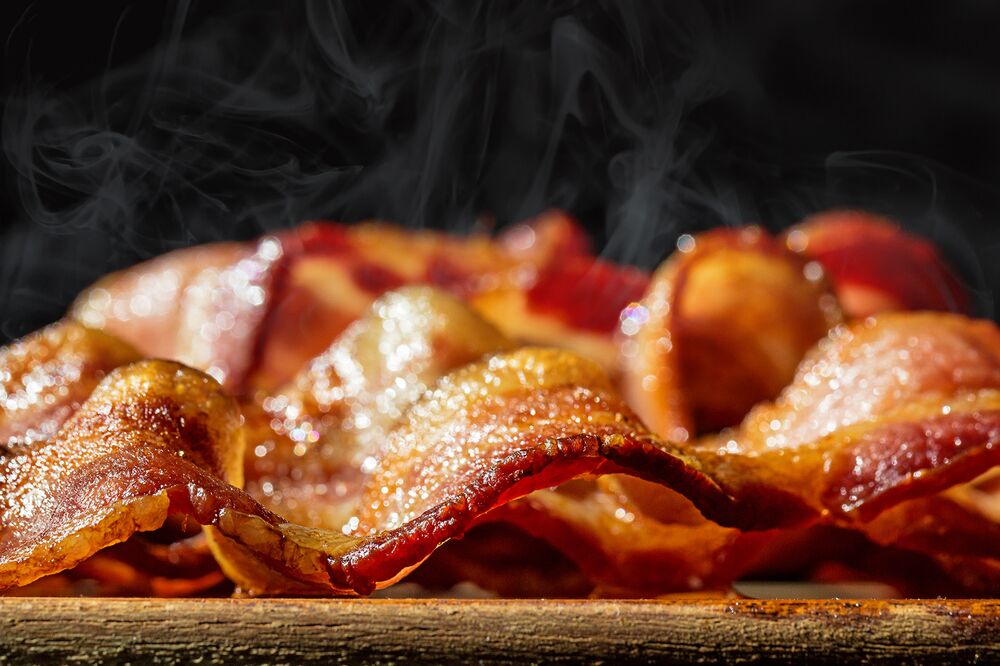
RF - Closeup Pile of Hot Sizzling Bacon
Photographer: adogslifephoto/iStockphoto

Bringing home the bacon will cost more. Blame African swine fever.

The deadly pig disease is wiping out hundreds of millions of hogs, mostly in China, driving a global surge in pork and bacon prices from Auckland to Vancouver. In Europe, swine carcasses have soared 31% and piglets 56% in the past year. Pig-meat is poised for the steepest jump since mad cow disease and bird flu outbreaks in 2004 led consumers to eat more pork, according to an index compiled by the Food and Agriculture Organization of the United Nations in Rome.

Run on Pigs

Pork is heading for the steepest annual increase in 15 years

Source: Food & Agriculture…

View original post 429 more words