

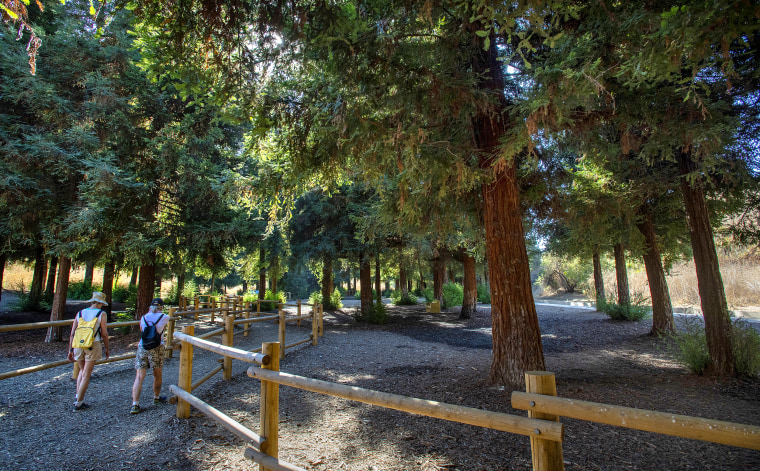
Visitors make their way through the three-acre grove of coastal redwoods, the largest grove of these trees in Southern California, in Carbon Canyon Regional Park in Brea early on Aug. 30, 2019.Mark Rightmire / Orange County Register via Getty Images file
A recent tree-planting campaign started by a YouTube personality set an ambitious goal: raise $20 million to plant 20 million trees by Jan. 1, 2020.
The project, known as #TeamTrees, offered the kind of internet-savvy effort that tends to achieve some virality. Silicon Valley heavyweights including YouTube CEO Susan Wojcicki, Twitter CEO Jack Dorsey and Tesla CEO Elon Musk, have already pushed the fundraiser past $14 million.
But while reforestation efforts have long been held…
View original post 1,173 more words


It’s very important though and should not be minimized. Native species please. It seems to me that more trees are cut down or burning because of human activities than are replaced!
This is more about the Amazon’s species than Northern evergreens.
The reason I say that is near where I live, a small solar farm was put up and the company promised to plant trees around it (probably to block the eyesore that it is). But the trees they planted look more like shrubs and non-native conifers of an office park landscaping!
All around the area there are very tall but rusty brown and dead white pines, I believe. I just wish they had planted native seedlings to replace them, but perhaps the native pines will grow up around these little guys and whatever other native shrubs and trees will return eventually.
I don’t think anyone means to plant trees in a civil war zone (eyeroll) or in areas where they are not suited. That sound like the argument some use about reintroducing wolves to downtown Seattle.
I think all that some ask, I know I do, is that we keep pace or ahead of pace with what is lost in former native tree areas, due to logging, human activity- exacerbated wildfire, and habitat loss from human settlement.
Maybe they’re planting that species of pine since they’re dying off elsewhere. Around here, the species is almost extinct from White Pine Blister Rust.