Meat shortages expected as coronavirus disrupts production, despite executive order

Exposing the Big Game's avatarThe Extinction Chronicles

Kyle Bagenstose, Nathan Bomey and Sky Chadde
USA TODAY

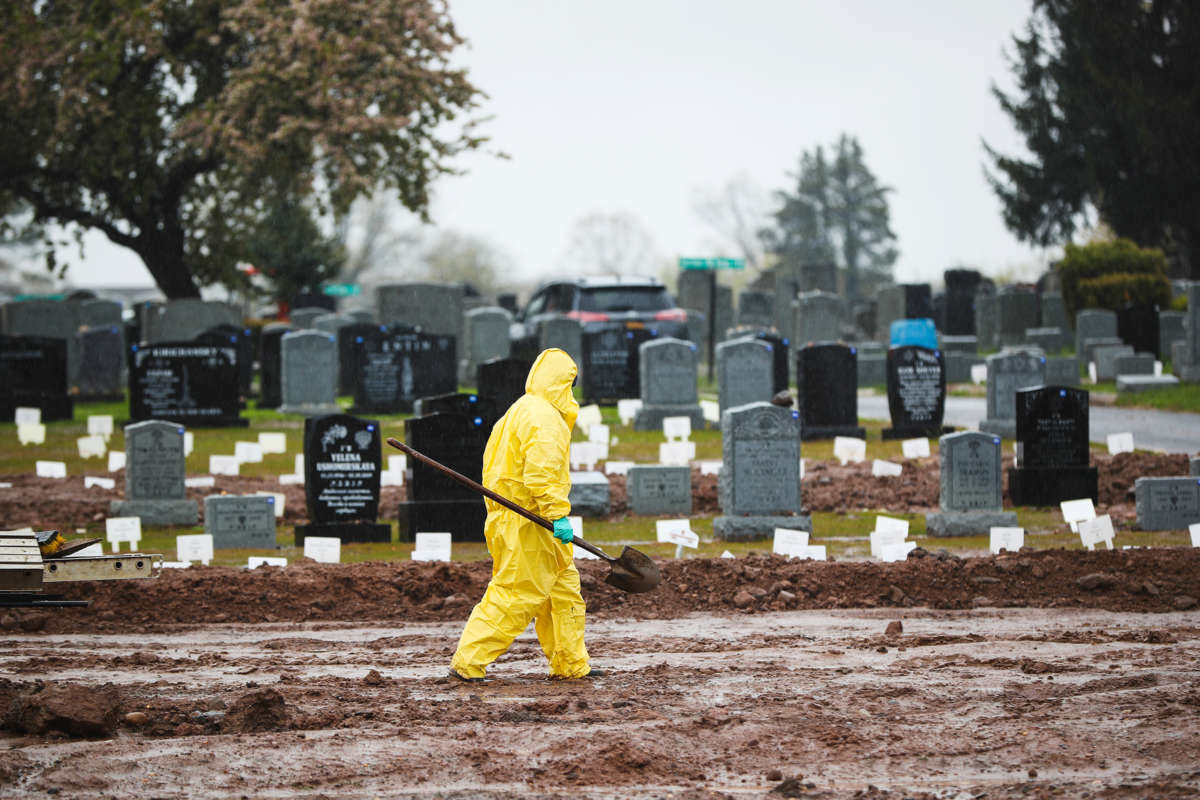
American slaughterhouses processed nearly a million fewer cattle, hogs and sheep in the past week than they did during the same time a year ago, marking a new low that experts say will likely increase “spot” shortages of meat at some grocery stores.

“I wouldn’t say the food system is breaking, but at least the meat sector is in real serious, critical condition at the moment,” said Jayson Lusk, head of the Department of Agricultural Economics at Purdue University. “The chances of there being limited availability have risen, and it’s going to depend a lot on where you live.”

Meanwhile, legal experts said President Donald Trump’s executive order Tuesday declaring meatpacking plants “critical” to keep open will do little on its own to stop the slide in meat production brought on by the spread of the coronavirus among meatpackers.

View original post 1,357 more words

Trump administration draws up plans to punish China over coronavirus outbreak

https://www.cnn.com/2020/04/30/politics/us-china-coronavirus-diplomacy-intelligence-donald-trump/index.html

Washington (CNN)The Trump administration is formulating a long-term plan to punish China on multiple fronts for the coronavirus pandemic, injecting a rancorous new element into a critical relationship already on a steep downward slide.

The effort matches but goes far beyond an election campaign strategy of blaming Beijing to distract from President Donald Trump’s errors in predicting and handling the crisis, which has now killed more than 60,000 Americans.
Multiple sources inside the administration say that there is an appetite to use various tools, including sanctions, canceling US debt obligations and drawing up new trade policies, to make clear to China, and to everyone else, where they feel the responsibility lies.
“We have to get the economy going again, we have to be careful about how we do this,” said one administration official, speaking on condition of anonymity.
“But we will find ways to show the Chinese that their actions are completely reprehensible.”
close dialog
Sign up for CNN’s
MEANWHILE IN AMERICA
A daily analysis of US politics for global readers.
Sign Me Up
No Thanks
By subscribing, you agree to our
privacy policy.
The intelligence community is meanwhile coming under enormous pressure from the administration, with senior officials pushing to find out whether the virus escaped into the public from a laboratory in Wuhan, China, two sources familiar with the frustrations said.
In an unprecedented move, the intelligence community issued a statement saying it was surging resources on the matter as it would in any crisis.
“The IC will continue to rigorously examine emerging information and intelligence to determine whether the outbreak began through contact with infected animals or if it was the result of an accident at a laboratory in Wuhan,” the statement said.
CNN reported earlier this month that the government was looking into the theory that the virus originated in the lab but hadn’t yet able to corroborate it. Earlier this month Gen. Mark Milley, the chairman of the Joint Chiefs of Staff, said the weight of evidence suggests the virus was of natural origin.
The New York Times reported Thursday that officials were pressuring intelligence analysts to find information supporting the idea.
“I think we will figure it out,” an administration official said, when asked if it was possible the origin of the virus would never be established.
The US-China clash is brewing amid growing suspicion inside the administration over China’s rising strategic challenge and fury that the virus destroyed an economy seen as Trump’s passport to a second term.
“I am very confident that the Chinese Communist Party will pay a price for what they did here, certainly from the United States,” Secretary of State Mike Pompeo said last week.
The building confrontation comes as both sides seek to exploit an already fragmented geopolitical environment already shaken by their rivalry that has been thoroughly fragmented by the pandemic.
In the long term, it threatens to cause uneasy choices for US Asian allies who are also keen not to antagonize the giant in their backyard. And the growing tension could have significant repercussions for the global economy as the US seeks to wean itself off supply chains dominated by China.
There are serious questions to be addressed about China’s transparency in the early days of the outbreak in Wuhan and whether its autocratic system fostered an attempt to cover it up. The United States is not the only nation that wants answers amid a pandemic that has devastated the global economy and cost hundreds of thousands of lives.
In response to building pressure, China has launched a propaganda effort to distract from its own culpability, including blaming US soldiers for importing the pathogen in remarks that infuriated Trump.

Administration sizes up options

Officials note that finding ways to punish China will be a sensitive business.
“We’ll get the timing right,” Pompeo said on Wednesday. In the extreme circumstances of the pandemic, China has the capacity to hit back at the United States making it “irresponsible” to drive too hard too early, officials say.
With the US afflicted by shortages of personal protective equipment, medical devices, biologic drugs and Chinese-made pharmaceuticals, it is vulnerable to short-term disruption in established supply chains amid a pandemic that has infected more than a million Americans.
Pompeo appeared to demonstrate this restraint last week when he was asked about new Chinese export controls that have prevented US medical supplies from getting to the US. In private, US officials are irate, but in public Pompeo used delicate language.
“The good news is we have seen China provide those resources. Sometimes they’re from US companies that are there in China, but we’ve had success,” Pompeo said.
“We are counting on China to continue to live up to its contractual obligations and international obligations to provide that assistance to us and to sell us those goods,” Pompeo said.
In the longer term, especially if Trump wins reelection, the US effort will likely treat offshore supply chains as national security priorities rather than as simply economic questions.
“If we fail to do that in the face of this crisis, we will have failed this country and all future generations of Americans. It is that clear,” Trump economic advisor Peter Navarro told CNN.

A tense turn in US-China relations

The toughened posture toward China is consistent with Trump’s rejection of the principles of Sino-US ties that date back to President Richard Nixon’s courting of the then-closed communist state in the early 1970s.
Trump says that the process of ushering Beijing into the world economy in an effort to avoid a clash between the dominant power, the US, and China, the rising one — known as the Thucydides Trap — has been a disaster.
He has argued that Washington has emboldened and enriched a foe with nearly three times its population and that has “raped” US industry in the flight of blue-collar jobs abroad.
It was a message that was electrified Trump supporters in the decaying US rustbelt in 2016 and is one on which he is relying to brand his presumptive Democratic opponent as a China-appeasing tool of the foreign policy elite in November.
“This is the natural way to go. It’s the only way to go. It is pretty much the main campaign theme,” said an official familiar with the campaign’s messaging efforts focused on China.
The administration’s national security strategy — which was laid out in 2017 — also casts China as a competitor and a revisionist power.
But as is often the case, the administration’s hard line is undermined or tempered by the President’s own unorthodox personality and approach to his job.
Trump’s over-personalized approach to world leaders and his fixation with preserving his friendship with Xi is also directly contradicting his political and diplomatic strategy.
“We are not happy with China,” Trump said Tuesday but his statements are undercut by the multiple times he praised Chinese President Xi Jinping for his handling of the pandemic earlier this year, apparently partly motivated by a desire to keep a US-China trade deal, one of the few limited wins of his administration, on track.
One disadvantage of Trump’s insistence on forging friendships with strongman leaders is that it leaves national relationships more susceptible to any fractures in personal ties.
Both Trump and Xi are the most aggressive, nationalistic leaders of their two nations in decades, who are keen to flex personal power in a way that can cause volatile foreign relations.
And the US President is not alone in facing domestic incentives to initiate confrontation. While China’s Communist Party leaders enjoy absolute power, they are susceptible to internal political pressures — especially as they try, like Trump, to deflect from their own virus missteps.
In its own disinformation offensive, Beijing has blamed US troops for bringing the novel coronavirus to China. On Tuesday, Foreign Ministry spokesman Geng Shuang accused “American politicians” of telling barefaced lies about the pandemic.
“They have only one objective: to try to shirk responsibility for their own epidemic and prevention and control measures and divert public attention,” Geng said.
The heated rhetoric over the virus threatens to unleash a chain reaction of mistrust and tension that worsens tensions between the US and China exacerbated by Trump’s trade war, territorial flashpoints including in the South China Sea and the global US campaign against the Huawei communications giant.
Former US Secretary of State Madeleine Albright warned on CNN last week that the building heat was dangerous.
“Frankly, it is each side pushing each other’s hyper nationalism buttons and we are getting nowhere,” she said.

The US/China freeze

Relations with China have plummeted in recent years, amid rising tensions over trade, Beijing’s territorial claims in the South China Sea and its rise to challenge the US strategically.
Trump’s decision to freeze funding for the World Health Organization, based on claims it was too solicitous from China, could also further undercut US influence, especially in Asia where the US withdrawal from the the Trans Pacific Partnership was a big win for Beijing.
China does have a record of overplaying its hand and driving regional powers back into the US orbit. The Obama administration exploited such a misstep with its Asia pivot.
Recent failures such as flawed personal protective equipment sent to Europe have tarnished Beijing’s coronavirus diplomacy. Racist treatment of Africans in the southern Chinese city of Guangzhou has had a similar effect. And despite its efforts to change the story, China may never escape the notoriety of being the incubator for the disease and claims its autocratic system was responsible for critical delays in tackling the virus.

Wuhan shows the world that the end of lockdown is just the beginning of the Covid-19 crisis

Exposing the Big Game's avatarThe Extinction Chronicles

https://www.cnn.com/2020/04/29/asia/wuhan-coronavirus-lockdown-analysis-intl-hnk/index.html

Shanghai (CNN)All around the world, people are waiting for the announcement that the coronavirus pandemic is contained and they can return to normal life.

But the Chinese city at the center of the pandemic has shown that normal might still be a long way off.
When Wuhan officials eased outgoing travel restrictions on April 8, effectively ending the city’s 76-day lockdown, residents and local businesses soon learned that city’s actual reopening would be painfully slow.
Despite the lifting of most strict lockdown laws, many stores are still shut, restaurants are restricted to takeaway and even when citizens go outside they still wear protective equipment and try to avoid each other.
Content by CNN Coupons
25% OFF + $5 OFF | DoorDash Promo Codes in April
Choose from 33 DoorDash coupons in April 2020…

View original post 907 more words

Chomsky: COVID-19 Has Exposed the US Under Trump as a “Failed State”

Exposing the Big Game's avatarThe Extinction Chronicles

The label “failed state” has started to fit the U.S. like a glove as the COVID-19 national health crisis continues to reveal the structural flaws and weaknesses of the United States, argues worldrenowned public intellectual Noam Chomsky in this exclusive interview for Truthout. Meanwhile, the Trump administration continues to exact a high price in human lives due to its caricaturish but highly dangerous response to the crisis. In the interview that follows, Chomsky also analyzes what’s behind Trump’s encouragement of the “anti-lockdown” protests, discusses the right-wing determination to destroy the…

View original post 5,263 more words

Jared Kushner Calls US COVID Death Toll of 60,000 a “Great Success Story”

Exposing the Big Game's avatarThe Extinction Chronicles

Jared Kushner, much like his father-in-law President Donald Trump, wants the American people to believe that the administration’s response to the coronavirus has been stellar so far, in spite of the fact that tens of thousands have died of the disease within the United States.

Appearing on “Fox & Friends” on Wednesday, Kushner portrayed the White House’s response to the pandemic in a positive light, and suggested that the narrative needed to be repeated more often.

“The federal government rose to the challenge and this is a great success story, and I think that that’s really what needs to be told,”…

View original post 615 more words

Coronavirus was ‘not manmade or genetically modified’: U.S. spy agency

WASHINGTON (Reuters) – The top U.S. spy agency said for the first time on Thursday the American intelligence community believes the COVID-19 virus that originated in China was not manmade or genetically modified.

FILE PHOTO: The ultrastructural morphology exhibited by the 2019 Novel Coronavirus (2019-nCoV), which was identified as the cause of an outbreak of respiratory illness first detected in Wuhan, China, is seen in an illustration released by the Centers for Disease Control and Prevention (CDC) in Atlanta, Georgia, U.S. January 29, 2020. Alissa Eckert, MS; Dan Higgins, MAM/CDC/Handout via REUTERS.

The Office of Director of National Intelligence statement contradicted conspiracy theories floated by anti-China activists and some supporters of President Donald Trump suggesting the new coronavirus was developed by Chinese scientists in a government biological weapons laboratory from which it then escaped.

It also echoed comments by the World Health Organization (WHO), which on April 21 said all available evidence suggests the coronavirus originated in animals in China late last year and was not manipulated or made in a laboratory.

“The Intelligence Community (IC) also concurs with the wide scientific consensus that the COVID-19 virus was not manmade or genetically modified,” the Office of Director of National Intelligence (ODNI) said in a statement.

“The IC will continue to rigorously examine emerging information and intelligence to determine whether the outbreak began through contact with infected animals or if it was the result of an accident at a laboratory in Wuhan,” it added.

U.S. officials familiar with intelligence reporting and analysis have said for weeks they do not believe conspiracy theories that Chinese scientists developed the coronavirus in a government biological weapons lab from which it then escaped.

Rather, they have said they believe it either was introduced naturally into a Wuhan meat market or could have escaped from one of two Wuhan government laboratories believed to be conducting civilian research into possible biological hazards.

Trump, who has heaped blame on China for the global pandemic, on Thursday said he believes China’s handling of the disease is proof that Beijing “will do anything they can” to make him lose his re-election bid in November.

More than 3.21 million people have been infected by the novel coronavirus globally, and 227,864 have died, according to a Reuters tally as of 10 a.m. EDT (1400 GMT) on Thursday.

In an Oval Office interview with Reuters on Wednesday, Trump talked tough on China and said he was looking at different options in terms of consequences for Beijing over the virus. “I can do a lot,” he said, without providing details.

Reporting By Mark Hosenball; writing by Arshad Mohammed; editing by Chizu Nomiyama and Jonathan Oatis

MORE FROM REUTERS

California governor to order closure of beaches and state parks amid coronavirus

Exposing the Big Game's avatarThe Extinction Chronicles

Adam Beam and Stefanie Dazio
The Associated Press

SACRAMENTO, Calif. (AP) — Gov. Gavin Newsom will order all beaches and state parks closed starting Friday after people thronged the seashore during a sweltering weekend despite his social distancing order that aims to slow the spread of the coronavirus, according to a memo sent to police chiefs around the state.

Eric Nuñez, president of the California Police Chiefs Association, said it was sent to the group’s members Wednesday evening so they have time to plan ahead of Newsom’s expected announcement Thursday.

A message to the governor’s office seeking comment wasn’t immediately returned.

While most state parks and many local beaches, trails and parks have been closed for weeks, Newsom’s order is sure to ignite pushback from communities who argue that they can safely provide some relief to residents who are starved of fresh air.

Pressure is building to…

View original post 807 more words

Iceland won’t be killing any whales this year

Exposing the Big Game's avatarCommittee to Abolish Sport Hunting Blog

View original post 837 more words

The real reason Trump treats meatpacking workers as disposable

Tyson employee says HR told him, 'Come to work, you're safe'

CONCERNS HAS RESULTED IN A
COLLECTIVE DECISION TO
Now PlayingTyson employee says…
Tyson employee says HR told him, ‘Come to work, you’re safe’ 02:21

Raul A. Reyes is an attorney and a member of the USA Today board of contributors. Follow him on Twitter @RaulAReyes. The opinions expressed in this commentary are solely those of the author. View more opinions on CNN.

(CNN)Get back to work, says President Trump. He might as well add: even if it might kill you.

Tuesday, he used the Defense Production Act to order meat and poultry processing plants to stay open, despite the coronavirus pandemic. He declared them “critical infrastructure” in an executive order designed to avoid shortages of beef, pork and chicken.
“We’re working very hard,” Trump said, “to make sure our food supply chain is sound and plentiful.”
Given that meat processing plants are Covid-19 hotspots, this order is the height of irresponsibility and cruelty. It endangers the health of some of America’s most vulnerable workers, many of whom are Latino, African American and immigrants. It prioritizes corporate interests over workers’ lives.
Across the country, meatpacking plants have been closing as their employees have gotten sick. Smithfield Foods closed its pork processing plant in Sioux Falls, South Dakota, this month after more than 600 workers tested positive for coronavirus. Last week, Tyson Farms shut down its biggest pork processing plant in Waterloo, Iowa, after more than 180 workers tested positive.
Other plants across the country have similarly closed, with reports of coronavirus-related illness and deaths.

Mayor: Closing Tyson plant was ‘best course of action’ to support workers 04:13
The employees at such plants work under extremely difficult, hazardous conditions. They often work shoulder to shoulder, receiving and killing animals and butchering them for sale. It is grueling, repetitive work that many Americans would shudder at doing, especially given the risk of injury and the low pay.
In 2017, employees at meat plants earned on average about $15 an hour plus benefits, while employees at chicken plants earned on average about a dollar less per hour. The think tank New American Economy estimates that nearly half of this workforce is made up of immigrants, and many are people of color.
Trump’s order may well amount to a death sentence for workers in meatpacking plants, who have little choice but to continue to work to provide for their families. In Iowa, for example, citing Iowa state data, The Gazette reports that African Americans and Latinos have disproportionately high rates of coronavirus as a result of their work in meatpacking plants when compared with US Census Bureau figures on their relative representation in the state: While Latinos are 6% of Iowa’s population, they account for 17% of the state’s confirmed coronavirus cases. African Americans are 3% of the state’s population, yet they are 9% of the state’s coronavirus cases.
These are the people the President wants to continue working for the benefit of American consumers. How unsurprising that the President, who has shown unprecedented cruelty and disdain for immigrants and minorities, now expects them to risk their lives so we all can have an uninterrupted food supply.
Recall, for one example, that last year, Trump ordered massive sweeps of food processing plants in Mississippi, resulting in hundreds of arrests of undocumented workers, as well as devastated communities.
The way Trump rolled out this executive order is especially telling. He told reporters he was working with Tyson Foods — as opposed to health and workplace safety experts. The order was developed in consultation with corporate industry leaders.
“We’re going to sign an executive order today, I believe, and that’ll solve any liability problems,” Trump said on Tuesday.

How meat plant closures could impact consumers

How meat plant closures could impact consumers 02:46
While his executive order states that employers will follow guidelines from the US Centers for Disease Control and Prevention and the Occupational Safety and Health Administration, his main concern seems to be for corporate bosses, not for employees or public health. And does anyone think that the President would be comfortable ordering white-collar professionals to stay at work, despite significant health risks of Covid-19 transmission?
That Trump was reluctant to invoke the Defense Production Act to expedite the production of personal protection equipment (PPE) for health care workers, and is now invoking the act in a manner that could truly harm meat plant workers, speaks volumes.
The president and CEO of the North American Meat Institute told the website Vox that meat processing plants are completely disinfected every night after the last shift, and that workers are required to wear masks and face shields when the plants can obtain them.
Separately, Dean Banks, the head of Tyson Foods, told CNN’s Erin Burnett that “we’re doing everything we can to make sure we take care of our team members.” Banks said that his company was “extremely early in providing as many protective measures as we could possibly imagine.”
Yet if conditions were safe, employees would not be staging walkouts and protesting at meat plants over working conditions.
There is no doubt that the meat processing sector is facing a serious threat from the coronavirus pandemic. The United Food and Commercial Workers international Union noted that plant closures have resulted in a 25% decline in pork slaughter capacity and a 10% reduction in beef slaughter capacity.
But the union also estimated that 20 meatpacking and food processing union workers have died from the virus so far, and that 6,500 union workers are sick or have been exposed to the virus. So safeguarding our food supply needs to begin with safeguarding workers on the food supply chain. A thoughtful response to this situation would be to prioritize worker safety, not corporate input.
Trump should be ordering the meat processing industry to comply with the highest standards of social distancing and safety, or else face fines and criminal liability. Instead he is protecting the industry at the expense of its workers.
Like so many other aspects of his administration’s coronavirus response, Trump’s latest executive order is profoundly misguided and negligent. Meat processing plant employees are not expendable — and should not be forced back into dangerous working conditions.

[Well, Duh:] Little to no evidence that smoking protects against COVID-19; may increase risk of complications instead

Exposing the Big Game's avatarThe Extinction Chronicles

Little to no evidence that smoking protects against COVID-19; may increase risk of complications instead

FULL CLAIM: “smoking may protect against COVID-19 … Scientists believe nicotine might protect against coronavirus.”

SUMMARY

Claims that smoking might protect against COVID-19 have been reported in several media outlets. Although many outlets, such as The Times and Franceinfo, urge caution towards such suggestions, still others have promoted smoking as a preventative measure against COVID-19. Such claims are currently going viral with more than 410,000 interactions on Facebook in April 2020.

Some of the evidence used to support this claim includes preprints—reports of studies that have not been peer-reviewed or formally published. These include a data analysis of five Chinese studies[1], a study by Miyara et al. based in France[2], a study in New York[3], and a report by the U.S. Centers for Disease Control and Prevention (CDC)[4]

View original post 1,825 more words