China continues to exploit wild animals by promoting bear bile for coronavirus cure

China continues to exploit wild animals by promoting bear bile for coronavirus cureImage: FuFioCat / shutterstock.com

China has approved traditional medicines which include bear bile and goat horn as remedies for the COVID-19 infection.

In a bid to control the spread of coronavirus and treat infected patients, China’s National Health Commission published a list of recommended traditional and Western treatments for the virus last month.

And one of the six traditional Chinese treatments included in the guidelines is Tan re Qing- which is made from bear bile, goat horn powder and herbs.

Banner

The medicine prepared by a Shanghai pharmaceutical company following traditional Chinese medicine protocols is claimed to treat patients with respiratory diseases, including pneumonia, acute bronchitis and chronic bronchitis.

Even President Xi Jinping has been actively promoting traditional medicine calling it “treasure of Chinese civilisation” and stressing that it should be given equal importance as other treatments.

This recommendation comes after imposing a ban on sale of wild animals for food amid the coronavirus outbreak, which is thought to have originated in a wet market in Wuhan that sells and harbors live and dead wild animals.
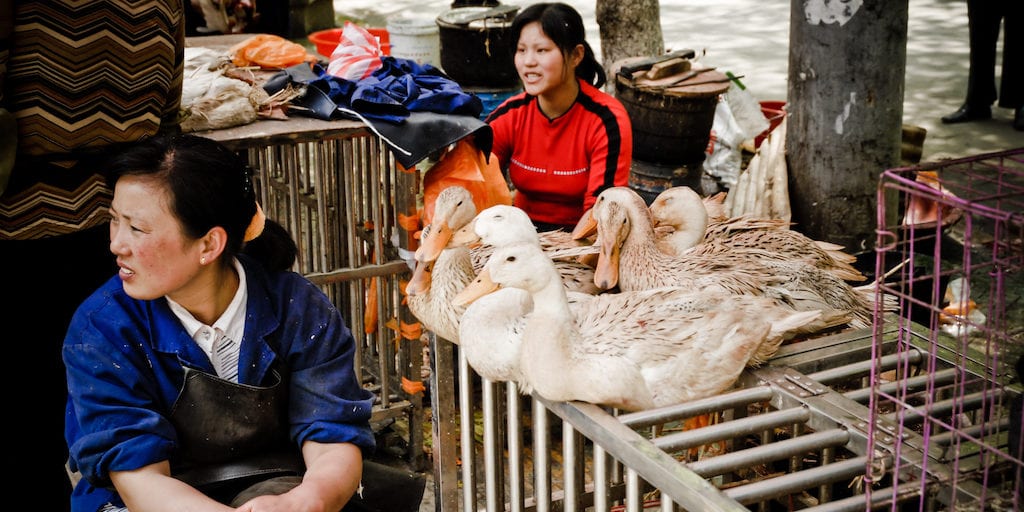
China finally implements a permanent ban on wildlife meat to stop virus spread
Image: mimohe / shutterstock.com

‘Both tragic and ironic’

A number of wildlife campaigners and animal rights activists have condemned the Chinese government and branded the news as ‘both tragic and ironic’ because it defeats the purpose of the ban implemented to stop the illegal animal trade.

“Across Asia, bear bile trade is widespread, although it is illegal in most countries,” said Richard Thomas of animal rights non-governmental organization Traffic.

“The active ingredient in bear bile, ursodeoxycholic acid, is readily synthesized in laboratories — so even if it did prove to be popular, there should be no need for bear bile to be included (in medicines).”

‘Hugely irresponsible’

In a statement, Aron White, EIA Wildlife Campaigner and China Specialist, said: “Restricting the eating of wildlife while promoting medicines containing wildlife parts exemplifies the mixed messages being sent by the Chinese authorities on wildlife trade.

“Aside from the irony of promoting a wildlife product for treatment of a disease which the scientific community has overwhelmingly concluded originated in wildlife, the continued promotion of the use of threatened wildlife in medicine is hugely irresponsible in an era of unprecedented biodiversity loss, including illegal and unsustainable trade.

“At this moment in history, as the world is crippled by the coronavirus pandemic, there could be no better time to end the use of the parts of threatened wildlife in medicine, especially as recent surveys conducted in China showed the vast majority of respondents were opposed to use of wildlife in medicine.”

‘Medicines should heal without harm’

Wildlife advocates also voiced their concerns that approving bear bile would in turn increase bear bile farms and justify animal abuse.

According to The Independent, bear bile farms in China and Vietnam account for nearly 12,000 bears held in captivity for their bile.

Highlighting the cruelty, Animals Asia, a nonprofit dedicated to ending bear bile farming said that  bear bile farms in China and across Southeast Asia keep bears in small cages for decades. The tiny cages restrict bear movements to such an extent that they are not even able to stand on all fours and most of these bears “are starved, dehydrated and suffering from multiple diseases and malignant tumours that not only contaminate their bile but ultimately kill them.”

In a statement on bear bile usage to treat COVID-19, the group said: “Animals Asia believes we shouldn’t be relying on wildlife products like bear bile as the solution to combat a deadly virus that appears to have originated from wildlife. It is accurate to assert the active ingredient in bear bile, UDCA, is effective in treating some conditions.

Banner

“This is the reason it has been produced synthetically (not using bile from bears) for decades and sold by the tonne across the world.

“Additionally, we understand according to the National Health Commission, Tanreqing has been used to successfully treat respiratory conditions like pneumonia and similar illnesses to COVID-19 for several years with success.

“However, traditional Chinese medicine has thousands of years of practical application and knowledge to draw upon, together with a philosophy of balancing harmony and peace with the environment. Such medicines should heal without harm.”

Brian Daly, a spokesman for the Animals Asia Foundation added: “Promotion of bear bile has the propensity to increase the amount used, affecting not only captive bears, but also those in the wild, potentially compromising an already endangered species in Asia and across the world.”

Share this story to reveal the truth behind bear bile farming and traditional medicines using animal ingredients.

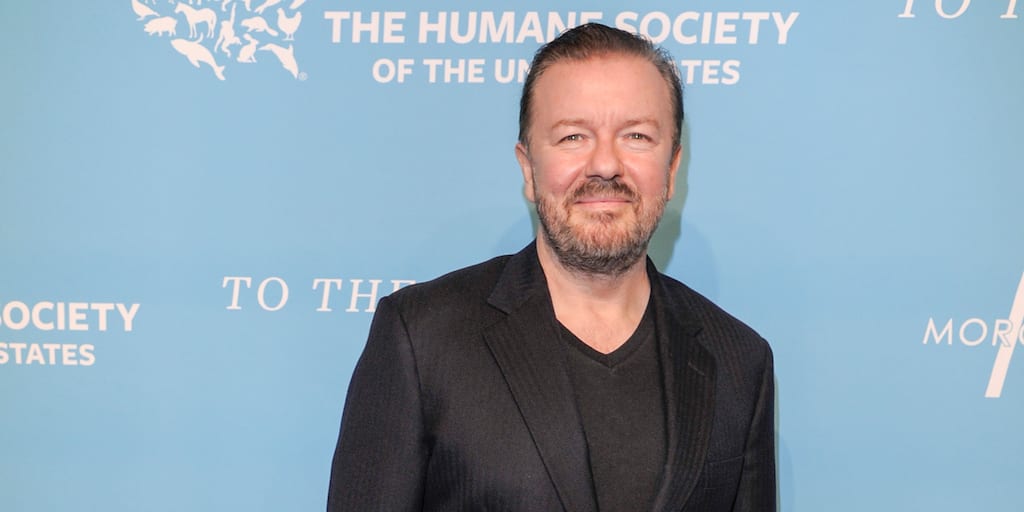
Ricky Gervais demands global shutdown of all wildlife ‘wet’ markets to avert future pandemics

Exposing the Big Game's avatarThe Extinction Chronicles

Ricky Gervais demands global shutdown of all wildlife 'wet' markets to avert future pandemicsImage: Ron Adar / shutterstock.com

For the sake of people and animals, wildlife trade and consumption has to end, now.’

Ricky Gervais called for a global shutdown of wet animal markets and a ban on wildlife trade while speaking to the Mirror on the current pandemic situation that has claimed more than 1,26,681 lives at the time of writing.

The actor and animal rights activist made the comments after the tabloid revealed images of live bats and reptiles still on sale alongside dogs in Indonesia.

Banner

According to experts the coronavirus reportedly spawned from one such wet market in China, Wuhan and has since spread globally forcing countries into lockdowns.

“For the sake of people and animals, wildlife trade and consumption has to end, now,” the 58 year old told the tabloid, adding that if humans kept on exploiting the animal kingdom…

View original post 429 more words

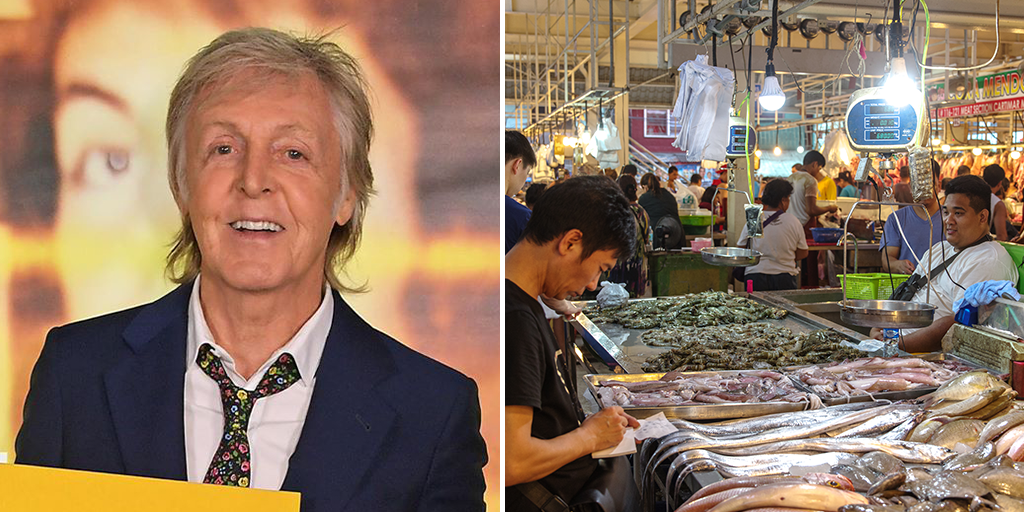
Paul McCartney blames ‘medieval’ Chinese ‘wet markets’ for coronavirus pandemic, demands closure

Paul McCartney wetmarketImage: paulmccartney (Left) and Kim David / shutterstock.com (Right)

‘Let’s face it, it is a little bit medieval eating bats.’

Sir Paul McCartney launched into a passionate rant aimed at the Chinese government’s reluctance to shut down wet markets- the suspected origin of the deadly coronavirus that has already killed tens of thousands, altered the daily lives of hundreds of millions, and put the entire world on edge.

Discussing the current pandemic situation on a call with US radio host Howard Stern on Sirius XM, this Tuesday, McCartney said: “I really hope that this will mean the Chinese government says, ‘OK guys, we have really got to get super hygienic around here.’

Banner

“Let’s face it, it is a little bit medieval eating bats.”

Stern echoing McCartney’s sentiment noted that it was “mind boggling” that China was reluctant to shut down the markets despite the current situation.

In reply, McCartney said: “It wouldn’t be so bad if this is the only thing it seems like you can blame on those wet markets.

“It seems like Sars, avian flu, all sorts of other stuff that has afflicted us … and what’s it for? For these quite medieval practices. They need to clean up their act. This may lead to [change]. If this doesn’t, I don’t know what will.”

‘Letting off atomic bombs’

Self-isolating at his home in Sussex with daughter Mary and her family, the former Beatles frontman and animal rights activist added that “whoever is responsible for this is at war with the world and itself.”

In reply to Stern’s next question on the idea of banning the wet markets, the 77-year-old answered: “I think it makes a lot of sense…when you’ve got the obscenity of some of the stuff that’s going on there and what comes out of it, they might as well be letting off atomic bombs. It’s affecting the whole world.”

McCartney’s views follow news that reports China allowing most wet markets including south-west China’s Guilin and southern China’s Dongguan to reopen and resume selling bats, pangolins and dogs for human consumption.

Even majority of the stalls at Wuhan’s biggest wet market Baishazhou have resumed business after lockdown rules were laxed at the epicentre.

‘Shut them right away’

Comparing China’s resistance to close the markets to the country’s slavery culture in the past, McCartney added: “I understand that part of it is going to be, ‘People have done it forever. This is the way we do things.’ But they did slavery forever, too. You’ve got to change things at some point.”

McCartney joins several other dignitaries that feel wet markets need to go.

Actor and animal rights activist Ricky Gervais called for a global shutdown of wet animal markets and a ban on wildlife trade.

Banner

In an interview with the Mirror, the 58-year-old said: “For the sake of people and animals, wildlife trade and consumption has to end, now.”

Even America’s chief infectious disease expert Dr. Anthony Fauci implied the ongoing public health crisis was a “direct result” of the thriving wet animal markets and demanded that authorities “should shut down those things right away.”

Share this story to reveal the dangers of wet markets on public health.

People Make ‘Mad Dash’ To Florida Beach That Reopened Amid Coronavirus Pandemic

Exposing the Big Game's avatarThe Extinction Chronicles

Something Went Wrong
Unfortunately, an error occurred. To try again, refresh the browser.
PP-400-602

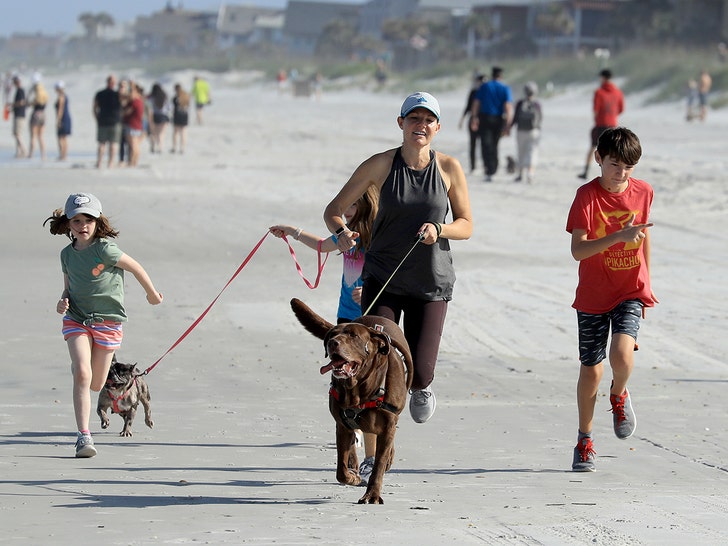
People flocked to a reopened beach in Jacksonville, Florida, on Friday afternoon after officials partially lifted restrictions aimed at slowing the spread of the coronavirus.

CNN correspondent Randi Kaye, who was reporting from the scene, described it as “a mad dash here for the ocean” on Friday’s broadcast of “Anderson Cooper 360.”

“Once police gave the all-clear, all the people who had been lined up in the streets waiting to get to the beach when they opened today at 5 p.m., they just flooded the area,” said Kaye.

“They were biking, they were running, they were swimming, surfing, they were fishing some of them, a lot of people brought their dogs,” she continued. “It was as if they had been cooped up for so long, for years. That’s how they…

View original post 852 more words

Dog who lost both owners to coronavirus looking for loving home

EATONTOWN, N.J. — A dog in New Jersey is in need of a new family after both of her owners died from COVID-19 complications.

Che-Che was scared and shaking when she was brought to the Monmouth County SPCA over the weekend. The staff wore full PPE and kept her the 9-pound dog in isolation before giving her a bath with hot soap and water.

The rescue group said it wants to honor her family and those lost by finding Che-Che the perfect home, and calls are already pouring in.

The group said it already has a long list of people who are interested in her, and it will find a home where she will live out the rest of her life in peace.

Protocols have changed during the pandemic for the staff, but their work to care for Che-Che and all the other animals who are waiting for their forever home doesn’t stop — even with fewer donations coming in.

But as more people stay home, officials say the good news people are fostering and adopting as they look for companionship during these uncertain times.

For those who are financially strapped, just know that help is available for your pets. The SPCA also has a pet food pantry so people can pick up their food along with food for their pets.

https://abc30.com/6107627/?fbclid=IwAR0Wzx9eH02UKMvvhIXOO4V8LxXHaCgaj2hghkxCwz7F2vVbzrdWigXb3L0

Click here to learn more on how to adopt from the Monmouth County SPCA or call the adoption center at 732-542-5962 with any questions.

FLORIDA BEACHES PACKED… As Trump Urges People To Break Quarantine

Exposing the Big Game's avatarThe Extinction Chronicles

View original post 4 more words

Jacksonville beaches reopen in Florida as states begin easing stay-at-home restrictions

Exposing the Big Game's avatarThe Extinction Chronicles

Jacksonville, Florida (CNN)Beaches and parks in Jacksonville, Florida, reopened Friday afternoon as more states consider easing restrictions put in place to battle the coronavirus pandemic.

The scene at Jacksonville Beach wasn’t one of caution in the middle of a worldwide pandemic. Crowds cheered and flooded the beach when police took the barriers down. People were seen swimming, biking, surfing, running and fishing.
Social distancing seemed to be the last thing on anyone’s mind Friday. Some residents told CNN not being able to go to the beach was “torture.” People were out with their towels, coolers and sunbathing. There were very few masks.
Beaches will be open from 6 to 11 a.m. and from 5 to 8…

View original post 472 more words

Wild animals are reclaiming cities and streets during coronavirus lockdown

Afoot and light-hearted, they’re taking to the open road.

Amid the global lockdowns to curb the spread of the coronavirus, striking images taken in South Africa’s popular Kruger National Park — which has remained shut since March 25 — show a pride of some 15 lions napping in the middle of an empty paved road.

CNN reports that on any typical day, this area would be packed with tourists on safari excursions. But that doesn’t mean that the travelers would get to experience this sight.

“This lion pride are usually resident on Kempiana Contractual Park, an area Kruger tourists do not see,” the park tweeted Wednesday. “This afternoon they were lying on the tar road just outside of Orpen Rest Camp.”

That isn’t the only atypical sight.

“Lying on the road during the daytime is unusual because under normal circumstances there would be traffic and that pushes them into the bush,” Kruger spokesman Isaac Phaahla tells CNN. “They just occupy places they would normally shun when there are tourists … People should remember that [Kruger] is still a largely wild area and in the absence of humans, wildlife is more active.”

It isn’t just Kruger that’s shut down. Despite initially announcing a 21-day lockdown for the country, South African President Cyril Ramaphosa said in early April that he would extend the quarantine at least until the end of the month.

Enlarge Image
Monkeys in India sit outside during quarantine.AFP via Getty Images

This isn’t just a sight limited to South Africa. Worldwide, with the coronavirus keeping humans inside, wild animals have taken to the streets to have their own play — even in cities. People in New Delhi have spotted monkeys looking for food in an alleyway lined with closed shops. In Venice, Italy, clear blue canals have lured swans and fish before tourists return in gondolas.

Here’s a look at some more.

You goat to be kidding me

Enlarge Image
Mountain goats roamed Llandudno, Wales, as people remained inside under coronavirus-related lockdown.Getty Images

In the north of Wales, herds of wild mountain goats have claimed the empty streets of Llandudno as their own. Known as the Great Orme Kashmiri goats, they typically live on a nearby hill that looks over the town, rarely heading into it. North Wales police reportedly said the agency received a call about the wandering herd — which had been grazing on people’s hedges and gardens — but there was no need to intervene.

“We are not aware of officers attending to them as they usually make their own way back,” the police said.

Mountain goats take over Welsh town

Play Video

A purrfect match

More locally, 50-year-old Latonya “Sassee” Walker — who’s cared for Canarsie’s wild cat population for a decade, has doubled the number of cats she looks after. She told The Post that typically she cares for four colonies of feral cats. But with many elderly folks stuck inside, she’s taken on more. She brings the cats dry food, wet food and water, predicting she’ll spend more than $600 this month because with restaurants shut, there’s no garbage for them to eat. She’s even brought them in to be spayed and neutered.

“The cats have no clue what’s going on because nothing has changed for them,” she says. “It’s not in my DNA to see a cat suffering and not do anything about it. I’m equipped to make a cat’s life better, so I’m going to.”

March of the penguins

Enlarge Image
This penguin, named Wellington, got to meet a Beluga whale at Shedd Aquarium in Chicago.SHEDD AQUARIUM via REUTERS

In March, with Chicago’s Shedd Aquarium closed to the public, penguins got the opportunity to explore their home thanks to no human visitors wandering about.

“Without guests in the building, caretakers are getting creative in how they provide enrichment to animals,” the aquarium told the Chicago Tribune. “Introducing new experiences, activities, foods and more to keep them active, encourages them to explore, problem-solve and express natural behaviors.”

With the aquarium closed to humans, penguins take opportunity to explore and visit other animals

Play Video

That means some penguins got to meet other aquarium inhabitants. One of them, a penguin named Wellington, saw Shedd’s Amazon Rising exhibit, looking around at the fish tanks with his head spinning in wonder. The fish even looked back.

“The black-barred silver dollars also seemed interested in their unusual visitors,” the caretakers tweeted.

Sea turtles are thriving as coronavirus lockdown empties Florida beaches

Exposing the Big Game's avatarThe Extinction Chronicles

(CNN)Sea turtles in Florida are nesting in peace — for now.

With the beaches in Florida closed in an effort to stop the spread of coronavirus, researchers are seeing less plastic and waste, fewer people and vehicles on the beach and less disorientation for emerging hatchlings that’s caused by artificial lights on the beach, David Godfrey, Executive Director for the Sea Turtle Conservancy told CNN.
And because of these factors, the sea turtles are able to build without any disruptions.

No people, no problem

Nesting season for leatherback turtles, the largest of all sea turtles, is underway right now mostly in the central east and southeast coast of Florida, according to Godfrey. They nest in fewer numbers than the loggerheads, who arrive in May. Later…

View original post 647 more words

EU to step up rules on factory farming, wildlife trading amid pandemic

Exposing the Big Game's avatarThe Extinction Chronicles

BRUSSELS (Reuters) – The European Union will step up efforts to control wildlife trading and make factory farming more sustainable, given that both issues have played a role in the coronavirus pandemic, the bloc’s environment chief said on Thursday.

“Healthy ecosystems lead to a healthy society and therefore it is not too high a price to pay to fix them,” Environment Commissioner Virginijus Sinkevicius told Reuters in a telephone interview.

While the source of the COVID-19 disease caused by the coronavirus is unknown, the World Health Organization has said the virus most probably has its “ecological reservoir” in bats.

China, where the virus was first identified in the central city of Wuhan, recently banned the trade of wild animals in response to the crisis, but the question of the origin of the virus has become a highly charged one in Western capitals.

Sinkevicius said…

View original post 213 more words