President Trump listens during a meeting with health care executives in the Cabinet Room of the White House on April 14, 2020, in Washington, D.C.DOUG MILLS-POOL / GETTY IMAGES
Trump’s announcement that the U.S. will withhold all its contributions to the World Health Organization (WHO)is an unforgivable abnegation of U.S. responsibility at the very moment when a coordinated international public health response is most needed.
At the height of a pandemic that threatens to kill millions and capsize the global economy, the U.S. presidentis trying to deflect blame for his own failings by going on a public offensive against the world’s preeminent public health organization. In consequence, the ability of the world’s most powerful countries to coordinate an effective global response to the pandemic has been dramatically…
A few weeks ago, Jim and Katie DiGangi started dumping up to 20,000 gallons of milk a day.
The couple runs Darlington Ridge Farms in Wisconsin. They’ve never had to dump milk before, and the practice has been “completely devastating,” said Katie. “It’s very challenging for our family.”
Dumping milk is pretty much what it sounds like: Disposing of milk before it is delivered to processors and turned into dairy products. Recently, farmers like the DiGangis have had to resort to milk dumping because of a precipitous drop in demand from schools, restaurants and other food service providers, which have been mandated to close their doors to stop the spread of the coronavirus pandemic.
The sudden shift in demand means that dairy farms across the country have an excess of milk. Between 2.7…
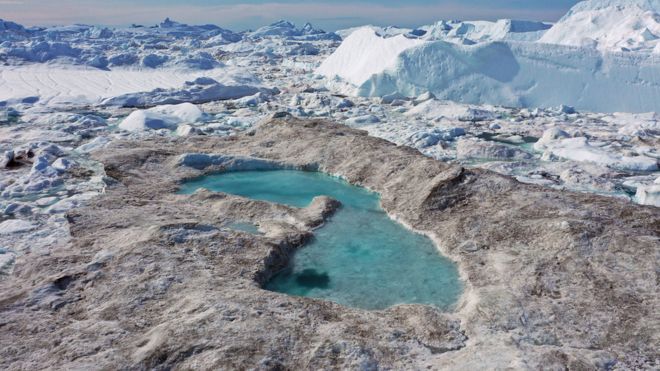
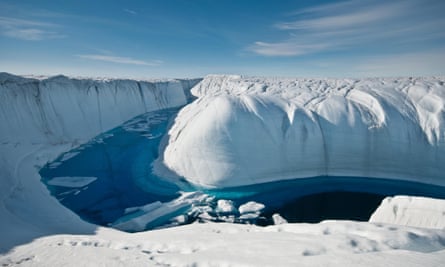
Greenland’s ice sheet is seven times the area of the UK and up to 2-3km thick in places. It stores so much frozen water that if the whole thing melted, it would raise sea levels worldwide by up to 7m.
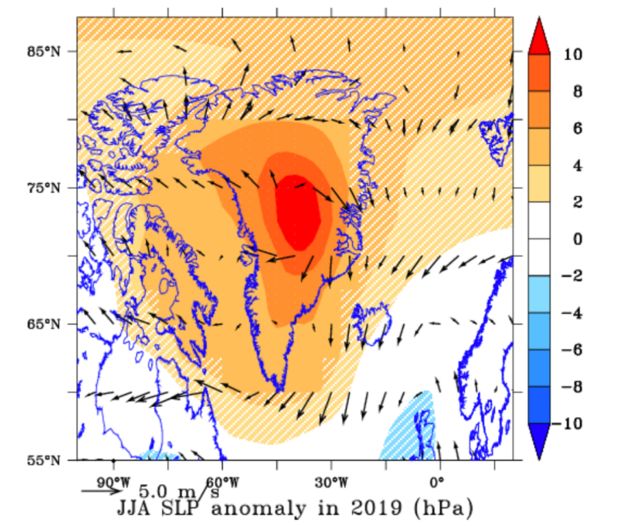
Image copyrightTEDESCO & FETTWEISImage captionAverage pressure over Greenland in summer 2019, with arrows showing wind direction
In recent weeks, an analysis of last year’s melting said the 600 billion tonnes of ice added 2.2mm to global sea levels in just two months.
This new study says that while rising global temperatures played a role in the events last year, changes in atmospheric circulation patterns were also to blame.
Researchers found that high pressure weather conditions prevailed over Greenland for record amounts of time.
They believe this is connected to what’s termed the “waviness” in the jet stream, the giant current of air that mostly flows from west to east around the globe.
As the current becomes more wobbly, it bends north, and high pressure systems that would normally move through in a few days become “blocked’ over Greenland.
These systems had different impacts depending on the part of Greenland you were in.
In the southern part of the island, the authors say, it caused clearer skies with more sunlight hitting the surface.
The cloud-free days brought less snow, which meant that 50 billion fewer tonnes were added to the ice sheet.
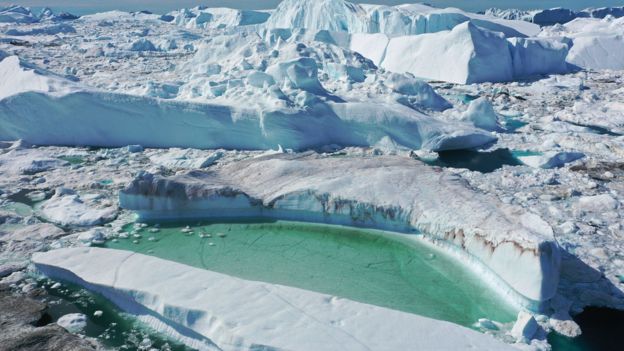
The absence of snow also exposed bare, dark ice in some place which absorbed more heat – contributing to the melt.
Image copyrightGETTY IMAGES
In other parts of Greenland, the changing atmospheric patterns had different but equally damaging impacts.
In northern and western region, the swirling but stuck high pressure systems pulled in warm air from southern latitudes.
“You can imagine that a sort of vacuum cleaner that is spinning clockwise and sucking all the warm and moist air from New York City for example,” said lead author Dr Marco Tedesco from Columbia University in New York, US.
“And because of the rotation, it deposits this warm, moist air high in the northern part. It forms clouds, and they behave like a greenhouse, trapping the heat that would normally radiate off the ice.”
Dr Tedesco explained that Greenland in 2019 experienced the largest drop in surface mass balance since records began in 1948.
The term surface mass balance describes the overall state of the ice sheet after accounting for gains from snowfall and losses from surface melt-water run-off.
The authors believe their study explains why, despite the fact that 2019 was not as warm as 2012, last year produced a record drop in surface mass balance.
“This is really pushing Greenland into the red,” said Dr Tedesco.
Other researchers working in this field agreed that the new paper is a good explanation of what happened last year in Greenland.
“The main message of the paper is that the very high melt was mostly driven by clear skies and direct melting rather than necessarily being attributable to unusually high temperatures over the ice sheet – a radiatively-driven, rather than thermally-driven, melt season as they put it,” said Dr Ruth Mottram, a climate scientist at the Danish Meteorological Institute in Copenhagen.
“In some ways, the weather pattern is rather similar to the great blocking high that lodged over Scandinavia for weeks in 2018, giving us the most extreme drought on record in much of northern Europe.”
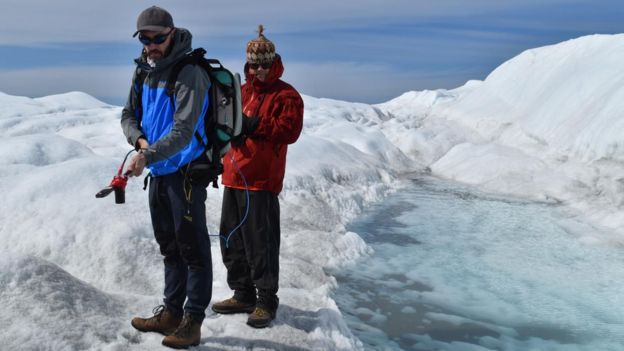
Image copyrightKEVIN KRAJICK/EARTH INSTITUTEImage captionMarco Tedesco (left) and a colleague measure reflectance on the Greenland ice sheet during a 2018 expedition
The exact mechanism by which climate change affects the jet stream isn’t understood. But the view is that as the Arctic warms, the temperature differences between the region and the mid-latitudes that drive the air current are reduced. This slows down the stream, making it wander further.
“The more CO2 we pump out, the more divergence starts to emerge between the behaviour of the Arctic and the mid-latitudes and this behaviour is accelerating and enhancing some of the differences. It is a crucial part of what is creating this waviness and the consequences,” said Dr Tedesco.
The authors also argue that climate models in general need to take account of this impact of the wavy jet stream. Others in the field say this issue needs addressing.
“These results imply that the climate models we use for future projections of sea level rise from Greenland are underestimating the extreme years at present and therefore likely also the rate at which the ice sheet melts and the oceans will rise in the future,” said Dr Mottram.
“The only ray of light is that as processor power increases and we can do higher resolution simulations with climate models, the representation of these processes does seem to improve and not just in Greenland but in other areas of the world where persistent blocking patterns can have an important influence on the season.”
The study has been published in the journal The Cryosphere.
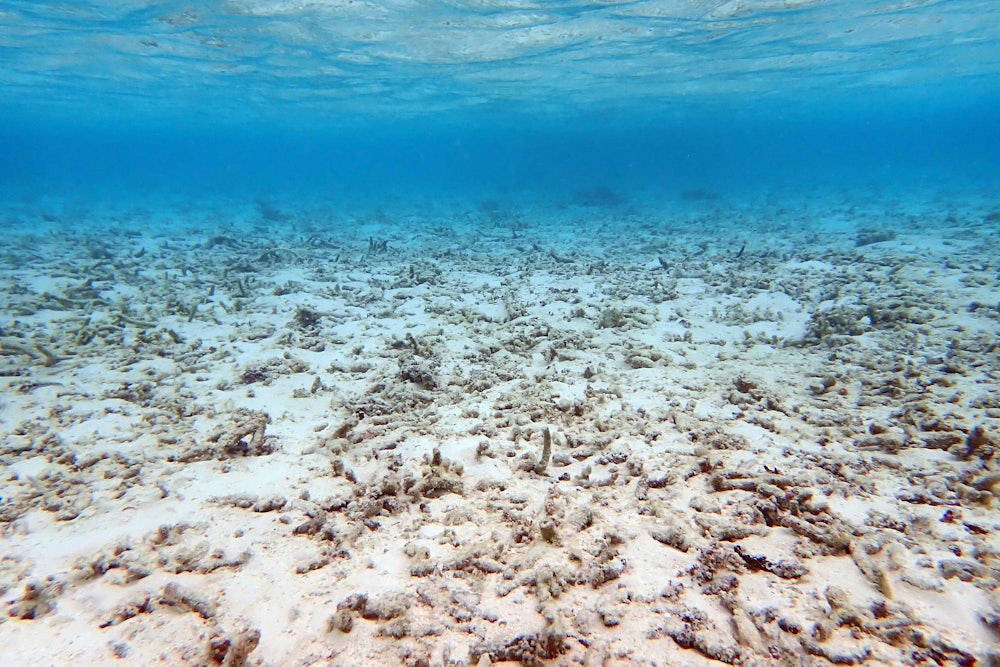
The Great Barrier Reef is in themidst of its third mass-bleaching event in the last five years. This year’s heat-induced bleaching—which occurs during the region’s summer season—is more severe than the previous two, with 25 percent of the reefs experiencing widespread bleaching. At this point, over 15 percent of the world’s largest reef system has turned a ghostly, skeletal white.
We stand at the very beginning of a long fight for the survival of coral. “Even if…
The Great Barrier Reef is in themidst of its third mass-bleaching event in the last five years. This year’s heat-induced bleaching—which occurs during the region’s summer season—is more severe than the previous two, with 25 percent of the reefs experiencing widespread bleaching. At this point, over 15 percent of the world’s largest reef system has turned a ghostly, skeletal white.
We stand at the very beginning of a long fight for the survival of coral. “Even if we stopped emitting CO2 today, the ocean would still get warmer for 30 to 40 years,” Stephen Palumbi, a coral researcher and professor of biology at Stanford University, told me. “It’s hard to conclude anything but that this ecosystem is in serious trouble.” As the ecosystem becomes more and more unstable, possible solutions become scarcer and increasingly expensive. High-tech measures like geoengineering, assisted evolution, and robot-assisted reproduction are quickly turning into scientists’ best bets.
The current reality of coral reefs is a clear warning about the future of the climate crisis. With each passing day of emissions, ecosystems under pressure become harder and more expensive to recover, eventually reaching a point where the only viable solutions could involve highly resource-intensive technology with uncertain outcomes. Coral reefs can show us what a losing battle the climate crisis could feel like once we reach a certain point.
Climate “tipping points” are thresholds where a tiny change in conditions pushes a system into a completely new state. While scientists say we’re not there yet with coral, we’re frighteningly close. Nearly50 percent of the world’s coral has died in the last 30 years; climate change is the primary culprit. Surface water temperature just a few degrees warmer than normal for several weeks is enough to drive widespread bleaching. Abnormally hot waters aremore common every year.
“Coral reefs provide a variety of different ecosystem services and functions,” said Emma Camp, a biologist and researcher focusing on coral reefs and climate change. “Many fish stock rely on coral reefs. Reefs play a huge role in nutrient recycling and coastal protection.”
The global economic value of coral reefs is estimated to be$36 billion each year. This revenue comes from diving, snorkeling, and wildlife watching as well as “reef-adjacent” tourism that relies on beautiful beaches and views. Reefs also serve as the first line of defense for many coastal areas against storm and wave activity, dissipating large waves and protecting islands from coastal erosion. “As we lose coral reefs, there will be socioeconomic ripple effects that spill far beyond the immediate communities affected,” Camp said.
Before the 2016-2017 bleaching in the Great Barrier Reef, the consensus among scientists was that those Pacific reefs wouldn’t require drastic technological solutions in order to be preserved. Now, out of necessity, the attitude has become closer to that of Silicon Valley than traditional science. Governments and private entities like Microsoft co-founderPaul Allen’s charity foundation and theUnited Arab Emirates havepoured billions of dollars into speculative initiatives to save coral reefs. While we’ve all heard about proposals like cloud-seeding or sun-shading floated as theoretical countermeasures to climate change, in the field of coral, many experts believe that the time to move forward with these risky geoengineering solutions isalready here.
In Australia, scientists tinker with creating new species of coral at the $25 millionNational Sea Simulator, using age-old plant domestication techniques and cutting-edge gene editing tools alike. An experimental program called assisted evolution brings corals into the lab and exposes them to heat gradually, creating coral that can survive under temperature stress for three times as long as the average coral.
While acknowledging the ethical implications of genetic engineering, Line Bay, a coral geneticist at the Australian Institute of Marine Science, toldScience magazine that delaying work on these proposals may leave the world unable to protect coral reefs in the future. “The worst thing that we could do is ignore genetic engineering because it’s frightening for some people, and then get 10 or 15 years down the road and realize it’s the only option,” Bay said.
Other proposals include geoengineering, such as spraying saltwater into the clouds to reflect more sunlight and dim the sun over the reefs. Another option involves countering ocean acidification—a side-effect of the oceans absorbing ever-greater amounts of carbon dioxide—by planting a massive amount of seagrass to turn seawater more alkaline. And the Australian government has already started funding the use of giant underwater fans to bring cooler water up to the surface.
Some scientists remain wary of some of these proposals. “I haven’t seen a geoengineering scheme that doesn’t make me really worried about what we’re doing,” Palumbi said, “especially without a couple of other planets to experiment on.”
Manufacturing and deploying massive fleets of underwater robots, while absurd on the surface, has quickly become one of the more scalable and easily controlled options when it comes to restoring dying reefs. In 2018, scientists at two Australian universities deployed robots to to re-seed reefs with millions of baby corals and help them grow back faster than they are bleaching.
The problem with coral restoration is the one we could soon be facing with multiple ecosystems: Its right to invest billions of dollars in protecting coral—without fighting to preserve these structures, we risk of the complete collapse of coral ecosystems, involving massive environmental and economic fallout. But focusing on coral-restoration technology can also draw attention away from the culprit driving this change to begin with: emissions.
The most important step for saving coral is moving away from a reliance on fossil fuels. “The future trajectory of reef health is entirely dependent on how soon we act,” Camp said. “The sooner we reduce emissions, the more likely we are to have healthy reefs in the future.” While scientists are increasingly wearing multiple hats as activists and communicators, the dialogue around restoring reefs can sometimes glance over the more important truth: Stopping emissions is the best and surest way to guarantee that reefs survive the century. Scientists have only turned to these alternative solutions because the world won’t act. “Our biggest tool to save coral, reducing emissions, isn’t working. So we have to think about the other tools in our toolbox like assisted evolution and geoengineering,” Camp said. But, at the same time, the emissions fight has never been more important: It’s the only way to avoid these battles of diminishing returns with other ecosystems down the line.
The situation facing coral reefs right now is a dry run for the tipping points rainforests, agriculture, and the polar ice caps could soon face. Right now, the most effective ways to save the Amazon rainforest are preventative—stopping deforestation and reducing carbon emissions. Butif the Amazon suddenly starts to collapse, it will already be too late and scientists will need to look to new, murky horizons, investing tremendous amounts of money in risky solutions in order to avoid imminent, drastic consequences.
Ecological systems under warming pressure can turn into a runaway train. The trillions of dollars in economic costs of climate inaction are not theoretical: The collapse of reef ecosystems today show us clearly what those economic and ecological costs will look like. Eliminating oil industry subsidies, a transition to a green economy, carbon taxes, far-reaching changes to individual lifestyles—everything needs to be on the table. While scientists can help coral survive into the short-term, it’s up to the greater community—and, in particular, that means policy at the national and international level—to create a future that coral can survive in.
Researcher explains 2022 social distancing projection03:03
(CNN)This may be the new normal for quite a while.
The US may have to endure social distancing measures — such as stay-at-home orders and school closures — until 2022, researchers projected on Tuesday.
That is, unless a vaccine or better therapeutics becomes available, or we increase our critical care capacity. In other words, 2022 is one scenario of many.
That’s according to researchers from the Harvard T.H. Chan School of Public Health, who published their findings in the journal Science on Tuesday. Those findings directly contradict research being touted by the White House that suggests the pandemic may stop this summer.
Scientists have reported in a preliminary study what they believe is the first significant mutation of the coronavirus which causes the COVID-19 disease. But experts told Newsweek it is unlikely the finding will jeopardize efforts to create a vaccine to prevent COVID-19.
The authors of the study examined the genetic make-up of 106 samples of SARS-CoV-2, the name of the coronavirus which causes COVID-19, from a database.
They compared these with 39 genome sequences of SARS, the virus which triggers severe acute respiratory syndrome (SARS) and started an outbreak in 2002. The complete or near-complete data on SARS-CoV-2 spanned 54 records from the US., 35 form China, three from Spain, two for Brazil, and one each from Australia, Finland, India, Italy, Nepal, South Korea, and Sweden.
There was a dramatic melting of Greenland’s ice sheet in the summer of 2019, researchers have confirmed, in a study that reveals the loss was largely down to a persistent zone of high pressure over the region.
The ice sheet melted at a near record rate in 2019, and much faster than the average of previous decades. Figures have suggested that in July alone surface ice declined by 197 gigatonnes – equivalent to about 80 million Olympic swimming pools.
Now experts have examined the level of melting in more detail, revealing what drove it. Crucially, the team note, the high pressure conditions lasted for 63 of the…
Attacks and calls to ban “wet markets” because of their potential for spreading diseases such as Covid-19 may be missing the point, say experts.
Earlier this week Sir Paul McCartney, a long-time vegetarian campaigner, called wet markets “medieval” and said that it made sense to ban them. “When you’ve got the obscenity of some of the stuff that’s going on there and what comes out of it, they might as well be letting off atomic bombs. It’s affecting the whole world.”
Last week more than 60 US lawmakers called for a global ban on what are referred to interchangeably as…
What’s in a cup of luwak coffee? Cruelty by the ounce, exposed by a Lady Freethinker investigation into the treatment of civet cats, or luwaks, who are force-fed coffee beans so their excrement can be made into the most expensive coffee in the world.
Watch the video and sign the petition urging TripAdvisor to stop selling tickets to luwak coffee tours.
By signing, you accept Lady Freethinker’s Terms of Service and Privacy Policy, and agree to receive email updates on this and other issues. You can unsubscribe at any time.
Share this petition
An LFT investigator visited multiple luwak coffee venues in Bali, Indonesia, and documented the horrifying conditions of captive civet cats, such as:
Cruel “luwak coffee tours” where these wild, solitary and nocturnal animals are…






 Exposing the Big Game