To think I almost watched an episode of the “Tiger King” at one time. I had added it to my Netflix list back when I’d heard only that it was a true crime documentay and guessed that it would reveal much about the way animals are abused when forced to perform. But I have long- since removed it from the list, after I started to get an idea that the rampant tiger abuse was not even the focus of the stupid show…
I was reminded of a time years ago when I took the chance to get near tigers by visiting a hollywood animal “trainer” or “wrangler” or whatever the heck they call them now at her property in rural Washington. She “owned” tigers, lions and I don’t remember what else–all kept in small, muddy outdoor enclosures, totally devoid of trees, bushes or any living vegetation. I’m guessing now, that she didn’t want to give the animals anything to hide behind.
When we went out to meet the tigers, one had knocked over its water bowl or for some reason she had to go into the pen with the tigers. One of them (playfully?) took a swipe at her and she responded by picking up a section of 2×4 and hitting the cat as hard as she could over the head, before hastily scrambling out of the fenced enclosure!
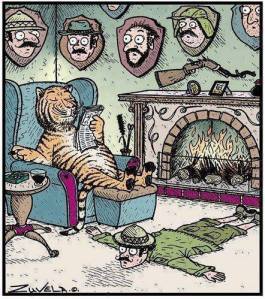
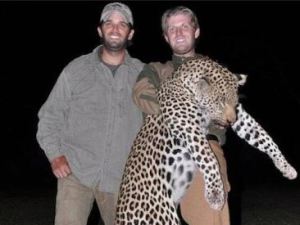
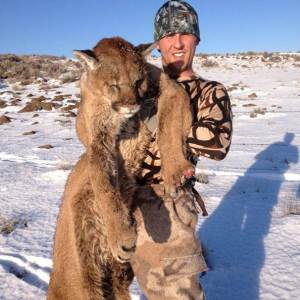
At that point it was clear that the animals weren’t at all happy there and wouldn’t hesitate to escape their confines if they had half a chance and freedom would not just end in them being shot like so many “big game” animals humans so proudly display on the walls of their dens or in their “trophy” rooms …
This article contains spoilers through all seven episodes of Tiger King.
At this particular moment, the most-watched show in America is a seven-part documentary series about a gay, polygamous zoo owner in Oklahoma who breeds tigers, commissions and stars in his own country-music videos, presides over what he describes as “my little cult” of drifters and much younger men, and ran for governor of Oklahoma in 2018 on a libertarian platform. He’s also currently serving a 22-year prison sentence for, among other charges, trying to arrange the assassination of his nemesis, an animal-sanctuary owner in Florida. And his business allies include another big-cat breeder—a yoga-loving guru in Myrtle Beach who runs what appears to be a tiger-themed sex sect.
A podcast about living through a pandemic
Listen to Social Distance, a series of conversations between Dr. James Hamblin, fellow journalists, and medical professionals about navigating life during the coronavirus crisis.
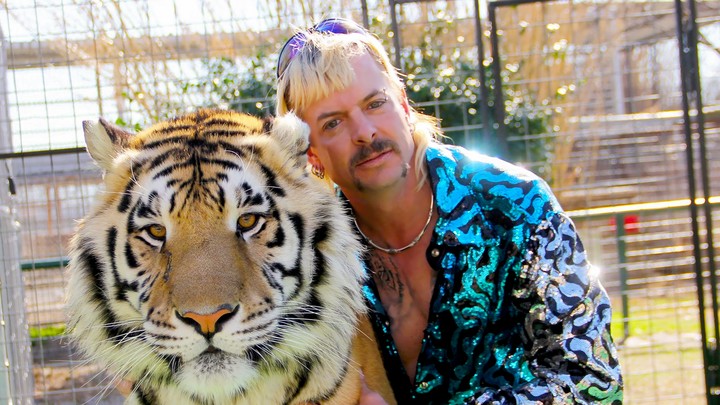
There are no heroes in Tiger King. Not Joseph “Joe Exotic” Maldonado-Passage, whose stripy mullet you’ve surely seen on social media, accompanied by a teal sequined jacket so ostentatious that the adult tiger he’s posing with looks like an afterthought. Not Bhagavan “Doc” Antle, who, one former employee alleges, coerces teenage girls working 100-hour weeks at his ranch to reach “his level of enlightenment” by sleeping with him. Not Carole Baskin, the owner of a Florida sanctuary for big cats, who Tiger King insinuates—in a strikingly unjournalistic way—might have killed her husband. And definitely not Eric Goode, the New York hotelier and animal-rights activist who co-directed the series, whose elevator pitch for it seems to have been “What if Christopher Guest, but real?” and whose disdain for the dentally challenged and leopard-print-festooned characters he captures is Tiger King’s most discernible emotion.
And yet, for the past two-plus weeks, Tiger King has consumed the pop-cultural imagination. It’s the stuff memes are made of, heavy on visual absurdity and light on meaning. The series is a carnival sideshow not unlike Joe Exotic’s central-Oklahoma park: You see the sign on the side of the road and you stop, not because you want to, necessarily, but because it’s there.
In that sense, Tiger King is also the latest and most acute iteration of a Netflix trend toward extreme storytelling; the more unfathomable and ethically dubious, the better. The point is virality—content so outlandish that people can’t help but talk about it. In 2018, the docuseries Wild Wild Country set the model, with its jaw-dropping chronicles of an alternative Oregon faith community whose antics allegedly included spiritual orgies, gun hoarding, electoral fraud, and mass poisonings. Last year’s Abducted in Plain Sight captured the appalling story of a teenage girl who was abused and kidnapped by a family friend, seemingly in full view of her parents. With its reality programming, too, Netflix has been courting eyeballs with simple insanity, via the hit dating series Love Is Blindand the upcoming Too Hot to Handle, a show in which ridiculously good-looking people are sequestered on an island to compete for a cash prize that diminishes every time they hook up, or even masturbate. The more scurrilous or degrading the concept, the more we watch.
This truism wasn’t news for P. T. Barnum, and it isn’t news now. But there’s still something wretched to me about the way Tiger King has managed to define a cultural moment in which empathy and communitarianism are so crucial. America right now, in the midst of a pandemic, is reliant on collective behavior, adhering to rules, and taking sensible precautions to avoid danger. Tiger King is the TV equivalent of licking the subway pole. Its characters have managed to construct whole worlds around themselves rather than curtail their worst impulses in any way. These characters are so colorful that they obliterate everything else around them. They’re any documentarian’s dream, and yet you can’t help but wonder what the directors hope to get out of giving showmen the mass exposure that they want. Who, in the end, benefits?
On its face, Tiger King is about a remarkable subculture in the U.S.: people who collect and (illegally) breed big cats. There are, the show reveals early on, more privately owned tigers living in America than there are existing in the wild, kept in independent “zoos” and parks across the country. (In 2003, authorities discovered that a man in Harlem was cohabiting with a 400-pound tiger named Ming, in the same apartment that his mother was using to babysit children.) If the people drawn to tigers have a shared quality, Tiger King emphasizes, it’s extroversion, which it illustrates in one scene with footage of Doc Antle riding an elephant into town while opining in voice-over about the “primordial calligraphy” of exotic animals.
Joe Exotic, for better or worse, is the show’s central character, and Tiger King sketches out a sparse biography that hints at, rather than elucidates, the forces that shaped him. The challenge seems to be that anything he says is stated in the service of inflating his own mystique, and the directors decline to press him or any of the other characters on the worst charges against them. There are some undeniable facts, such as how hard it must have been for Exotic to be a gay man in rural Oklahoma during the ’80s and ’90s. There’s also his history of releasing country songs he only lip-synchs to; his run for president in 2016 and for governor two years later; and his habit of filming virtually everything he does. There are a few private moments, too, including how he reacts after one of his employees is mauled by a tiger while at work. “I’m never gonna financially recover from this,” Maldonado-Passage sighs, while the rest of his employees try to tend to the victim’s severed arm. Hardest to endure is how he behaves at the funeral for his youngest husband, Travis, who accidentally shoots himself in the head. Dressed up in a dog collar, Exotic seizes the spotlight, singing, cracking jokes, and reminiscing fondly about his late partner’s testicles while Travis’s mother sobs.
Mostly, though, Exotic communes with tigers. He cuddles them while they’re riding shotgun in the front seat of his truck; he wrestles with them; he uses a steel hook to wrest newborn cubs from their mothers and then complains that the screaming babies are making too much noise. The visual impact of seeing humans and tigers so intimately connected is one of the defining qualities of Tiger King, and is also, the series suggests, why some people find tigers so appealing. There’s a taboo quality to the breach of natural laws separating humans and big cats that implies strength, virility, and power. No wonder, the show notes, so many male Tinder users have tiger selfies as avatars.
NETFLIX
Tiger King’s unified theory of tiger obsession falls short, however, when it reaches Carole Baskin, the owner of a Florida animal sanctuary devoted to big cats. This shortcoming might explain why the show takes such pains to portray her as a kook, and possibly even a murderer. Baskin is Exotic’s bête noire, a woman who has dedicated her career to trying to outlaw the breeding and personal ownership of exotic cats in the U.S. The show’s treatment of Baskin is where it indulges in its most egregious displays of false equivalence, as it tries to elevate her eccentricities to stand alongside those of Exotic and Antle. Baskin, Tiger King painstakingly lays out, is obsessed with animal print. The horror! Sometimes she wears flower crowns! She has an uncanny gift for search-engine optimization! She rides a bicycle! Her sanctuary relies heavily on unpaid volunteers! The show underscores all these facts, while making the most of the mysterious disappearance of Carole’s husband in 1997 and interviewing family members who seem convinced that she killed him. “There is absolutely no physical evidence at this time” implicating any one individual as a suspect, a police detective firmly and rather crushingly points out. Tiger King doesn’t care. It would much rather imply several times that she could have fed her husband’s corpse to tigers, had she been so inclined.
Baskin is interesting, too, because she’s a woman operating in a world characterized by gleeful misogyny. Exotic makes effigies of Baskin; he fills her mailbox with snakes (a strangely phallic gesture); he makes memes about her crotch, and videos in which he fantasizes about torturing her with a horse penis. He calls her a bitch so many times that the word loses all meaning. Jeff Lowe, one of Exotic’s business associates, who enters the series midway through, is a more limited character, but his treatment of women is still horrible enough to be noteworthy. (As his wife tells the camera about how she’s preparing for the upcoming birth of their child, Lowe remarks that she’ll immediately have to go back to the gym, and shows the directors glamour shots of the women he’s considering as nannies. Lowe, according to the show, also has a felony criminal record and a history of charges that include throttling his first wife.)
NETFLIX
The degradation in Tiger King starts to feel contagious after a while. Goode and his co-director, Rebecca Chaiklin, filmed the series over five years, and the longer they spend with their subjects, the more obviously things fall apart. One of Exotic’s ex-husbands, John Finlay, gives shirtless interviews that show off his abundant tribal tattoos—including a crotch adornment that reads privately owned joe exotic—and his undeniable lack of teeth. (Only in Episode 5 does Tiger King stop to note that meth has been a prevalent factor in Exotic’s world the whole time.) The interviews become more and more invasive. Travis’s mother is asked about her son’s death while she’s seemingly intoxicated. In Episode 7, one of Exotic’s zoo employees is so incapacitated that he passes out mid-interview. Exotic’s campaign manager is interviewed early on as a fresh-faced former Walmart manager enthusiastically crafting Exotic’s libertarian platform; a year or so later, he too has lost teeth, and appears considerably more disheveled than during his clean-cut canvassing days.
Exotic is the only one who appears unchanged, even as the plot makes its way toward his 22-year jail sentence for conspiring to have Baskin assassinated. The persona he’s crafted, you sense, is strong enough to survive anything, even prison. In that sense, there’s something undeniably Trumpian about him. No misfortune can shake his sense of self. No humiliation can shame a man who refuses to be shamed. The chaotic reactions that Exotic has sparked are irrevocable, and even now, he’s fast approaching cultural-legend status, as Hollywood stars spar on Twitter over who gets to play him in the already-approved miniseries. “Fuck yeah, roll the cameras,” is how the reality-TV producer Rick Kirkham described watching Exotic at his most idiosyncratic and badly behaved. Netflix obviously agreed. Why can’t the rest of us look away?
Joe Exotic had a long history of breeding and dumping large numbers of big cats and bears. At his facility, it was routine to pull newborn cubs, some just hours old, from their mothers to be hand-raised so they could be readied for handling by the public. Photo by the HSUS
We’ve known “Joe Exotic” [Joe Schreibvogel) for a long while, and we know him well. This week, we’re releasing additional footage from the Humane Society of the United States investigations focusing on Joe, Doc Antle and other wild animal breeders and traders that began in 2011. For those fighting to bring an end to the exotic animal industry in the United States, it’s ironic that the Netflix series “Tiger King” has made a household name of the tawdry tiger breeder and tout for the…
We’ve stopped grizzly bear trophy hunting before, now we need your help to protect the Great Bear once again!
Thanks to decades of advocacy by WildEarth Guardians and fellow wildlife Guardians like you, grizzly bears in the lower-48 states are currently protected under the Endangered Species Act (ESA), making it illegal to harm, harass, or kill these bears, except in cases of self-defense.
While the grizzly bear is slowly recovering after near-extermination, these iconic species remain absent from nearly 98 percent of their historic range. Grizzlies face continuing threats from climate change, dwindling key food resources, illegal poaching, lack of connectivity among populations…
Trump to open more wildlife refuge land to hunting, fishing
By BRADY McCOMBS Associated Press,April 9, 2020, 7:39 p.m.
SALT LAKE CITY — The Trump administration plans to open 2.3 million acres of land for hunting and fishing at more than 100 national wildlife refuges and fish hatcheries under a proposal unveiled Wednesday that is aimed at giving Americans more recreational access on public lands.
The plan earned applause from several hunting and fishing groups, but criticism from one conservation organization that called it “tone deaf” to focus on this during the COVID-19 pandemic.
The proposal would allow fishing for the first time at several national wildlife refuges, including San Diego Bay in California, Alamosa in Colorado, Bombay Hook in Delaware, Umbagog in Maine and New Hampshire, and Everglades Headwaters in Florida.
Advertisement
Western Values Project director Jayson O’Neill criticized the announcement.
FILE- In this Aug. 10, 2015, file photo, turkeys stand in a barn on turkey farm near Manson, Iowa. The nation’s first case of highly pathogenic bird flu since 2017 has been found in a South Carolina turkey operation, leading to the killing of more than 30,000 birds. Even a single case of bird flu causes alarm in the poultry industry, which was devastated by a large outbreak in 2015 that led to the killing of millions of chickens and turkeys.
Charlie Neibergall
FILE- In this Aug. 10, 2015, file photo, a turkey stands in a barn on turkey farm near Manson, Iowa. The nation’s first case of highly pathogenic bird flu since 2017 has been found in a South Carolina turkey operation, leading to the killing of more than 30,000 birds. Even a single case of bird flu causes alarm in the poultry industry, which was devastated by a large outbreak in 2015 that led to the killing of millions of chickens and turkeys.
Charlie Neibergall
FILE- In this Aug. 10, 2015, file photo, turkeys stand in a barn on turkey farm near Manson, Iowa. The nation’s first case of highly pathogenic bird flu since 2017 has been found in a South Carolina turkey operation, leading to the killing of more than 30,000 birds. Even a single case of bird flu causes alarm in the poultry industry, which was devastated by a large outbreak in 2015 that led to the killing of millions of chickens and turkeys.
Charlie Neibergall
DES MOINES, Iowa (AP) — An infectious and fatal strain of bird flu has been confirmed in a commercial turkey flock in South Carolina, the first case of the more serious strain of the disease in the United States since 2017 and a worrisome development for an industry that was devastated by previous outbreaks.
The high pathogenic case was found at an operation in Chesterfield County, South Carolina, marking the first case of the more dangerous strain since one found in a Tennessee chicken flock in 2017. In 2015, an estimated 50 million poultry had to be killed at operations mainly in the Upper Midwest after infections spread throughout the region.
“Yes, it’s concerning when we see cases, but we are prepared to respond very quickly and that was done in this case,” said Lyndsay Cole, a spokeswoman for the U.S. Department of Agriculture’s Animal and Plant Health Inspection Service.
The USDA has been working in recent months with scientists and farmers in North Carolina and South Carolina, where a low pathogenic — or less severe — strain of bird flu had been detected.
Low pathogenic bird flu causes few clinical signs in infected birds. However, two strains of low pathogenic bird flu — the H5 and H7 strains — can mutate into highly pathogenic forms, which are frequently fatal to birds and easily transmissible between susceptible species.
Low pathogenic cases were already in an area near the South Carolina and North Carolina state line and USDA was closely monitoring and testing. The case in Chesterfield County, South Carolina was expected to be another low pathogenic case, but it came back from the laboratory high pathogenic which means the less severe virus mutated into the more severe version, Cole said.
“Our scientists at the National Veterinary Services Laboratory had looked at the virus characteristics of the low path virus and they had previously indicated that this was one that was probably likely to mutate so they were watching it very closely,” Cole said.
A laboratory in Ames, Iowa, confirmed the virus with that had been killing turkeys was a high pathogenic H7N3 strain of avian influenza.
A report on the outbreak indicates in was discovered on April 6. It has killed 1,583 turkeys and the remainder of the 32,577 birds in the flock were euthanized.
State officials quarantined the farm, movement controls were implemented and enhanced surveillance was already in place in the area.
“The flock was quickly depopulated and will not enter the marketplace,” said Joel Brandenberger, president of the National Turkey Federation, an industry trade group. “Thorough disinfecting and cleaning procedures have already been initiated on premises as well as surveillance of commercial flocks in the surrounding area. This occurrence poses no threat to public health. Turkey products remain safe and nutritious.”
He said poultry farmers implement strict biosecurity measures year-round and routinely test flocks for avian influenza.
These measures were implemented after an H5N2 avian influenza outbreak that began in December 2014 swept commercial chicken, egg laying and turkey populations throughout much of 2015 killing 50 million birds and causing as much as $3 billion in economic damage. That outbreak is believed to have originated in wild birds.
Nearly 90 percent of the bird losses were on egg-laying chicken farms in Iowa and turkey farms in Minnesota. The bulk of other cases occurred in the adjacent states of Nebraska, Wisconsin, and South Dakota.
Cole said since 2015 significant planning, exercises and coordination has occurred between the federal government, state agencies and the industry.
Cole said the coronavirus pandemic has not affected the ability of the government to respond to the bird flu.
A highly pathogenic H7N9 bird flu strain was detected in Lincoln County, Tennessee, in a chicken flock of 73,500 birds in early March 2017. Ten days later samples from a commercial flock less than two miles away also tested positive for the same strain. The birds were euthanized and buried and the virus didn’t spread further indicating immediate mitigation action can stop spread.
Despite public opposition, the Washington Department of Fish and Wildlife is pushing a harmful proposal to expand trophy hunting of cougars. If you live in Washington, we encourage you to speak out against these proposals and tell the Commission you do not support trophy hunting of the state’s rare wild cats. Photo by Alamy
Every day produces ample evidence that those involved with harming and killing animals don’t take a break, even during a national emergency. And neither do we. The latest example involves a proposal to expand trophy hunting of cougars in Washington State. The Washington Department of Fish and Wildlife recently introduced proposals to increase the kill quotas for cougars, and the Washington Fish and Wildlife Commission will vote on them this Friday at 10am PT.
According to the agency, there are just 2,000 adult cougars left in Washington…
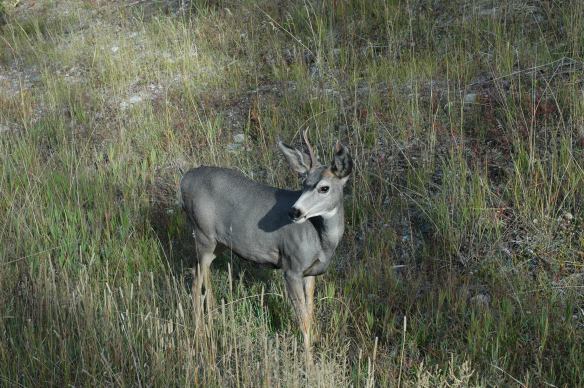
In this day and age we should be working to protect more lands for wildlife–NOT opening them up to hunting and fishing! Please vote NO on the proposed rule which would further degrade habitat for all species.
Jim Robertson
————————————————————————-
Interior Secretary David L. Bernhardt recently announced a proposal to open or expand hunting and fishing opportunities on 97 National Wildlife Refuges (NWR) across the country and 9 National Fish Hatcheries. This will include 8 NWR’s that will be opened to hunting or fishing for the first time. The increased access and opportunities for sportsmen spans 2.3 million acres and brings the number of refuges where the public may hunt up to 399 and up to 331 where fishing is permitted. This proposed expansion will create 900 distinct new hunting opportunities across the United States. A full list of Refuge…
Cases reported in Colorado, South Dakota, Pennsylvania
‘You cannot make sacrifices like this with people’s lives’
We’re tracking the latest on the coronavirus outbreak and the global response. Sign up here for our daily newsletter on what you need to know.
There’s been a spike in coronavirus cases at meat plants in the U.S., with hundreds of reported infections in just the last week. That’s adding to questions over the fragility of the food-supply chain and raising concerns over worker safety.
As many as 50 people at a JBS SA beef facility in Colorado’s Weld County tested positive, adding to more than 160 cases at a Cargill Inc. meat-packaging plant in Pennsylvania, union officials said on Friday. South Dakota Governor Kristi Noem on Friday reported 190 cases at a Smithfield Foods Inc. pork facility, the Associated Press said. The Cargill and Smithfield plants are being shuttered, while JBS said it will continue operations.
Workers are also starting to die. Two more deaths were reported by union officials on Friday, one at the Greeley, Colorado meat plant and one in Pennsylvania. Both those facilities are owned by JBS SA, the world’s top meat producer, which didn’t confirm the deaths.
“As our communities and our country collectively face the coronavirus challenge, JBS USA has had team members impacted by COVID-19,” the American unit of the Brazilian meatpacker said in an emailed statement. “We are offering support to those team members and their families. Out of respect for the families, we are not releasing further information.”
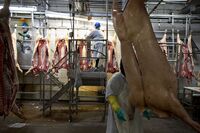
Employees work on pig carcasses at a pork processing facility in Missouri, U.S.
While it’s unclear whether the deaths and other cases have anything to do with the workplaces, the news exposes the vulnerability of global supply chains that are needed to keep grocery stores stocked after panic buying left shelves empty. President Donald Trump and Vice President Mike Pence both addressed the sudden jump in cases at meat plants when speaking to reporters on Friday.
Pence said as many as 300 people have been “impacted” by the coronavirus at the Colorado meat plant. It’s unclear what that figure was referring to, whether it was people who have been quarantined, or possible cases.
Trump also referred to the outbreak at Colorado meat plants on Friday. Neither Pence nor Trump specified exactly which plant they were talking about. Greeley is about 65 miles northeast of Denver.
“We’re looking at this graph where everything’s looking beautiful and is coming down and then you’ve got this one spike. I said, ‘What happened to Denver?,’” Trump said. “And many people, very quickly.”
Plants across the U.S. are starting to reduce output or idle as cases spread from the main cities to rural America. Laborers have, in some cases, staged walk-outs to protest working conditions. In meat plants, stations on processing lines can be close together, creating challenges for social distancing. Workers share break and locker rooms.
The deaths reported Friday bring the total reported for JBS employees to three. On Tuesday, the Retail, Wholesale and Department Store Union, which represents thousands of poultry workers, said two of its members working at a Tyson Foods Inc. plant in Camilla, Georgia, died from the virus.
Smithfield said it will close its South Dakota plant for three days. The company will suspend operations in a large section of the plant on April 11 and completely shutter on April 12 and April 13. The facility has 3,700 employees.
Deep Cleaning
During the suspension, “essential personnel will repeat the rigorous deep cleaning and sanitization that have been ongoing at the facility and install additional physical barriers to further enhance social distancing,” Smithfield said in a statement. “Employees will be paid for any previously scheduled hours during the temporary closure.”
The Cargill plant is located in an area where there are large manufacturing plants and a large influx of people coming in from New York City. Those were among factors that contributed to a high number of cases in that region of Pennsylvania, it’s not a Cargill-only issue, said Wendell Young IV, president of Local 1776 of the United Food & Commercial Workers. The Minneapolis-based company declined to comment on the number of cases at the facility that employs 900 people.
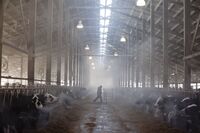
A farmer feeds cattle in a barn at a dairy farm in Illinois, U.S.
“We’ve taken extra steps to focus on safety,” said Jon Nash, head of Cargill’s North American protein business. The company is implementing temperature testing, providing and encouraging employees to wear face coverings, doing enhanced cleaning and sanitizing, among other measures, he said, while also citing temporary wage increases, bonuses and waiving co-pays for Covid-19 testing.
“Our facility will re-open as soon as is it is safe to do so.”
JBS said there were 36 employees who work at the Greeley plant with the virus, fewer than the 50 positive cases reported by the local union. JBS also confirmed “increased absenteeism” at the beef production facility.
The company said it was working in partnership with the U.S. federal government, Colorado Governor Jared Polis and Senator Cory Gardner to secure Covid-19 tests for all team members at the Greeley plant, which it’s aiming to complete through Monday. JBS will also “further enhance previously announced deep cleaning efforts at the facility,” it said in a statement, while adding it planned to continue operations.
The Greeley plant employs more than 3,000 workers, according to the JBS website.
Meanwhile, the local union sent a letter to Governor Polis along with company and county officials demanding that the Greeley plant be shut down for at least a week for “extensive and repeated deep cleanings.” The union asked that employees be paid regular wages during the shutdown, and that upon re-opening workers receive an additional $3 per hour as “hazard pay” on top of usual hourly rates.
“You cannot make sacrifices like this with people’s lives,” Kim Cordova, president of Local 7 of the United Food & Commercial Workers Union, said by telephone. “People can live without beef.”
An infectious and fatal strain of bird flu has been confirmed in a commercial turkey flock in South Carolina, the first case of the more serious strain of the disease in the United States since 2017 and a worrisome development for an industry that was devastated by previous outbreaks.
CHESTERFIELD COUNTY, S.C. (AP) — An infectious and fatal strain of bird flu has been confirmed in a commercial turkey flock in South Carolina, the first case of the more serious strain of the disease in the United States since 2017 and a worrisome development for an industry that was devastated by previous outbreaks.
The high pathogenic case was found at an operation in Chesterfield County, South Carolina, marking the first case of the more dangerous strain since one found in a Tennessee chicken flock in 2017. In 2015, an estimated 50 million…






 Exposing the Big Game