Exposing the Big Game

Forget Hunters' Feeble Rationalizations and Trust Your Gut Feelings: Making Sport of Killing Is Not Healthy Human Behavior

Exposing the Big Game

DIANE KEATON JOINS FIGHT TO STOP ANIMAL CRUELTY EXPOSED BY TIGER KING

VegNews.DianeKeatonParamount

The actress steps up her activism as board member of animal-rights group Social Compassion in Legislation to push for the passing of The Big Cat Public Safety Act, a law that would prohibit the ownership of big cats.

https://vegnews.com/2020/4/diane-keaton-joins-fight-to-stop-animal-cruelty-exposed-by-tiger-king


5,360 Shares    

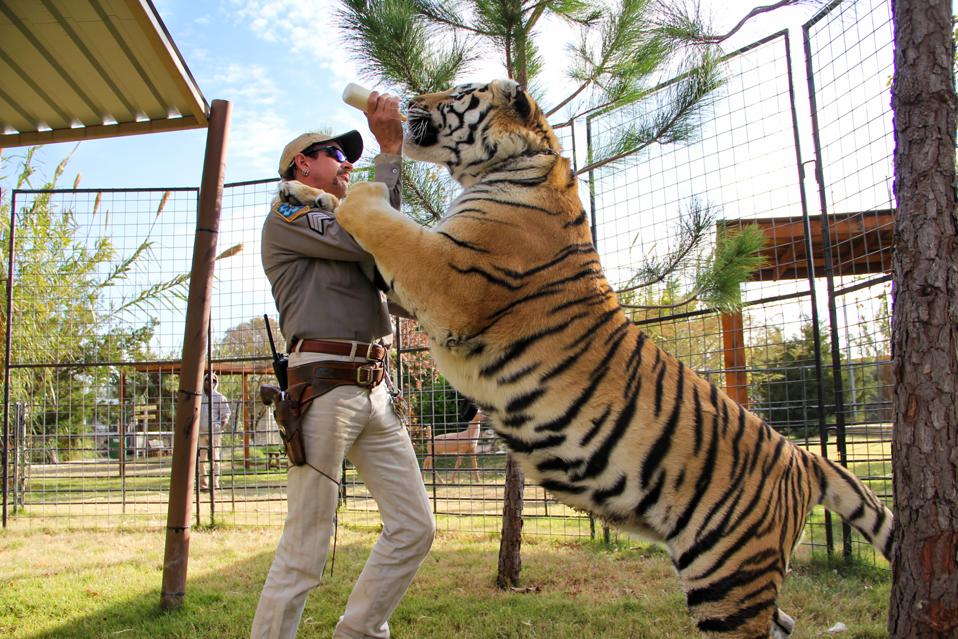
After watching popular Netflix series Tiger King: Murder, Mahem, and Madness, actress Diane Keaton was inspired to take action to stop the animal cruelty depicted in the series. The docu-series follows the feud between Oklahoma roadside zookeeper Joe Maldonado-Passage (known as “Joe Exotic”) and Carole Baskin—owner of Florida sanctuary Big Cat Rescue who worked to shut down Exotic’s zoo—along with other eccentric characters classified loosely as “big cat people.” While Exotic and fellow Tiger King zookeepers claim that their work aids the conservation efforts of big cats, undercover investigations have proven otherwise.

This week, The Humane Society of the United States (HSUS) released never-before-seen footage of Exotic and his cohorts at his G.W. Zoo punching cubs in the face, dragging them by the tails, and engaging in other forms of abuse in the name of making profit from breeding and keeping the wild animals in captivity. Exploiting big cats for entertainment also poses dangers to humans, as seen by the brutal mauling of a zoo employee featured in Tiger King. “Now is the time to end animal cruelty,” Keaton said. “Exotic animals that are kept for private use are not only a public health issue but also endanger the lives of first responders.”

Keaton has long been a board member of animal-rights organization Social Compassion in Legislation (SCIL) and is stepping up her efforts to bring awareness to The Big Cat Public Safety Act, HR 1380 (BCPSA), legislation that would effectively end the ownership of big cats nationwide and prohibit the use of cubs for photo opportunities. “Too many animals suffer in roadside zoos in America. Tiger King did not show the abuses suffered off-camera,” Louise Linton, another prominent SCIL board member, said. “Bears, Big Cats, and many other exotic animals languish in ill-health, starvation, and abuse in tiny cages. There are ample transport vehicles and many sanctuaries awaiting these animals’ release.”

This week, Keaton and other SCIL board members (which include vegan actress Maggie Q) spoke with BCSA author Congressman Mike Quigley (D-IL) to establish a path toward effectively pushing the bill through Congress once the COVID-19 pandemic is under control.

“We are so fortunate to have our board members standing up and shining a light on the problem of personal ownership of these magnificent animals,” SCIL Founder and President Judie Mancuso said. “It is important for the public to understand that exploiters like Joe Exotic put profit over the welfare of the animals. They will breed and breed to keep the baby tiger photo ops rolling, but do not care what happens to those animals once they are sold to whoever is willing to pay for them or dispose of them before they get too big. Sanctuaries like the one run by Carole Baskin do not breed and do not allow the animals to interact with humans, which the show did not highlight enough.”

SCIL, Baskin, the HSUS, and others are urging citizens to voice their concerns about the suffering of big cats to their legislators by asking them to support The Big Cat Public Safety Act.

Photo Credit: Paramount Pictures

Intensity of past methane release measured with new, groundbreaking methods

Exposing the Big Game's avatarThe Extinction Chronicles


March 30, 2020
Source:
CAGE – Center for Arctic Gas Hydrate, Climate and Environment
https://www.sciencedaily.com/releases/2020/03/200330093427.htm
Summary:
A novel approach to geochemical measurements helps scientists reconstruct the past intensity of the methane seeps in the Arctic Ocean. Recent studies show that methane emissions fluctuated, strongly, in response to known periods of abrupt climate change at the end of the last glacial cycle.
Share:
FULL STORY

Past records of methane release are crucial for understanding future climate changes. Methane is a potent greenhouse gas, that has had significant impact on climate changes in the geological past.

“Previously, when dating the natural release of methane, we used to measure mostly carbon isotopes. But now we know that carbon isotopes alone can’t tell us the full story of past emissions of this greenhouse gas.” says professor Giuliana Panieri, from CAGE Centre for Arctic Gas Hydrate, Environment and Climate at UiT The Arctic University of…

View original post 934 more words

I’m A Real Tiger Keeper. Here’s What Disturbed Me About ‘Tiger King.’


“The way we treat wildlife matters. In the era of the coronavirus pandemic, we’re seeing the dire consequences of this right now.”
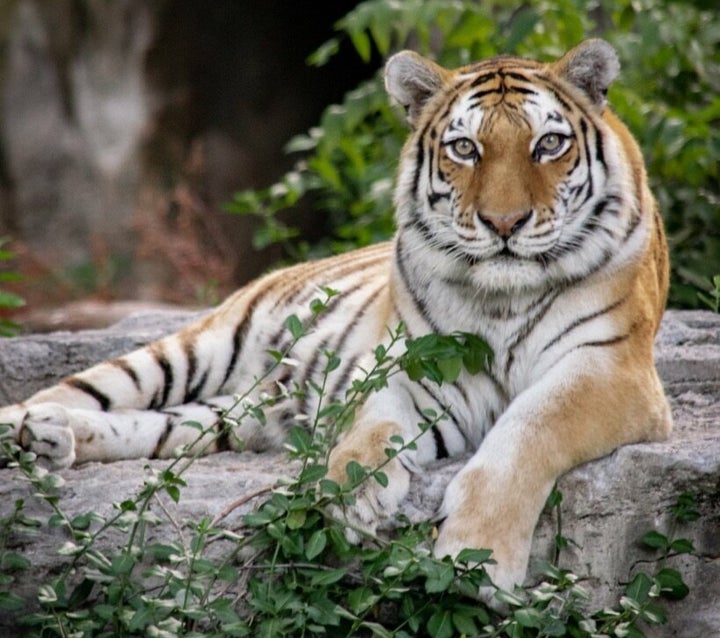
A female Amur tiger at the zoo where the author works. It's estimated that only 350-450 Amur tigers survive in the wild.

A female Amur tiger at the zoo where the author works. It’s estimated that only 350-450 Amur tigers survive in the wild.

I’ve worked as an animal caretaker at a renowned, AZA-accredited organization for over a decade now. It’s a unique job, and every day is different, but even in my world, it’s a weird time to be a tiger keeper.

I guess you might say that it’s never not a weird time to be a tiger keeper, but here in the age of COVID-19 and “Tiger King,” I find it especially odd.

The pandemic started to spread before I saw the Netflix documentary. When the mayor of our city issued a “shelter in place” order, the zoo that I work at closed to the public. For years, I’ve explained that I work in a 365-day a year occupation to kids by saying, “You don’t skip feeding your dog on Christmas, right?” Meaning just because the zoo is closed, keepers still need to come in.

The first morning of working in the closed zoo felt peaceful. I’m used to quieter days in the winter, but even then, the zoo functions like a small city, with various employees cleaning grounds, fixing infrastructure, hustling this way and that. The lockdown feels different.

Only “essential” staff are present, and carnivore keepers like myself typically work solo as a safety precaution. Sometimes I spend my entire shift without seeing another person. There’s a calmness in the solitude. It’s just me and the cats.

Outside, the world brimmed with a sense of impending doom, with rising coronavirus case counts and what seemed negative news 24 hours a day. Within the zoo’s walls, I pushed the anxiety out and focused on the gentle chuffs of our tigers.

The zoo is not immune to the workings of the outside world, and as COVID-19 escalated, things changed within it. Our department split into two teams, and our weekends rotated, with each team now working half of the week.

In theory, if one team becomes exposed to the virus, the other team could still function and step in. After all, you don’t skip feeding your tiger just because there’s a terrifying global pandemic, right?

It was painful to watch Joe’s rowdy staff call themselves ‘keepers,’ diminishing the occupation at a time when caretakers of all kinds are called upon to demonstrate extreme dedication to their particular cause.

Shortly after we split our routine, the texts started.

“Have you seen ‘Tiger King’?” friends asked as seemingly all of America binged the new docuseries.

The show tells the story of Joe Exotic and his uncouth roadside attraction contemporaries who own large exotic animals, like tigers.

I hadn’t seen it.

As many of my friends joked about working from home in their sweatpants and as comedians hosted late-night shows from their bathtubs, my job seemed to become even more intense. Despite what Joe preaches, wild animals are not pets, so I can’t exactly take my work home with me.

While on the job, I’ve been busy, to say the least, averaging 15,000 to 20,000 steps a shift lately. My co-workers and I maintain the animals’  habitats and make sure everyone has healthy diets, fresh water and plenty of enriching objects, foods and activities. Though the zoo’s pathways are vacant, our standards of care remain the same.

What we do at the zoo does not compare to the front-line work of health care, housekeeping, first responder and sanitation workers during the age of COVID-19. These individuals truly are heroes. Nonetheless, I am leaving my home every morning ― the only place I deem genuinely safe ― and going out into an increasingly perilous world.

At work, I inevitably cross paths with maintenance workers or horticulture staff from time to time, and it isn’t always possible to maintain a six-foot distance. Then, of course, there is the shift change between teams. Before I leave my building on my “Friday,” I wipe down everything I can with diluted bleach. I wipe door handles, locks, broom handles, countertops, the desk and keyboard, hose bibs and sink nozzles. But it still seems impossible to sanitize everything. It never really feels like enough.

When I get home from work each day, I go straight into my basement, where I am lucky enough to have a shower. I leave my zoo clothes downstairs, wipe my phone down with alcohol, shower and wash my hair before relieving my now teach-at-home husband from caring for our young son.

This is all to say, I’m not exactly in the position for a quarantine-TV binge.

Still, the texts kept coming.

“What do you think of ‘Tiger King’?”

In an effort to have an opinion to offer, I finally squeezed the show into my nightly meal-prep/dishwashing routine.

So, here’s what I think.

The animal abuse was appalling. Seeing Joe Exotic tear tiger cubs, only minutes old, away from their mother so that they could become props in his “cub petting” scheme is not a scene I will quickly forget.

But there was something else about “Tiger King” that bothered me. Something more subtle than the overt abuse and general craziness.

I took a pause, hearing this, as I peanut-buttered my sandwich to prepare for work the next day. I was prepping to leave my safe space, potentially risking the safety of my family, to care for the zoo’s animals. And, honestly, I wouldn’t have it any other way. My co-workers  and I are determined to guide the animals in our care through this uncertain era, no matter what comes of it.

Whether it’s a wet market in China or people like Joe Exotic and his friends illegally trading and breeding wildlife in our own backyard, the way we treat wildlife matters. We’re seeing the dire consequences of this right now.

Most animal caretakers have four-year degrees, or even graduate degrees,  and years of experience. We are working in two teams precisely because of the skill and expertise our job requires. If we all become sick with the novel coronavirus, the average (pardon the pun) Joe will not be able to step in and safely fill our shoes, despite Baskin’s claim that anyone could and would “just do that stuff for free.”

It was painful to watch Joe’s rowdy staff call themselves “keepers,” diminishing the occupation at a time when caretakers of all kinds are called upon to demonstrate extreme dedication to their particular cause.

As these weeks of sheltering in place have gone by, the weather has warmed up. More trees have budded out. The forsythia bloomed. There’s a muted murmur in the air — the spring chorus of American toads — adding an otherworldliness to the zoo’s vacant pathways. But the quiet no longer seems peaceful to me. It seems eerie.

I miss the energy ― the laughter and joy bubbling from families visiting the zoo, now unnervingly gone. I miss the chance to connect with guests and talk to them about what our zoo is all about ― the conservation and welfare of the diverse species, including tigers, in our care. I may not have always recognized it, but now it’s obvious: The visitors are an essential component of the zoo, too.

As we continue to be locked in our homes and to distance ourselves from friends and family and co-workers, many people have looked for the source of this pandemic. I have seen bats blamed for the coronavirus. Or pangolins. I’ve even heard snakes are at fault. But really, we humans are the ones to blame.

The intersection of humans, animals and the environment creates the One Health approach to disease control, and, let’s be honest, as a society, we’re kind of failing at it. Whether it’s a wet market in China or people like Joe Exotic and his friends illegally trading and breeding wildlife in our own backyard, the way we treat wildlife matters. We’re seeing the dire consequences of this right now.

It’s hard not to watch “Tiger King.” Everyone is talking about it and, while we patiently quarantine, no one really has any other plans. So, why not indulge in staring at the train wreck? But remember that for every Joe Exotic, there are hundreds of dedicated keepers leaving the safety of their homes and heading out into the pandemic to care for these remarkable animals in real and positive ways.

And when all of this is over, this tiger keeper, for one, can’t wait to welcome guests back to the zoo. None of us knows what a post-pandemic world will look like. But I sure hope that there will be a bright future for both humans andtigers.

Carolyn Mueller Kelly is a keeper at an AZA-accredited U.S. zoo with more than a decade of experience in animal care. Aside from her work with lions, tigers and bears, she loves to spend her time writing.

Did Netflix’s ‘Tiger King’ Forget About The Tigers?

EDITORS’ PICK|3,758 views|

The crazy, chaotic energy of Netflix’s Tiger King proved the perfect antidote to coronavirus anxiety, as 34 million people watched the series during its first ten days on the streaming platform.

Judging from the initial responses on social media, many viewers felt absolutely certain that Carole Baskin murdered her husband (as the documentary strongly implies), while Joe Exotic was hailed as a warped kind of hero, being the protagonist of Netflix’s story.

The series even sparked a semi-satirical #FreeJoeExotic campaign, prompting a reporter to ask President Trump if the titular Tiger King was to receive a presidential pardon; it’s a ridiculous question for the president to receive during a global pandemic, but to be fair, we live in ridiculous times.

Now that the initial shockwave has passed, and the world has had time to fully absorb the madness of the exotic animal trade, some are asking why the filmmakers chose to leave big cat welfare in the background, focusing on the eccentric personalities and unsolved murder-mystery.

It’s not a particularly difficult question to answer; any filmmaker rewatching those clips in the editing room, tasked with crafting a compelling narrative, would absolutely shift focus to the larger-than-life characters in this story. Tigers can’t possibly compete with the electric cast of crackpots featured in this series – they’re far too outrageous to waste.

From an animal rights perspective, there’s much to criticize about Tiger King, but I think it’s important to view the series as what it actually is – a story – rather than what it “should” have been. Tiger King is a sensationalist slice of entertainment, and doesn’t pretend to be anything else.

The plight of the lions and tigers cooped up in Joe’s cages, however, is rarely forgotten; the sight of the majestic creatures sitting forlornly in those tiny cages serves as a constant reminder that Joe and others are severely abusing them for profit. Watching newborn cubs being torn from their mother was disgusting, and it was clear that Joe didn’t give a damn about their welfare; these magnificent predators were treated like oversized plushies.

That being said, Carole Baskin, whatever you think of her, has good reason to be angry about her portrayal; not just the murder mystery thing (which has, inevitably, led to her being harrassed by lunatics), but the implication that Baskin was mistreating her tigers to the same extent Joe was, which is simply false.

Or at least, that’s currently the case. Because Baskin’s sanctuary, Big Cat Rescue, has a complicated history, like everything in Tiger King. As the documentary points out, Baskin used to be incredibly ignorant to the needs of these animals, and during the nineties, even offered a “bed and breakfast” experience that allowed guests to spend the night with a young wild cat in their cabin.

Clearly, Baskin has changed her priorities, having overhauled and reassembled the sanctuary long ago; it’s been a non-profit for years, Baskin now campaigning for a total ban of the private ownership of big cats, regardless of keeping conditions.

From an animal rights perspective, it doesn’t matter what Baskin’s motivations are, or what her history is, considering that she is currently advocating for big cat welfare. Clearly, the exotic animal market is rotten to the core, a wretched hive of scum and villainy – that’s why it made for such great television.

Big cat people, to put it mildly, are extremely weird. Many of them have a warped, Disney-esque perception of the animal kingdom, an infatuation devoid of real respect. Should one really cuddle creatures that are capable of tearing off limbs?

But there is an upside to Tiger King’s sensationalism; due to the documentary’s outrageous content, an extraordinary amount of people are now talking about it. Which means that many more people now understand how deeply immoral it is to own a tiger, pet a tiger, or to have a selfie taken with a cub.

This wasn’t the focus of the documentary, but it’s become part of the conversation, and those big cats desperately needed someone to shine a light on their deplorable living conditions.

Because the most extraordinary thing about this insane series, by far, is that (almost) all of what we saw was perfectly legal.

WHO investigating reports of coronavirus patients testing positive again


Volume 90%

The World Health Organization (WHO) confirmed on Saturday it is investigating reports of some recovered coronavirus patients testing positive for the illness after initially testing negative.

The move is in response to a report from South Korea on Friday that 91 patients who had been cleared of COVID-19 and were being prepared for discharge tested positive again. Officials say that, rather than being reinfected, patients may be suffering from a “reactivated” coronavirus.

“We are aware of these reports of individuals who have tested negative for COVID-19 using PCR (polymerase chain reaction) testing and then after some days testing positive again,” the WHO told The Hill in a statement.

“We are closely liaising with our clinical experts and working hard to get more information on those individual cases. It is important to make sure that when samples are collected for testing on suspected patients, procedures are followed properly,” it added.

The WHO’s clinical management guidelines state that patients can be discharged from the hospital after two negative coronavirus test results at least 24 hours apart.

Current studies have shown that as many as 14 days can take place between the start of symptoms and clinical recovery in mild cases of the coronavirus.

“We are aware that some patients are PCR positive after they clinically recover, but we need systematic collection of samples from recovered patients to better understand how long they shed live virus,” the WHO said.

The novel coronavirus has infected more than 1.7 million people worldwide and killed more than 103,000.


COVID-19 is nature’s revenge

I’m in the checkout line at the supermarket. Six feet separates me from the people in front of me unloading their groceries onto the conveyer belt. Behind their N95 facemasks I can see the anxiety in their eyes.

They’re leaning as far away from the cashier as possible to maintain a safe zone around them. It’s hard for me not to notice the items being tallied as the red scanner beeps loudly. Pearl onions, chili powder, People magazine, Wisconsin cheddar cheese, chicken wings, BBQ sauce. Then it occurs to me. We’re doomed. This is it. We are in over our heads, and we’re not going to make it.

This is, by any measure, the largest health emergency of my, over-half-century-lifetime. A viral pandemic sweeps the globe. A sickness unleashed by our human exploitation of animals in an Asian meat market, and our response? Quarantine us at home with dry rubbed chicken wings with BBQ sauce.

I know what you’re thinking. Damn! That sounds delicious! Am I right? OK. Let’s pull the lens back to wide angle for a minute and have a look around.

It’s almost as if nature, and the animals themselves are holding up a protest sign, arms extended overhead, marching down main street, saying ENOUGH IS ENOUGH!

A majority of emerging infectious diseases in humans — including COVID-19, Mad Cow Disease, Bird Flu, MERS, SARS, Ebola, HIV, Swine flu, and cholera all came from animals, and how we treat them.

Bird flu came from chickens. Swine flu came from pigs. Mad Cow Disease came from cows. Ebola came from bats. And now COVID -19 seems to have originated from a nasty meat-market cocktail of slaughtered pigs, dogs, cats, bats, turtles, chickens, and pangolins. Just in case our ethnocentric defenses were raised when considering the food habits of people in a faraway land. Keep in mind, that animals on industrial factory farms in the good-ole U.S. of A. are so highly confined that the only defense against bio-catastrophic viral outbreaks are massive amounts of overused antibiotics. Antibiotics passed on to us through the food system. Antibiotics that will no longer work given that these mutant viral eruptions have clever tendencies to overcome.

It’s almost as if nature, and the animals themselves are holding up a protest sign, arms extended overhead, marching down main street, saying ENOUGH IS ENOUGH! Stop exploiting us! But are we listening? Is this new pandemic enough for us to take a look at how we exploit and consume animals? After all, our own existence is in jeopardy. It’s obvious, what we’re doing to animals is killing us, too.

I’ve had a plant-based diet for over 35 years. I had my own mini-awakening when examining our unhealthy meat-centric food system.

I learned that a vegan diet produces the equivalent of 50% less carbon dioxide, uses 1/11th oil, 1/13th water, and 1/18th land compared to a meat-lover for their food. Each day, a person who eats a vegan diet saves 1,100 gallons of water, 45 pounds of grain, 30 square feet of forested land, 20 pounds CO2 equivalent, and one animal’s life.

As a matter of fact, the World Health Organization recommends a plant-based diet to help prevent obesity, heart disease and type-2 diabetes.

Forgive my hyperbolic meltdown in the supermarket earlier when observing the general public’s food choices. I’m not as hopeless as my melodramatic self claims to be. More and more people are making the connection that eating plants instead of animals is healthier for us, more sustainable for the earth, and obviously a better deal for animals.

I’ll ask the question we’re all thinking. But why are vegans so annoying? I know, I know, we can be.

I don’t have the answers to all of our questions. But there is one thing I do know, our exploitive relationship with animals and nature is the reason why the world is on lockdown, and choosing to eat plants instead of animals is a giant step toward a better future.

John Merryfield lives in Tahoe City.

Coronavirus: ‘Deadly resurgence’ if curbs lifted too early, WHO warns

Exposing the Big Game's avatarThe Extinction Chronicles

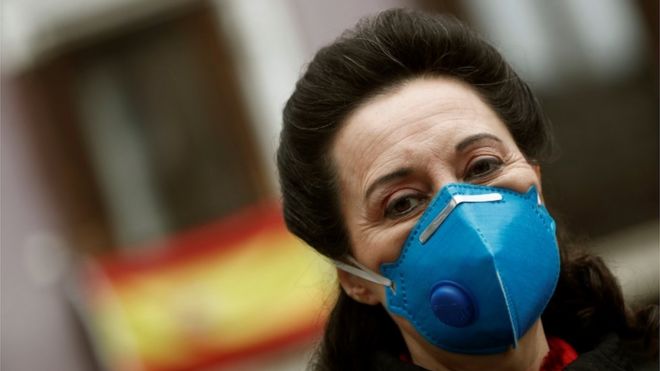
A woman walks on a street in central Madrid, Spain, 10 April 2020Image copyrightEPA
Image captionEaster celebrations have been cancelled across Spain and people encouraged to worship remotely

Lifting coronavirus lockdown measures too early could spark a “deadly resurgence” in infections, the World Health Organization chief has warned.

Dr Tedros Adhanom Ghebreyesus said countries should be cautious about easing restrictions, even as some struggle with the economic impact.

Europe’s worst hit countries, Spain and Italy, are both relaxing some measures, while their lockdowns continue.

Globally there are 1.6 million cases of coronavirus and 100,000 deaths.

Speaking at a virtual news conference in Geneva, Dr Tedros said there had been a “welcome slowing” of the epidemics in some European countries.

He said the WHO was working with governments to form strategies for easing restrictions, but that this should not be done too soon.

“Lifting restrictions too quickly could lead to a deadly resurgence,” he said.

View original post 406 more words

Coronavirus: New York has more cases than any country

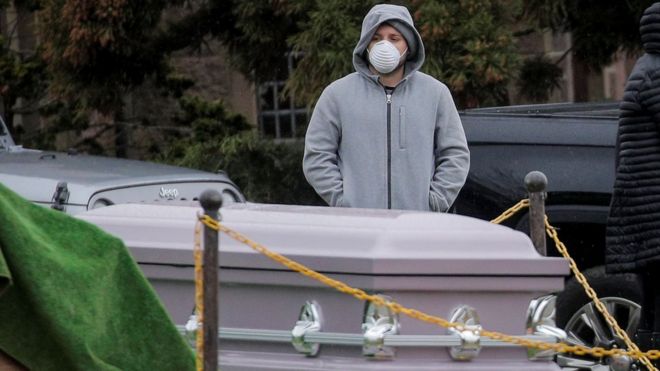
Mourners attend a funeral at The Green-Wood Cemetery, amid the coronavirus disease in Brooklyn, New YorkImage copyrightREUTERS
Image captionMourners attend a funeral in Brooklyn, New York, as the city’s coronavirus death toll hit a record high for a third day

New York state now has more coronavirus cases than any single country outside the US, according to latest figures.

The state’s confirmed caseload of Covid-19 jumped by 10,000 on Thursday to 159,937, placing it ahead of Spain (153,000 cases) and Italy (143,000).

China, where the virus emerged last year, has reported 82,000 cases.

The US as a whole has recorded 462,000 cases and nearly 16,500 deaths. Globally there are 1.6 million cases and 95,000 deaths.

While New York state leads the world in coronavirus cases, its death toll (7,000) lags behind Spain (15,500) and Italy (18,000), though it is more than double the official figure from China (3,300).

Photos have emerged of workers in hazmat outfits burying coffins in a mass grave in New York City.

Drone pictures show bodies being buried in a wide trench on New York's Hart IslandImage copyrightREUTERS
Image captionAbout 40 coffins were buried on Thursday
Drone pictures show bodies being buried on New York's Hart IslandImage copyrightREUTERS

Drone footage showed workers using a ladder to descend into the huge pit where the caskets were stacked.

The images were taken at Hart Island, off the Bronx, which has been used for more than 150 years by city officials as a mass burial site for those with no next-of-kin, or families who cannot afford funerals.

Burial operations at the site have ramped up amid the pandemic from one day a week to five days a week, according to the Department of Corrections.

Prisoners from Rikers Island usually do the job, but the rising workload has recently been taken over by contractors.

New York City Mayor Bill de Blasio indicated earlier this week the city’s public cemetery might be used for burials during the pandemic.

“Obviously the place we have used historically is Hart Island,” he said.

Media captionIs it too soon for a thriller movie on coronavirus?

The number of coronavirus deaths in New York state increased to 799 on Wednesday, a record high for a third day.

But Governor Andrew Cuomo took heart from the fact that the number of Covid-19 patients admitted to New York hospitals dropped for a second day, to 200.

He said it was a sign social distancing was working. He called the outbreak a “silent explosion that ripples through society with the same randomness, the same evil that we saw on 9/11”.

Another glimmer of hope was heralded on Thursday as official projections for the nationwide death toll were lowered.

Banner image reading 'more about coronavirus'
Banner

Dr Anthony Fauci, a key member of the White House’s coronavirus task force, told NBC News’ Today show on Thursday the final number of Americans who will die from Covid-19 in the outbreak “looks more like 60,000”.

In late March, Dr Fauci estimated “between 100,000 and 200,000” could die.

The 60,000 projection would match the upper estimate for total flu deaths in the US between October 2019 to March 2020, according to government data.

But Vice-President Mike Pence stressed on Thursday that Covid-19 is about three times as contagious as influenza.

The White House has previously touted estimates that 2.2 million Americans could die from coronavirus if nothing was done to stop its spread.

Stay-at-home orders have in the meantime closed non-essential businesses in 42 states, while drastically slowing the US economy.

New data on Thursday showed unemployment claims topped 6 million for the second week in a row, bringing the number of Americans out of work over the last three weeks to 16.8 million.

Chicago meanwhile imposed a curfew on liquor sales from 21:00 local time on Thursday to stop the persistent violation of a ban on large gatherings.

Media captionHow caravans are helping frontline medics with a place to stay

The measure, due to remain in place until 30 April, comes after health officials this week said black Chicagoans account for half of all the Illinois city’s coronavirus cases and more than 70% of its deaths, despite making up just 30% of the population.

“We are putting this curfew in place because too many individuals and businesses have been violating the stay-at-home order,” said Mayor Lori Lightfoot on Wednesday.

Gun violence in Chicago on Tuesday left seven dead and 14 injured, which city officials said was unforgivable given the virus crisis.

“Every one of those ER beds taken up by a gunshot victim could be somebody’s grandmother, somebody with pre-existing conditions, somebody that is in danger of losing their lives because of the pandemic,” Supt Charlie Beck said.

Media caption‘I just had a baby – now I’m going to the frontline.’

Figures from Louisiana, Mississippi, Michigan, Wisconsin and New York reflect the same racial disparity in coronavirus infections.

Presumptive Democratic White House nominee Joe Biden joined growing calls on Thursday for the release of comprehensive racial data on the pandemic.

He said it had cast a spotlight on inequity and the impact of “structural racism”.

Meanwhile, a court has blocked parts of Texas’ temporary abortion ban, which the state announced last month citing the coronavirus outbreak.

The order against “medically unnecessary” procedures was introduced to reserve valuable medical resources for those treating Covid-19 only, the state’s Republican attorney general said in March.

Media captionItalian PM Giuseppe Conte said he might begin to relax some measures by the end of this month

But Judge Lee Yaekel, a George W Bush appointee, granted a temporary restraining order against the ban on Thursday.

“As a minimum, this is an undue burden on a woman’s right to a previability abortion,” he wrote in his ruling.

Alabama, Iowa, Ohio and Oklahoma have introduced similar abortion bans.

While there is still no vaccine for Covid-19, America’s culture wars have proved similarly incurable.

Legal battles have also ensued over whether guns shops should be closed during the pandemic, and if religious services should be exempt from state orders that ban large gatherings.

China’s wet markets can include these bizarre, unusual items

Get all the latest news on coronavirus and more delivered daily to your inbox. Sign up here.

GRAPHIC IMAGE WARNING 

Sponsored Video

Watch to learn more

While rumors have swirled that the coronavirus pandemic originated in bats and then infected another animal that passed it onto people at a market in the southeastern Chinese city of Wuhan, scientists have not yet determined exactly how the new coronavirus infected people.

CLICK HERE FOR COMPLETE CORONAVIRUS COVERAGE

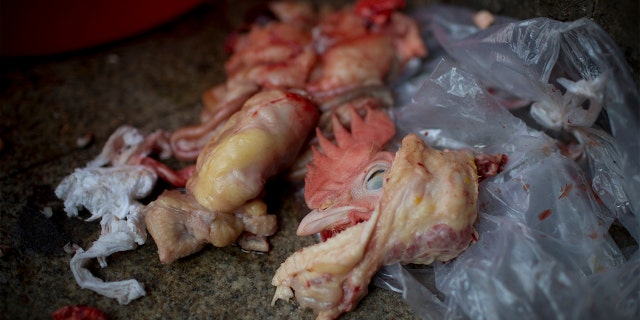
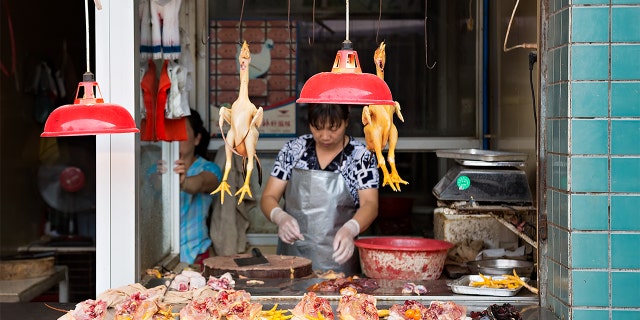
Chicken parts sit on the floor at a stall in the Shekou wet market in Shenzhen, China. (Brent Lewin/Bloomberg via Getty Images)

Chicken parts sit on the floor at a stall in the Shekou wet market in Shenzhen, China. (Brent Lewin/Bloomberg via Getty Images)

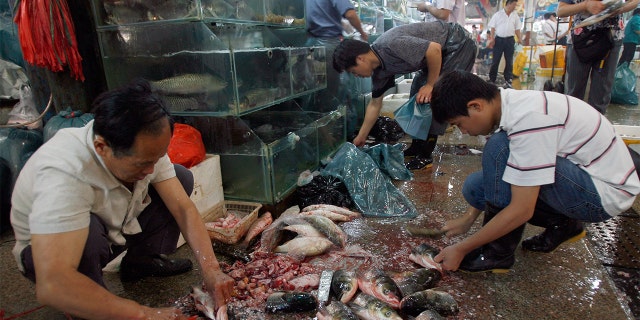
But these kinds of wet markets, which have long included bizarre and unusual items, are known to operate in not the most sanitary conditions.

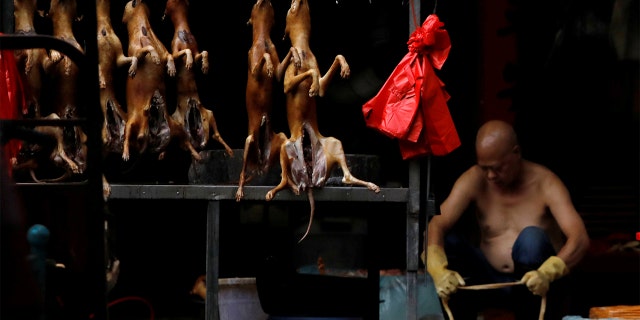
Butchered dogs displayed for sale at a stall inside a meat market during the local dog meat festival, in Yulin, Guangxi Zhuang Autonomous Region, China. (REUTERS/Tyrone Siu/File Photo)

Butchered dogs displayed for sale at a stall inside a meat market during the local dog meat festival, in Yulin, Guangxi Zhuang Autonomous Region, China. (REUTERS/Tyrone Siu/File Photo)

“You’ve got live animals, so there’s feces everywhere. There’s blood because of people chopping them up,” Peter Daszak, president of EcoHealth Alliance, which works to protect wildlife and public health from emerging diseases, told the Associated Press last month.

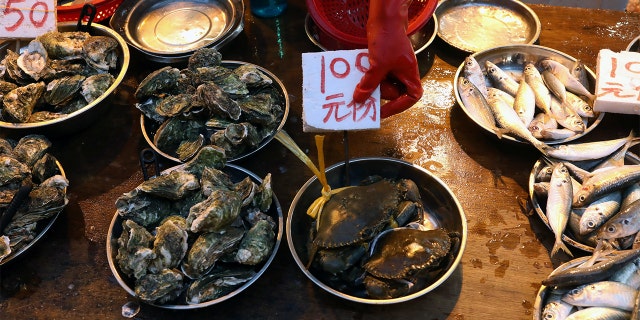
Fresh seafood on sale at a wet market in Hong Kong, China. (REUTERS/Ann Wang)

Fresh seafood on sale at a wet market in Hong Kong, China. (REUTERS/Ann Wang)

“Wet markets,” as defined by the Oxford English Dictionary, are places “for the sale of fresh meat, fish, and produce.” They also sell an array of exotic animals.

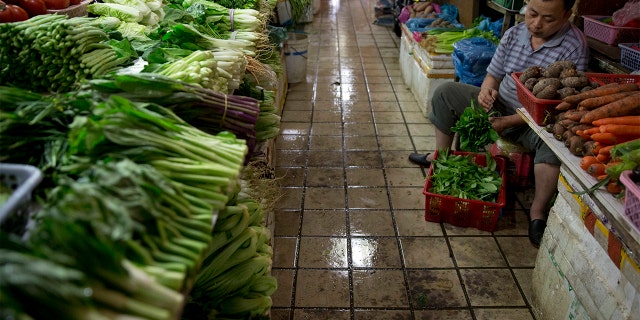
A vendor prepares vegetables for sale at a wet market in Shenzhen, China. (AP Photo/Ng Han Guan)

A vendor prepares vegetables for sale at a wet market in Shenzhen, China. (AP Photo/Ng Han Guan)

The Huanan Seafood Wholesale Market in Wuhan, before its closure, advertised dozens of species such as giant salamanders, baby crocodiles and raccoon dogs that were often referred to as wildlife, even when they were farmed, according to the AP.

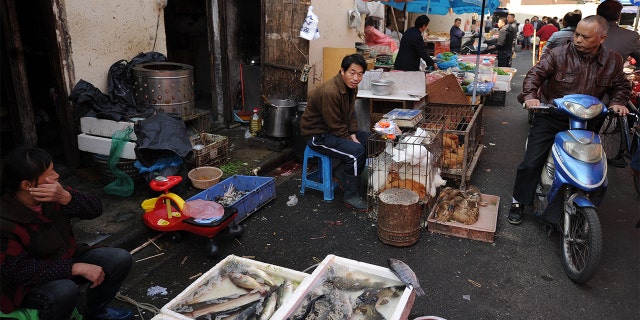
Vendors sell fish and poultry at an outdoor wet market in Shanghai's northern district of Zhabei. (PETER PARKS/AFP via Getty Images)

Vendors sell fish and poultry at an outdoor wet market in Shanghai’s northern district of Zhabei. (PETER PARKS/AFP via Getty Images)

And like many other “wet markets” in Asia and elsewhere, the animals at the Wuhan market lived in close proximity as they were tied up or stacked in cages.

Poultry (FILE)

Poultry (FILE)

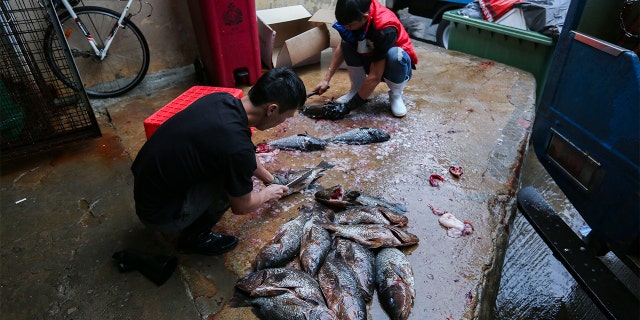
Animals in “wet markets” are often killed on-site to ensure freshness — yet the messy mix raises the odds that a new virus will jump to people handling the animals and start to spread, experts say.

Chinese seafood vendors prepare fresh fish at a wet market in Beijing. (TEH ENG KOON/AFP via Getty Images)

Chinese seafood vendors prepare fresh fish at a wet market in Beijing. (TEH ENG KOON/AFP via Getty Images)

“I visited the Tai Po wet market in Hong Kong, and it’s quite obvious why the term ‘wet’ is used,” an NPR reporter wrote about them earlier this year.

Seafood at Aberdeen Wet Market. (Chen Xiaomei/South China Morning Post via Getty Images)

Seafood at Aberdeen Wet Market. (Chen Xiaomei/South China Morning Post via Getty Images)

CORONAVIRUS: WHAT YOU NEED TO KNOW

“Live fish in open tubs splash water all over the floor. The countertops of the stalls are red with blood as fish are gutted and filleted right in front of the customers’ eyes. Live turtles and crustaceans climb over each other in boxes,” he described. “Melting ice adds to the slush on the floor. There’s lots of water, blood, fish scales and chicken guts. Things are wet.”