A northeast Washington sheriff said Tuesday he may look into trapping and putting radio collars on wolves to protect public safety, after his offer to help the state Department of Fish and Wildlife got a cold reception.
Stevens County Sheriff Brad Manke met with Fish and Wildlife officials last week to discuss having wildlife deputy Jeff Flood trap wolves. Flood’s experience as a trapper and knowledge of wolf movements would help the department collar, and track, more wolves, Manke said.
“I made it very clear our help was for free. I made it clear we would assume liability for anything we do,” Manke said,
“They pretty much indicated they didn’t want our help trapping,” he said. “I’d rather cooperate with the department. That would be a better scenario. But I’m going to look at different scenarios.”
A Fish and Wildlife spokeswoman said the department…
The closure is to protect the public during weekend turkey lottery hunts and open turkey hunting on the WMA and is part of the 2019-20 hunting season regulations. Turkey lottery hunts will be held April 11-12 and April 18-19 with open turkey hunting scheduled for April 25-26. The WMA is still open to the public during weekdays in April.
LDWF would also alert the public that Clark’s Creek State Park in Mississippi, which offers nature hiking near the Tunica Hills WMA, is closed as a precaution due to the coronavirus pandemic.
Wasin Kaki, 28, seated, after his arrest by rangers for hunting in Salak Phra Wildlife Sanctuary in Sri Sawat district of Kanchanaburi. (Photo: Piyarat Chongcharoen)
KANCHANABURI: A hunter was arrested in a wildlife sanctuary in Sri Sawat district in possession of two dead animals and some wild honey, but three other men fled after allegedly injuring a forestry official with a knife.
A team of rangers spotted four armed men carrying sacks inside Salak Phra Wildlife Sanctuary in Sri Sawat district on Wednesday evening. They called out for them to stop for a search, but they ran away, said Niphon Chamnonsirisak, director of Forest Conservation Area Zone 4.
As the rangers gave chase, one of the fleeing men allegedly wounded one of them in the right arm with a knife.
Three of the men made good their escape, abandoning…
The COVID-19 virus, of which the origin is not fully confirmed, is generally believed to have infected its first human host at a wildlife market in the central Chinese city of Wuhan, the epicenter of the pandemic.
The highly contagious novel coronavirus, following the SARS virus in 2003, has reignited concerns on wildlife protection and fresh food safety in China. Consequential measures taken to contain the virus spread, such as city lockdowns, transport restrictions, and delays in resuming businesses, have also begun to upend the country’s fresh food industry and supply chain.
The crisis underscores an urgency Chinese business might soon encounter whereby consumers in the country become more wary of the sourcing and distribution of their meat products and other food supplies.
Given the cultural significance of fresh food in China – this is a…
By: By REBECCA BOONE Updated: April 9, 2020 – 11:47 AM
BOISE, Idaho — (AP) — They are two disasters that require opposite responses: To save lives and reduce the spread of COVID-19, people are being told to remain isolated. But in a wildfire, thousands of firefighters must work in close quarters for weeks at a time.
Wildfires have already broken out in Texas and Florida, and agencies are scrambling to finish plans for a new approach. They are considering waivers for some training requirements to previously-certified crew members, and moving some training online.
Other proposals include limiting fire engines to a driver and one passenger, requiring other crew members to ride in additional vehicles. They may scrap the normal campsite catering tents in favor of military-issue MREs, or “Meals Ready to Eat” to reduce touching serving utensils.
Jason Baker-https://www.thejakartapost.com/academia/2020/04/09/will-whats-on-our-plates-cause-the-next-pandemic.html
Jakarta / Thu, April 9, 2020 / 01:44 pm
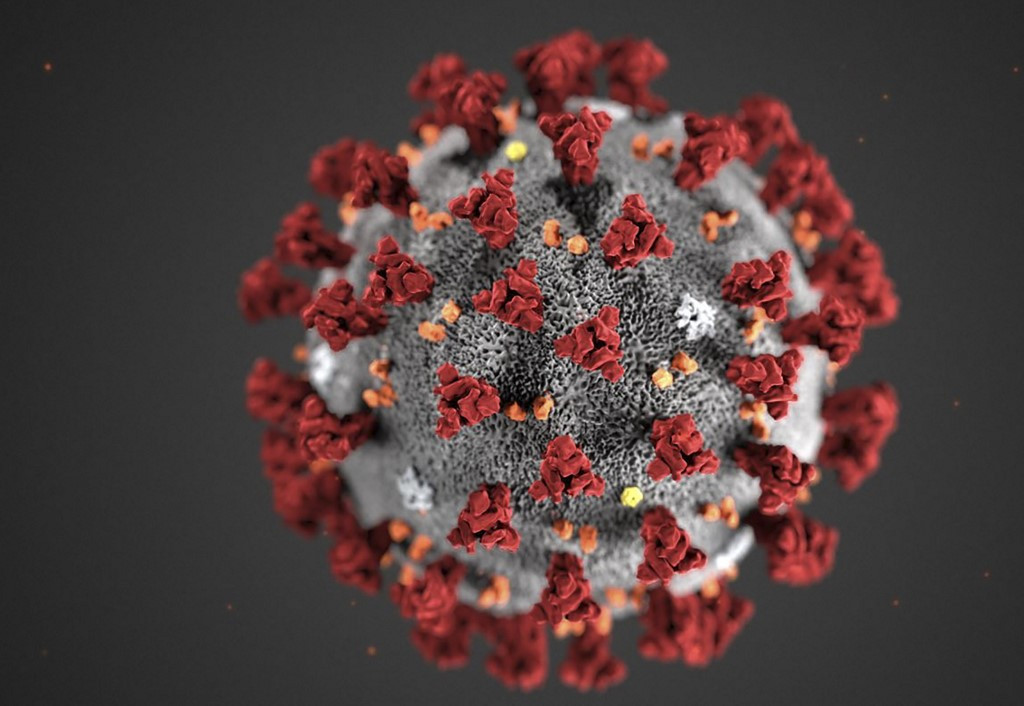
This illustration image obtained on Feb. 3 courtesy of the Centers for Disease Control and Prevention, and created at the Centers for Disease Control and Prevention (CDC), reveals ultrastructural morphology exhibited by coronaviruses. (AFP/Lizabeth Menzies / Centers for Disease Control and Prevention )
The current situation in Indonesia brought about by the novel coronavirus (SARS-CoV-2) makes me want to pull my hair out. Not just because it’s disruptive, but because the signs that an outbreak like COVID-19 would happen were so clear.
Seventeen years ago, when SARS first made headlines, I locked myself in a cage in Hong Kong to illustrate the way our taste for animal flesh contributes to animal-borne diseases. That same year, I wore a hazmat suit to the ASEAN+3 Summit in Bali, where officials were discussing ways to prevent killer diseases. I also dressed as a chicken and demonstrated at a KFC in Bangkok during a deadly bird flu outbreak. All in all, I’ve spent more than two decades warning people that it’s unhealthy – and downright dangerous – to raise animals for food.
Seeing people get sick and die from COVID-19 has only strengthened my resolve to persuade everyone to stop eating animals. We have to learn from past pandemics and go vegan before wearing face masks becomes as commonplace as wearing clothes.
Meat markets, factory farms and slaughterhouses provide the perfect breeding ground for coronaviruses and other potentially devastating pathogens. The high demand for animal-based food means that animals must be mass-produced in crowded, feces-ridden farms and slaughtered on killing floors that are contaminated with blood, vomit and other bodily fluids. Pathogens flourish in such conditions. And when an outbreak does occur, the animals, who have already suffered so much, are slaughtered en masse in horrific ways. I know. I was in Manilla when countless pigs were killed because of a swine flu outbreak.
Some scientists say SARS-CoV-2 started in a Chinese “wet market” that sold seafood, live poultry and exotic animals for human consumption. Others suspect the virus may have been spread by pangolins, scaly anteaters that are often poached and used in traditional Chinese medicine or eaten in China and Vietnam. Whatever its exact origin, SARS-CoV-2 most likely started in animals.
According to the United Nations, 70 percent of new human diseases originate in animals, and most of those are directly linked to animals used for food. Most scientists believe that every flu virus originated in birds, as birds are known to carry every single one of the 144 varieties of influenza.
It’s not unusual for animal-borne pathogens to mutate and sicken humans. While precautions such as suspending travel, quarantining at-risk individuals and practicing good hygiene may help stop the spread of COVID-19 and other deadly diseases, we need to take one more significant step to prevent future epidemics of animal-borne diseases in the first place: Stop raising animals for food.
It’s bad enough that the consumption of meat and other animal-based food contributes to heart disease, diabetes and cancer and that harmful bacteria, including salmonella and E. coli, found in the intestines and feces of warm-blooded animals, often lead to food-poisoning outbreaks. Do we really want to add potentially deadly animal-borne viruses to the mix?
—
PETA’s senior vice president for international campaigns
Disclaimer: The opinions expressed in this article are those of the author and do not reflect the official stance of The Jakarta Post.
Elk gathering on a golf course in ColoradoColorado Parks and Wildlife
As the world has slowed down to stave off the spread of COVID-19, stories of wild animals tromping into now-quiet city streets have gone viral online. Some of these turned out to be completely made-up, including the dolphins supposedly swimming through Venice canals or the elephants getting drunk on corn wine in a Chinese farming village.
But there are also plenty of very real sightings of animals you might not expect in the urban jungle. Coyotes have been spotted throughout San Francisco, even taking naps in patches of green spaces in the city. In the coastal Welsh town of Llandudno, a herd of mountain goats stomped through the streets, munching on vegetation…
by Dan Challender, Amy Hinsley, Diogo Veríssimo and Michael ‘T Sas-Rolfes, The Conversation
Credit: Shutterstock
The early stages of the COVID-19 pandemic have been linked to a “wet”
market in Wuhan, in the Hubei province of eastern China. Wet markets are common in Asia, Africa and elsewhere, selling fresh fruit and vegetables, poultry, fresh meat and live animals, including wildlife.
Reports initially indicated that the coronavirus which causes COVID-19 may have been transmitted to people from wildlife at this wet market because of unsanitary conditions.
The pandemic has led to some wildlife conservation organisations to call for blanket bans on wildlife trade on public health grounds. They include bans on commercial trade in wildlife for human consumption and the closure of these markets. More extreme calls from more than 200 organisations include ending the keeping, breeding, domestication and use of all wildlife, which also covers traditional medicine.
Customers select seafood at a wet market in Dandong, Liaoning Province, China, in 2017. (Philip Wen/Reuters)
They’re more alike than not in their violations of moral common sense.
NRPLUS MEMBER ARTICLE
Although no government is better than China’s at making troublesome people disappear, a strange leniency has been accorded vendors at the country’s live-animal meat markets, who by most accounts gave us the pandemic and yet, reports the Daily Mail, have lately been allowed to set up shop again. China’s coronavirus lockdown is over, authorities have encouraged celebrations of “victory,” and citizens may once again go about their food shopping amid the cries and mayhem of animal slaughter. Ahh, back to normal life!In these parts, we’re told, you’re not really celebrating unless there’s bat, pangolin, cat, or dog meat on the table — the latter, notes the Daily Mail, “a traditional ‘warming’ winter dish.” Reporter George Knowles, writing late last month, provides one of the milder accounts of scenes that will quickly exhaust anyone’s supply of culturally sensitive euphemisms, describing one of the markets — also known as “wet markets,” where both live and dead animals are on offer — in China’s southwestern city of Guilin: “Terrified dogs and cats crammed into rusty cages. Bats and scorpions offered for sale as traditional medicine. Rabbits and ducks slaughtered and skinned side by side on a stone floor covered with blood, filth, and animal remains.”
If you’re up for a few further details, we have travel writer Paula Froelich, in a recent New York Post column, recalling how in the Asian live-animal markets she has visited the doomed creatures “stare back at you.” When their turn comes, she writes,
the animals that have not yet been dispatched by the butcher’s knife make desperate bids to escape by climbing on top of each other and flopping or jumping out of their containers (to no avail). At least in the wet areas [where marine creatures are sold], the animals don’t make a sound. The screams from mammals and fowl are unbearable and heartbreaking.
The People’s Republic has supposedly banned the exotic-meat trade, and one major city, Shenzhen, has proscribed dog and cat meat as well. In reality, observes a second Daily Mail correspondent, anonymously reporting from the city of Dongguan, “the markets have gone back to operating in exactly the same way as they did before coronavirus.” Nothing has changed, except in one feature: “The only difference is that security guards try to stop anyone taking pictures, which would never have happened before.”
Lest we hope too much for some post-pandemic stirring of conscience, consider the Chinese government’s idea of a palliative for those suffering from the coronavirus. As the crisis spread, apparently some fast-thinking experts in “traditional medicine” at China’s National Health Commission turned to an ancient remedy known as Tan Re Qing, adding it to their official list of recommended treatments. The potion consists chiefly of bile extracted from bears. The more fortunate of these bears are shot in the wild for use of their gallbladders. The others, across China and Southeast Asia, are captured and “farmed” by the thousands, in a process that involves their interminable, year-after-year confinement in fit-to-size cages, interrupted only by the agonies of having the bile drained. Do an image search on “bear bile farming” sometime when you’re ready to be reminded of what hellish animal torments only human stupidity, arrogance, and selfishness could devise.
If one abomination could yield an antidote for the consequences of another, Tan Re Qing would surely be just the thing to treat a virus loosed in the pathogenic filth and blood-spilling of Wuhan’s live market. There’s actually a synthetic alternative to the bile acids, but Tradition can be everything in these matters, and devotees insist that the substance must come from a bear, even as real medical science rates the whole concoction at somewhere between needless and worthless. President Xi Jinping has promoted such traditional medicines as a “treasure of Chinese civilization.” In this case, the keys to the treasure open small, squalid cages in dark rooms, where the suffering of innocent creatures goes completely disregarded. And perhaps right there, in the willfulness and hardness of heart of all such practices, is the source of the trouble that started in China.
Already, in the Western media, chronologies of the pandemic have taken to passing over details of the live-animal markets, which have caused viral outbreaks before and would all warrant proper judgment in any case. News coverage picks up the story with the Chinese government’s cover-up of early coronavirus cases and its silencing of the heroic Wuhan doctors and nurses who tried to warn us. To brush past the live markets in fear of seeming “xenophobic,” “racist,” or unduly judgmental of other people and other ways is, however, to lose sight of perhaps the most crucial fact of all. We don’t know the endpoint of this catastrophe, but we are pretty certain that its precise point of origin was what Dr. Anthony Fauci politely calls “that unusual human–animal interface” of the live markets, which he says should all be shut down immediately — presumably including the markets quietly tolerated in our own country. In other words, the plague began with savage cruelty to animals.
Discussion of the live-animal markets is another of those points where moral common sense encounters the slavishly politically correct, though it’s not as if we’re dealing here with Asia’s most sensitive types anyway. No Western critic need worry about hurting the feelings or reputations of people who maximize the pain and stress of dogs in the belief that this freshens the flavor of the meat, and who then kill them at the market as the other dogs watch. Customers of such people aren’t likely to feel the sting of our disapproval either.
About the many customers and suppliers in Asia, and especially in China, of exotic fare, endless ancient remedies, and carvings and trinkets made of ivory, the best that can be said is that these men and women are no more representative of their nations than are the riffraff running the meat markets. Their demands and appetites have caused a merciless pillaging of wildlife across the earth — everything that moves a “living resource,” no creature rare or stealthy enough to escape their gluttony or vanity. Of late even donkeys, such peaceable and unoffending creatures, have been rounded up by the millions in Asia, Africa, the Middle East, and South America for shipment and slaughter, all to satisfy demand for yet another of China’s traditional-medicine manias.
Easy to blame for all of this is the government of China. Authorities took forever, for example, to enforce prohibitions on ivory carving, despite an unquestioned competence in carrying out swift crackdowns. And in general, at every level, the government tends to tolerate a culture of cruelty, or else to actively promote it at the prodding of lucrative industries, both legal and illicit. But the problem runs deeper than that, even as many younger Chinese, to their enormous credit, have tried to organize against the ivory trade, the wet markets, and other depravities in their midst.
In the treatment of animals and in safeguarding human health, there are elementary standards to which all must answer. The challenge to clear thinking, as Melissa Chen writes in SpectatorUSA,
is to avoid falling into the trap of cultural relativism. It’s perfectly appropriate to criticize China’s rampant consumption of exotic animals, lack of hygiene standards and otherwise risky behavior that puts people at risk for zoonotic infections. Until these entrenched behaviors based on cultural or magical beliefs are divorced from Chinese culture, wet wildlife markets will linger as time-bombs ready to set off the next pandemic.
Acknowledging that Western societies have every moral reason to condemn the barbarism and recklessness of the live-animal markets only invites, however, a tougher question: Do we have the moral standing? And if any of us are guilty of blind cultural prejudice or of a smug sense of superiority toward Chinese practices, a moment’s serious thought will quickly set us straight.
When the Daily Mail describes how Chinese guards at the live-animal market now “try to stop anyone from taking pictures,” who does that remind us of? How about our own livestock companies, whose entire mode of operation these days is systematic concealment by efforts to criminalize the taking of pictures in or around their factory farms and slaughterhouses? The foulest live-animal-market slayer in China, Vietnam, Laos, or elsewhere would be entitled to ask what our big corporations are afraid the public might see in photographic evidence, or what’s really the difference between his trade and theirs except walls, machinery, and public-relations departments.
If you watch online videos of the wet markets, likewise, it’s striking how the meat shoppers just go on browsing, haggling, chatting, and even laughing, some with their children along. Were it not for the horrors and whimpers in the background, the scene could be a pleasant morning at anyone’s local farmer’s market. As the camera follows them from counter to counter, you keep thinking What’s wrong with these people? — except that it’s not so easy, rationally, to find comparisons that work in our favor.
No, we in the Western world don’t get involved while grim-faced primitives execute and skin animals for meat. We have companies with people of similar temperament to handle everything for us. And there’s none of that “staring back” that the Post’s Paula Froelich describes, because, in general, we keep the sadness and desperation of those creatures as deeply suppressed from conscious thought as possible. An etiquette of denial pushes the subject away, leaving it all for others to bear. Addressing a shareholders’ meeting of Tyson Foods in 2006, one worker from a slaughterhouse in Sioux City, Iowa, unburdened himself: “The worst thing, worse than the physical danger, is the emotional toll. Pigs down on the kill floor have come up and nuzzled me like a puppy. Two minutes later I had to kill them — beat them to death with a pipe. I can’t care.”
Following the only consistent rule in both live-animal markets and industrial livestock agriculture — that the most basic animal needs are always to be subordinated to the most trivial human desires — this process yields the meats that people crave so much, old favorites like bacon, veal, steak, and lamb that customers must have, no matter how these are obtained. When the pleasures of food become an inordinate desire, forcing demands without need or limit and regardless of the moral consequences, there’s a word for that, and the fault is always easier to see in foreigners with more free-roaming tastes in flesh. But listen carefully to how these foods or other accustomed fare are spoken of in our culture, and the mindset of certain Asians — those ravenous, inflexible folks who will let nothing hinder their next serving of pangolin scales or winter dish of dog — no longer seems a world away.
We in the West don’t eat pangolins, turtles, civets, peacocks, monkeys, horses, foxes, and wolf cubs — that’s all a plus. But for the animals we do eat, we have sprawling, toxic, industrial “mass-confinement” farms that look like concentration camps. National “herds” and “flocks” that all would expire in their misery but for a massive use of antibiotics, among other techniques, to maintain their existence amid squalor and disease — an infectious “time bomb” closer to home as bacterial and viral pathogens gain in resistance. And a whole array of other standard practices like the “intensive confinement” of pigs, in gestation cages that look borrowed from Asia’s bear-bile farms; the bulldozing of lame “downer cows”; and “maceration” of unwanted chicks, billions routinely tossed into grinders. All of which leave us very badly compromised as any model in the decent treatment of animals.
Such influence as we have, in fact, is usually nothing to be proud of. It made for a perfect partnership when, for instance, one of the most disreputable of all our factory-farming companies, Smithfield Foods, was acquired in 2013 by a Chinese firm, in keeping with some state-run, five-year plan of the People’s Republic to refine agricultural techniques and drive up meat production. Now, thanks to American innovation, Smithfield-style, the Chinese can be just as rotten to farm animals as we are — and just as sickly from buying into the worst elements of the Western diet.
In China and Southeast Asia, they have still not received our divine revelation in the West that human beings shall not eat or inflict extreme abuse on dogs but that all atrocities to pigs are as nothing. They’re moving in our culinary direction, however, and more than half the world’s factory-farmed pigs are now in China and neighboring countries. In the swine-fever contagion spreading across that region right now — addressed as usual by mass cullings: gassing tens of millions of pigs or burying them alive — our industrial animal-agriculture system is leaving its mark, while providing yet further evidence that factory farms are all pandemic risks themselves.
How many diseases, cullings, burial pits, and bans on photographing these places even at their wretched best will we need before realizing that the entire system is profoundly in error, at times even wicked, and that nothing good can ever come of it? Perhaps the live-animal markets of China, with all the danger and ruin they have spread, will help us to see those awful scenes as what they are, just variants of unnatural, unnecessary, and unworthy practices that every society and culture would be better off without.
Plagues, as we’re all discovering, have a way of prompting us to take stock of our lives and to remember what really matters. If, while we’re at, we begin to feel in this time of confinement and fear a little more regard for the lives of animals, a little more compassion, that would be at least one good sign for a post-pandemic world.
A Tyson-owned meat processing plant that churns out 2% of the US pork supply ground to a halt this week as workers became infected with Covid-19.
And that wasn’t the only meatpacking plant impacted by the spread of the novel coronavirus. JBS USA on March 31 said it hit pause on much of its work at a beef facility in Souderton, Pennsylvania and wouldn’t have it back online until mid-April. National Beef Packing on April 2 temporarily stopped slaughtering cattle at one of its plants in Tama, Iowa after a worker tested positive for the virus.
Plant closures are emblematic of a larger issue across the US food system, as farms and companies work to weather the storm of Covid-19. The health and safety of workers is paramount if food chains are to continue running smoothly—and workers’ perceived…




 Exposing the Big Game