Exposing the Big Game

Forget Hunters' Feeble Rationalizations and Trust Your Gut Feelings: Making Sport of Killing Is Not Healthy Human Behavior

Exposing the Big Game

COVID-19 Is Trump’s 9/11. Like Bush, He Was Warned and Didn’t Act.

Exposing the Big Game's avatarThe Extinction Chronicles

Donald Trump is a rancid racist, misogynist, liar, fearmonger, panderer and the undisputed world champion of self-aggrandizement. Until a few days ago, however, George W. Bush was winning in the vile metric of the body count: From September 11 to Afghanistan to Iraq, the sheer volume of human suffering that took place during the eight grinding years of the Bush administration bloodbath — suffering that has continued unabated even unto this moment before us — put him in rare and terrible historic company.

When I woke up this morning, COVID-19 had laid its cold finger on the shoulders of nearly 1.5 million people worldwide, killing more than 80,000 of them. Here in the United States, where the buck allegedly…

View original post 647 more words

HSUS sues USDA over policies that risk future pandemics

April 8, 2020 0 Comments

Today the Humane Society of the United States filed a federal lawsuit challenging the response plan for Highly Pathogenic Avian Influenza (or “bird flu”) of the United States Department of Agriculture. The response plan, produced by the Animal Plant Health Inspection Service, is shortsighted and dangerous.

For years, the HSUS has been warning USDA and the factory farm industry of the imminent threat of a pandemic resulting from zoonotic pathogens — diseases transmitted from animals to humans—that are closely associated with the intensive confinement of animals.

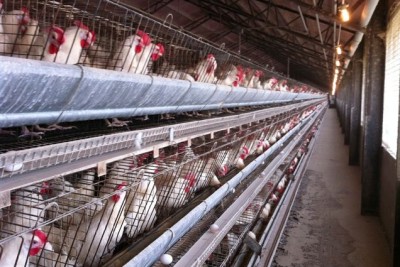
Influenza spreads within factory farms directly from animal to animal or by way of workers, flies, manure, and rodents. When thousands of animals are tightly confined it creates a recipe for disaster, in which potential pathogens can recombine and generate viral forms with the ability to infect people.

While the COVID-19 pandemic likely resulted from a wildlife market and the wildlife trade,prior deadly and costly outbreaks of pathogenic illness in the global food chain have been linked to farm animals. For instance, a 2003 bird flu outbreak came from infected chickens and the 2009 H1N1 swine flu outbreak that sickened nearly 60 million people was linked to U.S. pig farms.

Five years ago, seeing the threat of potential disease outbreaks based on farm animal to human transmission, we asked APHIS to consider how its Highly Pathogenic Avian Influenza control plan could help prevent the development and spread of bird flu. The HSUS suggested a plan that would incentivize producers to give animals room to move naturally, instead of the industrialized norm which often involves cramming birds into cages. Giving animals more space would reduce the risk of mutation and spread of disease. But APHIS went in another direction, with a plan that essentially subsidizes the extreme confinement of animals that causes the threat in the first place.

During a typical outbreak of zoonotic disease, APHIS’s response is often to slowly suffocate and cook millions of conscious birds to death through a method called ventilation shutdown. This involves shutting down a facility’s entire ventilation system causing carbon dioxide and heat to build up. The animals’ bodies are piled up and burned or dumped together. This entire process releases fluids and gases, like dioxin—a toxin linked to cancer, liver and immune system damage, birth defects, and reproductive problems.

Under the APHIS plan, the companies that stuffed these animals in cages or warehouses are to be reimbursed with taxpayer dollars and allowed to continue cruelly confining birds so that this wasteful, cruel and self-defeating cycle can begin again. Between 2014 and 2016 more than 50 million birds (egg laying hens, chickens raised for meat, turkeys and others) were killed across more than a dozen states in an effort to contain a bird flu outbreak. This did as much as three billion dollars’ worth of damage to the U.S. economy, and APHIS spent over $900 million cleaning up the mess it describes as the most serious animal health disease incident in history.

An outbreak response plan that indemnifies factory farms in this way isn’t just cruel; it represents a threat to human health. As our lawsuit makes clear, the USDA’s approach foolishly props up practices that threaten not just Americans but countless others around the globe with more frequent and more life-threatening pandemics.

We advise a better direction. Our federal government should require producers to agree to end their intensive confinement of chickens in cages and shift to cage-free systems that give the birds dramatically more space and ability to engage in healthy, natural behaviors. Preventing outbreaks is far cheaper than trying to contain them, and investments in prevention pay off a whole lot more than the perpetuation of a failed and dangerous paradigm like intensive confinement. Bringing an end to government response plans that reimburse the perpetrators of such reckless practices would be a good start.

The lawsuit was prepared and filed by pro bono counsel at the law firm Shearman & Sterling, LLP and the HSUS’s Animal Protection Litigation team.

Trump Was Warned of Potential “Cataclysmic” Pandemic as Early as Last November

Exposing the Big Game's avatarThe Extinction Chronicles

In the middle of March, President Donald Trump claimed he and the rest of the federal government were caught off guard about the novel coronavirus, including its potential to spread outside of China and cause harm to other countries.

“Nobody knew there’d be a pandemic or an epidemic of this proportion,” Trump said on March 19. “Nobody has ever seen anything like this before.”

Those comments came just days after telling reporters at the White House that he viewed COVID-19 as “a pandemic long before it was called a pandemic,” adding at the time, “I’ve always viewed it as very serious.”

So did Trump know or not know about the threat COVID-19 posed — and if…

View original post 366 more words

NY spring wild turkey hunting season set for May 1 with strong social distancing advice given

Exposing the Big Game's avatarCommittee to Abolish Sport Hunting Blog

Turkey season

The spring turkey hunting season in New York opens May 1.

New York’s spring’s wild turkey hunting season – with strict recommendations for hunters to maintain proper social distancing due to the COVID-19 pandemic — will open May 1 in all of Upstate New York north of the Bronx-Westchester County boundary, the state Department of Environmental Conservation said.

In addition, the DEC’s annual youth turkey hunting weekend, open for junior hunters ages 12 to 15, is still set for April 25-26. See the DEC website for more about this.

“Many New Yorkers are eager to spend time outdoors and turkey hunting is one great way to reconnect to nature,” DEC Commissioner Basil Seggos said. “Whether participating in the upcoming youth hunt with your children, or heading out on your own in pursuit of a wary gobbler, be sure to hunt safe and…

View original post 579 more words

Keep your cat indoors if you’re self-isolating to limit spread of coronavirus, vets advise owners


(CNN)Cat owners who are self-isolating or have Covid-19 symptoms should consider keeping their pets indoors to stop them carrying the virus on their fur, a veterinary body has advised.

The British Veterinary Association said animals “can act as fomites” (objects that can become contaminated with infectious organisms) and could hold the virus on their fur if they are petted by someone who has contracted it.
“For pet owners who have Covid-19 or who are self-isolating we are recommending that you keep your cat indoors if possible, during that time,” the BVA said in a statement. “The virus could be on their fur in the same way it is on other surfaces, such as tables and doorknobs.”
The body said, however, that its main advice to pet owners was to practice good hand hygiene.
It stressed that it is not suggesting all cats should be kept indoors, and said owners should do so “only if the cat is happy to be kept indoors,” acknowledging that “some cats cannot stay indoors due to stress-related medical reasons.”
close dialog
Get coronavirus updates delivered to your inbox daily. Accurate information you can trust from CNN.
There has been a tiny handful of incidents in which animals have themselves tested positive for Covid-19, including a tiger in Bronx Zoo, but even in those cases there is no evidence that animals can pass the virus to humans.
“It is very important that people don’t panic about their pets. There is no evidence that animals can pass the disease to humans,” the BVA said. “From the small number of cases it appears that dogs do not show symptoms, but cats can show clinical signs of the disease.”

Differing views

The greater concern is that infected owners pet their cats, who then leave the house and are petted or stroked by strangers.
But opinion is divided on whether pets can indeed carry the virus in that way.
The leading veterinary authority in the United States — the American Veterinary Medical Association — is not issuing the same advice to pet owners as its UK counterpart.
“It is important to remember that there is currently no reason at this time to think that domestic animals, including pets, in the United States might be a source of infection with SARS-CoV-2,” the AVMA says on its website.
“Accordingly, there is no reason to remove pets from homes where COVID-19 has been identified in members of the household, unless there is risk that the pet itself is not able to be cared for appropriately. In this emergency, pets and people each need the support of the other and veterinarians are there to support the good health of both,” they add.
“In theory, if a patient with a virus in their nose rubbed their nose and got a bunch of virus on their hand and then petted their dog … and then another family member petted that dog in the exact same place and then rubbed their nose, maybe they could transmit it,” Dr. John Williams, chief of the division of pediatric infectious diseases at the University of Pittsburgh Medical Center Children’s Hospital of Pittsburgh, told CNN last month.
“But if you’re living in a home with a person who has the virus, the risk factor is that human, not the pets,” he added.

Chaos rocks Trump White House on virus’ most tragic day

Exposing the Big Game's avatarThe Extinction Chronicles

(CNN)The chaos and confusion rocking President Donald Trump’s administration on the most tragic day yet of the coronavirus pandemic was exceptional even by his own standards.

Trump set out Tuesday to cement his image of a wartime leader facing down an “invisible enemy” at a dark moment as the country waits for the virus to peak and with the economy languishing in suspended animation.
“What we have is a plague, and we’re seeing light at the end of the tunnel,” the President said, on a day when a record number of Americans succumbed to the wicked respiratory disease.
But instead of putting minds at rest, Trump’s wild performance instead put on a display many of the personal and political habits that have defined his tumultuous presidency. It was a troubling spectacle coming at such…

View original post 1,842 more words

China lifts 76-day lockdown on Wuhan as city reemerges from coronavirus crisis

Exposing the Big Game's avatarThe Extinction Chronicles

(CNN)China has ended its lockdown of Wuhan, the original epicenter of the coronavirus crisis, as the city reemerges from a deadly outbreak that is now raging across the globe.

But even as Wuhan reopens its borders after 76 days, some restrictions within the city will remain in place, and officials warn that the threat of further infections remains far from over.
The metropolis of 11 million, where the coronavirus was first detected in December, had been sealed off from the outside world since January 23 in an unprecedented effort to contain the outbreak.
On Wednesday, healthy residents and visitors will finally be allowed to leave Wuhan, the capital of Hubei province, with trains and flights resumed and highway entrances reopened.
Wuhan’s railway authority estimated more than 55,000 passengers will leave Wuhan by train Wednesday…

View original post 1,277 more words

Conservation Groups and Health Experts Ask WHO to Permanently Close Live Animal Markets

wet-market-1586282627838.jpg
SOURCE: ANTHONY KWAN/GETTY IMAGES

https://www.greenmatters.com/p/wet-markets-coronavirus?fbclid=IwAR2leUmfeu7ZqeFFWi0LOAxNxd7yiH9D1EFJymr_bdk_3WLsh8BLOz5KSgo

BY 

It’s easy to see how the novel coronavirus is spreading — but do you know how the virus began?

Experts believe that the virus originated in a live animal market in Wuhan, China. Because COVID-19 is not the first infectious disease to start in one of these controversial “wet markets,” conservation and health experts are now asking the World Health Organization (WHO) to force governments to permanently close these markets around the world, in hopes of preventing another pandemic.

wet-market-2-1586282683381.jpg
SOURCE: NOEL CELIS/AFP VIA GETTY IMAGES

Like COVID-19, both SARS and the bird flu (avian influenza) originated in Chinese wet markets. And according to the letter, other significant zoonotic diseases associated with wildlife include Ebola, MERS, HIV, bovine tuberculosis, rabies, and leptospirosis; additionally, zoonotic diseases are responsible for more than 2 billion cases of human illness and more than 2 million human deaths annually.

What are wet markets?

wet-market-3-1586282725763.jpg
SOURCE: EDWARD WONG/SOUTH CHINA MORNING POST VIA GETTY IMAGES

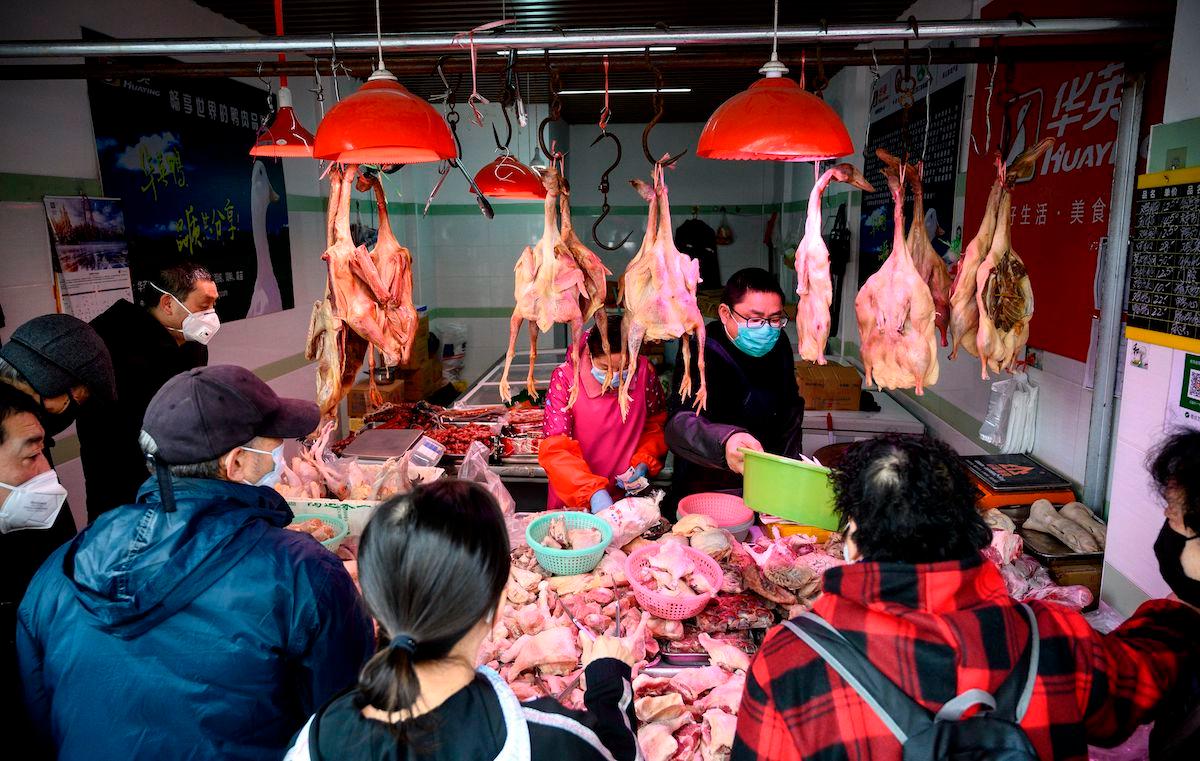
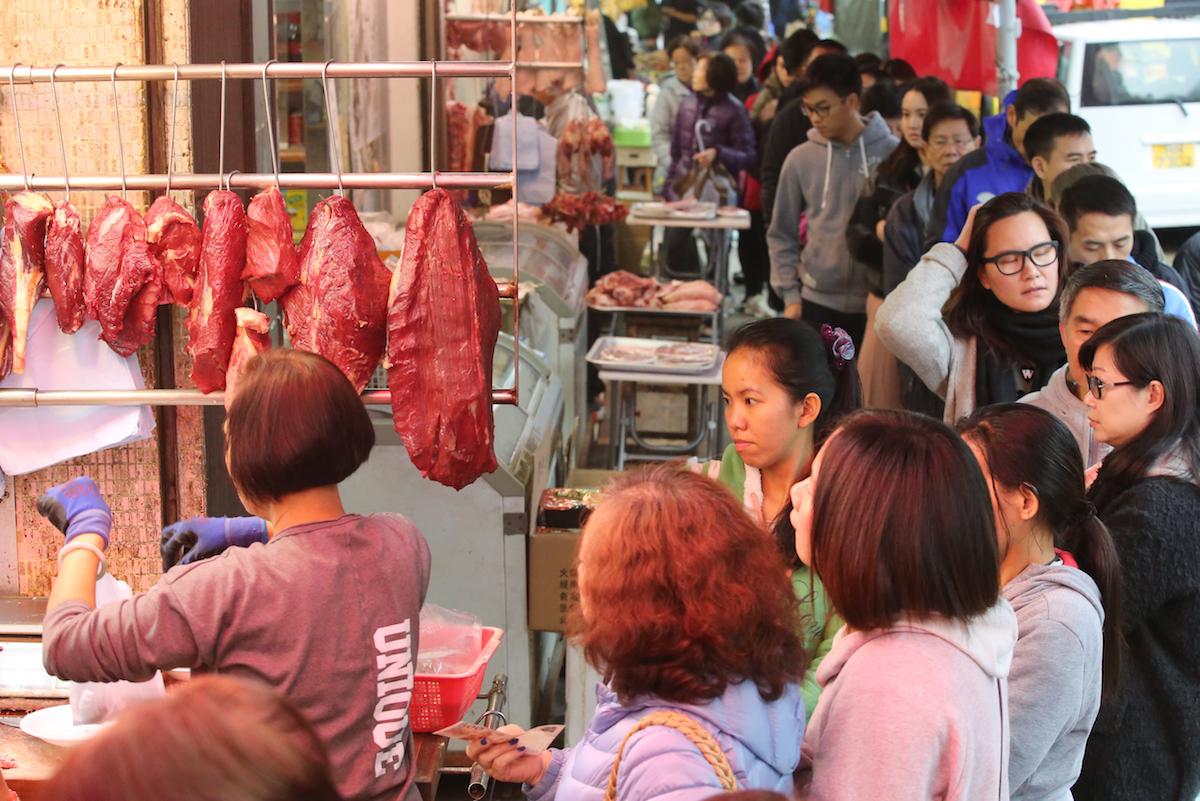
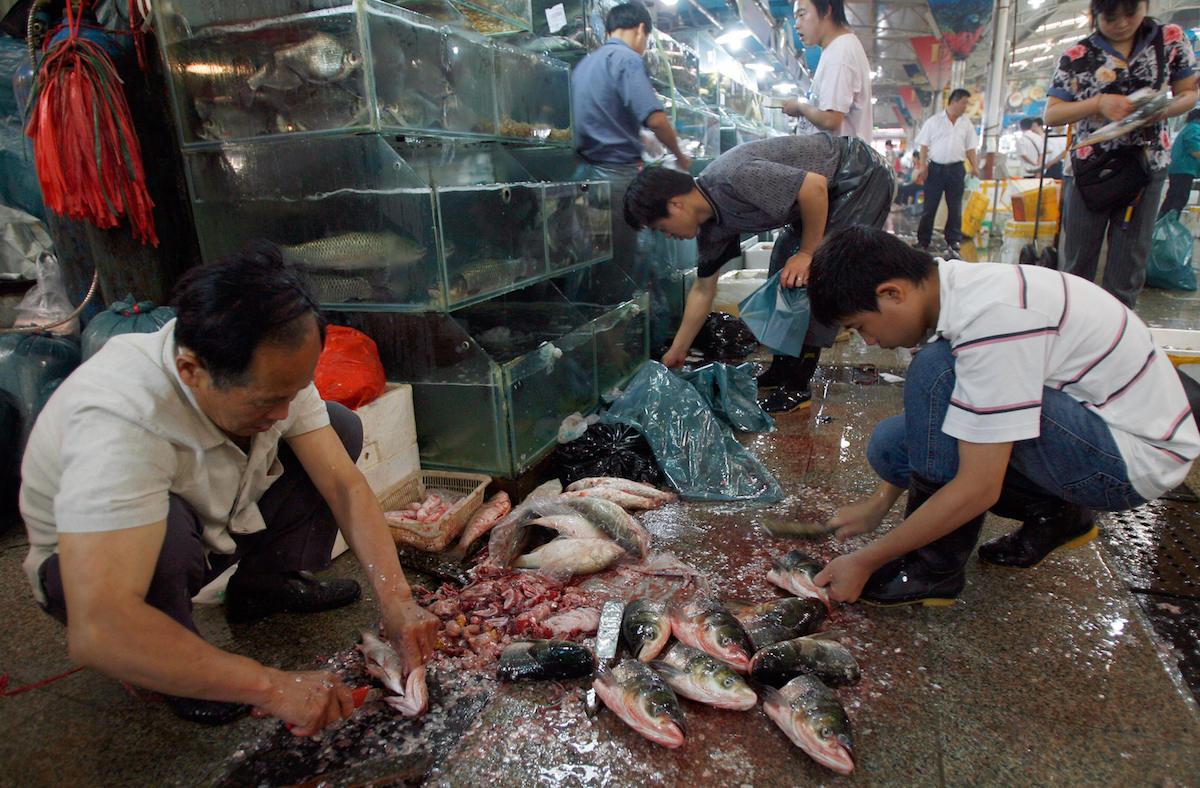
Wet markets, aka live animal markets, are marketplaces where customers can select live animals from cages, who workers then slaughter on-site for customers to take home and cook.

“You’ve got live animals, so there’s feces everywhere,” Peter Daszak, president of EcoHealth Alliance, told the Associated Press. “There’s blood because of people chopping them up.”

How did wet markets cause the coronavirus?

wet-market-4-1586282765264.jpg
SOURCE: TEH ENG KOON/AFP VIA GETTY IMAGES

Many of these markets are unregulated, meaning it’s not uncommon to find illegally-traded animals in Wuhan’s wet market cages. The lack of regulations also means that the markets are often kept in unhygienic conditions — and with wet markets putting people in close proximity with internationally-traded animals, animal waste, and animal slaughter, bacteria and viruses can easily spread.

Who wants to shut down wet markets?

Organizations to sign the letter include Animal Legal Defense Fund, Big Cat Rescue (yes, from Tiger King), Endangered Species Coalition, various chapters of Humane Society International, the Jane Goodall Institute, PETA, Pro Wildlife, Sea Shepherd, various Societies for the Prevention of Cruelty to Animals, WildAid, and more.

Other notable people who have called for a global shutdown of wet markets include Dr. Anthony Fauci, the U.S.’s top expert on infectious diseases and a leader of the White House’s coronavirus task force; Elizabeth Maruma Mrema, head of the U.N. Convention on Biological Diversity; and Jinfeng Zhou, secretary general of the China Biodiversity Conservation and Green Development Foundation.

“I think we should shut down those things right away,” Dr. Fauci recently said of wet markets on Fox & Friends, via Politico. “It boggles my mind how, when we have so many diseases that emanate out of that unusual human-animal interface, that we don’t just shut it down.”

Coronavirus: Columbus Zoo follows pandemic plan to avoid infecting animals as happened at Bronx Zoo

After a tiger at the Bronx Zoo in New York tested positive for the COVID-19 coronavirus, local zoo officials at the Columbus Zoo and Aquarium said they’ll continue to follow protocols already in place to prevent the spread of the disease to both their staff and the 10,000 animals in their care.

The top animal health official at the Columbus Zoo and Aquarium says its daily operations will change little, if at all, after a tiger tested positive for the new coronavirus this weekend at the Bronx Zoo.

That’s because the zoo has had protocols in place for weeks, limiting contact among staff members and animals, to help keep both groups healthy as the COVID-19 pandemic continues to spread in Ohio.

Veterinarians and animal keepers have divided into small teams that stagger work on site to prevent an entire crew of specialized caregivers from becoming infected. They’re also wearing masks and other protective gear to reduce the likelihood of spreading disease to the zoo’s 10,000 animals.

“We do a lot of telemedicine, phone calls, video conferences — keepers sending us pictures of things, instead of us always going out to see them,” said Randy Junge, the zoo’s vice president of animal health, who is now on zoo grounds just twice weekly.

“There are just a few people on zoo grounds, and when they’re out, everyone is wearing a mask, waving at each other from 6 feet apart.”

That has been the situation since the zoo indefinitely shuttered its doors to the public on March 16, three weeks ago.

>> This story is being provided free as a public service to our readers during the coronavirus outbreak. You can find more stories on coronavirus here. Please support local journalism by subscribing to The Columbus Dispatch at subscribe.dispatch.com.

The recently confirmed case of COVID-19 at the Bronx Zoo was in a 4-year-old female Malayan tiger. Three other tigers and three African lions had developed similar mild symptoms such as a dry cough and loss of appetite but were not tested because it would have required anesthetizing the animals. All are expected to recover.

The U.S. Department of Agriculture’s National Veterinary Services Laboratory, based in Iowa, confirmed the case, a first for the species and for any animal in the U.S.

The department’s Animal and Plant Health Inspection Service, which regulates zoos, suspects an employee who was “actively shedding virus” infected the tiger, according to a statement issued Sunday.

Some people don’t experience symptoms until up to 14 days after being infected, experts say.

The Bronx Zoo, like most nationwide, had been closed to the public since mid-March.

The Association of Zoos and Aquariums, a nonprofit group of more than 230 accredited institutions in the U.S. and abroad, including the Columbus Zoo, has advised big cat keepers to wear protective equipment, limit close interactions and use foot baths when entering or leaving a cat area.

The Columbus Zoo has had pandemic response plans for at least 20 years, said Doug Warmolts, its vice president of animal care.

“We were prepared for this, in a sense, but not to this magnitude,” he said. “Like the (COVID-19) virus in general, unfortunately a lot is still unknown.”

Though zoonotic diseases, transmitted between animals and people, may seem otherworldly to the public, for those who work in zoos, it’s a constant threat that must be prevented, Junge said.

It’s estimated that more than 60% of known infectious diseases in people can spread from animals, and that 75% of new or emerging infectious diseases in people come from animals, according to the U.S. Centers for Disease Control and Prevention. Examples of such diseases include rabies, salmonella, West Nile virus, Lyme disease and the H1N1 “swine flu” and H5N1 “bird flu” strains.

This has led to an approach among health professionals called “One Health” — recognizing that the health of people is closely connected to the health of animals and our shared environment.

⭕️🙌❗️⭕️❤️🌰

View image on Twitter

Coronaviruses are known to infect mammals and birds. It’s believed that this coronavirus pandemic started with an infected horseshoe bat in China, then jumped from another species to humans at a wildlife food market, researchers say.

Early research has indicated that cats and ferrets are susceptible, Junge said, citing a preliminary study out of China, where researchers forced high concentrations of the virus into the animals. Other animals, such as dogs, were not considered at risk.

It’s always assumed that primates can catch human diseases because they share a similar genetic makeup, Junge said. During flu season, their keepers always wear masks and protective gear.

“That’s why they get their flu shots in the fall, just like us,” Junge explained.

The recent developments shouldn’t be a cause for panic among cat and ferret owners, experts say.

There have been no confirmed cases of COVID-19 in U.S. pets, and there is no evidence that any humans have been infected by animals beyond the initial cases in China, according to the U.S. Department of Agriculture. Nevertheless, the department and the American Veterinary Medical Association are advising people with COVID-19 infections to avoid contact with animals, including pets, out of “an abundance of caution.”

Owners who suspect their pets may be infected should talk to their veterinarians.

If a cat has no exposure to the outdoors, you’re more likely to infect it, not the other way around, Junge said.

Those who work in animal welfare say they’re already concerned about pets being surrendered or dumped as families struggle with the financial impact of the coronavirus pandemic.

Rachel Finney, CEO of Columbus Humane, said the Northwest Side shelter hasn’t experienced an influx of people surrendering their pets, but it is a concern. The nonprofit agency has plans ready to distribute food and supplies to owners in need.

“The very best thing people can do is keep their pets with them at home,” Finney said.

She also advised owners to plan in advance for their pets’ care in the event they are no longer able to look after them, such as during an extended hospitalization.